“I write because I don’t know what I think until I read what I say.”
— Flannery O’Connor
It looks as though I’m stepping into my fifth year writing about collage at this blogsite, and I hope that you’ve been with me for part of that enjoyable ride.
When I look back at my wish list for Year Four, I realize, not with any surprise, that my appetite for creating collage artwork has eclipsed a sometimes equally strong desire to delve verbally into the many interesting aspects of the medium. I would like to think that I met a few of the writing goals I set for myself last summer, and, of course, my ambitions to add to that list here in this post will be dutifully curbed. At any rate, I think that the best thing to do is to break this entry into a few parts that cover various and sundry topics on my mind.
The Social Network of Collage Artists
• For at least a couple of years I have wanted to write more about the influence of social media. Nearly every day I see a collage artist defeat the potential of a sharing platform with overexposure. Some may disagree and say, “the more, the merrier.” 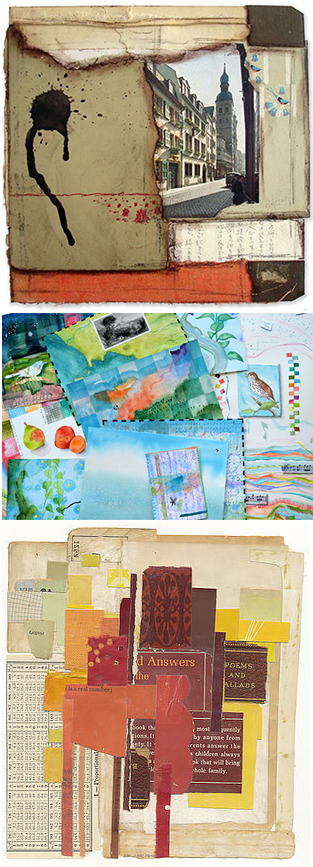 That is not a point I care to debate, because there may be something else to highlight more important than whether or not the quality-vs-quantity consideration can fall to the wayside — the vital role of networking among artists. I am more convinced than ever that the cross-pollination and mutual support of online networks has been of significant benefit to those of us working in the medium. Crystal Neubauer has one of the more interesting blogsites by a collage artist. She touched on the topic of creative communities so well that I direct you to her short essay at ClothPaperScissors.com. Another collage artist I admire who has recently made an impression as a strong blogger is Melinda Tidwell. I like her process-oriented posts. Although more of a mixed-media artist rather than a conventional collage practitioner, the versatile Kathleen O‘Brien maintains a steady flow of what I consider “must-read” entries at her studio blogsite. Create your own list of frequent art-blog destinations and branch out to new sharing platforms (I just learned about some new artist blogs from Caterina Giglio and opened a new account at Instagram.). As the entire evolving array of networking sites weeds out the fads, imitators and clunky interfaces (finding it difficult to tolerate LinkedIn as a user), you will settle into a community of online cohorts who reinforce your daily challenges as a creative person. When you come to know that someone else is on “the same wavelength,” reach out and make contact as an authentic being behind the profile. There are rewards to be discovered!
Cheap Collage Tricks
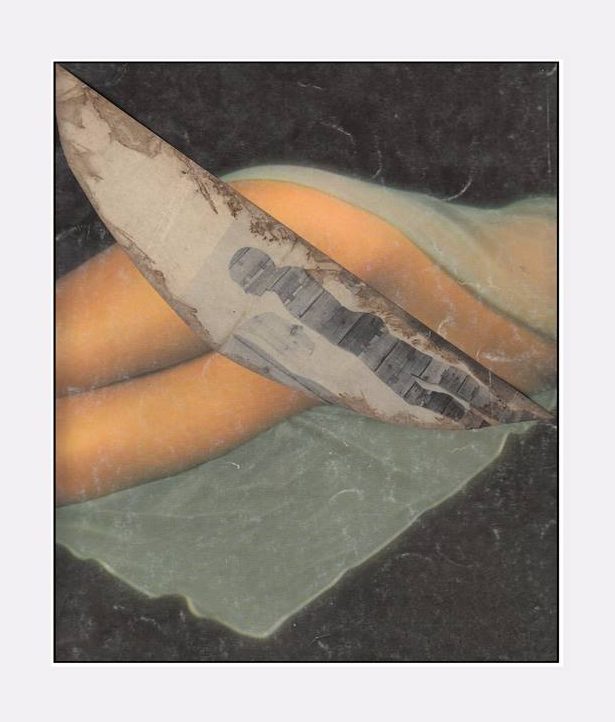
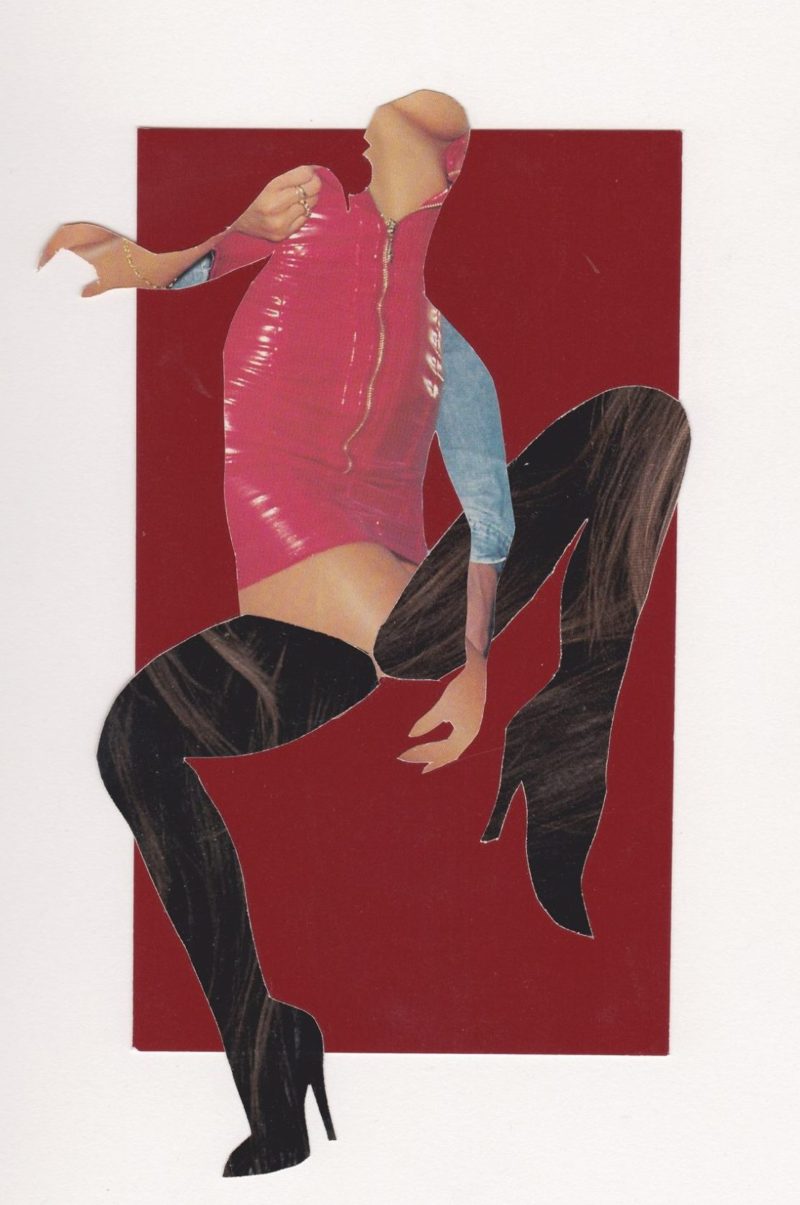
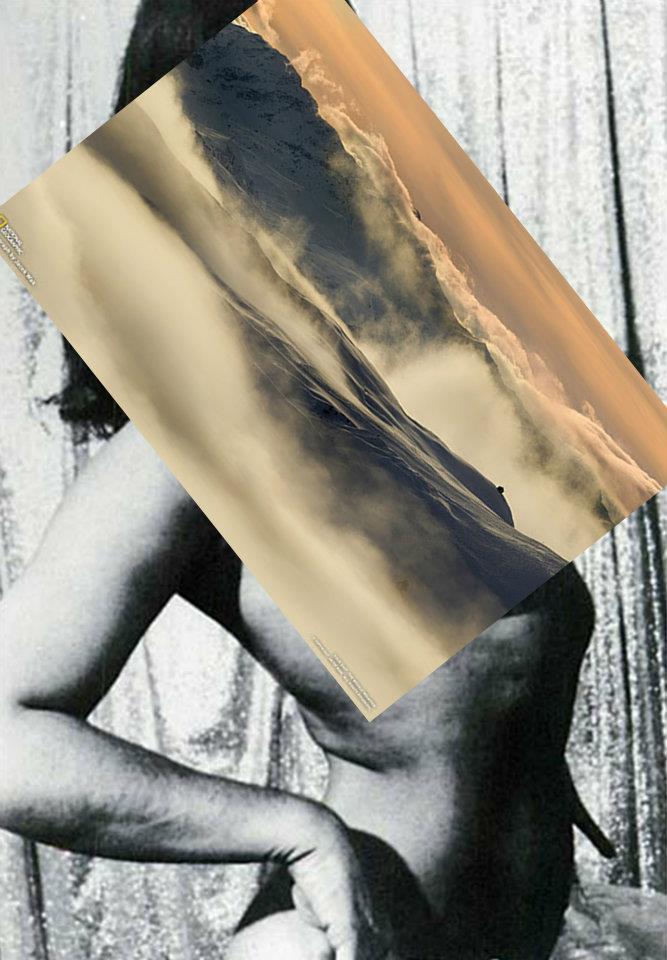
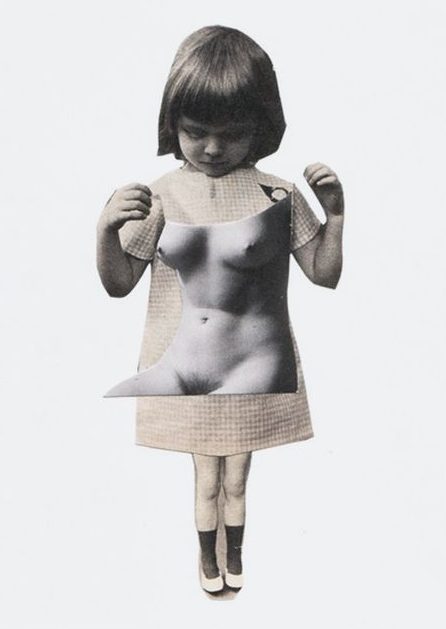
• Collage artist Allan Bealy seems to be everywhere, but, trust me, he is no gadfly. He recently raised a topic that struck a nerve with many. There are a lot of cheap tricks appearing in the medium, and most of them are harmless, if unimaginative, but the temptation to exploit visual ingredients readily available in our culture to “objectify women” is perhaps the most repugnant. 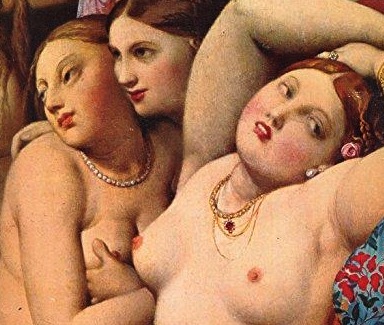 Those of us who believe we are above that sort of thing need to think more deeply about how and why we use nudes in a collage. This suggests another potential self-assignment for my coming year — a “DON’T DO THIS” post illustrating the most prevalent cheap tricks in collage. (Not that there’s anything wrong with replacing a man’s head with a vulture to carry the banner of Dada during the art movement’s centennial year.) To be honest, I have nothing against a cliche, if it “works.” Isn’t that the reason something becomes a cliche in the first place? I say go for the cheap trick if you can score in the highest percentile (anyone who thinks it’s an easy thing to do is mistaken). I hope to post a follow-up look at the endurance of the surreal face in collage, so stay tuned. But let’s get back to Allan’s remonstrance. The woman as sex object can be traced back to long before the rise of Madison Avenue and Larry Flynt. Don’t bite the lure, folks. Everything one needs to dabble in this unworthy stunt abounds. Nevertheless, I long have been fascinated with the exemplars of erotic minimalism and their work in contemporary collage — those who transcend the cheap tricks to achieve a fine-art impression. Add another one to my wish list for Year Five of The Collage Miniaturist.
Priorities Get the Last Word
• My wife, Dana, and I managed to get two tickets to The Seer (a new documentary portrait of Kentuckian Wendell Berry, re-titled “Look & See” for Sundance Institute) before the Lexington screening sold out last night. 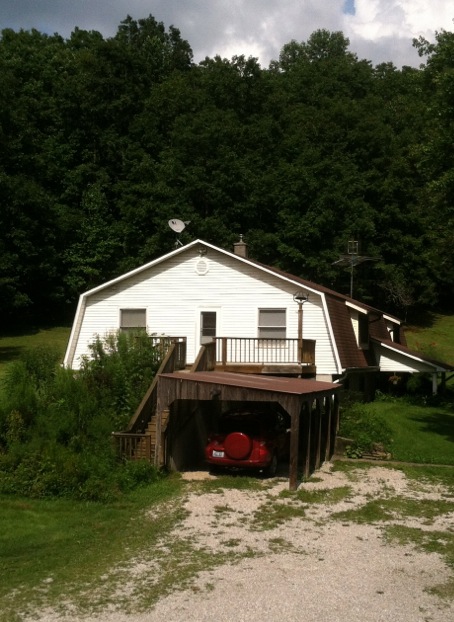
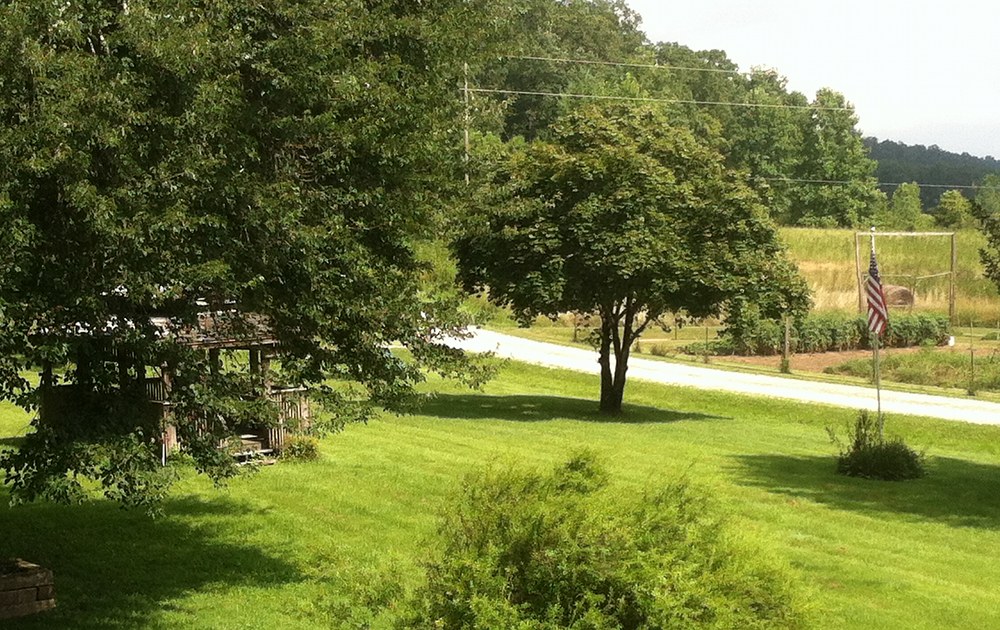 It is a significant film that will become more widely available into next year, and it has my highest recommendation. Does it have anything to do with collage? Nothing at all, except for everything under the sun. If you haven’t discovered the poet, novelist, essayist, and farmer-philosopher, I have accomplished one meaningful thing with this site by inviting your interest. It was fitting that I got out of the studio and spent time at our farm. It was very hot work up on the shed roof, but pleasant to be away from all the noise (traffic, sirens, and incessant political jousting). Connecting with our rural place offered an opportunity, as it always does, to put priorities back into alignment. There is a place in the documentary when Laura Dunn (the filmmaker in voice-over) explains to Berry her motivation and how she looks “to places where there is still a remnant of togetherness, or unity, or community, of connection to the land, and I study those, because I don’t come from a place — I come from divorce …”
“We all come from divorce!” her subject interrupts. “This is an age of divorce. Things that belong together have been taken apart. And you can’t put it all back together again. What you can do, is the only thing that you can do. You take two things that ought to be together and you put them together. Two things! Not all things.” It is his metaphor for the creative life, and a tremendously healing admonition to those of us with a tendency to become overwhelmed by the enormity of the world’s chaotic disintegration. Collage artists put things together to make something new, and often we are the ones who have taken apart discarded things to do it, but there is always a much larger phenomenon at work — one of discord vs harmony, mechanism vs intuition, wastefulness vs thrift, cynicism vs affection. When I return to the studio from a natural place that has responded to my care, I am in a better condition to ask myself, “To which side of the big equation are you making your contribution as an artist?”
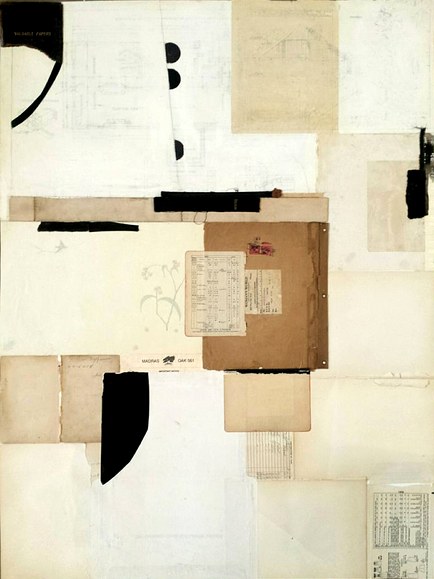
Crystal Neubauer
Her blogging often touches on the complexity of a creative life.
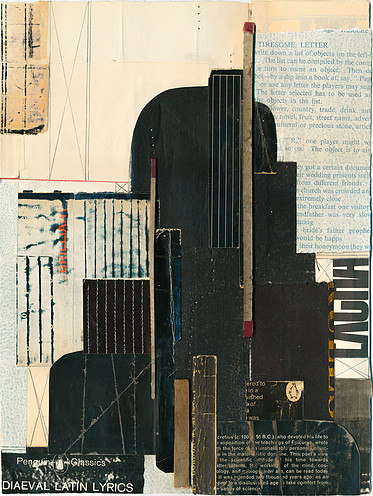
Melinda Tidwell
Perhaps you will admire her solid abstractions as much as I do.
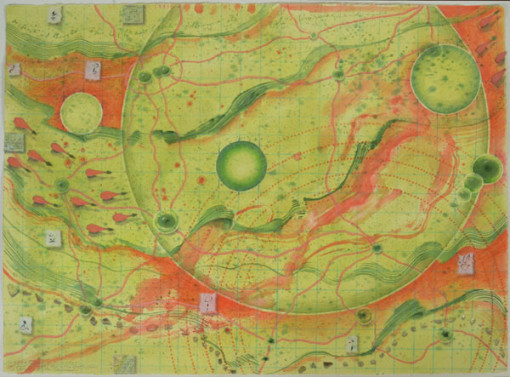
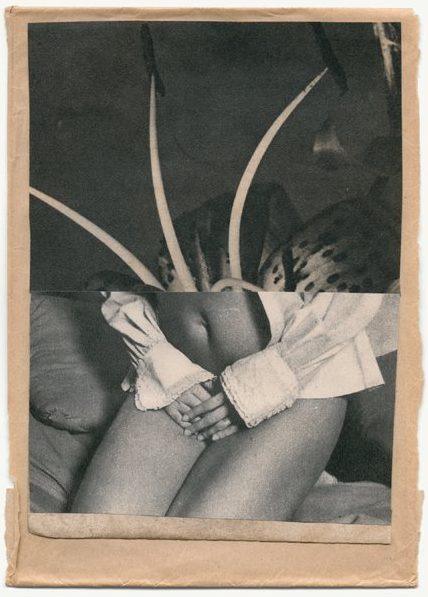
Kathleen O’Brien
Her art always nudges one toward a deeper sense of balance and wholeness.
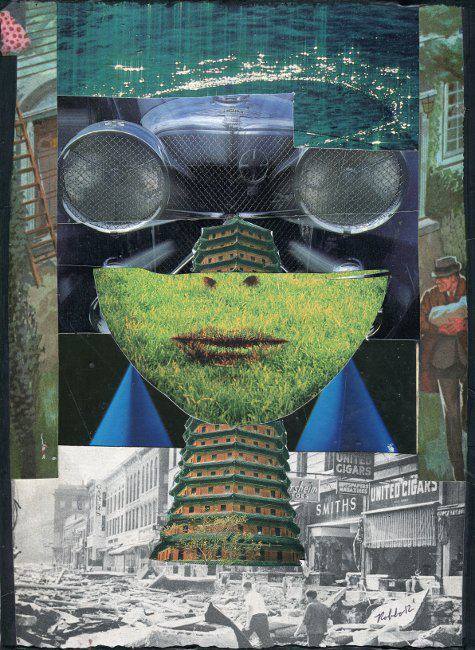
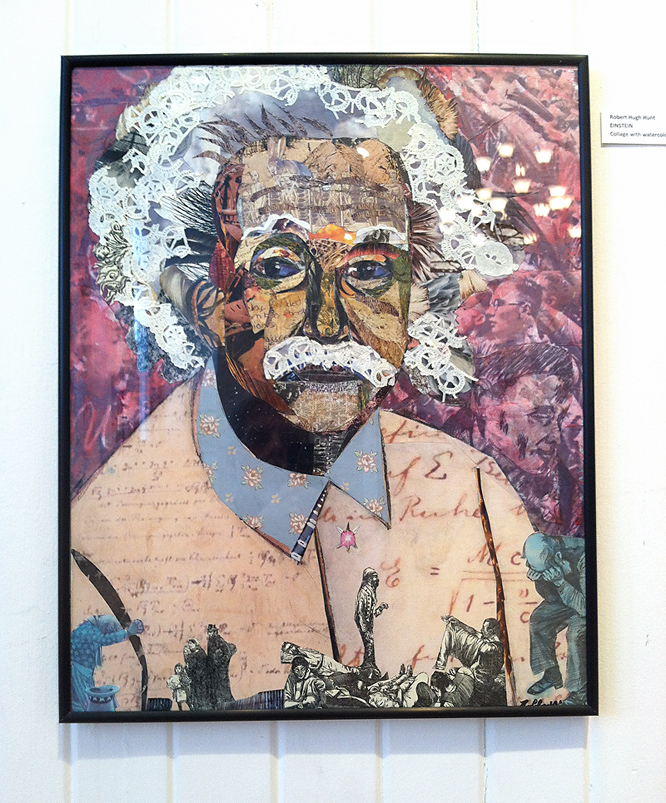
Robert Hugh Hunt
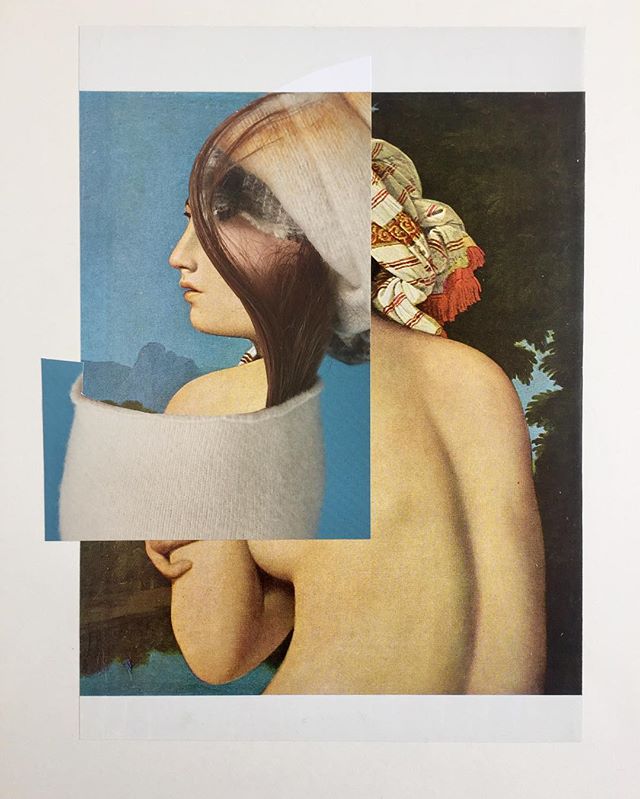
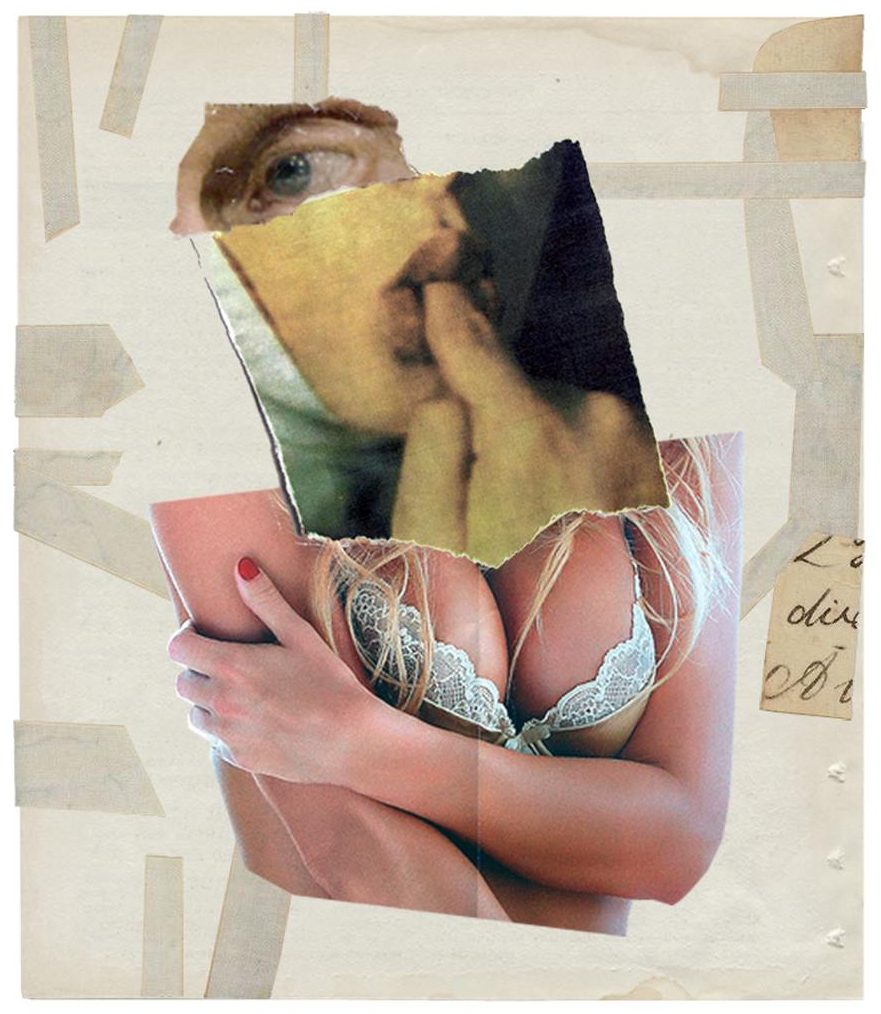
Stay tuned for a continuation of my review of “the surreal face.”
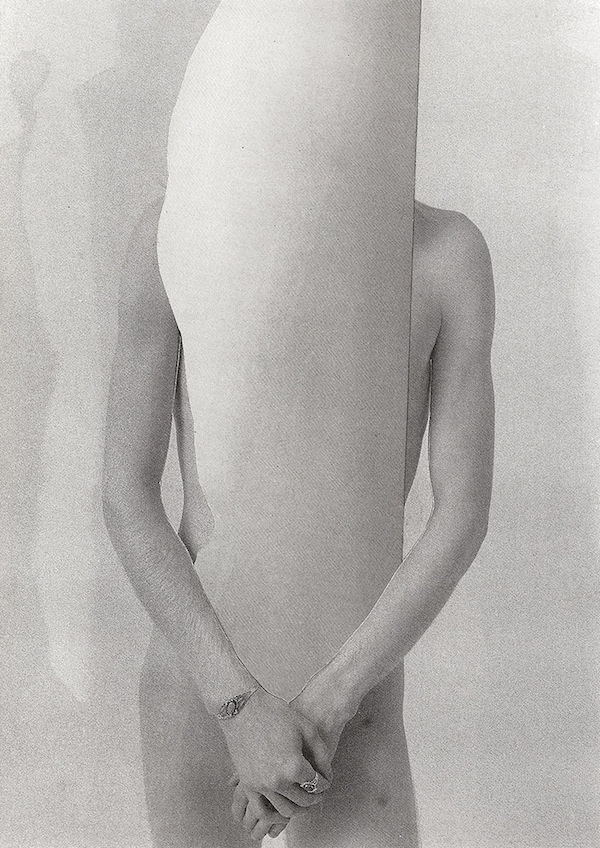
Bene Rohlmann
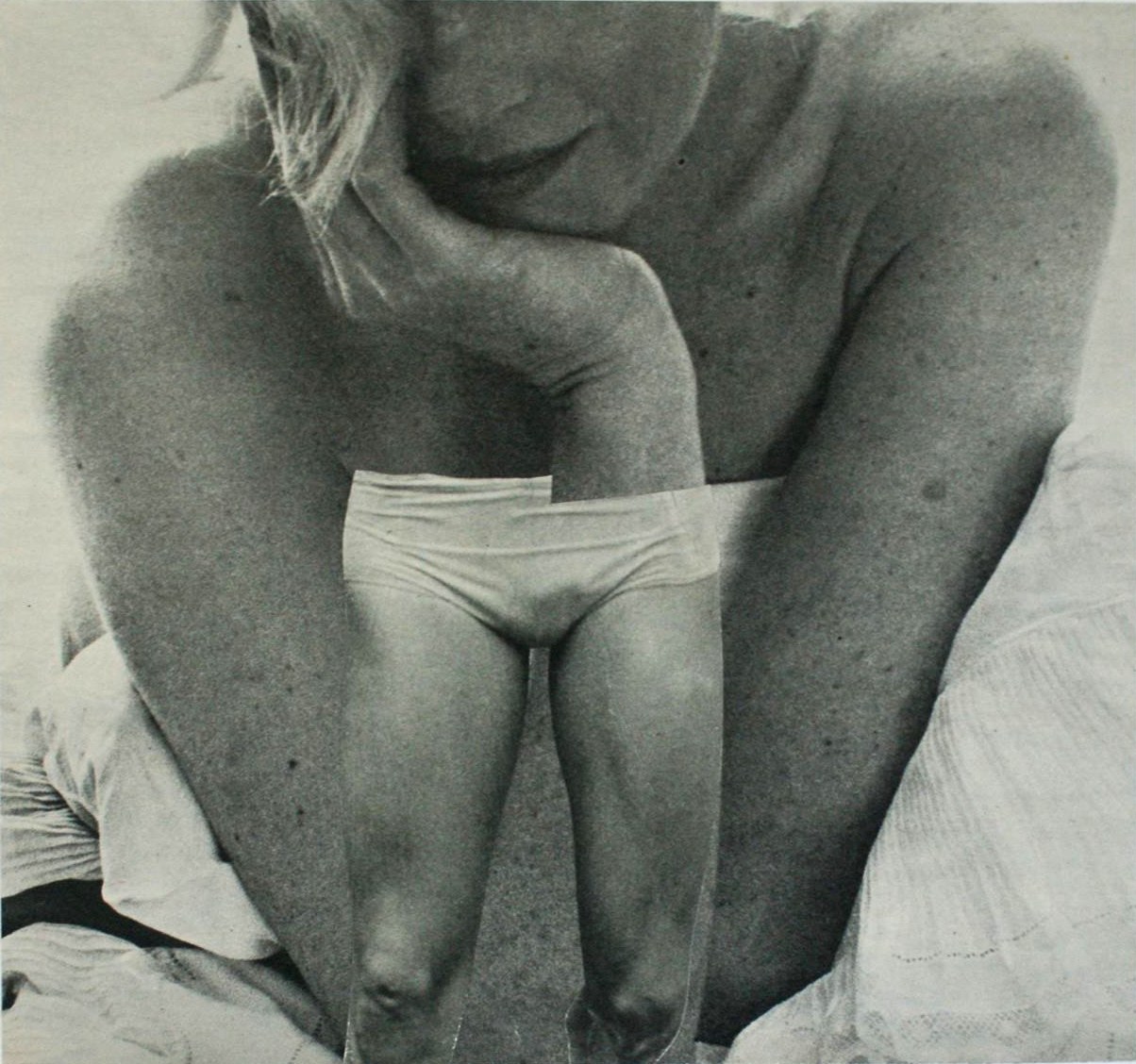
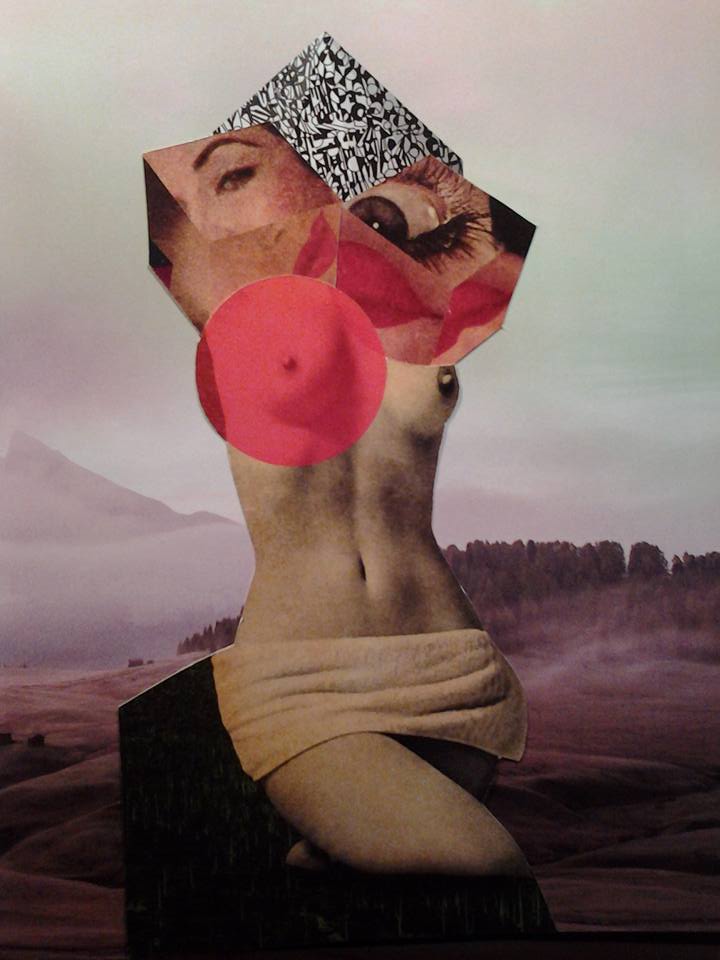
Look ahead to my first discussion of erotic minimalism in collage.
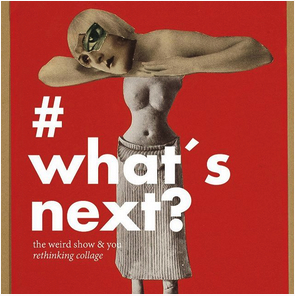 than a ton of casual “likes.” Those of us who love this practice need to push beyond the comfort of mutual praise and communicate honestly about the medium of collage (not about our political attitudes). Don’t expect the lords of social media to provide a thumbs-down button. That’s not the solution (even if they do). There needs to be the virtual equivalent of the intense coffee houses and night spots of a century ago, where artists were not shy about challenging the easy answers and safe solutions.
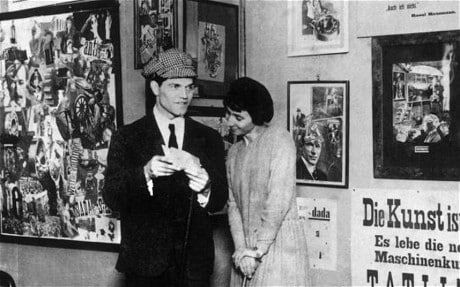 Höch, Hausmann, Schwitters, and their fellow collage “inventors” included found material contemporary with their times. There are many current practitioners who restrict themselves to “vintage” resources, and some of them avoid using anything younger than 50 years old. Whatever they choose to do is fine, but, in my opinion, 21st-century collage artists are challenged to explore the cast-off stuff of today for potential ingredients in a fresh “school of post-centennial collage” that “documents” our own culture, rather than confine themselves to curating the artifacts of our ancestors. Remember, when KS pasted down a tram ticket in place of a brushstroke, nearly a hundred years ago, he was clearly using something that he just acquired on the street. Let’s think about that when as ask ourselves, “What’s Next?”