Archive for the ‘Methodology’ Category

On collage derivations . . .

Sunday, November 17th, 2013

“I believe that it is better to be receptive to correction than to be satisfied with one’s own imperfection, and to think that one is oh so original!”
— Piet Mondrian

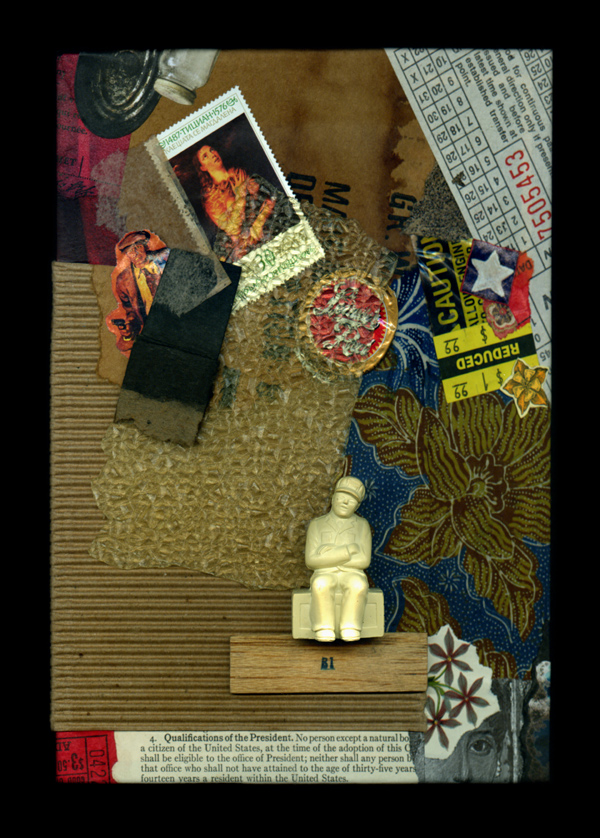
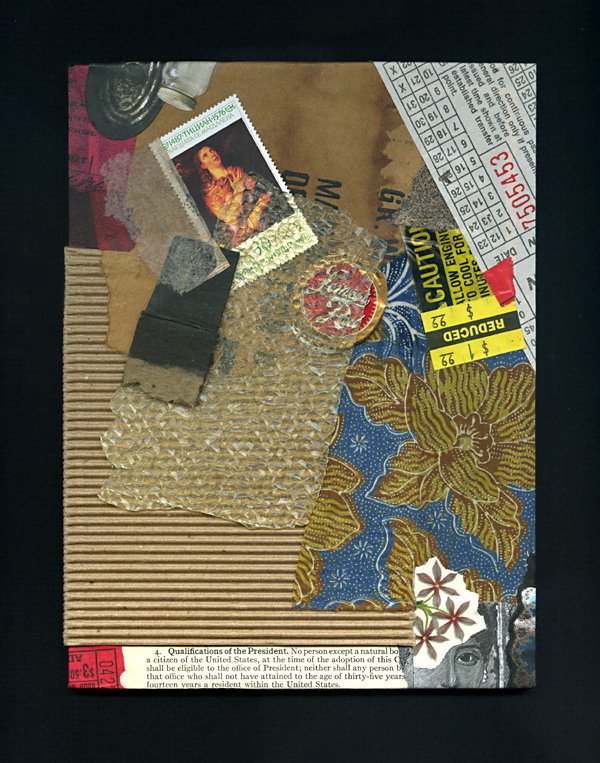
As I mentioned in a welcome statement from over a year ago (and perhaps more recently), I have nothing against digital collage, although I do maintain a bias in favor of conventional (so-called analogue) techniques, especially at this site, but don’t expect me to become “all blogmatic” about the topic, since I have been known to gratefully accept commissions for digital montage and affirm my respect for those who do collage illustration at a high level. The point I want to make today is that, so far, I have not generated much enthusiasm for manipulating or reproducing my “tear and glue” artworks as digital prints or “art merchandise.” Someone recently asked if I sold note-card versions of my miniatures, and I had to admit that “I have never quite gotten around to that.”
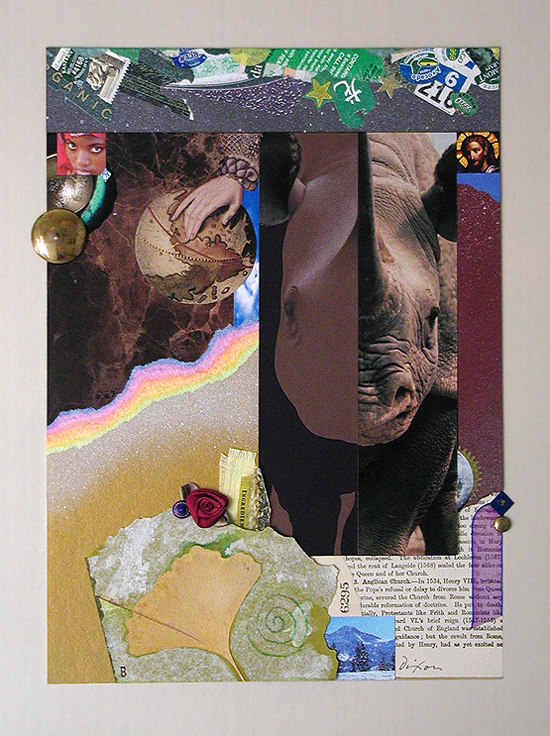
There are many reasons, both good and bad, to produce derivations of one’s own work for the marketplace. There are also many reasons, both good and bad, to restrain oneself. I would hope to be open-minded about the subject. Not everyone who enjoys collage can afford to collect originals. In addition, I often get ideas about how to combine separate works into a composite digital design, exploring in the process a distinctive aesthetic resonance that might not be discovered in other ways. I occasionally imagine how one of my miniatures would look as a super-enlargement, or I envision an exhibition of large canvases created from Giclée blow-ups of small works. No doubt, there is an appropriate place for digital technology in the medium, whether on the front- or back-end of the process. The digital image is, of course, the stock in trade of any artist with an active presence on the Internet. That comes with its own set of issues that I plan to cover in my next discussion. Meanwhile, I hope to preserve my emphasis on a traditional methodology and observe how other collage practitioners adopt emerging technology to enhance their fine-art investigations.
 

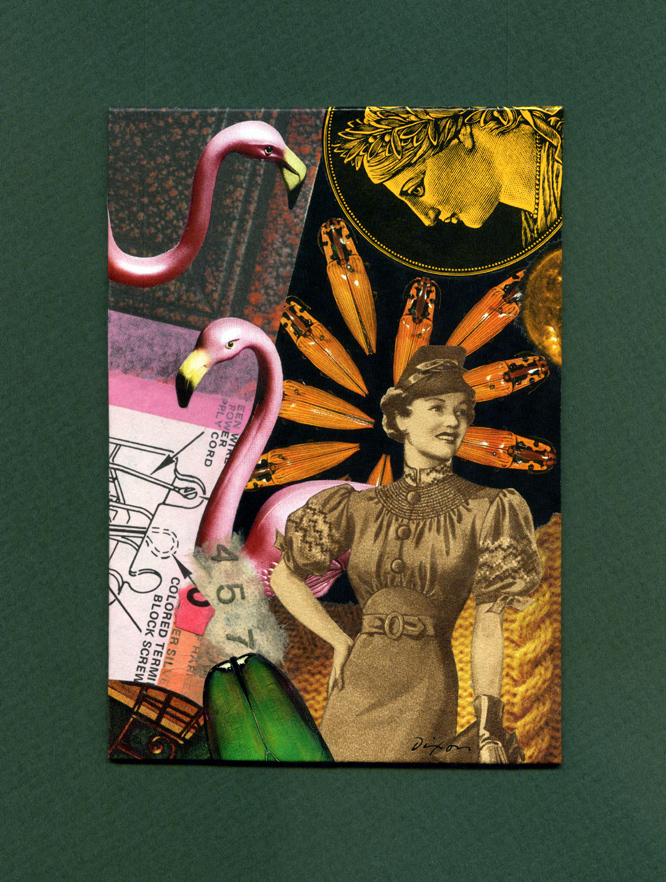
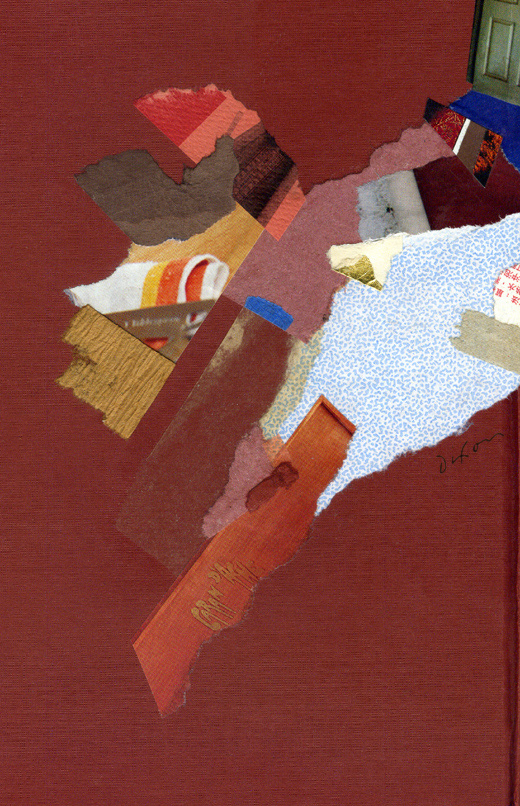
Microcosmic Moments
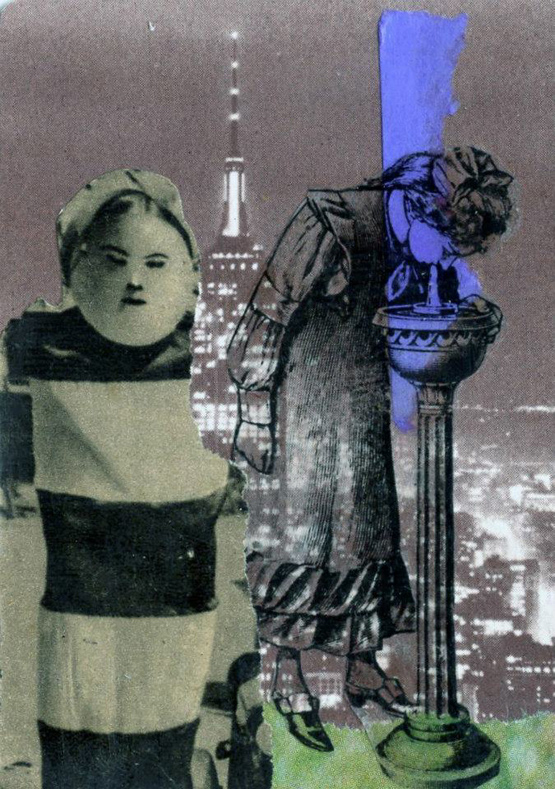
compilation of nine miniatures by J A Dixon
proposed digital concept, variable in dimensions

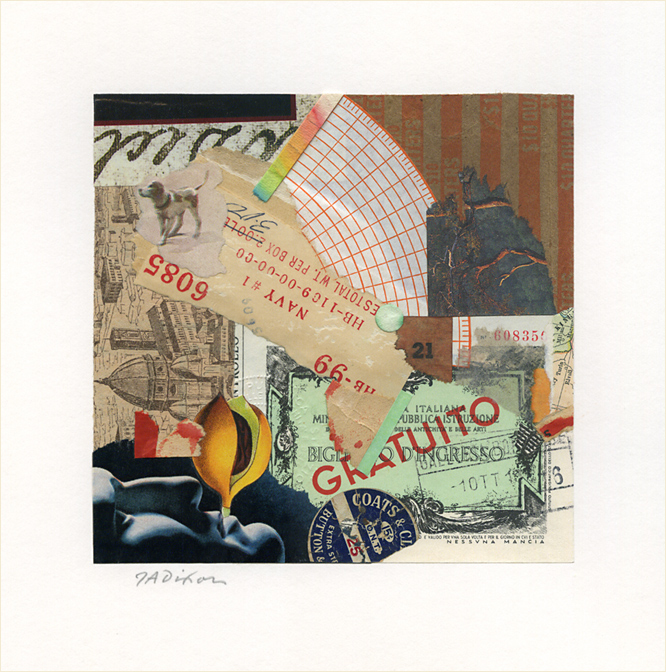
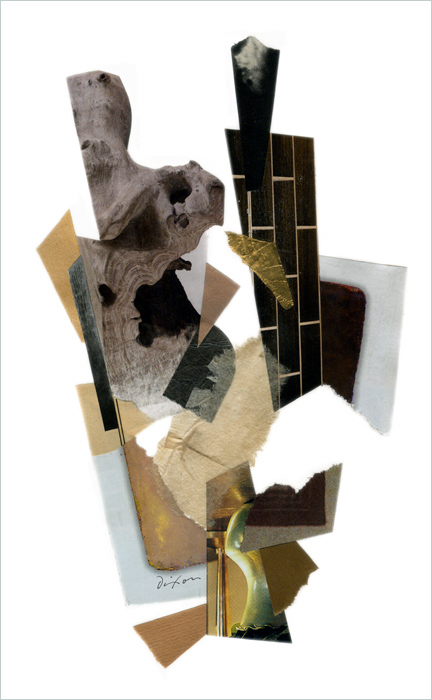
Modular Zowee
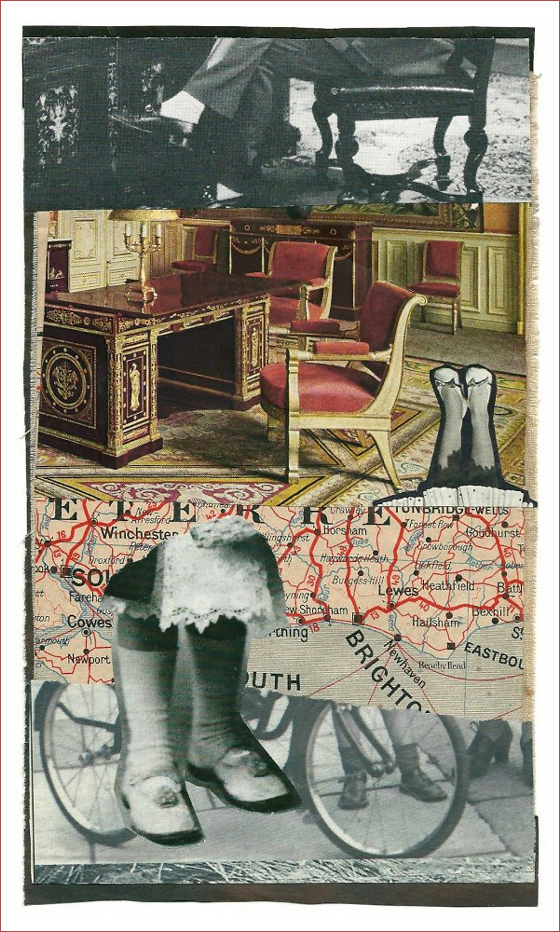
composite of collage details by J A Dixon
proposed digital concept, variable in dimensions

Mystery Solved (detail)
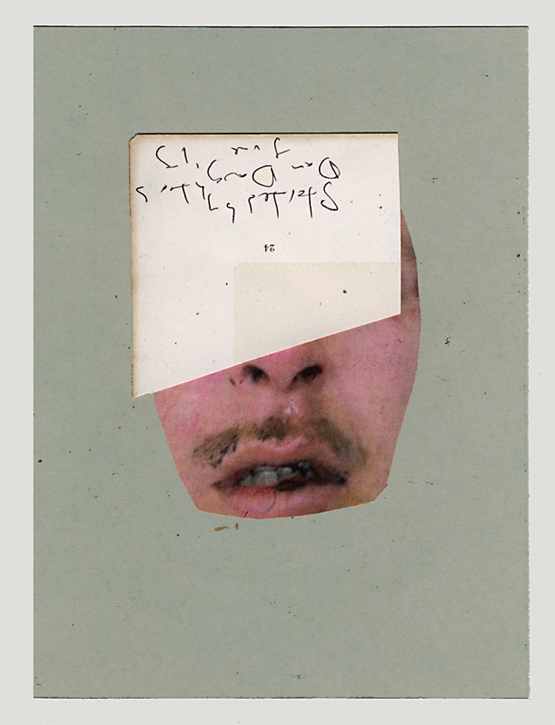
super-enlargement of collage detail by J A Dixon
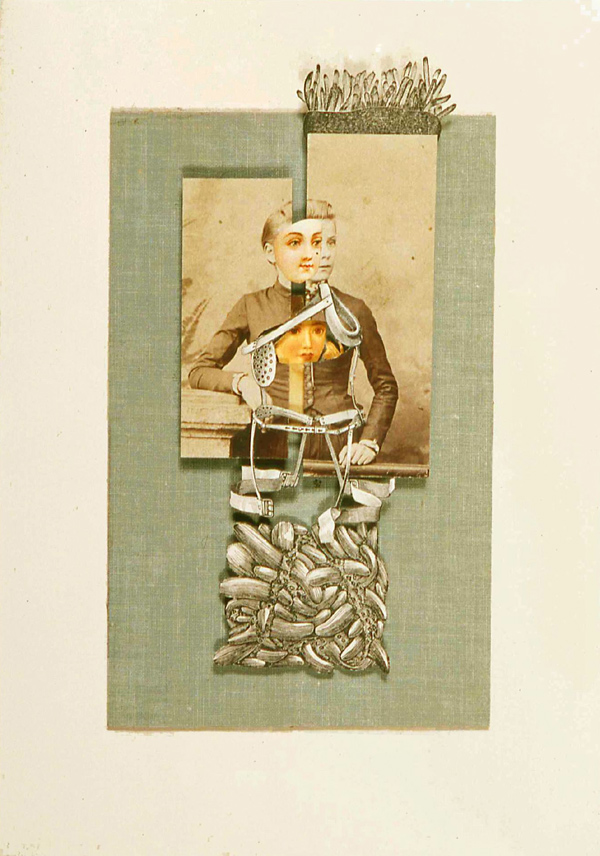
proposed digital concept, variable in dimensions

Mystery Solved (set of four cards)
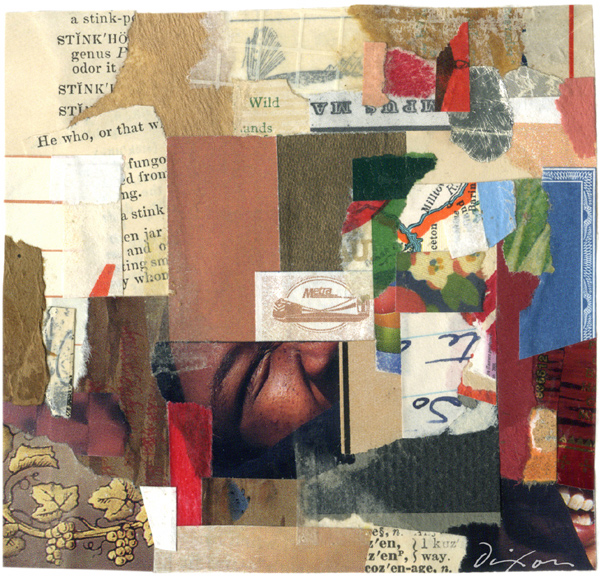
merchandise with collage details by J A Dixon
proposed digital reproductions, 5.75 x 4.5 inches

Broadband Access
digital montage by J A Dixon
editorial illustration for ACUTA Journal

Collaboration in Collage, part 2

Saturday, November 9th, 2013

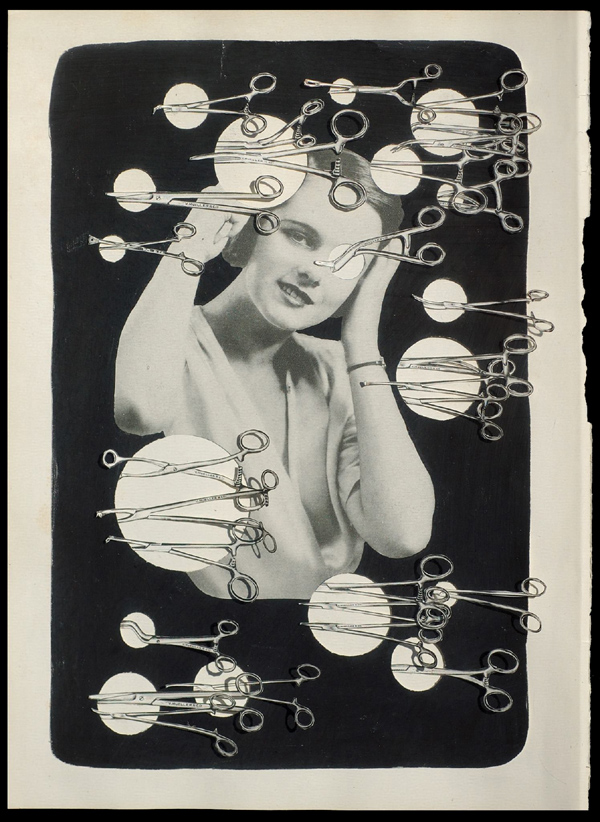
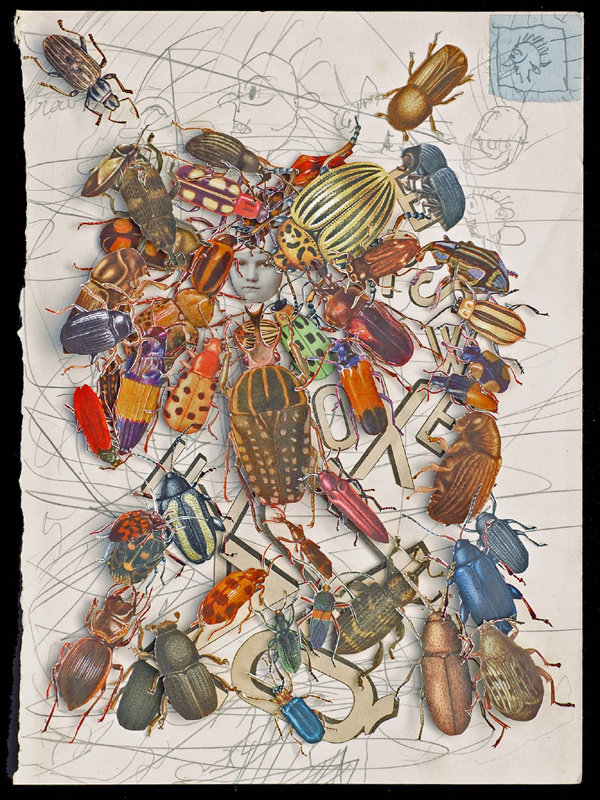
“There has been an increased attention on collaborative practice in the arts in recent times with a perceived increase in artists working in groups or partnerships. For many other artistic enterprises, collaboration is the norm. Musicians form together into ensembles and bands; actors, writers and directors necessarily work in companies; and dancers, choreographers and musicians work in companies too, or in troupes. But for the visual arts the history of collaboration is less dominant, but perhaps, on the rise.”
— Kent Wilson, from the Central Highlands ArtsAtlas

The Target Practice Project is certainly taking on a life of its own. L T Holmes has established a new blogsite and yesterday she kindly featured me as a “guest blogger.” Thank you, Laura, for your generous spirit.

Several of my entries over the past weeks have illustrated thematic collaborations. How many other kinds are there at play in the contemporary collage scene? Please indulge me as I continue to count the ways.

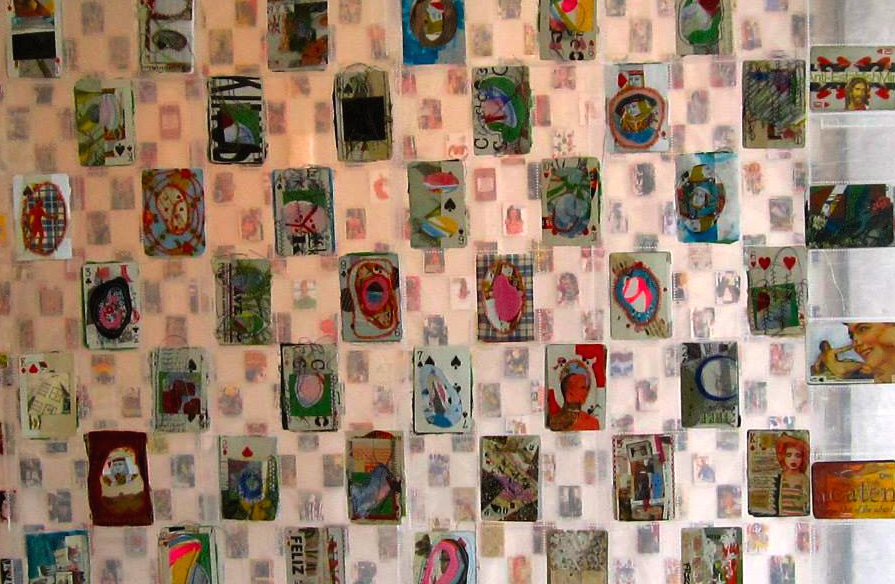
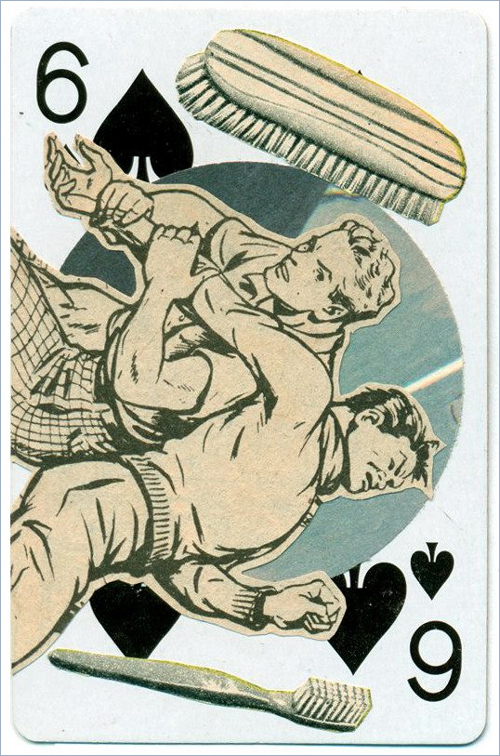
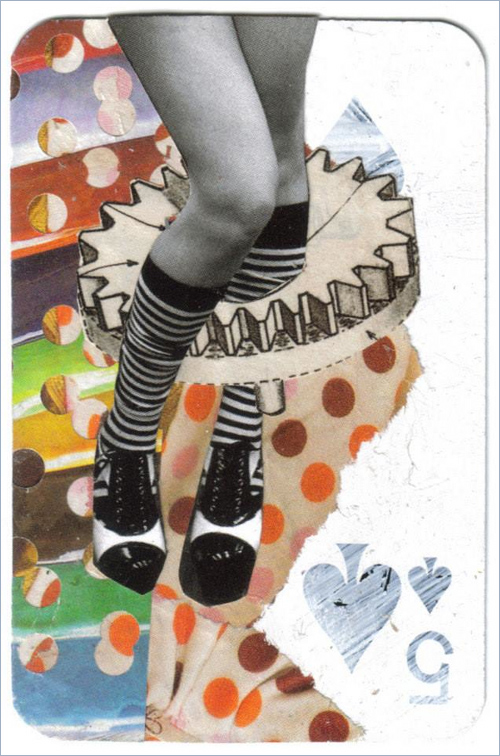
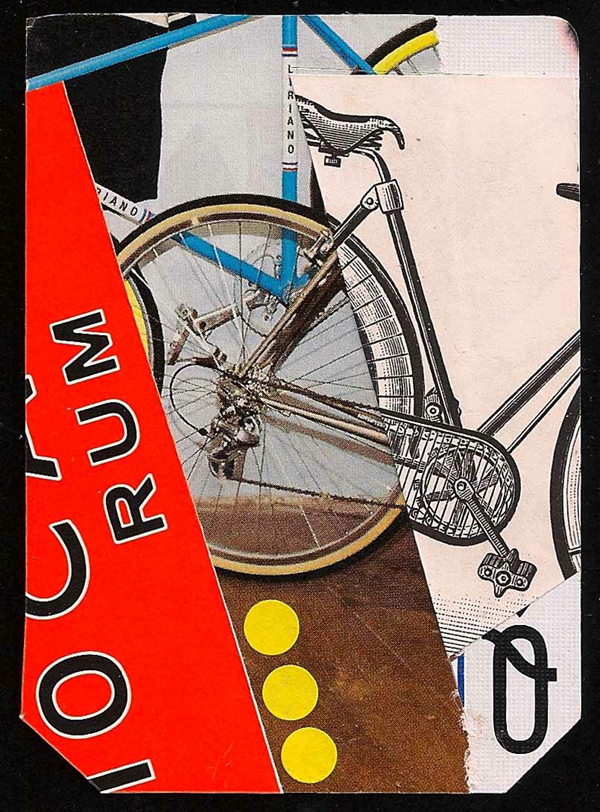
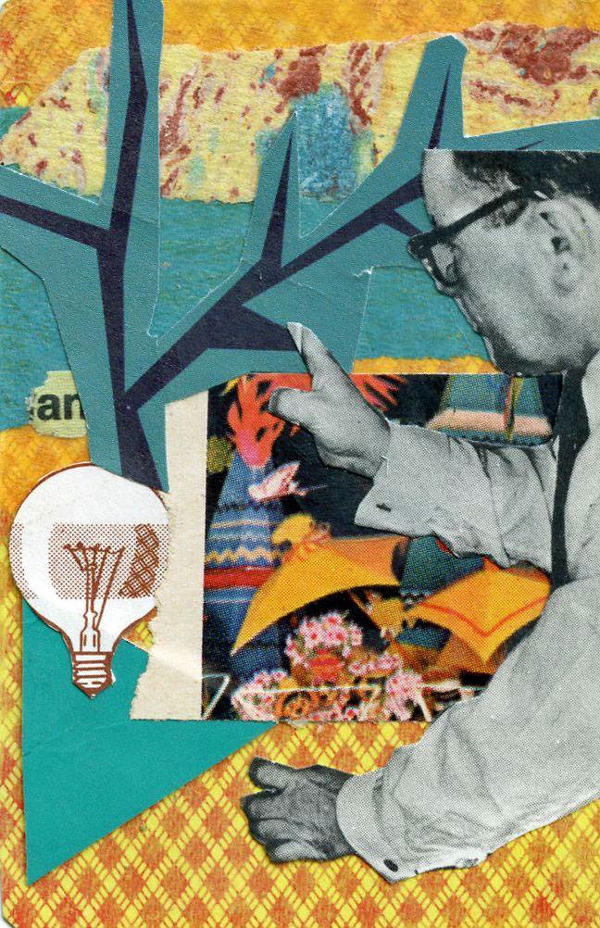
There have been remarkable long-term projects such as Liz Cohn’s Playing with a Full Deck. The playing card format seems to be a perpetual stimulus to interesting collaborations in collage. And then there is always the creative teamwork that simply results from a meeting of improvisational minds. One artist will originate a piece and a partner will complete it. Sometimes the process works in both directions at once. In other cases, a collaborator will select ingredients in order that a fellow “chef” may prepare a delicious “entrée.” Zach Collins has devoted much of a Tumblr site to his prolific joint ventures. Musta Fior is internationally known for his many visual co-conspiracies. Below are representative products of collaboration in the medium that have recently caught the eye of The Collage Miniaturist.

Long have I been convinced that musicians had it all over visual artists when it came to the collaborative urge, but countless exponents of contemporary collage are helping to revise that perception. Ladies and gentlemen, keep jammin’ away!
 

“Playing with a Full Deck” exhibit
altered playing card collaborations
Gallery 6 PDX, 2013

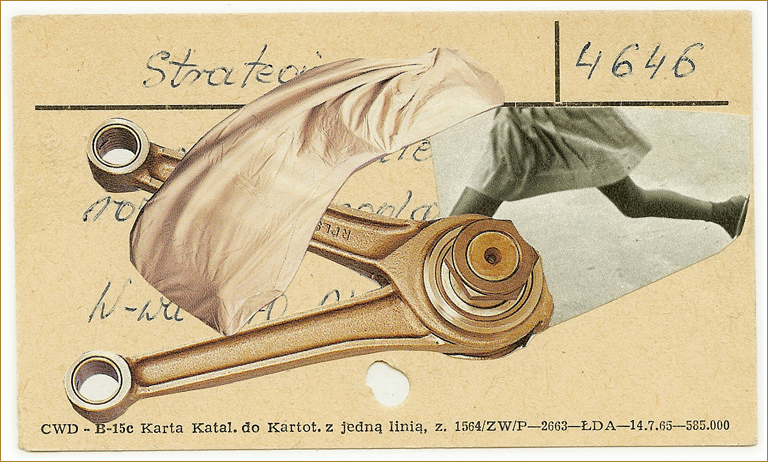
4646
collage collaboration
F Free + J Gall, date unknown

(start and finish, title unknown)
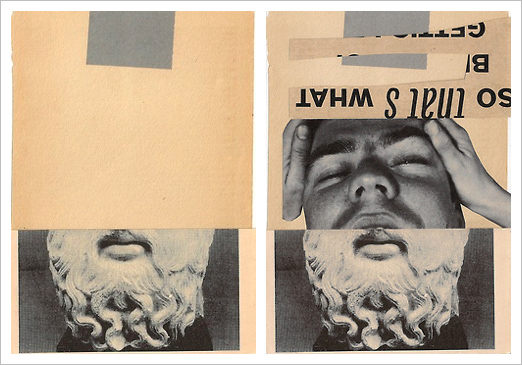
collage collaboration
start by A Bealy, finish by Z Collins, 2013

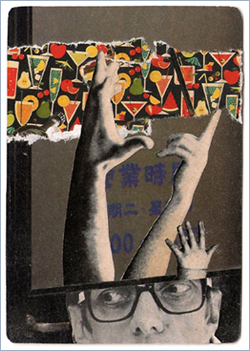
(title unknown)
altered playing card collaboration
start by G Stadler, finish by Z Collins, 2013

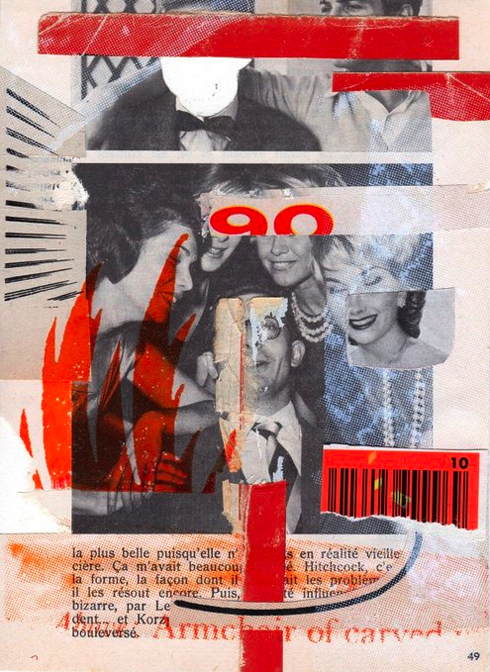
deception
collage collaboration
(©2013 Flore Kunst/Aaron Beebe)

Cute commando 5
altered playing card collaboration
(©2013 Flore Kunst/Musta Fior)

(title unknown)
altered playing card collaboration
M Fior + + L J Miller-Giera, 2013

Ragbrai
altered playing card collaboration
T Tollefson + L J Miller-Giera, 2013

A Dreadful Idea
altered playing card collaboration
L T Holmes + C Chocron, 2013

Bigger Than That
altered playing card collaboration
T R Flowers + L T Holmes, 2013

Channel Crossing
collage collaboration
start by J Ratouin-Lefèvre, finish by D Daughters, 2013

24.2
collage collaboration
D Daughters + I Reitemeyer, 2013

More collage experiments . . .

Tuesday, October 29th, 2013

“All the works of man have their origin in creative fantasy.”
— Carl Jung

Anyone who thinks that everything about collage is known is probably stuck in a dull place. Continuous experimentation is vital, whether or not we divulge or share the products of our investigation, and constructive self-criticism is essential, if one is to avoid the pitfall of “artistic comfort.”
 

Untitled (kaleidoscope)
collage experiment by J A Dixon
4 x 3.75 inches, not for sale

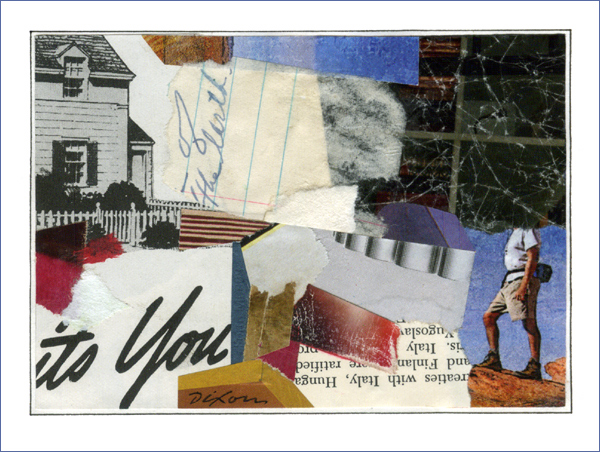
its You
collage experiment by J A Dixon
4.375 x 3 inches, not for sale

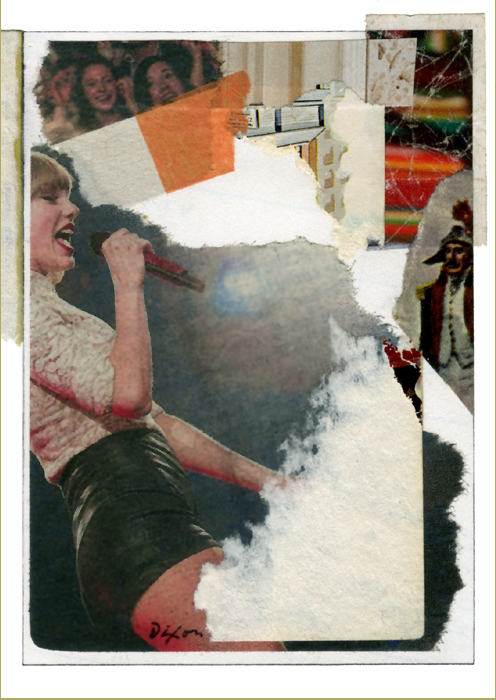
Reign Glorious
collage experiment by J A Dixon
3.25 x 4.5 inches, not for sale

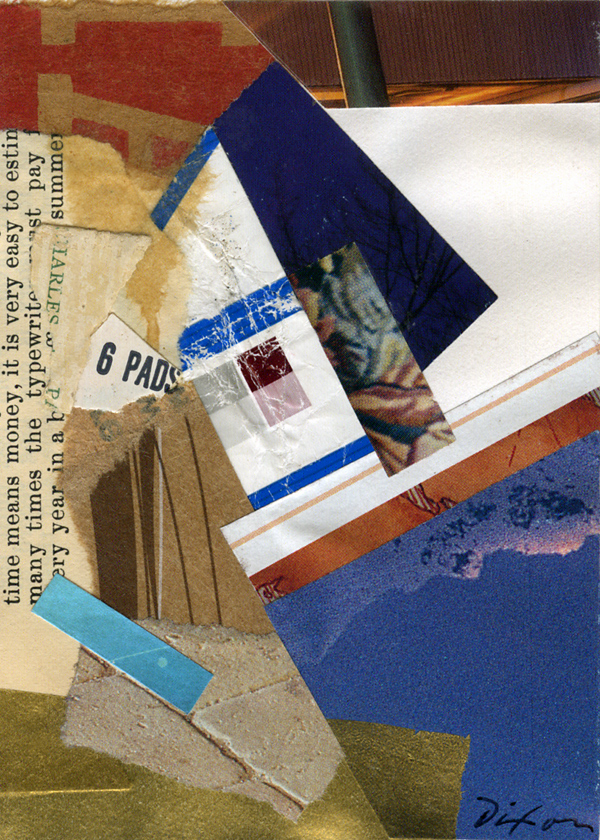
6 Pads Of Time
collage experiment by J A Dixon
3 x 4.25 inches, not for sale

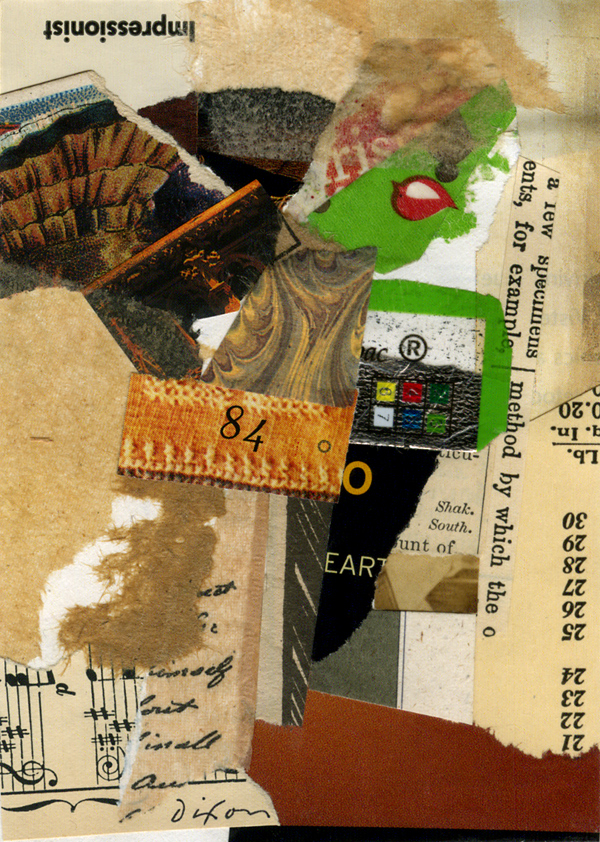
84 Tonal Impressions
collage experiment by J A Dixon
3 x 4.25 inches, not for sale

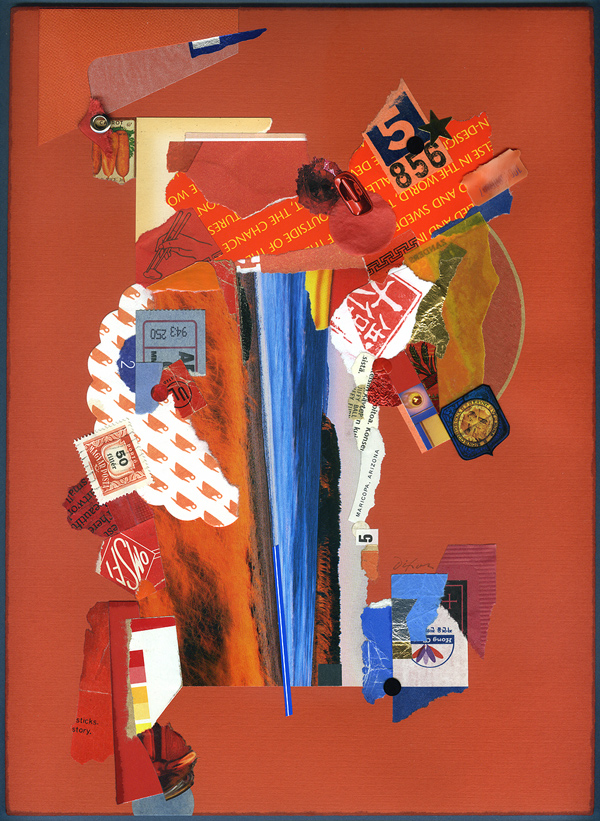
Untitled (overlook)
collage experiment by J A Dixon
5 x 7.75 inches, not for sale

Never stop scratching

Sunday, October 20th, 2013

“The true method of knowledge is experiment.”
— William Blake

Conducting intuitive experiments with eventual disclosure in mind may defeat their purpose at some level, but it can be beneficial at times to share the creative process that leads to new works. Nevertheless, the primary purpose of experimentation is to remove oneself from the context of producing something to be held up for evaluation by others. To investigate. To explore. To defy one’s own expectations.
 

Untitled (shards)
collage experiment by J A Dixon
4.5 x 7.5 inches, not for sale

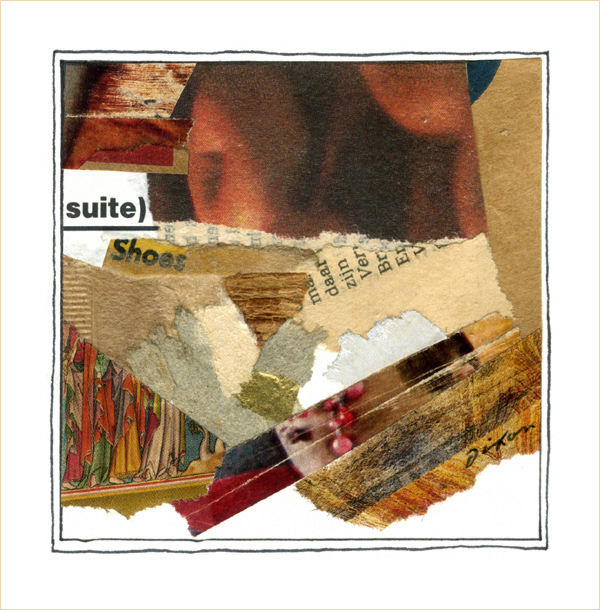
suite)Shoes
collage experiment by J A Dixon
3.25 x 3.25 inches, not for sale

Untitled (la vie moderne)
collage experiment by J A Dixon
5 x 3.625 inches, not for sale

The New Number Two
collage experiment by J A Dixon
5.5 x 3.75 inches, not for sale

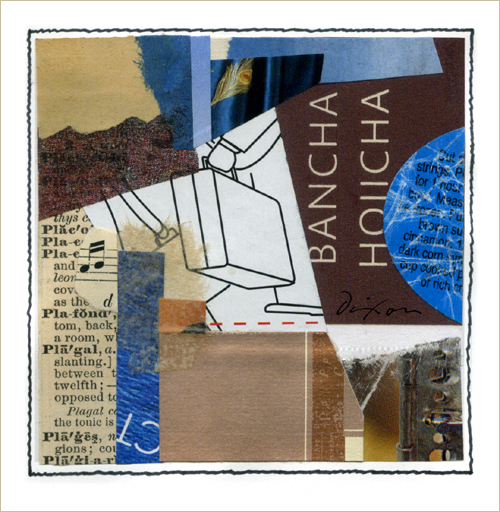
Morning Bancha
collage experiment by J A Dixon
3 x 3 inches, not for sale

Cosmorama with Rhino

Tuesday, August 27th, 2013

“By three methods we may learn wisdom: first, by reflection, which is noblest; second, by imitation, which is easiest; and third, by experience, which is the most bitter.”
— Confucius

Like reading a past entry in a journal, it is often interesting to scrutinize an older artwork. Awareness of what one does the same and what one has refined to do differently can be quite informative. Sometimes, after doing this, I am slightly disappointed to acknowledge a more skillful handling of a basic technique. Preferably, this activity brings a certain kind of satisfaction that comes with perceived attainment. Continuous improvement must be built on both emotions.
 

Cosmorama with Rhino
mixed media and collage
J A Dixon, 2006
collection of V K Birney
 

Maximalism and Minimalism in Collage, part 5

Tuesday, August 20th, 2013

“I have devoted myself to the technique of cut-paper collage.”
— Hope Kroll

Mysterious and spooky? Could it be possible that I am examining an art collection in the Addams mansion? No. The essence is far too rarefied for that. Do I instead find myself at a museum of lost Victorian curiosities? No. The effect is much too audacious for that. Perhaps you already have guessed my desirable plight. Yes, dear reader, I am slowly steeping in the sublime virtuosity of a Hope Kroll collage.

Known to many as the “paper surgeon,” the artwork of Hope Kroll would be astonishing enough for her extraordinarily meticulous “scissorship,” but she has clearly decided to put her demanding technique into service for eloquent visual statements that intrigue both the mind and eye. As Cecil Touchon points out, this would be outstanding enough, but she does not stop there. In most of her collage assemblies, she also introduces a signature three-dimensionality to heighten the surreal impression. A maximalist at heart, the prolific artist would certainly agree with Milton Glaser that “Less in not necessarily more.” Somehow she manages, time after time, to achieve unified outcomes from highly complex compositions, while at the same time evoking a powerful atmosphere that first entices, then engrosses, and finally beguiles the observer. I occasionally find her work a bit unsettling, but never unsavory, and always aesthetically exquisite. Like a fine bouillabaisse, her creations delight multiple senses.

Sample a few of her delicious recipes below and “hope,” as I do, that she continues to make many more.
 

Reconfiguration
Hope Kroll, 2003

Grooming
Hope Kroll, 2006

The Way Children Learn
Hope Kroll, 2010

Science And Faith
Hope Kroll, 2008

Thought Process
Hope Kroll, 2009

Ghost in the Machine
Hope Kroll, 2012

Maximalism and Minimalism in Collage, part 4

Wednesday, July 31st, 2013

“I’m not an art reviewer, nor am I a psychiatrist, but I’ve often thought that Katrien De Blauwer’s special talent is her ability to speak to and for the collective unconscious of human emotions.”
— Laura Tringali Holmes

I regularly walk to a nearby college natatorium to swim laps. To my periodic astonishment, I will get an idea for a collage while staring at the bottom of a pool. My mind apparently stays cluttered with images of unused ingredients, and I suppose they demand to be composed, even when I am absent from my studio. As I travel to and from the destination, no scrap of litter escapes my attention (an occupational practice for many collage artists). Recently, when I discovered a wadded-up candy or bubble-gum wrapper that looked to me like a tiny, mashed bird (or was it a disfigured fleur-de-lis?), I knew I had to find a place for it, but I preferred that it not get lost in a “maximalist” design. So I encouraged myself to produce a collage with a minimal of elements. This is not my typical style, but I visually partake daily of numerous examples by peers who excel at this technique, if one can call it that. Thankfully, a bit of their approach may have rubbed off. Laura Tringali Holmes has taken it another step by accepting the challenge of creating a collage under the influence of a particular fellow artist. Laura often leans in the direction of maximalism, as do I, and her skillful homage to Katrien De Blauwer, a master of minimalism, is worth a visit to her site. As you may know, I am keen on the cross-fertilization of solid influences. I am not ashamed to say that both of these collage artists are among my favorite sources of rich visual pollen. Watch for a profile of each in future entries here.
 

Fear of Failure
collage miniature by J A Dixon
4.75 x 6.375 inches
 
Purchase this artwork!

Maximalism and Minimalism in Collage, part 3

Saturday, July 6th, 2013

“My scraps rarely get thrown away and are often the main inspiration for getting started on a piece.”
— Fred Free

Slowly open your eyes to find yourself in an oddly familiar space that is part tool & die shop, Zen garden, and hi-fi showroom. Mom is there in her polka-dot apron, and somewhere in the next room, The Adventures of Jonny Quest has gone to commercial break. It may well be a surreal warp in quantum time, but, more than likely, it is the distinctive world of a Fred Free collage.

I cannot say if Fred Free uses his given name or a pseudonym, but it has never really mattered to me. He is one of the most actively intriguing artists working in the medium today. His superb compositions often look more minimalist than they actually are, offering delightful complexities that blend a clearly restrained interplay of vintage ingredients and street rubbish with moods that fluctuate between reverence for lost motifs, wry humor, and a mild disenchantment with 21st-century culture. While cohering to a recognizably defined vision, FF skillfully explores the spectrum of minimalism to maximalism in collage. In spite of a “yesteryear” oeuvre, he makes adept use of online platforms and social networks, while also effectively promoting visual cross-pollination at Tumblr by “endorsing” other artists with his Variety Showcase.
 

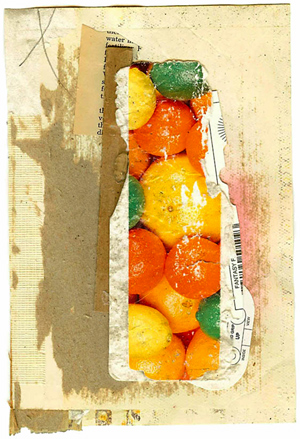
fantasy f
Fred Free, 2005

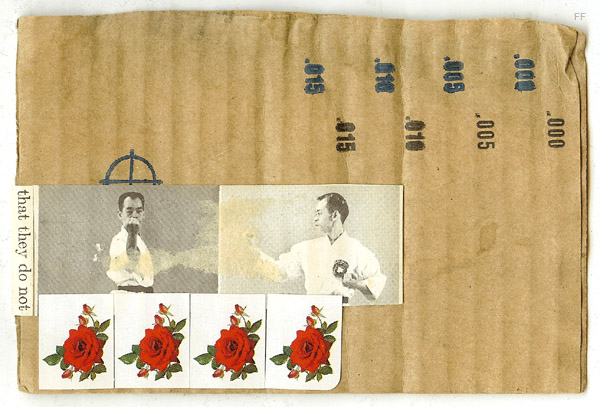
to pay
Fred Free, 2007

conceal
Fred Free, 2008

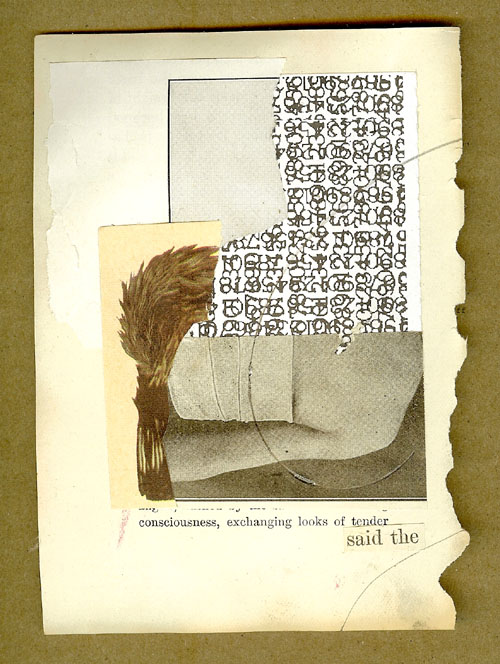
digging for the foundations on
Fred Free, 2011

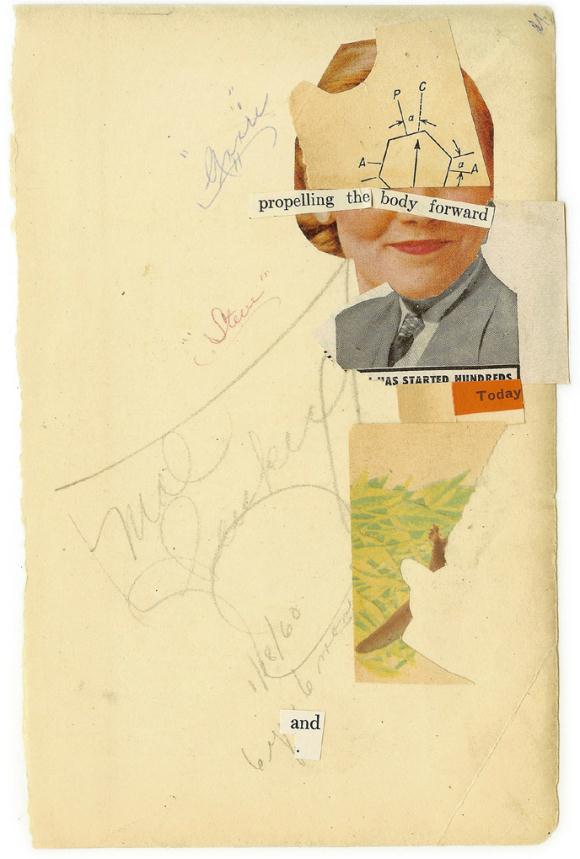
activities
Fred Free, (date unknown)

7413
Fred Free, 2013

Maximalism and Minimalism in Collage, part 2

Sunday, June 30th, 2013

“Transforming nothing into something is something of course, but because it’s a metaphor (let’s say it’s a reflection of life and death), doesn’t mean it’s especially important.”
— Matthew Rose

Is a pizza fundamentally more satisfying than a beer?

Perhaps this question is a peculiar way of following up on my previous post. The subject of maximalism and minimalism in collage is worth continuing, and I readily admit that our topic would benefit more from an interactive discourse than a single voice, but such is the nature of a blog that has yet to gain a participatory following. Nevertheless, I cannot drop the discussion without further remarks and, in particular, some worthy examples of each methodology.

Getting back to the opening query . . . There is nothing more inviting on a hot summer evening than a cold beer after a day of effort. It can immediately lose its appeal if flat or flavorless. A slice of pizza will look much better — steaming, fragrant, and loaded with toppings — but not if it is dry, overdone, or charred underneath. What I am trying to suggest with this oddball reference is the idea that a simple thing or a complex thing is not necessarily better than the other. It is all about how each is presented. And the most meaningful conclusion may be that both are enhanced when the two exist together. Whether you investigate Picasso, Braque, or Schwitters, it is clear that they thought of collage as an extension of painting, and how can one say that maximalism or minimalism in painting takes supremacy over the other? One cannot, of course, and either method is more interesting when the entire scale of approaches to the medium are continually explored (in some cases by the same artist). So, returning to my feeble analogy, we recognize that the combination of “good stuff” determines a synergistic effect. Collage as an art form is more vital today as a result of this diversity of orientation.

Our medium does not exist in a vacuum. Maximalism, minimalism, and everything in between is rooted in the movements of Dada, Surrealism, Constructivism, Expressionism, and Popism. One contemporary collage artist with a keen awareness of these influences is the “American in Paris,” Matthew Rose. He has created masterful works at multiple points in the spectrum of complexity, and a few examples appear below. In future entries, we shall feature other artists who probe minimalism and maximalism in collage.
 

The End Of The World
Matthew Rose, 2008

Immaculate Perception
Matthew Rose, 2010

Breathless
Matthew Rose, 2010

China Star
Matthew Rose, 2010

Experience
Matthew Rose, (date unknown)

Lucky Strike
Matthew Rose, 2010

Self Portrait
Matthew Rose, 2011

Fallen Body

Monday, June 24th, 2013

“Less is not necessarily more.”
— Milton Glaser

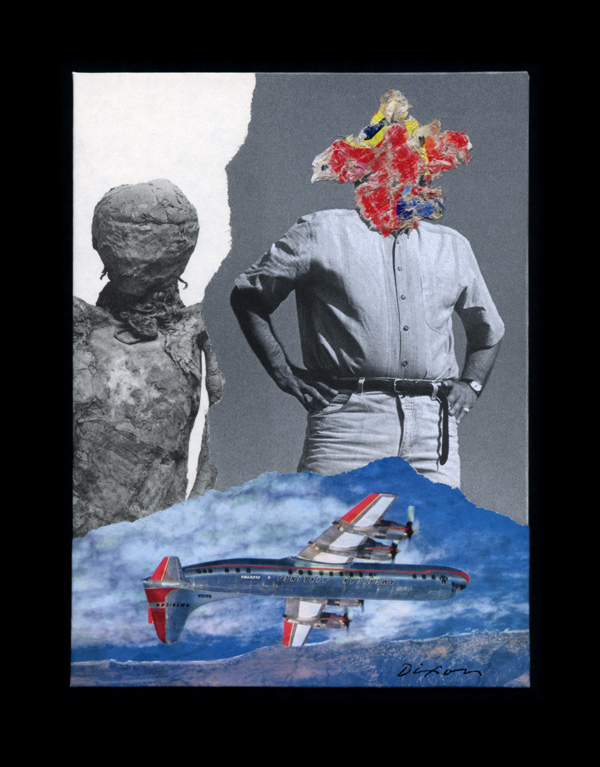
A profusion of collage artwork has recently come to my attention that makes use of only two or three elements. When this type of minimalist approach is successful, the result can be quite arresting to the eye and mind. More often than not, it looks uninteresting or unfinished to me. It may come as no surprise that I am more of a maximalist, preferring to build a layering of ingredients that transcends the intrinsic quality of the found material. I suppose that I have been more influenced by Schwitters than Cornell. Although there is nothing inherently unappealing to me about “sparsity,” admiring those who employ the methodology with skill, I have found myself pulled toward “density’ for the past few years. Some artists may think that if one hasn’t achieved a solution with fewer than a dozen parts, the essence of the piece has escaped. I appreciate that viewpoint, and respect those who consistently meet the challenge of limitation. For me, the working surface calls out for more, until a balance of “visual polyphony” takes form, and the dynamic aspects of color, shape, composition, and symbolic communication have resolved themselves as a distinctive, unified whole.
 

Fallen Body
collage artifact by J A Dixon
7.5 x 10.5 inches
available for purchase

Fears and Fancies

Wednesday, June 12th, 2013

“Art is never finished, only abandoned.”
— Leonardo Da Vinci

“A painting is never finished. It simply stops in interesting places.”
— Paul Gardner

One of the many fascinating aspects of this medium is that a collage can never be ruined, but only delayed. Perhaps it is the most forgiving of all art forms. Nevertheless, artists have been thinking about the issue of completion for a very long time, and a vital part of creating a collage is deciding when to quit. We see many examples that appear overworked to the point of exhaustion, or that fall short of a fitting denouement. Whether one considers it abandonment, suspension, or conclusion, the collage artist, like any creative person, must pay attention to a process that leads to the notion of “ahhh… the end.” When does the sculptor lay down the chisel? How does the choreographer know a dance is finished? When does the poet decide to stop revising?

A collage may languish in the working space for days, or even weeks, defying its appointed culmination. With experience, one can recognize the need for postponing a final resolution, and it usually involves matters of both compositional harmony and ingredient quality. While some arrangements follow a natural progression of assembly, others cannot be pushed to premature completion. If a “missing” element eludes the sought-after symbiotic result, one must wait until a solution is clear. In spite of its size, today’s featured miniature is such a case in point. Brought out several times for fresh review and incremental color refinements, it was deemed unfinished until a second egret presented itself. How does one know when a collage is done? For me, the more important consideration is learning how to see that it is not.
 

Fears and Fancies
collage miniature by J A Dixon
4.5 x 4.5 inches
private collection