Archive for the ‘Collage’ Category

The Paris Papers

Friday, November 15th, 2013

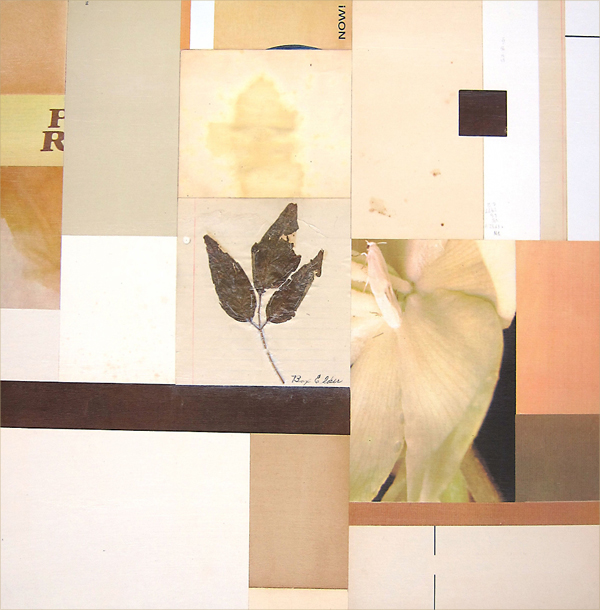
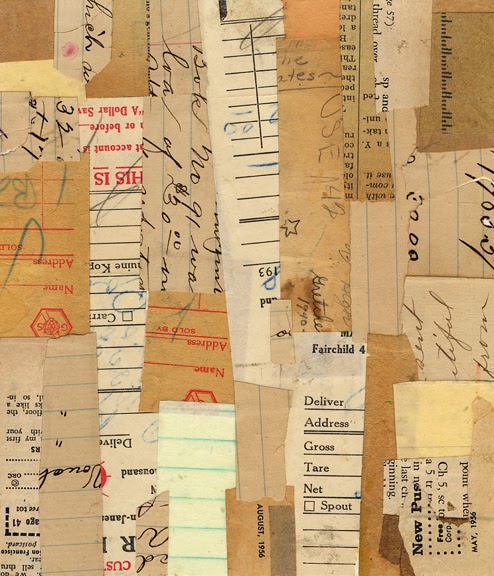
A recent series of intensive collage investigations undertaken by Cecil Touchon while abroad — resulting in The Paris Papers — are more than worthy of our careful study. One of the medium’s most assiduous practitioners, Mr. Touchon clearly earned a well-deserved break after his significant contributions to the Collage Centennial, and yet it is no surprise for me to learn that he would combine it with such a Herculean self-assignment. We are all the beneficiaries.

p s ~ He also let everyone know the good news that he quit smoking during his month-long adventure hanging out with collaborator Matthew Rose. Amazing.
 

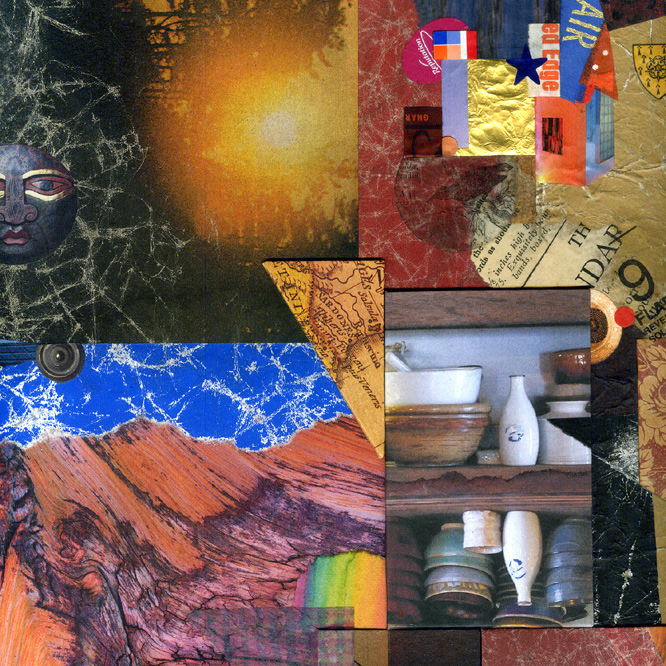
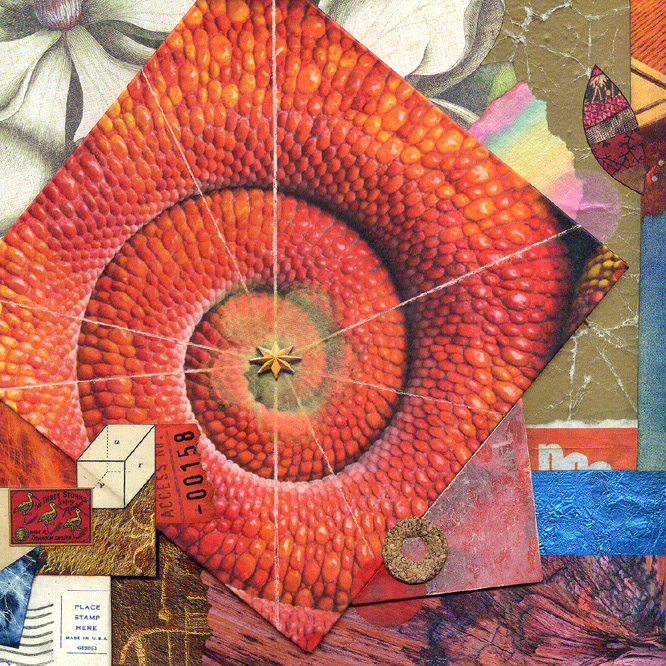
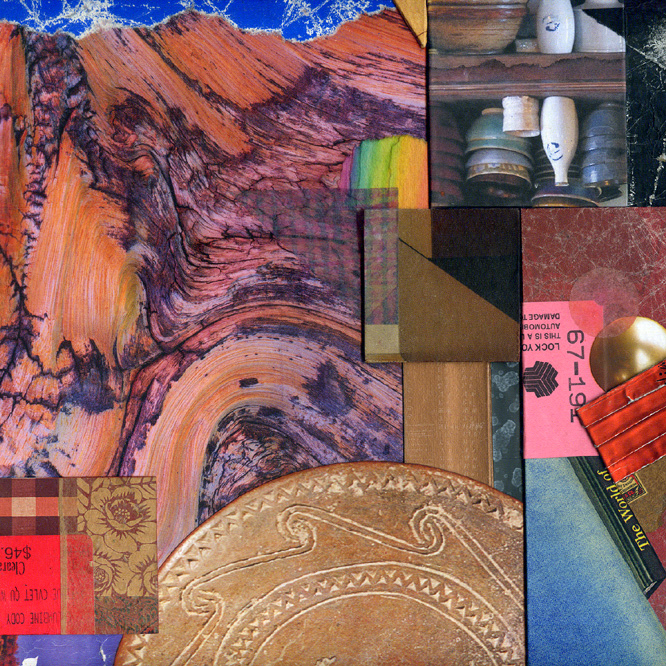
fs3384ct13-cecil-touchon-web

Fusion Series #3384
collage on paper by Cecil Touchon
made with bits of paper from Parisian street posters
8 x 12 inches, 2013
 

Collaboration in Collage, part 2

Saturday, November 9th, 2013

“There has been an increased attention on collaborative practice in the arts in recent times with a perceived increase in artists working in groups or partnerships. For many other artistic enterprises, collaboration is the norm. Musicians form together into ensembles and bands; actors, writers and directors necessarily work in companies; and dancers, choreographers and musicians work in companies too, or in troupes. But for the visual arts the history of collaboration is less dominant, but perhaps, on the rise.”
— Kent Wilson, from the Central Highlands ArtsAtlas

The Target Practice Project is certainly taking on a life of its own. L T Holmes has established a new blogsite and yesterday she kindly featured me as a “guest blogger.” Thank you, Laura, for your generous spirit.

Several of my entries over the past weeks have illustrated thematic collaborations. How many other kinds are there at play in the contemporary collage scene? Please indulge me as I continue to count the ways.

There have been remarkable long-term projects such as Liz Cohn’s Playing with a Full Deck. The playing card format seems to be a perpetual stimulus to interesting collaborations in collage. And then there is always the creative teamwork that simply results from a meeting of improvisational minds. One artist will originate a piece and a partner will complete it. Sometimes the process works in both directions at once. In other cases, a collaborator will select ingredients in order that a fellow “chef” may prepare a delicious “entrée.” Zach Collins has devoted much of a Tumblr site to his prolific joint ventures. Musta Fior is internationally known for his many visual co-conspiracies. Below are representative products of collaboration in the medium that have recently caught the eye of The Collage Miniaturist.

Long have I been convinced that musicians had it all over visual artists when it came to the collaborative urge, but countless exponents of contemporary collage are helping to revise that perception. Ladies and gentlemen, keep jammin’ away!
 

“Playing with a Full Deck” exhibit
altered playing card collaborations
Gallery 6 PDX, 2013

4646
collage collaboration
F Free + J Gall, date unknown

(start and finish, title unknown)
collage collaboration
start by A Bealy, finish by Z Collins, 2013

(title unknown)
altered playing card collaboration
start by G Stadler, finish by Z Collins, 2013

deception
collage collaboration
(©2013 Flore Kunst/Aaron Beebe)

Cute commando 5
altered playing card collaboration
(©2013 Flore Kunst/Musta Fior)

(title unknown)
altered playing card collaboration
M Fior + + L J Miller-Giera, 2013

Ragbrai
altered playing card collaboration
T Tollefson + L J Miller-Giera, 2013

A Dreadful Idea
altered playing card collaboration
L T Holmes + C Chocron, 2013

Bigger Than That
altered playing card collaboration
T R Flowers + L T Holmes, 2013

Channel Crossing
collage collaboration
start by J Ratouin-Lefèvre, finish by D Daughters, 2013

24.2
collage collaboration
D Daughters + I Reitemeyer, 2013

Autumn Ode (to Merz)

Wednesday, October 23rd, 2013

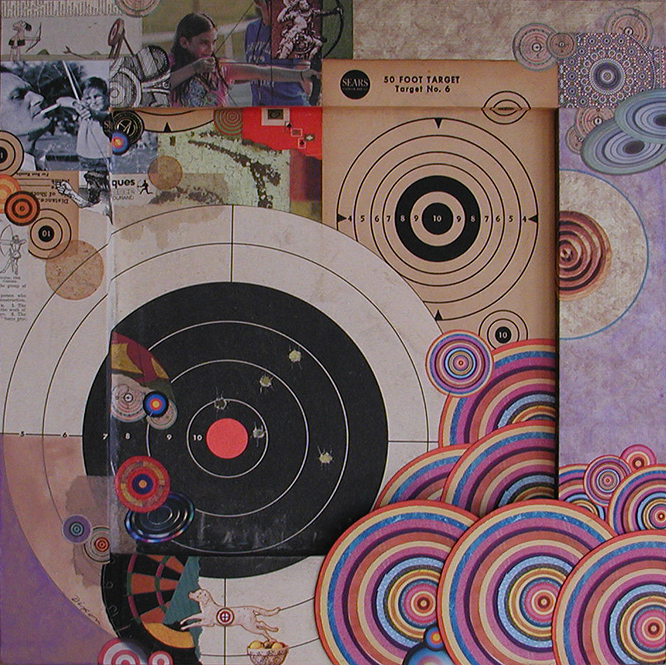
This is a collage artwork that I currently have on display as part of the “Autumn Glory” exhibition in the Mahan Gallery at the Boyle County Public Library. If you find yourself in downtown Danville, please stop by the show. It lasts until December 1st.
 

Autumn Ode (to Merz)
mixed-media collage by J A Dixon
16 x 20 inches, framed
available for purchase
l’alato

Sunday, September 15th, 2013


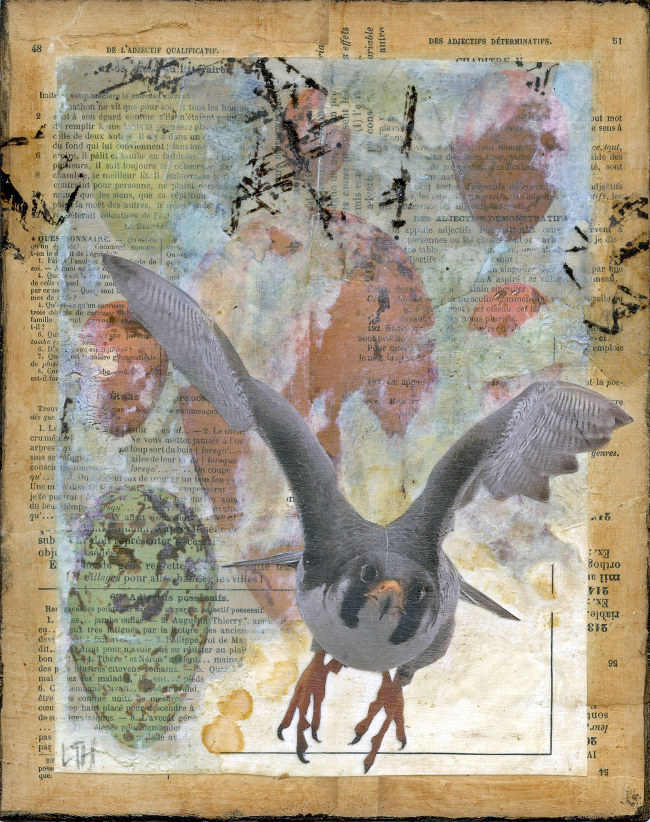
l’alato
collage miniature by J A Dixon
5.5 x 6.75 inches
private collection

Maximalism and Minimalism in Collage, part 5

Tuesday, August 20th, 2013

“I have devoted myself to the technique of cut-paper collage.”
— Hope Kroll

Mysterious and spooky? Could it be possible that I am examining an art collection in the Addams mansion? No. The essence is far too rarefied for that. Do I instead find myself at a museum of lost Victorian curiosities? No. The effect is much too audacious for that. Perhaps you already have guessed my desirable plight. Yes, dear reader, I am slowly steeping in the sublime virtuosity of a Hope Kroll collage.

Known to many as the “paper surgeon,” the artwork of Hope Kroll would be astonishing enough for her extraordinarily meticulous “scissorship,” but she has clearly decided to put her demanding technique into service for eloquent visual statements that intrigue both the mind and eye. As Cecil Touchon points out, this would be outstanding enough, but she does not stop there. In most of her collage assemblies, she also introduces a signature three-dimensionality to heighten the surreal impression. A maximalist at heart, the prolific artist would certainly agree with Milton Glaser that “Less in not necessarily more.” Somehow she manages, time after time, to achieve unified outcomes from highly complex compositions, while at the same time evoking a powerful atmosphere that first entices, then engrosses, and finally beguiles the observer. I occasionally find her work a bit unsettling, but never unsavory, and always aesthetically exquisite. Like a fine bouillabaisse, her creations delight multiple senses.

Sample a few of her delicious recipes below and “hope,” as I do, that she continues to make many more.
 

Reconfiguration
Hope Kroll, 2003

Grooming
Hope Kroll, 2006

The Way Children Learn
Hope Kroll, 2010

Science And Faith
Hope Kroll, 2008

Thought Process
Hope Kroll, 2009

Ghost in the Machine
Hope Kroll, 2012

Back Here in 43119

Sunday, July 14th, 2013

“I am looking for an art to serve the new millennium, to re-define its culture, to question its philosophy, to re-examine its images. What we thought of as art is about to be reconfigured by a new generation born after 1985…”
— George Rodart

George R drew my attention to a thought provoking post from 2008.

If painting can survive the transition from cave art to Byzantine frescoes, through the Renaissance, the conquest of a new hemisphere, the rise of the machine, and planetary war on an industrial scale, it can surely navigate an emerging globalization based on the total commercialization of culture. A small few will redefine it. Some will understand it. Many will reject it. Most will just consume. Until the next ricochet.

Collage grew out of painting. To many, the essence of it has never been anything but painting. Will others eventually look back and say that collage penetrated and shaped all other media, or will they say that painting reclaimed collage to transform itself yet again?
 

Back Here in 43119
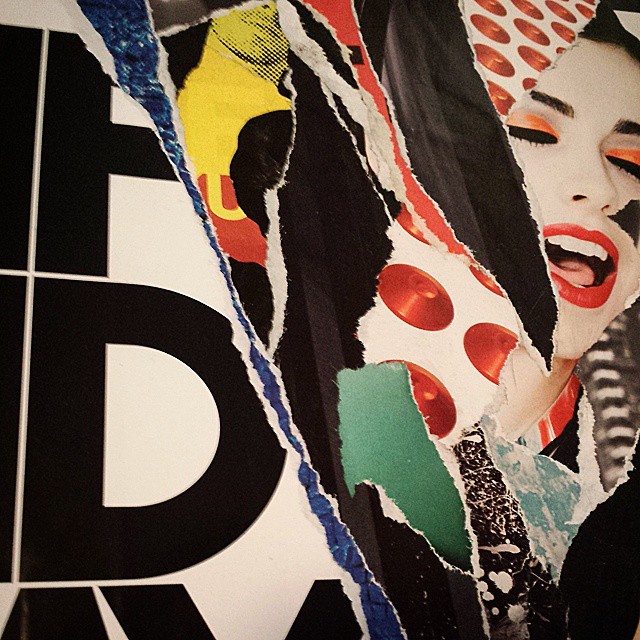
collage miniature by J A Dixon
6.5 x 7 inches
 
Purchase this artwork!
All Things Collage: Year One

Friday, July 12th, 2013

“Any fool can carry on, but only the wise man knows how to shorten sail.”
— Joseph Conrad

Looking back on a full year as a blogger, many of my initial objectives have been met, but there are even more subjects to tackle in the coming months. Can I find the right balance between words and images, welcoming others to act as better scribes for what is happening in collage and remembering that I would rather be holding a pair of scissors than typing at a keyboard? The exceptional print quarterly out of Canada, Kolaj, has also celebrated its first birthday. 2012 was the perfect year to salute a century of collage as a modern art and also to look around, assessing the current maturity of the practice. I still have much to say about the pioneers and exemplars — Gris, Schwitters, Hausmann, Höch, Cornell, Hamilton, Johnson — for there is much to observe and absorb about their seminal talismans and bodies of work.

It is equally important to evaluate more of the leading and emerging artists now actively producing what may be known as “post-centennial collage,” perhaps the most vital period of cross-pollinated output in the medium’s history. Where to focus next? Those who magnify the traditions of Dada, Surrealism, Fluxus, or Layerism? Dedicated collage abstractionists such as Touchon, Dryden, Romoff, or Gordon? Masters of the outer reaches of a Maximalist/Minimalist spectrum such as Kroll, Reitemeyer, or De Blauwer? I have for some time lamented the lack of a visual-arts phenomenon equivalent to how musicians have traditionally improvised together, but my recent awareness of dynamic collaborations between collage artists is forcing me to change my mind. Is it time for me to take a closer look at the creative fusions instigated by Collins, Holmes, Daughters, or Wilkin?

My, my . . . have we just laid out another year or more of entries? And I have not yet “scraped the working surface” of all the collage artists who make the contemporary scene so exciting. Do I possess the necessary wisdom to tame my ambitions and “shorten sail?” My mind rebels at the idea that I cannot be an artist and a writer, too. I am no scholar, and some art historians would scoff at my correlations, but I cling to the notion that there is a place for insights about our medium that can come only from a person who faces the same challenges as my working peers when confronting a pile of scrap.

One more thought: As the digital age sweeps over the planet, is there also taking place a not-so-quiet backlash against the erosion of manual dexterity? If so, is there a more compelling counter-trend example than the current explosion of tearing, cutting, assembling, transferring, and pasting? And beyond the familiar “analog” technique, what can be said about the deep influence of visual collage on the preponderance of montage in all things sensory — music, performance, film, and media design? This site can become a place where all of this is explored, discussed, shared, and challenged. Much of that is up to you, valued reader. Meanwhile, I shall continue to see, write, and make more art. Stop by again, soon!
 

Every Instinct of My Being Rebels
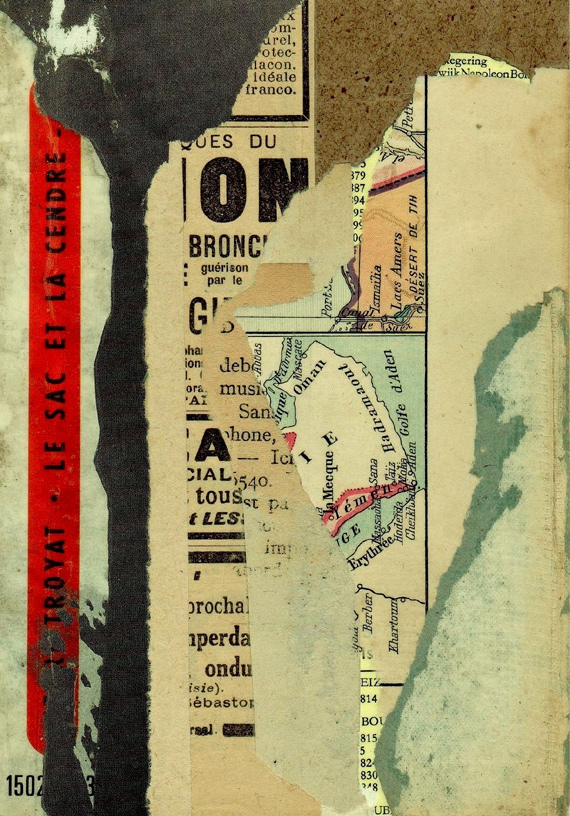
collage miniature by J A Dixon
7 x 5 inches
 
Purchase this artwork!
Maximalism and Minimalism in Collage, part 3

Saturday, July 6th, 2013

“My scraps rarely get thrown away and are often the main inspiration for getting started on a piece.”
— Fred Free

Slowly open your eyes to find yourself in an oddly familiar space that is part tool & die shop, Zen garden, and hi-fi showroom. Mom is there in her polka-dot apron, and somewhere in the next room, The Adventures of Jonny Quest has gone to commercial break. It may well be a surreal warp in quantum time, but, more than likely, it is the distinctive world of a Fred Free collage.

I cannot say if Fred Free uses his given name or a pseudonym, but it has never really mattered to me. He is one of the most actively intriguing artists working in the medium today. His superb compositions often look more minimalist than they actually are, offering delightful complexities that blend a clearly restrained interplay of vintage ingredients and street rubbish with moods that fluctuate between reverence for lost motifs, wry humor, and a mild disenchantment with 21st-century culture. While cohering to a recognizably defined vision, FF skillfully explores the spectrum of minimalism to maximalism in collage. In spite of a “yesteryear” oeuvre, he makes adept use of online platforms and social networks, while also effectively promoting visual cross-pollination at Tumblr by “endorsing” other artists with his Variety Showcase.
 

fantasy f
Fred Free, 2005

to pay
Fred Free, 2007

conceal
Fred Free, 2008

digging for the foundations on
Fred Free, 2011

activities
Fred Free, (date unknown)

7413
Fred Free, 2013

He Smiled With His Mind

Tuesday, July 2nd, 2013

“I believe it is impossible for a man to tell the truth about himself or to avoid impressing the reader with the truth about himself.”
— Mark Twain

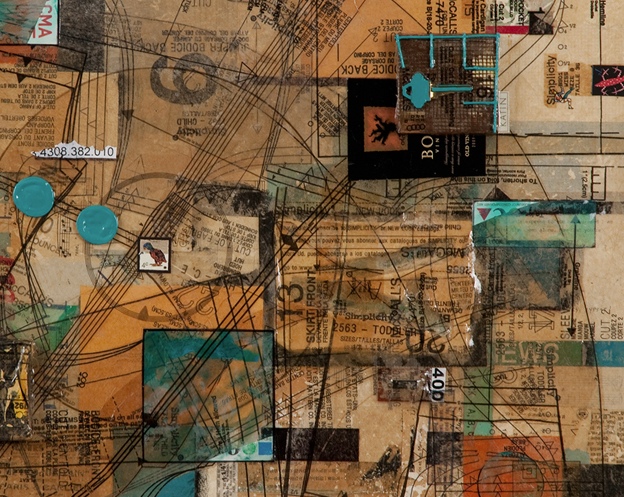
It is highly doubtful that any blogger can evade the pitfalls so evident over a century ago to one of the first modern minds that America produced. At any rate, I shall attempt to be as candid as possible about my own artwork, as well as the current output of contemporary collage artists. Today’s featured item stumbled badly out of the starting gate and remained in a suspended mode until a color scheme and visual subtext came into focus. What do you think of it?

Do not forget that I have a thick skin. As a firm believer that we learn more through a constructive critique than through a casual note of praise, I shall anticipate your comments at this site. Please register today and help make The Collage Miniaturist a destination for those who are not timid about having a frank discussion about this medium.
 

He Smiled With His Mind
collage miniature by J A Dixon
9.25 x 7 inches
 
Purchase this artwork!
Maximalism and Minimalism in Collage, part 2

Sunday, June 30th, 2013

“Transforming nothing into something is something of course, but because it’s a metaphor (let’s say it’s a reflection of life and death), doesn’t mean it’s especially important.”
— Matthew Rose

Is a pizza fundamentally more satisfying than a beer?

Perhaps this question is a peculiar way of following up on my previous post. The subject of maximalism and minimalism in collage is worth continuing, and I readily admit that our topic would benefit more from an interactive discourse than a single voice, but such is the nature of a blog that has yet to gain a participatory following. Nevertheless, I cannot drop the discussion without further remarks and, in particular, some worthy examples of each methodology.

Getting back to the opening query . . . There is nothing more inviting on a hot summer evening than a cold beer after a day of effort. It can immediately lose its appeal if flat or flavorless. A slice of pizza will look much better — steaming, fragrant, and loaded with toppings — but not if it is dry, overdone, or charred underneath. What I am trying to suggest with this oddball reference is the idea that a simple thing or a complex thing is not necessarily better than the other. It is all about how each is presented. And the most meaningful conclusion may be that both are enhanced when the two exist together. Whether you investigate Picasso, Braque, or Schwitters, it is clear that they thought of collage as an extension of painting, and how can one say that maximalism or minimalism in painting takes supremacy over the other? One cannot, of course, and either method is more interesting when the entire scale of approaches to the medium are continually explored (in some cases by the same artist). So, returning to my feeble analogy, we recognize that the combination of “good stuff” determines a synergistic effect. Collage as an art form is more vital today as a result of this diversity of orientation.

Our medium does not exist in a vacuum. Maximalism, minimalism, and everything in between is rooted in the movements of Dada, Surrealism, Constructivism, Expressionism, and Popism. One contemporary collage artist with a keen awareness of these influences is the “American in Paris,” Matthew Rose. He has created masterful works at multiple points in the spectrum of complexity, and a few examples appear below. In future entries, we shall feature other artists who probe minimalism and maximalism in collage.
 

The End Of The World
Matthew Rose, 2008

Immaculate Perception
Matthew Rose, 2010

Breathless
Matthew Rose, 2010

China Star
Matthew Rose, 2010

Experience
Matthew Rose, (date unknown)

Lucky Strike
Matthew Rose, 2010

Self Portrait
Matthew Rose, 2011

Fallen Body

Monday, June 24th, 2013

“Less is not necessarily more.”
— Milton Glaser

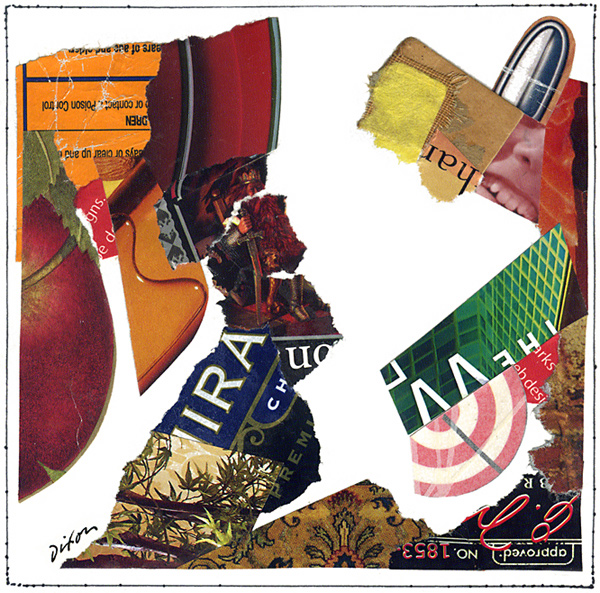
A profusion of collage artwork has recently come to my attention that makes use of only two or three elements. When this type of minimalist approach is successful, the result can be quite arresting to the eye and mind. More often than not, it looks uninteresting or unfinished to me. It may come as no surprise that I am more of a maximalist, preferring to build a layering of ingredients that transcends the intrinsic quality of the found material. I suppose that I have been more influenced by Schwitters than Cornell. Although there is nothing inherently unappealing to me about “sparsity,” admiring those who employ the methodology with skill, I have found myself pulled toward “density’ for the past few years. Some artists may think that if one hasn’t achieved a solution with fewer than a dozen parts, the essence of the piece has escaped. I appreciate that viewpoint, and respect those who consistently meet the challenge of limitation. For me, the working surface calls out for more, until a balance of “visual polyphony” takes form, and the dynamic aspects of color, shape, composition, and symbolic communication have resolved themselves as a distinctive, unified whole.
 

Fallen Body
collage artifact by J A Dixon
7.5 x 10.5 inches
available for purchase