Posts Tagged ‘collage’

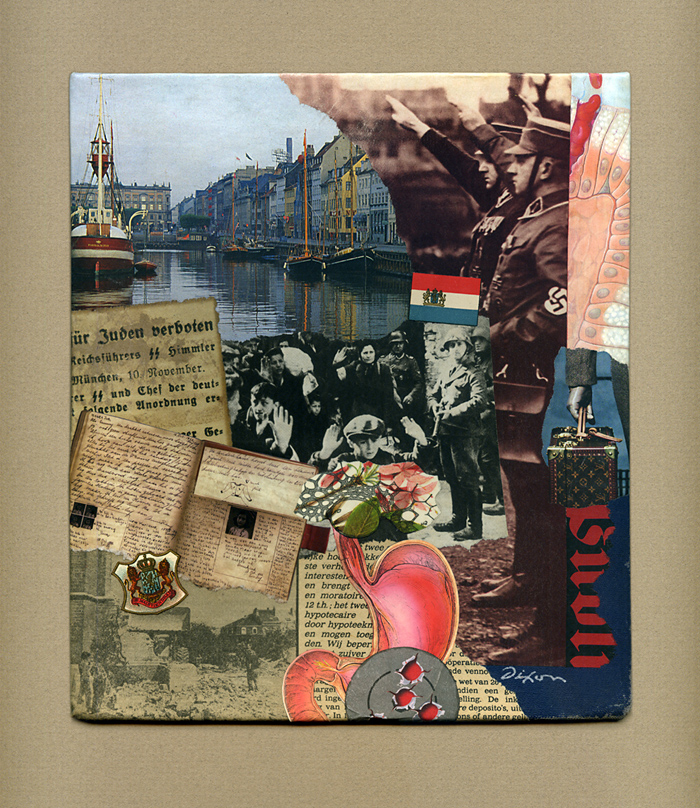
Mr. Kraler’s Distress

Monday, April 23rd, 2018

“I don’t think of all the misery, but of the beauty that still remains.”
— Anne Frank
 

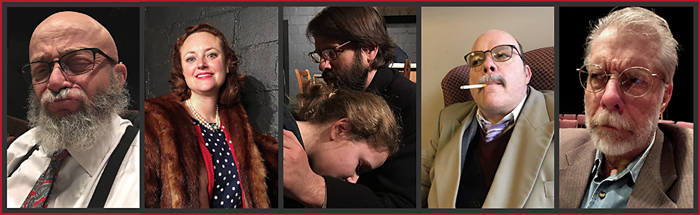
It has been a distinct pleasure to perform in the company of some accomplished dramatic artists. I felt like a novice throughout our local production of The Diary of Anne Frank. There were times when the angst of my character, Mr. Kraler, spilled over into my off-stage being. So, naturally, I fell back on my own art and made a collage miniature as a creative catharsis. After a bit of sadness when the Secret Annex set was struck, I found myself eager to spend more time in the studio.
 
Mr. Kraler’s Distress ~ collage miniature by John Andrew Dixon ~ Danville, Kentucky

Mr. Kraler’s Distress
collage miniature by J A Dixon
8.25 x 9.375 inches
collection of the artist

from the diary of a collage artist . . .

Saturday, April 7th, 2018

Opened by Customs was created in Lysaker, Norway, after Schwitters emigrated from Nazi Germany in 1937. Here he attempted to continue his Merzbau, or Cathedral of Erotic Misery, which he had begun in c.1923 in his apartment in Hanover. While living in Norway his work was exhibited in his homeland in the Nazi Degenerate Art exhibition. He left Norway for Britain in 1940 when Germany invaded the country. … The complex mesh of language and layers that comprise the work suggests a correspondingly complex web of ideas and emotions. The turmoil of the period (experienced by Schwitters as well as other German émigrés) is conveyed through the conflicting languages, both printed and handwritten, and the fierce red marks added using stamps, cut-outs and daubings. The titular German customs label, which takes a prominent position at the top left of the work, points to a lack of personal autonomy and compounds the sense that Schwitters is escaping ideological oppression. The lack of cohesion – the texts run in several different directions – may be indicative of the upheaval that both the artist and the continent were undergoing at this time.”
— Hana Leaper
 

When it was announced that the artwork of my friend and fellow collage artist Robert Hugh Hunt would be featured to promote the planned production of “A Diary of Anne Frank,” the long-dormant Thespian awakened inside of me. In a moment of pure impulse, I showed up at the audition and soon found myself cast in the Pulitzer Prize-winning play.

I admit to woefully underestimating the commitment of time and inward focus, not having been involved with theater for nearly fifty years. As a result, my studio work surface has lain fallow and my sense of personal priorities has been throttled. Perhaps you’ve experienced something similar to this — an abrupt, self-generated break in routine that causes the discomfort of withdrawal, but at the same time, a positive awareness that the impending return to creative output will bring a new, energized perspective.
An unforeseen synchronicity is the juxtaposition of performing a character in dread of Nazi abuse with my evolving thoughts about what it must have been like for Kurt Schwitters as he fled his homeland, or when he escaped peril a second time as Germany invaded Norway. I had no conscious regard for treading into this emotional process when I walked down the street to my local community theater. Weeks later, I have no illusions about ever being able to simulate the terror that people endured during those years.

I am gratified to be part of a fine ensemble in an exceptional play. If you happen to be in my neck of the woods, get a ticket for our show before the seats are filled.


Promotional items for our local production feature
the mixed-media artwork of Robert Hugh Hunt
.

Mouse in the House

Saturday, March 31st, 2018

“You can’t really make ideas, create ideas. You know, all ideas are the same. They just wander by. If your house has mice, you never know when they’re going to show up, or how, or in which room. and great ideas are the same. They’re like mice. Just a mouse. A mouse in the house. And you step on its tail and you go, ‘Hold it, buddy.’”
— Jerry Seinfeld
 

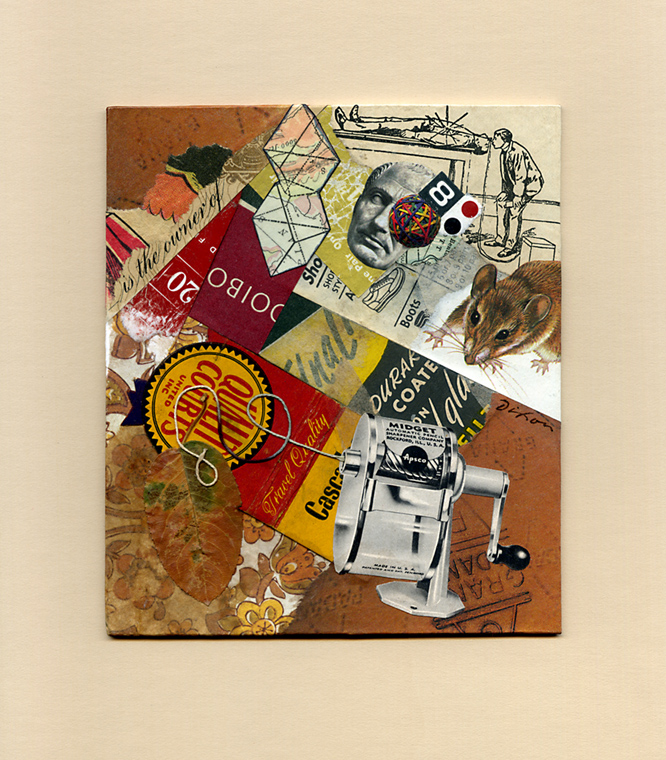
Ideas will suggest ingredients, but, as often as not, ingredients will spark ideas. Actually, I prefer the latter. In discussing the groundbreaking Merz pictures of Schwitters, curator Isabel Schulz asserts that his materials “surrender their original function … but not all semantic meaning.” Those meanings can generate layers of additional meaning when ingredients combine in synergy. Before long, if the exterminator is not on site, the house is happily full of mice.
 
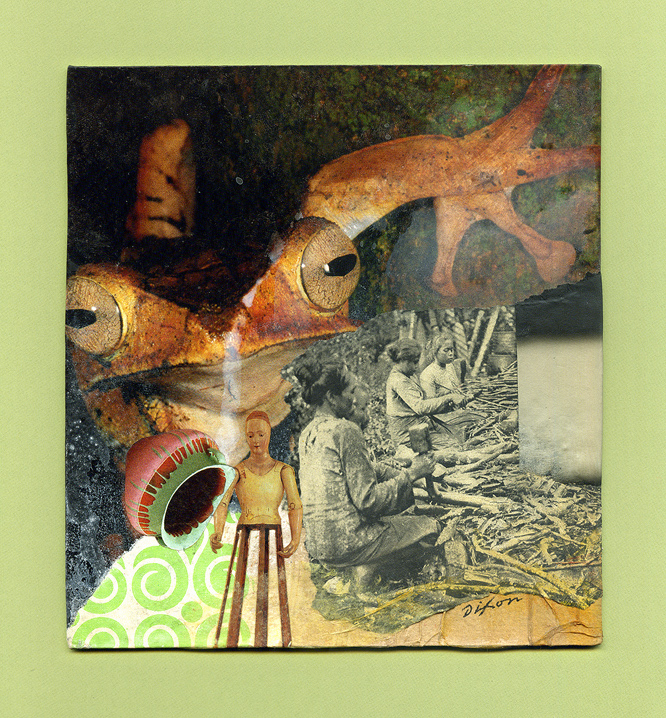
Mouse in the House ~ collage miniature by John Andrew Dixon ~ Danville, Kentucky ~ Kentucky Crafted Mixed Media Artist

Mouse in the House
collage miniature by J A Dixon
4.75 x 5.5 inches
 
Purchase this artwork.

The “Collagesmith” as Artisan

Saturday, March 24th, 2018

“Even in the absence of inspiration and talent, I think that through sheer craft you can actually create extremely good work, all the time, reliably. Great work is something else. I think for great work you also need a lot of luck. You can only aspire to really good work. The great work either happens or it doesn’t.”
— Christoph Niemann
 

Sloppy collage artwork has never held much appeal for me. Individuals might define “sloppy” differently, so I’ll rephrase that. I have always found well-crafted collage artwork to be the most appealing. In practice, I have aspired to the highest level of artisanship to which I am capable. According to my peculiar notions, the very nature of collage as a “mash-up” of visual ingredients suggests that one resist all the inherent temptations to condone careless techniques. To do anything less is a disservice to the medium, and strikes me as being a bit lazy.

I have been at this long enough to contrast current activity with a study of my “early” work. I perceive it now as more crisp and aligned with my long stint as a designer and illustrator. I remain proud of craftsmanship that continues to challenge my present hand skills. Like everyone who sticks around, I have moved relentlessly toward a period of life when manual dexterity and vision are unlikely to improve. At any rate, clean, precise work is more about attitude and personal commitment than it is about facility. Lately, on the other hand, I have sought a more organic, less contrived look — the impression that a piece is naturally the way it should be, rather than appear too obviously composed and belabored. As I work, I try not to permit the goal of a somewhat softer and cohesive whole to suggest a relaxation of craft. In fact, I have gradually introduced steps in the process that demand extra time and attention: sanding the reverse side of ingredients for adhesive-saturated compression and eliminating white edges on printed scrap to enhance a seamless effect. I combine that with ample burnishing and some hair-dryer prep before curing time under weight, followed by multiple light-touch coats of matte sealant. I would rather be thinking about practical methodology or a musical playlist than what is literally evolving on the surface before me, allowing that to be as intuitive as possible.

And perhaps (just maybe), Lady Luck will smile.
 
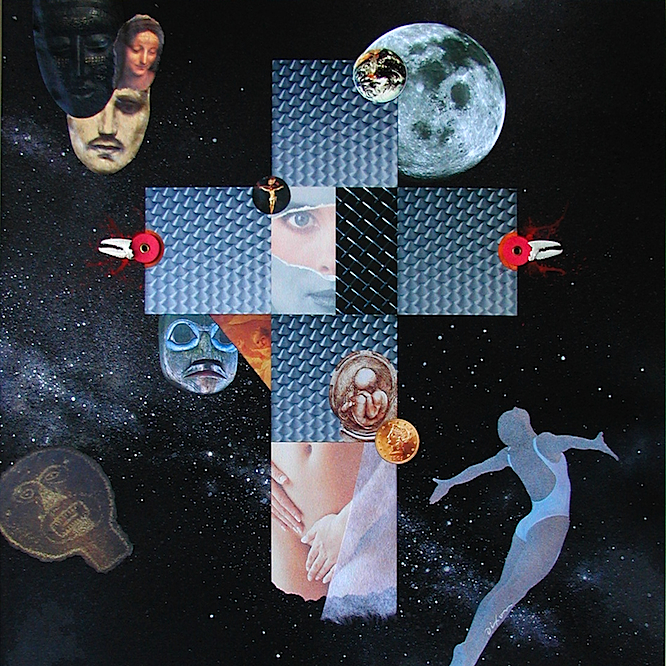
Cosmic Crucifixion ~ J A Dixon

Cosmic Crucifixion
mixed-media collage by J A Dixon
2006, 16 x 16 inches
available for purchase

20th-Century Man, 21st-Century Artist

Wednesday, February 21st, 2018

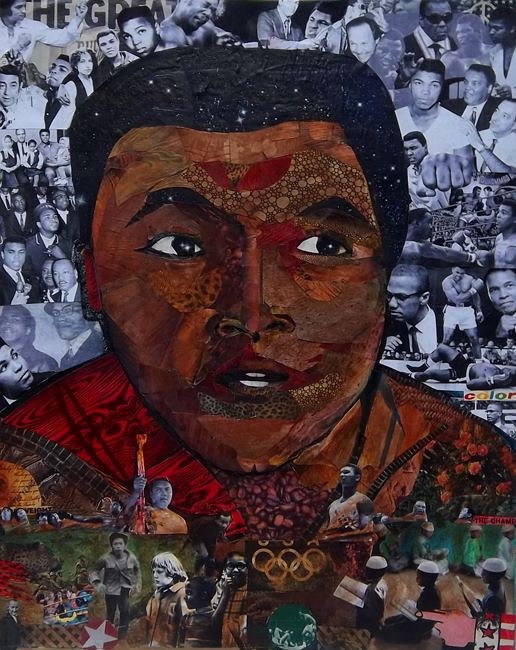
Earlier this month I had the privilege of attending a gallery talk by Kentucky artist Robert Hugh Hunt, as he outlined his ambitious “Twentieth-Century Icons” collage portrait project and described an attitude toward the medium that is profoundly thought provoking.

R H Hunt gallery talk at the Community Arts Center in downtown Danville, Kentucky


You may be aware of Robert from his long-running Hillbilly Voodoo collaboration with T R Flowers or the way he brings an individualistic mixed-media aspect to contemporary collage. Hunt and I have done our own collaborative works together and we share the experience of creating collage artwork in a geographic environment that often responds to the medium with a sense of bewilderment. Clearly, this circumstance is no impediment to the strong personal approach that runs through Robert’s body of work. He describes himself as a twentieth-century man, but his art is always fresh and intuitive. It springs from a deep cultural awareness that is inseparable from his creative identity.

Hunt told me that he thinks there is lot of negativity towards collage. “I hear people say that collage artists are only using something someone else has created,” he said. “The word appropriation is bandied about. This is true to a certain extent. Collage is a medium steeped in appropriation, and as such is delegated to the status of the red-headed stepchild of art. But to me collage or any medium has to transcend the material used to make it, to truly be art. It is the collage artist’s job to use the appropriated imagery, and, by changing and manipulating it, to relay his own message and to find his own voice.”

Katrien De Blauwer recently brought our attention to the same topic with a link to this page at WIDEWALLS, where Elena Martinique suggests that the term adoption is “more appropriate to describe the level of care one should take when using someone else’s creativity” as a point of takeoff. Many of us who pay attention have seen collage after collage that exploits a prominently featured “load-bearing” image, with trite or superficial treatments that rely almost solely on the power or interest of a photographer’s or illustrator’s invested creativity. Most of us probably started out this way, and it can be initially absolved in student work. Professional or serious amateur collage artists must hold themselves to a much higher standard.

Perhaps that is why I lean toward “maximalism” in my own work. I don’t know what I would say to other creative people if they called me on merely tweaking their intellectual property with a note of irony, humor, or cosmic wonder. Robert Hugh Hunt’s in-process portrait of the 14th Dalai Lama ~ newest addition to his ‘20th-Century Icons’ seriesI have great respect for collage minimalists who bring a consistent level of innovation to work that actually transcends the component parts.
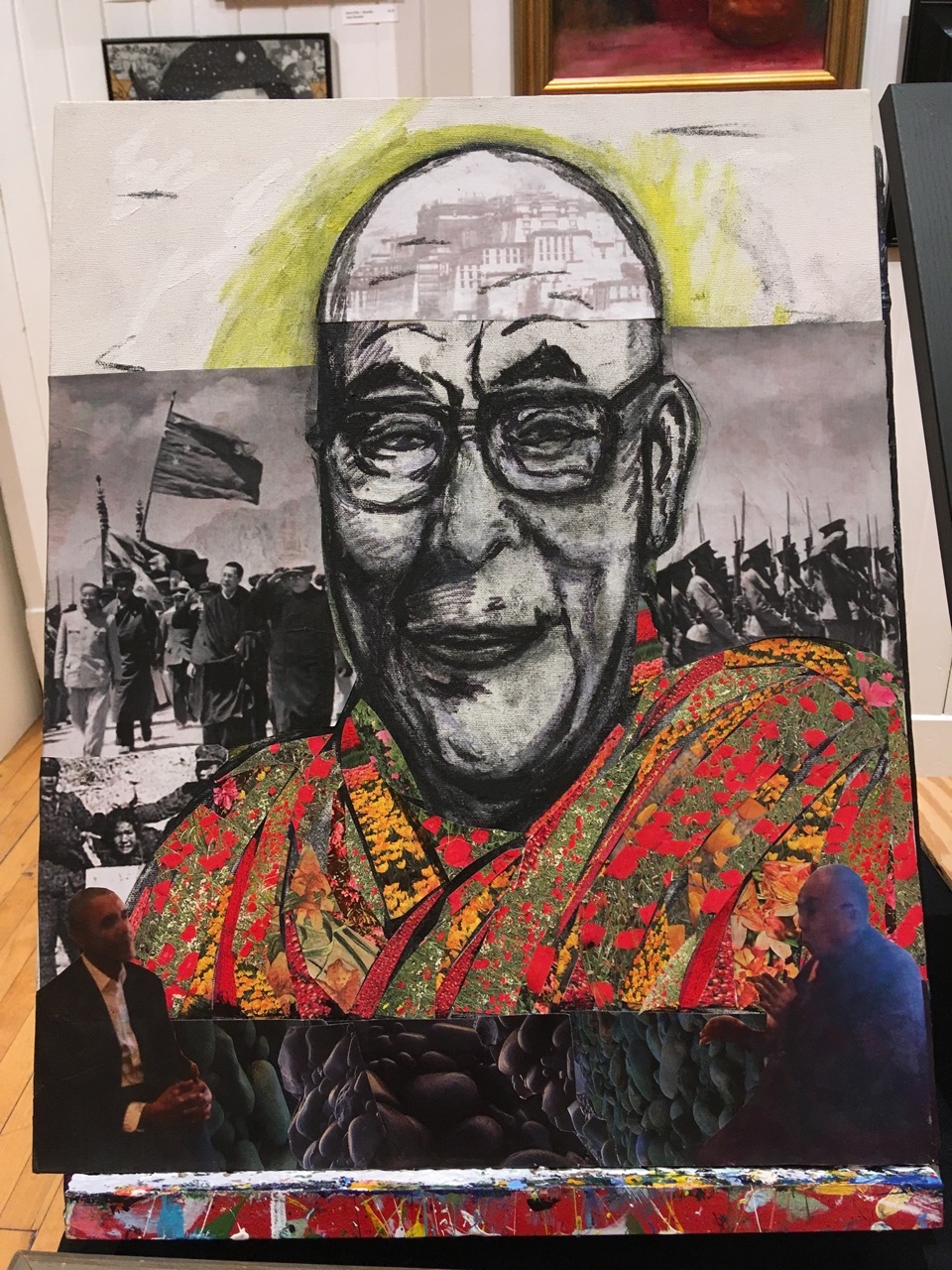
Robert Hugh Hunt moves from minimalism to maximalism with a particular voice that defies imitation. In the tradition of fine art collage, the unique instrumental sound of “Robbo” is heard above whatever compilation of raw ingredients he puts to use. But, for me, there is another dimension that is also present — an authenticity rooted in drawing that cannot be imposed with a contrived “outsider” style. I look forward with high anticipation to how he brings all of this capability to his emerging series of famous faces.
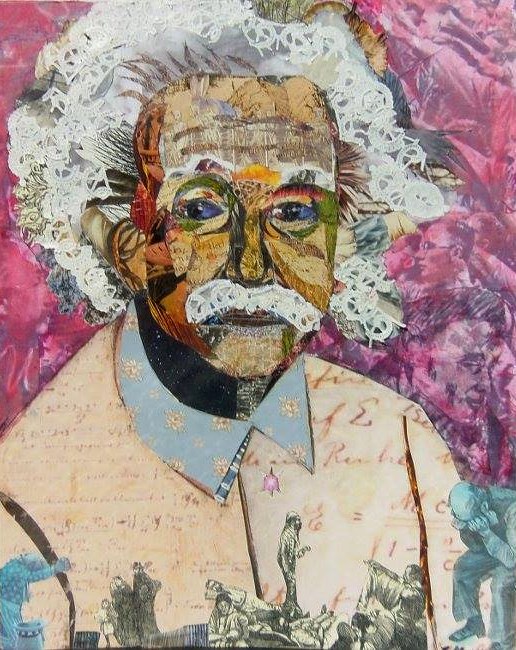


EinsteinTeddyAliAnne Frank
mixed media collage portraits by R H Hunt
16 x 20 inches each, 2014-2017

(below) R H Hunt at the Community Arts Center with his
in-process portrait of the 14th Dalai Lama

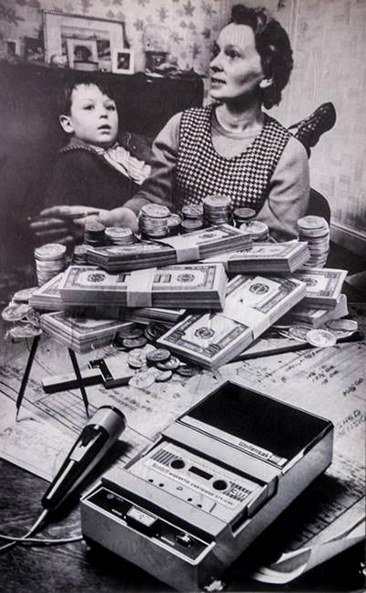
 
R H Hunt with his in-process portrait of the 14th Dalai Lama


Mama’s Story ~ R H Hunt

Mama’s Story
monochromatic collage by R H Hunt
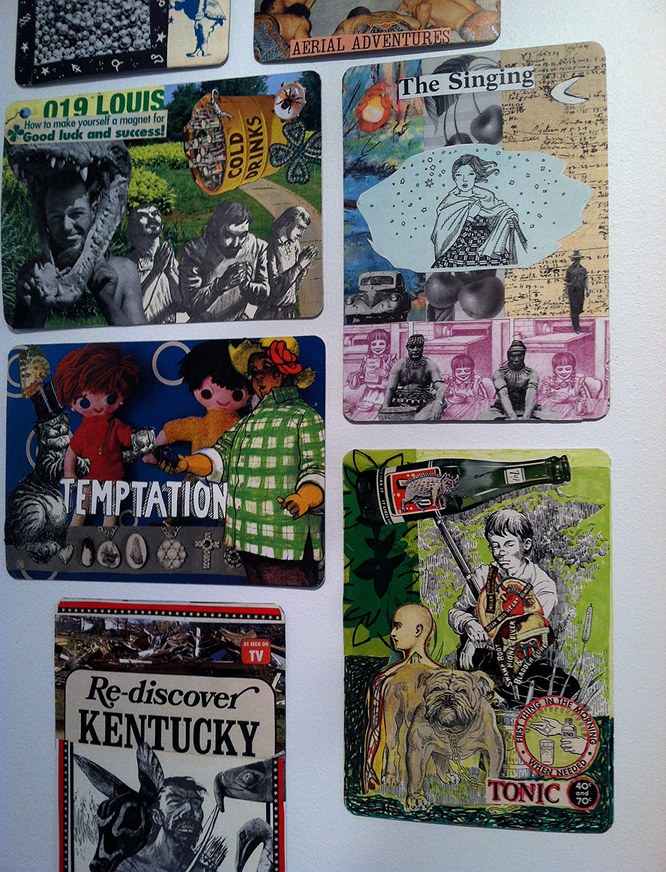
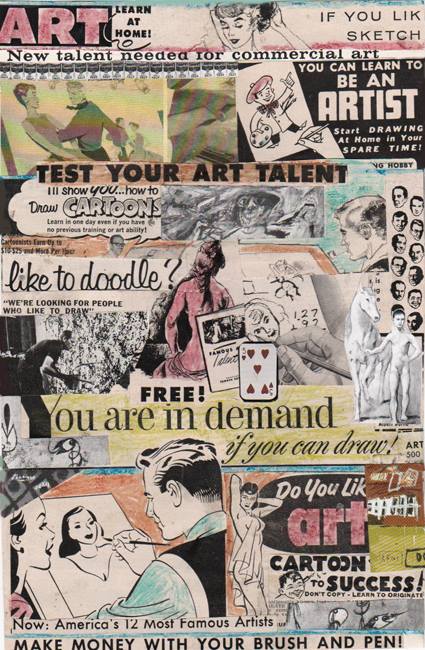
collaborative collage on playing cards from ‘Hillbilly Voodoo’ series ~ R H Hunt and T R Flowers

collaborative collage
from ‘Hillbilly Voodoo’ series
R H Hunt and T R Flowers
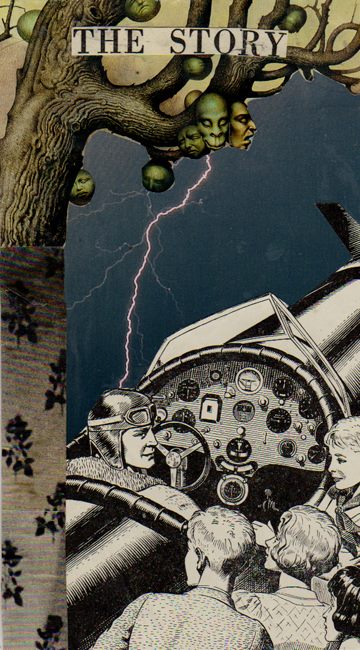
The Story ~ R H Hunt The Five of Arts ~ R H Hunt Let Dad Live ~ R H Hunt
 
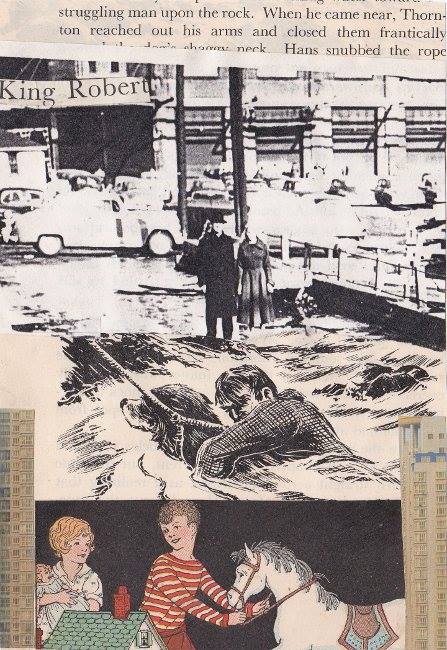
Struggling Man Upon the Rock ~ R H Hunt The Number ~ R H Hunt The Death Of Billy ~ R H Hunt
 
His Big Day ~ R H Hunt Thirst ~ R H Hunt

mixed media collage by R H Hunt
(click each to view larger)
Suspend this series?

Sunday, January 28th, 2018

“When I begin a new work, I have to start from scratch again, from nothing. I have to be cleared of everything: Tabula rasa.”
— Arvo Pärt
 

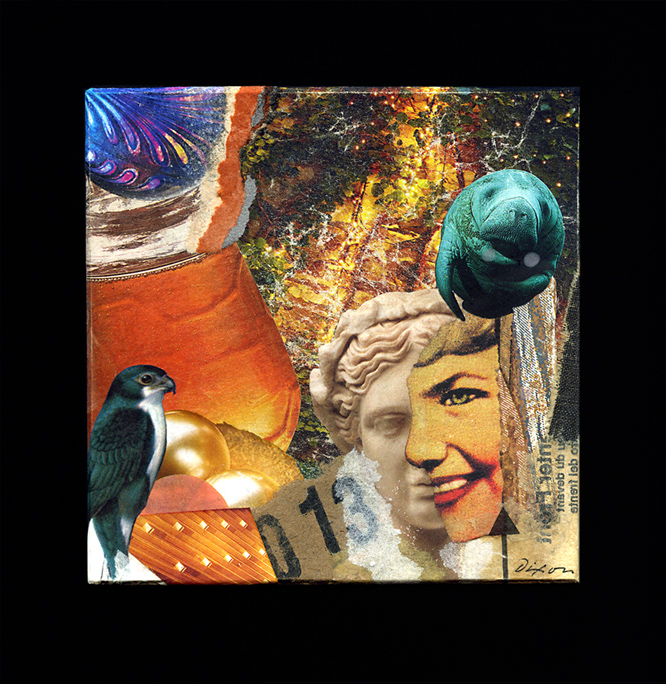
Suspend the Bibelot Series? It doesn’t look like it. I begin a collage artwork with no preconceived notions and before long it appears to be a “bibelot.” Spontaneity apparently works that way, revealing some unmet creative urge that is removed from conscious awareness. Shall I ever purposely end a particular series? More likely than not, I’ll just come to the conclusion that there are no more variations on that theme with a need to emerge — until I am proven wrong.
 
Suspend (Bibelot 013) ~ a collage miniature by John Andrew Dixon ~ part of his Bibelot Series

Suspend (Bibelot 013)
collage miniature by J A Dixon
4.625 x 4.625 inches
 
Purchase this artwork.

Collage En Plein Air ~ third chapter

Wednesday, August 9th, 2017

“Try to understand, not only the nature of what you’re looking at, but your own perception and the judgments behind what you’re looking at.”
— Nicolas Uribe
 

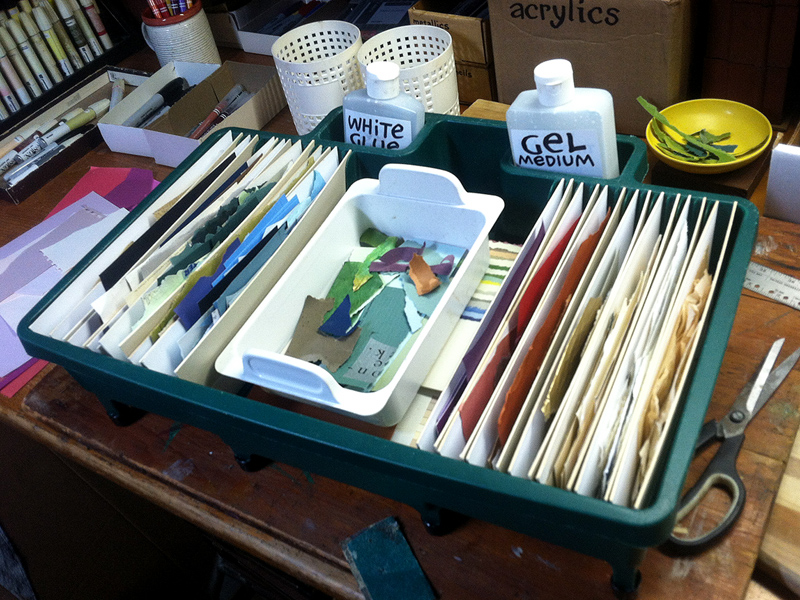
Are you still as interested in this subject as I am, my dear reader? I hope so. Permit me to begin this entry with an update on my evolving ‘Plein Air Collage Kit.’ After two more productive “art-outs,” minor refinements are still taking place. Protective feet were added to the base, a better diversity of colored and printed papers were organized, and, since it isn’t necessary to take much adhesive on location, I downsized the glue bottles for a better fit.

Plein Air Collage Kit based on a re-purposed dish drainer ~ by J A Dixon, collage artist from Danville, Kentucky


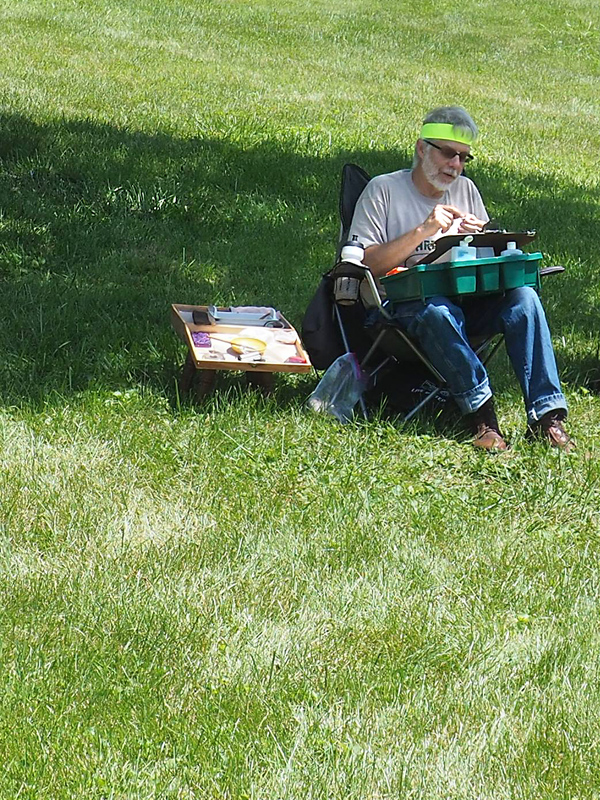
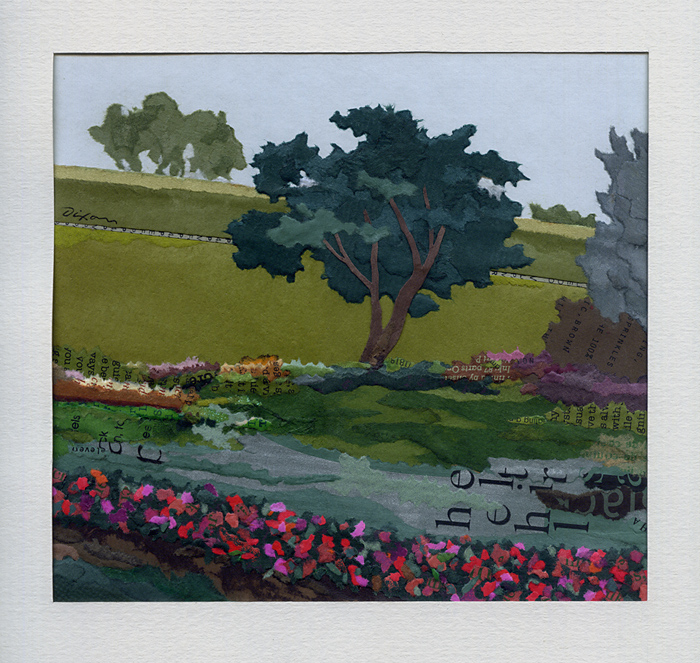
The PAACK group was welcomed to a home with lovely farmscapes in every direction. I picked a breezy spot to test my methodology and to capture one of our host’s flower gardens. I liked the sloping road and cornfield in the background and a central tree at its summer peak. John Andrew Dixon ~ plein air collage artistThe composition was complex enough that I would push the limit of the 50/50 ratio of location-to-studio labor before it was finished. I wanted to do justice to the impatiens in the foreground. Although I intend to get back to some strictly on-site studies, I decided to create a companion piece with the same ratio on my next venture into the countryside.

In my adopted area of the southern bluegrass region of Kentucky, there are many historic farm estates. Two of my favorites are Isaac Shelby’s Traveler’s Rest, which is partially accessible to the public, and pioneer surgeon Ephraim McDowell’s summer retreat named Cambus-Kenneth Farm, which is not. It was a rare treat for our group to be offered the opportunity to wander among the paddocks and historic structures of the serene Cambus-Kenneth on the last day of July.

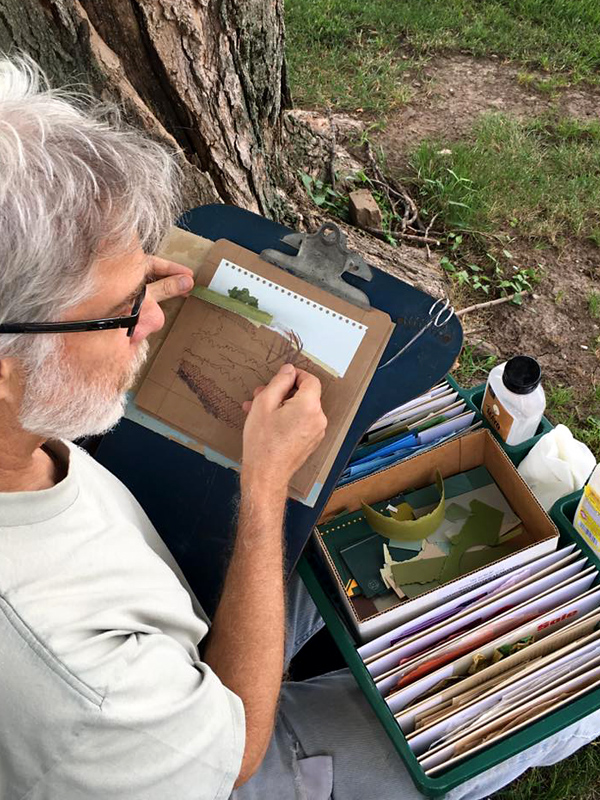
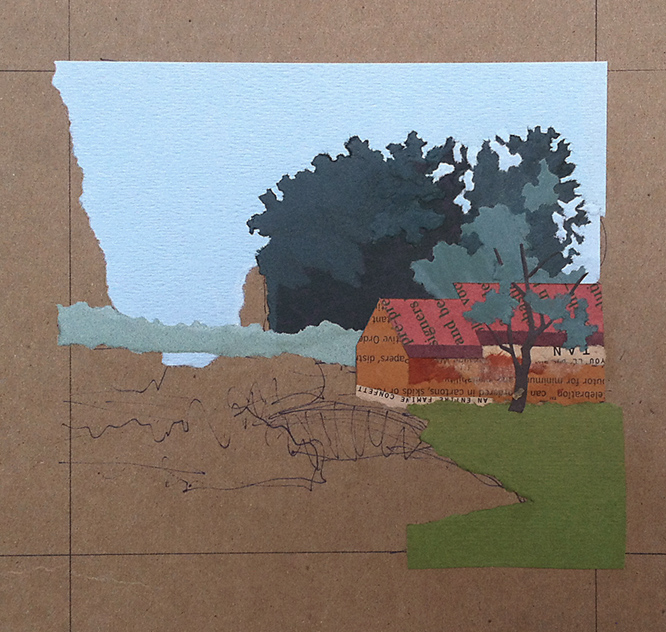
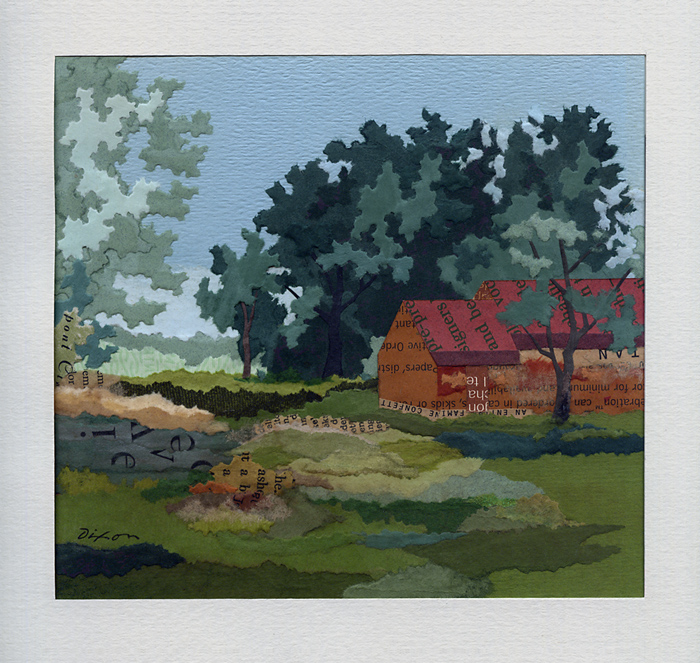
It’s not as though I haven’t drawn or painted out of doors many times since youth, but the recent, more systematic approach has introduced me to aspects of the plein air discipline that are no doubt familiar to artists who have made the practice a ritual. Personally, I find that it is important to not spend too much time selecting a spot to sit, John Andrew Dixon ~ plein air collage artisteven though the entire enterprise rests upon the decision. It seems as though the act should be part of the overall intuitive process to which the day is pledged. It was tough to avoid squandering valuable minutes at Cambus-Kenneth, since there were barns, ponds, pastures, an impressive Italianate home, and many remarkably preserved 18th- and 19th-century brick outbuildings, including an icehouse, springhouse, and slave quarters. By using a viewing card with square “window,” I zeroed in on the old red-roofed quarters. I was able to complete enough of the design that day to stay within the 50/50 restriction when I finished the artwork in the studio a few days later. Folks, I may just be getting the hang of this gig. Please let me know what you think of the results.
 

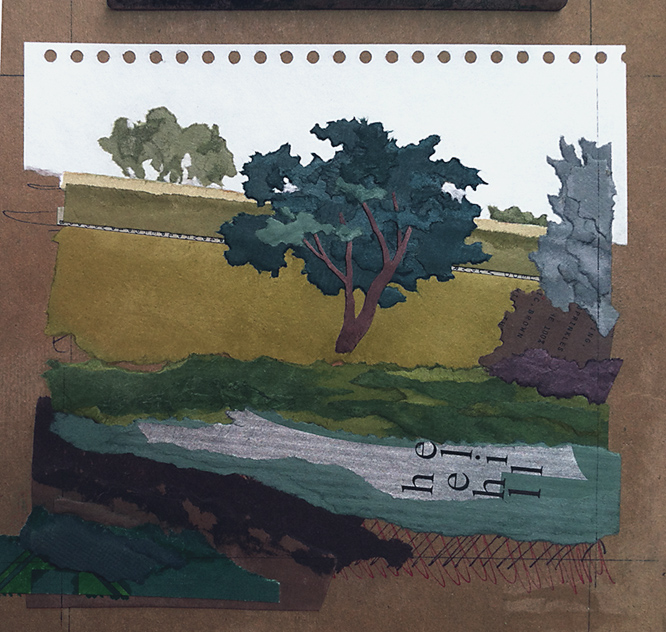
Intermediate stage of ‘Garden of Alice’ ~ J A Dixon Intermediate stage of ‘Old Quarters’ ~ J A Dixon

Here are the intermediate stages of two plein air miniatures, after completing
the on-location work. I start with my finding an appealing composition with a
viewing card, then roughly sketch the layout before picking a color scheme
from papers available in my kit. These artworks required studio time equal
to what I spent in the field — a total of approximately nine to ten hours each.

Garden of Alice ~ plein air collage miniature by J A Dixon

Garden of Alice
plein air collage miniature by J A Dixon
6.625 x 6.125 inches

•  S O L D

Old Quarters ~ plein air collage miniature by J A Dixon ~ at Cambus-Kenneth Farm, Danville Kentucky

Old Quarters
plein air collage miniature by J A Dixon
6.625 x 6.125 inches

•  S O L D

Collage Miniature Collaboration Number Five

Sunday, June 26th, 2016

“I love improvisation. You can’t blame it on the writers. You can’t blame it on direction. You can’t blame it on the camera guy… It’s you. You’re on. You’ve got to do it, and you either sink or swim with what you’ve got.”
— Jonathan Winters

“The thing about improvisation is that it’s not about what you say. It’s listening to what other people say. It’s about what you hear.”
— Paul Merton
 

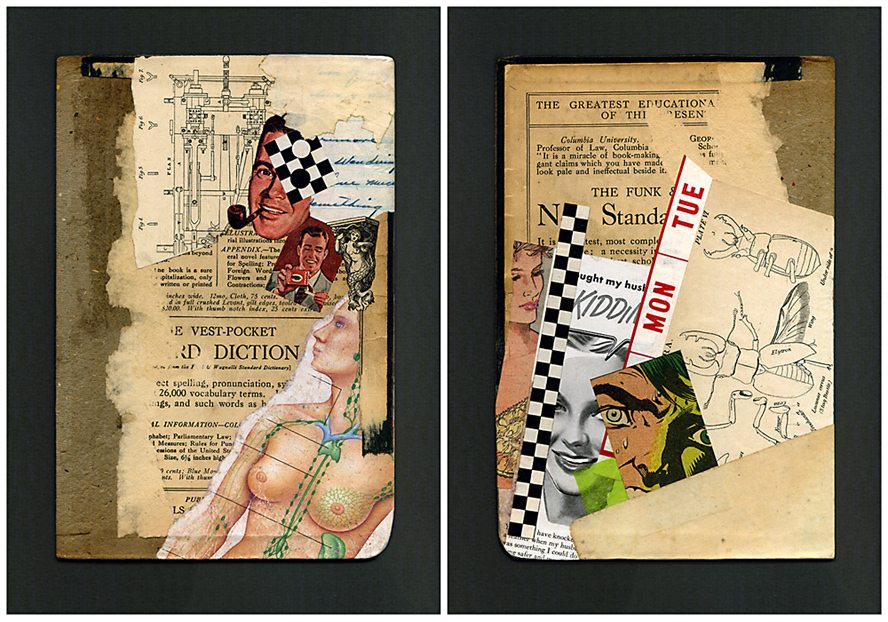
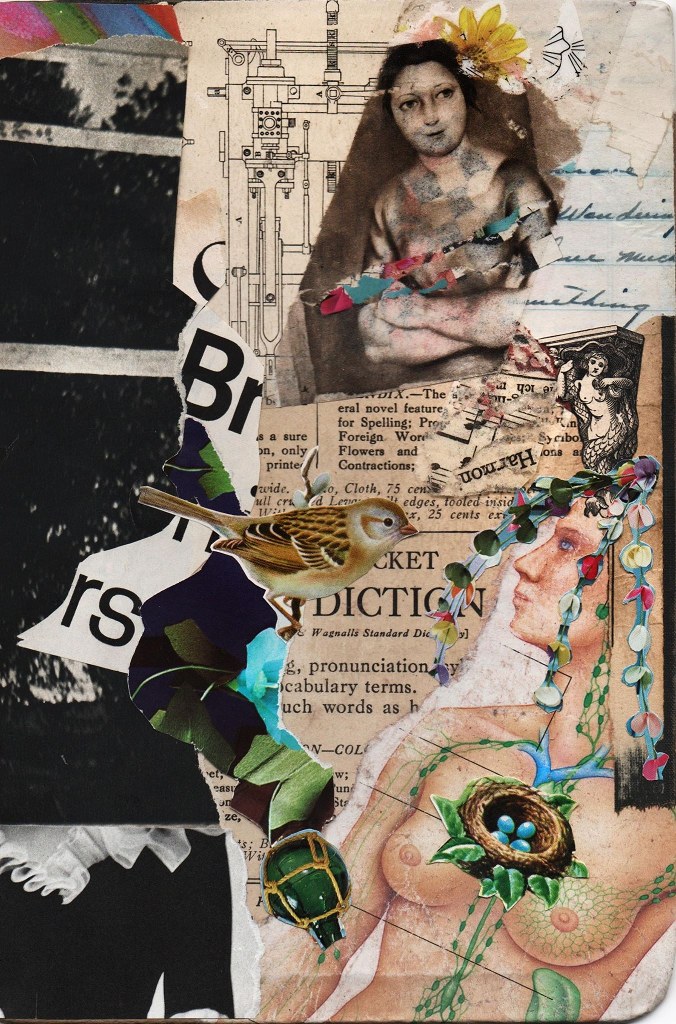
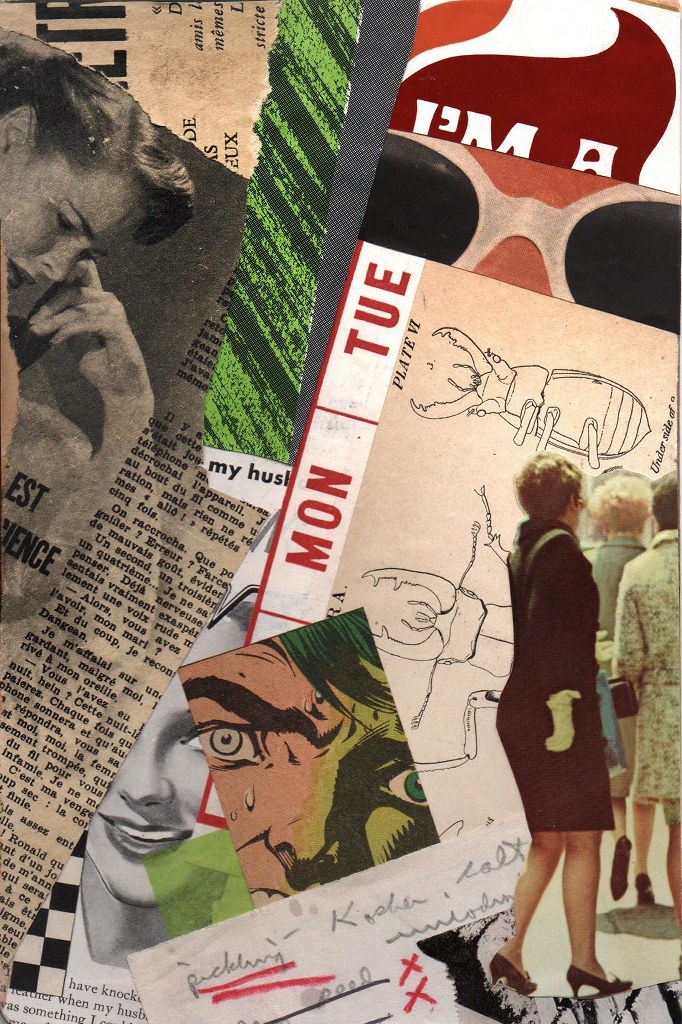
Two of the things that distinguish the artwork of Mary Madelyn Carney are keen visual contrasts and an imaginative approach to choosing ingredients. Naturally, she brings these qualities into her collage collaborations, so I wanted to send her a couple of bold “starts” on book covers that might play to her strengths. In hindsight, perhaps I did not provide her as much “elbow room” as the ones she sent me. Collage collaboration is quite a bit like two actors doing a scene. The key is to enhance each other’s performance, and to avoid stepping on lines or physically upstaging the partner. Actually, it is even more like live improvisation, especially when it is understood that the result will be shared publicly, because the success of a collaboration depends on how well you “listen,” and very little on imposing your own thing.

I was delighted with the way that Mary responded. Her intuitive decisions blended skillful symbolic fusions with an evident personal quality, and the aesthetic nuances were superb. That the two of us might interact on the same “wavelength” was first suggested to me some time ago by veteran collaborator Allan Bealy, but I had not anticipated just how conscientious she would be with our joint venture. We may have to join forces again for another “jam session.”
 

A collage miniature collaboration by John Andrew Dixon and Mary Madelyn Carney

Robin’s Chest
a collage collaboration by J A Dixon and M M Carney
(start by Dixon, finish by Carney)
5 x 7 inches, collection of M M Carney

A collage miniature collaboration by John Andrew Dixon and Mary Madelyn Carney

Pickling My Husband
a collage collaboration by J A Dixon and M M Carney
(start by Dixon, finish by Carney)
5 x 7 inches, collection of J A Dixon

Collage and the Meaning of Existence

Sunday, January 31st, 2016

Sorry about that title. I am having a bit of fun with the search engines.

On a serious note, today’s entry is about how collage can be put to the service of more than irony, shock, whimsy, irreverence, or cynicism. Let me say first, if you please, that all those things can be valid, even pleasurable, effects. They are rooted deeply in the history of the medium. One could make the case that a collage artwork is never more than a step or two removed from the essence of dada, surrealism, or popism. On the other hand, for me, there are times when that creative genealogy is best put aside, in favor of a different tone.

Developing works with special meaning to those for which they were intended has always been some of the most fulfilling time I have spent as an artist. Collage has the potential to capture profound significance for a recipient, especially when it is personalized with meaningful artifacts and memorabilia. Also, there is an opportunity for the artist to thoughtfully select and integrate additional ingredient elements for greater depth and layered associations.

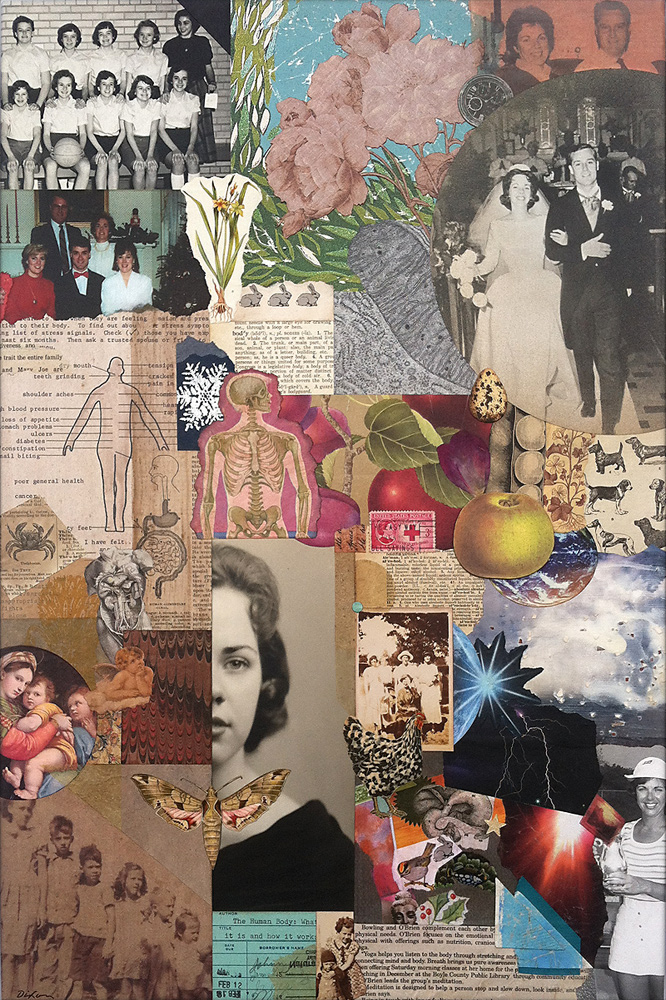
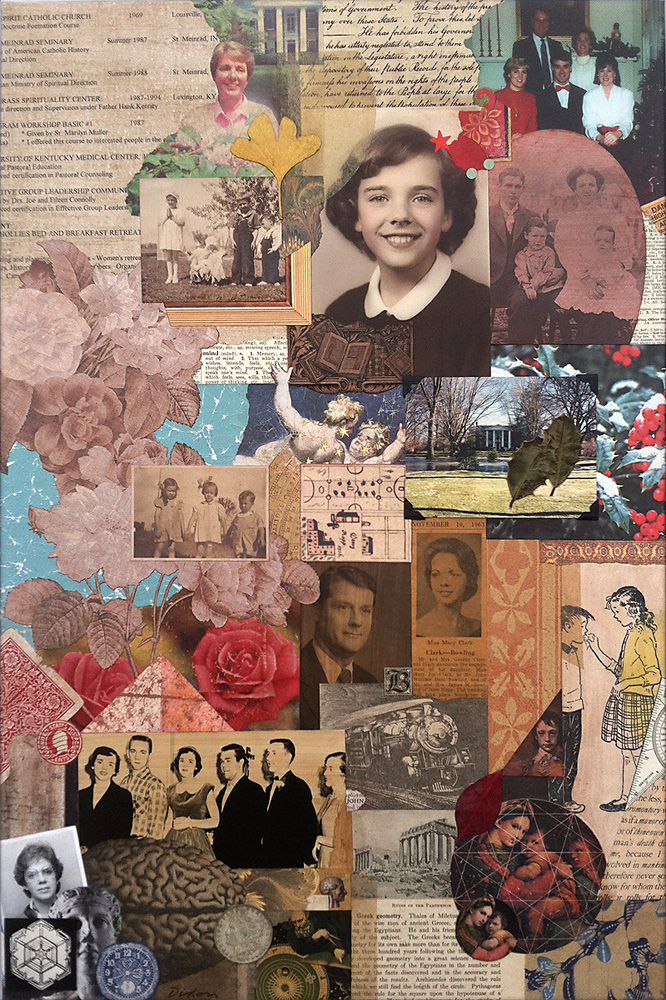
The project featured below began with a discussion about how all of us accumulate “stuff” that will never rise to the level of a family heirloom, but cannot be comfortably discarded because it has true meaning in the context of one’s journey in life. The patron took to heart my offer to embed many of these things in an artistic expression that would likely become a treasure for descendants instead of a burden of disposition. With the capacity to transcend the “scrapbook,” fine art collage is ideally suited for such an endeavor.

It was the client’s idea to approach the commission as a triptych, or three separate panels, that would convey the themes of body, mind, and spirit. I wanted the components to work as a total piece, but also for each to have a stand-alone quality. Whether they stay together or part company will be left to future circumstances and decisions. The resulting “legacy collage” is a distinctive creation that preserves images representing the life and guiding principles of a unique individual. It has been my honor to provide that creative service to her.
 

Body (for MJCB) ~ J A Dixon Mind (for MJCB) ~ J A Dixon Spirit (for MJCB) ~ J A Dixon

Body  ~  Mind  ~  Spirit
John Andrew Dixon
three legacy collage artworks on structured panels
16 x 24 inches each
private collection

Continuing the Bibelot Series

Sunday, December 27th, 2015

 
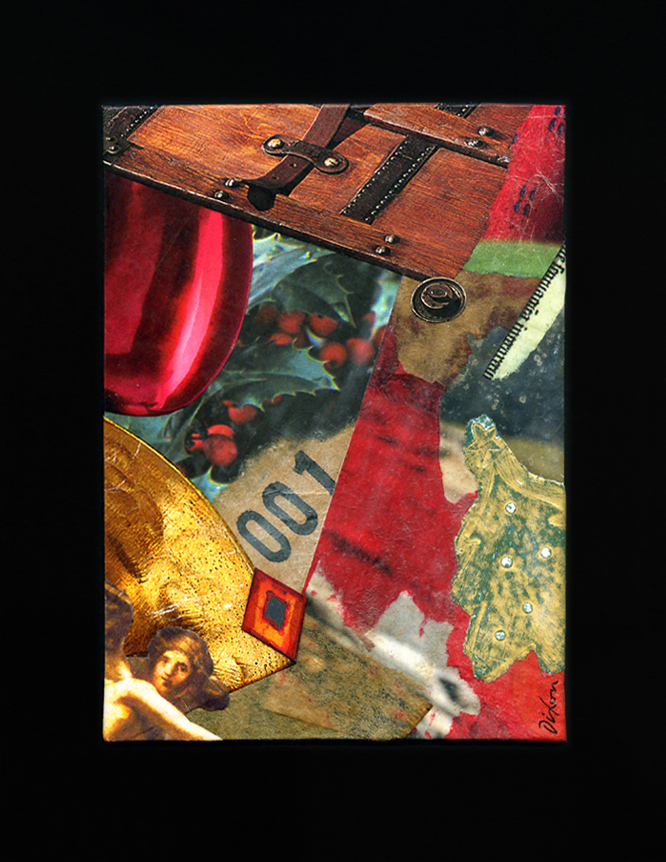
Yule (Bibelot 001) ~ collage miniature by John Andrew Dixon ~ part of the Bibelot Series of collage artworks

Yule (Bibelot 001)
collage miniature by J A Dixon
4 x 5.5 inches
 
Purchase this artwork!

Ever Crawling Forth

Wednesday, November 11th, 2015

 
Ever Crawling Forth ~ a collage miniature by John Andrew Dixon

Ever Crawling Forth
collage miniature by J A Dixon
5.5 x 6 inches
available for purchase