Archive for the ‘Movements’ Category

Roster of Shows

Tuesday, August 7th, 2018

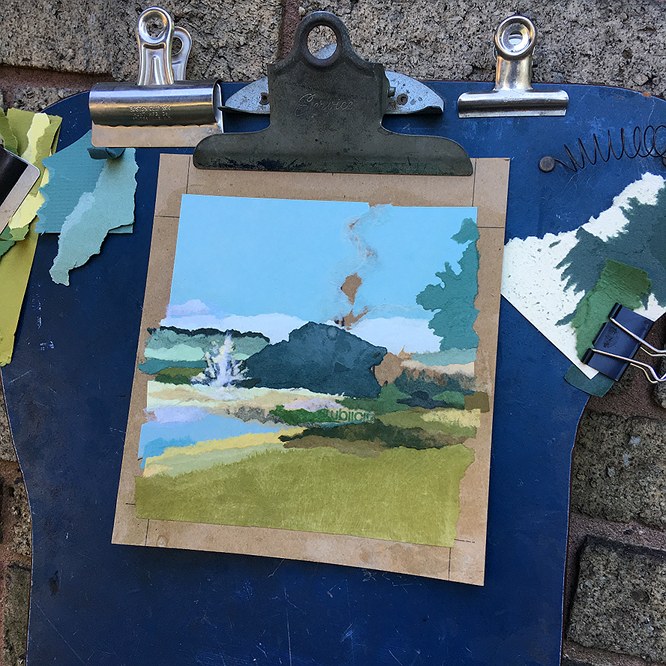
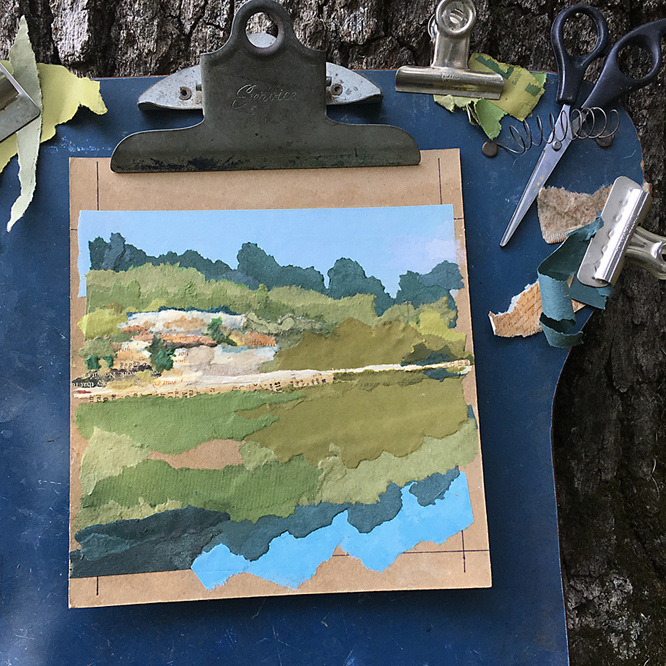
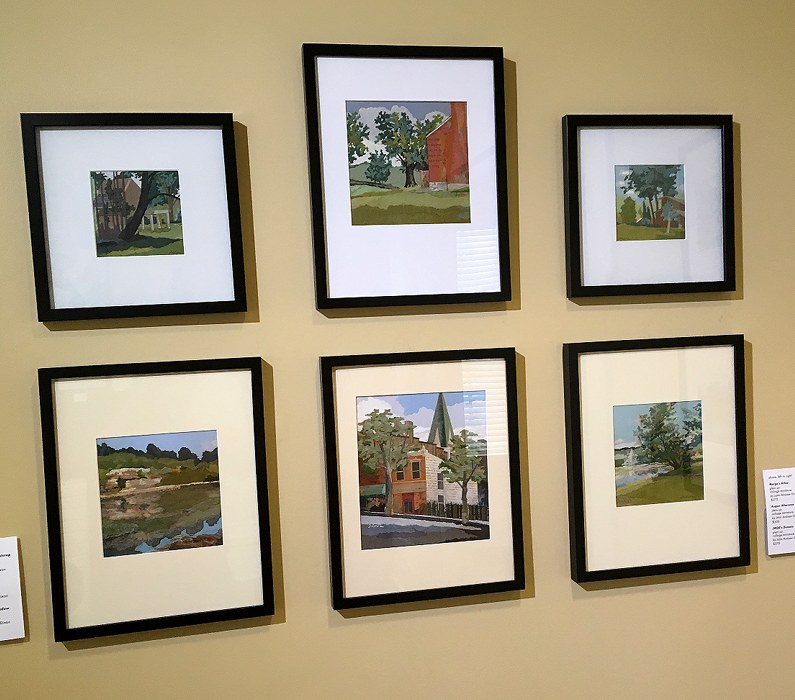
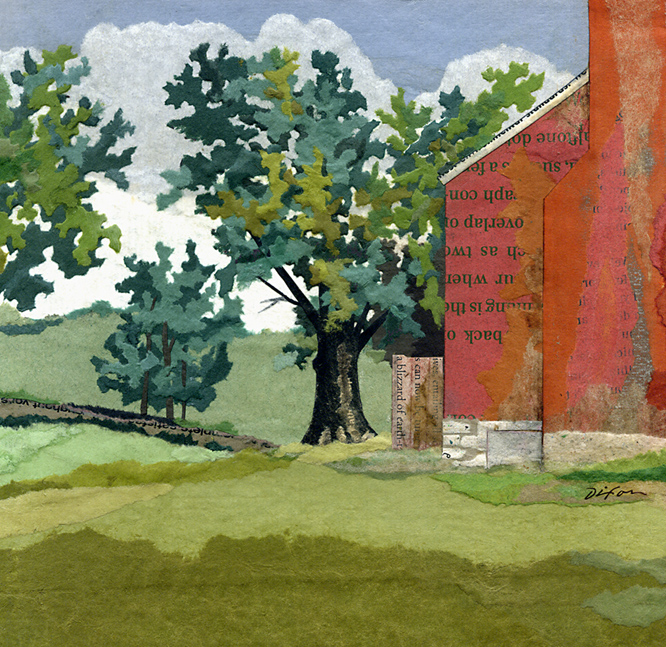
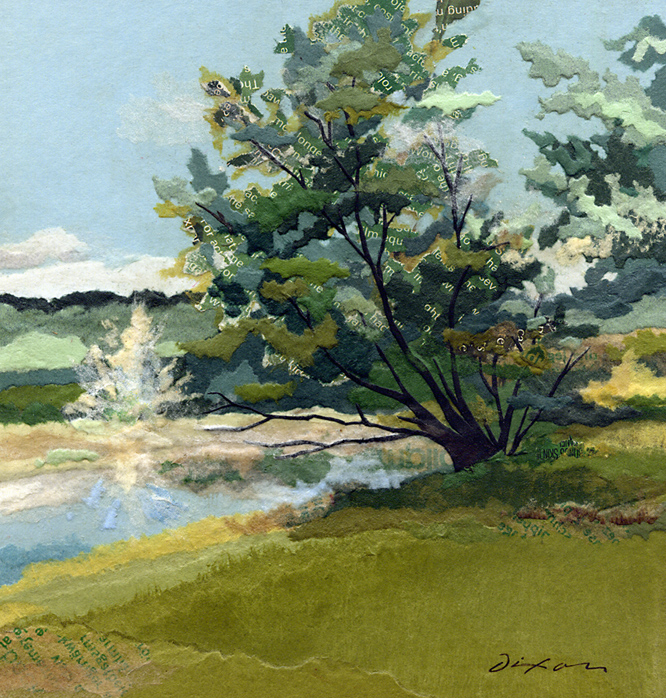
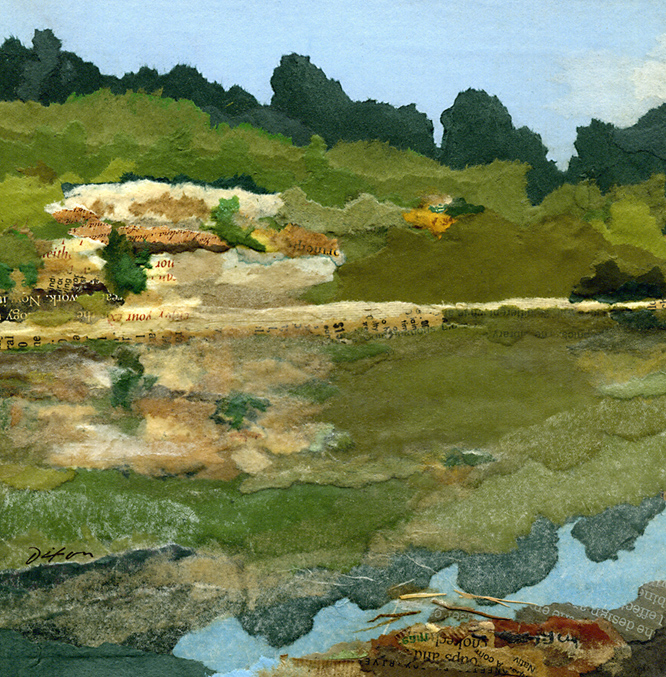
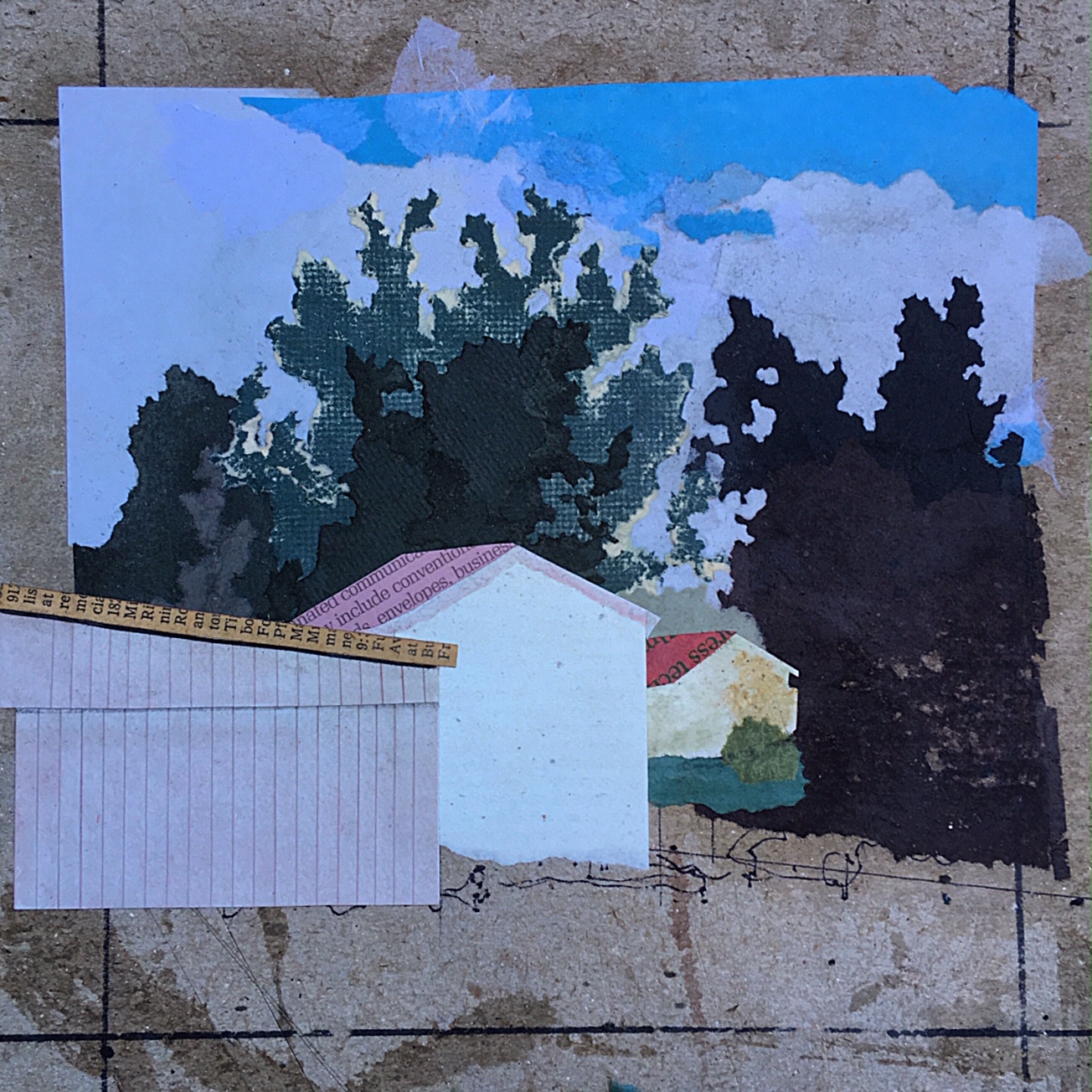
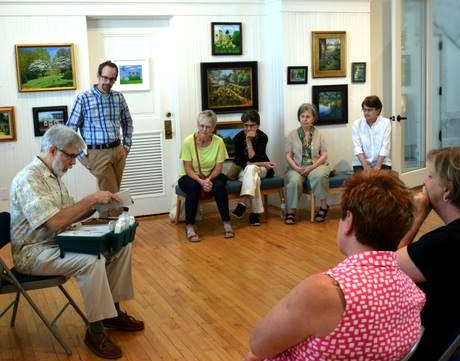
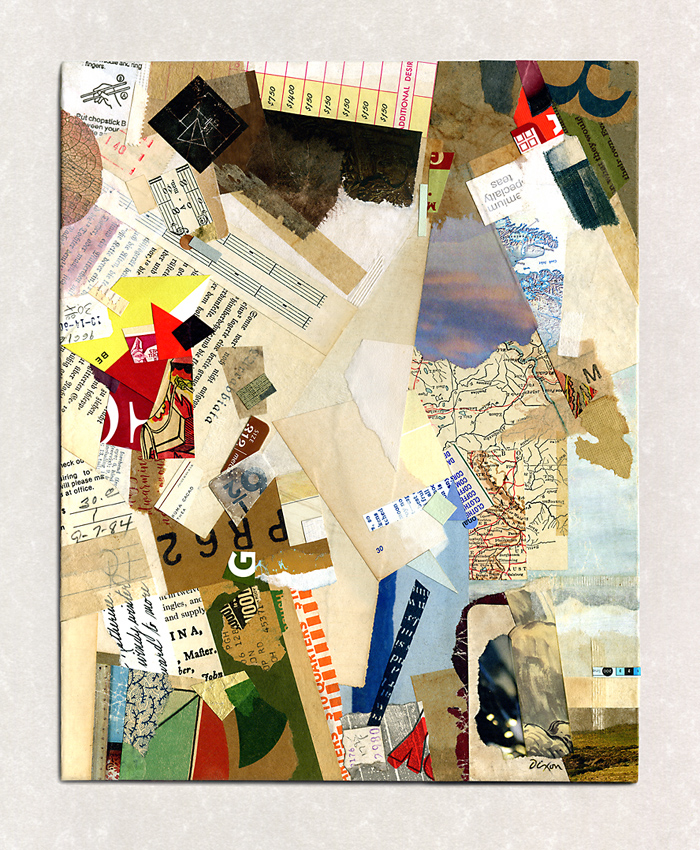
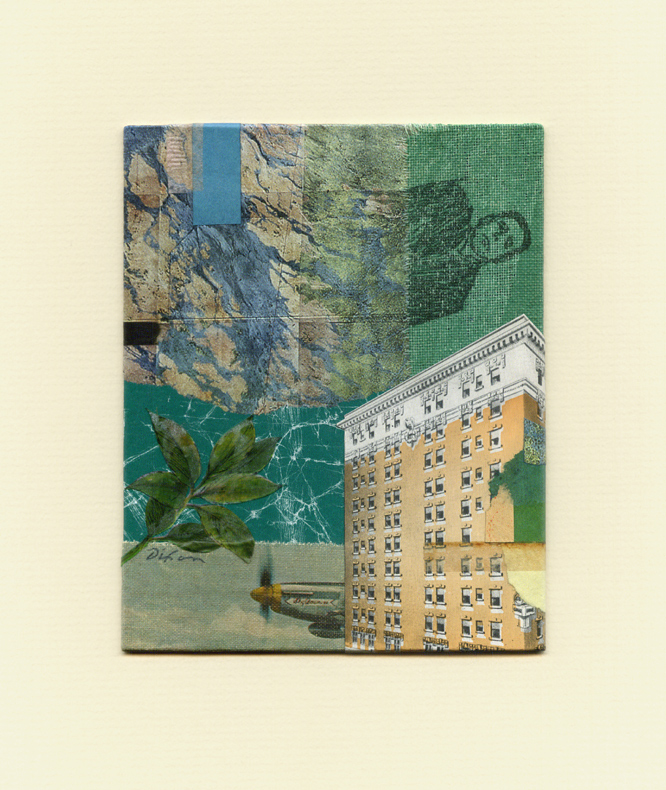
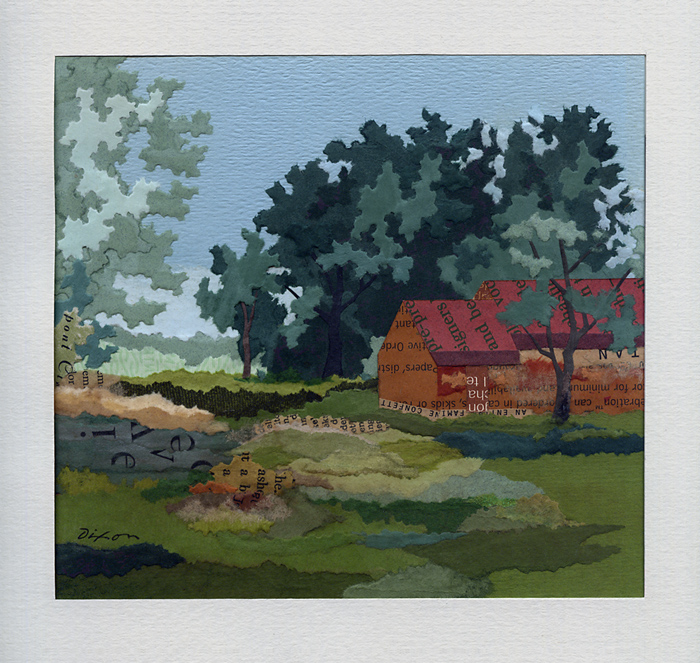
Adding a couple more items to my Roster of Shows: A collage miniature from 2014, Melting into Air, was displayed as part of “Little Pieces,” the fourth exhibition of the Nashville Collage Collective. It was an honor to be invited to participate with the dynamic group. Two of my plein-air collage pieces currently hang in the large grouping of works by members of PAACK. The Plein Air Artists of Central Kentucky meet regularly for organized “paint-outs” during the summer months, visiting local farms, parks, and historic landmarks. Locally, the exhibit is an annual favorite. The 2017 exhibit holds the distinction of being the show that yielded the most art sales last year in my hometown of Danville. If you haven’t checked out the summary from last year, read about how I solved the challenges of “painting” with small collage ingredients in the open air. I’ve been asked to make remarks during the upcoming “gallery talk” at the Community Arts Center, scheduled for the last Thursday of August. Perhaps I’ll see you there!
 

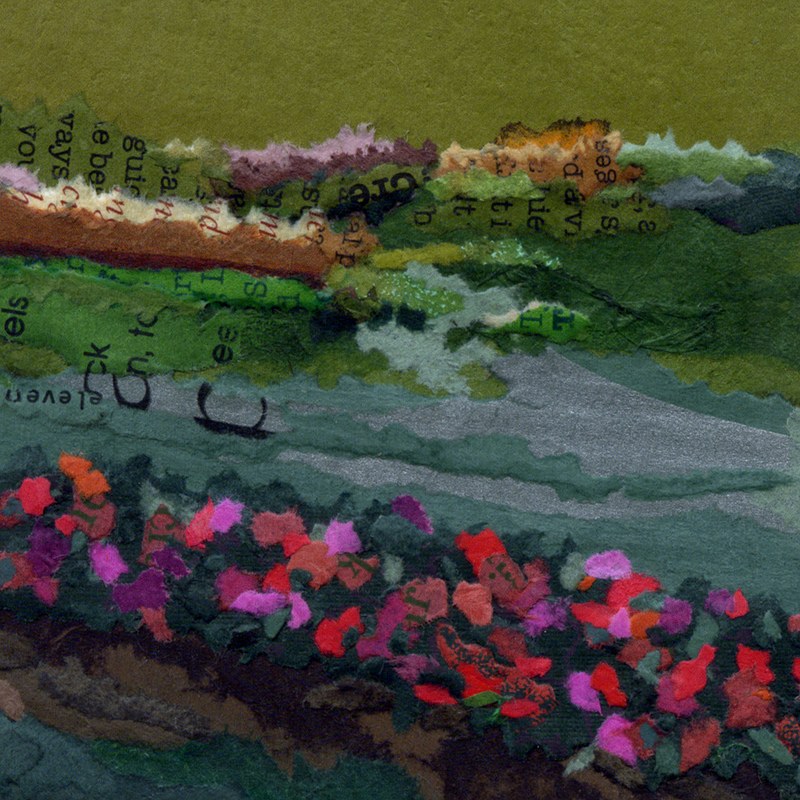
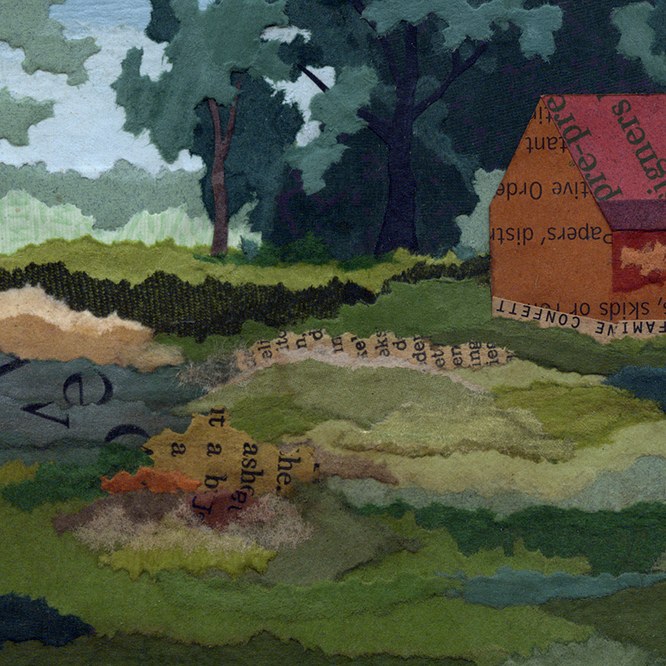
Melting into Air (detail) ~ J A Dixon Old Quarters (detail) ~ J A Dixon

Two square details of collage miniatures exhibited this summer.

Make it count

Saturday, June 23rd, 2018

“True desire in the heart, that itch that you have, whatever it is you want to do, that thing that you want to do to help others, and to grow, and to make money, that desire, that itch, that’s God’s proof to you, sent beforehand, to indicate that it’s yours already. And anything you want good you can have, so claim it, work hard to get it. When you get it, reach back, pull someone else up…”
— Denzel Washington
 

Denzel is the quintessence of the successful artist, and, by all appearances, he has defied the stereotype by cultivating humility and magnanimity. He also says, “Each one, teach one.” There are many ways to teach, and the opportunity presents itself differently at various points in our creative life.

I have always tried to compare and contrast the human qualities of those who have reached the pinnacle of an art form, and to remember that it cannot be about the creative result alone. When someone like Denzel advises, “Don’t just aspire to make a living. Aspire to make a difference.”, there is a desire for us to examine our definition of success, and it undoubtedly comes from his own life experience, one that’s had its ups and downs, its in-focus and out-of-focus moments.

For me, a passion for traditional teaching was more of a young person’s enterprise. I taught art to youngsters back in the “halcyon days” before background-check requirements, and spent seven years in my 30s as an adjunct professor in a university environment, taking what I was learning in the studio and sharing it with those just starting out. Other artists arrive at giving back much later in life, and bring to teaching their mature insights and proven practices. But, for me, the making of gift art has been the most fulfilling way to teach others in an unconventional way. Beyond a demonstration of willingness to give the gift of time and artistic effort instead of monetary value, one can also stimulate curiosity about the creative process that is personally powerful to young people.


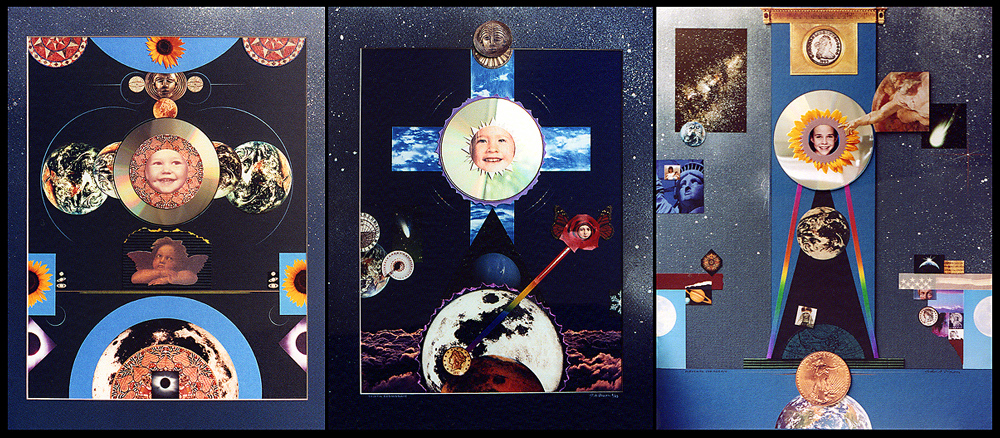
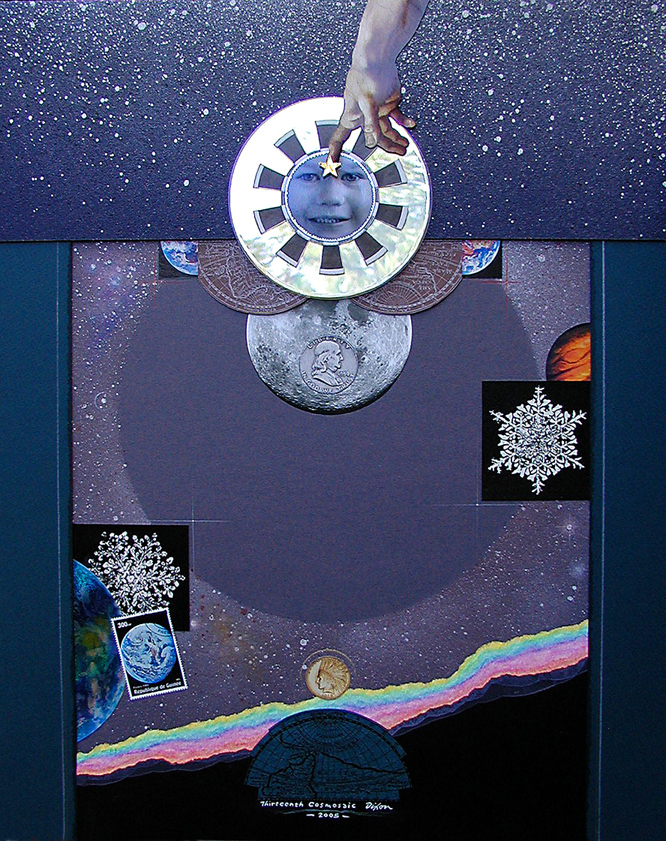
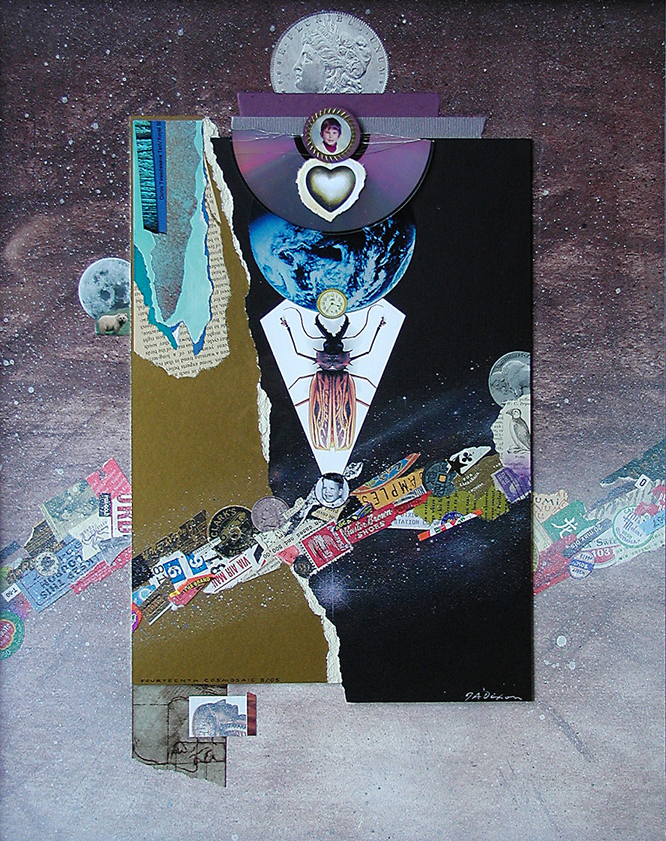
My Cosmosaic Series is only one of the ways that I have tried to meet this obligation. It is almost impossible to describe the reaction of young people when they realize that you’ve made them the object of an exercise in pure creativity, as well as the recipient of the finished work. Many profound conversations have been the result — discussions about life aspirations and individual destiny that would have been awkward or futile to jump-start in another context. It should go without saying that this is merely one way to teach another about one’s most significant values, but it happens to be one that is readily available to any imaginative individual.

As always, keep creating lots of stuff, but let’s not forget to make some of it count in an exceptional way. Pulling someone up a bit may be the most selfishly meaningful thing of all.
 

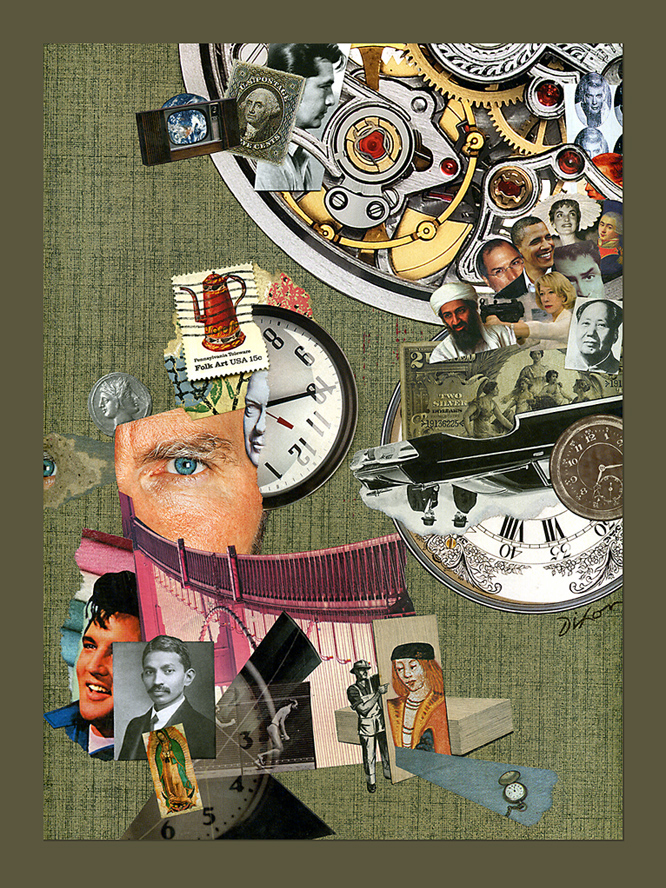
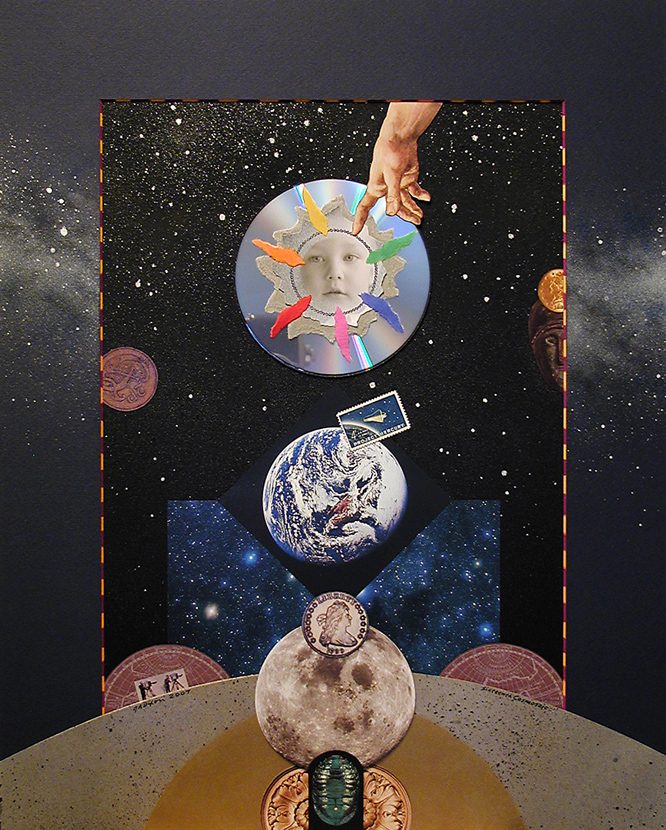
Thirteenth Cosmosaic ~ J A Dixon

Thirteenth Cosmosaic
mixed media collage by J A Dixon
16 x 20 inches
private collection

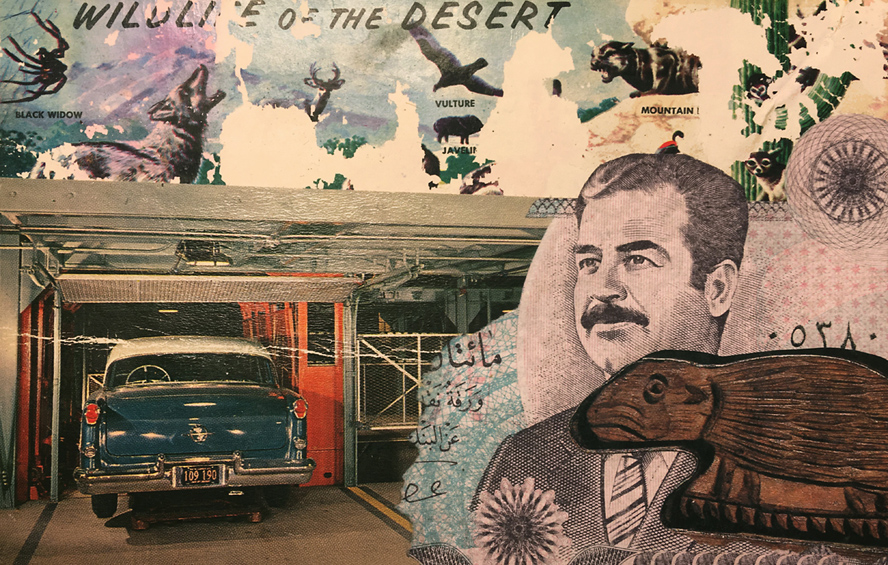
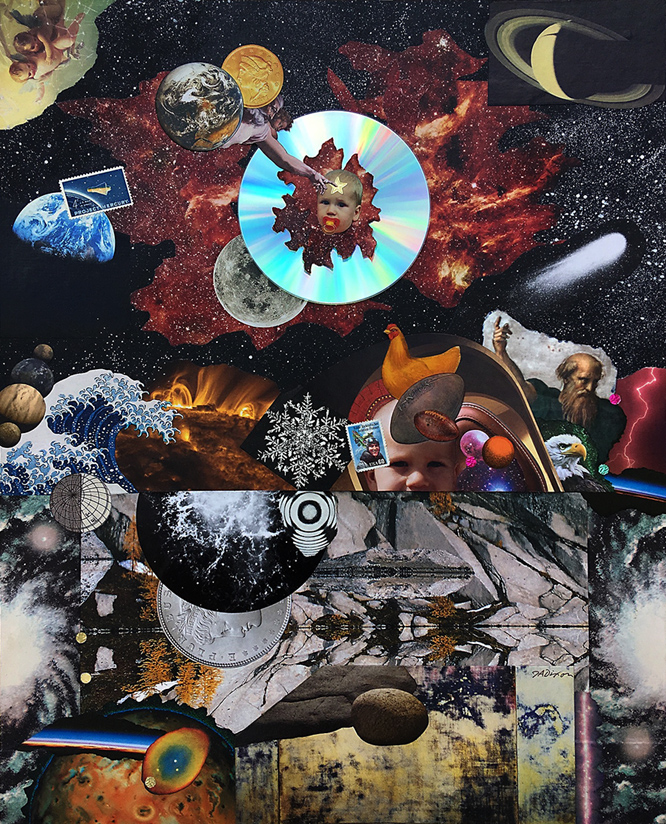
Fourteenth Cosmosaic ~ J A Dixon

Fourteenth Cosmosaic
mixed media collage by J A Dixon
16 x 20 inches
private collection

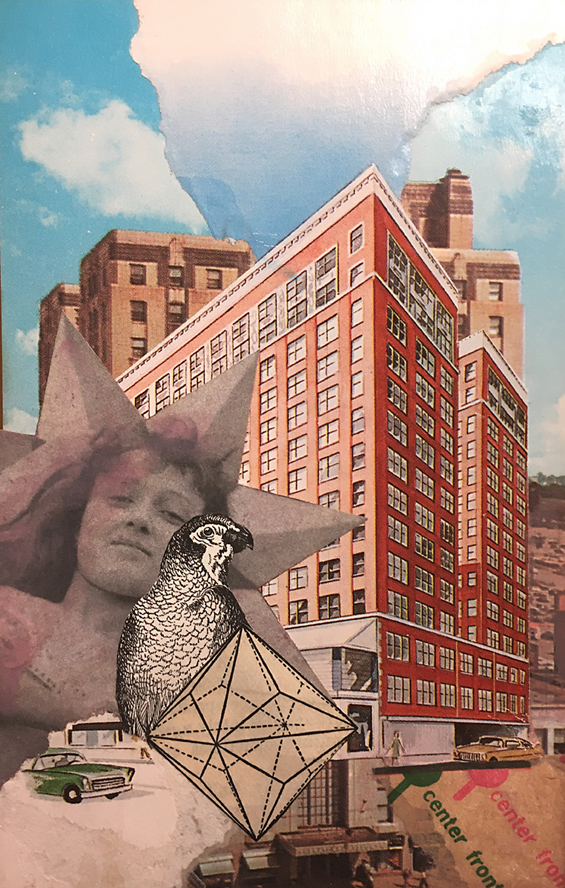
Sixteenth Cosmosaic ~ J A Dixon

Sixteenth Cosmosaic
mixed media collage by J A Dixon
16 x 20 inches
private collection

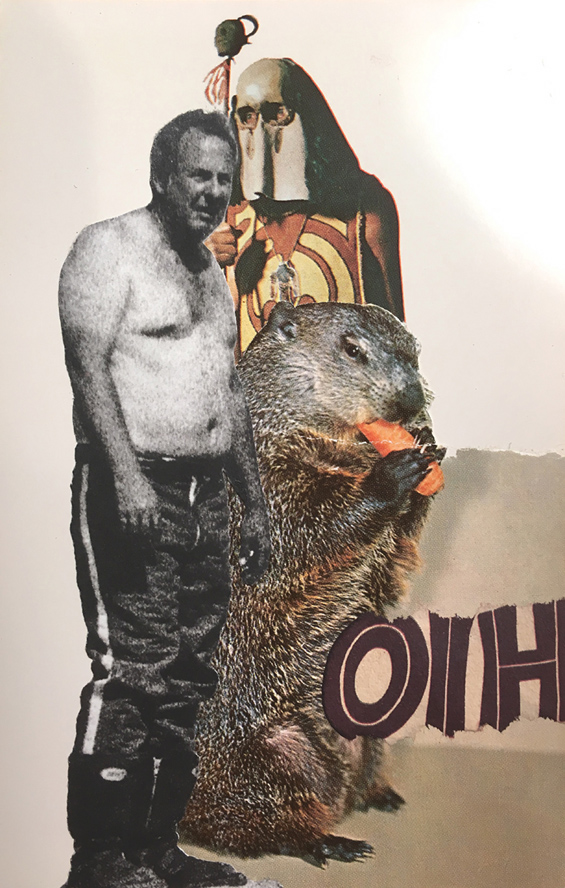
Twenty-third Cosmosaic ~ J A Dixon

Twenty-third Cosmosaic
mixed media collage by J A Dixon
16 x 20 inches
private collection

Various and Sundry Scraps ~ No.1

Thursday, April 26th, 2018

Don’t we all want to be Cecil when we grow up?
There was a time when Merz was deemed degenerate.
Destruction of the Merzbau and the human toll in Hannover.
Kurt Schwitters and his fellow artists in captivity.
How synthetic cubism led to collage as a modern art.

Thanks to The Kurt Schwitters Society for sharing several of these links.

Master of Merz

Saturday, March 17th, 2018

“Schwitters began making collages in 1918 and produced them in large numbers for the remainder of his career. In 1919 he began using the term ‘Merz’ (which originated from the German word ‘Kommerz’, meaning ‘commerce’) to describe his principle of assembling found materials.”
— Louise Hughes
 

Das Kirschbild — a fitting followup for the previous entry on abstraction.

And for those of us who never tire of learning new things about the incomparable Master of Merz:

from the Armitt Museum Collection in the Lake District

from the Tate Britain

from the Guggenheim

from the Sprengel Museum Hannover

 
Merzbild 32 A. Das Kirschbild ~ K Schwitters

Merzbild 32 A. Das Kirschbild
Kurt Schwitters, 1921
The Museum of Modern Art, New York

Abstraction in Collage

Saturday, March 10th, 2018

“In the ’20s, dadaist Kurt Schwitters collected bits of detritus such as cigar bands and bus tickets and used them in collages. They were shocking then but with the passage of time have taken on the aura of classics: vibrantly colored and harmonious arrangements of abstract forms and only incidentally assemblages of junk.”
— John Ashbery
 

About a hundred years ago, a handful of Europeans had set out to invent what we now know as the medium of collage. Nearly all of them were painters. From the beginning, collage was rooted in modern art concepts that were emerging at the same time — the fundamentals of abstraction. Thus, the evolution of abstraction and collage in the 20th century are entwined, and remain so in a burst of contemporary activity in this post-centennial period. Next year will mark a full century of Merz. Artists working in collage abstraction carry the “creative code” of Kurt Schwitters and his seminal innovations. But, allow me to pause here and point out something that has become increasingly obvious: conventional art history was woefully male centered. Intentionally or not, the discipline would downplay or ignore many exceptional women artists, and that includes collage antecedents which were largely the domain of females, especially in the domestic or folk arts. For example, an interesting feature at moowon.com highlights the forgotten art of Chinese textile collage. from his Cockatoo Series ~ an homage to Juan Gris by J CornellPicasso lifted visual ideas from tribal cultures. Cornell borrowed techniques tied directly to Victorian crafts. We understand that now. Modern art did not spring fully formed from the brow of Zeus like the armored goddess Athena. Fast forward to 2018. Many of the most accomplished and widely recognized collage artists of today are women. And the best part is that we know about them.

Melinda Tidwell is one of the dedicated abstractionists in collage that I enjoy following. She has a solid and very articulate designer “upstairs” guiding each decision, but her regard for the unexpected is a strong part of her intuition. Last summer, she published a two-part discussion of “order versus disorder” at her blogsite. It features abstractions by Lance Letscher and is well worth checking out.

Please indulge me as I share examples of collage abstraction from artists who continue to favorably capture my eye. Some of them range into mixed media in a way that remains very much collage. Others are strictly “painting with paper.”

Merz is alive and well in the 21st century, my friends.
 

(title unknown)
abstract collage by L Letscher

(title unknown)
abstract collage by M Tidwell

11zc18
abstract collage by Z Collins

Elysburg IV
abstract collage by C Chapman

Ellington
abstract collage by D McKenna

Osmosis 3
abstract collage by C Emeleus

Antoinette
abstract collage by W Strempler

Music
abstract collage by S Kraft

from her series, BALANCE
abstract collage by S A Herman

Day 18 of 40
abstract collage by C Neubauer

Red Cottage — from her series, SENSE OF PLACE
abstract collage by P A Turner

(title unknown)
abstract collage by J C Martin

Reap ~ G Cooper

Reap
abstract collage by G Cooper

Cognitives and Conclusions
abstract collage by S Ringler

Dynamic Stability ~ J A Dixon

Dynamic Stability
abstract collage by J A Dixon
 
Purchase this artwork.

Top collage artists I never even knew about !!!

Saturday, January 13th, 2018

“I have always tried to exploit the photograph. I use it like color, or as the poet uses the word.”
— Hannah Höch
 

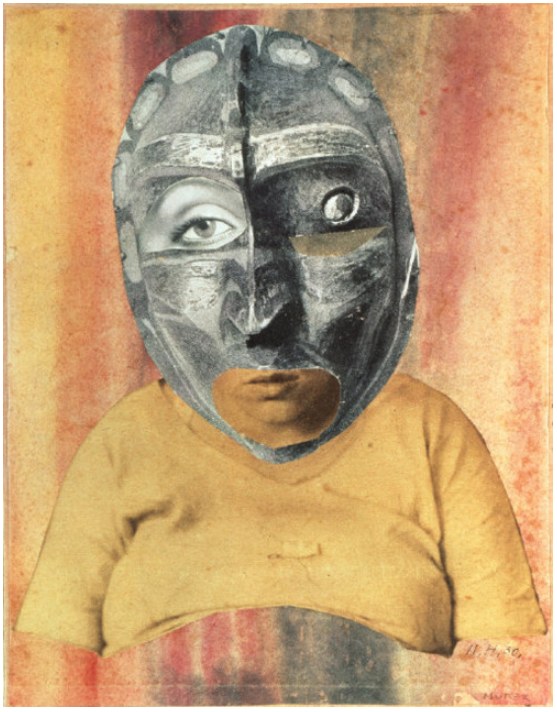
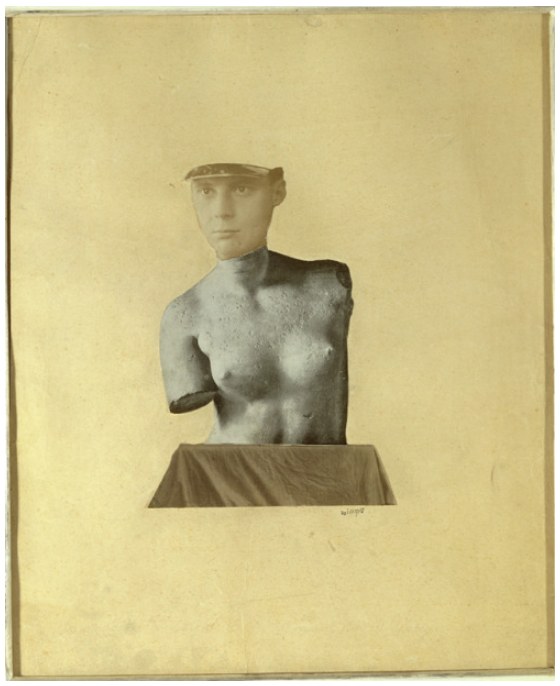
It is always a temptation for a so-called blogger to dangle a “best of” or “top twenty” list to entice a visitor, and, of course, we see this tactic used almost on a daily basis in various fields of art and entertainment. How many of us have gone online and swallowed just such a colorful lure? On the most obvious level, the whole stimulus-response thing is a bit silly, but the potential to learn something new does exist, or to sharpen our own sense of quality, preference, and discernment. Each of us is free to have viewpoints, as long as we recognize them as personal opinions, and avoid casting them about as certitude. Isn’t there enough of that going on these days? (Yes, dear guest, that is merely my perspective.) Cut with the Dada Kitchen Knife through the Last Weimar Beer-Belly Cultural Epoch in Germany ~ Hannah Höch

What does this have to do with collage? Well, I just paid a visit to a page at AnotherMag.com (in response to the aforesaid bait), and I learned for the first time about three collage artists who were new to me, a working artist who purports to ruminate on “all things collage.” In this particular case, there may have been an explicit effort to achieve an overdue gender balance for a post intended to spotlight the Höch retrospective at the Whitechapel Gallery in London, but one could question the absence of Paolozzi, Rauschenberg, Johnson, Hamilton, or Kolář. To not include at least one of these men as a key figure in the history of collage brings no meaningful discredit on any of the artists, but only on the list. (And that, too, is just my opinion).

Nevertheless, I am not ashamed to accentuate the gaps in my collage literacy and to feature three noteworthy female artists: Eileen Agar, Nancy Spero, and Annegret Soltau. Examples of their work should have appeared here long before now.
 

Woman reading ~ Eileen Agar

Woman reading
by Eileen Agar, 1936
Museum of New Zealand

Protagonists ~ Nancy Spero

Protagonists
by Nancy Spero, 1989
disposition unknown

Grima - mit Katze ~ Annegret Soltau

Grima – mit Katze
by Annegret Soltau, from her 1986-97 series
Vero Group Collection, Houston, Texas

Collage En Plein Air ~ third chapter

Wednesday, August 9th, 2017

“Try to understand, not only the nature of what you’re looking at, but your own perception and the judgments behind what you’re looking at.”
— Nicolas Uribe
 

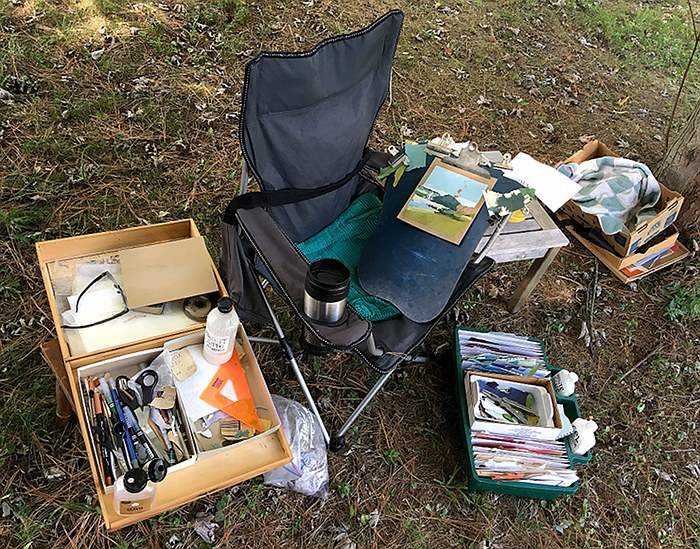
Are you still as interested in this subject as I am, my dear reader? I hope so. Permit me to begin this entry with an update on my evolving ‘Plein Air Collage Kit.’ After two more productive “art-outs,” minor refinements are still taking place. Protective feet were added to the base, a better diversity of colored and printed papers were organized, and, since it isn’t necessary to take much adhesive on location, I downsized the glue bottles for a better fit.

Plein Air Collage Kit based on a re-purposed dish drainer ~ by J A Dixon, collage artist from Danville, Kentucky


The PAACK group was welcomed to a home with lovely farmscapes in every direction. I picked a breezy spot to test my methodology and to capture one of our host’s flower gardens. I liked the sloping road and cornfield in the background and a central tree at its summer peak. John Andrew Dixon ~ plein air collage artistThe composition was complex enough that I would push the limit of the 50/50 ratio of location-to-studio labor before it was finished. I wanted to do justice to the impatiens in the foreground. Although I intend to get back to some strictly on-site studies, I decided to create a companion piece with the same ratio on my next venture into the countryside.

In my adopted area of the southern bluegrass region of Kentucky, there are many historic farm estates. Two of my favorites are Isaac Shelby’s Traveler’s Rest, which is partially accessible to the public, and pioneer surgeon Ephraim McDowell’s summer retreat named Cambus-Kenneth Farm, which is not. It was a rare treat for our group to be offered the opportunity to wander among the paddocks and historic structures of the serene Cambus-Kenneth on the last day of July.

It’s not as though I haven’t drawn or painted out of doors many times since youth, but the recent, more systematic approach has introduced me to aspects of the plein air discipline that are no doubt familiar to artists who have made the practice a ritual. Personally, I find that it is important to not spend too much time selecting a spot to sit, John Andrew Dixon ~ plein air collage artisteven though the entire enterprise rests upon the decision. It seems as though the act should be part of the overall intuitive process to which the day is pledged. It was tough to avoid squandering valuable minutes at Cambus-Kenneth, since there were barns, ponds, pastures, an impressive Italianate home, and many remarkably preserved 18th- and 19th-century brick outbuildings, including an icehouse, springhouse, and slave quarters. By using a viewing card with square “window,” I zeroed in on the old red-roofed quarters. I was able to complete enough of the design that day to stay within the 50/50 restriction when I finished the artwork in the studio a few days later. Folks, I may just be getting the hang of this gig. Please let me know what you think of the results.
 

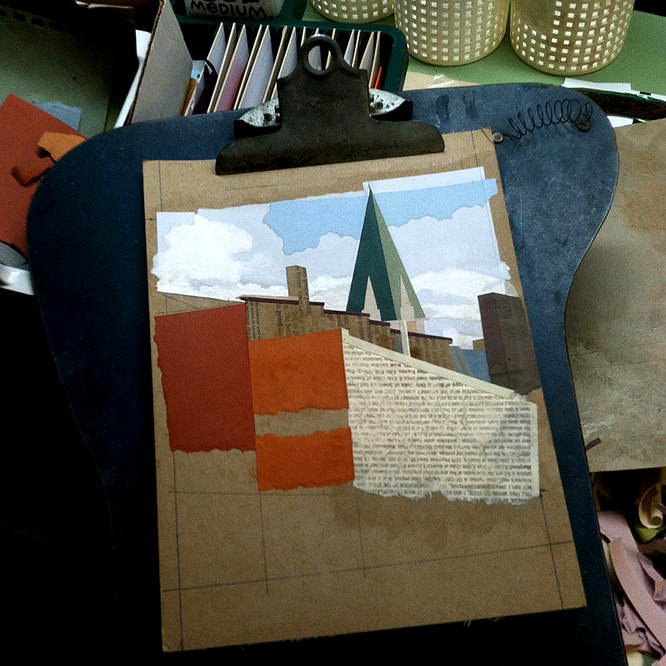
Intermediate stage of ‘Garden of Alice’ ~ J A Dixon Intermediate stage of ‘Old Quarters’ ~ J A Dixon

Here are the intermediate stages of two plein air miniatures, after completing
the on-location work. I start with my finding an appealing composition with a
viewing card, then roughly sketch the layout before picking a color scheme
from papers available in my kit. These artworks required studio time equal
to what I spent in the field — a total of approximately nine to ten hours each.

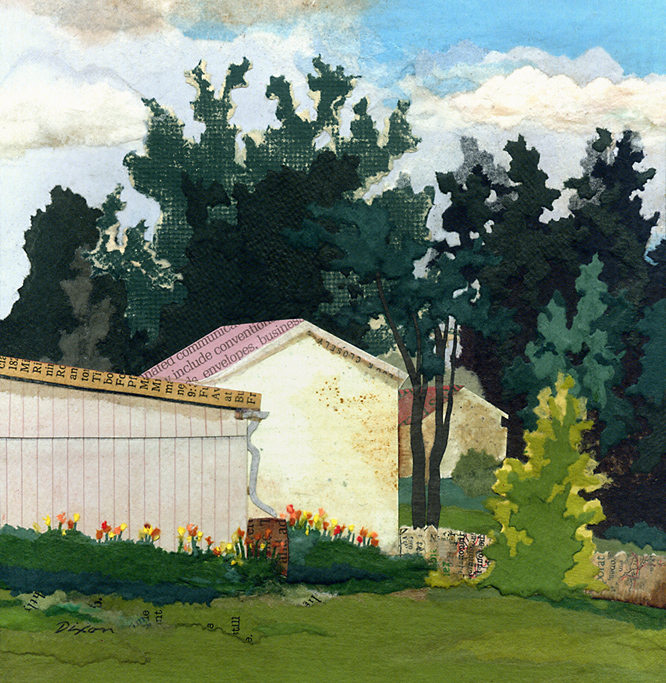
Garden of Alice ~ plein air collage miniature by J A Dixon

Garden of Alice
plein air collage miniature by J A Dixon
6.625 x 6.125 inches

•  S O L D

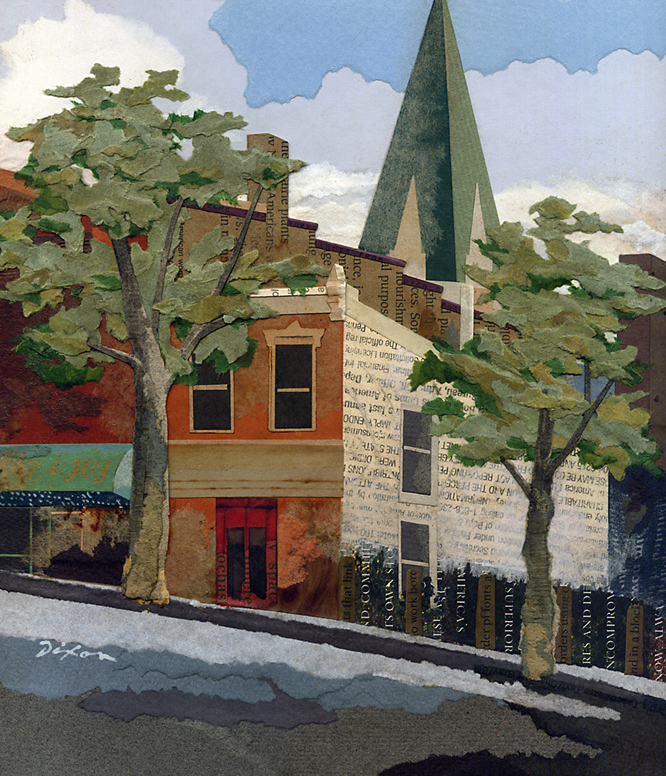
Old Quarters ~ plein air collage miniature by J A Dixon ~ at Cambus-Kenneth Farm, Danville Kentucky

Old Quarters
plein air collage miniature by J A Dixon
6.625 x 6.125 inches

•  S O L D

Saturday, August 5th, 2017

En Plein Air ~ an exhibition at the Community Arts Center, Danville, Kentucky ~ with collage miniatures by John Andrew Dixon and the Plein Air Artists of Central Kentucky


My sincere appreciation to the PAACK for permitting this rookie to display two of my plein air collage miniatures at the August show. Last night’s gathering at our Community Arts Center was a joy, and I heard that a local record was broken for opening-reception sales.

My appreciation to Kate Snyder for some nice local publicity.
 

two plein air collage miniatures by artist John Andrew Dixon on display at the PAACK show, Danville, Kentucky

Collage En Plein Air ~ second chapter

Wednesday, July 19th, 2017

“Detached from judgement, hesitation, fear of failure or imitation, one embraces the moment and the place, as revealed in value, color, and shape — the impossible can happen and the spirit of the place appears as if by magic.”
—Dean Taylor Drewyer
 

I joined the Plein Air Artists of Central Kentucky on one of their regular “art-outs” with a totally different system than I used in my first venture. Louis Degni is marketing an outdoor kit for collage artists that he calls the “St Hilaire System” (named for artist Elizabeth St Hilaire). John Andrew Dixon ~ plein air collage artistHis design may work fine, but the idea of using cups to control available source paper did not appeal to me, so I put together a different configuration based on a re-purposed plastic dish drainer. Using custom-cut folders fitted to the 14 dish slots, I have an array of potential ingredients that are fully protected from the wind. Needless to say, even a mild breeze can play the devil with small scraps of paper. After I got to the site and picked my location, I sorted through a spectrum of colors to choose a palette. John Andrew Dixon ~ plein air collage artist A central compartment between the little folders provides storage for this selected material under the large clipboard that secures my working surface. Bottles with two different adhesives fit handily into what was originally meant to hold kitchen flatware. The scale is ideal for a collage miniature. Additional refinements are anticipated, especially if I decide to increase the working dimensions, but I now have a solid approach that allows me to concentrate on capturing the essence of the scene.

The hospitality extended by our hosts for the day was remarkable. I was free to roam the property and found a grape arbor that had seen better days, but still looked handsome in a patch of sunlight. My subject may have been too complex for the time slot, or, more likely, the process remains slow, since my layering method is still inefficient. I wasn’t able to complete all the foliage on site, so I had to spend some studio time the following day to finish up. I’ll admit to being pleased with the results, although I hadn’t expected to be satisfied with my early attempts. I have no idea where this is heading, but I’m happy to follow my enthusiasm to the next phase!
 

Margo’s Arbor ~ plein air collage miniature by J A Dixon

Margo’s Arbor
plein air collage miniature by J A Dixon
4.625 x 4.625 inches

•  S O L D
Collage En Plein Air

Wednesday, June 28th, 2017

“When painting and sketching plein air I sink into the landscape, an attuned witness to its mood and beauty.”
—Dianne Bersea
 

After the experience I had last September in Sault Ste Marie, I stayed attached to the particular idea that I could perfect a method of doing collage en plein air. I had no illusions about becoming a Tom Thomson or Rockwell Kent. I was just waiting for an opportunity to put my notion to the test, and I found it when the Plein Air Artists of Central Kentucky invited me to one of their summer outings.

I assumed going into the experiment that, aside from the creative challenge that faces any person working out of doors, a collage artist would need to be prepared to accommodate even the slightest of breezes. I had no coherent system for doing that and placed more of my focus on how to transport what I thought I would need on location. Fortunately, the scheduled gathering was on a day of gentle weather, so I was able to measure the potential hazard under ideal conditions. Truth be told, I still spent some time on hands and knees, searching for wayward scraps in the surrounding grass. Ideas for a more systematic approach took shape as I worked, and I also learned what would not be needed the next time out (perhaps equally important as identifying what was essential). Forgetting common white glue was a blunder, so I fell back on a desirable combination of wheat paste and gel medium. I rarely use a single adhesive anyway.

The process was more like painting with paper than what I have been used to — studio collage is more concerned with the ingredients themselves, but this was about interpreting what was visually in front of me. I was reminded of the small, square studies that an accomplished plein air painter showed me when I visited her studio in Berkeley, California. To develop the capacity to genuinely SEE what is before me is an exciting prospect (admittedly long overdue). As I move from everything being new and unfamiliar to a clearer sense of the potential for this activity, I can eventually pursue the inherent spontaneity and unexpected juxtapositions of true collage, rather than the effect of a simple, torn-paper rendering. Nevertheless, my initial emphasis must be on devising a more workable, mobile kit that guards against the qualities of wind, of which there is no degree so minimal as to not be undesirable when handling small paper ingredients. It is no surprise to me that relatively few collage artists are creating works entirely outside.
 

JWDB’s Domain ~ plein air collage miniature by J A Dixon

JWDB’s Domain
first plein air collage miniature by J A Dixon
4.625 x 4.625 inches

•  S O L D
DADA CENTENNIAL Day of the Dead

Sunday, May 7th, 2017

It is with high anticipation that I await my first look at the new publication which documents the Dada Centennial exhibition organized by the Ontological Museum. My sincere thanks to Cecil Touchon for including the essay that I wrote last yearOn Kurt Schwitters and a Century of Dada — but, most of all, for volunteering so much of his time to this historic observation and to the ongoing administration of the institution he founded, now located in Santa Fe, New Mexico.

The exhibition at the archives of the International Museum of Collage, Assemblage and Construction opened on November 4, 2016 and lasted through January 31, 2017. A worldwide array of Dada-inspired artists sent artworks for the show that will be added to the permanent collection. They are all displayed in the full-color, 275-page catalog that is available for purchase. A “Merz Painting” by Peter Dowker is featured on the cover. In addition to my essay, the publication has an introduction by Touchon, another essay by Drager Meurtant, Birth of Merz by Schwitters, original verse by Dada artists, writings by Hugo Ball, three of my experimental miniatures, and collage art by some whose work I have spotlighted here at TCM, including Dowker, Hope Kroll, Zach Collins, Nikki Soppelsa, Erin Case, Joel Lambeth, Melinda Tidwell, Evan Clayton Horback, and Katrien De Blauwer.

When I experienced the milestone Schwitters exhibition at the Berkeley Museum of Art in 2011, I failed to bring home the forty-dollar catalog. When I got back to Kentucky, I discovered that the compendium was already worth $200. I do not know what long-term plan the Ontological Museum has for this publication, but it may not always be available. Go online, take advantage of the current discount, and buy it now.
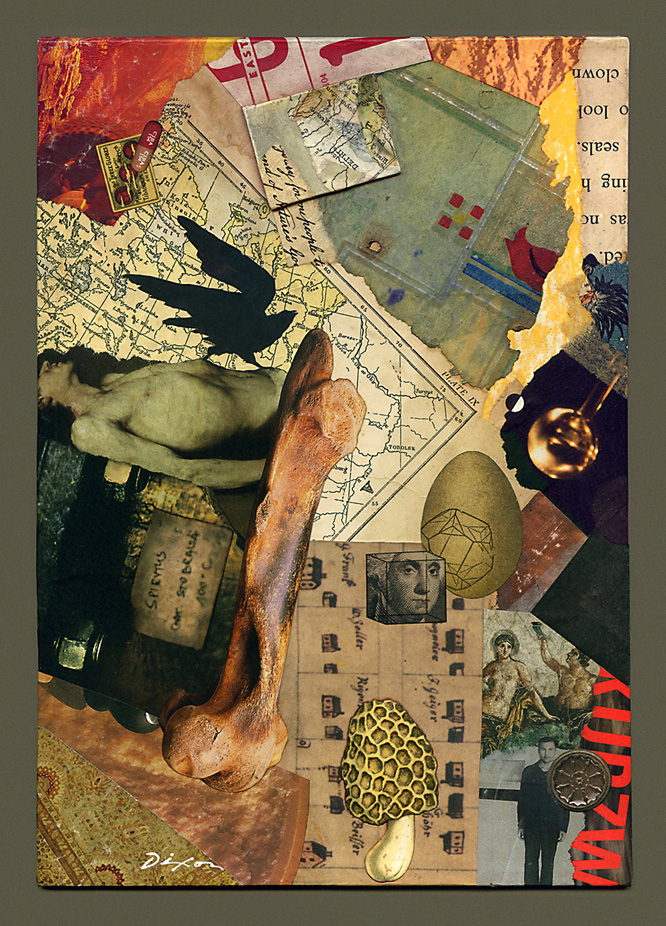
Grateful Ode to Merz ~ John Andrew Dixon

Grateful Ode to Merz
collage miniature on Bristol by J A Dixon
homage to Kurt Schwitters
collection of The Ontological Museum