Archive for the ‘Methodology’ Category

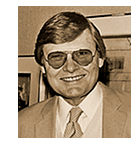
Fred Otnes, 1925–2015

Monday, August 17th, 2015

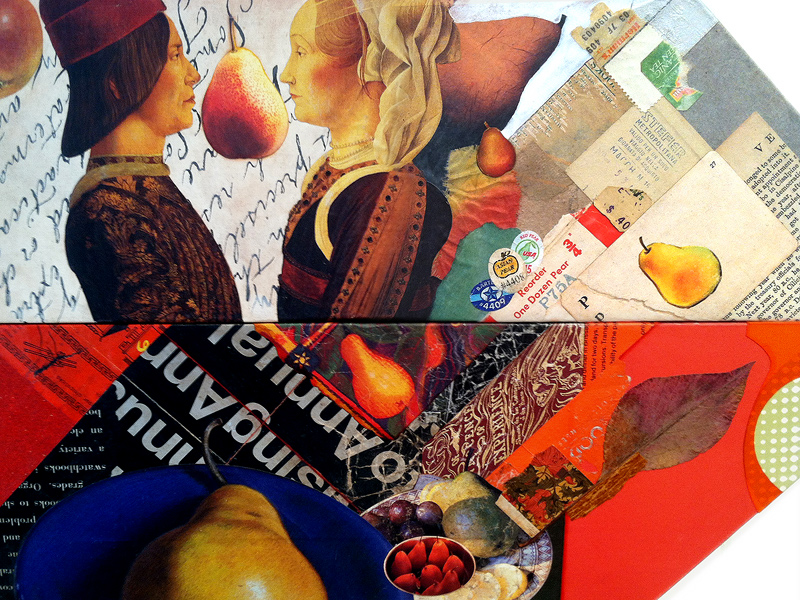
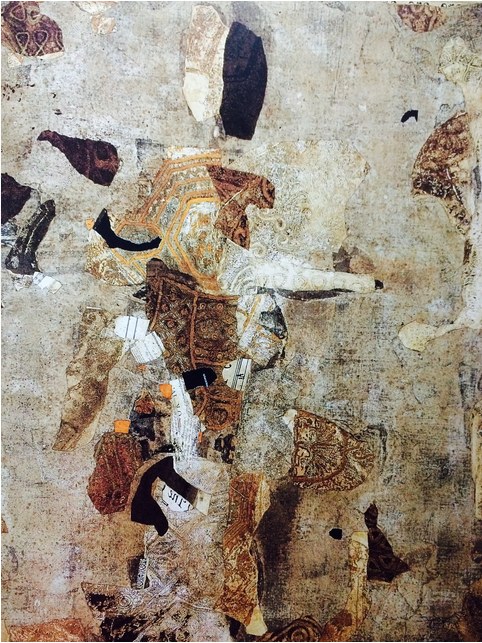
“Otnes abandoned the narrative style… The move set him apart from other commercial artists of his time, and his willingness to embrace the abstract and chaotic nature of collage put him in high demand during one of the most turbulent decades of American history.”
— The Saturday Evening Post, 2015

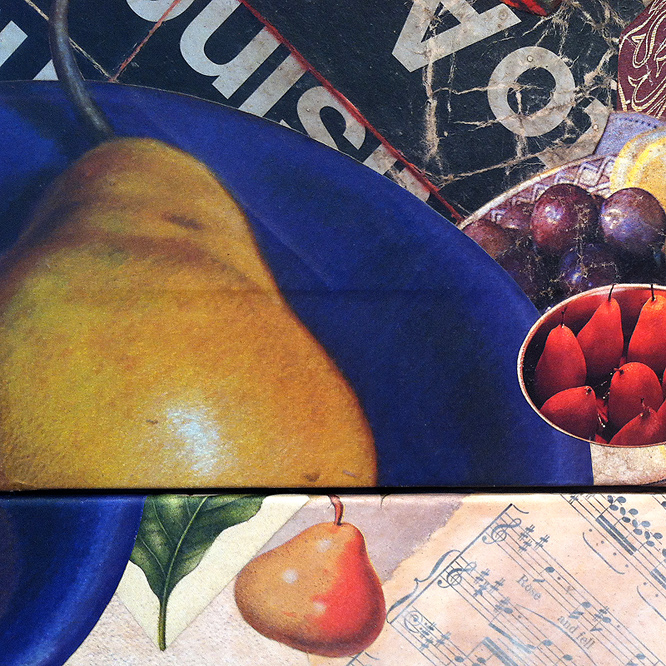
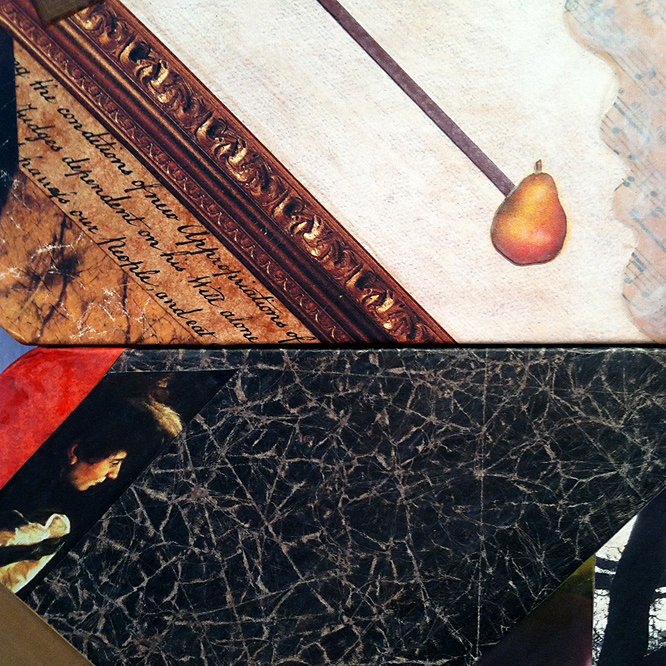
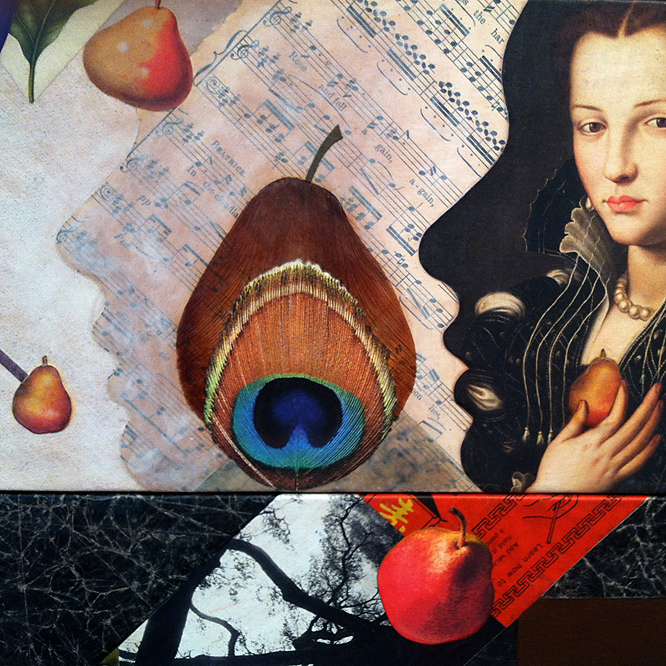
“Fred Otnes brings to his collage paintings a classical refinement and control that makes poetry out of chance pictorial effects. He dips into early Cubist collage techniques, touches Florentine and Renaissance bases, and reverses Dadaist chaos into gorgeous homages to order.”
— Maureen Mullarkey, 2002
 

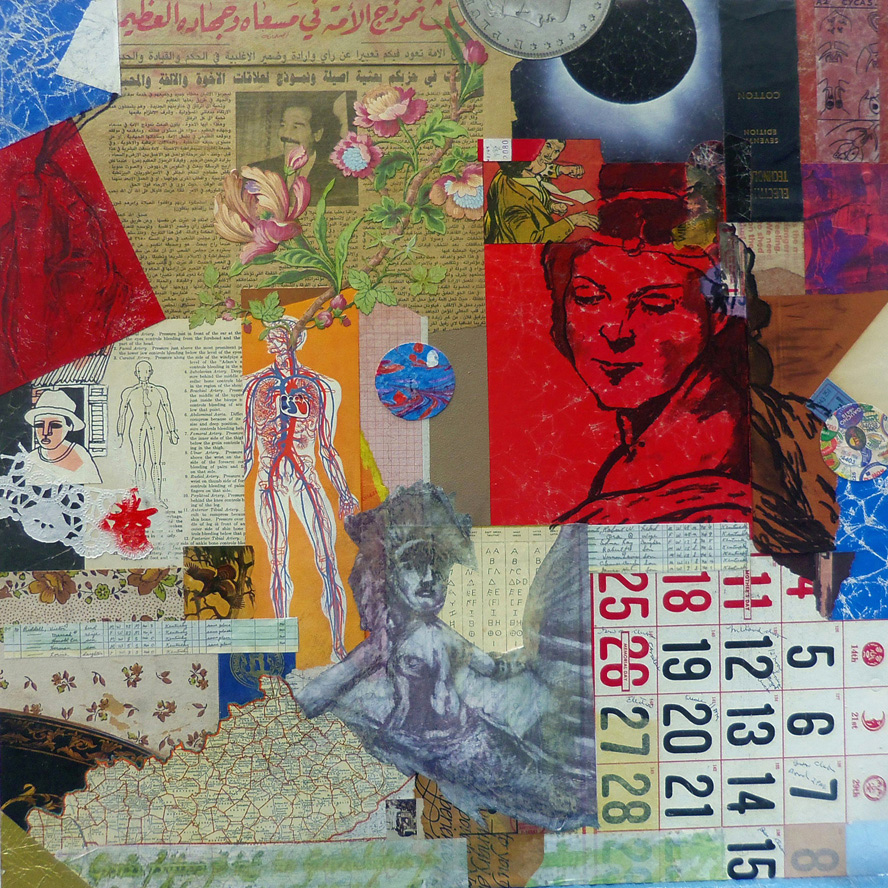
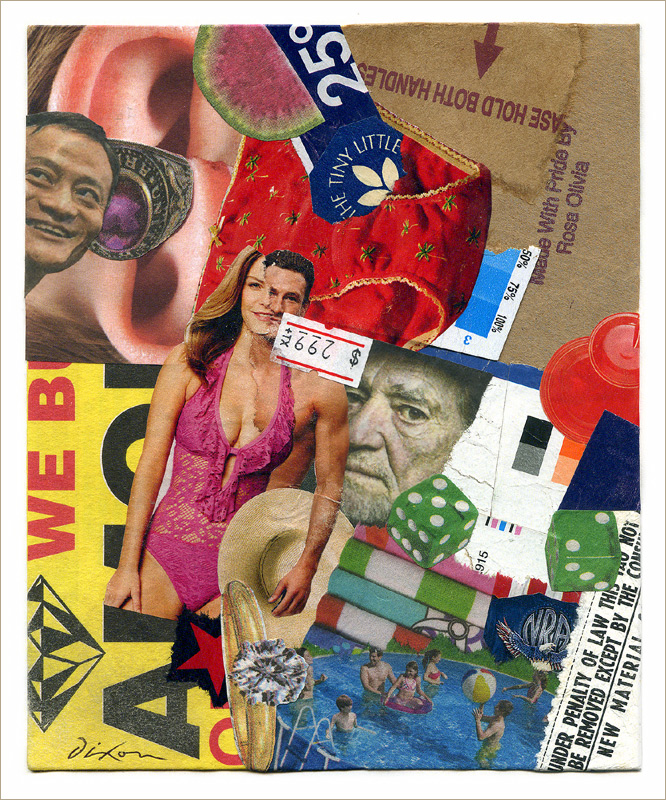
I just learned about the death of artist/illustrator Fred Otnes. I tend to focus here and in my own practice on the acknowledged masters of fine-art collage, but Mr. Otnes certainly had a greater influence on me during my formative years and during the period of my life devoted to “making it” as an independent illustrator and designer. He is rarely included among the seminal figures of 20th-century collage, but he should be. Allow me to back up a bit and reveal some of my own story.

In the 1960s I had four different art teachers in four years of high school. I resist being unkind, but each one of them was worthless. I had some talent, so there was no reason to spend time with me. I was left to fend for myself, because, apparently, it was more urgent to actively babysit the class goof-offs. By sixteen I was investigating the available correspondence coursework. No one thought to tell me about the Dayton Art Institute in the closest big city. I don’t think I even realized how desperate I’d become. What others might have viewed as crass merchandising was a Godsend for me. I responded to an advertisement from the Famous Artists School and completed the test. A representative actually paid a visit to discuss the home-study course that would provide the fundamental art instruction I’d been missing, and I begged my parents to let me give it a shot. They said, “Okay,” and I am grateful for this simple consent — access to legitimate art educators would be mine. I acknowledge now that their “Course For Talented Young People” was a marketing experiment, an attempt to leverage the successful adult course with a younger demographic. That meant nothing to me at the time. This was the school endorsed by Norman Rockwell, and I was a charter student! Although my Mom eventually had to cajole me into keeping abreast of the challenging lessons, a sea change had occurred. I was at long last formally introduced to the world of fine and applied artists. Among those that impressed me most was someone named Fred Otnes.

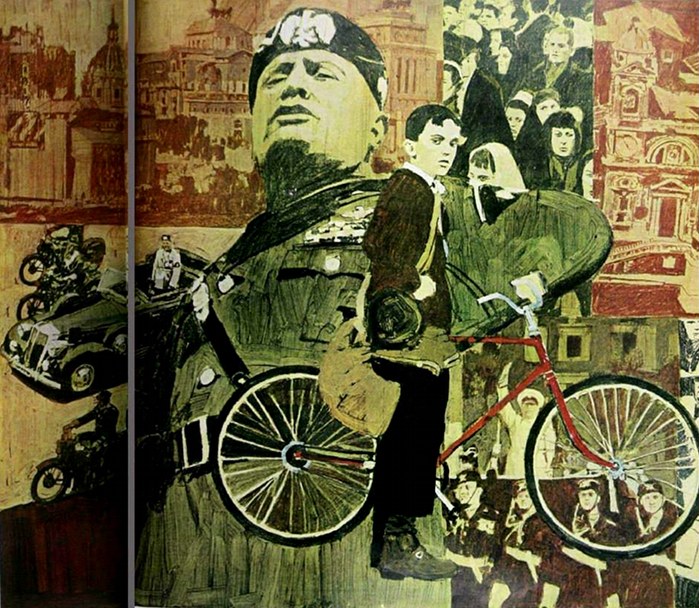
I was a peculiar kid who got more excited about magazine illustrations, corporate trademarks, television animation, and the Sunday comics than I did about “museum art.” The work of Otnes touched me in a way that would take decades for me to unravel. In my youth, not being able to figure out how an artist created something was usually paired with disinterest, but his work affected me in the opposite way. His graphic synthesis of images, engravings, diagrams, and language exposed a realm that I could aspire to enter. Even as an experienced pro, I continued to find his technique mystifying. I was relieved when legendary illustrator Mark English said, “I don’t even know how he did them, the mechanics of printing, photography and all the things he did to put them together.” Suffice it to say that in a profession biased against the creative explorer, Fred Otnes braved a path that few, if any, realized was there, successfully made it his own, and became one of the most distinctively recognizable, highly honored applied artists of his generation.

For many years, through the Illustrator’s Workshop, Otnes was a teacher and mentor, and, like others in the field, spent his later years expanding his personal style as a gallery artist. Whether applied to editorial or commercial use, the creations embody his profound respect for subject matter. If there is something elusive in his work that will continue to inspire me, it is this — I shall always hold in high regard the sense of “reverence” he brought to each layered plane of expression, to every choice of color or texture, to the symbolic meaning of each ingredient, and to the aesthetic harmony of the whole.
 

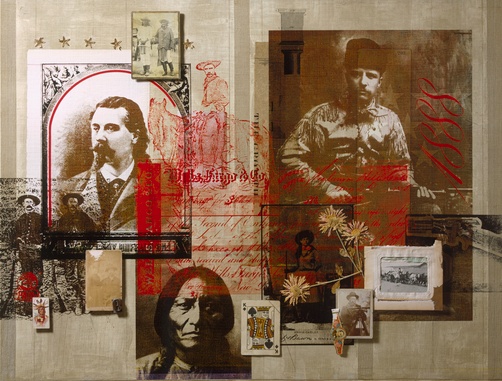
Otnes_Mussolini_1966

The Day Mussolini Dies . . .
Saturday Evening Post illustration by F Otnes, 1966

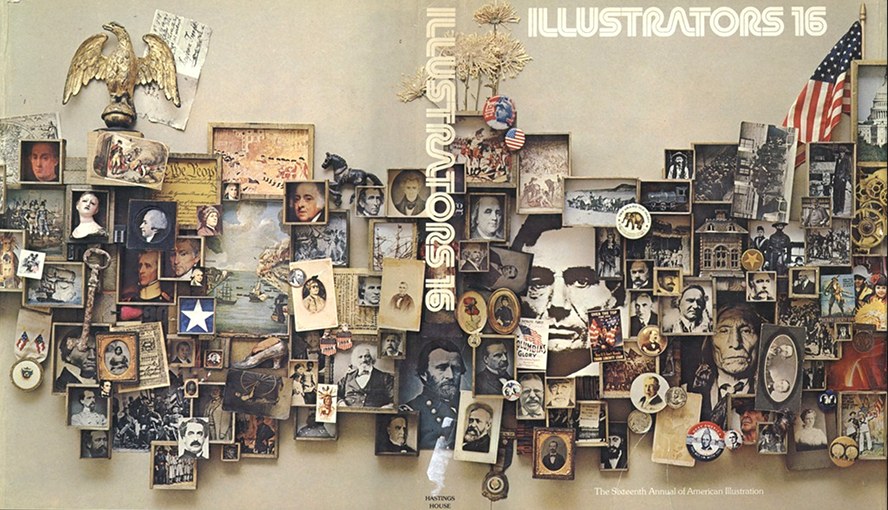
Society of Illustrators 16th Annual ~ cover by F Otnes

Illustrators 16
Society of Illustrators Annual cover by F Otnes, 1974

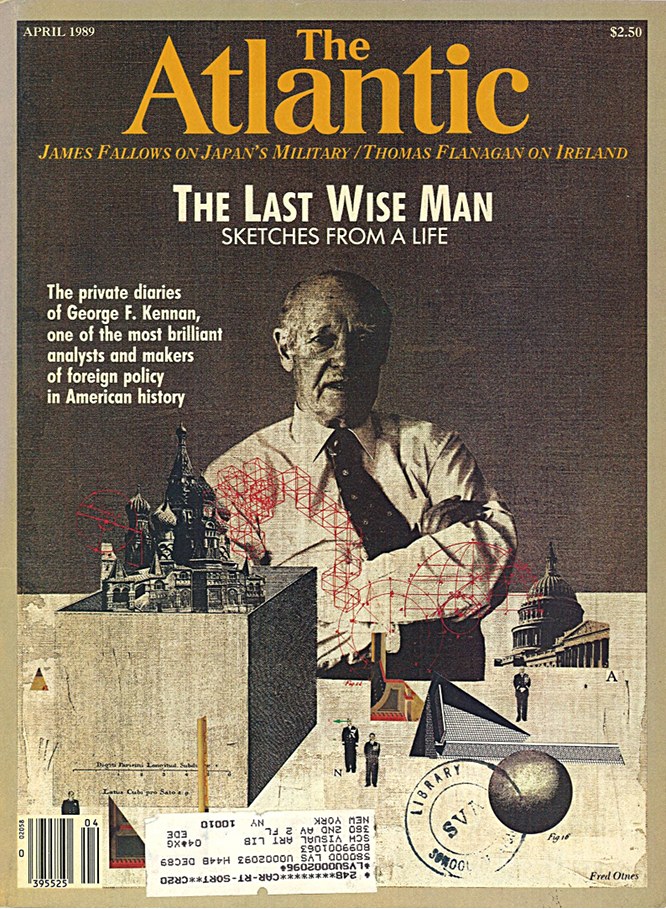
Atlantic cover by Fred Otnes, April, 1989

The Last Wise Man
Atlantic cover by F Otnes, 1989

National Geographic illustration by Fred Otnes

(title unknown)
National Geographic illustration by F Otnes (rights managed)

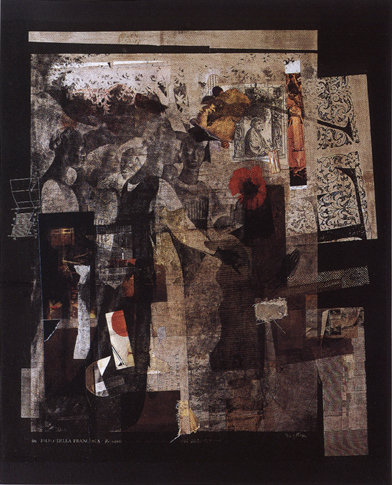
Piero ~ traditional collage by Fred Otnes

Piero
traditional collage by F Otnes, 1994

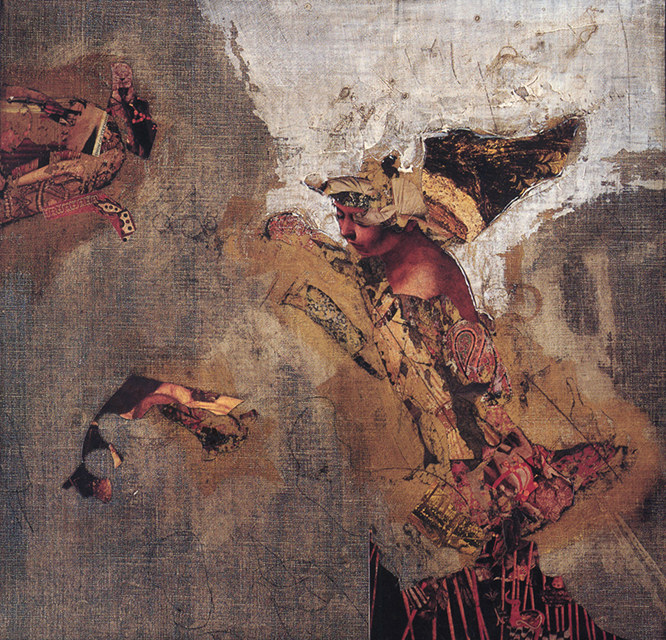
A Tragic Princess ~ collage painting by Fred Otnes

A Tragic Princess
collage painting by F Otnes, date unknown

Liagre ~ Fred Otnes ~ 2002

Liagre
collage painting by F Otnes, 2002

selecting details . .

Thursday, July 16th, 2015

“We do have repeated patterns that arise, in differing ways for different people, every time we create. But how do you get excited by the downturns and turn this into a positive experience?”
— Lyne Marshall

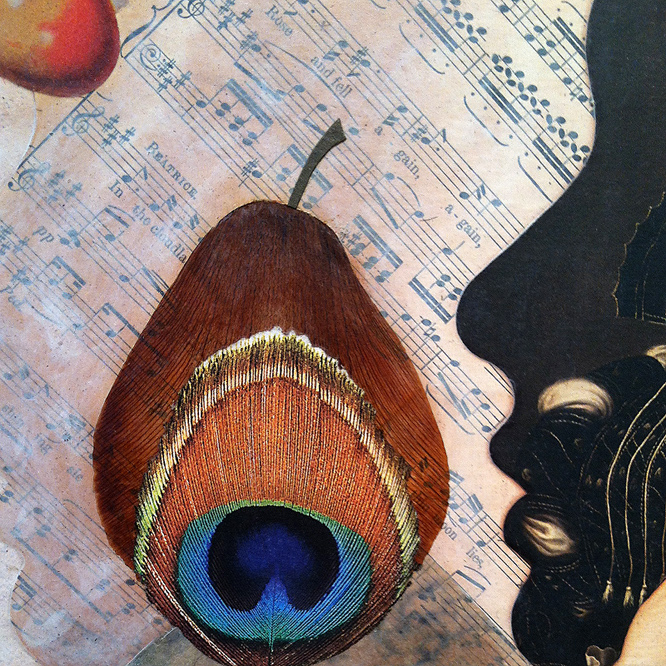
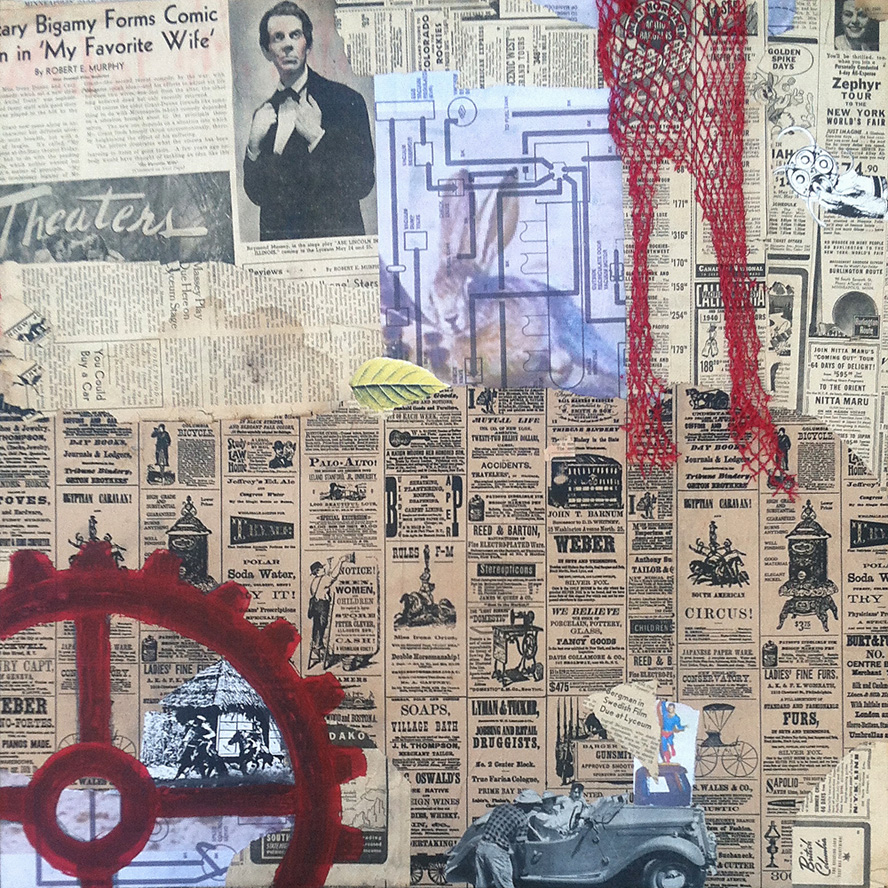
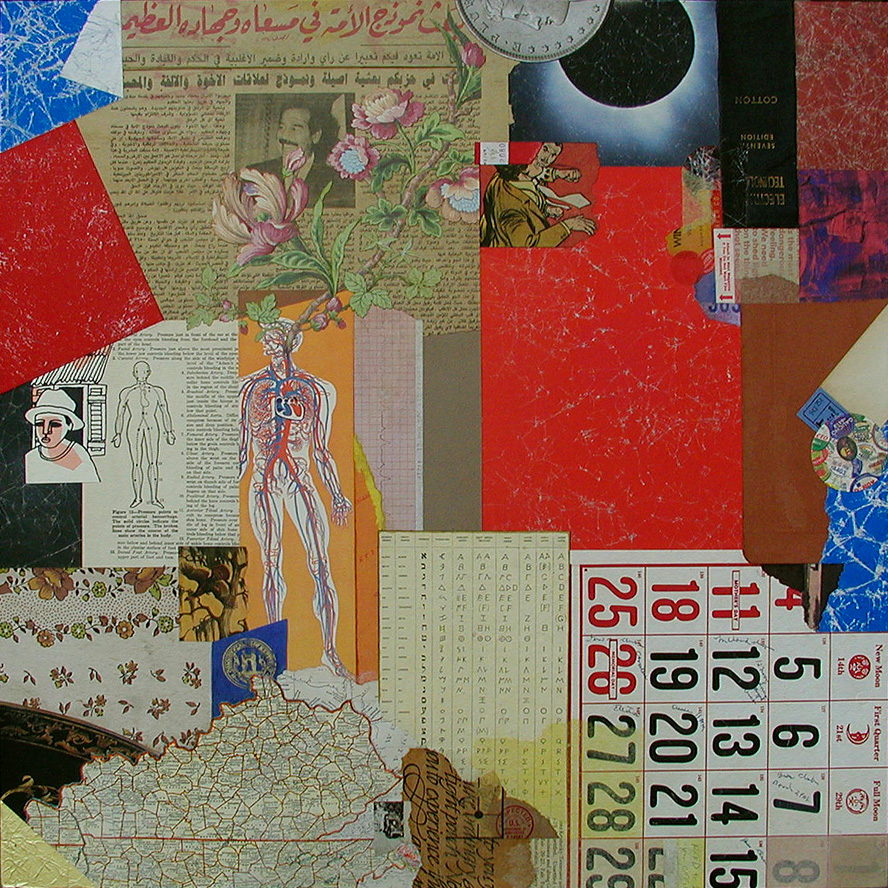
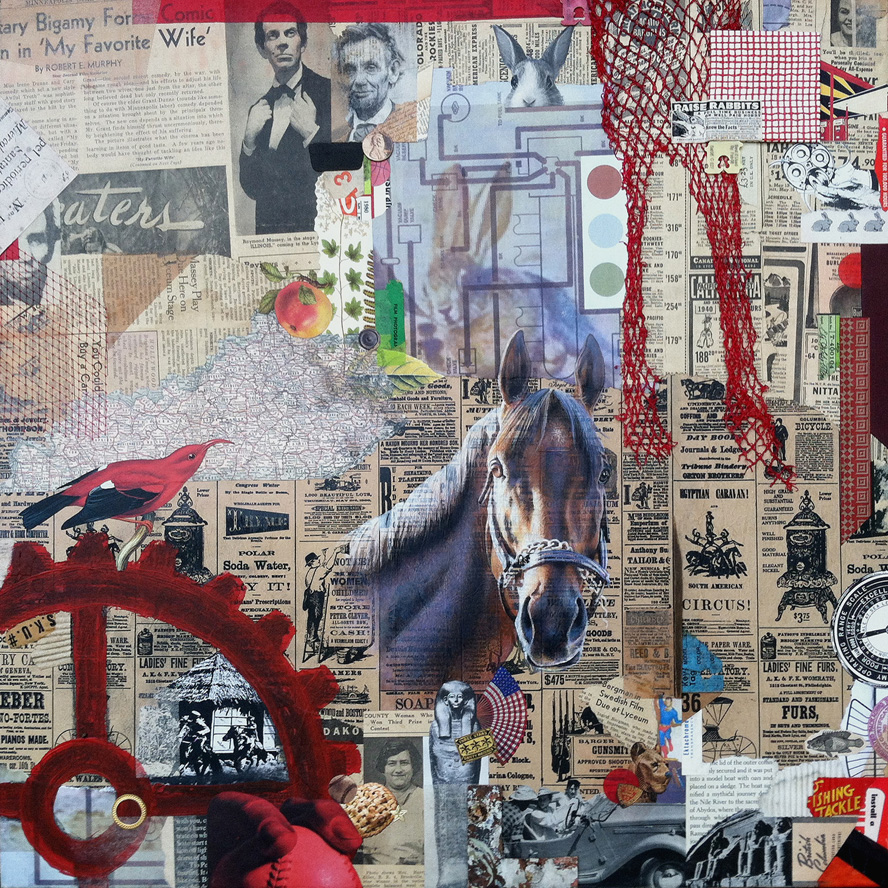
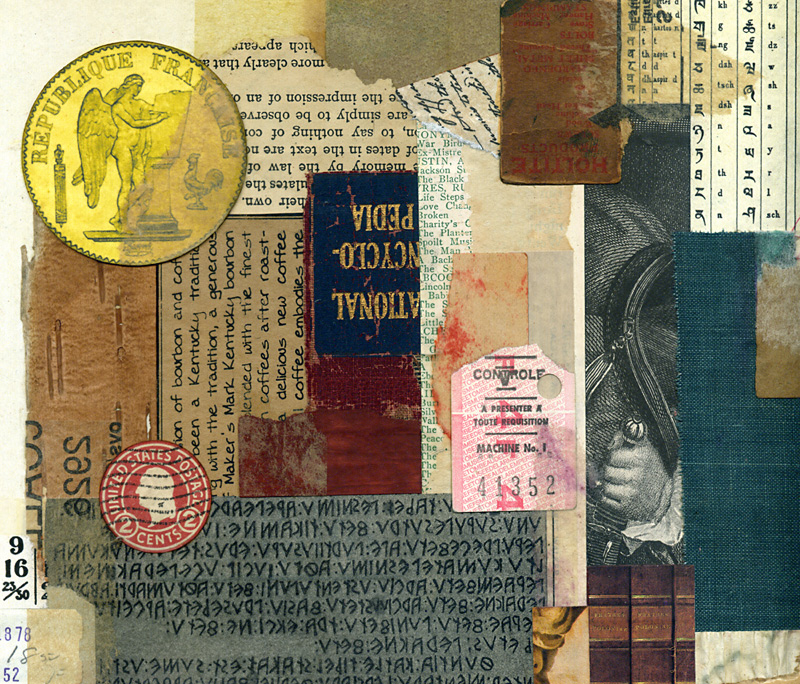
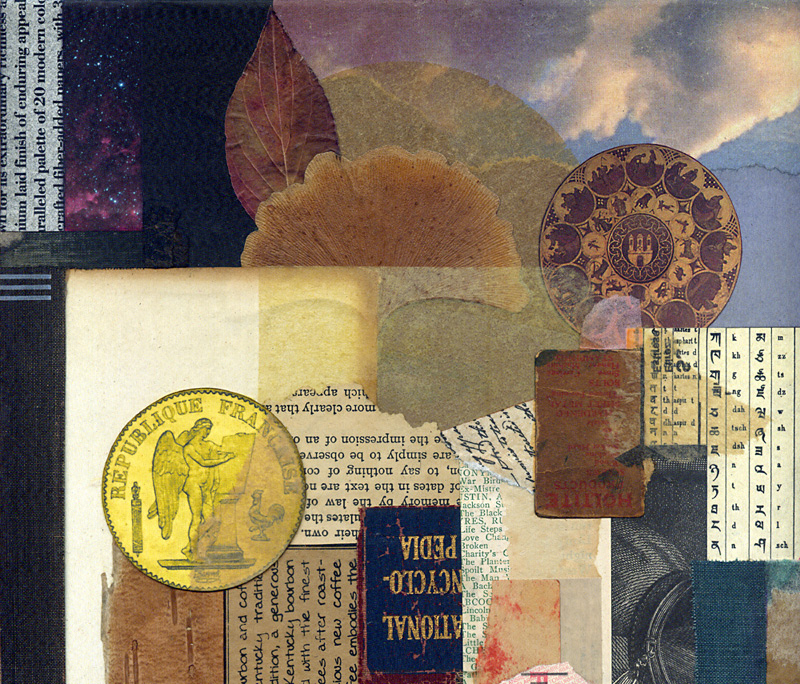
After I finish a larger artwork and its temporary or permanent disposition is settled, I have this tendency to focus on the perceived flaws, the missed opportunities, or that appealing ingredient “left on the cutting room floor.” Diverting my observation to the areas that I prefer, I crop into the design, looking for interesting sub-compositions. I tell myself that I should create spin-off prints or note cards based of a series of details — it must be my built-in bias toward the miniature. In almost every case, I put market-driven notions aside and begin something new. Objective scrutiny usually becomes a catalyst to the creative process. The cycle continues.
 

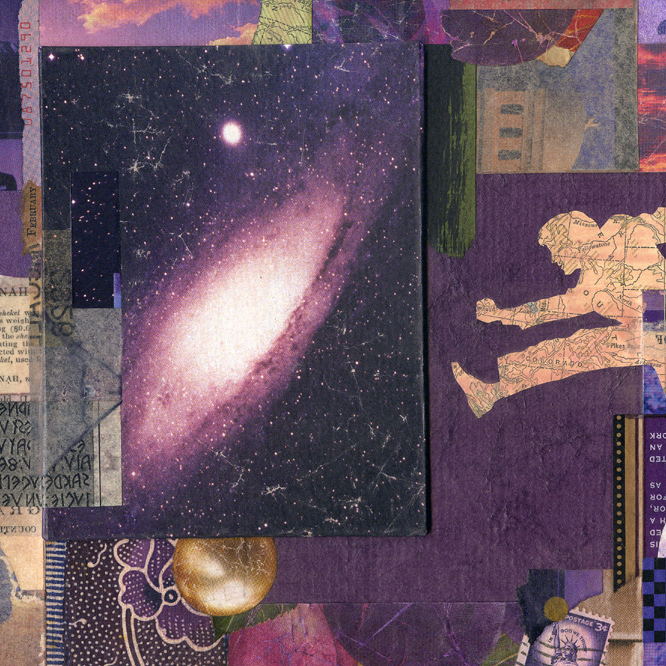
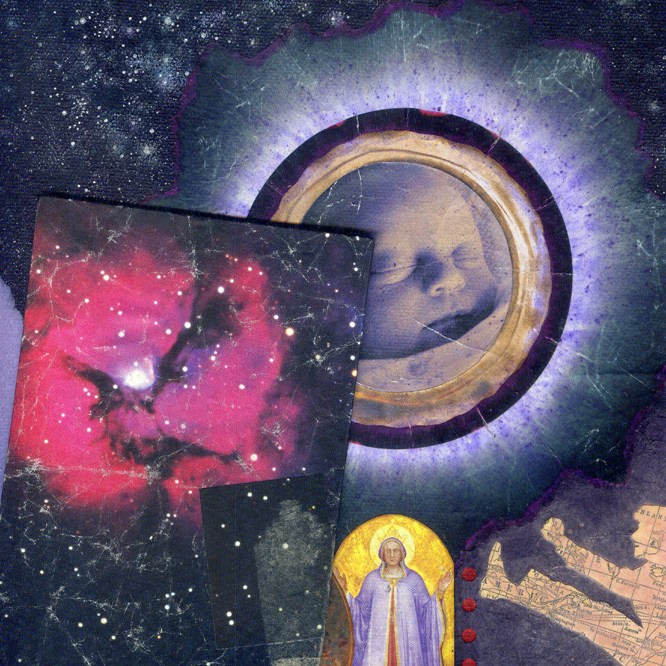
detail from Selective Fusion ~ John Andrew Dixon


detail from Selective Fusion ~ John Andrew Dixon

two details from Selective Fusion
collage on structured panel by J A Dixon

Selective Fusion

Monday, July 13th, 2015

“Schwitters subjected his bits of flotsam to an organizing principle resembling the vertical scaffolding of Analytic Cubism, thus transforming the diverse components into formal elements.”
— Nancy Spector

Color and composition may be the most common denominators of all visual art. Collage, by its nature, relies on a combination of separate, often disparate elements, and those two fundamentals generally play a more prominent role in the finished effect, but that does not make collage essentially a category of abstraction. A minimalist concept built on a provocative juxtaposition or image insertion can be a predominantly figurative or representational approach, even if symbolic or surreal ideas are introduced. On the other hand, collage artworks rooted in the seminal innovations of Kurt Schwitters pay primary tribute to a tradition of abstraction now more than a century old. Of course, the medium had other early pioneers, but it is difficult to imagine the trajectory that collage might have taken without his towering influence. Personally, I have no qualms about continuing to respectfully mine the rich vein of creative ore he helped to expose. Whether it proves to be a nonrenewable resource has yet to be shown.
 

Selective Fusion ~ John Andrew Dixon, collage artist

Selective Fusion
collage on structured panel by J A Dixon
13.375 x 11.75 inches
not for sale

another “trip collage” exercise

Monday, June 29th, 2015

“The absence of limitations is the enemy of art.”
– Orson Welles

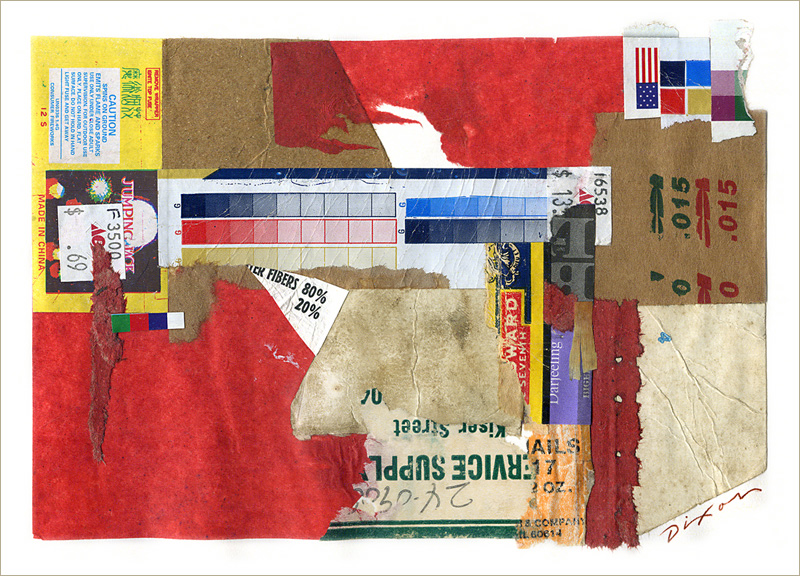
Here is another journal experiment based on ingredient constraints. It has a more abstract emphasis, in contrast to the previous example. There are numerous ways to impose this instructive limitation. Some collage artists have been known to create a composition restricted to the random scraps found on their work surface. Others make it into collaborative play, swapping an envelope of ingredients within which to work. A speed requirement will reveal more aspects of creative decision making and give rise to other insights. Paradoxically, there is no limit to how limitations can unlock the freedom of artistic expression.
 

journal experiment ~ John Andrew Dixon

results of a “trip collage” exercise
journal experiment by J A Dixon
7.25 x 5.25 inches

It’s a trip collage, man . . .

Monday, June 22nd, 2015

“It is the limitation of means that determines style, gives rise to new forms and makes creativity possible.”
– Georges Braque

From the first decision an artist makes when confronting a blank format, available options are eliminated. As contradictory as it may sound, writers, designers, musicians, dancers, visual artists — all of us find fertile ground in restriction. Working within limitations, self-imposed or otherwise, is always at the heart of the creative process. One of my preferred journal experiments is a variation I call the “trip collage.” Mind you, this has absolutely nothing to do with psychotropic escapades. However, I do periodically “expand my consciousness” of the medium with an exercise based on limited ingredients. When on holiday or outside the studio, I produce a small collage only with the elements immediately available at hand. Litter, junk mail, discarded packaging, or the detritus of a particular environment will become the instruments of a miniature orchestration. Even within this constraint, choices about what to use and what to ignore will govern the approach, and the interesting relationship between spontaneity and intuitive judgment can be observed.
 

Journal experiment ~ John Andrew Dixon

results of a “trip collage” exercise
journal experiment by J A Dixon
5.5 x 6.75 inches

more leaps . . .

Monday, June 15th, 2015

“Different themes inevitably require different methods of expression. This does not imply either evolution or progress; it is a matter of following the idea one wants to express and the way in which one wants to express it.”
— Pablo Picasso

The quick sale of Rhetorical Leap was among several factors that would cause me to create a slightly larger piece with similar themes. It was an interesting experience on multiple levels. I had the opportunity to revisit my original intuitive process in a more rational way. It is not for me to judge the relative “success” of either work. I prefer to focus on what it was like to make the journey a second time. Personally, I find the effort to recapture nearly any aspect of life to be a hit-or-miss proposition. For every time one scores the same enjoyment or sense of fulfillment, there is another that falls short of expectations. For this reason, I tend to resist variations on a theme or a defined series when approaching collage artwork. At any rate, that is my tendency, although the practice retains a special appeal that I have no reason to resist. Ideally, one’s entire body of work might be seen by others as an extended series of thematic variations. It is only natural for most observers to put emphasis on the end products, rather than the more obscure goings-on that make up the creative process.
 

detail from Rhetorical Leap ~ John Andrew Dixon  detail from Leap of Faith ~ John Andrew Dixon

left: Rhetorical Leap (detail)
right: Leap of Faith (detail)
two collage artworks on canvas by J A Dixon

White space ain’t a negative thing.

Saturday, May 16th, 2015

“Life is trying things to see if they work.”
– Ray Bradbury

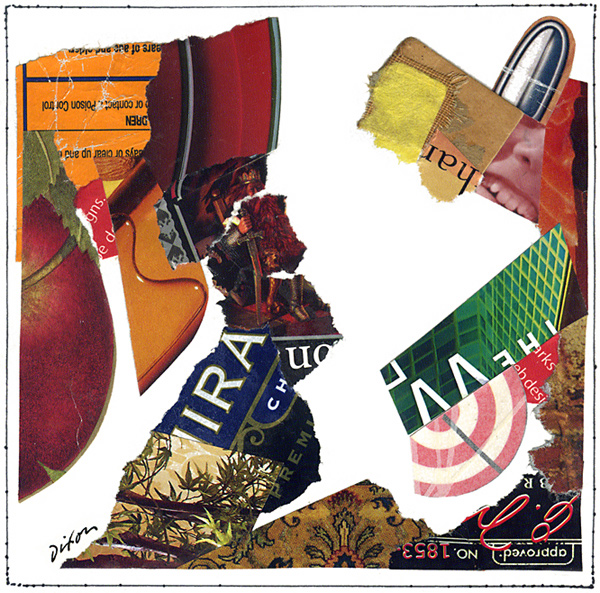
A familiar approach to collage makes use of elements positioned on a field, activating the “white space” with a typical figure/ground relationship. Often the working substrate is carefully selected for inherent visual interest or aesthetic qualities. Like a visage with character, a single piece of “ancient” stock can speak volumes on its own. There are many other ways for “negative space” to play a key part in collage artwork. For me, experimenting with small studies in my journal can suggest a different twist, with the potential for exploitation in a more finished composition.
 

Dixon_Untitled(IRA)

Untitled (IRA)
journal experiment by J A Dixon
4.375 x 4.25 inches

Drawing out the unfulfilled possibility

Saturday, May 2nd, 2015

“I am a great believer in the primacy of drawing as a means of engaging the world and understanding what you’re looking at.”
– Milton Glaser

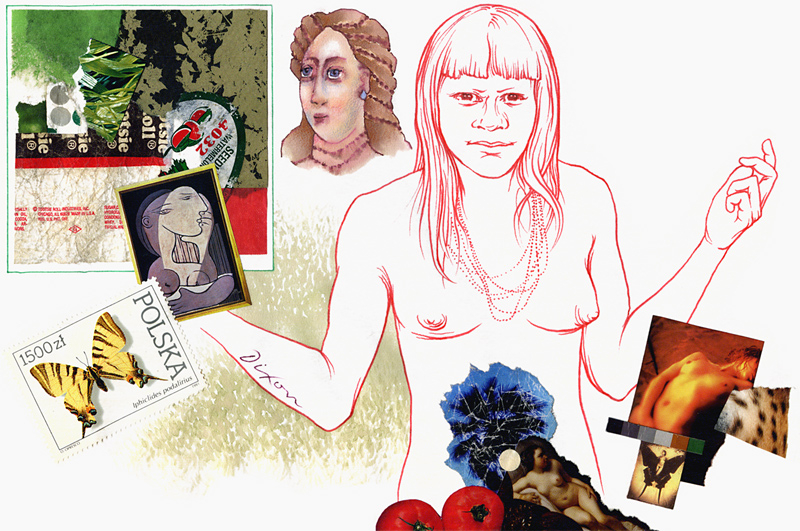
“Why do you make collage artwork when you can draw?” People who broach the subject rarely come at it quite so directly, but even if they did, the question would not be any easier to answer. To begin with, I do indeed draw, and have since the dawn of memory, and I bring that ability to my work as an illustrator, portrait artist, watercolorist, and wood engraver. My enthusiasm for collage is rooted in something else — an impulse not entirely clear to me. I am grateful for all my talents, but I was educated and trained as a designer, and the practice has done more than enable me to create a life as an independent creative professional. It has become embedded in my consciousness. Decades of visual decisions have informed my responsive intuition. Collage is part design experimentation, part painterly expression, part artisanship, and part meditation. It is always a probing beyond expectations, an exploration of potentials, a harnessing of associations in flux. It can be the result of self assignment, but the most exciting effects often grow out of ritual. For me, it is never disconnected from what is taking form in my current journal. Not true artist’s sketchbooks (much as I have always hope they would evolve toward), they inevitably become a record of verbal and visual thoughts or non-thoughts. Some of my journal experiments combine techniques and mediums in ways that have not yet found manifestation outside their covers. Perhaps some day the question will be: “Why do you also draw in your collage artwork?”
 

Untitled (necklace) ~ another journal experiment by J A Dixon

Untitled (necklace)
journal experiment by J A Dixon
9.5 x 6.25 inches

Bull’s-eye Nosegay

Wednesday, February 11th, 2015

“To get to be somebody who gets to love what they do for a living, that’s so rare, and so there must be some kind of price you have to pay.”
— Ethan Hawke

The Target Practice Project shows no signs of winding down. Two of the vintage targets from L T Holmes were still in my possession, so I started another piece last summer. It had a stubborn inertia of its own that repeatedly would cause me to set it aside until the next phase came into focus. It’s funny how a certain artistic progression can have “a mind of its own,” so to speak, and others can fall into place like clockwork. One of the things I appreciate most about collage is getting into an effortless “flow,” but there is something to be said about having to dig deeper to pull the solution from a more difficult effort. In those situations, a different kind of fulfillment is the reward — the sense that I have pushed by craft to a new level. It may not seem as joyful, but I feel just as fortunate to be involved in something I love to do. And it makes me stop and think that perhaps, when that easier process is flowing, it could be the exact moment to mix it up, take a risk, lose my footing, defy the comfort, and pay the price.

Bull’s-eye Nosegay ~ J A Dixon

Bull’s-eye Nosegay
mixed-media collage on framed panel
vintage target from L T Holmes
17 x 17 inches, currently not for sale
featured at The Target Practice Project

A universal antidote . . .

Saturday, January 17th, 2015

“Self-consciousness is the enemy of all art, be it
acting, writing, painting, or living itself, which is
the greatest art of all.”
— Ray Bradbury

I was honored, but also thrilled, to accept my third invitation for the “New Year New Art” exhibition at our local Community Arts Center, one of the outstanding cultural institutions in Central Kentucky. The extraordinary thing about this annual show is a freedom to display, The Barretts ~ a portrait by John Andrew Dixonwithout juried appraisal, one or two pieces for which one has passion. The only restriction is that the work not be over four months old. I decided to create something around the holidays specifically for the opportunity, and, because I had just completed a difficult portrait commission in watercolor and pencil, a more personal form of expression was a welcome idea. I had used an illustrative, “news-magazine-cover” style that always has had great appeal to me, but that over the years has challenged my self confidence and repeatedly has put my perfectionist tendencies to a stress test. Fortunately, I have discovered a universal antidote for all that — collage.

For the January exhibition I wanted to do something fresh, to surprise myself, but also, as most artists prefer, to create something that would please others, that would excite an individual’s subjective response. Mixed-media collage is a medium that people find both provocative and delightful, and to which I am strongly committed, but that should be no surprise to anyone who follows this site. As a working designer and graphic artist, I return to collage on a nearly daily basis as fuel for my creative life and a potent solvent for that side of myself which continually flirts with self doubt if something might not turn out exactly as I imagine it should. All that nonsense fades away when I incite the spontaneity of this magnificent medium.

Of course, I remain captivated by the ability to make something of value from material that otherwise would be thrown away or recycled. I enjoy creating artwork that has bold visual appeal from across a room, but that also provides a depth of interest at close observation, with many stimulating details within an intimate viewing distance. “Matthew’s Touchonic Lodge” is primarily an abstract composition, and I salute two collage artists whose work I admire with my title and embedded allusions. “Apparition Rising” uses ingredients that are more whimsical, but perhaps slightly “spooky” at the same time. A phrase from a song that I like sparked the genesis of its assembly. Both are significantly larger than my typical miniature, more dimensional than a standard flat surface, and, as with all my designs, I worked intuitively with color, contrast, and the activation of space. In addition, I continue to push the effect of collage as a stand-alone treatment that does not demand the protective glass barrier. Please let me know what you think of these new works.
 

Dixon_TouchonicLodge

Matthew’s Touchonic Lodge
mixed-media collage by J A Dixon
22.5 x 20 inches, December 2014
title source: homage to artists M Rose and C Touchon
Purchase this artwork!

Dixon_ApparitionRising

Apparition Rising
mixed-media collage by J A Dixon
19.5 x 27.5 inches, December 2014
title source: from the song “Ghost Town” by J Brasfield
also available for purchase

On Nostalgia in Collage

Thursday, December 11th, 2014

“ . . . what I am hoping to do is discover if it is possible to separate nostalgia and collage art, or determine whether the two are inextricably entwined.”
— Joel Lambeth

In a blog entry last month, collage artist Joel Lambeth asked the challenging question, “Is collage inherently nostalgic?” It is one of the more provocative pieces about our medium that I have read this year, although a bit wordy in places. Admittedly, most working collage artists like us who maintain blogs that purport to be more than an online portfolio are not the finest writers alive, and I salute him for not choosing to approach the topic in a superficial way. Nevertheless, it is always risky to generalize about anything, but Lambeth cuts deeply into the subject to probe the history and heart of collage as an art form, and he manages to avoid a semantic discourse on the definition of the word “nostalgia.” His thoughtful viewpoints have sparked a desire on my part to weigh in (with what also may prove to be an entry more verbose than usual).

The groundbreaker Max Ernst worked with vintage engravings, perhaps to emphasize his anti-traditionalist intentions.a Joseph Cornell aviary assemblage He influenced Joseph Cornell, who captured feelings of personal nostalgia with innovative effects that were as cutting-edge as they were fixated on musings about the past. When analyzing collage artwork with respect to the idea of nostalgia, we must take into consideration the artist’s motivation in addition to the overall character of the medium. When I look at current examples from the daily waves of creative output, it is clear that nostalgia in collage plays out along a spectrum or continuum like nearly every other feature of the process, whether it be minimalism/maximalism, realism/surrealism, or representation/abstraction.

It is surprising to me how many contemporary collage artists work exclusively with old ingredients, but that does not mean necessarily that their agenda is merely to traffic in sentimentality. Sara Caswell-Pearce and Nancy Gene Armstrong are among those who appear to harness nostalgia as a conscious objective in their work while achieving a broad balance of artistic creativity. Many collage artists, such as Carolina Chocron, Nikki Soppelsa, Ross Carron, Fred Litch, Laura Collins, and Frank Voigt are more apt to generate nostalgic tones as a byproduct of incorporating vintage ingredients into strong compositions. Only these individuals could clarify to what degree they actively try to convey impressions of an era gone by. The versatile Zach Collins and Randel Plowman, although they frequently work with obviously old paper, both seem to be engaged in ongoing visual investigations more primary than any sense of nostalgia embedded in their finished works.

Lambeth compares the nostalgic impulse to the process of collage itself and concludes by suggesting “that at a very base level collage and nostalgia have more in common than they do separating them.” He acknowledges the contemporary effort to transcend the inherent bias that the medium may have toward nostalgia. Perhaps he, Marc Deb, Launa Romoff, Andrew Lundwall, Teri Dryden, and numerous other artists are making the push beyond any fundamental nostalgic essence. If so, collage, after more than a hundred years, is cycling back to its roots, when Kurt Schwitters, who always considered himself a painter, became convinced that the pasted detritus of his environment was equally as legitimate as a brushstroke of oily pigment.
 

Midnight Gambol: Or Why The Bees Slept In Every Morning
mixed-media collage by Sara Caswell-Pearce

A Boy and a Swan
collage by Nancy Gene Armstrong

descosiendo el cuadrilátero
collage by Carolina Chocron

Napoleon shows his hand
collage by Nikki Soppelsa

untitled
collage by Fred Litch

Nubecula Cum Ovi
collage by Ross Carron

Jump
collage by Laura Collins

untitled
collage by Frank Voigt

141zc14
collage on wood panel by Zach Collins

August Night
collage by Randel Plowman

Ripping It Up
collage by Joel Lambeth

Imperfect Parallels
collage by Marc Deb

the parrot (detail)
mixed-media collage by Launa D Romoff

Substance
mixed-media collage by Andrew Lundwall

9 Lives
mixed-media collage by Teri Dryden