Archive for the ‘Links’ Category

Cut & Post

Saturday, December 22nd, 2018

The Edinburgh Collage Collective has made a splash in the international collage scene over the past couple years, and it closed out 2018 with its Cut & Post project. The Collective and collage artist Mark Murphy, along with guest jurists, collaborated to select a group of finalists from postcard-based collage artworks submitted from around the world in order to produce a limited edition set of collector cards. Organizers told Kolaj Magazine that they “featured a wide range of submitted works on social media and showcased as many postcard collages as possible, demonstrating the diverse visual responses and interpretations.” According to the publication, “the project joins a list of strategies collage artists are using to curate and disperse collage outside of the gallery exhibition format.” With over 1400 individual pieces of work electronically submitted, the project sponsors admit to being “completely overwhelmed by the response.” There is talk of exploiting the body of accumulated images beyond the original scope of the open submission.

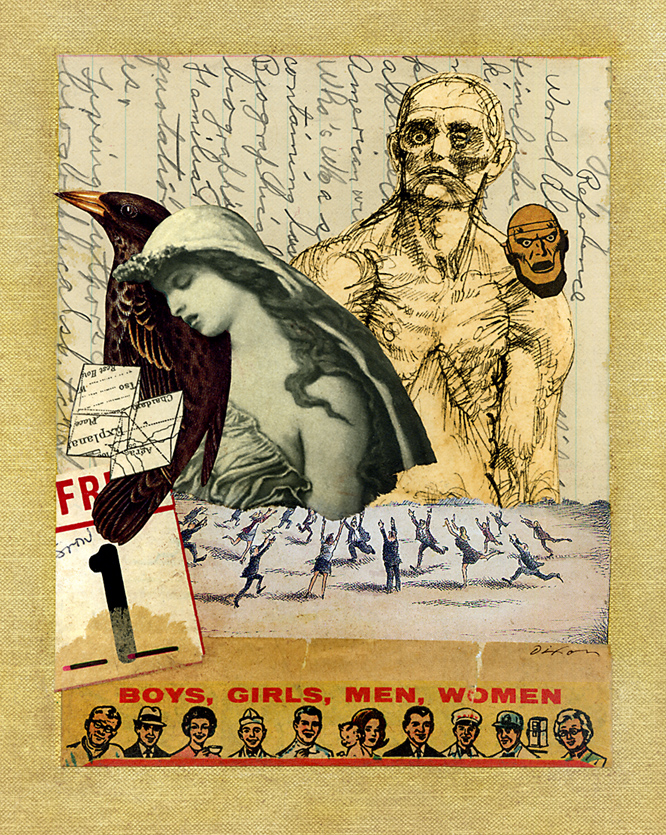
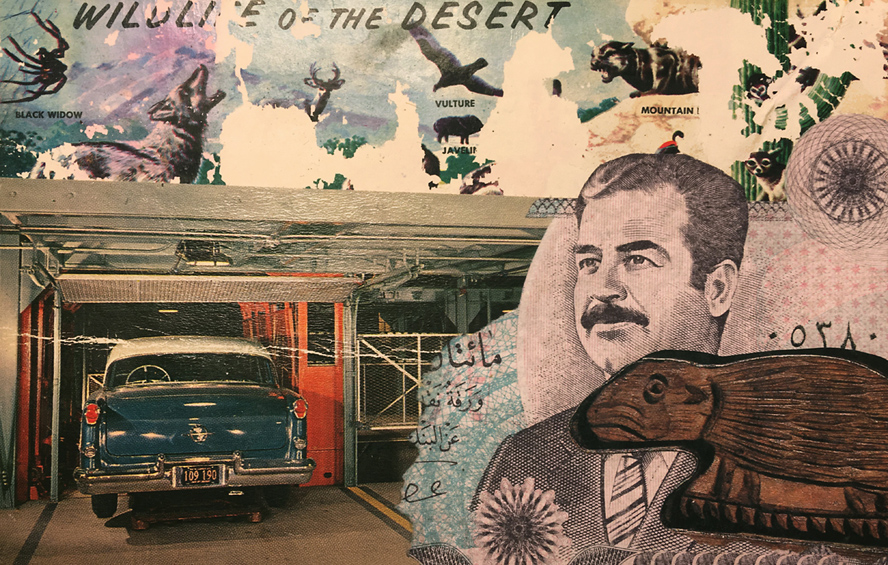
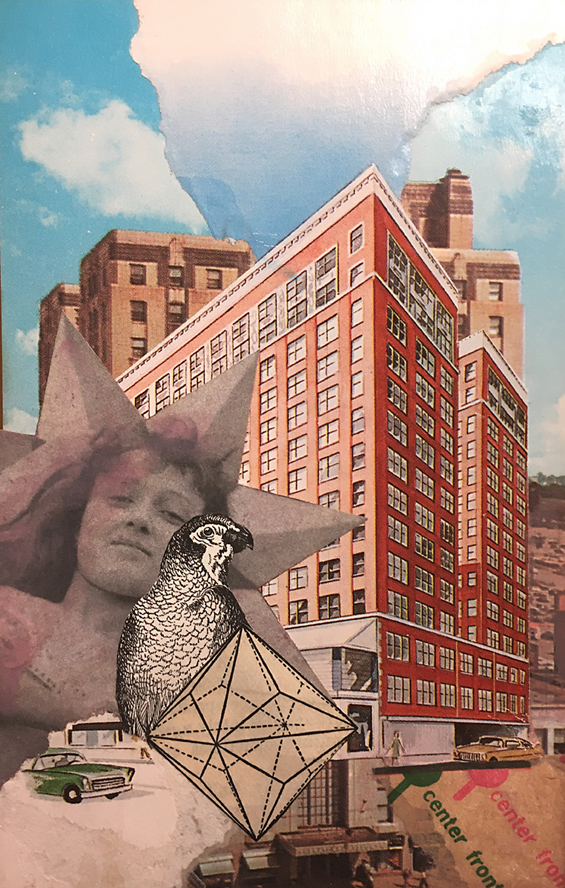
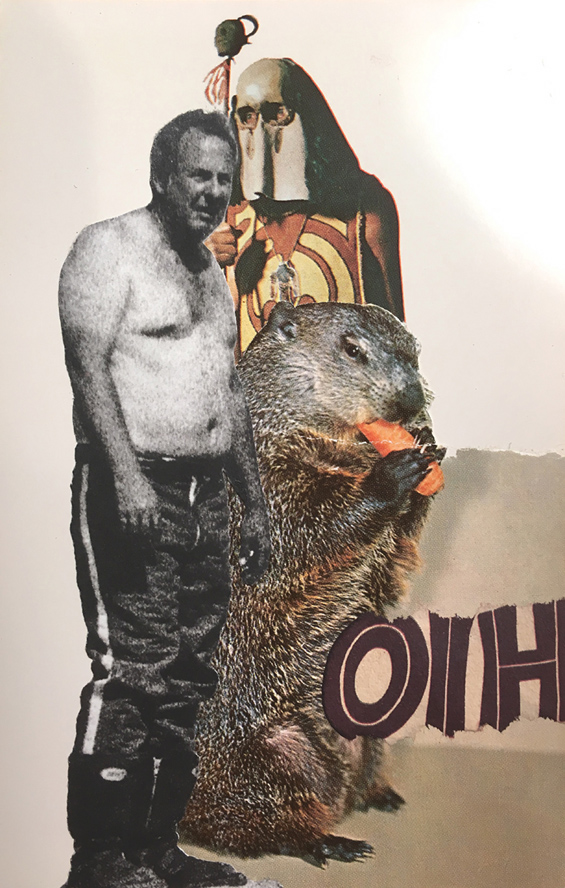
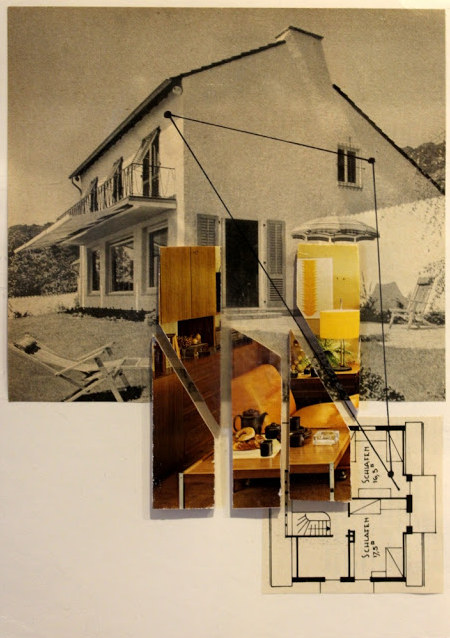
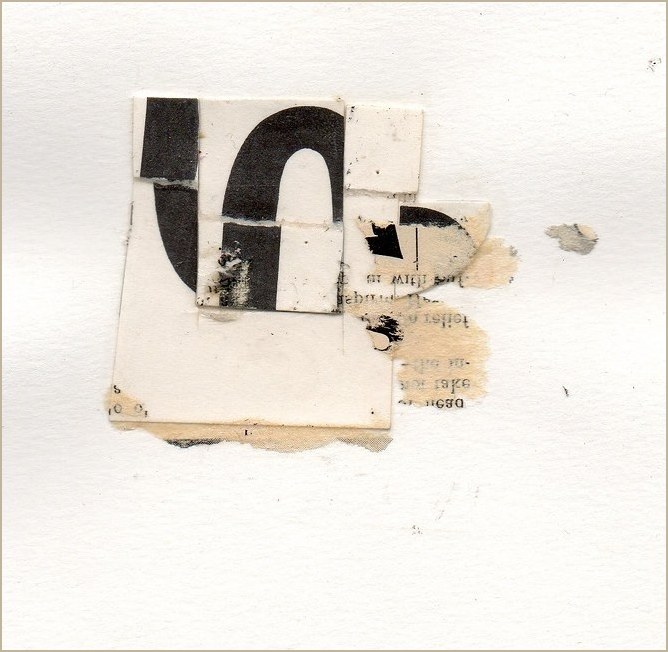
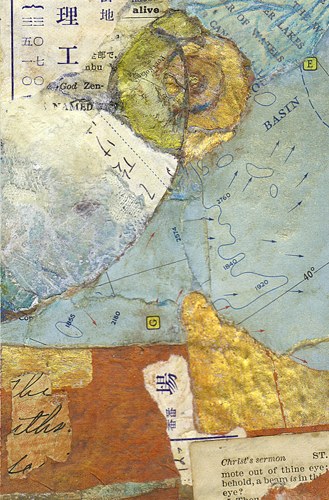
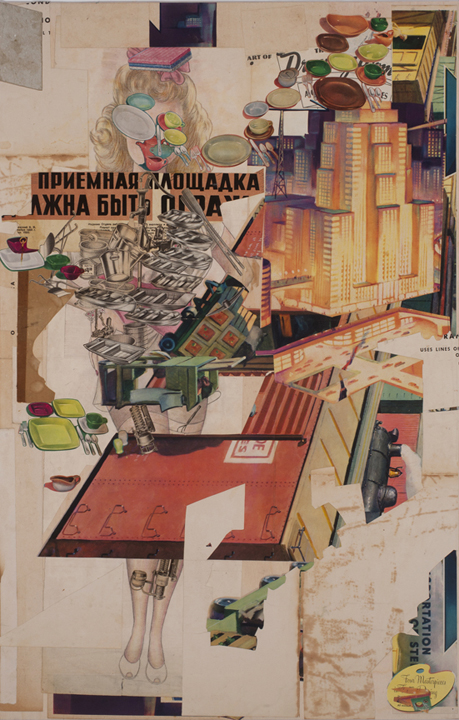
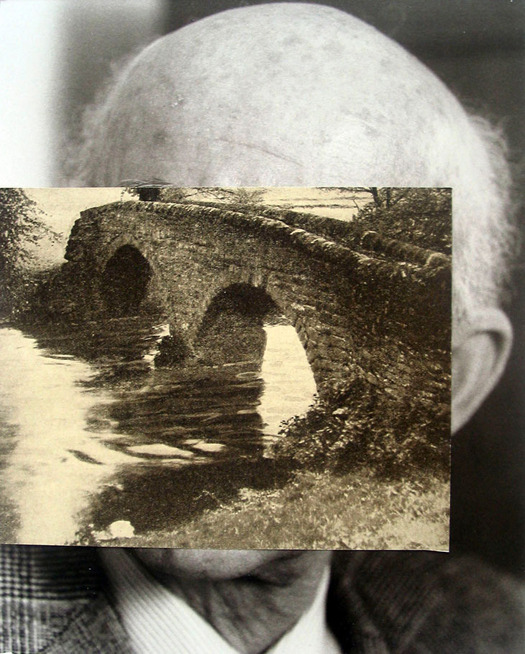
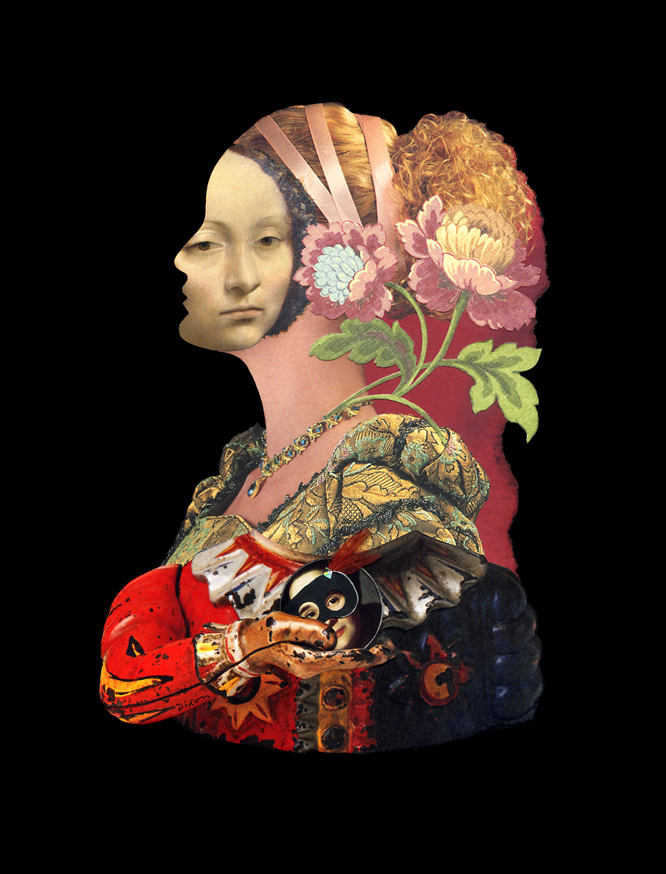
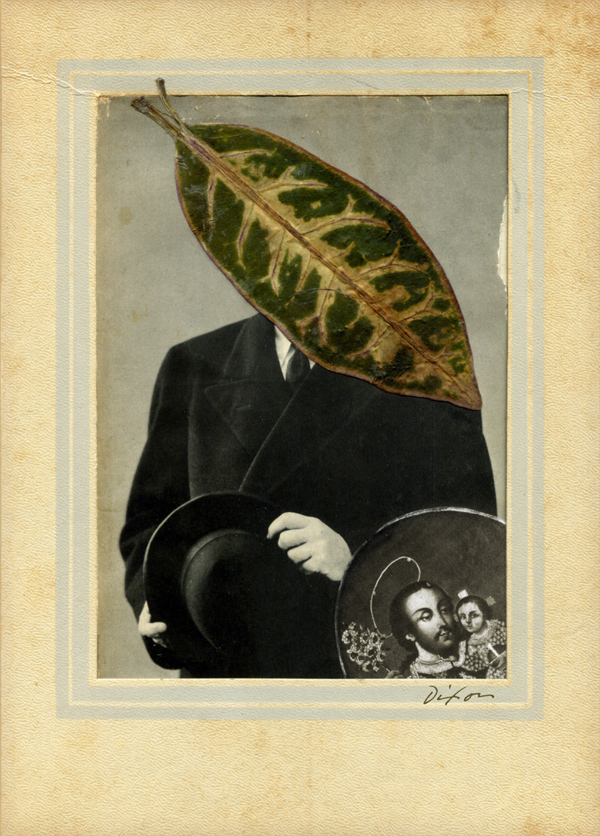
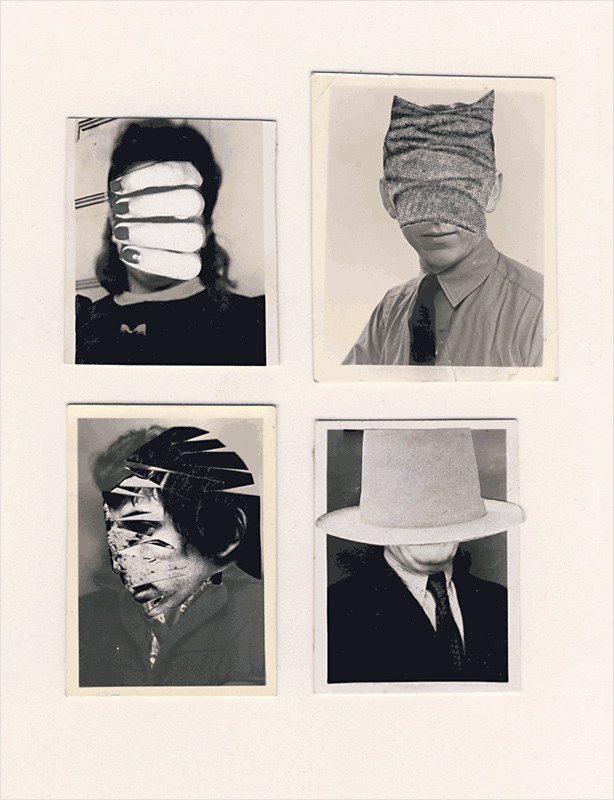
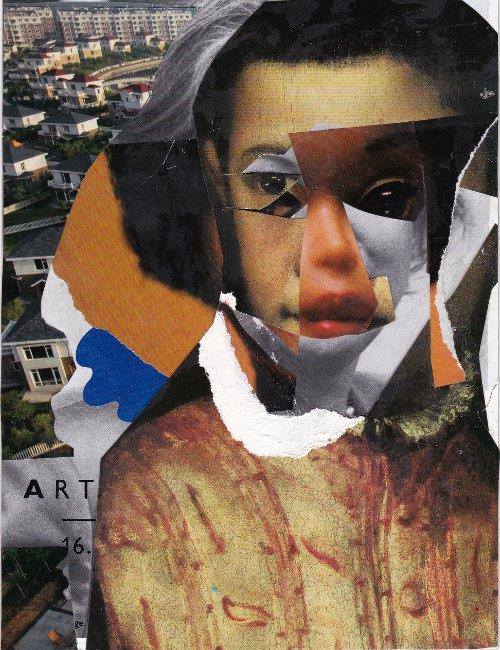
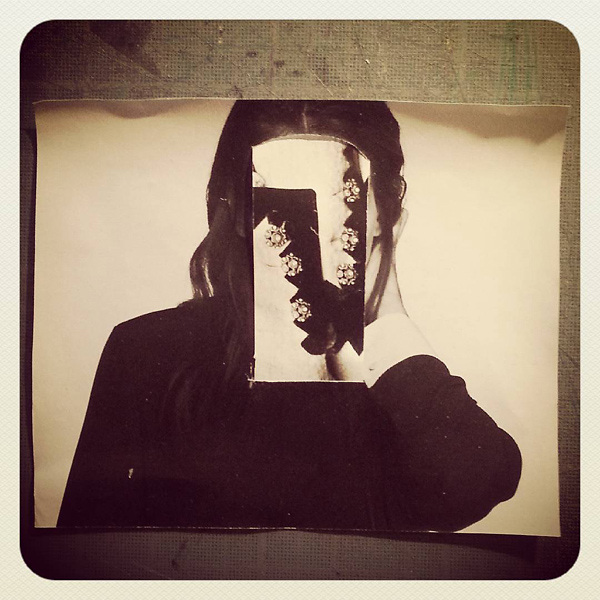
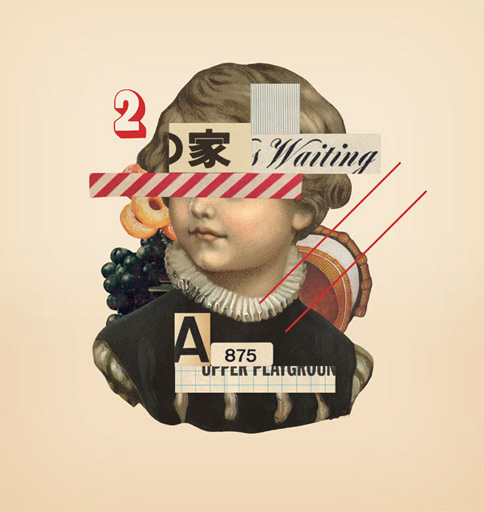
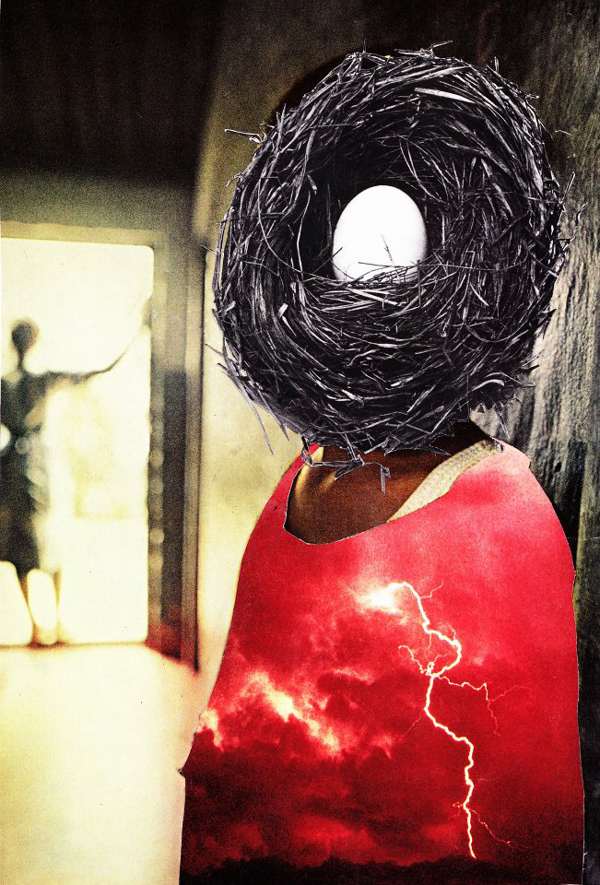
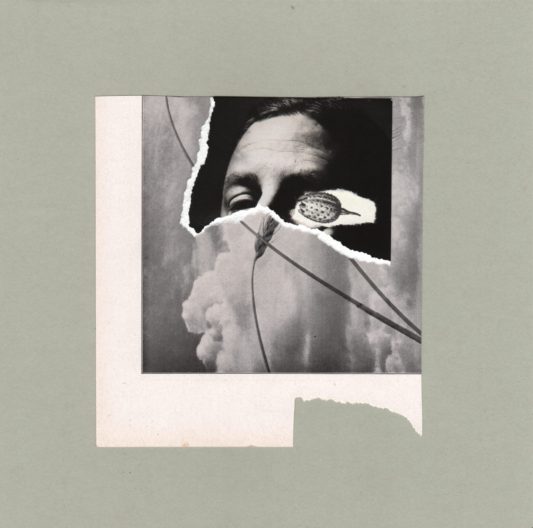
Below are five experimental pieces that I created for the submission. I also included two previous collage artworks with postcard ingredients among the total seven image files that I sent to Edinburgh for consideration, but none of them made the project’s “first cut.” I shall keep my fingers crossed and look ahead to new initiatives from a city shaping up to be a world center for the medium. (More about that next year!)


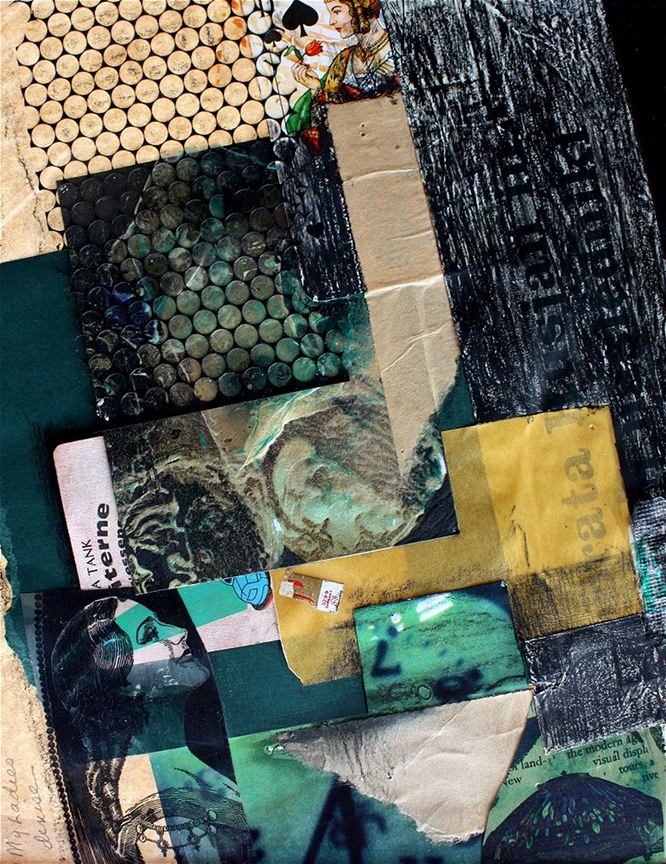
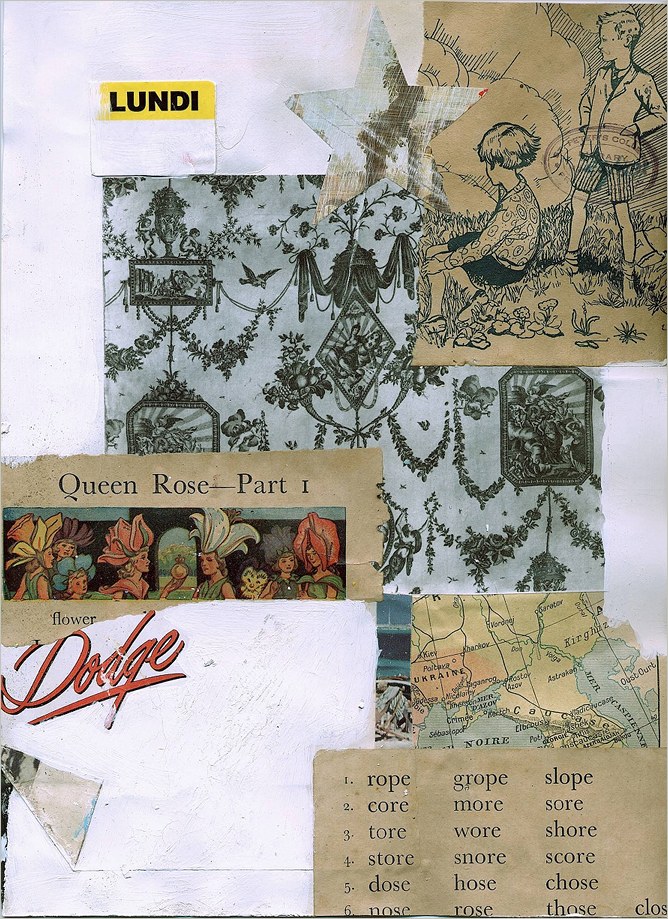
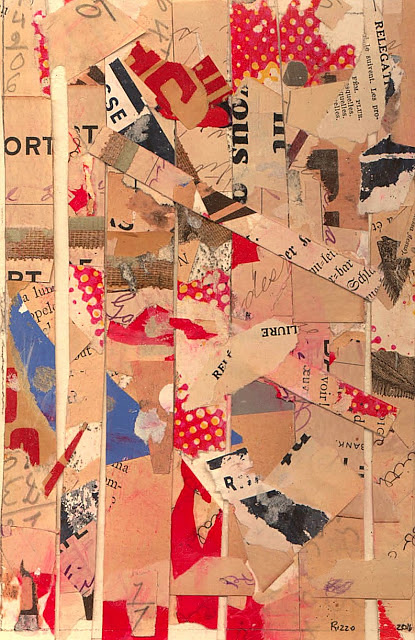
Five experimental post cards that I submitted to the ‘Cut & Post’ project that was based in Edinburgh, Scotland


Various and Sundry Scraps ~ No.2

Saturday, October 6th, 2018

Collage is painting, so Cinta can inform and inspire collage.
Many of us wanted to stow ourselves in Teri’s art-supply case.
I’ve lost count of all the things I admire about Sheldon’s artistry.
Cecil: The “spectacularness” of the harmony of all things.
The opposite of collage — two solid hours of Wesley at work.

My thanks to everyone who created these featured videos.

Worthy of note . . .

Tuesday, September 18th, 2018

Sharing a major announcement in the world of collage and assemblage: The Ontological Museum has undertaken an entire makeover of its online archives. Let all doff their hats to Cecil Touchon!

Beware — connoisseurs of the collage medium can be swept into this magnificent black hole of imagery. Just a few outstanding examples are featured below.

Fellow collage artists, it is up to us to grow and preserve this extraordinary collection. Become a subscribing member!
 

The Sun Always Shines on TV
collage artwork by Cory Peeke, 2010

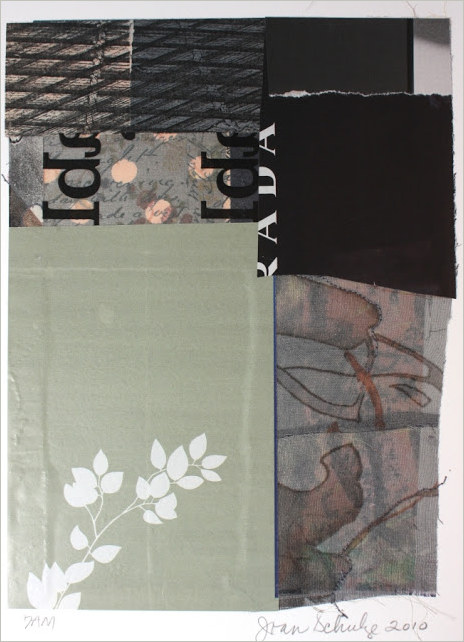
7 am
collage artwork by Joan Schulze, 2010

Ritual 2
mixed-media collage by Svetlana Pesetskaya, 2011

Case #10
small things by Hope Kroll for Fluxcase Micro Museum, 2011

(title unknown)
mixed-media collage on paper by Denise Pitchon, 2012

Queen Rose Score
collage on paper by Matthew Rose, 2012

(title unknown)
collage for Dada Centennial by Bob Rizzo, 2016

Homage to Merzbau
collage artwork by Sabine Remy, 2016

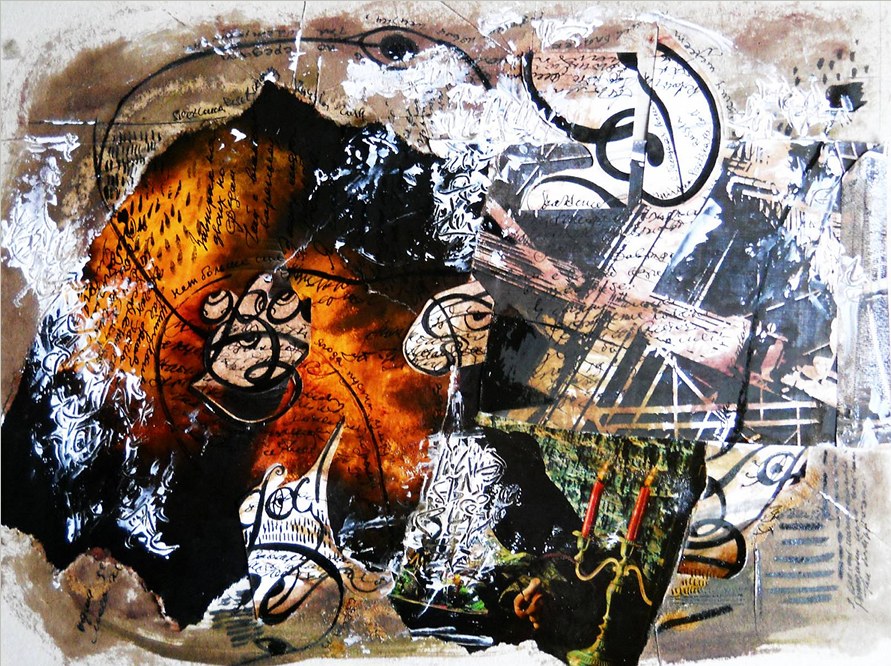
(title unknown)
asemic collage on paper by Jim White, 2018 


(images courtesy of The Ontological Museum)

Various and Sundry Scraps ~ No.1

Thursday, April 26th, 2018

Don’t we all want to be Cecil when we grow up?
There was a time when Merz was deemed degenerate.
Destruction of the Merzbau and the human toll in Hannover.
Kurt Schwitters and his fellow artists in captivity.
How synthetic cubism led to collage as a modern art.

Thanks to The Kurt Schwitters Society for sharing several of these links.

Master of Merz

Saturday, March 17th, 2018

“Schwitters began making collages in 1918 and produced them in large numbers for the remainder of his career. In 1919 he began using the term ‘Merz’ (which originated from the German word ‘Kommerz’, meaning ‘commerce’) to describe his principle of assembling found materials.”
— Louise Hughes
 

Das Kirschbild — a fitting followup for the previous entry on abstraction.

And for those of us who never tire of learning new things about the incomparable Master of Merz:

from the Armitt Museum Collection in the Lake District

from the Tate Britain

from the Guggenheim

from the Sprengel Museum Hannover

 
Merzbild 32 A. Das Kirschbild ~ K Schwitters

Merzbild 32 A. Das Kirschbild
Kurt Schwitters, 1921
The Museum of Modern Art, New York

Top collage artists I never even knew about !!!

Saturday, January 13th, 2018

“I have always tried to exploit the photograph. I use it like color, or as the poet uses the word.”
— Hannah Höch
 

It is always a temptation for a so-called blogger to dangle a “best of” or “top twenty” list to entice a visitor, and, of course, we see this tactic used almost on a daily basis in various fields of art and entertainment. How many of us have gone online and swallowed just such a colorful lure? On the most obvious level, the whole stimulus-response thing is a bit silly, but the potential to learn something new does exist, or to sharpen our own sense of quality, preference, and discernment. Each of us is free to have viewpoints, as long as we recognize them as personal opinions, and avoid casting them about as certitude. Isn’t there enough of that going on these days? (Yes, dear guest, that is merely my perspective.) Cut with the Dada Kitchen Knife through the Last Weimar Beer-Belly Cultural Epoch in Germany ~ Hannah Höch

What does this have to do with collage? Well, I just paid a visit to a page at AnotherMag.com (in response to the aforesaid bait), and I learned for the first time about three collage artists who were new to me, a working artist who purports to ruminate on “all things collage.” In this particular case, there may have been an explicit effort to achieve an overdue gender balance for a post intended to spotlight the Höch retrospective at the Whitechapel Gallery in London, but one could question the absence of Paolozzi, Rauschenberg, Johnson, Hamilton, or Kolář. To not include at least one of these men as a key figure in the history of collage brings no meaningful discredit on any of the artists, but only on the list. (And that, too, is just my opinion).

Nevertheless, I am not ashamed to accentuate the gaps in my collage literacy and to feature three noteworthy female artists: Eileen Agar, Nancy Spero, and Annegret Soltau. Examples of their work should have appeared here long before now.
 

Woman reading ~ Eileen Agar

Woman reading
by Eileen Agar, 1936
Museum of New Zealand

Protagonists ~ Nancy Spero

Protagonists
by Nancy Spero, 1989
disposition unknown

Grima - mit Katze ~ Annegret Soltau

Grima – mit Katze
by Annegret Soltau, from her 1986-97 series
Vero Group Collection, Houston, Texas
Does this have anything to do with collage?

Friday, September 30th, 2016

 
jadixon_waitingfordana
 

Waiting for Dana
combined mediums by J A Dixon
6.5 x 4.875 inches

My honest answer to the title question —
“We won’t know until I finish this post.”

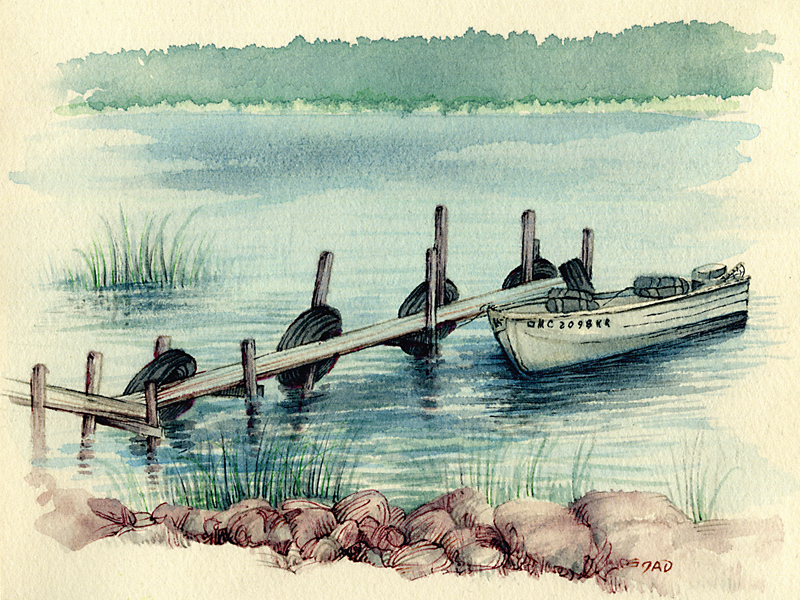
During my annual “fishing retreat” in Les Cheneaux on Lake Huron, I convinced myself to make a small painting for the mate who holds our fort in Kentucky. It disturbed me to confront the idea that I had fallen woefully away from my practice of drawing or painting en plein air, so I found a spot to sit and scraped some rust off my lost habit. If a tradition of plein air collage exists, now or in the past, I so far have not discovered any evidence. One would think that the medium does not lend itself to it, but there is no fundamental reason why collage cannot be executed out of doors, or benefit from direct observation of nature or the built environment. If we are to think as the artists who “invented” it, collage is another variation of painting. And painting, as we know, is not about visual replication, but about capturing what the artist “sees” — in the fullest sense of the word.

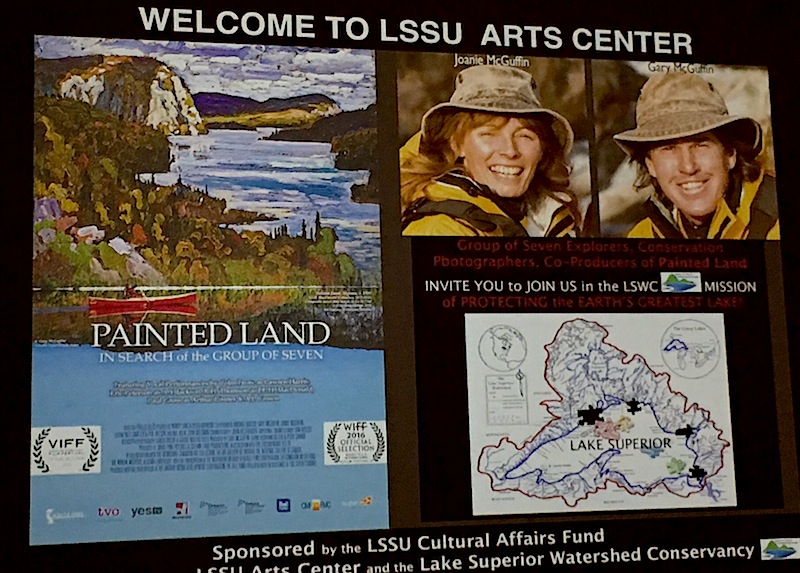
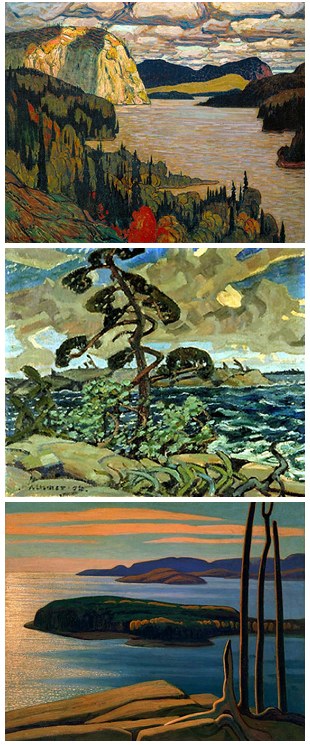
As smiling fortune would have it, I had the opportunity to view a presentation of Painted Land at the Lake Superior State University Arts Center (in nearby Sault Ste. Marie) as a part of my visit to the Upper Peninsula. Proceeds from the screening of the new documentary helped benefit the Lake Superior Watershed Conservancy. The subject of the film is the Group of Seven, the twentieth-century artists who took the Canadian consciousness by storm when they rattled the national establishment with the first widely seen modern-art landscapes. The filmmakers successfully proved that the iconic paintings now revered by Canadians were created by the pioneering artists when they arduously discovered wilderness locations, and were not constructed from imagination, as many had previously believed. On top of that, most of these unspoiled sites in the vicinity of Lake Superior have the potential to remain so, if preserved and protected from development.

The breaking of my plein air dry spell, combined with a heightened awareness of how some of North America’s most daring artists actually made their works, has overwhelmed me with new ideas about ways to invigorate my approach to collage and its relationship to the seen image. I don’t know where these experiences will lead me, but those who follow my journey here no doubt will be the first to find out. Until then, thanks again for visiting.

 
“The most important thing a painter can do is
find a good place to sit.”
– J.E.H. MacDonald


Maximalism and Minimalism in Collage, part 6

Friday, August 26th, 2016

It would not be a mistake to put me in a category dedicated to “maximalism” in collage — the practice of adding more visual elements to achieve a balanced effect, in contrast to restricting a composition to a minimum of ingredients. Not that long ago I discovered the work of two maximalists when I happened upon an old blog post by fellow Kentucky collage artist Sharmon Davidson. I have never met the prolific Davidson, but it pleases me to find her concise survey of collage pioneers juxtaposed with examples of contemporary artists active in the medium. I have a high regard for collage artists who maintain a keen awareness of the history of mixed media. Her own work evokes for me the layerist tradition, and I especially like many of her miniatures. In addition to learning about Sharmon, her 2014 entry introduces me to Lance Letscher, a maximalist’s maximalist who also has been known to explore the spectrum’s opposite side with a minimalist approach. The widely exhibited Letscher is formerly a sculptor.
 

Sharmon Davidson
Her artwork emerges from the interplay of intention and intuition.

Lance Letcher
The spatial density of his designs exemplify a “maximalist” approach.

The Surreal Face, Part Two

Friday, August 5th, 2016

“If we adopt a surrealist viewpoint, art logically must be and naturally will tend to be surrealist, and thus be justifiable only in its ability to reveal the new, the ‘never seen,’ the parallel activity of thought and chance in consciousness.”
— Alan Gullette, 1979

You may recall, dear visitor, my June jaunt at this site into the staying power that “the surreal face” maintains in contemporary collage. I shall highlight a few more examples below. Old Mask II ~ John Stezaker ~ born 1949, Worcester, United KingdomWhen a distinct sub-genre of the medium intrigues me, as this one clearly does, I often attempt to “diagram its visual pedigree” through the history of modern art. This is not an easy task for a non-academic (nor one, perhaps, for a scholar). A “collage geneologist” can run the risk of getting sidetracked into Man Ray or René Magritte, only to question whether use of the word “surreal” is relevant at all. Does it make more sense to trace a connection from Picasso to Tatlin to Hausmann’s 1920 homage to the Russian Constructivist and thereby leap-frog André Breton’s “psychic automatism” entirely? As much as I love the history of collage, all that delineation is beyond the scope of your humble Collage Miniaturist. Pulcinella’s Secret ~ John Andrew DixonAskance ~ John Andrew DixonSuffice it to say that the gongs of Dada still reverberate. Ultimately, we are more concerned with a phenomenon that is alive and well among contemporary collage artists (and that long ago shed any musty trappings of Weimar Republic protest, Trotskyite dilettantism, or hostility toward religion). Even a cursory review of recent collage output exposes an enduring thread weaving its way through students, emerging professionals, veteran practitioners, and masters of the medium. Rather than muddy ourselves grubbing 20th-century roots, let us instead ask two important questions — What is the elusive essence of “the surreal face,” and why does its enduring appeal lack any sign of a downtrend?
 

Isabel Reitemeyer
Her consummate approach convinces me that less indeed can be more.

Robert Hugh Hunt
Fresh, intuitive, culturally aware. Robbo’s art springs from individuality.

Manu Duf
There is never a timid thing about his proficient approach to collage.

Eduardo Recife
The Brazilian illustrator sets a high standard for digital collage.

Erin Case
The Michigan-based artist is rapidly making her mark as a collage pro.

Claudia Pomowski
The versatile graphic artist is a “collage experimentalist.”

Jordana Mirski Fridman
This emerging designer/artist is “exploding” onto the medium.

Julia Lillard
The self-taught Oklahoma artist has nailed “the surreal face.”

Various and Sundry — Four Years and Counting . . .

Friday, July 29th, 2016

“I write because I don’t know what I think until I read what I say.”
— Flannery O’Connor

It looks as though I’m stepping into my fifth year writing about collage at this blogsite, and I hope that you’ve been with me for part of that enjoyable ride.

When I look back at my wish list for Year Four, I realize, not with any surprise, that my appetite for creating collage artwork has eclipsed a sometimes equally strong desire to delve verbally into the many interesting aspects of the medium. I would like to think that I met a few of the writing goals I set for myself last summer, and, of course, my ambitions to add to that list here in this post will be dutifully curbed. At any rate, I think that the best thing to do is to break this entry into a few parts that cover various and sundry topics on my mind.

The Social Network of Collage Artists
• For at least a couple of years I have wanted to write more about the influence of social media. Nearly every day I see a collage artist defeat the potential of a sharing platform with overexposure. Some may disagree and say, “the more, the merrier.” That is not a point I care to debate, because there may be something else to highlight more important than whether or not the quality-vs-quantity consideration can fall to the wayside — the vital role of networking among artists. I am more convinced than ever that the cross-pollination and mutual support of online networks has been of significant benefit to those of us working in the medium. Crystal Neubauer has one of the more interesting blogsites by a collage artist. She touched on the topic of creative communities so well that I direct you to her short essay at ClothPaperScissors.com. Another collage artist I admire who has recently made an impression as a strong blogger is Melinda Tidwell. I like her process-oriented posts. Although more of a mixed-media artist rather than a conventional collage practitioner, the versatile Kathleen O‘Brien maintains a steady flow of what I consider “must-read” entries at her studio blogsite. Create your own list of frequent art-blog destinations and branch out to new sharing platforms (I just learned about some new artist blogs from Caterina Giglio and opened a new account at Instagram.). As the entire evolving array of networking sites weeds out the fads, imitators and clunky interfaces (finding it difficult to tolerate LinkedIn as a user), you will settle into a community of online cohorts who reinforce your daily challenges as a creative person. When you come to know that someone else is on “the same wavelength,” reach out and make contact as an authentic being behind the profile. There are rewards to be discovered!

Cheap Collage Tricks
• Collage artist Allan Bealy seems to be everywhere, but, trust me, he is no gadfly. He recently raised a topic that struck a nerve with many. There are a lot of cheap tricks appearing in the medium, and most of them are harmless, if unimaginative, but the temptation to exploit visual ingredients readily available in our culture to “objectify women” is perhaps the most repugnant. Those of us who believe we are above that sort of thing need to think more deeply about how and why we use nudes in a collage. This suggests another potential self-assignment for my coming year — a “DON’T DO THIS” post illustrating the most prevalent cheap tricks in collage. (Not that there’s anything wrong with replacing a man’s head with a vulture to carry the banner of Dada during the art movement’s centennial year.) To be honest, I have nothing against a cliche, if it “works.” Isn’t that the reason something becomes a cliche in the first place? I say go for the cheap trick if you can score in the highest percentile (anyone who thinks it’s an easy thing to do is mistaken). I hope to post a follow-up look at the endurance of the surreal face in collage, so stay tuned. But let’s get back to Allan’s remonstrance. The woman as sex object can be traced back to long before the rise of Madison Avenue and Larry Flynt. Don’t bite the lure, folks. Everything one needs to dabble in this unworthy stunt abounds. Nevertheless, I long have been fascinated with the exemplars of erotic minimalism and their work in contemporary collage — those who transcend the cheap tricks to achieve a fine-art impression. Add another one to my wish list for Year Five of The Collage Miniaturist.

Priorities Get the Last Word
• My wife, Dana, and I managed to get two tickets to The Seer (a new documentary portrait of Kentuckian Wendell Berry, re-titled “Look & See” for Sundance Institute) before the Lexington screening sold out last night. It is a significant film that will become more widely available into next year, and it has my highest recommendation. Does it have anything to do with collage? Nothing at all, except for everything under the sun. If you haven’t discovered the poet, novelist, essayist, and farmer-philosopher, I have accomplished one meaningful thing with this site by inviting your interest. It was fitting that I got out of the studio and spent time at our farm. It was very hot work up on the shed roof, but pleasant to be away from all the noise (traffic, sirens, and incessant political jousting). Connecting with our rural place offered an opportunity, as it always does, to put priorities back into alignment. There is a place in the documentary when Laura Dunn (the filmmaker in voice-over) explains to Berry her motivation and how she looks “to places where there is still a remnant of togetherness, or unity, or community, of connection to the land, and I study those, because I don’t come from a place — I come from divorce …”
      “We all come from divorce!” her subject interrupts. “This is an age of divorce. Things that belong together have been taken apart. And you can’t put it all back together again. What you can do, is the only thing that you can do. You take two things that ought to be together and you put them together. Two things! Not all things.” It is his metaphor for the creative life, and a tremendously healing admonition to those of us with a tendency to become overwhelmed by the enormity of the world’s chaotic disintegration. Collage artists put things together to make something new, and often we are the ones who have taken apart discarded things to do it, but there is always a much larger phenomenon at work — one of discord vs harmony, mechanism vs intuition, wastefulness vs thrift, cynicism vs affection. When I return to the studio from a natural place that has responded to my care, I am in a better condition to ask myself, “To which side of the big equation are you making your contribution as an artist?”
 

Crystal Neubauer
Her blogging often touches on the complexity of a creative life.

Melinda Tidwell
Perhaps you will admire her solid abstractions as much as I do.

Kathleen O’Brien
Her art always nudges one toward a deeper sense of balance and wholeness.

Robert Hugh Hunt
Stay tuned for a continuation of my review of “the surreal face.”

Bene Rohlmann
Look ahead to my first discussion of erotic minimalism in collage.

Governor’s Derby Exhibit

Saturday, April 23rd, 2016

“The Governor and I are pleased to continue this longstanding tradition of showcasing the finest in Kentucky art.”
– Glenna Bevin, Kentucky’s First Lady
 

Kentucky Sovereign ~ collage collaboration by R H Hunt and J A DixonOne of the most satisfying occurrences of the year so far was to learn that Kentucky Sovereign, my collage collaboration with Robert Hugh Hunt, had been accepted into the 2016 Governor’s Derby Exhibit. The two of us never dreamed that the piece would find its way to the Capitol Rotunda in Frankfort, but there we were, getting to meet the First Lady and explaining our unusual work of art. Hunt’s Mama’s Story also made the cut, the only “traditional” collage in the show (a black and white gem). Needless to say, to have any aspect of my creative life represented in this high-profile exhibition is a distinct pleasure, especially because it’s a part of the Kentucky Arts Council’s 50th Anniversary celebration. The exhibit lasts until May 7.

Robbo and I are already conspiring to initiate a second collaborative project. Visit here again to learn more about it!
 

Dixon_Hunt_Bevin_GDE

Robert Hugh Hunt and I explain our collage collaboration to Glenna Bevin.

Bailey_Bevin_Dixon_Hunt_GDE

From left— painter Brian Bailey, Kentucky’s First Lady, J A Dixon, and R H Hunt.