Archive for the ‘Collage’ Category

By Heaven’s Good Grace

Friday, December 28th, 2012

“Whatever an artist’s personal feelings are, as soon as an artist fills a certain area on the canvas or circumscribes it, he becomes historical. He acts from or upon other artists.”
— Willem De Kooning

“You can never see too many things in a work of art. Itself, the work is a means for discovering what is already within us. The true work of art is more than its creator; it is always beyond him; soon it enters another orbit not his, because the artist changes, he dies, while the work lives in others.”
— Michel Seuphor

As I look back on six months of producing this site, I recognize that there are probably only a handful of people who currently pay a visit. To those of you who do, please accept a sincere tip of the hat. I hope that you find my periodic entries to be stimuli worthy of your time. Perhaps 2013 will bring a wider audience.

Collage is a distinctively collaborative medium, at times directly, but always indirectly. We are continuously interacting with those responsible for the ingredients we value enough to incorporate into a work. They might include one of the finest masters of the brush, an outstanding photographer, a bull-pen illustrator, an obscure commercial artist, or an anonymous shipping-carton keyliner. All that matters is this: Each has in some way caught hold of our eye, mind, or heart. Each has become an influence and unwitting contributor. For reasons not entirely clear, some of us attempt to have a more active effect on the state of our art by regularly making words, too. Allow me to bring a few stimulating blogs to your attention, if you haven’t already discovered them—

matthew rose studio
kathleen o’brien studio
a collage a day
daily collage project
with scissors by hand
paper with a past
every day should be a red letter day
lynn whipple’s blog
janice mcdonald collage art studio
four corners design
the altered page
collage clearinghouse


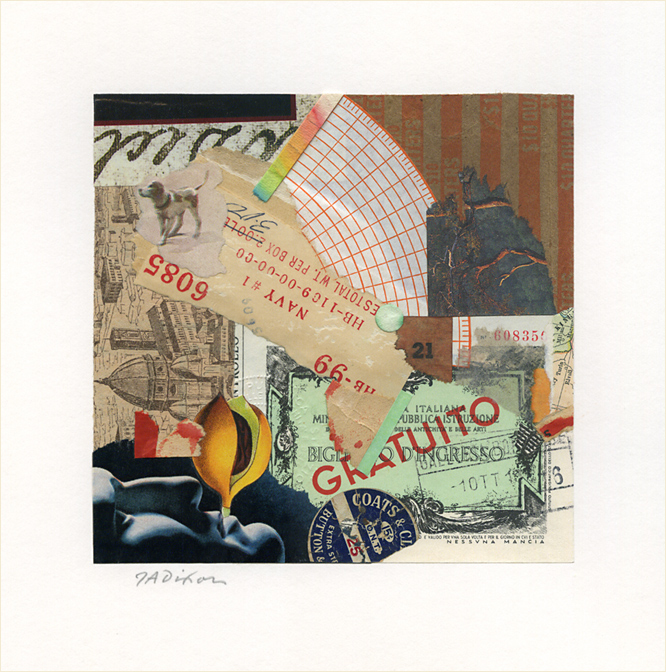
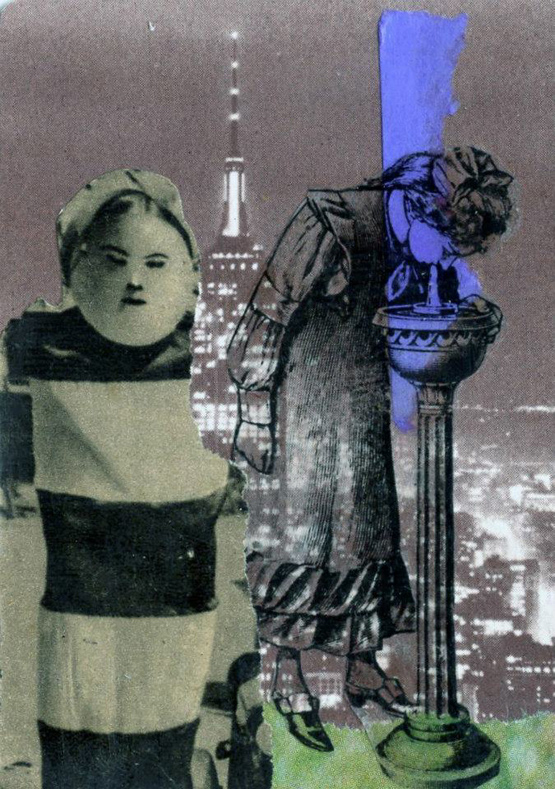
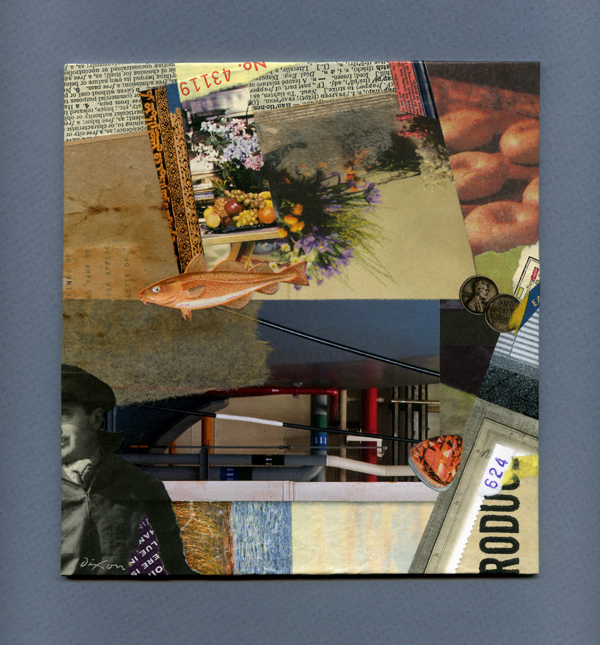
By Heaven’s Good Grace ~ J A Dixon

By Heaven’s Good Grace
collage miniature by J A Dixon
5 x 5 inches
 
Purchase this artwork!

Merry Merry !

Tuesday, December 25th, 2012


Tannenbaumbastic by J A Dixon

Tannenbaumbastic
collage miniature by J A Dixon

Blue Cracker Jacket

Wednesday, December 12th, 2012

“People often say that motivation doesn’t last. Well, neither does bathing and that’s why we recommend it daily.”
— Zig Ziglar   ( 1926–2012 ~ R I P )

I occasionally create, as a motivational exercise, a collage-miniature-as-greeting-card with no thought for who will eventually receive it, the opposite of making one by reflection on a particular soul. I cannot help but think that the intended individual is somehow— at a level hidden from outer consciousness and in a way we do not yet understand —part of the creative process. This is not unlike when people discover an unclaimed artwork and respond to it with the forceful conviction that it was produced specifically for them.
 

Blue Cracker Jacket by J A Dixon

Blue Cracker Jacket
collage miniature by J A Dixon
4.5 x 3.75 inches, not for sale

Broken Qualifications

Sunday, December 9th, 2012

“Any true artist is putting down the most accurate formula he can for what he perceives … The truth is the truth and you don’t want to change it to make it more palatable to reach more people.”
— Robert Motherwell

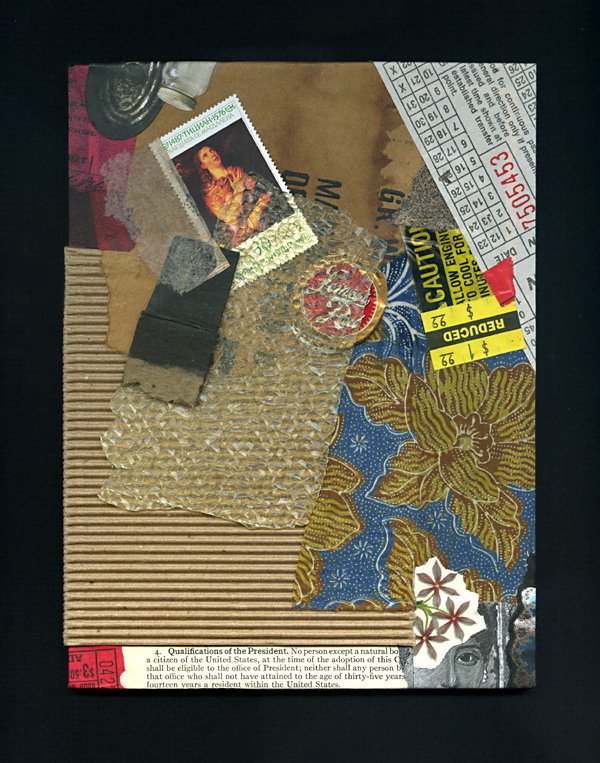
I frequently make reference to figures who have made their mark on art history, but I also find the work of my collage contemporaries very stimulating. An astonishing number of artists are exploring this vibrant medium who remain true to a keen perception that is beyond an art-buying public looking for familiar effects. This is nothing new, and presents a problem only for those who attempt to gain wide popularity. Occasionally, I am lured by a collage that has made a clear stab at shock, irony, or absurdity. These evocative goals, or some level of social commentary, are worthy objectives for collage as an art form (for which it can be strongly suited). They are among the different approaches to an orientation that Laura T Holmes refers to as “intentional design.” At any rate, I will usually set aside admiration for a conceptual process and re-focus on the visual aesthetics that continuously capture my interest: color, shape, texture, depth, rhythm, resonance, counterpoint, and compositional harmony. So much the better if layers of symbolic meaning emerge, and an observer brings his or her individual responses to the finished result.
 

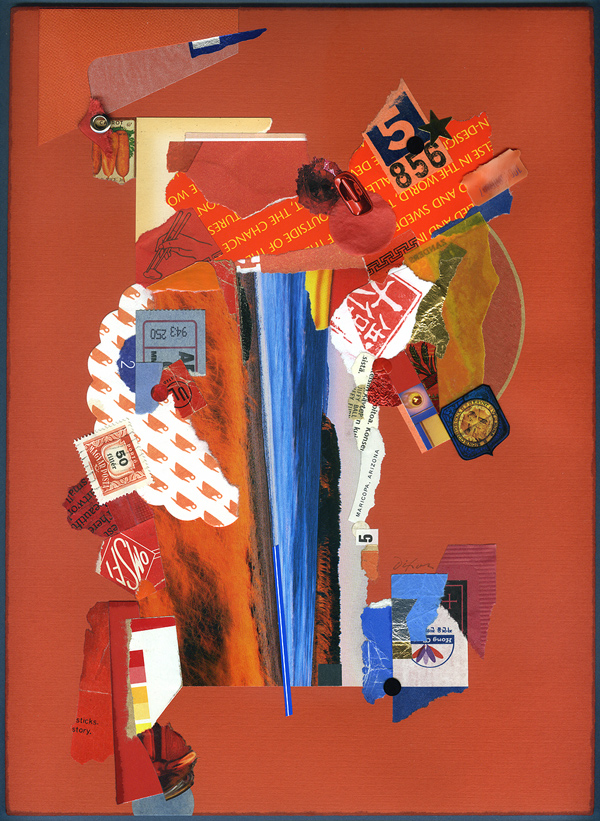
Broken Qualifications by J A Dixon

Broken Qualifications
collage miniature by J A Dixon
6 x 8 inches
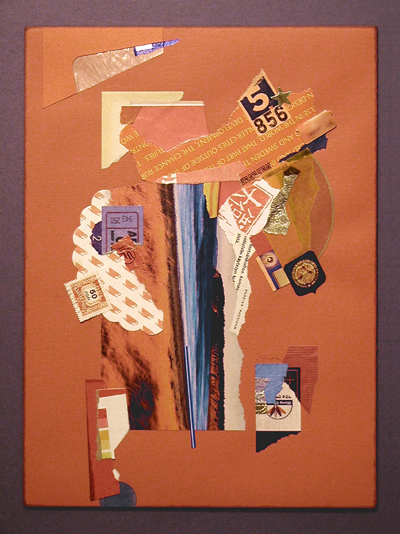
see the revised version

There I Was

Saturday, December 8th, 2012

“He spread flour and water over the paper, then moved and shuffled and manipulated his scraps of paper around in the paste…. Finally, he removed the excess paste with a damp rag, leaving some like an overglaze in places where he wanted to veil or mute a part of the color.”
— Charlotte Weidler

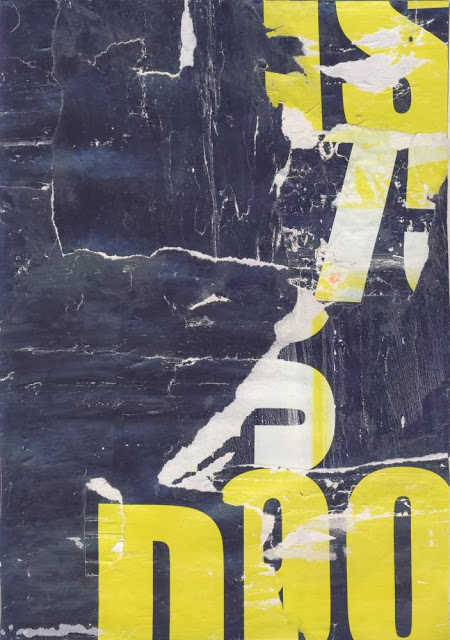
It has been more than a year since I had the humbling opportunity to study dozens of Kurt Schwitters originals at the Berkeley Art Museum. I read the description by the art historian Charlotte Weidler that same day, but I only recently decided to experiment with the paste method she observed. I have always worked with a variety of adhesives, and I often combine more than one in a single collage, never hesitating to literally mix them together (white glue + acrylic varnish, for example). I was impressed with how good some of Kurt’s compositions had held together after 70 to 80 years. I dug out a small package of paper-hanger’s wheat paste acquired in the 1970s, with the new intention of using it to produce a collage on canvas that would stand on its own as an object when finished. Although I expected to coat the final surface later with gel medium, for my first piece based on using the same adhesive as the pioneering artist, I was mainly interested in how wheat paste would affect my process.

The artwork is undone, but I share one of my separate experiments below. I could not be more pleased with the results of this approach. The paste dries slowly. This allows for repositioning, easy removal of excess, and it cures to a flat, velvety finish. I am especially pleased with how conducive it is to manipulating coated paper torn from magazines, an ingredient I am quite fond of. I lightly sand the reverse side, adding a bit of white glue to the paste for good measure, and, using this hand-pasting technique, I have never found “mag scrap” more easy to work with. It may not seem like a big deal to those who attend diverse workshops and demonstrations, but, as a self-taught collage artist, it feels like a significant breakthrough to me.

Now, the only question that remains is one of durability. The seminal works of K.S. show every sign of lasting a century in decent shape, but I am no museum expert, nor have I been as fixated on archival longevity as some collage artists I know. I expect my creations to age, perhaps in unexpected ways. This reminds me of an online discussion not long ago about using elements taken from newspapers. Many collage artists may share my expectation that a newsprint ingredient will simply mature as nature sees fit, adding a certain “wabi-sabi” aspect to a work of art that relies on found material. Who knows what Picasso or Braque thought about the nature of impermanence when each created their first collage with that famous wood-grain paper found in a store? Or, for that matter, what Schwitters himself thought when— with seemingly little regard for acid-free niceties —he built the enduring concepts of Merz on the detritus of ordinary life?
 

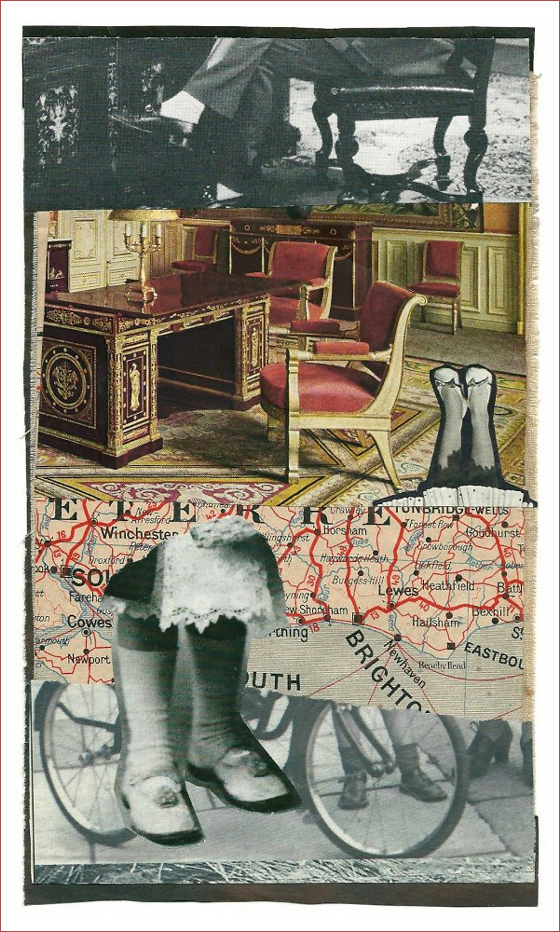
There I Was by J A Dixon

There I Was
collage experiment by J A Dixon
8.75 x 11.5 inches, not for sale

Is it or isn’t it?

Wednesday, November 14th, 2012

“Man himself is mute, and it is the image that speaks. For it is obvious that the image alone can keep pace with nature.”
—Boris Pasternak

Those who speak or write as though they understand everything about this medium do not know what they are talking about. But, to be honest, I have never met anyone who behaves that way, so perhaps my opening declaration is meaningless. Sometimes it is even difficult to classify what we do as artists in order to place the effort in some category. I just encountered an interesting chunk of round-table discourse by a new online discussion group struggling to define their area of focus. Most distinctions made between what artists call collage, montage, assemblage, construction, layerism, mixed-media, digital art, illustration, or graphic design are somewhat arbitrary, and we continue to see new terms coined by those who hope to distinguish what they perceive as a unique approach. At any rate, the intent of the artist is central. Clearly, definitions in art are rarely necessary except when attempting to trace a cross-pollination or lineage of influences, and when an organized effort or exhibition requires mutually acknowledged parameters. Additionally, there are always other important considerations to discuss, such as: What is an original? What is the relationship between process and artifact? What is the purpose of reproduction? Does a nomenclature based on exclusion have intellectual validity, or is it simply an adjunct to merchandising?
 

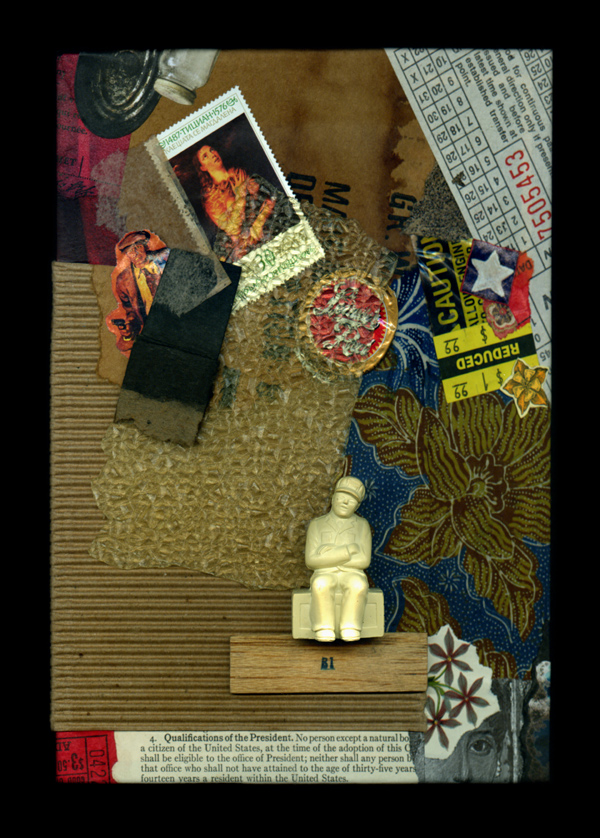
A likely story indeed! ~ J A Dixon

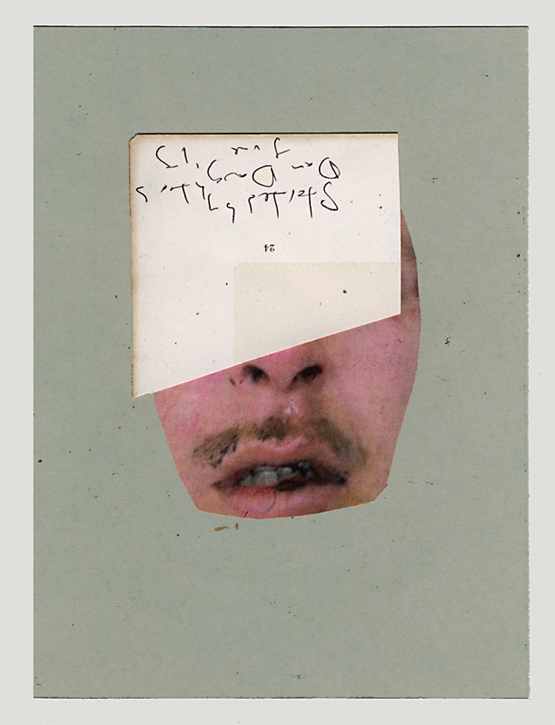
A likely story indeed!
collage miniature by J A Dixon
4 x 6 inches
 
Purchase this artwork!

The power of association

Saturday, October 27th, 2012

“I value sense and nonsense alike. I favor nonsense, but that is a personal matter.”
— Kurt Schwitters

When creating a collage, there is no right or wrong approach, but I can’t help but notice the extent to which some artists go in their obvious effort to be clever. Whether one seeks the visual pun, an intellectual twist, or utter shock value, I think all of us would hope to avoid a result that looks too “gimmicky.” For many of us, the goal is to find a desirable place on a spectrum that extends from the fully honed concept to the purely unconscious response. There are times when the progression from start to finish is a smooth, natural flow. More often than not, the process becomes a balancing act of decisions.Detail: A Pantry Ballet by J Cornell The artist weighs the various relationships between layers of overt connotation and covert significance. Blending levels of stark clarity with obscurity, insinuation, and nuance is what gives the medium of collage its distinctive power.

In The Essential Joseph Cornell, Ingrid Schaffner delineates the various threads of underlying meaning in Cornell’s “A Pantry Ballet (for Jacques Offenbach),” and how the artist weaves together French Romantic poetry, Lewis Carroll, lobsters, metaphysics, and the once-scandalous cancan. She explains how his work “was built on the power of association and was so well constructed that it is less essential for us to understand all the references than it is to let our mind wander and play with the images.” There is perhaps no artist who influenced the middle decades of the hundred-year history of collage more than Cornell. His constructions demonstrate just how seamless the balance of conscious and subliminal meaning can become in a work of art.

I like to produce compositions without the motive force of intention, but I also enjoy working with an organizing idea or theme. During the course of its creation, a collage may rely on either principle. A piece might begin as sheer abstraction and evolve toward symbolic implications. On the other hand, it might begin with a mental construct that invites other types of intuition and gut reactions. The essence of collage is complex, synergistic, alchemical. Let us all make more!
 

Cyclic Attraction by J A Dixon

Cyclic Attraction
collage miniature by J A Dixon
7.75 x 3.375 inches
collection of G Zeitz

Extracting value out of the worthless

Monday, October 22nd, 2012

“I could see no reason why used tram tickets, bits of driftwood, buttons, and old junk from attics and rubbish heaps should not serve well as materials for paintings; they suited the purpose just as well as factory-made paints.”
— Kurt Schwitters

There may be no more delightful aspect of collage than the realization that this medium can be pursued endlessly without the need for costly materials. The only significant budgetary item is creative time. True, we all want to document our work and frame it handsomely, but that same desire is an across-the-board constant for all fine artists. The activity itself is within the reach of everyone, regardless of economic means. Anyone can create value from substance that has virtually no intrinsic worth. An artist who uses nothing more than a pencil still wants to draw on a lovely, well-made piece of paper. By contrast, the working surface for a collage can derive from the same cast-off resources as the ingredient found material. How wonderful a world is that?
 

Disney Sauce by J A Dixon

Disney Sauce
collage miniature by J A Dixon
3 x 3 inches, not for sale

Safe from importance and finality

Wednesday, October 17th, 2012

“Success is the sum of small efforts, repeated day in and day out.”
— Robert Collier

“Sometimes when I consider what tremendous consequences come from little things … I am tempted to think … there are no little things.”
— Ralph Waldo Emerson

As much as I realize how vital it is to study and experiment without preconceived visual notions or tangential aims, it is a rare thing for me to produce a collage without some underlying motivation, whether it be an eventual offer to sell or a simple desire to display the work through social networks or a site such as this. It is, however, important to devise, apart from distracting intentions, some ongoing method of keeping one’s rhythm of composing material for its own sake, in order to reveal and sustain a process of pure discovery. It is not as though some artists are better at this than others. I see it more as a matter of momentum.

Perhaps musicians are more attuned to this, although it is always foolhardy to generalize. They seem to possess an innate understanding of and appreciation for distinct activities— creating, practicing, jamming, performing —that derive from a more collaborative tradition than the visual arts. I admire artists who don’t have to trick themselves into engaging in strictly private, personally unique investigations. To develop and internalize this kind of work ethic— to be able to honestly tell oneself that nobody ever needs to see the product, that it never needs to be held up to evaluation or approval —is one of the most valuable qualities an artist can achieve. This involves resisting the desire to immediately display our incremental output. It means creating a framework we can use for real exploration, and, in the words of John Willenbecher, “try things out, put things down safe from importance and finality.” There is often a fine line between true worth and mere preciousness. Artists who have refined their creative process know the difference.
 

Blog Jam by J A Dixon

Blog Jam
collage miniature by J A Dixon
3 x 3 inches, not for sale

By Dint of Maple

Wednesday, October 3rd, 2012

“This is the modern attitude—reactions are based on intellect and preconceived ideas instead of a response to natural, immediate experience. Art is the last refuge. It need not
be rationalized.”
—Harlan Hubbard

There is often a direct relationship between a collage and Nature, especially when ingredient elements are drawn from the organic or botanical wonders that surround us. Certainly, there is no way to classify all the indirect relationships, whether they involve images of the natural world or structures that reflect the cosmic order. Frequently, the quality of found material itself conveys the very essence of natural impermanence and the cycles of creation and decomposition. In the final analysis, can there be anything more natural than a spontaneity of eye, hand, and the intuitive psyche?
 
By Dint of Maple by J A Dixon

By Dint of Maple
collage miniature by J A Dixon
collection of Wesley W Bates

Unconditional Surrender

Saturday, September 29th, 2012

“To say that Kurt Schwitters was an amazingly versatile artist and anticipated much is such an absurd understatement that the remark is almost Dada.”
—Walter Hopps

“And so you will understand why we have had enough of Dada. The mirror that indignantly rejects your worthy countenance, that in mirroring it banishes it, such a mirror does not love you, it is in love with the very opposite.”
—Kurt Schwitters

To perpetually imitate KS is to be as unlike him as one could conceive. He was always pushing forward into the untried. But it is not for every artist to cross a boundary into the unknown. Some of us might be better suited to settling the frontier. There may be some among us more appropriately equipped to continue investigating the discoveries of a pioneering original— by sharing these visual concepts with a broader audience, by weaving them into a greater tapestry of the visual landscape, and, with a bit of luck, by finding a way to fuse our unique perspective with what has been handed off to us, in order to express new ideas that further cultivate a valuation of the past.Collage and Dada

I am not an expert on Dada or the relationship of Schwitters with the phenomenon. I am always learning more. I just know that he was never fully accepted by the movement at its peak, and that he was compelled to articulate his own vision of Merz. Perhaps much of it relates to Fascist oppression and the resulting geographic disruption, but I’ve always believed there was more to it than that. More important to me is an ongoing effort to unravel the underlying differences. A certain veneration for painting, design, and the aesthetics of beauty probably set KS apart from some of his rejectionist or surrealist contemporaries, but that is what gives his creations a unique, seminal power for me and for others. His perseverance in the face of daunting circumstances and a professed goal of “creating relationships, preferably between all things in the world” fly in the face of a nihilist orientation. Although I remain awed by surrealism in collage, and I am as tickled by irreverent juxtapositions as the next guy, there is an inherent pessimism or metaphysical anarchy in the “art of weirdness” that never seems to resonate with my deepest creative urge. I cannot say that I fully understand that, or that I am not occasionally moved to place a fish head on a reclining nude or mask a face with a front-loading washer. Is it even productive for me to engage in such self-analysis? Or, is it important only to submit to the most undeniable inner motivations when in the studio, sorting through another pile of visual fragments that await an intuitive response?
 

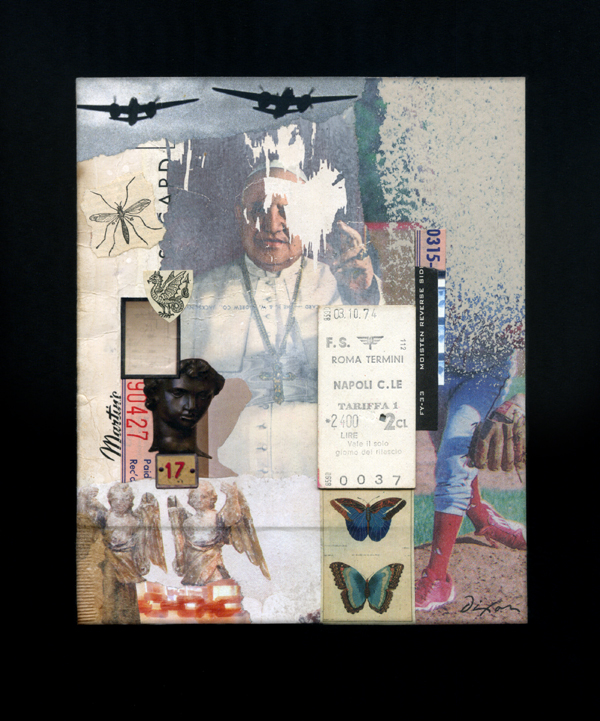
Unconditional Surrender
collage artifact by J A Dixon
collection of Nancy and Charles Martindale