Archive for the ‘Collage’ Category

Empress of Wings — When is the flight over?

Sunday, January 15th, 2017

“I tell you what gets harder over the years, it’s coming to grips with ‘is it finished yet or do I want to make one more change?’”
– B L Cummings
 

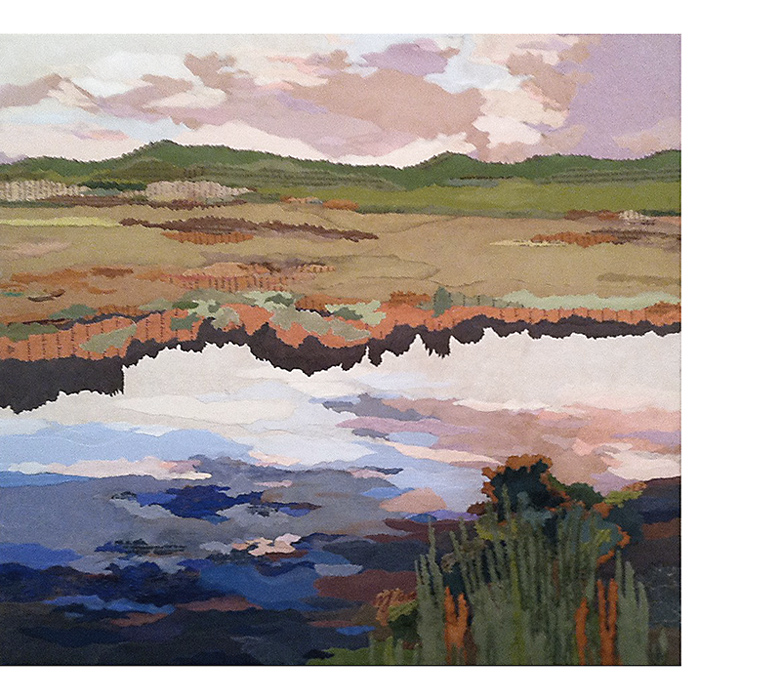
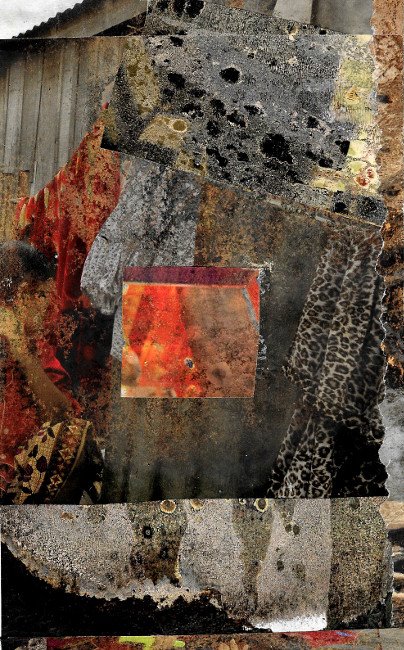
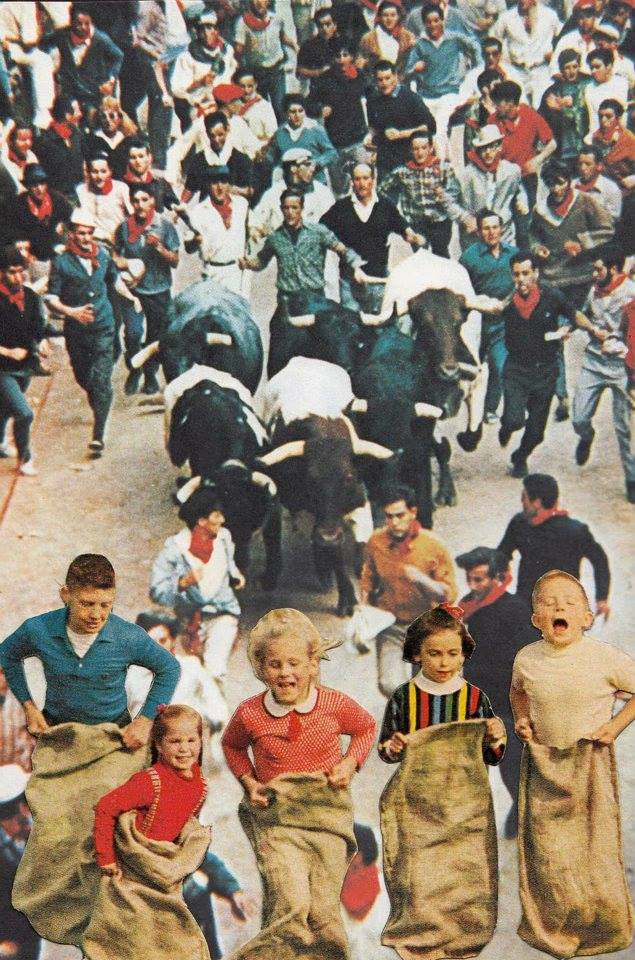
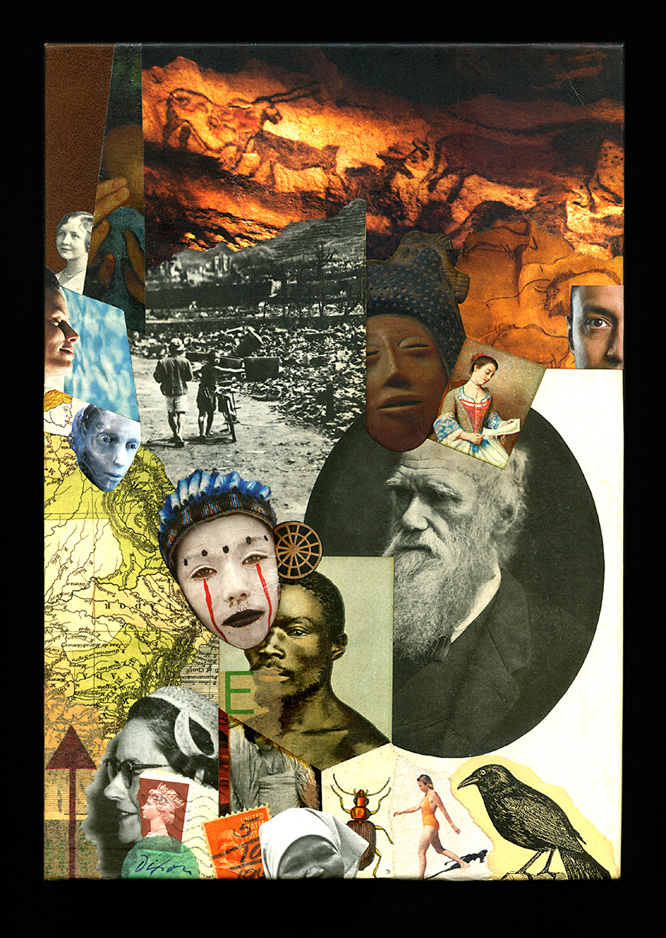
Being invited by our Community Arts Center to participate in the annual winter invitational of regional artists never fails to jump-start my burst of year-end activity. Submissions to the January-to-February show are required to have been completed after August. The request comes in late October, but, instead of selecting from completed works, I’ll typically commence a work specific to the exhibition in early November. I set a goal this time to produce my largest collage ever and to shoot some in-progress photos.

The first image below indicates how I blocked out the early composition with mostly larger elements. The second represents how the color-quantity contrasts and spatial manipulations resolved themselves. The last image is the finished work with final layering and a few closing refinements.

It is a challenge to maintain a high degree of spontaneity when creating so large a work (for me, the dedicated miniaturist). It helps to carry a momentum of small-scale experimentation into the process, plus there are things I do to boost an “organic” flow. For example, if there are aspects of the color scheme I want to enhance, rather than acquire and position new elements one by one and invite too much preoccupation with each, I will quickly prepare a batch of ingredients and place them into the composition as rapidly and as intuitively as possible, responding to my impression of the evolving totality. Instead of pondering two-dimensional locations, the eye or hand moves first, and one learns to trust whether something “belongs” or not. Also, it can be difficult to know when the winding down to conclusion should start. At a certain point, I become conscious of a natural progression toward closing refinements (more logical considerations for balancing and harmonizing the overall effect). Noticing an escalation of rational deliberation can be the reliable signal that a piece may nearly be done — almost time to “pull the plug and sign it.”

We are unlikely to hear any collage artist say that completing a work is an exact science. Personally, if I walk away from something that I suspect is finished, it is less probable that I will continue to monkey with it when I come back. It is beneficial to have an objective consultant — in my case, a trusted partner willing to instruct, “Don’t touch it!”

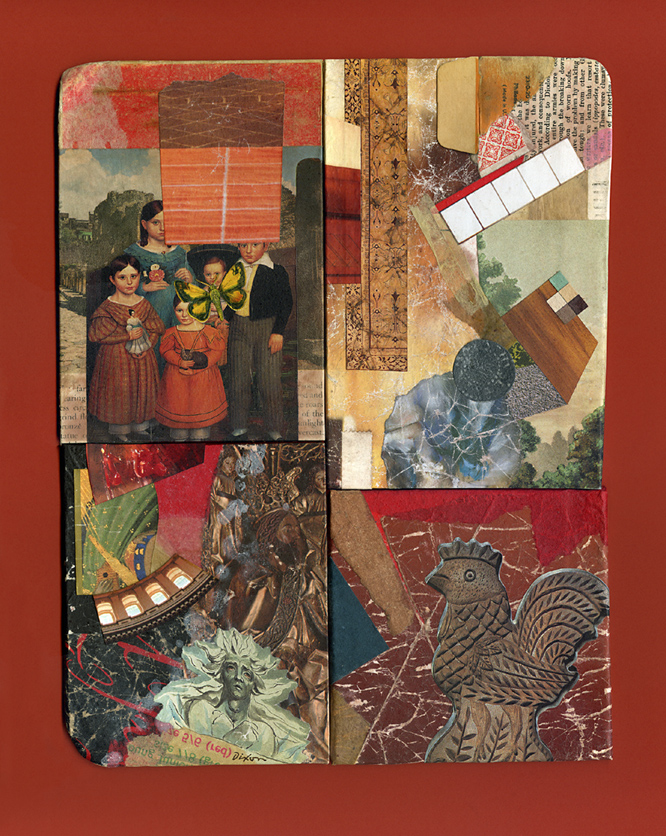
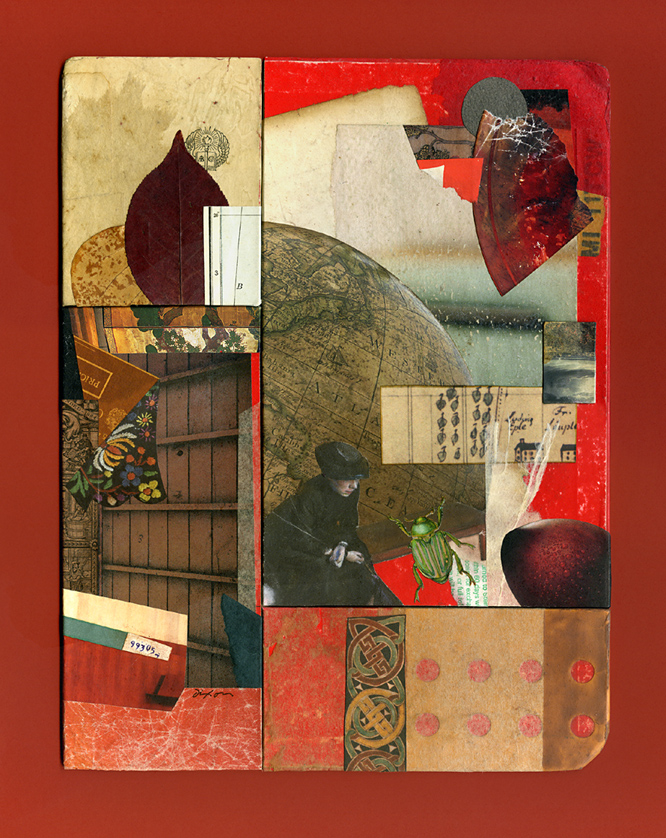
I also should note that the exhibition is an opportunity for Robert Hugh Hunt and me to unveil another major collaboration (more to say about that next time). Creating the interlocking mixed-media construction was an interesting process. The result is something unconventional, and we’re pleased that it was selected as the promotional image for the show.


an early and a late
stage of my largest
collage painting to date
 
(click each for larger view)


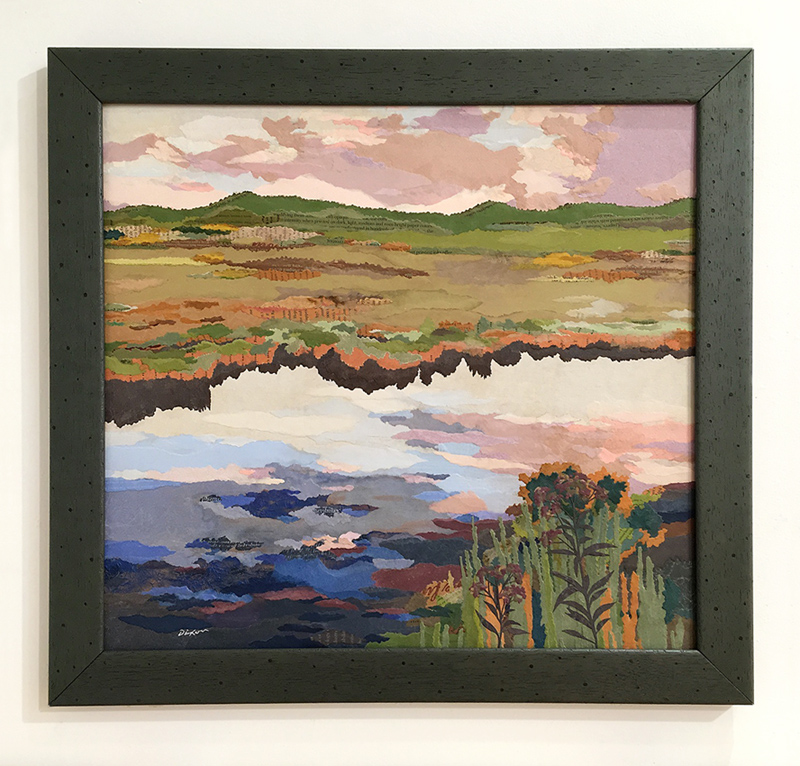
Empress of Wings ~ John Andrew Dixon

Empress of Wings
collage on canvas by J A Dixon
42.25 x 30.375 inches
available for purchase

That dreaded Artist Tongue

Friday, December 2nd, 2016

“Somehow the language used for describing and discussing art has a reputation for unusual opacity, even sadism.”
– Robert Atkins

Someone recently remarked that my description of collage as an intuitive phenomenon sounds like “artspeak.” I know what she meant — confusing, overblown prose that tends to alienate the “uninitiated.” She may have had a point, although I would hope that there is a difference between jargon meant to exclude those who don’t speak the often-elitist language of contemporary art, and an honest attempt to write about something that is difficult to articulate (because, in essense, it is a non-verbal, non-rational process). If I fall prey to obscuring that distinction at The Collage Miniaturist, please call me on it. I can take it.

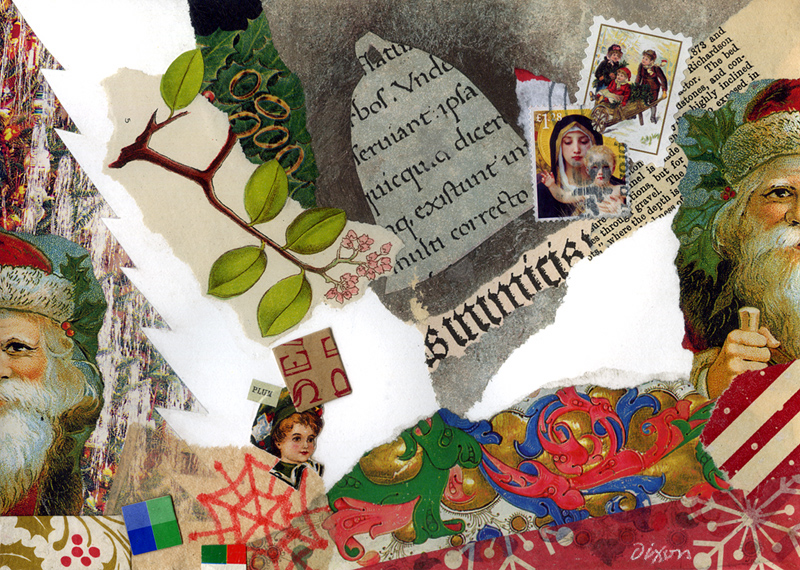
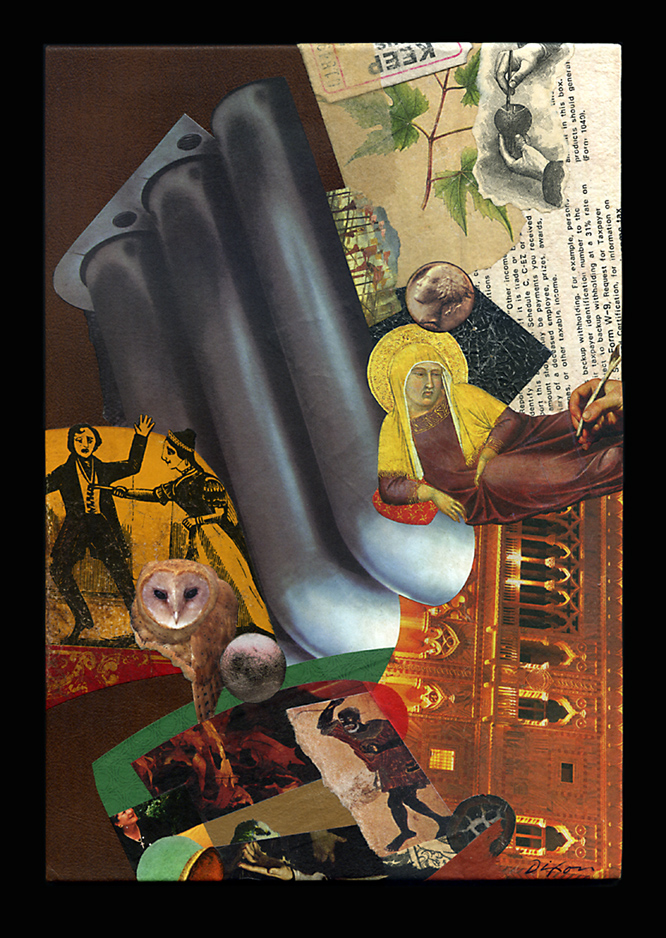
dixon_untitledindustry

Untitled (INDUSTRY)
collage experiment by J A Dixon
8 x 12 inches
not for sale

Does this have anything to do with collage?

Friday, September 30th, 2016

 
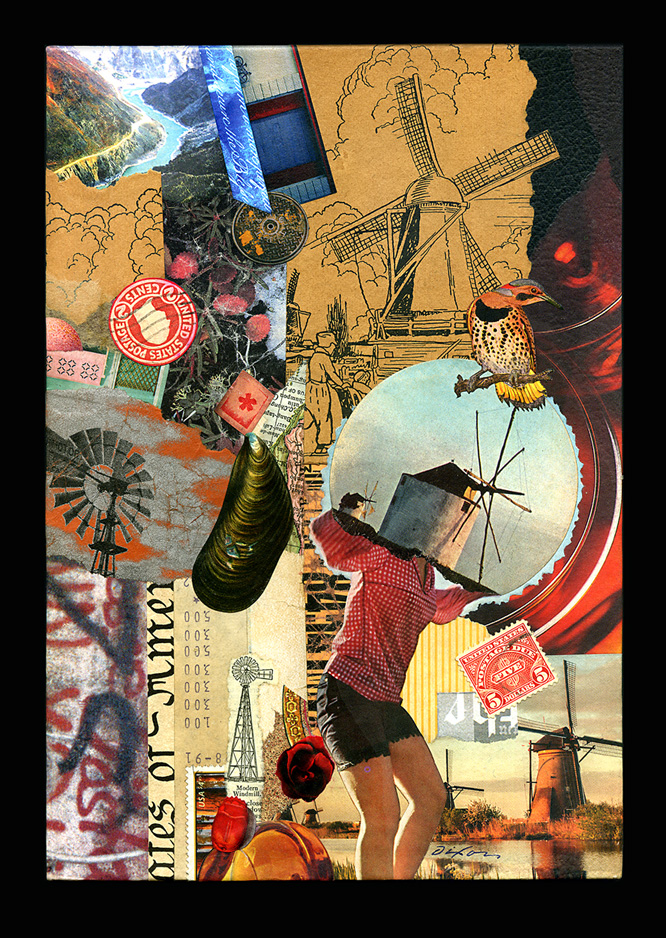
jadixon_waitingfordana
 

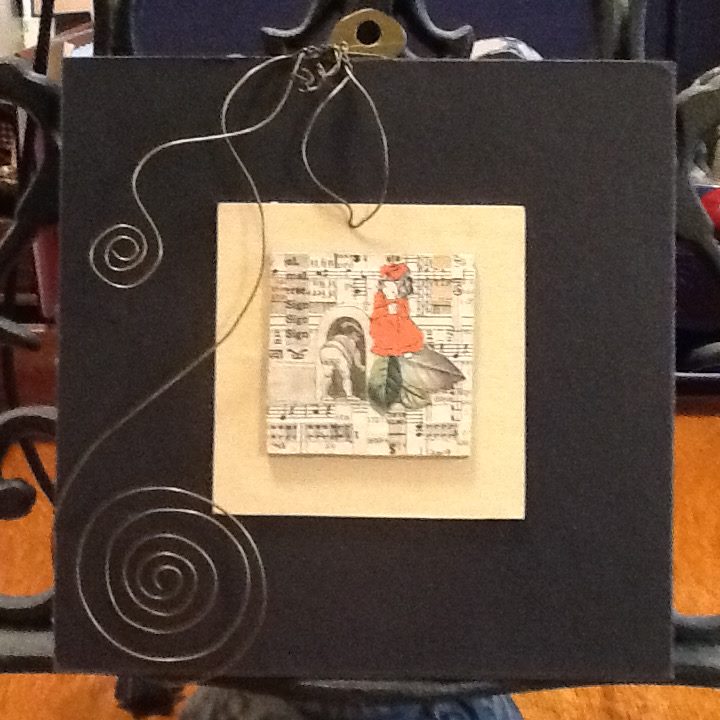
Waiting for Dana
combined mediums by J A Dixon
6.5 x 4.875 inches

My honest answer to the title question —
“We won’t know until I finish this post.”

During my annual “fishing retreat” in Les Cheneaux on Lake Huron, I convinced myself to make a small painting for the mate who holds our fort in Kentucky. It disturbed me to confront the idea that I had fallen woefully away from my practice of drawing or painting en plein air, so I found a spot to sit and scraped some rust off my lost habit. If a tradition of plein air collage exists, now or in the past, I so far have not discovered any evidence. One would think that the medium does not lend itself to it, but there is no fundamental reason why collage cannot be executed out of doors, or benefit from direct observation of nature or the built environment. If we are to think as the artists who “invented” it, collage is another variation of painting. And painting, as we know, is not about visual replication, but about capturing what the artist “sees” — in the fullest sense of the word.

As smiling fortune would have it, I had the opportunity to view a presentation of Painted Land at the Lake Superior State University Arts Center (in nearby Sault Ste. Marie) as a part of my visit to the Upper Peninsula. Proceeds from the screening of the new documentary helped benefit the Lake Superior Watershed Conservancy. The subject of the film is the Group of Seven, the twentieth-century artists who took the Canadian consciousness by storm when they rattled the national establishment with the first widely seen modern-art landscapes. The filmmakers successfully proved that the iconic paintings now revered by Canadians were created by the pioneering artists when they arduously discovered wilderness locations, and were not constructed from imagination, as many had previously believed. On top of that, most of these unspoiled sites in the vicinity of Lake Superior have the potential to remain so, if preserved and protected from development.

The breaking of my plein air dry spell, combined with a heightened awareness of how some of North America’s most daring artists actually made their works, has overwhelmed me with new ideas about ways to invigorate my approach to collage and its relationship to the seen image. I don’t know where these experiences will lead me, but those who follow my journey here no doubt will be the first to find out. Until then, thanks again for visiting.

 
“The most important thing a painter can do is
find a good place to sit.”
– J.E.H. MacDonald


a mini-tutorial for gel transfers

Tuesday, September 27th, 2016

“Self-education is, I firmly believe, the only kind of education there is.”
― Isaac Asimov

A growing number of people will now agree that most emerging social networks are not what they’re cracked up to be. For an artist who spends a lot of time in solitary activities, it can be a beneficial connection to a larger body of peers. I concur with Cal Newport that it can also be a habit-forming distraction that pulls one into a more shallow mode than the deep concentration necessary to produce exceptional creative work. There are times, however, when a Facebook interaction is so good that I have to marvel at the way people can quickly exchange valuable information across continents. Case in point: a recent back-and-forth between Peter Dowker (Lac-Brome, Quebec) and Matthew Rose (Paris, France) about image transfers for collage assembly. When Susanna Lakner (Stuttgart, Germany) and Melinda Tidwell (Santa Fe, New Mexico) jumped in, it developed into one of the best step-by-step descriptions of gel-medium transfer that I have seen. Here is my summary of Dowker’s technique—

“First of all, stay away from the hard stuff, like the toxic chemical cleaner trichlorethylene. Instead, use a gel-medium method to achieve an effective transfer. Apply a healthy coat of liquid acrylic medium to the image side of an ingredient and adhere it face down. GLOSS medium sticks better than matte. Rub with a brayer, or burnish gently with a soup spoon, and let it dry. Using a bit of water, gently rub off the paper backing with your finger or a piece of cloth. Don’t use too much water and slowly move over the surface, removing a bit at a time. Use oil varnish or vegetable oil to bring up the image. A minute amount of paper will always remain behind, giving it a cloudy appearance when dry. The oil varnish or vegetable oil will make that disappear and enhance the transparency. I formerly used matte oil-based varnish, which works okay. The vegetable oil idea comes from Allan Beally. There will be hardly any build up at all — probably less than any of the collaged pieces next to it. When making a transfer onto vintage papers, I find it’s better to seal them first before you begin — 1 or 2 coats of matte gel medium — the water involved to rub off the back of the transfer can destroy the substrate. Keep in mind that different papers react in different ways. Sealing is only necessary if the base is fragile. Be patient after gluing down the transfer. Letting it TOTALLY dry before rubbing off the paper is essential. If you’re not patient and start rubbing too soon, the image can start to break down. Wait a minimum of 2 hours (overnight is best) before removing the paper backing. If I know I’m going to be using a transfer from the outset, I start the piece on heavy card, to keep the substrate from becoming wrinkly in one spot from the water. The method works with original elements or copies. When I do use a laser print, it’s on thin, cheap office paper. Removing the paper backing can take ten minutes or more, because I go slow, not wanting to damage the image — not really that long at all. I’ve had the most luck since I began sealing the receiving surface with matte medium and waiting longer for it to dry. And the oil works wonders!”

My thanks to Mr. Dowker for allowing me to share this description here. Some of us have also used a variation that involves removing the paper backing independently, in a basin of water, before adding it to the collage surface. When doing that, one ends up working with a collage element that is essentially a veneer of acrylic medium, which introduces a size limitation and other aspects of craftsmanship. Peter calls this the “gel-skin method.” Although he has used it many times, a drawback for him is the need to build up 4 to 5 layers of medium — so it’s not too fragile for the rubbing stage — which makes for a thicker transfer. According to Peter, “not very appealing to the fussier ones among us.” The gel-skin method does allow for a right-reading image (if that’s important), otherwise the previous method will result in a flopped image (unless it can be photomechanically or digitally reversed prior to transfer). Each collage artist will refine an individual methodology, and, not surprisingly, new discoveries and “fortunate accidents” occasionally can result. As Peter reminds us, “Don’t be shy!”

Take a few minutes to savor a few of his extraordinary artworks below—
 

CUTTERS
collage with image transfer by P Dowker

ACORN
collage with image transfer by P Dowker

VAAVING
collage with image transfer by P Dowker

TOYS
collage with image transfer by P Dowker

Maximalism and Minimalism in Collage, part 6

Friday, August 26th, 2016

It would not be a mistake to put me in a category dedicated to “maximalism” in collage — the practice of adding more visual elements to achieve a balanced effect, in contrast to restricting a composition to a minimum of ingredients. Not that long ago I discovered the work of two maximalists when I happened upon an old blog post by fellow Kentucky collage artist Sharmon Davidson. I have never met the prolific Davidson, but it pleases me to find her concise survey of collage pioneers juxtaposed with examples of contemporary artists active in the medium. I have a high regard for collage artists who maintain a keen awareness of the history of mixed media. Her own work evokes for me the layerist tradition, and I especially like many of her miniatures. In addition to learning about Sharmon, her 2014 entry introduces me to Lance Letscher, a maximalist’s maximalist who also has been known to explore the spectrum’s opposite side with a minimalist approach. The widely exhibited Letscher is formerly a sculptor.
 

Sharmon Davidson
Her artwork emerges from the interplay of intention and intuition.

Lance Letcher
The spatial density of his designs exemplify a “maximalist” approach.

Various and Sundry — Four Years and Counting . . .

Friday, July 29th, 2016

“I write because I don’t know what I think until I read what I say.”
— Flannery O’Connor

It looks as though I’m stepping into my fifth year writing about collage at this blogsite, and I hope that you’ve been with me for part of that enjoyable ride.

When I look back at my wish list for Year Four, I realize, not with any surprise, that my appetite for creating collage artwork has eclipsed a sometimes equally strong desire to delve verbally into the many interesting aspects of the medium. I would like to think that I met a few of the writing goals I set for myself last summer, and, of course, my ambitions to add to that list here in this post will be dutifully curbed. At any rate, I think that the best thing to do is to break this entry into a few parts that cover various and sundry topics on my mind.

The Social Network of Collage Artists
• For at least a couple of years I have wanted to write more about the influence of social media. Nearly every day I see a collage artist defeat the potential of a sharing platform with overexposure. Some may disagree and say, “the more, the merrier.” That is not a point I care to debate, because there may be something else to highlight more important than whether or not the quality-vs-quantity consideration can fall to the wayside — the vital role of networking among artists. I am more convinced than ever that the cross-pollination and mutual support of online networks has been of significant benefit to those of us working in the medium. Crystal Neubauer has one of the more interesting blogsites by a collage artist. She touched on the topic of creative communities so well that I direct you to her short essay at ClothPaperScissors.com. Another collage artist I admire who has recently made an impression as a strong blogger is Melinda Tidwell. I like her process-oriented posts. Although more of a mixed-media artist rather than a conventional collage practitioner, the versatile Kathleen O‘Brien maintains a steady flow of what I consider “must-read” entries at her studio blogsite. Create your own list of frequent art-blog destinations and branch out to new sharing platforms (I just learned about some new artist blogs from Caterina Giglio and opened a new account at Instagram.). As the entire evolving array of networking sites weeds out the fads, imitators and clunky interfaces (finding it difficult to tolerate LinkedIn as a user), you will settle into a community of online cohorts who reinforce your daily challenges as a creative person. When you come to know that someone else is on “the same wavelength,” reach out and make contact as an authentic being behind the profile. There are rewards to be discovered!

Cheap Collage Tricks
• Collage artist Allan Bealy seems to be everywhere, but, trust me, he is no gadfly. He recently raised a topic that struck a nerve with many. There are a lot of cheap tricks appearing in the medium, and most of them are harmless, if unimaginative, but the temptation to exploit visual ingredients readily available in our culture to “objectify women” is perhaps the most repugnant. Those of us who believe we are above that sort of thing need to think more deeply about how and why we use nudes in a collage. This suggests another potential self-assignment for my coming year — a “DON’T DO THIS” post illustrating the most prevalent cheap tricks in collage. (Not that there’s anything wrong with replacing a man’s head with a vulture to carry the banner of Dada during the art movement’s centennial year.) To be honest, I have nothing against a cliche, if it “works.” Isn’t that the reason something becomes a cliche in the first place? I say go for the cheap trick if you can score in the highest percentile (anyone who thinks it’s an easy thing to do is mistaken). I hope to post a follow-up look at the endurance of the surreal face in collage, so stay tuned. But let’s get back to Allan’s remonstrance. The woman as sex object can be traced back to long before the rise of Madison Avenue and Larry Flynt. Don’t bite the lure, folks. Everything one needs to dabble in this unworthy stunt abounds. Nevertheless, I long have been fascinated with the exemplars of erotic minimalism and their work in contemporary collage — those who transcend the cheap tricks to achieve a fine-art impression. Add another one to my wish list for Year Five of The Collage Miniaturist.

Priorities Get the Last Word
• My wife, Dana, and I managed to get two tickets to The Seer (a new documentary portrait of Kentuckian Wendell Berry, re-titled “Look & See” for Sundance Institute) before the Lexington screening sold out last night. It is a significant film that will become more widely available into next year, and it has my highest recommendation. Does it have anything to do with collage? Nothing at all, except for everything under the sun. If you haven’t discovered the poet, novelist, essayist, and farmer-philosopher, I have accomplished one meaningful thing with this site by inviting your interest. It was fitting that I got out of the studio and spent time at our farm. It was very hot work up on the shed roof, but pleasant to be away from all the noise (traffic, sirens, and incessant political jousting). Connecting with our rural place offered an opportunity, as it always does, to put priorities back into alignment. There is a place in the documentary when Laura Dunn (the filmmaker in voice-over) explains to Berry her motivation and how she looks “to places where there is still a remnant of togetherness, or unity, or community, of connection to the land, and I study those, because I don’t come from a place — I come from divorce …”
      “We all come from divorce!” her subject interrupts. “This is an age of divorce. Things that belong together have been taken apart. And you can’t put it all back together again. What you can do, is the only thing that you can do. You take two things that ought to be together and you put them together. Two things! Not all things.” It is his metaphor for the creative life, and a tremendously healing admonition to those of us with a tendency to become overwhelmed by the enormity of the world’s chaotic disintegration. Collage artists put things together to make something new, and often we are the ones who have taken apart discarded things to do it, but there is always a much larger phenomenon at work — one of discord vs harmony, wastefulness vs thrift, cynicism vs affection. When I return to the studio from a natural place that has responded to my care, I am in a better condition to ask myself, “To which side of the big equation are you making your contribution as an artist?”
 

Crystal Neubauer
Her blogging often touches on the complexity of a creative life.

Melinda Tidwell
Perhaps you will admire her solid abstractions as much as I do.

Kathleen O’Brien
Her art always nudges one toward a deeper sense of balance and wholeness.

Robert Hugh Hunt
Stay tuned for a continuation of my review of “the surreal face.”

Bene Rohlmann
Look ahead to my first discussion of erotic minimalism in collage.

Merely a metabolic event?

Sunday, June 19th, 2016

“I’m a ‘what if’ person. I have always felt that failure was a completely underrated experience.”
– Kevin Costner

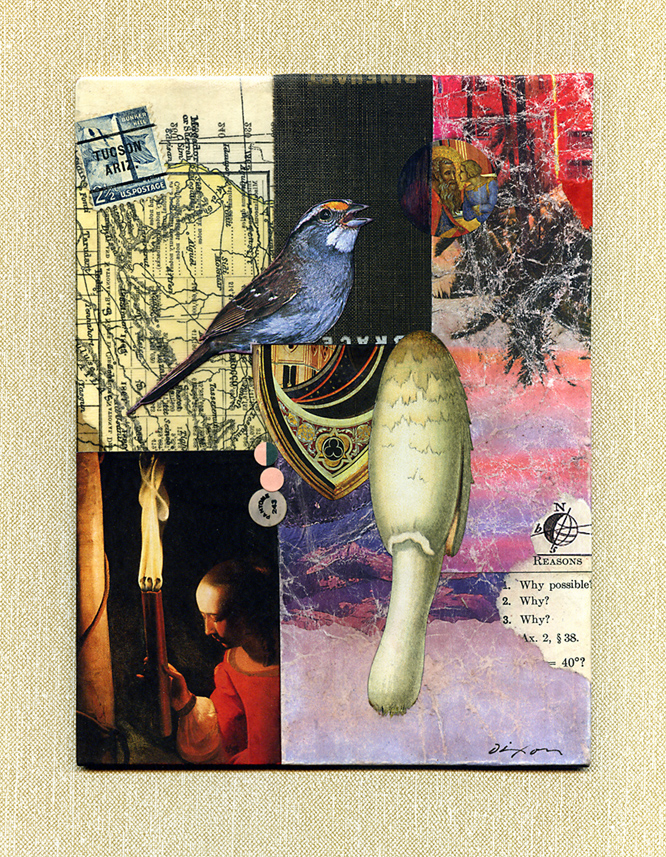
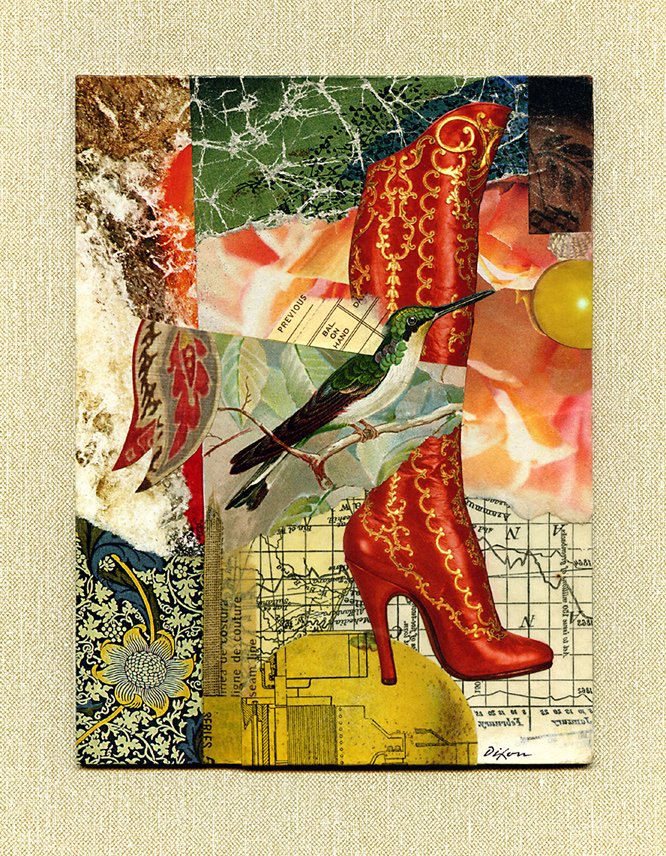
Process is everything with some artists, and I respectfully get that. Experimental spontaneity within the small format is a vital and meaningful aspect of my art, but when I scale up for a larger work, I apply that experience and insight toward an end result — something more planned, with the intention to provoke a positive response in another — an agreeable product, if you will. So, what about the individual artwork that has “merely” contributed to the overall creative metabolism of an artistic investigation, and, as a stand-alone work, is little more than a “glorious failure,” in the final analysis?

I wish I knew how to answer that dangling question. Obviously, not every collage “sketch” is significant in its own right, but if the potential exists for it to engage a particular person, and that person wants to observe it repeatedly, to discover if it has a few secrets others have missed — how can anyone diminish its intrinsic value?

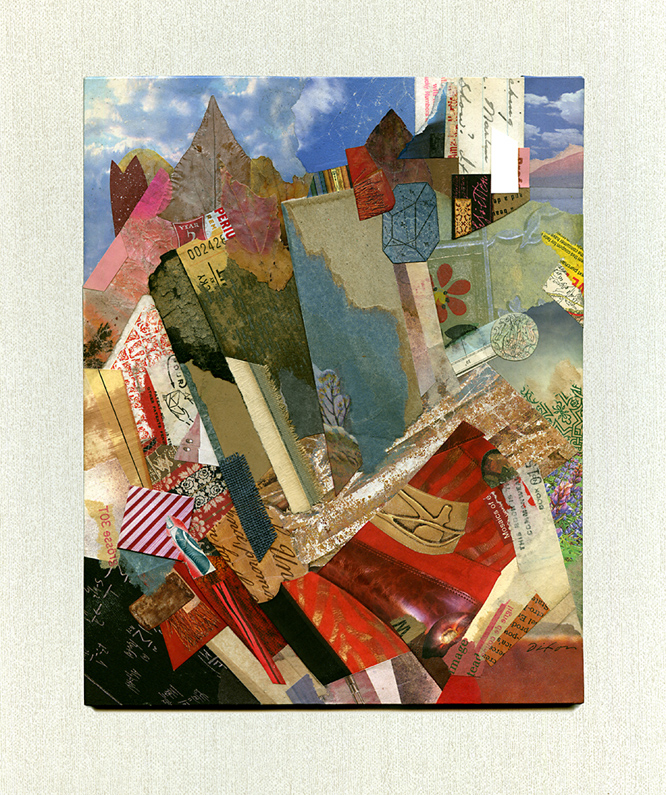
Dixon_Metabolism

Metabolism
collage miniature by J A Dixon
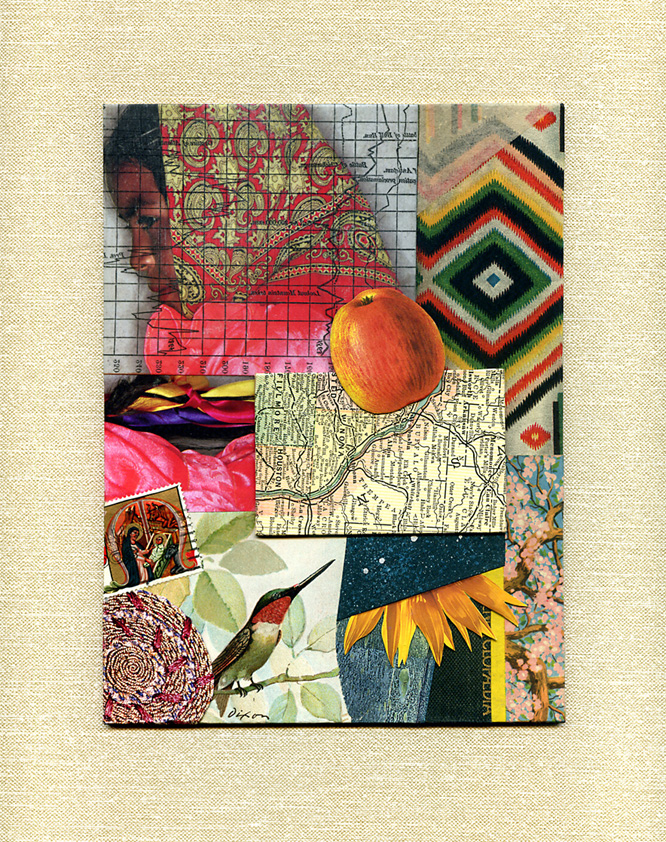
7.375 x 9.5 inches
 
Purchase this artwork.

a final glance back at JUXTAPOSE . . .

Tuesday, May 3rd, 2016

“Collage artists form a unique and interesting community. The hunt for found materials is crucial to the process of many collage artists, causing them to be consummate collectors of things. Their collecting of material artifacts for their artistic appeal and possibilities, rather than for rarity or value, often makes them keenly aware of popular culture — present and past — with the subtle eye of an anthropological curator.”
— Cecil Touchon

During a gallery talk in early March for JUXTAPOSE, I floated this question to my audience: “What makes collage and assemblage rewarding for those of us who can draw?” The answer for me is that we see in the found material of our physical surroundings the ingredients for a different kind of creative spontaneity. As in most improvisational activity, there is a splendid opportunity for mystery, surprise, discovery, and joy. But there is more to it than that. I am convinced that what distinguishes artists who do contemporary collage and assemblage is their acute connection to the mundane “stuff” of culture and the inner need to bring a measure of order and harmony from the sheer volume of material produced by our throw-away society — with its chaotic, numbing effect on our sensibilities — to infuse a new energy into that which would otherwise be discarded. It is a burning desire to create value when none exists and to find wonder, meaning, significance, and (yes) beauty, where none could have been expected.

It was a distinct privilege to exhibit with some of the finest collage and assemblage artists in Kentucky, and if nothing else happens on the art front for the balance of 2016, JUXTAPOSE will have made my year.
 

Pretty Please Peony ~ Meg Higgins, Louisville, Kentucky

Pretty Please Peony
Meg Higgins
collage on wood panel

collaborative collage on oversized playing cards ~ Terry Ray Flowers and Robert Hugh Hunt

collaborative collage on oversized playing cards
Robert H Hunt and Terry R Flowers

No Stopping ~ Brad Devlin, Louisville, Kentucky

No Stopping
Brad Devlin
assemblage, found objects

Intergalactic Passion ~ Brandon Long, Danville, Kentucky

Intergalactic Passion
Brandon Long
recycled promotional banners

six collage/assemblage artworks by Lisa Austin, Louisville, Kentucky

six collage/assemblage artworks
Lisa Austin

Pollinators 1 ~ Kathleen O’Brien, Harrodsburg, Kentucky

Pollinators 1
Kathleen O’Brien
mixed-media collage

Crossroads ~ Teri Dryden, Louisville, Kentucky

Crossroads
Teri Dryden
collage from discarded books on panel

Einstein ~ Robert Hugh Hunt, Richmond, Kentucky

Einstein
Robert Hugh Hunt
collage with watercolor on canvas board

JuxtaposeGrouping

This image represents to me the strong diversity of the JUXTAPOSE exhibition and reminds me of the exceptional “company” my art shared earlier this year — a pair of shadow boxes by yours truly in proximity to pieces by Robert Hugh Hunt, Cynthia Carr, Teri Dryden, and Lisa Austin.

It won’t surprise you to learn that I am looking for a good excuse to publish a compilation of JUXTAPOSE images with artist comments. Please let me know if that interests you!

Spencer Gulf

Monday, April 25th, 2016

“The Japanese word yugen means ‘aesthetically mysterious.’ We don’t have a word like this to describe art in the Western art world. Yugen as a concept worries some because it describes an intangible. It says ‘awe’ and ‘mystery’ can also be qualitative aesthetics, and the beauty of this is that though yugen is a Japanese word what it describes is universal in reach. Though a refined concept, it is an everyman’s word because it describes perfectly a good deal of the art the entire world makes to achieve personal and cultural satisfaction. In a time when we are 1% and 99% sensitive, let us indeed remember that the art mainstream, the academic discourse, the intellectual game of art about art, the ivory tower is only 1% of why the world makes art.”
— Randall Morris
 

For the second consecutive year, I had the opportunity to create a collage as prize art for the preeminent single-shot rifle match held in Kentucky. Visitors to this blogsite know my ongoing fascination with collage as an ideal medium for total spontaneity. Of course, it also lends itself perfectly to a planned, thematic solution for specific appeal.

I discovered enough ingredients in my stash of papers to cover the Australian topic, but also to entertain a desired level of synchronicity to encompass a few distinctive characteristics of the event. In addition to my personal enjoyment, I am always pleased to see the positive response to collage as art. It has to be more than the element of the unexpected, although, admittedly, collage is never what people anticipate in these situations. I think it may be the particular combination of accessibility, interactivity, and “mystery” so inherent in the medium. I suppose there is more to said about that, but we shall save it for another day.
 

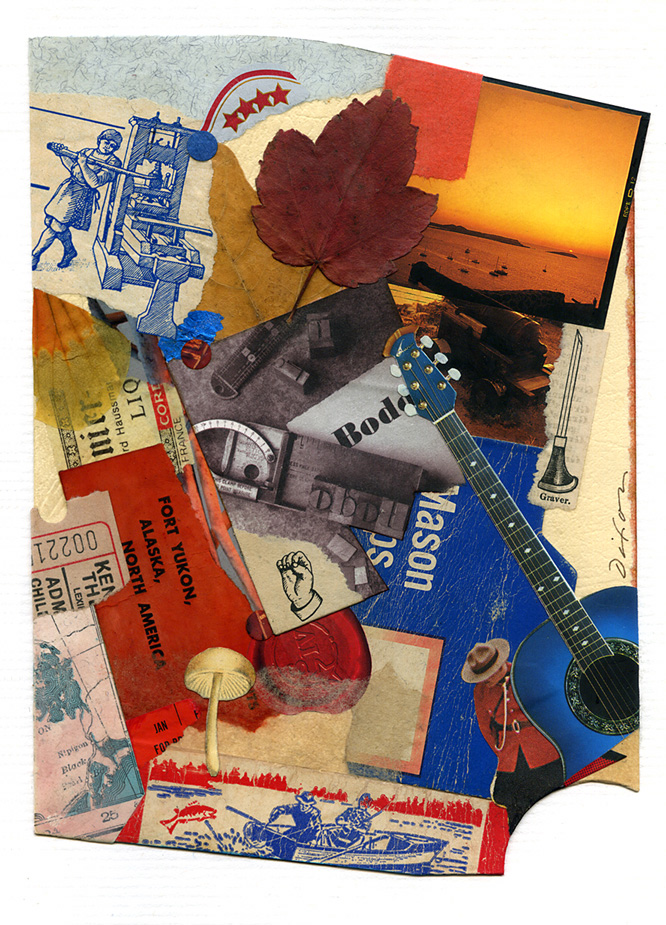
Spencer Gulf ~ J A Dixon

Spencer Gulf
collage miniature by J A Dixon
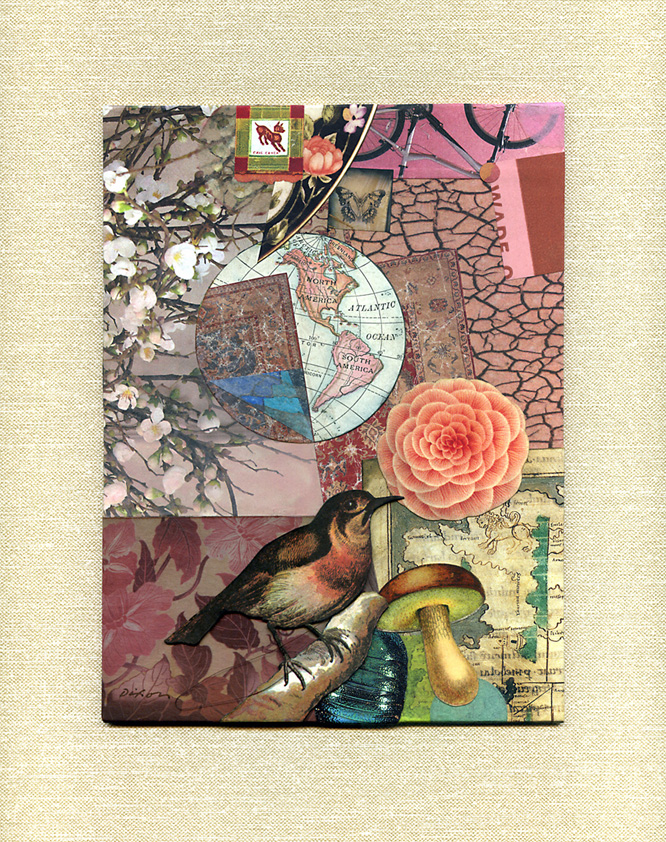
7 x 9.5 inches
prize art for The Great .310 Australian Cadet Martini Match of 2016
awarded to D Simpson

Much more about JUXTAPOSE . . .

Monday, February 29th, 2016

Friend and fellow collage artist Kathleen O’Brien is in the midst of her countdown to a big solo show in April. She asked me to do a favor and share a guest review as part of her final promotions for JUXTAPOSE before Drawn to the Earth requires her full concentration. As excited as I am about the group exhibition in Danville, it was a tougher post to write than I first anticipated. Collage is not the easiest art form on which to expound, perhaps because it relies on the “logic” of irrational choices.

At any rate, my dedicating a blogsite to that very topic was nobody else’s idea, so I best not complain to those of you kind enough to visit here. Would I rather be making art? Of course. Even so, I cannot constrain my enthusiasm for all things collage. Here’s my take on a great show. Be forewarned: If you’re looking for some criticism, you won’t find it!


I’ll admit it. I can’t get enough of JUXTAPOSE. The current exhibition of collage and assemblage is at the Community Arts Center until April 2nd. That’s not exactly the most humble thing to say, considering it features a dozen works by yours truly, so I won’t pretend that I can offer an unbiased review. Program director Brandon Long has organized a finely curated, must-see destination that brings together over a thousand examples of the two associated mediums (literally, but I’ll explain that in a moment). This is an unprecedented group show for the Bluegrass-based artists involved, and I am thrilled to be exhibiting side-by-side with Kathleen O’Brien, Teri Dryden, Robert Hugh Hunt, Meg Higgins, Connie Beale, Cynthia Carr, and many others. No doubt my enthusiasm has something to do with its location less than a city block from my studio, which bestows the luxury of repeated immersions, and there is over a month left in the duration!

There are more participants than I can profile individually, and far too many artworks to highlight. The best example of this is a room devoted to three complete year-long series of collage-a-day works by O’Brien, Long, and Nan Martindale. Combined with almost one hundred seventy of Robert Hugh Hunt’s provocative collage collaborations, the magnitude of miniature artworks presented in a single space could be overwhelming. As an exhibition designer, Long uses geometric grids, browsing boxes, and two flat-screen displays to make the huge collection comprehensible for viewers. O’Brien’s sensitive, meticulously layered collection of daily two-sided postcards is a journey to which I surrender with pleasure each time I visit, but only after a jolting romp through Hunt’s rarely exhibited Hillbilly Voodoo series with T R Flowers.

An opportunity to view works by six outstanding Louisville-based artists is worth the trip to Danville. Several major works by Meg Higgins captured my first impression. Two enormous pieces composed with transparent elements sandwiched between Plexiglas are suspended between the vestibule and grand gallery. I was equally impressed by a smaller collage on wood panel, Japanese Peony Goes to Italy, with its exquisite East-West flavor. Brad Devlin’s solid but clever exploitation of found objects yields bold abstractions that simultaneously maintain a strong environmental essence. His Open Sunday is also physically more complex than it first appears, and this allows the artisanship of his assemblage to become a secondary experience deserving of scrutiny. Masters of juxtaposition who reinforce the theme of the exhibition as well as anyone taking part, Patrick Donley, Lisa Austin and Brandon Bass each define a distinctive individual style. Approach to composition, color considerations, and a playful choice of ingredients form undercurrents that tie their pieces together, and Long knows how to modulate the walls in a way that makes groupings of their work satisfying to study. Although she has recently gained attention for her paintings, there are at least seven panels by Teri Dryden from a handsome body of work created from discarded books. Her Monteith’s Marrakesh exemplifies how her investigation successfully transcended the source material. Personally, I hope she rotates to collage again for another dynamic round of re-purposing cast-off items.

detail from Reliquia ~ collage on framed panel by John A. DixonIn addition to displaying a pair of shadow boxes, my only surrealist assemblage, and six favorite collage miniatures, JUXTAPOSE provides an opportunity to exhibit Bull’s-eye Nosegay for the first time, which I created for the Target Practice Project initiated by L T Holmes. Also, I did two larger collage artworks especially for this show. Each makes more than a fleeting nod to artists who I admire. What is it about Cherry Balm that causes me to think I just might be “tipping my beret” to the inimitable Matthew Rose? Reliquia is my tribute to the late Fred Otnes, a giant within the medium who has been a force in my consciousness since adolescence. Pearallelograms was held over from the previous exhibition at the institution, but the crowning delight for me may well be the presence of Kentucky Madonna, last year’s “finish” by Robert Hugh Hunt to my “start.” The collaborative piece is a companion to one currently hanging with the IT TAKES TWO exhibition of collaborations at the Kentucky Artisan Center in Berea. Robert and I can’t ask for more than to know that both are now available for public observation (unless someone wants to give them a good home).

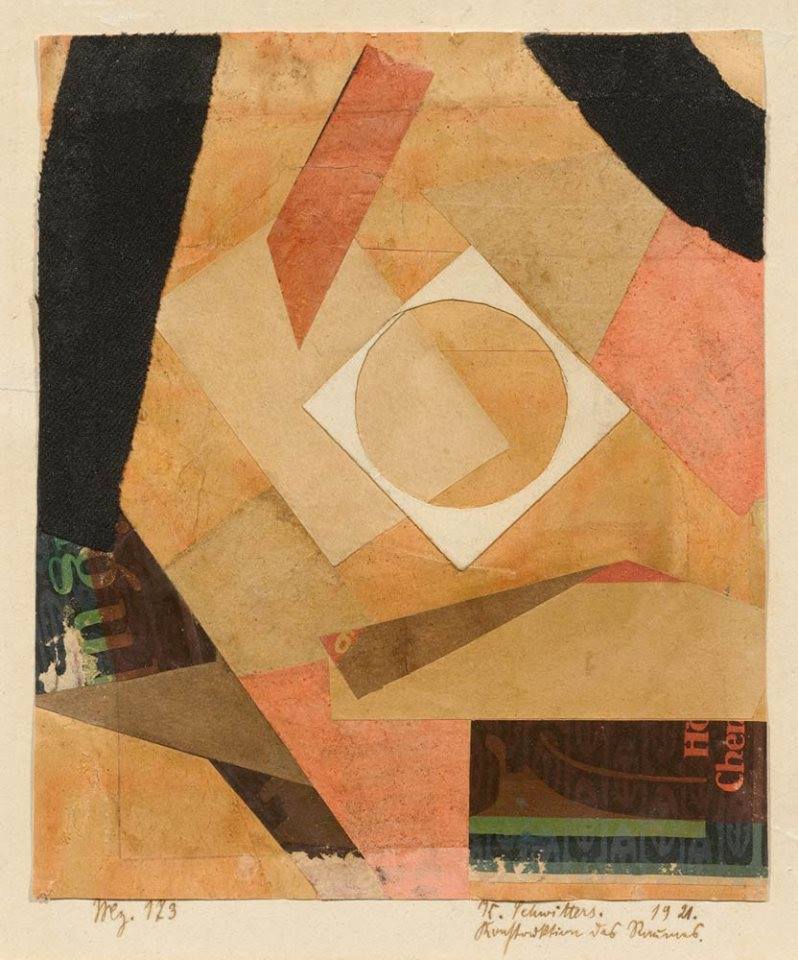
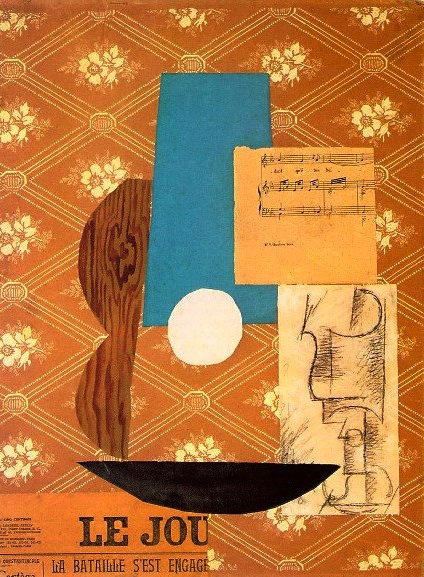
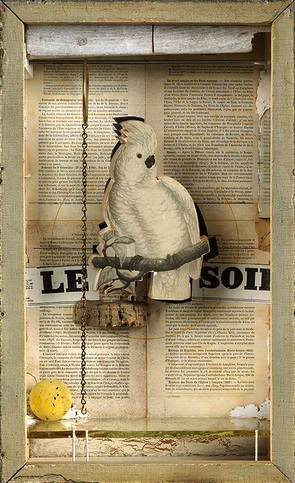
I am no art historian, but I can’t help but be mindful of the pioneering artists who laid a hundred-year foundation for the sweeping diversity of this exhibition. The creative innovations of Picasso, Braque, Duchamp, Schwitters, Höch, Cornell, Johnson, and Kolář reverberate throughout the building. In many respects, all contemporary collage/assemblage is a tacit homage to these seminal influences, but that is never the only thing at work nor the only phenomena to be perceived when one indulges an exhibition of this scope. Most artists are striving for a personal means of expression informed by those who have made their enduring mark on a medium. I am convinced, more than ever, that what distinguishes contemporary collage/assemblage artists is their keen connection to the mundane “stuff” of culture and the inner need to bring a measure of order and harmony from the sheer volume of material produced by our throw-away society, with its chaotic effect on our sensibilities — to create value where none exists, or to find wonder, meaning, significance, and beauty where none can be expected.
 

Japanese Peony Goes to Italy ~ Meg Higgins, Louisville, Kentucky

Japanese Peony Goes to Italy
Meg Higgins
collage on wood panel

Open Sunday ~ B Devlin

Open Sunday
Brad Devlin
assemblage, found objects

Strength ~ P Donley

Strength
Patrick Donley
mixed-media on wood

Bird’s Eye View ~ L Austin

Bird’s Eye View
Lisa Austin
collage

Monteith’s Marrakesh ~ T Dryden

Monteith’s Marrakesh
Teri Dryden
collage from discarded books on panel

Cherry Balm ~ John Andrew Dixon, collage artist, Danville, Kentucky

Cherry Balm
John Andrew Dixon
collage on canvas
available for purchase

Reliquia ~ John Andrew Dixon, collage artist, Danville, Kentucky

Reliquia
John Andrew Dixon
collage on framed panel

•  S O L D

JUXTAPOSE opens in Danville, Kentucky

Friday, February 12th, 2016

An outstanding group show of Kentucky-based collage and assemblage artists has opened in my hometown at the local Community Arts Center, and it is an unprecedented exhibit of these mediums for our geographic area. Thanks to the support of the Corning Incorporated Foundation, curator Brandon Long has organized a must-see destination, and I am thrilled and gratified to be a part of it, along with Robert Hugh Hunt, Teri Dryden, Kathleen O’Brien, Lisa Austin, Patrick Donley, Brad Devlin, and others. With create-your-own-collage installations and multiple sets of 365 miniatures from full-year collage-a-day challenges, it is more than a typical exhibition. And where else can one experience 162 cards made available for public viewing by prolific collage collaborator Hunt, including items from his Hillbilly Voodoo series? Please pay a return visit here at this site for much more about this show!
 
Kentucky-based collage and assemblage artists at the Juxtapose reception, Community Arts Center, Danville, Kentucky

JUXTAPOSE collage and assemblage artists at the opening reception—
Front row, left to right: Meg Higgins, Virginia Birney, Cynthia Carr,
Nan Martindale, Kathleen O’Brien. Back row: Patrick Donley, Brad Devlin,
Brandon Long, Robert Hugh Hunt, John Andrew Dixon.

162 collage collaborations
R H Hunt, T R Flowers, and various artists

detail of Cherry Balm ~ J A Dixon

Cherry Balm (detail)
collage on canvas by J A Dixon
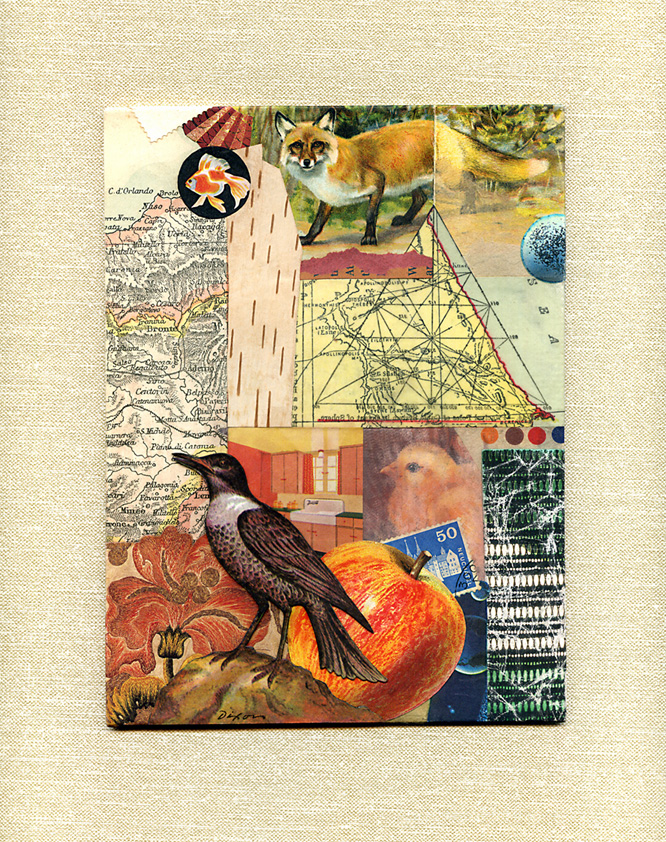
20 x 16 inches