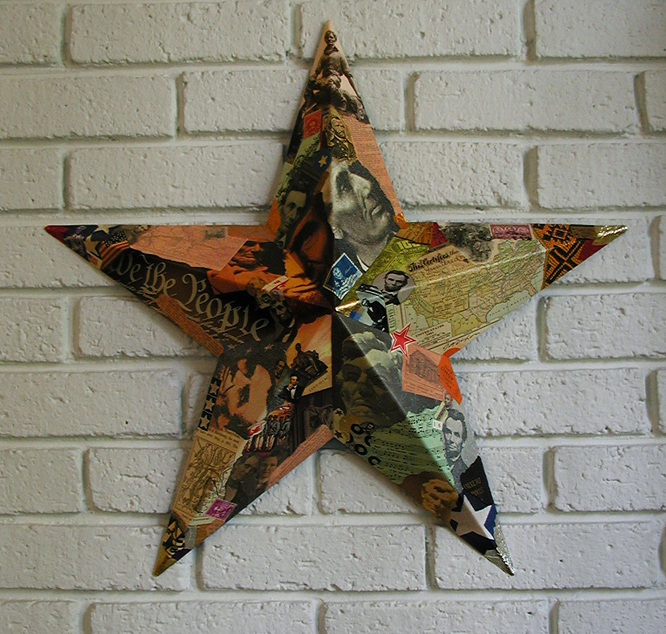
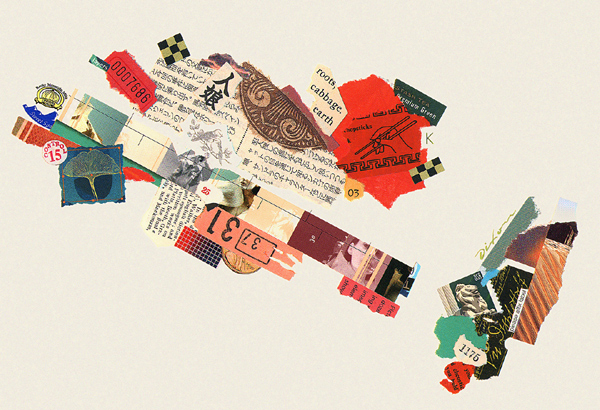
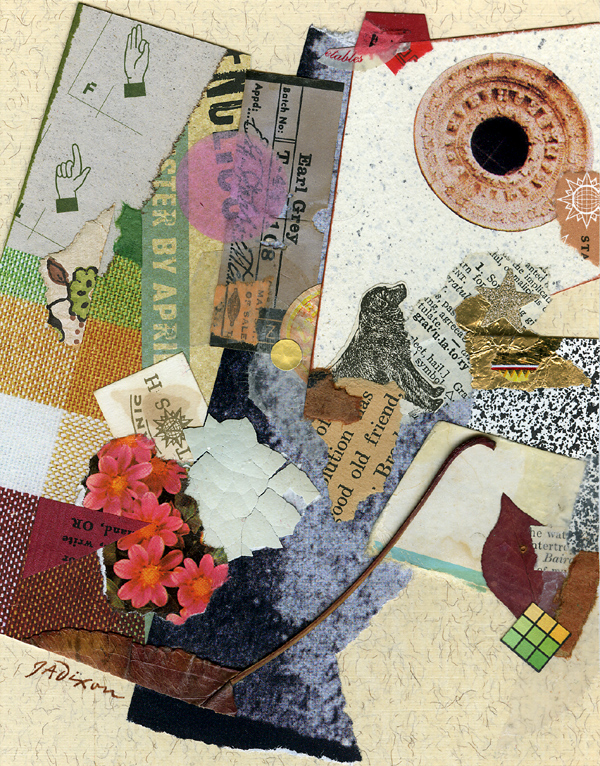
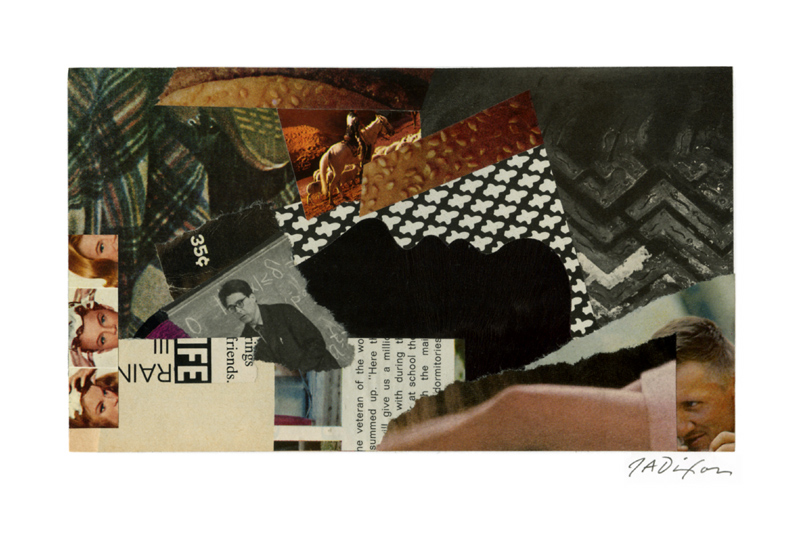
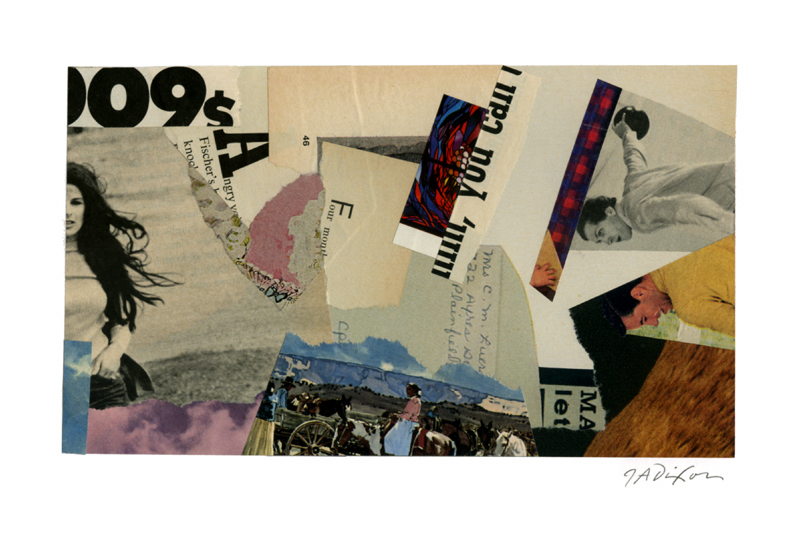
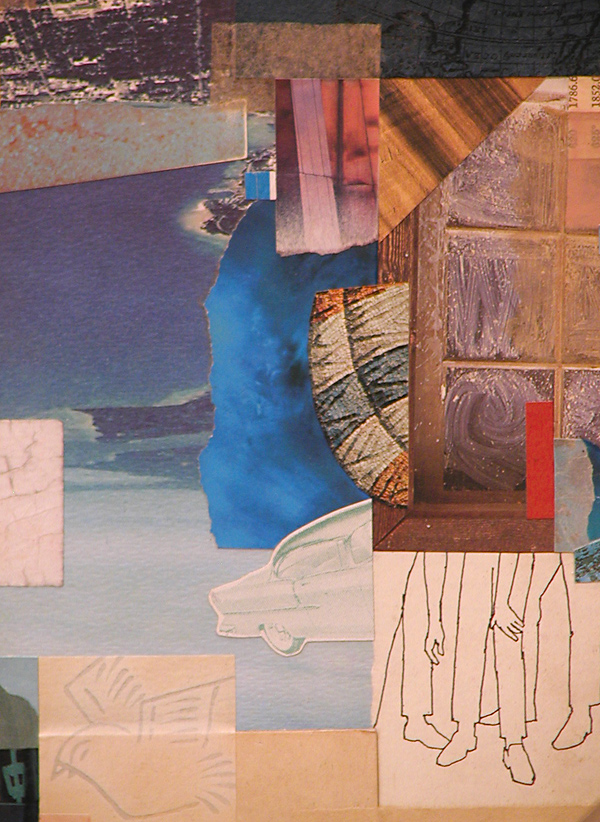
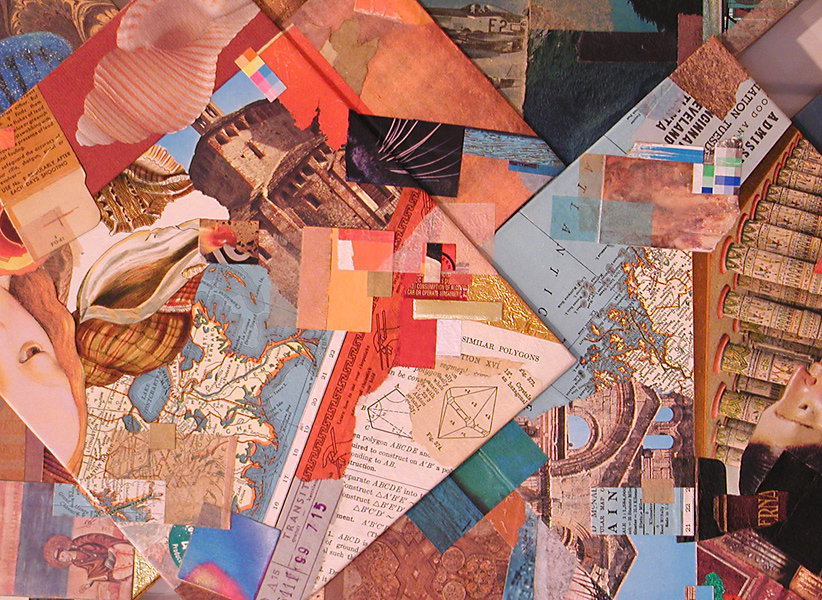
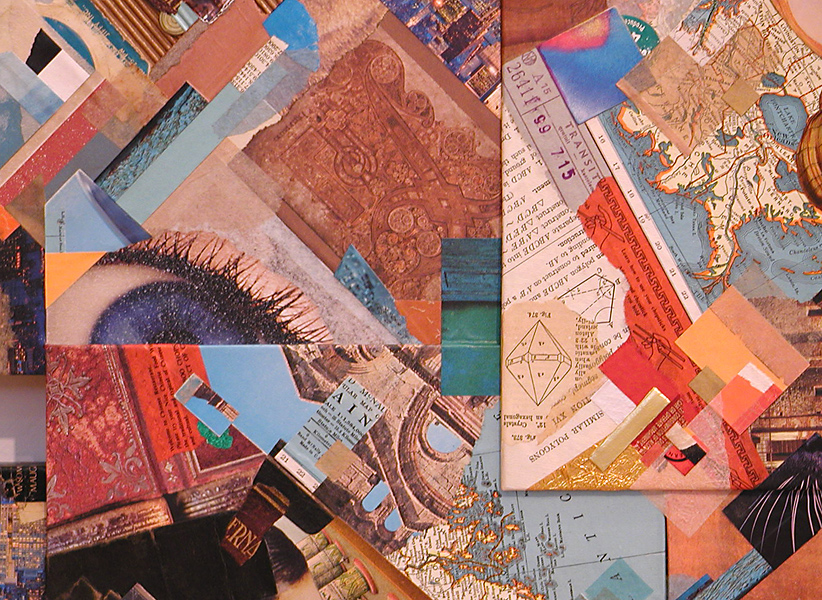
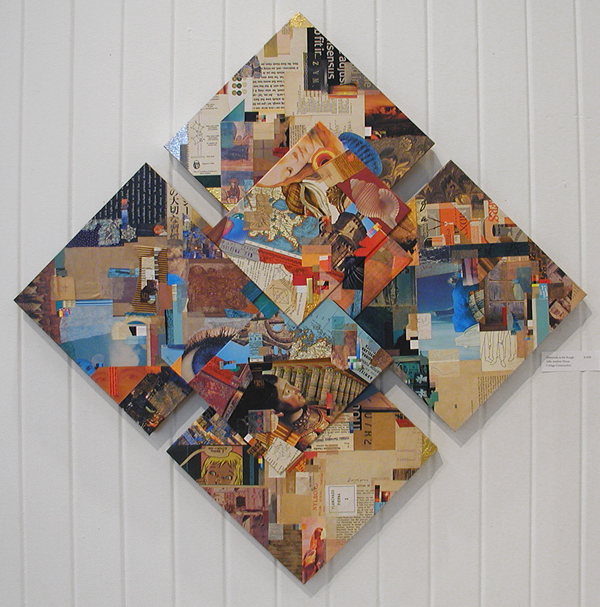
Cuba
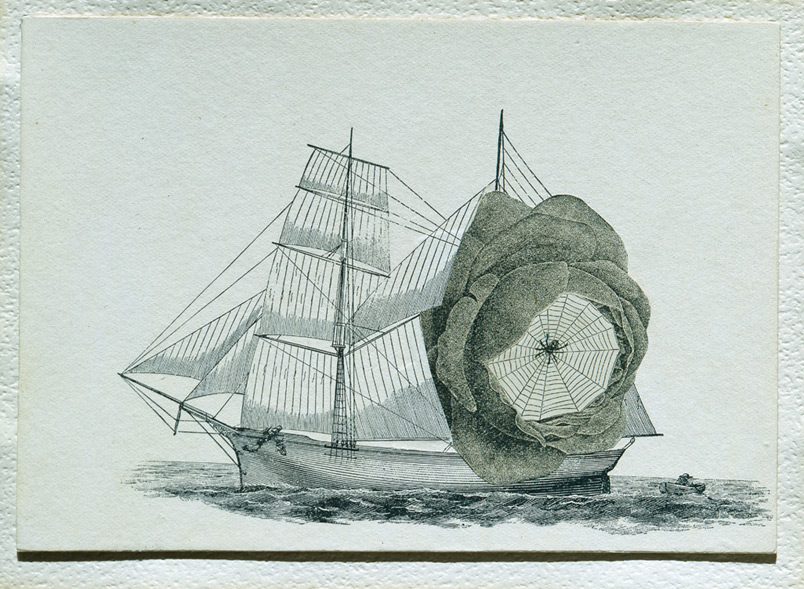
collage miniature by J A Dixon
collection of R K Hower
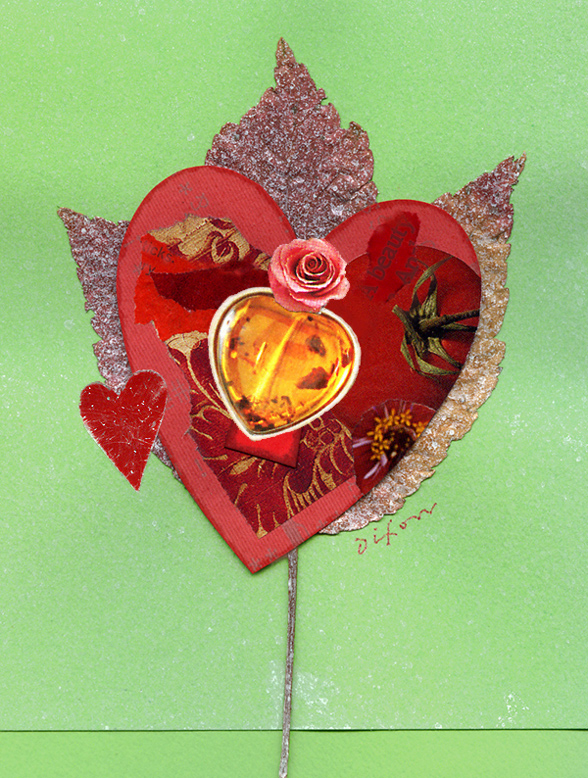
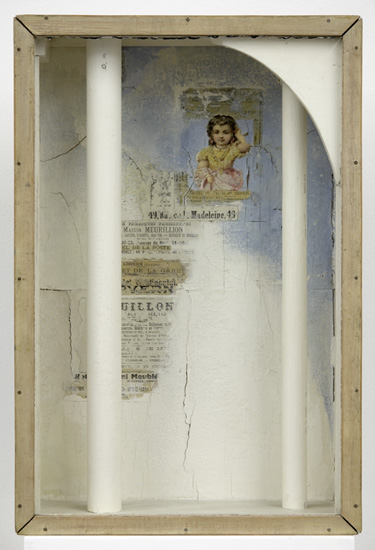
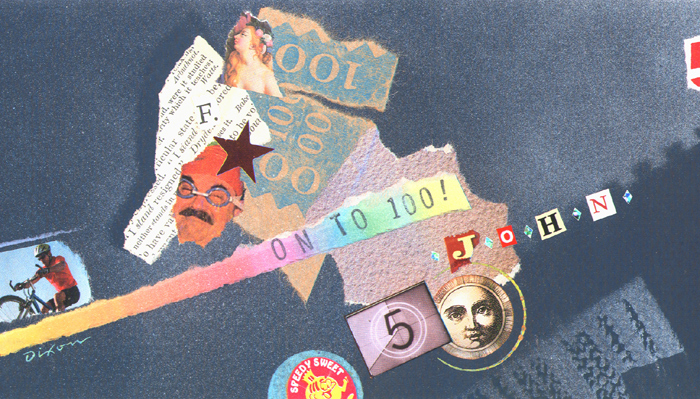
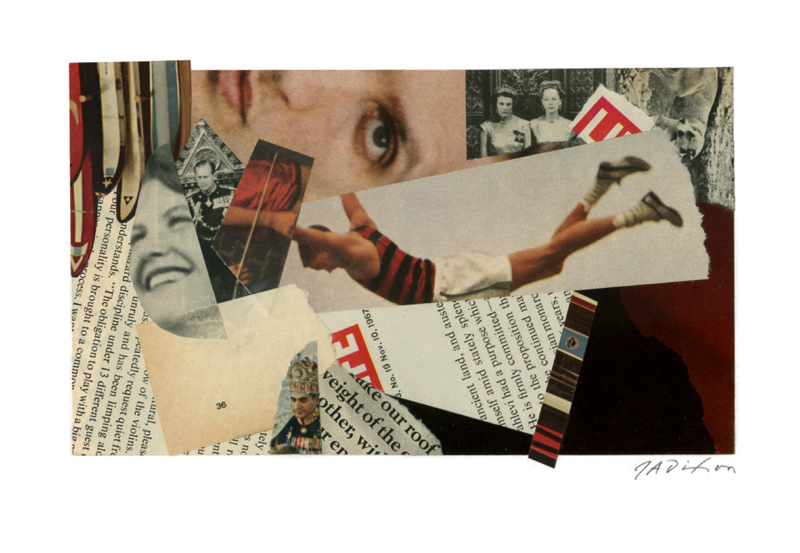
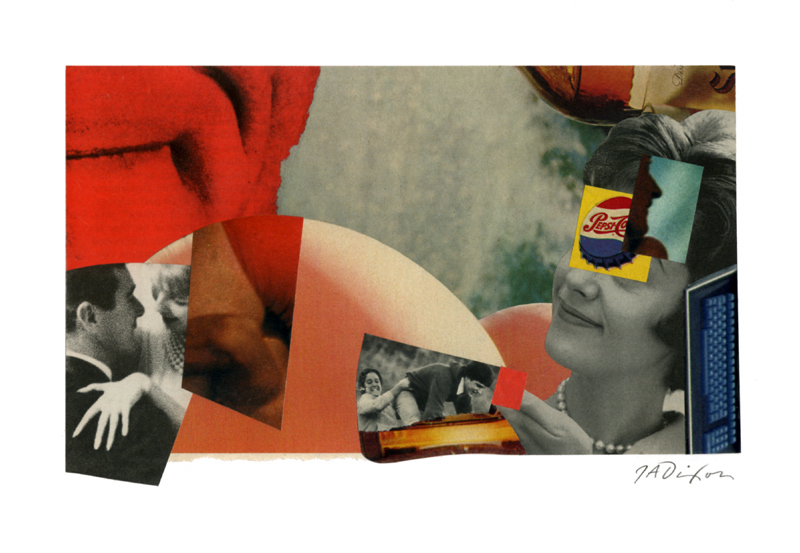
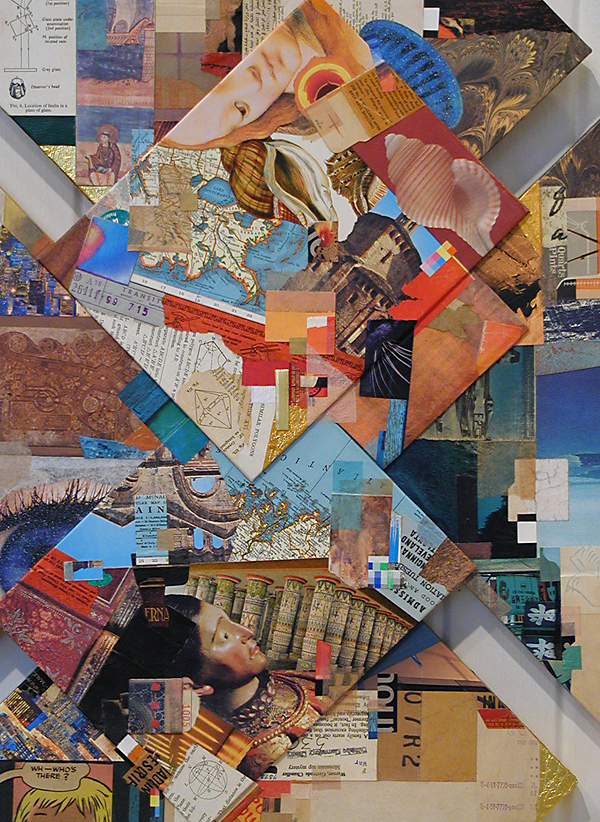
Yoga
collage miniature by J A Dixon
collection of M Higgins
“There is no excellent beauty that hath not some strangeness in the proportion.”
—Francis Bacon
Many of the collage artworks that I have found to be the most fun in creation began as salutes to a friend or member of my family. Quite a few took the form of cover images for greeting cards. What might originate as a meditation on personal traits or favored aspects of life would at times veer unexpectedly into wild territory. For every image imbued with sweetness and flowers, there has been another that threatens to topple the credibility of the entire enterprise — thus, the activity has long been known as my Haus of Cards.
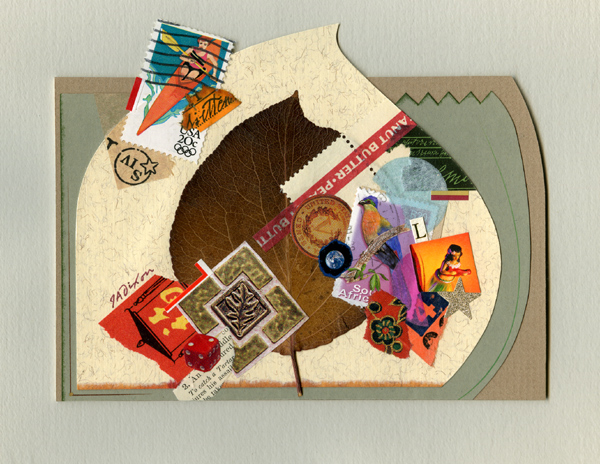
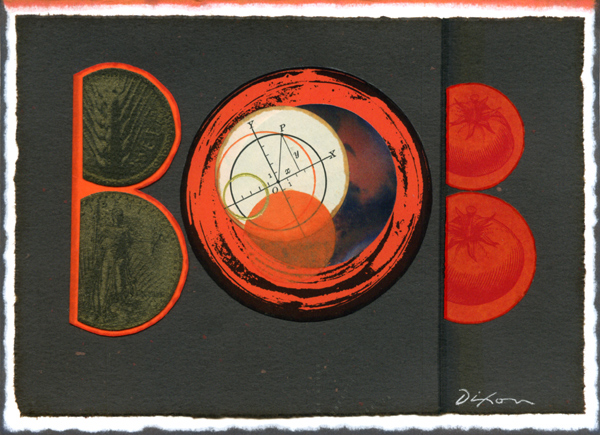
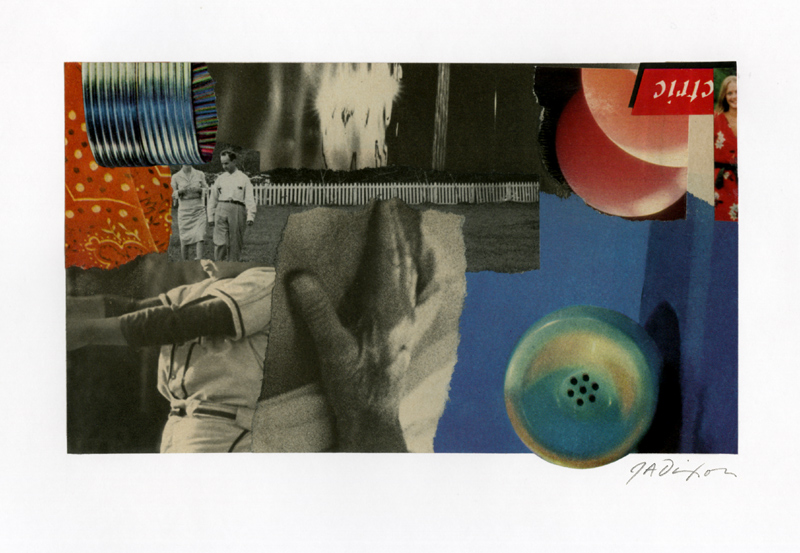
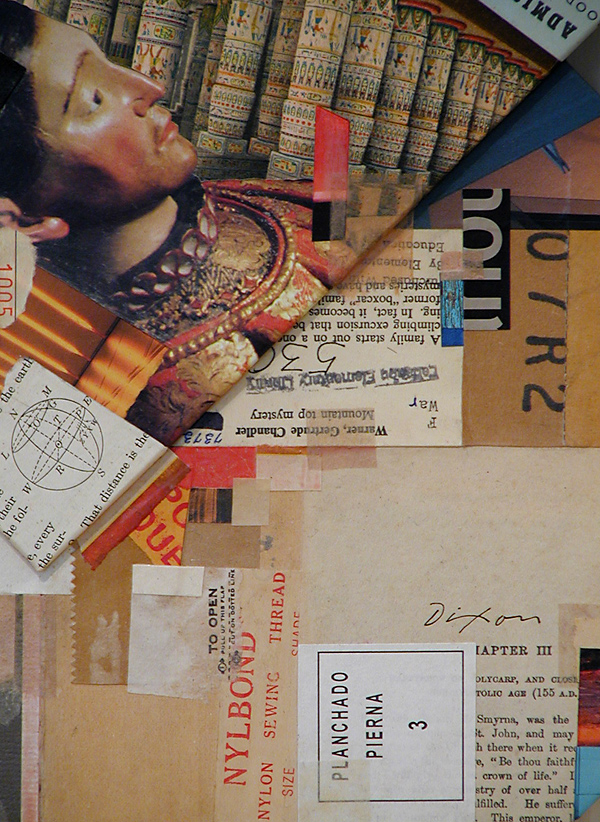
Red Bob Ruptured
collage miniature by J A Dixon
collection of R K Hower
“Man himself is mute, and it is the image that speaks. For it is obvious that the image alone can keep pace with nature.”
—Boris Pasternak
Those who speak or write as though they understand everything about this medium do not know what they are talking about. But, to be honest, I have never met anyone who behaves that way, so perhaps my opening declaration is meaningless. Sometimes it is even difficult to classify what we do as artists in order to place the effort in some category. I just encountered an interesting chunk of round-table discourse by a new online discussion group struggling to define their area of focus. Most distinctions made between what artists call collage, montage, assemblage, construction, layerism, mixed-media, digital art, illustration, or graphic design are somewhat arbitrary, and we continue to see new terms coined by those who hope to distinguish what they perceive as a unique approach. At any rate, the intent of the artist is central. Clearly, definitions in art are rarely necessary except when attempting to trace a cross-pollination or lineage of influences, and when an organized effort or exhibition requires mutually acknowledged parameters. Additionally, there are always other important considerations to discuss, such as: What is an original? What is the relationship between process and artifact? What is the purpose of reproduction? Does a nomenclature based on exclusion have intellectual validity, or is it simply an adjunct to merchandising?
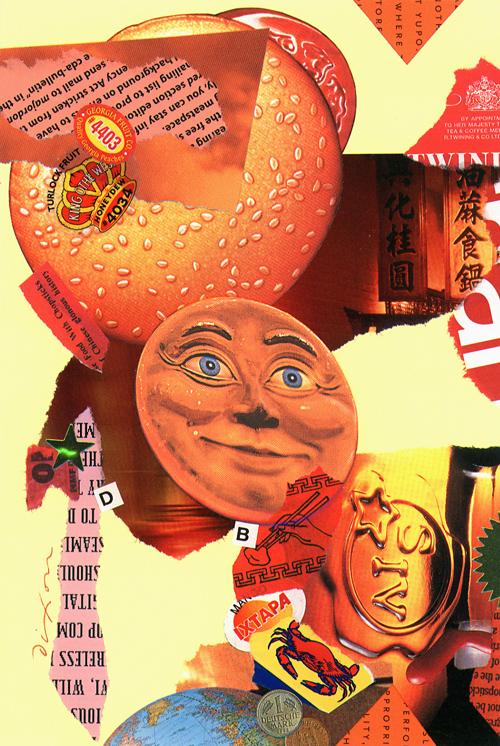
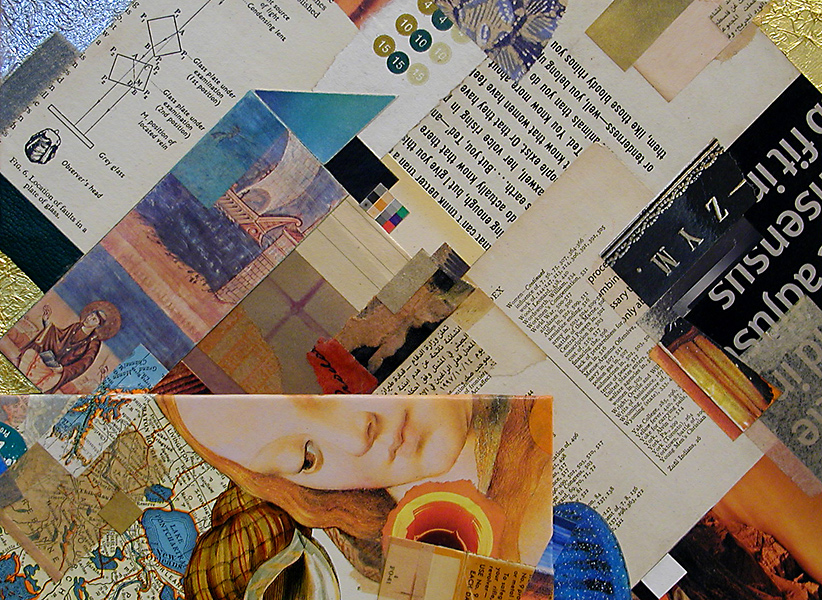
A likely story indeed!
collage miniature by J A Dixon
4 x 6 inches
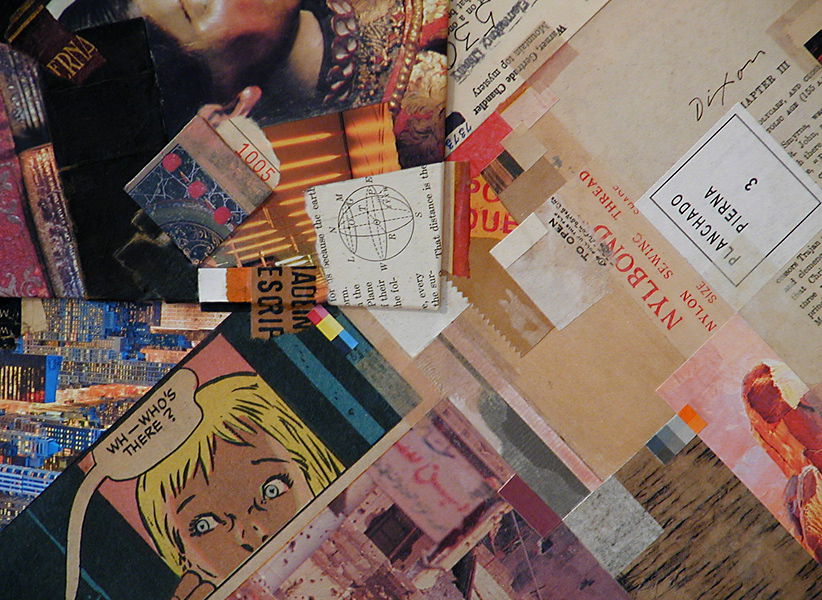
Purchase this artwork!
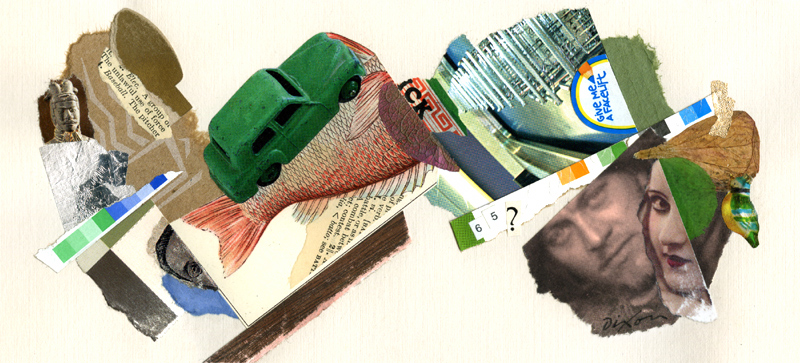
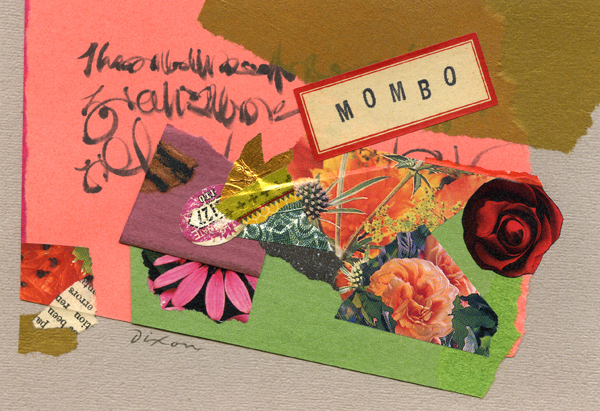
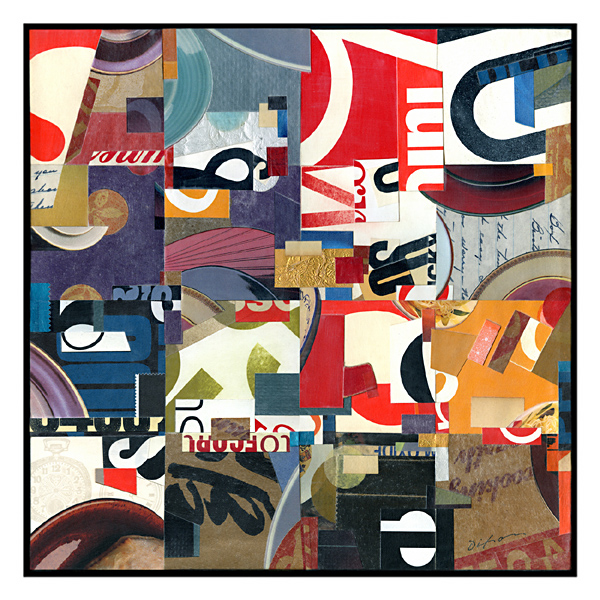
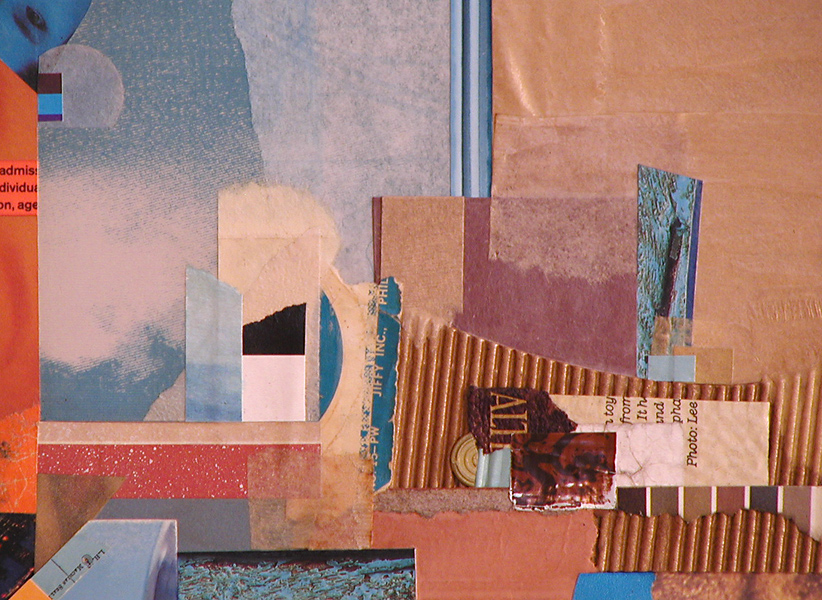
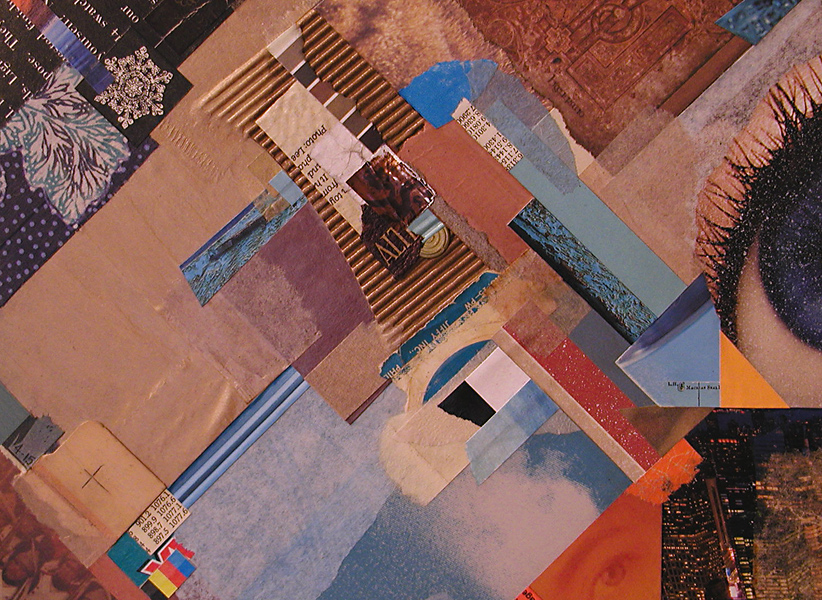
We know that this is a blog, and it’s supposed to be about words, but are there not times when I should just keep quiet and allow a few collage miniatures to speak for themselves?
Ginger’s Mischief
collage miniature by J A Dixon
collection of V Robertson
Dignified By Response
collage miniature by J A Dixon
collection of R Jones
Two and Seven Eighths
collage miniature by J A Dixon
collection of E MacNabb
For Her Day
collage miniature by J A Dixon
collection of S J Montgomery
“I value sense and nonsense alike. I favor nonsense, but that is a personal matter.”
— Kurt Schwitters
When creating a collage, there is no right or wrong approach, but I can’t help but notice the extent to which some artists go in their obvious effort to be clever. Whether one seeks the visual pun, an intellectual twist, or utter shock value, I think all of us would hope to avoid a result that looks too “gimmicky.” For many of us, the goal is to find a desirable place on a spectrum that extends from the fully honed concept to the purely unconscious response. There are times when the progression from start to finish is a smooth, natural flow. More often than not, the process becomes a balancing act of decisions.
The artist weighs the various relationships between layers of overt connotation and covert significance. Blending levels of stark clarity with obscurity, insinuation, and nuance is what gives the medium of collage its distinctive power.
In The Essential Joseph Cornell, Ingrid Schaffner delineates the various threads of underlying meaning in Cornell’s “A Pantry Ballet (for Jacques Offenbach),” and how the artist weaves together French Romantic poetry, Lewis Carroll, lobsters, metaphysics, and the once-scandalous cancan. She explains how his work “was built on the power of association and was so well constructed that it is less essential for us to understand all the references than it is to let our mind wander and play with the images.” There is perhaps no artist who influenced the middle decades of the hundred-year history of collage more than Cornell. His constructions demonstrate just how seamless the balance of conscious and subliminal meaning can become in a work of art.
I like to produce compositions without the motive force of intention, but I also enjoy working with an organizing idea or theme. During the course of its creation, a collage may rely on either principle. A piece might begin as sheer abstraction and evolve toward symbolic implications. On the other hand, it might begin with a mental construct that invites other types of intuition and gut reactions. The essence of collage is complex, synergistic, alchemical. Let us all make more!
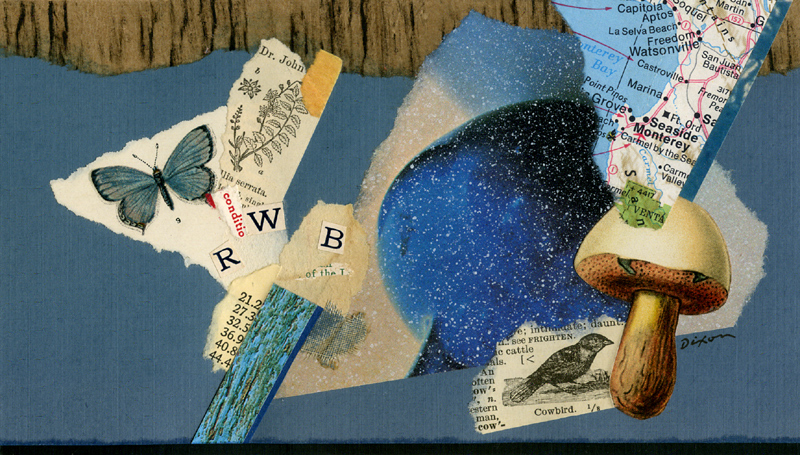
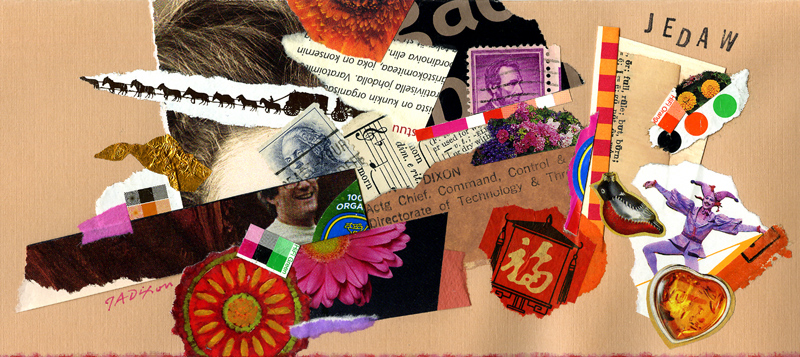
Cyclic Attraction
collage miniature by J A Dixon
7.75 x 3.375 inches
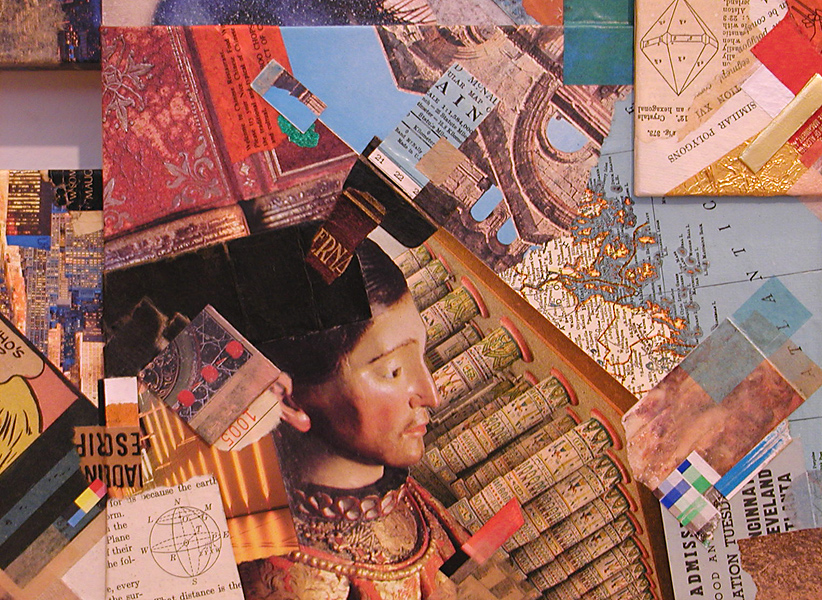
collection of G Zeitz
“I could see no reason why used tram tickets, bits of driftwood, buttons, and old junk from attics and rubbish heaps should not serve well as materials for paintings; they suited the purpose just as well as factory-made paints.”
— Kurt Schwitters
There may be no more delightful aspect of collage than the realization that this medium can be pursued endlessly without the need for costly materials. The only significant budgetary item is creative time. True, we all want to document our work and frame it handsomely, but that same desire is an across-the-board constant for all fine artists. The activity itself is within the reach of everyone, regardless of economic means. Anyone can create value from substance that has virtually no intrinsic worth. An artist who uses nothing more than a pencil still wants to draw on a lovely, well-made piece of paper. By contrast, the working surface for a collage can derive from the same cast-off resources as the ingredient found material. How wonderful a world is that?
Disney Sauce
collage miniature by J A Dixon
3 x 3 inches, not for sale
“Success is the sum of small efforts, repeated day in and day out.”
— Robert Collier
“Sometimes when I consider what tremendous consequences come from little things … I am tempted to think … there are no little things.”
— Ralph Waldo Emerson
As much as I realize how vital it is to study and experiment without preconceived visual notions or tangential aims, it is a rare thing for me to produce a collage without some underlying motivation, whether it be an eventual offer to sell or a simple desire to display the work through social networks or a site such as this. It is, however, important to devise, apart from distracting intentions, some ongoing method of keeping one’s rhythm of composing material for its own sake, in order to reveal and sustain a process of pure discovery. It is not as though some artists are better at this than others. I see it more as a matter of momentum.
Perhaps musicians are more attuned to this, although it is always foolhardy to generalize. They seem to possess an innate understanding of and appreciation for distinct activities— creating, practicing, jamming, performing —that derive from a more collaborative tradition than the visual arts. I admire artists who don’t have to trick themselves into engaging in strictly private, personally unique investigations. To develop and internalize this kind of work ethic— to be able to honestly tell oneself that nobody ever needs to see the product, that it never needs to be held up to evaluation or approval —is one of the most valuable qualities an artist can achieve. This involves resisting the desire to immediately display our incremental output. It means creating a framework we can use for real exploration, and, in the words of John Willenbecher, “try things out, put things down safe from importance and finality.” There is often a fine line between true worth and mere preciousness. Artists who have refined their creative process know the difference.
Blog Jam
collage miniature by J A Dixon
3 x 3 inches, not for sale
“Get the facts first, and then you can distort them as much as you please.”
— Mark Twain
I live and work in a 90-year-old bungalow in downtown Danville, Kentucky. Tomorrow night, a couple blocks from my studio, Centre College will host the 2012 Vice Presidential debate between Joseph Biden and Paul Ryan. A few of us will walk over to campus, set up chairs, and view the contest on a big screen. After the event, there will be a free outdoor concert by the Marshall Tucker Band.
So, there you have it: the most political entry you will ever see at this site. God bless America.
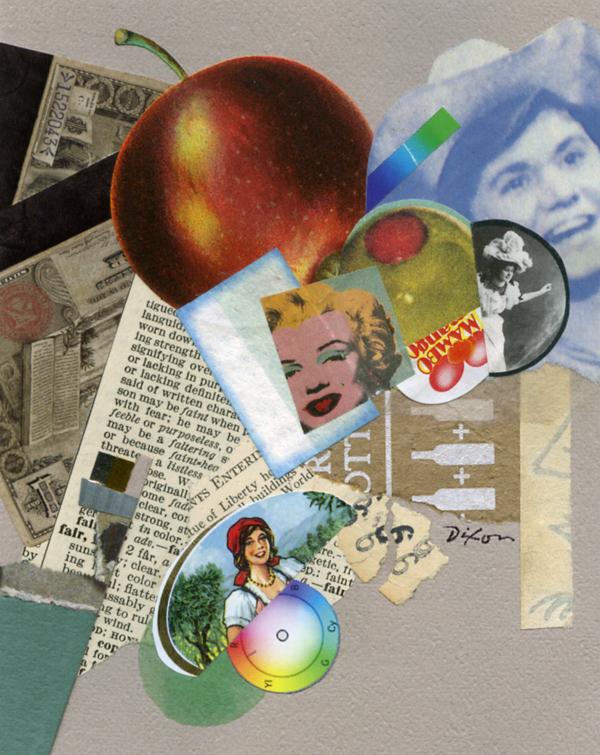
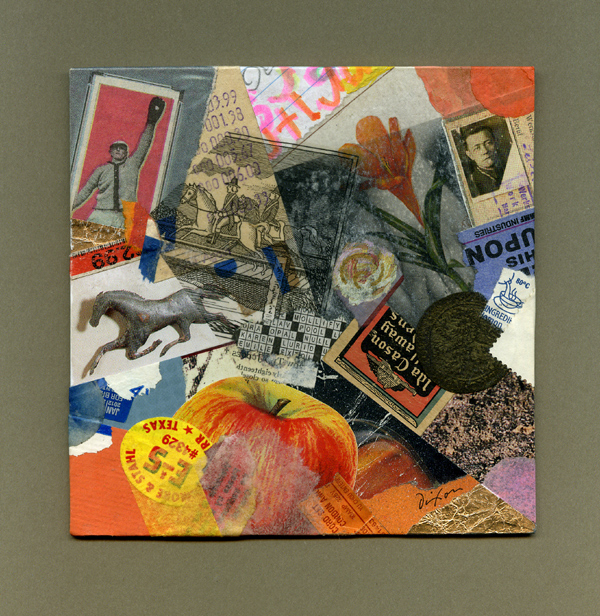
Mao, Mom, and Cherry Pie
collage miniature by J A Dixon
4.5 x 4.5 inches
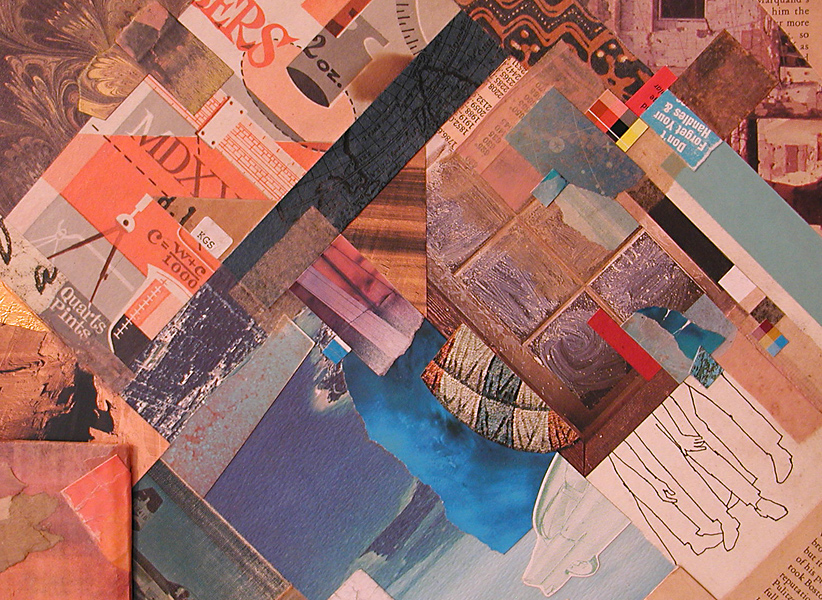
collection of J Hellyer