Posting too much, too often.

October 14th, 2015

Oftentimes on the internet, it’s more a culture of ‘Look at me! Look at me! My thing! My thing!’ and it’s competitive.”
— Joseph Gordon-Levitt

“There is no design without discipline.”
— Massimo Vignelli
 

Perhaps it is disingenuous for a blogger to bring up the subject of routine self-exposure, but I cannot help myself today. The level of unbridled disclosure on the Web is out of hand, and there is no sign of moderation on the horizon. Out of respect for your time and consideration, it would make sense for me to stay on the subject of collage. You have your reasons for visiting this site, and I doubt that they have anything to do with my general opinion of social media.

Let me be blunt: Too many people who create collage are posting too much, too often. This viewpoint is coming from someone who is a big fan of the positive influence and cross-pollination in our medium. I can see no benefit from working in a vacuum. On the other hand, there is something to be said for a bit of restraint, and we all have a need for greater discernment before deciding whether or not our most recent composition is worthy of public display.

So, now I have to come up with a suitable image (or unsuitable, depending on one’s perspective) to illustrate this rant. Here we go:
 

rejected collage
(for educational purposes only)

a birthday salute . . .

October 7th, 2015

“In 1998, Ma founded Silkroad, a nonprofit outfit that connects diverse cultures and musicians not only through Ma’s Silk Road Ensemble (for which more than 80 pieces have been commissioned), but also by supporting education and cross-cultural business and artistic partnerships.”
– NPR.org
 

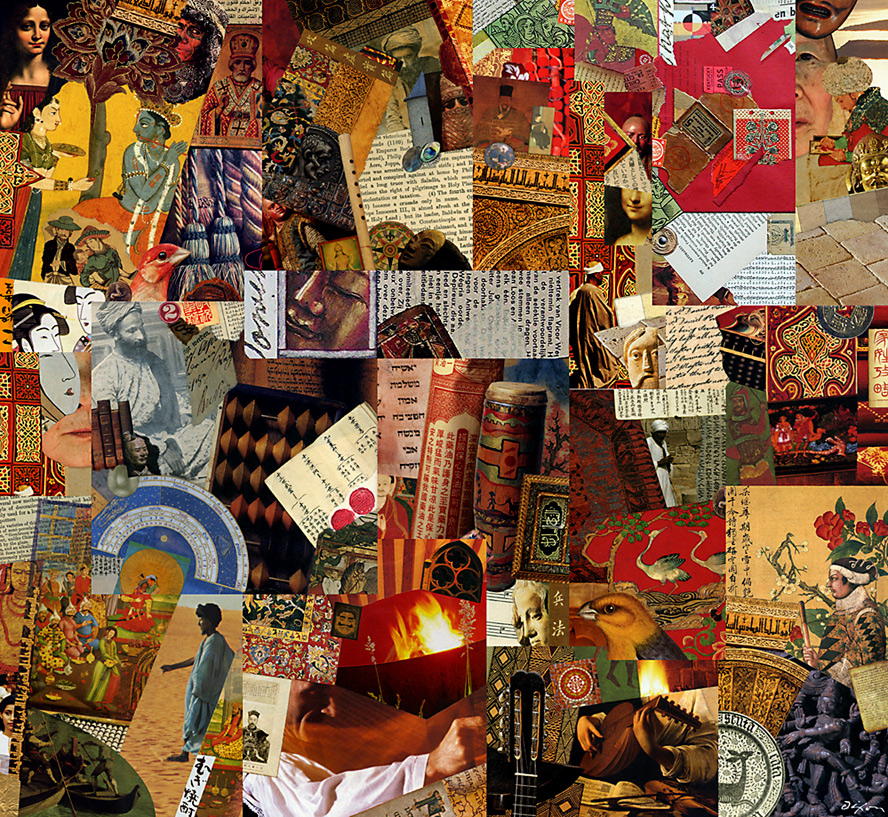
Today is the 60th birthday of Yo-Yo Ma, among the world’s most impressive creative individuals. When he brought his Silk Road Ensemble to my hometown in 2013, I was inspired to begin a series of collage poems dedicated to East-West understanding. I can think of no living artist with a greater curiosity for diverse influences, or a wider versatility, fusing cultural traditions with innovative experimentation.
 

Silk Road Details
digital compilation by J A Dixon
a birthday salute to Yo-Yo Ma

Big No-No

October 2nd, 2015

“The purpose of this challenge is to have some fun, and to experience the challenge of finishing a collage that someone else has started. That someone else was me.”
– Terry R Flowers

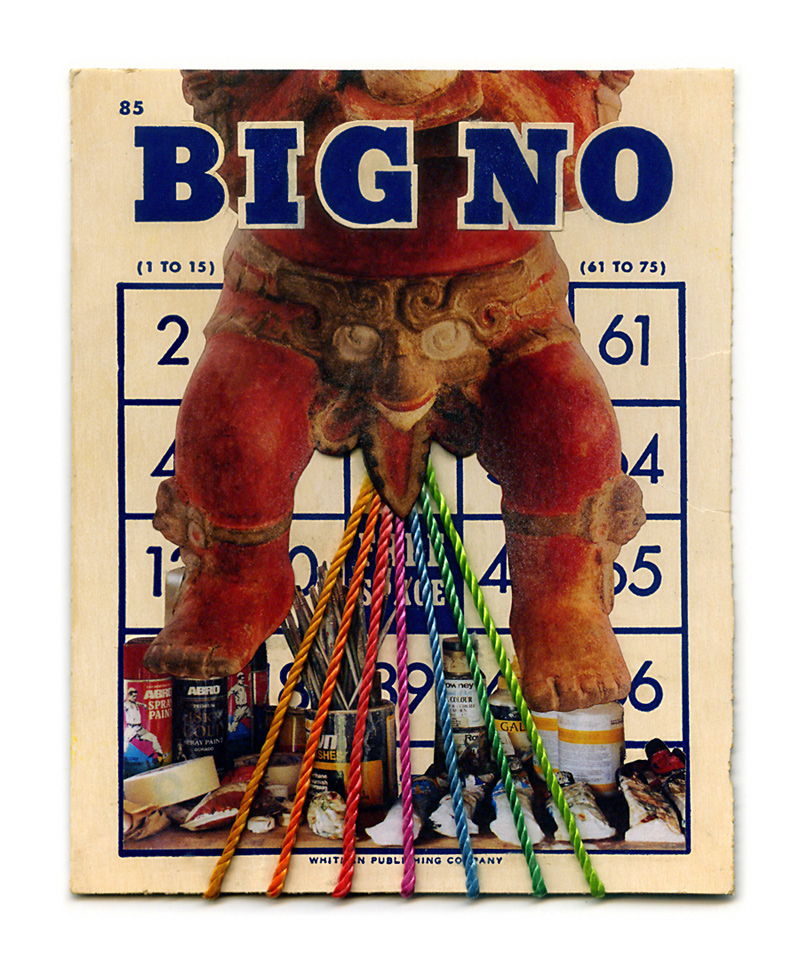
I may be getting the hang of this shared-authorship thing. Veteran collaborator T R Flowers offered a spot to me in his bingo-card “zine” project, so I grabbed it. His prolific creations are characterized by wit and humor, so I pushed myself in that direction. Here is the original card. Here is Terry’s start that he sent to me. Stay tuned for a look at some of the other interesting contributions rolling in.
Big No-No ~ collage collaboration on bingo card by Terry Flowers and John Andrew Dixon

Big No-No
collage collaboration on bingo card
start by T R Flowers, finish by J A Dixon
4.5 x 5.625 inches

September 25th, 2015


It pleases me to let everyone know that we shall open our studio and gallery to the public again during the first weekend of November. For more information, please visit our facebook page.


Pleased and honored . . .

September 18th, 2015

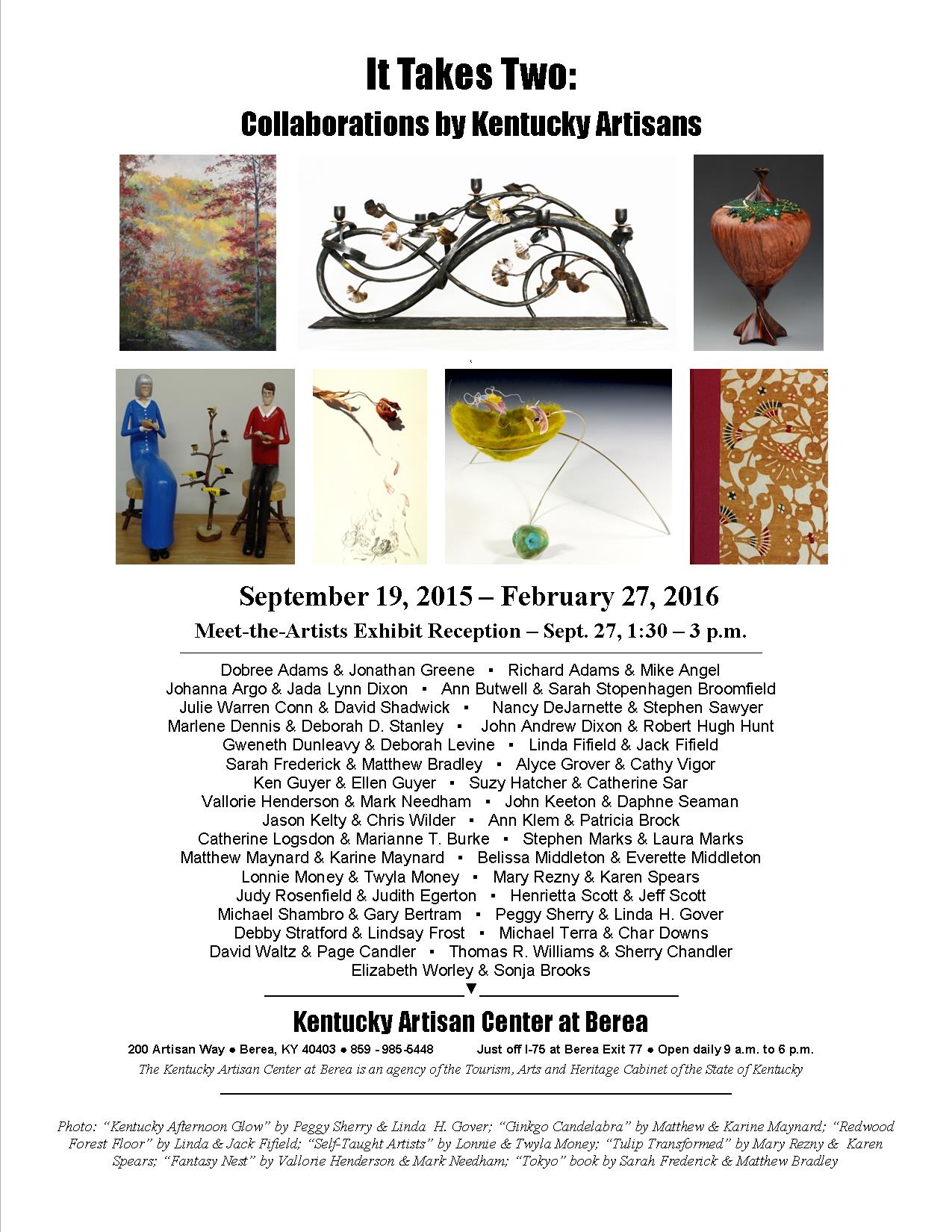
Well, just in case I have not made myself crystal clear — I am very pleased and honored to be represented in this exhibition with my “co-conspirator” Robert Hugh Hunt. I trust there is plenty of time for a lot of people to see what is shaping up to be a distinctive show. Perhaps that includes you!

John Andrew Dixon ~ It Takes Two ~ Collaborations by Kentucky Artisans ~ Kentucky Artisan Center at Berea ~ September 19, 2015 to February 27, 2016

Happy 33!

September 11th, 2015

Dana and I are observing 33 years of marriage, apart from each other. I have made an anniversary collage for her with the scraps of rubbish at hand. Is there not beauty and the potential for redemption in nearly everything, if you remember to look for it?
 

a hand-crafted 33rd anniversary card by John Andrew Dixon for his wife, Dana

Les Cheneaux Sails
collage miniature by J A Dixon
5 x 7 inches
collection of D L Dixon

For Your Protection

September 7th, 2015

“Many men go fishing all of their lives without knowing that it is not fish they are after.”
– Henry David Thoreau

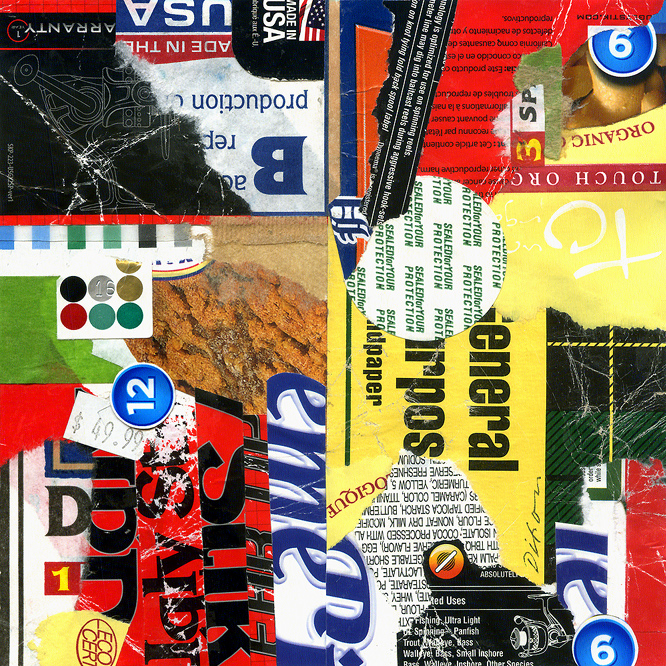
Another trip collage from my recent “fishing retreat” to the Les Cheneaux Islands of Lake Huron. Working within the constraint of limited scrap at hand is a worthwhile visual exercise in preparation for creating collage artworks at any scale.
 

Dixon_ForYourProtection

Untitled (For Your Protection)
journal experiment by J A Dixon
6 x 6 inches

Character Flaw

August 31st, 2015

 
Character Flaw ~ J A Dixon

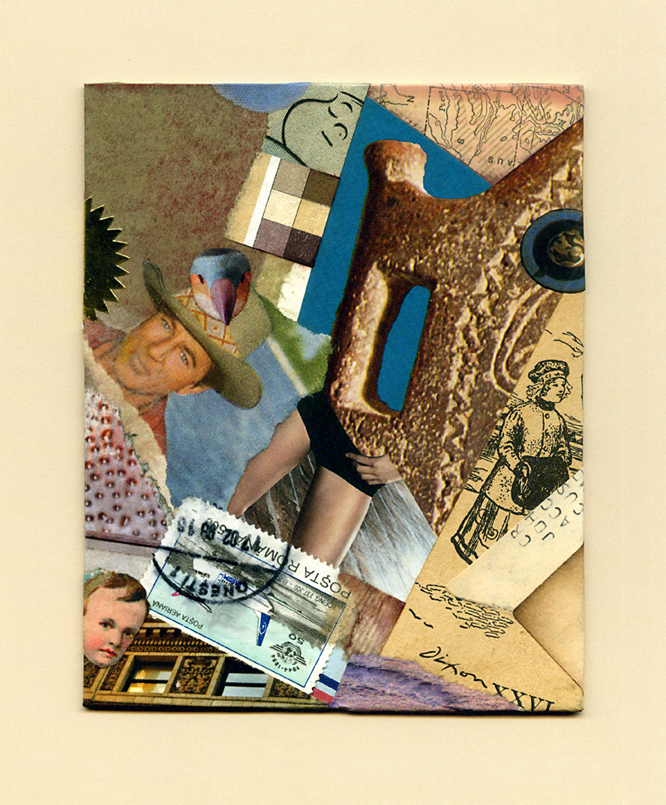
Character Flaw
collage miniature by J A Dixon
4 x 5 inches
 
Purchase this artwork!

A Kentucky Collaboration

August 24th, 2015

“I’ve collaborated with many artists over the years but never on a project of this size. The two pieces were to be 24″ x 24″ on structured panels. What made this collaboration successful was the interplay between the two artists. We both sent numerous pictures of our starts in progress and were able to play off the ideas and techniques the other was using, in this we created a true pair of collages instead of two separate pieces.”
— Robert Hugh Hunt
 

Collaboration between collage artists is a widespread, dynamic development within a medium that has shown extraordinary vitality after its centennial milestone in 2012. This very well may be part of a broader phenomenon, due in no small way to the explosion of social media and a greater networking among artists of all kinds. I was not surprised when, earlier this year, here in my home state, the Kentucky Artisan Center at Berea announced a major exhibition called It Takes Two: Collaborations by Kentucky Artisans.

In response to this opportunity, I decided to contact Robert Hugh Hunt, an artist from Richmond, Kentucky whose work I had come to respect after we made a connection through Facebook. Both of us were aware of our geographic proximity, but had not previously met in person, nor had we collaborated remotely on a casual project. Appreciating each other’s prior work is no guarantee that two artists will enjoy the collaborative process or value the creative end result. Only by risking a joint venture will both artists find out if they actually are “on the same wavelength.” I am pleased to report that the results of my teamwork with Robert exceeded our optimistic expectations, and that one of the two pieces we created was selected for the “Takes Two” show.

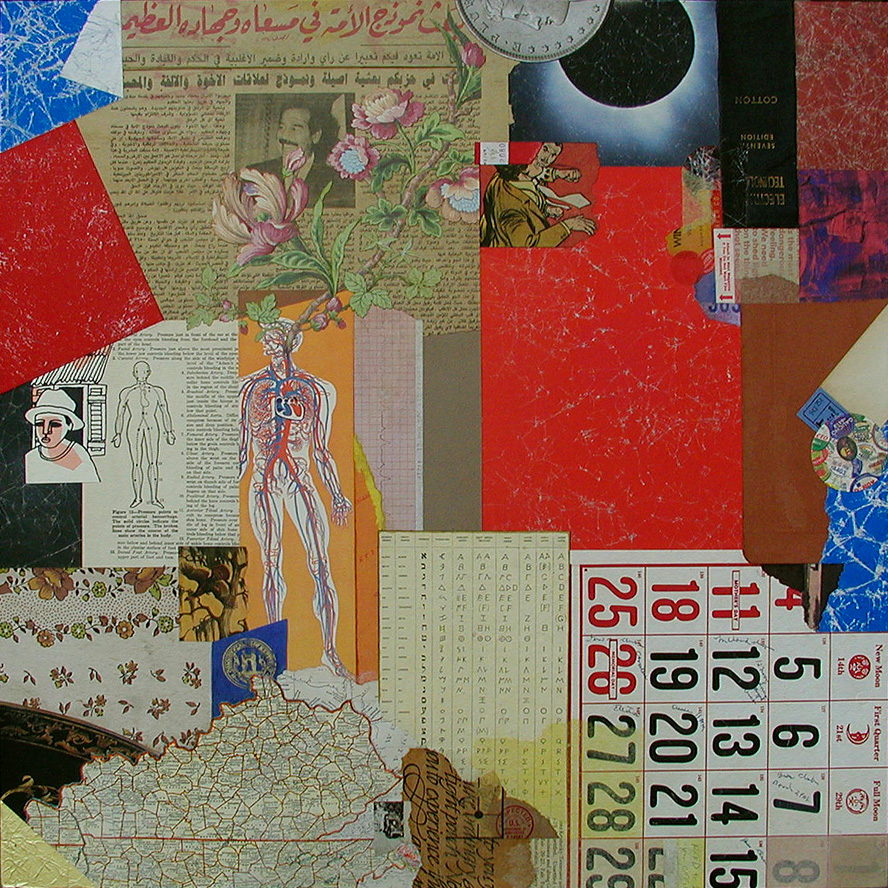
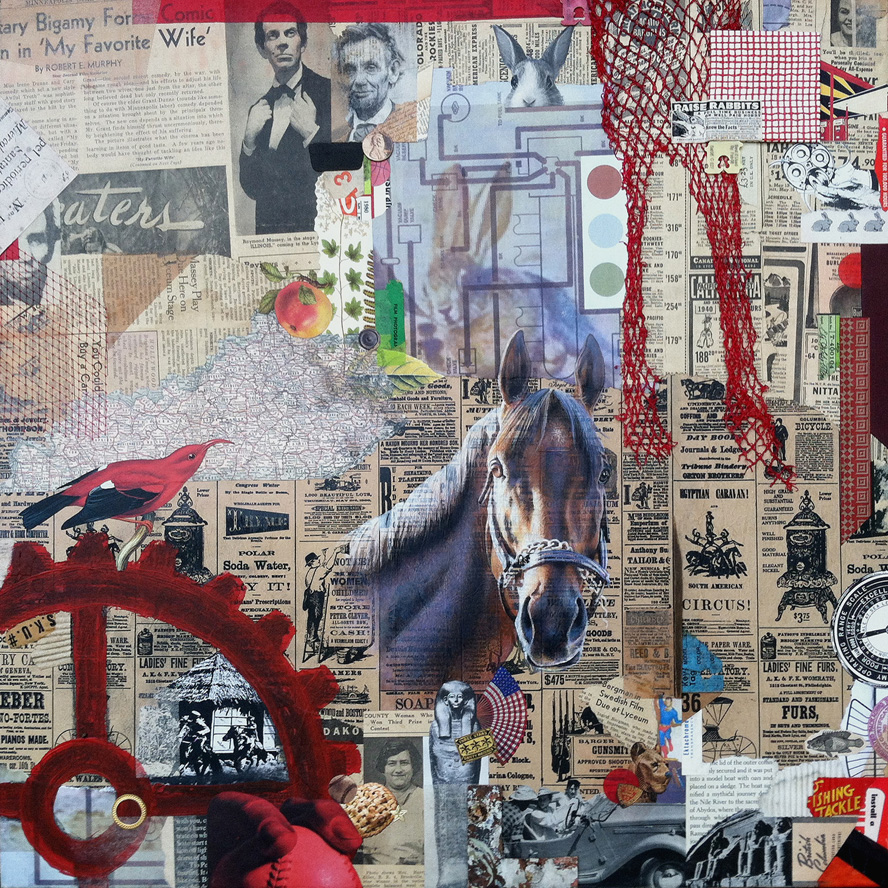
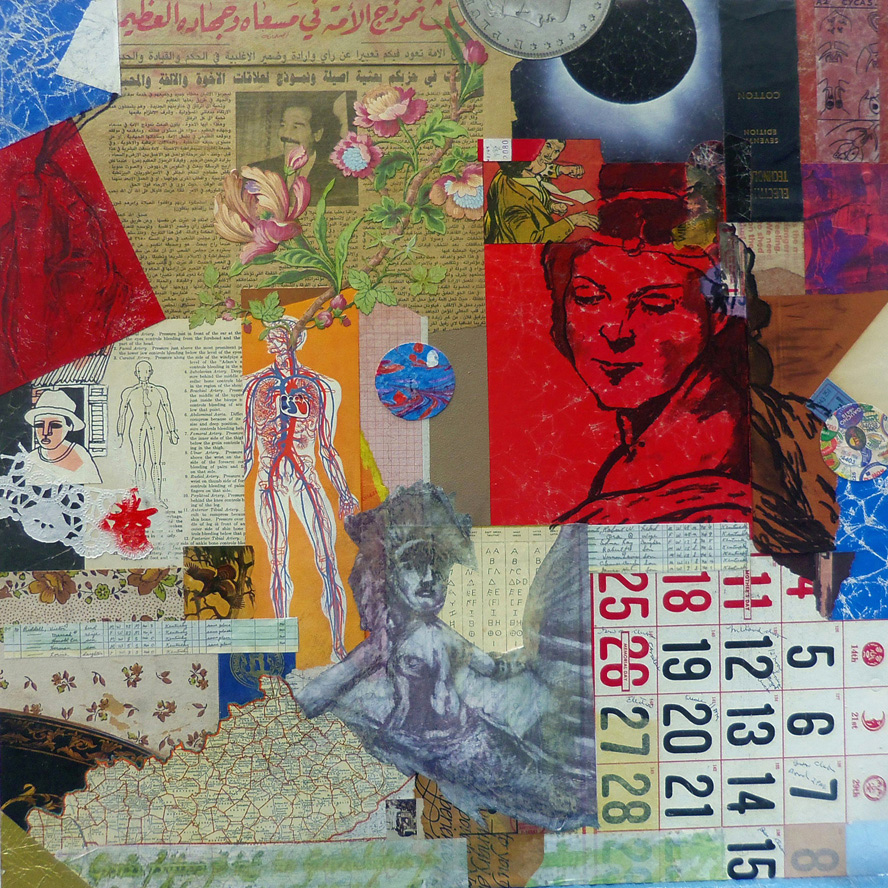
As artists, Robert and I both work regularly with combined mediums, but we chose collage as the foundation of our approach because we recognize how ideally suited it is for collaboration. There was no inclination to think small. We each fabricated larger dimensional panels and created a “start” for the other — to establish the background and organize the two-dimensional space with found material and other recycled/repurposed elements. collage collaboration ~ the start by Robert Hugh Hunt for Kentucky Sovereign ~ collage on structured panelAfter meeting for the first time (with spouses, over lunch at a delightful new Cuban eatery halfway between our studios), we exchanged the unfinished works to complete the compositions with additional ingredients and renderings. Robert’s recognized practice of layering his cut-and-paste collage artworks with mixed-media additions had already caught my attention, and his expressed aim to do the same within our collaboration inspired me to include a hand-rendered element as a focal point in my “finish,” which we titled Kentucky Sovereign. Robert’s finish, Kentucky Madonna, features multiple mixed-media treatments on top of my background shapes. The effect helps to integrate our respective techniques and to bond the artworks as a “true pair,” to use Robert’s phrase.

For my start, I began with a section of an Iraqi newspaper brought home by a member of the Kentucky National Guard. Robert made use of clippings from a 1940s-era newspaper that he got from fellow collage artist Ted Tollefson. collage collaboration ~ the start by John Andrew Dixon for Kentucky Madonna ~ collage on structured panelOur range of “merz-strokes” was unfettered, but we shared a desire to “Kentuckify” our choices, although neither of us knew exactly what we meant by that. Other ingredients include magazine scraps, printed papers, antique maps, used packaging, illustrations from discarded books, mesh bag material, tissue, fabric, plastic clasps, wood, gummed labels, metal, emptied tea-bags, produce stickers, foil, wallpaper, digital printouts, a paper doily, and more (with a modest assemblage aspect thrown in for good measure). As with any collaboration, the challenge is to discover a way to enhance the start in a complimentary manner and also to bring one’s personal approach to the finish. Our decision to avoid isolation was a good one. Images exchanged during development kept the creative energy in flux and maintained a visual cord (a common chord?) between the surfaces as they evolved separately. It was a positive experience for both of us and boosted our enthusiasm to continue as active collaborators.

Thanks, Robbo!
 

finish by John Andrew Dixon for Kentucky Sovereign ~ a collaboration with R H Hunt ~ collage on structured panel

Kentucky Sovereign
a collaboration by R H Hunt and J A Dixon
collage on structured panel, 24 x 24 inches
(start by Hunt, finish by Dixon)
selected for It Takes Two: Collaborations by Kentucky Artisans
available for purchase

finish by Robert Hugh Hunt for Kentucky Modonna ~ a collaboration with John Andrew Dixon ~ collage on structured panel

Kentucky Madonna
a collaboration by J A Dixon and R H Hunt
collage on structured panel, 24 x 24 inches
(start by Dixon, finish by Hunt)
available for purchase

Fred Otnes, 1925–2015

August 17th, 2015

“Otnes abandoned the narrative style… The move set him apart from other commercial artists of his time, and his willingness to embrace the abstract and chaotic nature of collage put him in high demand during one of the most turbulent decades of American history.”
— The Saturday Evening Post, 2015

“Fred Otnes brings to his collage paintings a classical refinement and control that makes poetry out of chance pictorial effects. He dips into early Cubist collage techniques, touches Florentine and Renaissance bases, and reverses Dadaist chaos into gorgeous homages to order.”
— Maureen Mullarkey, 2002
 

I just learned about the death of artist/illustrator Fred Otnes. I tend to focus here and in my own practice on the acknowledged masters of fine-art collage, but Mr. Otnes certainly had a greater influence on me during my formative years and during the period of my life devoted to “making it” as an independent illustrator and designer. He is rarely included among the seminal figures of 20th-century collage, but he should be. Allow me to back up a bit and reveal some of my own story.

In the 1960s I had four different art teachers in four years of high school. I resist being unkind, but each one of them was worthless. I had some talent, so there was no reason to spend time with me. I was left to fend for myself, because, apparently, it was more urgent to actively babysit the class goof-offs. By sixteen I was investigating the available correspondence coursework. No one thought to tell me about the Dayton Art Institute in the closest big city. I don’t think I even realized how desperate I’d become. What others might have viewed as crass merchandising was a Godsend for me. I responded to an advertisement from the Famous Artists School and completed the test. A representative actually paid a visit to discuss the home-study course that would provide the fundamental art instruction I’d been missing, and I begged my parents to let me give it a shot. They said, “Okay,” and I am grateful for this simple consent — access to legitimate art educators would be mine. I acknowledge now that their “Course For Talented Young People” was a marketing experiment, an attempt to leverage the successful adult course with a younger demographic. That meant nothing to me at the time. This was the school endorsed by Norman Rockwell, and I was a charter student! Although my Mom eventually had to cajole me into keeping abreast of the challenging lessons, a sea change had occurred. I was at long last formally introduced to the world of fine and applied artists. Among those that impressed me most was someone named Fred Otnes.

I was a peculiar kid who got more excited about magazine illustrations, corporate trademarks, television animation, and the Sunday comics than I did about “museum art.” The work of Otnes touched me in a way that would take decades for me to unravel. In my youth, not being able to figure out how an artist created something was usually paired with disinterest, but his work affected me in the opposite way. His graphic synthesis of images, engravings, diagrams, and language exposed a realm that I could aspire to enter. Even as an experienced pro, I continued to find his technique mystifying. I was relieved when legendary illustrator Mark English said, “I don’t even know how he did them, the mechanics of printing, photography and all the things he did to put them together.” Suffice it to say that in a profession biased against the creative explorer, Fred Otnes braved a path that few, if any, realized was there, successfully made it his own, and became one of the most distinctively recognizable, highly honored applied artists of his generation.
For many years, through the Illustrator’s Workshop, Otnes was a teacher and mentor, and, like others in the field, spent his later years expanding his personal style as a gallery artist. Whether applied to editorial or commercial use, the creations embody his profound respect for subject matter. If there is something elusive in his work that will continue to inspire me, it is this — I shall always hold in high regard the sense of “reverence” he brought to each layered plane of expression, to every choice of color or texture, to the symbolic meaning of each ingredient, and to the aesthetic harmony of the whole.
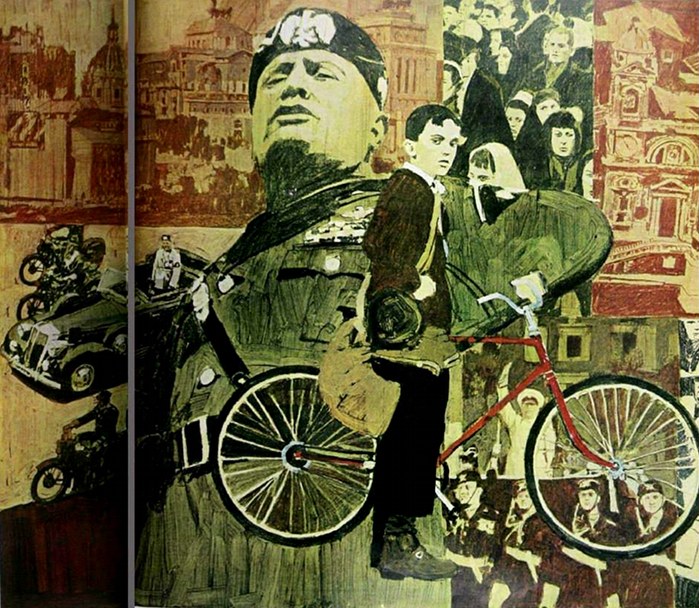
 

Otnes_Mussolini_1966

The Day Mussolini Dies . . .
Saturday Evening Post illustration by F Otnes, 1966
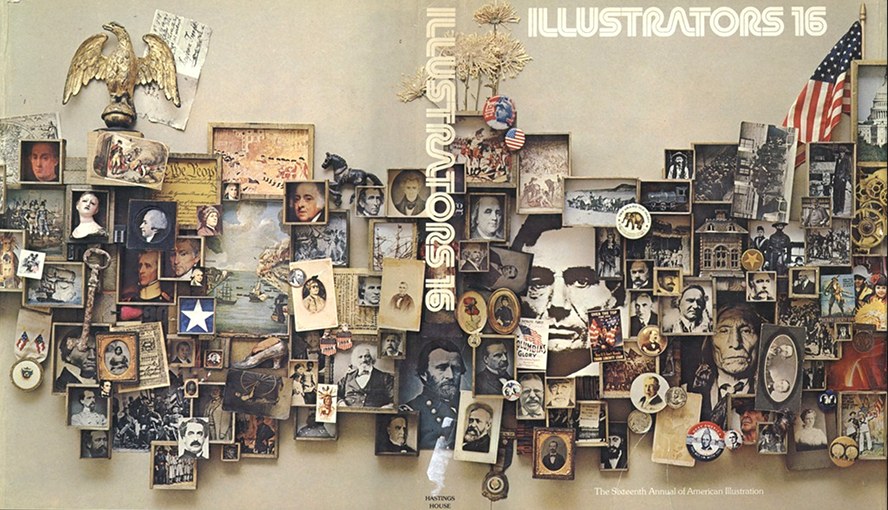
Society of Illustrators 16th Annual ~ cover by F Otnes

Illustrators 16
Society of Illustrators Annual cover by F Otnes, 1974
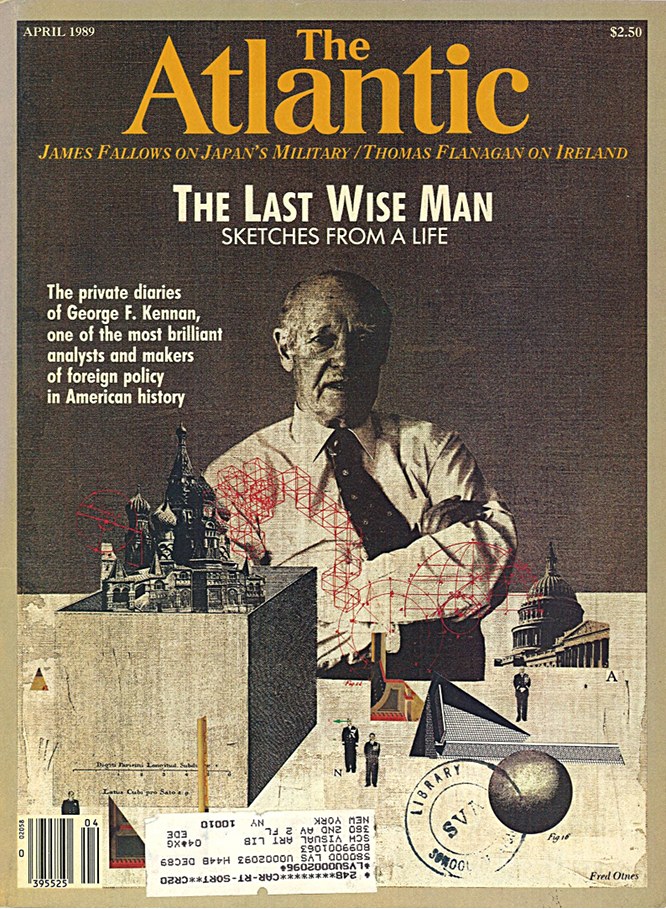
Atlantic cover by Fred Otnes, April, 1989

The Last Wise Man
Atlantic cover by F Otnes, 1989
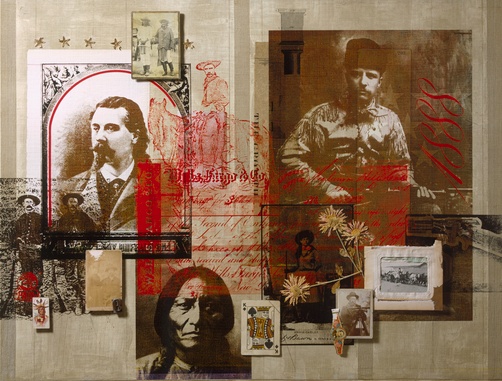
National Geographic illustration by Fred Otnes

(title unknown)
National Geographic illustration by F Otnes (rights managed)
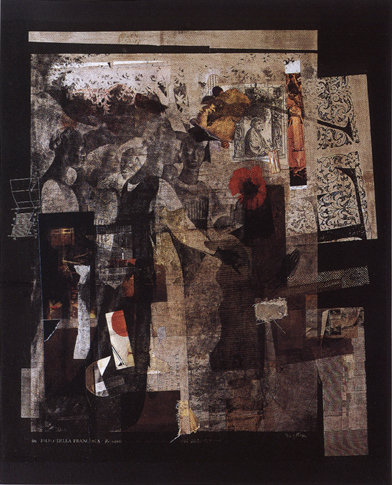
Piero ~ traditional collage by Fred Otnes

Piero
traditional collage by F Otnes, 1994
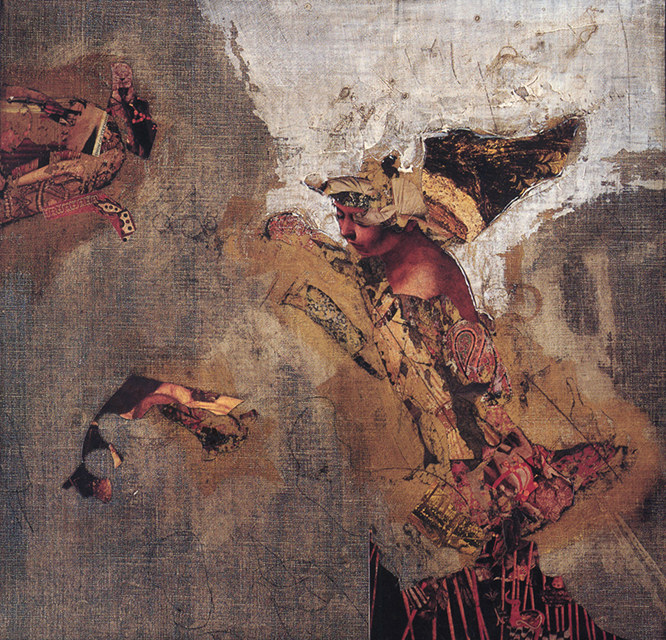
A Tragic Princess ~ collage painting by Fred Otnes

A Tragic Princess
collage painting by F Otnes, date unknown
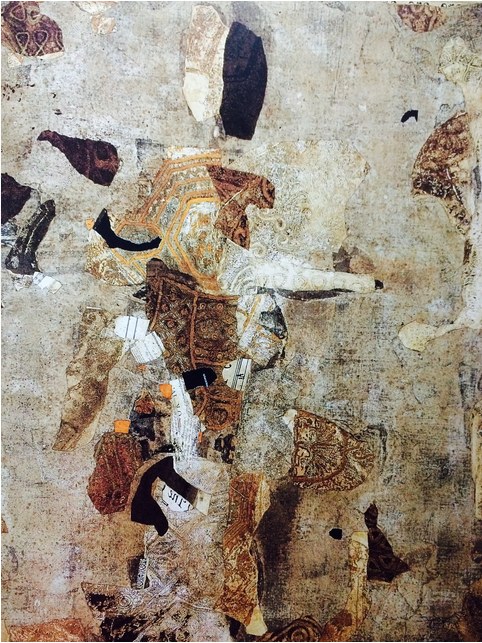
Liagre ~ Fred Otnes ~ 2002

Liagre
collage painting by F Otnes, 2002
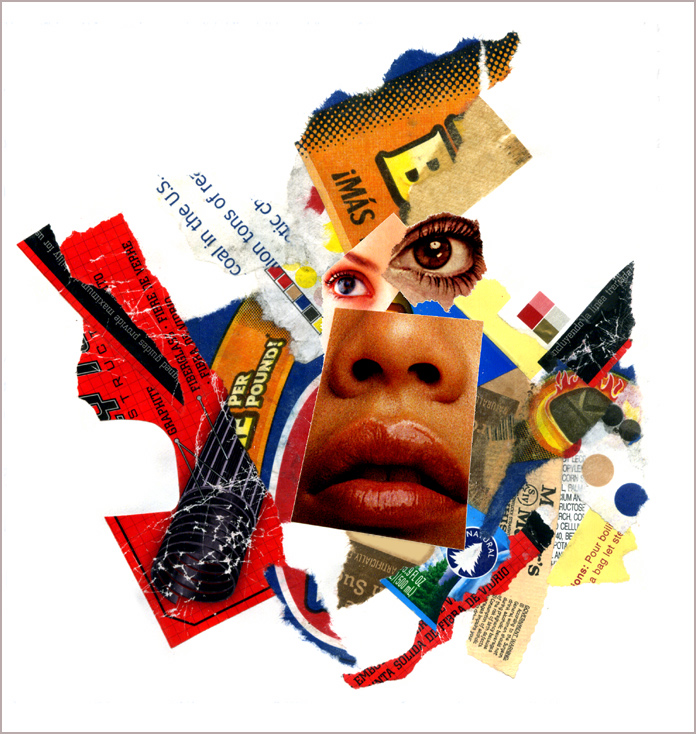
The Mind of FRON

August 10th, 2015

 
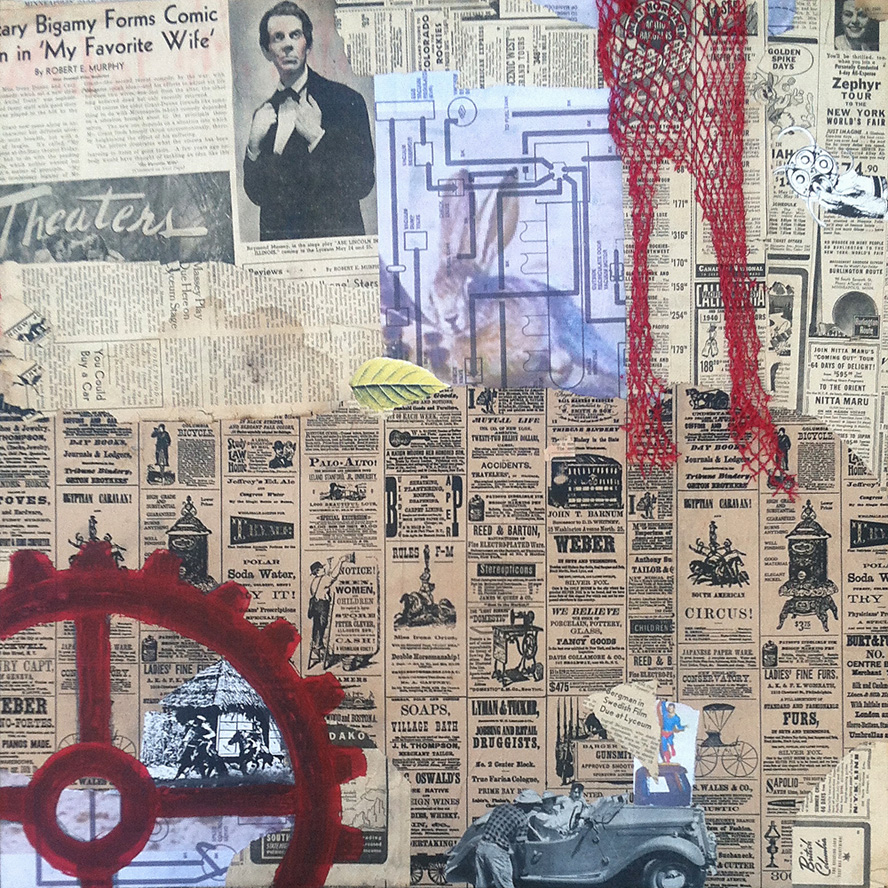
The Mind Of Fron ~ J A Dixon

The Mind of FRON
collage miniature by J A Dixon
7 x 9 inches
collection of J L Dixon