Posts Tagged ‘Dixon’

Schwitters’ Army Mobilized in Rural Scotland

Monday, January 20th, 2020

“. . .this is what we do in the collage community: we engage, we exchange, we manifest with one another. We emerge into a new state of being together. That is what makes art powerful. It connects us and takes us into the future.”
— Ric Kasini Kadour
 

Any collage artist who maintains even a casual curiosity about the legacy of Kurt Schwitters has to be enthusiastic about developments in Sanquhar. As someone who employs this space to exalt the “Master of Merz” without apology, I now feel compelled to praise Ric Kasini Kadour and his worldwide call to built a Schwitters’ Army collection of collage artwork at the center for learning established by David Rushton in the Scots town. Needless to say to an audience that visits this site with an interest in all things collage, Ric has made an impressive effort over the past few years to raise the level of discourse about a medium to which so many of us have dedicated ourselves. From Kolaj Magazine to Kolaj Institute to Kolaj Fest, he’s been making his mark for some time and clearly doesn’t intend to rest on his laurels.

As part of his curatorial efforts at MERZ Gallery, he has asked contributing collage artists to answer a few questions. As I prepare to ship my donation to the cause, I’ll publish my supporting remarks here for your potential interest.

Next time: a look at the artwork and my thoughts about the context of its creation.

What is your origin story? When did you first start making collage seriously?

The first collage art that I remember creating was in the 4th or 5th grade, probably in 1961 or 1962, when I used sample chips of color from a paint store to cut and paste a mosaic-like image that won the “Poppy Day” poster contest. It’s always stood out in my memory. I thought of myself as an artist from that point forward. Nevertheless, up into high school, I would feel the lack of any competent art instruction as a keen deprivation. I convinced my parents in 1967 to enroll me as a charter student in the home-study course co-founded by Norman Rockwell called “The Famous Artists Course for Talented Young People.” Unlike the successful version for adults on which it was patterned, the package of guided assignments for teens would fail in the marketplace, but not before exposing me to a diversity of fine and applied art mediums, including collage.

Who was the first collage artist you connected with?

The Famous Artists Course would bring to my awareness many influences in the area of collage and assemblage, including Fred Otnes, Robert Rauschenberg, Louise Nevelson, Joseph Cornell, and Kurt Schwitters. Although I didn’t understand his technical methods, I initially attached my affection to the visually comprehensible Otnes, and I’d emulate his montage approach throughout my years as a professional illustrator and designer. In contrast, a series of breakthroughs in my journey to unravel the Merz of Schwitters would take another forty years, culminating in my first solo exhibition as a collage artist in 2007.

How do you connect with the collage community?

I began writing about collage and showcasing my practice at “The Collage Miniaturist” in 2012. Since then, beginning with fellow artists in Kentucky who work in the medium, I’ve collaborated with a body of dedicated collage artists. I’ve also regularly entered pieces in national and international calls for collage and submitted my work to landmark exhibitions and permanent collections. Believing that cross-pollination in collage through worldwide virtual communities is a vital force in the so-called “Post-Centennial” collage movement, I follow hundreds of active collage artists through social networks. As much as possible for someone who continues to sustain an ongoing studio and exhibition schedule, I regularly comment on trending topics and answer questions in the digital realm.
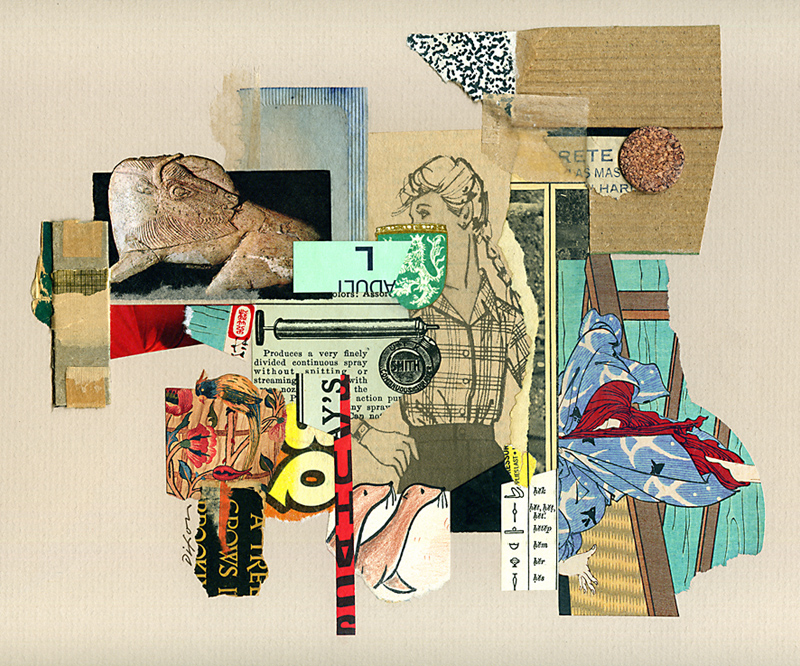
 

Knicknackery

Monday, January 13th, 2020


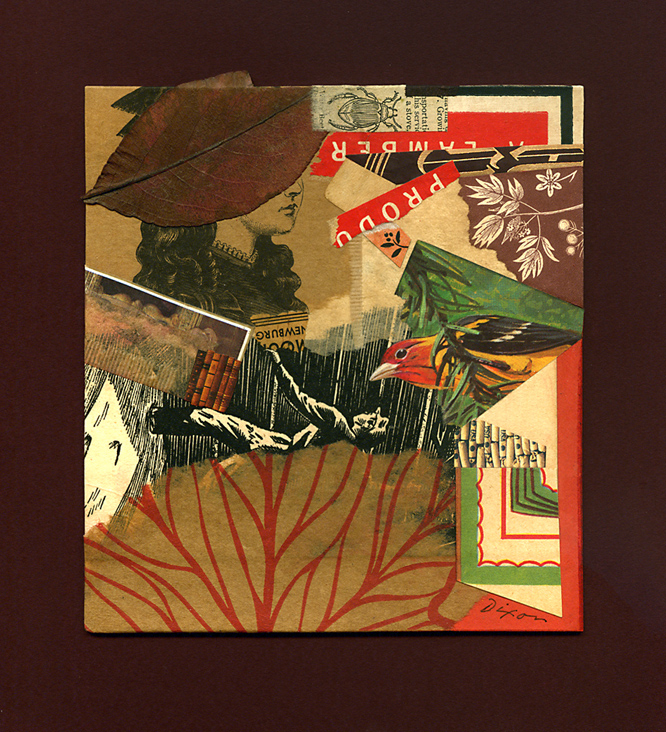
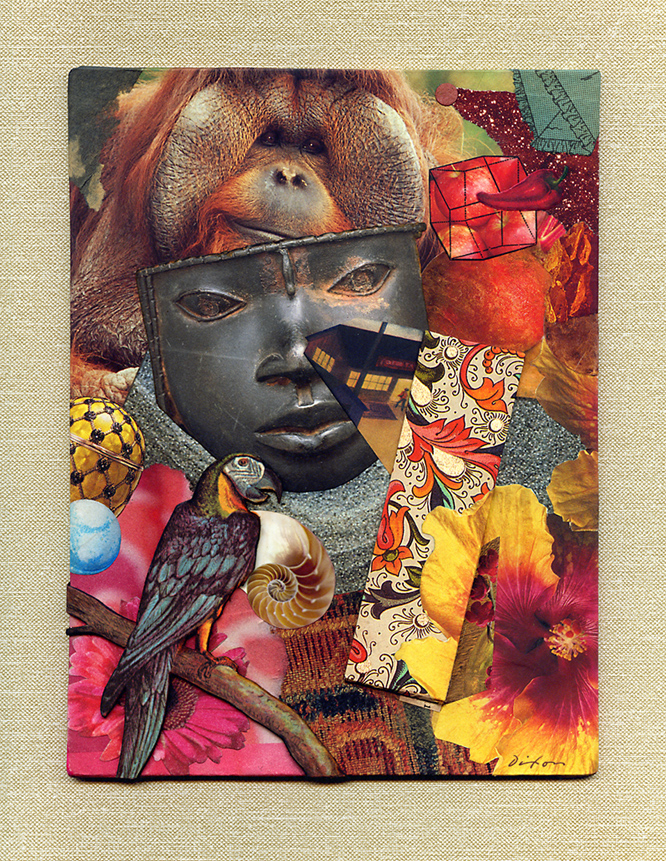
Knicknackery
collage artwork by J A Dixon
10 x 9 inches
 
Purchase this artwork.

The spirit of my time . . .

Thursday, January 2nd, 2020

“Real trust does not need verification;
if you have to verify, it is not trust.”
– Charles H Green
 

Being part of a regional group invited to unveil a “fourth-quarter” creation in January is something that I’ve come to deeply appreciate. It’s getting difficult to remember any other way to conclude a year of creative activity. Because I’ve routinely written here about our New Year New Art tradition, I don’t want to overdo the point. To bypass the typical curatorial scrutiny and be entrusted with hanging something sight unseen is a gratification that every working artist should know.

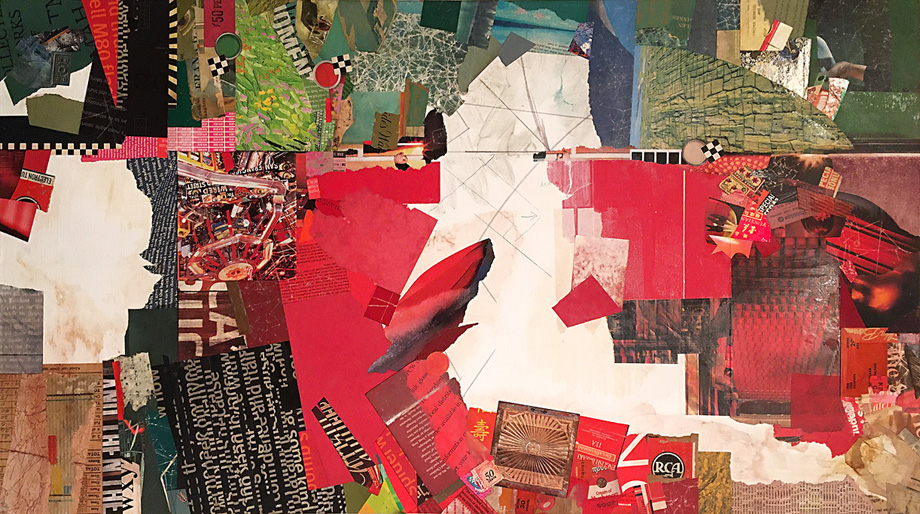
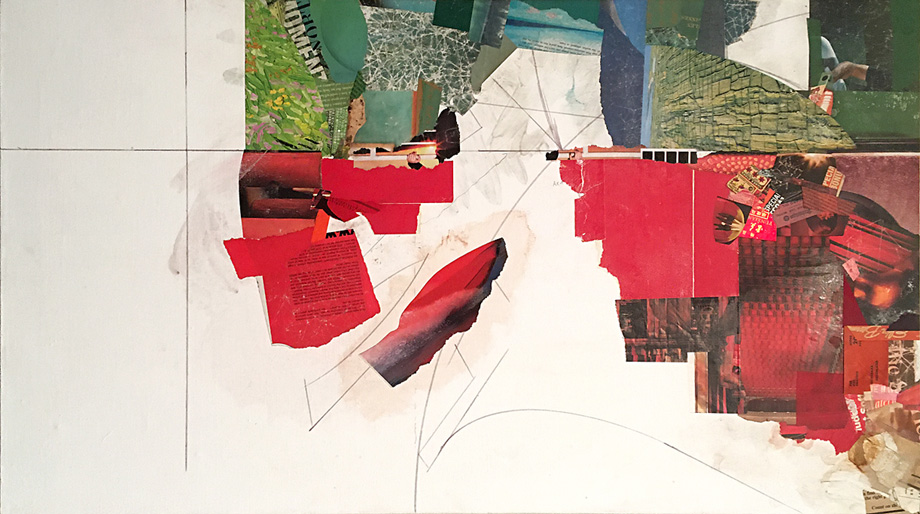
Zeitgeist originated as part of a process that I began over a year ago, but it had taken a back seat to a couple of other ideas that got more attention at the time. All three had been sparked by the NYNA catalyst. The only restriction that comes with the invitation is that the artwork be completed after August. This time, I didn’t get rolling until after the Thanksgiving holiday.

I’d just returned from a trip to Pennsylvania. Long-postponed pilgrimages to Chadds Ford and Fallingwater finally had been realized. Visions from the Barnes Collection and the Philadelphia Museum of Art were spilling over within my inner sight. I decided to bring the third of the thumbnail concepts to fruition in a manner that would not have occurred to me in 2018. I wanted to create a highly energetic, maximalist piece without losing control of its compositional stability. A loose structure offered a starting point, but I had to alternate intuitive bursts of “Merz assembly” with rational decisions that would visually anchor the dynamism. In addition, coordinated “B-Roll” embellishments were prepared nearby in the studio and inserted at the final stage. The process would bring into greater focus a refined method of harnessing small-format spontaneity when working big.


look back
at early- and
late-stage views
of my newest
big-scale work


(click each
to enlarge)


My personal orientation to collage remains with smaller dimensions, although some may question the continued self-description as a “miniaturist.” The practice seems to be evolving toward more frequent oversized works, in which I usually embed at least one miniature element that could stand on its own. The annual New Year New Art showcase has provided beneficial opportunities for me to shift from a comfortable frame of reference and build a body of larger collage paintings.
 

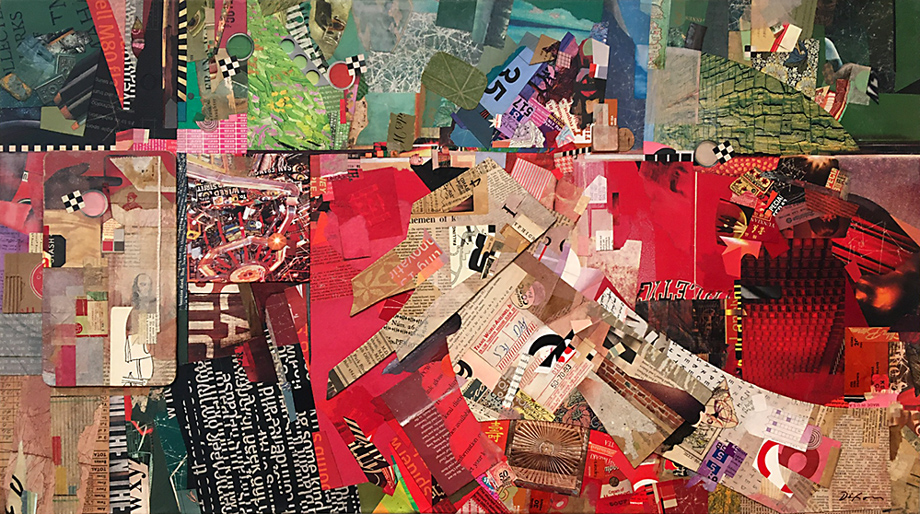
Zeitgeist ~ John Andrew Dixon

Zeitgeist
collage painting on canvas by J A Dixon
36 x 20.25 inches
available for purchase

A Most Joyous Day to All . . .

Wednesday, December 25th, 2019


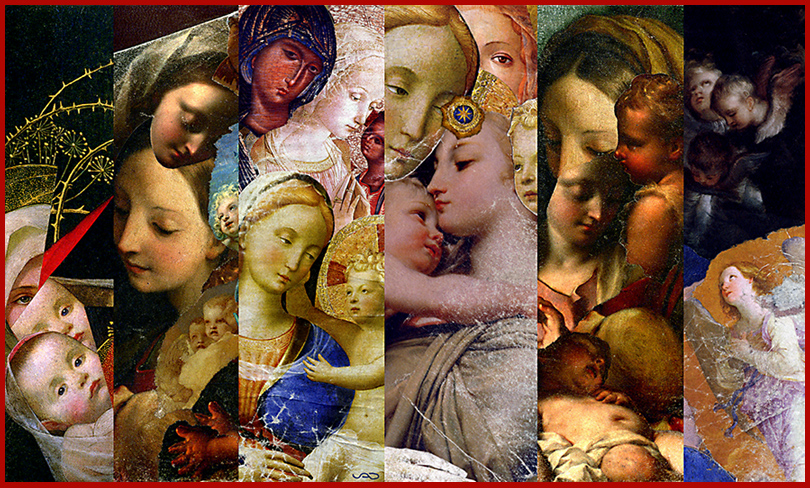
Six Sacred Slices
collage composite by J A Dixon
details from private collections

Monsieur Peepers

Wednesday, December 18th, 2019


Monsieur Peepers
collage miniature by J A Dixon
5.125 x 5.75 inches
 
Purchase this artwork.

Sisters of Sustenance

Friday, December 13th, 2019

“If a work of art does not live in the present, it does not live.”
— Pablo Picasso
 

I am not unlike most collage artists who find strong visual appeal in my stash of vintage scrap, but I cannot bring myself to limit the process to old ingredients. I have no intention of knocking the current practitioners who’ve mastered the use of antique material as a self-imposed constraint, but, for me, an artwork lacks contemporary vitality unless up-to-date components from our own time find a place to “belong” in a new piece.

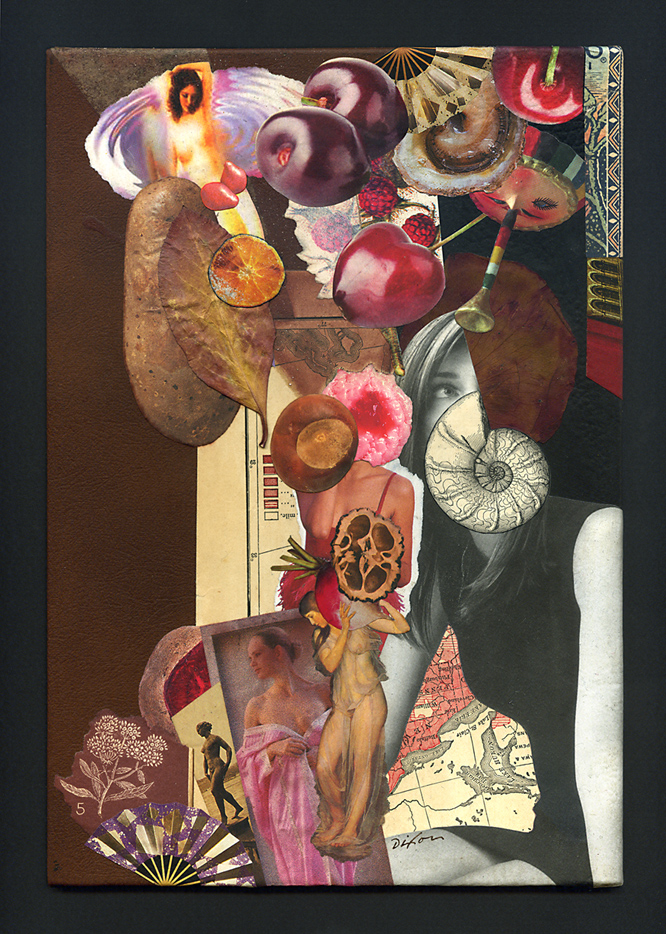
Featured below is my response to a project by artist, designer, and educator Clive Knights, who recently introduced his “Corporeal Gestures” investigation to collage artists worldwide. It’s an extension of his long-term effort to re-identify “the nine muses as the cultivation of the orderliness of the human body” through shared necessities. I picked “nourishing” as a catalyst to explore the theme with both old and new paper elements, all of which had retained no intrinsic value and likely would have been recycled or ended up as more rubbish.

Collage will always have the potential to nourish our sensibilities by transforming apparently worthless but renewable paper into enduring artifacts with fresh symbolic power. Thank you, professor, for a most stimulating exercise.


Sisters of Sustenance
collage on book cover by J A Dixon
6.875 x 10.125 inches
for the Corporeal Gestures project

Ding-ding-ding. The market is open!

Thursday, November 14th, 2019

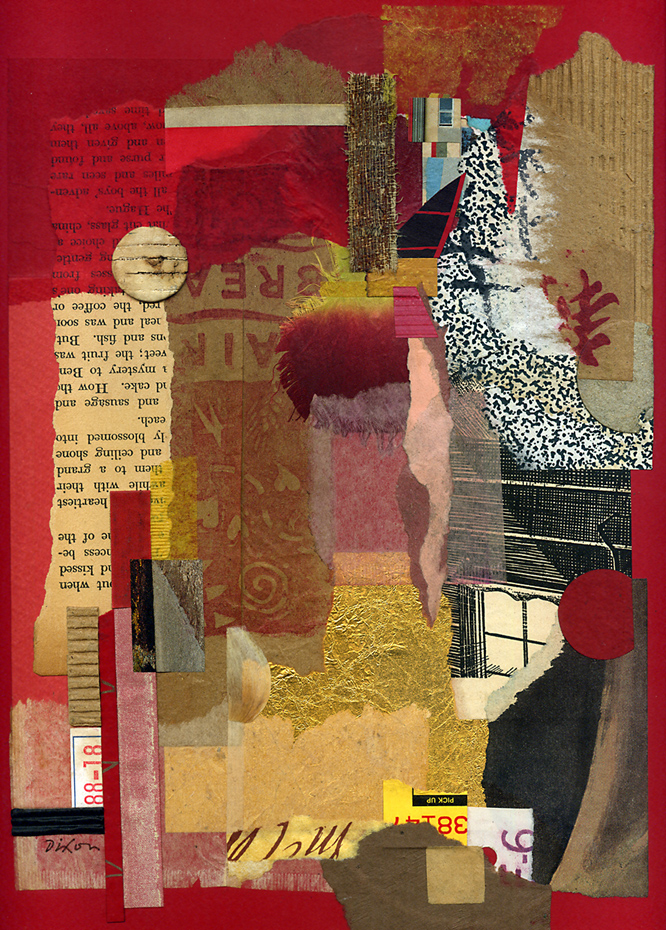
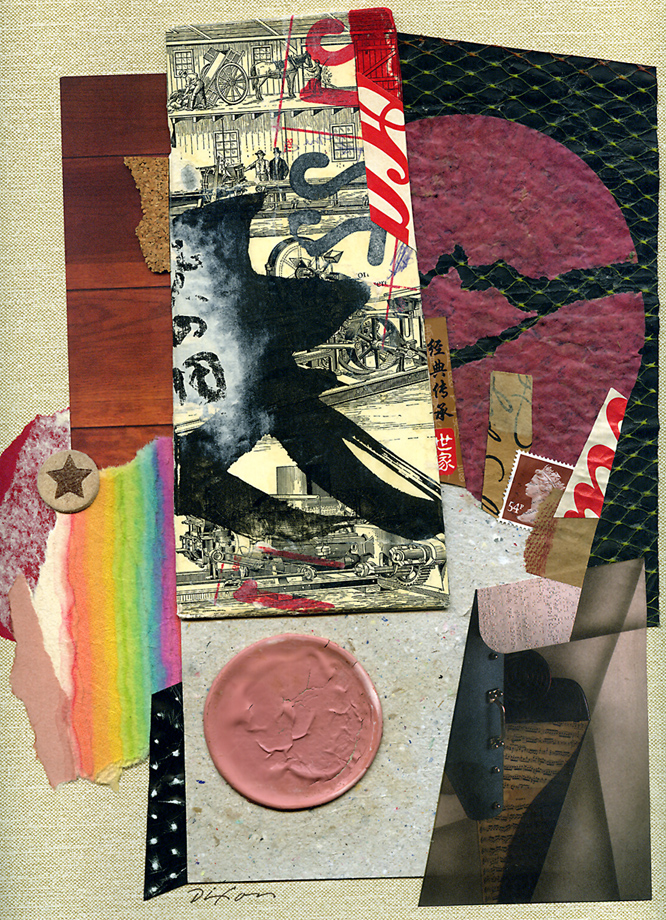
The Holiday Market sponsored by the Art Center of the Bluegrass is open — a great way for everyone in our community to support ART LOCAL with their gift giving. I have collage miniatures, wood engravings, and note cards available (They can also be purchased online by those who aren’t anywhere near Central Kentucky!). I also made a couple of new Merz Pictures just for the season, continuing my “Market Shard” series. The opening reception is tomorrow, from 5:30 to 7:30pm. I suspect there will be a crowd, so perhaps you might bump an elbow with me.


Something Given
collage artwork by J A Dixon
9 x 11.625 inches
 
Purchase this artwork!


With Mind Serene
collage artwork by J A Dixon
8.375 x 11.375 inches
 
Purchase this artwork!

B O O !

Thursday, October 31st, 2019


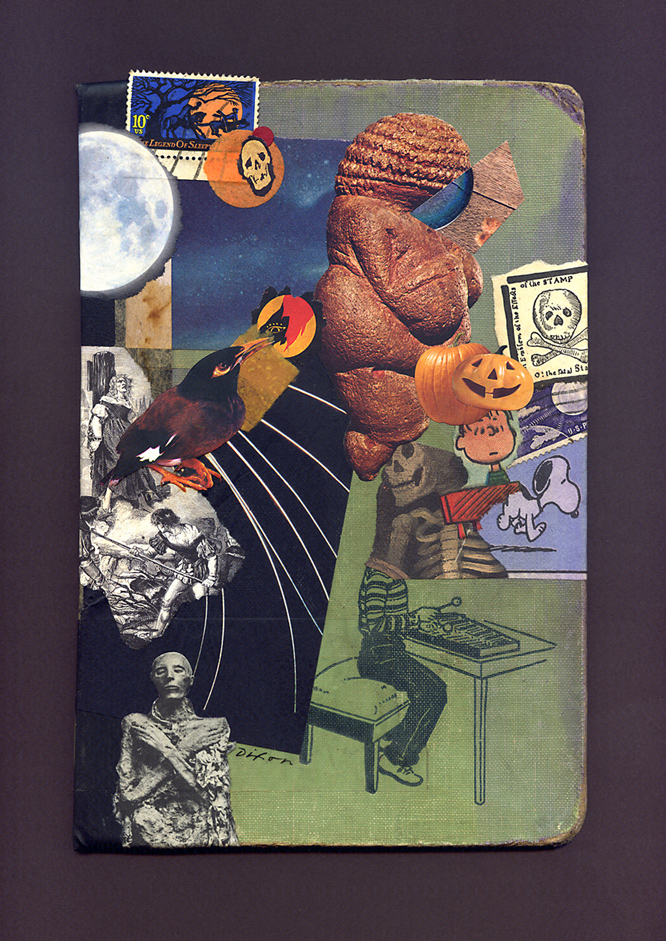
Venus of Pumpkindorf
collage on book cover by J A Dixon
6 x 9 inches
 
Purchase this artwork!

It’s Complex, Man

Saturday, October 26th, 2019

“Look, man, I’ve got certain information, all right? Certain things have come to light. And, you know, has it ever occurred to you, that, instead of, uh, you know, running around, uh, uh, blaming me, you know, given the nature of all this new shit, you know, I-I-I-I… this could be a-a-a-a lot more, uh, uh, uh, uh, uh, uh, complex, I mean, it’s not just, it might not be just such a simple… uh, you know?”
— The Dude (from The Big Lebowski)
 

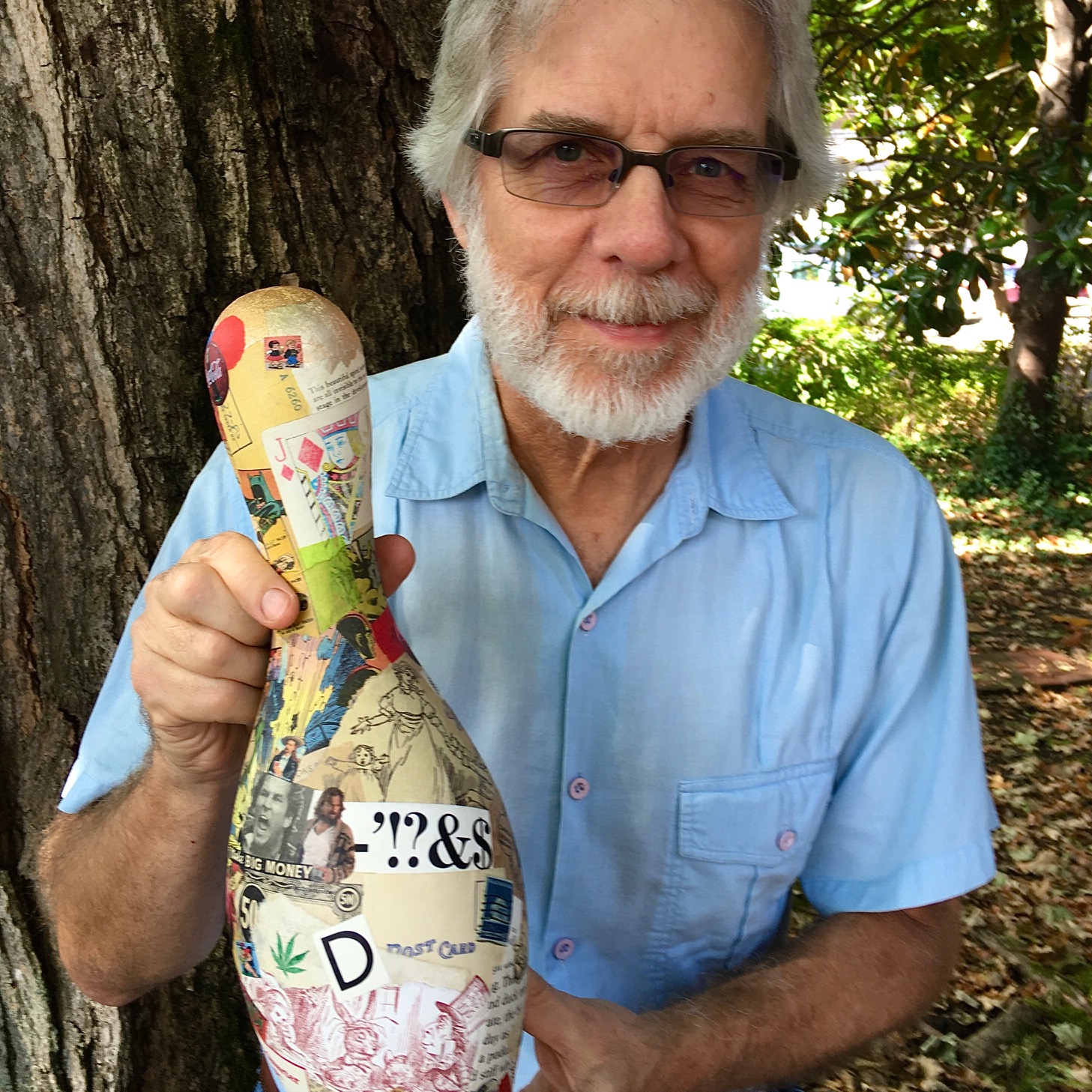
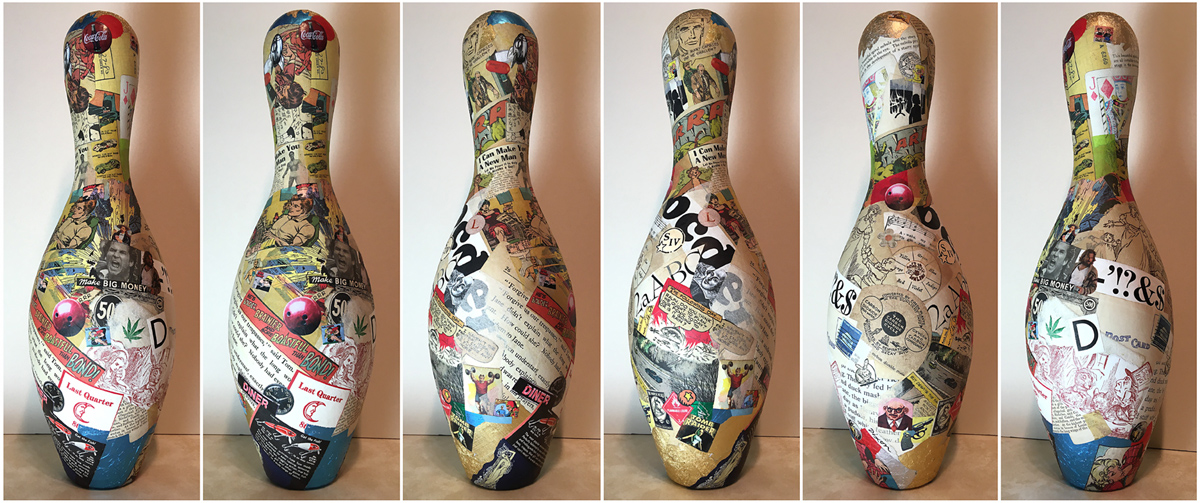
I’m super pumped (in the, uh, parlance of the day), because tonight is The Big LeBOWLski Arty Party to benefit the arts in Lexington and Central Kentucky, and it’s a delight to be a part of it!

It’s Complex, Man is my contribution to the fundraising event. Ten regional creatives will have their bowling-pin art in the silent auction, and we’ll split the purchase price 50/50 with LexArts, the sponsoring organization. How many nonprofits offer that deal when artists are asked to donate their creative labor to a cause?

Crafting this piece was pure fun, with pleasant allusions to my Mrs. Bradshaw chair. There are ample references to the Coen Brothers picture, but it’s not only an homage. I revisit my practice of juxtaposing high literacy with the pulpy preferences that many of us harbor. If you’re weary of seeing that in collage art, “Yeah, well, you know, that’s just, like, your opinion, man.”

Rumor has it that The Dude will make an appearance. Let’s go bowling!

Simia Egg Macao

Saturday, October 19th, 2019


Simia Egg Macao
collage on book cover by J A Dixon
6 x 8 inches
 
Purchase this artwork!

Fifth Chapter: Sparring with the breeze . . .

Saturday, October 5th, 2019

“This idea of having something that isn’t quite in focus, something that isn’t quite understood, is interesting. I think details that are over-plentiful, details that are very dense, are lifelike. They exist in natural environments. Forests have a huge amount of details, because they are not built on a human level, so they are impossible to analyze at first glance, and I think we can only recreate what nature has done already, so I don’t think that the idea of simplifying something is a good thing.”
— Édouard Lock
 

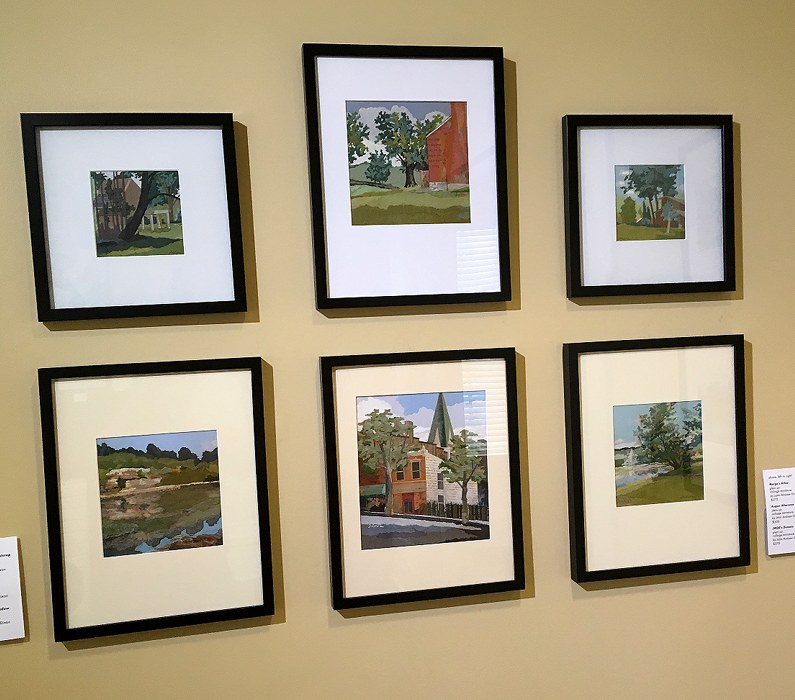
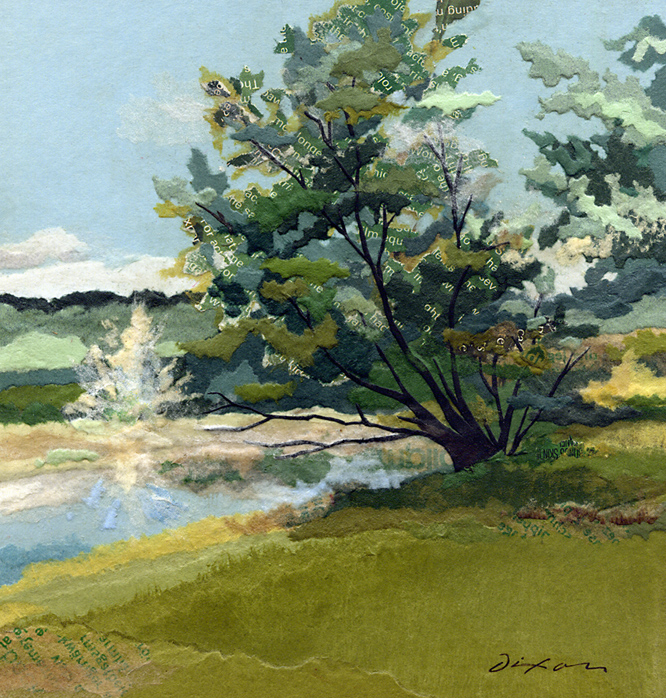
August and September provided a stretch of exceptionally dry weather that was a disappointment for farmers in the Bluegrass, but valued by our intrepid PAACK of regional artists who work out of doors. I was able to create three more satisfying landscape miniatures.

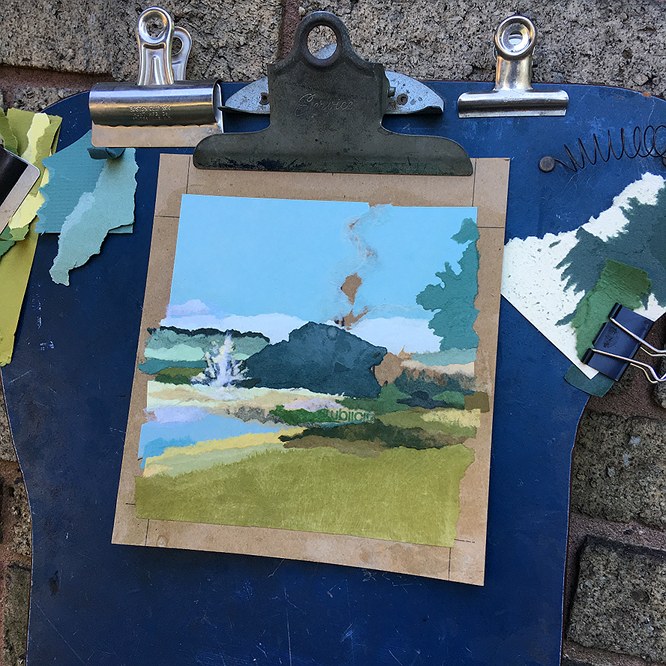
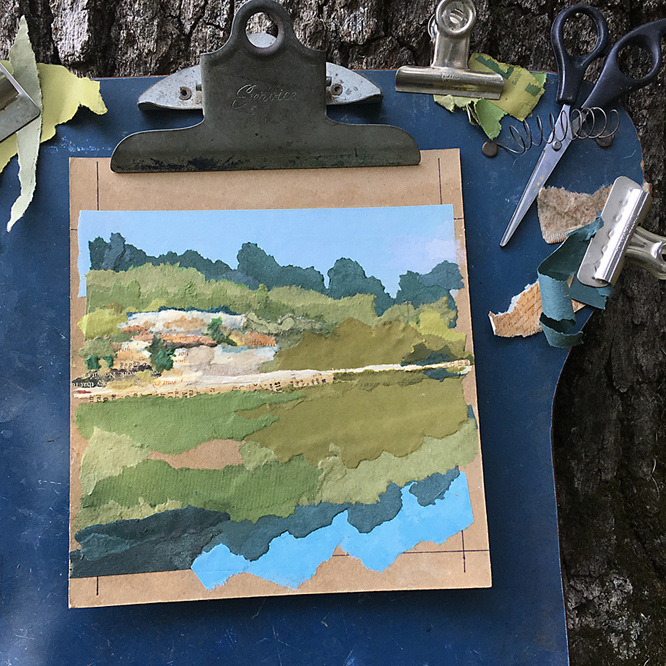
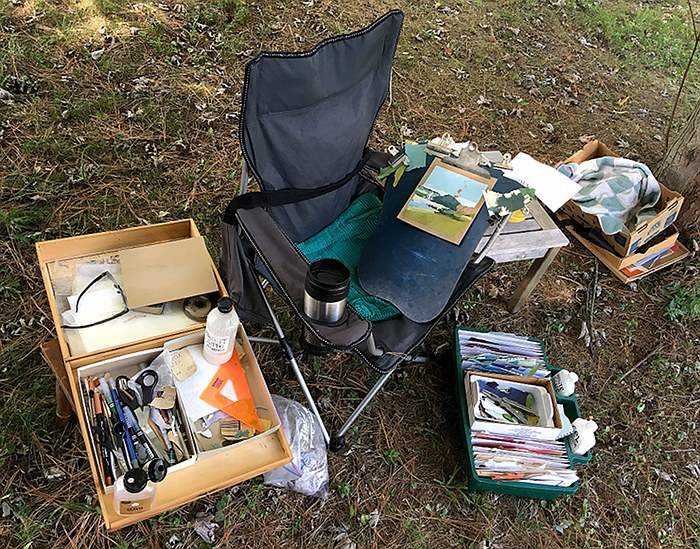
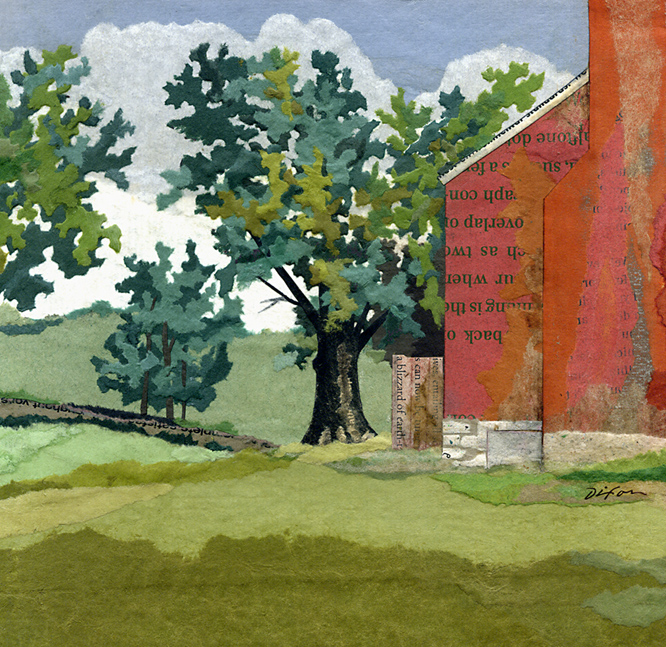
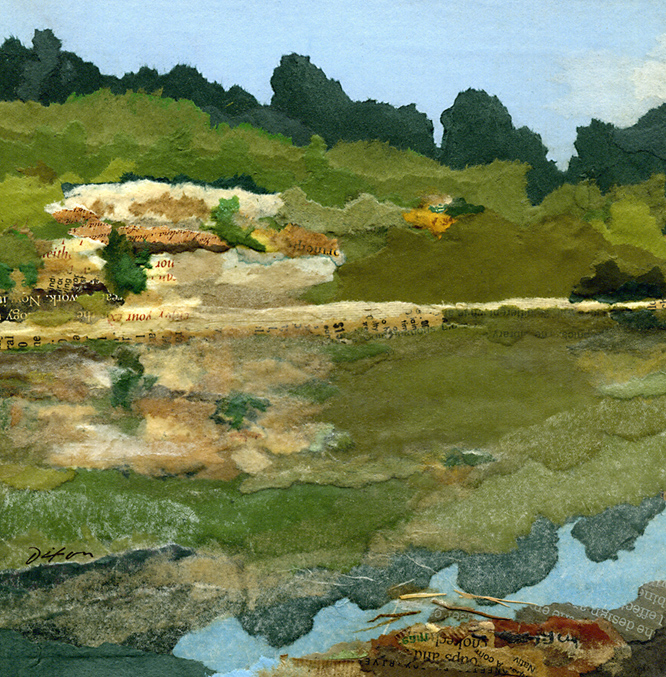
Those who have followed this sequence of descriptions realize it hasn’t been that long since I met the challenge of doing collage en plein air. It has evolved as a gradient progression of discoveries. I’ve learned to think of my application of paper ingredients as a density of “brushstrokes” rather than the placement of simple design elements into a composition. The two-year process has brought my artwork from a crafted illustration with cleanly pasted elements to a more layered, painterly effect. I’m tending to work wet-on-wet, using sandpaper and blades to score and feather edges. The thickness of papers is torn into “veneers” with areas that can achieve a blended translucency, and I’m more routinely taking advantage of recycled tea-bag “skins” to add warmth, texture, or visual softness. I continue to use three different liquid adhesives — wheat paste, white glue, and polymer gel — which offer contrasting levels of stickiness and drying time. I saturate the paper for manipulations not available with dry material and then flatten the surface with a cloth or burnisher, depending on a desired level of dimensionality. Bits of printed text continue to appear as part of my treatment, providing subtle highlights or more overt suggestions of pattern. This growing vocabulary of techniques has given me more confidence to tackle scenes that might have looked too difficult not so long ago. Attempting to “paint” a pond fountain or a rocky outcrop with only paper would have seemed more daunting when I first started to do this.

None of it would be possible without the generosity of those who host our outings. With a spirit of hospitality, the diversity of two farms and a wonderful view of the Dix River were each made available to us for a day. I rely on a square viewing card to select my composition and the all-important place to sit.
 

A point of self-criticism: my plein-air “collage rig” had gradually crept into the forbidden zone of overkill, so I made an effort to lighten my load before the next PAACK venture.

My goal has been a self-imposed limitation of studio follow-through, equal to or less than the amount of time I spend at the original site. I was able to meet that comfortably with August Afternoon, for a 50/50 allocation. When completing Fountain and Shadow, I had to suspend my detailed labor on the central tree. I’d prefer to invest less time indoors and was able to do that with Reflection on an Outcrop (a more desirable 60/40 ratio). Having been studio oriented in my art practice, I always need to guard against allowing the concluding phase to upstage a vital plein-air impression. I’ll rely on memory as much as I do an iPhone photo taken on location. It’s also important to remind myself that, as much as I enjoy my “maximalist” propensity, the objective should be a creative interpretation instead of a literal rendering. It is, after all, a collage artwork.

Collage Madness, my joint exhibition with Connie Beale, is currently on display here in Danville, Kentucky at the Mahan Gallery of Boyle County Public Library. It has provided the first ideal opportunity to showcase my approach to plein air collage and I’ll explain my process to visitors at a Gallery Talk on Saturday afternoon, October 19th. I’ve covered a number of bases as an artist and designer, but I have to say that this has been one of the most personally rewarding projects I’ve begun. Perhaps many of you can be there to hear my remarks.
 
 
August Afternoon ~ plein air collage miniature by J A Dixon

August Afternoon
plein air collage miniature by J A Dixon
7.25 x 7.125 inches
available for purchase

 
Fountain and Shadow ~ plein air collage miniature by J A Dixon

Fountain and Shadow
plein air collage miniature by J A Dixon
6 x 6.375 inches

•  S O L D

 
Reflection on an Outcrop ~ plein air collage miniature by J A Dixon

Reflection on an Outcrop
plein air collage miniature by J A Dixon
6.375 x 6.625 inches

•  S O L D