Archive for the ‘Influences’ Category

Fred Otnes, 1925–2015

Monday, August 17th, 2015

“Otnes abandoned the narrative style… The move set him apart from other commercial artists of his time, and his willingness to embrace the abstract and chaotic nature of collage put him in high demand during one of the most turbulent decades of American history.”
— The Saturday Evening Post, 2015

“Fred Otnes brings to his collage paintings a classical refinement and control that makes poetry out of chance pictorial effects. He dips into early Cubist collage techniques, touches Florentine and Renaissance bases, and reverses Dadaist chaos into gorgeous homages to order.”
— Maureen Mullarkey, 2002
 

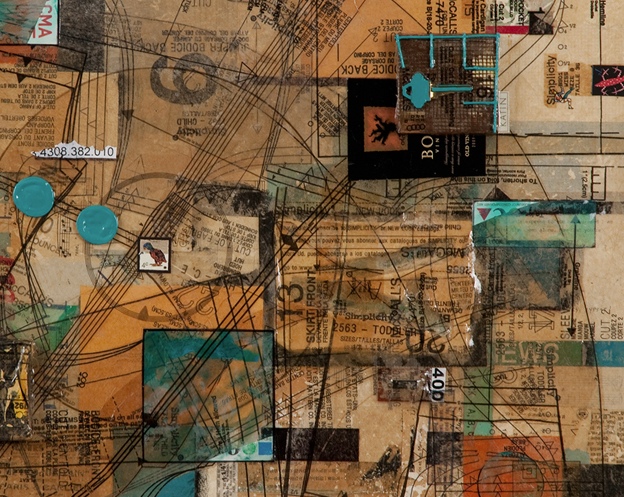
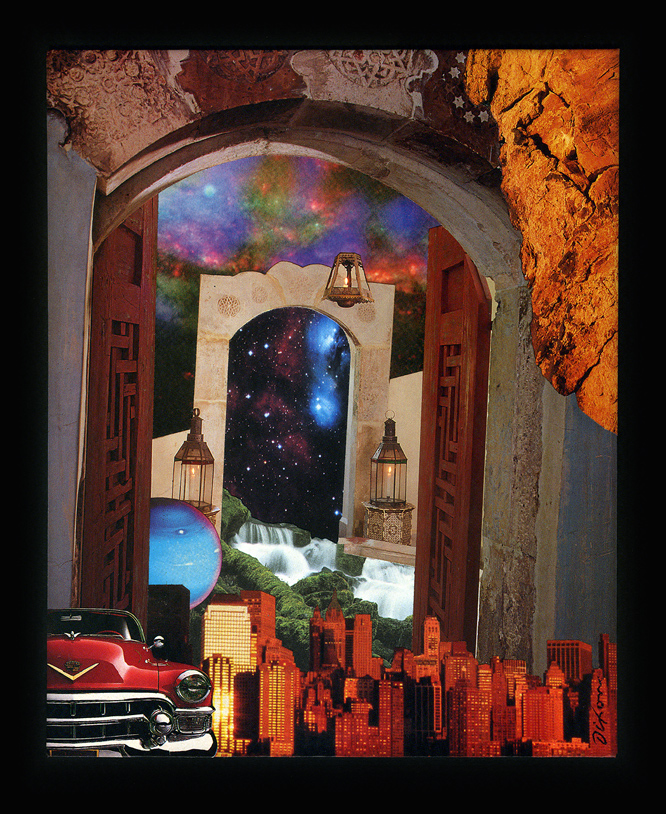
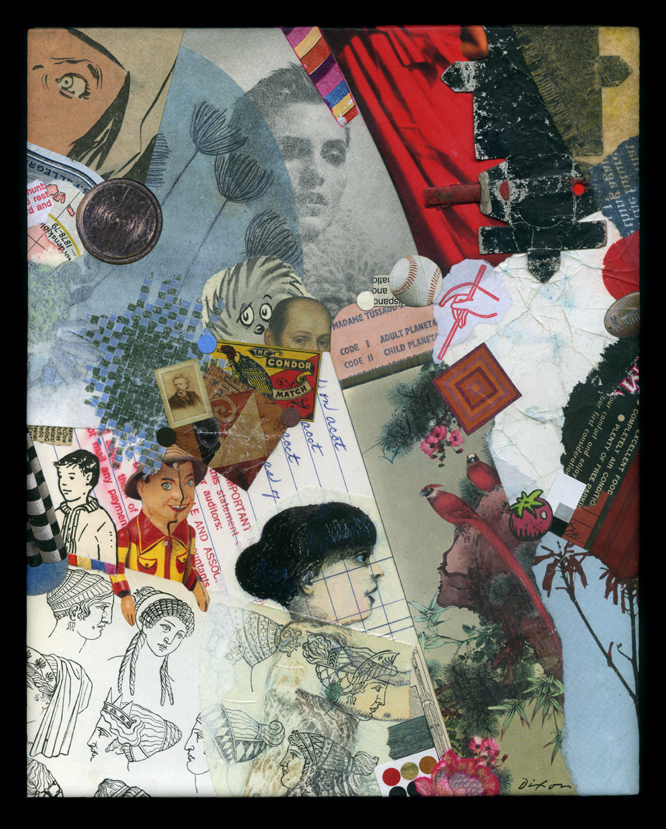
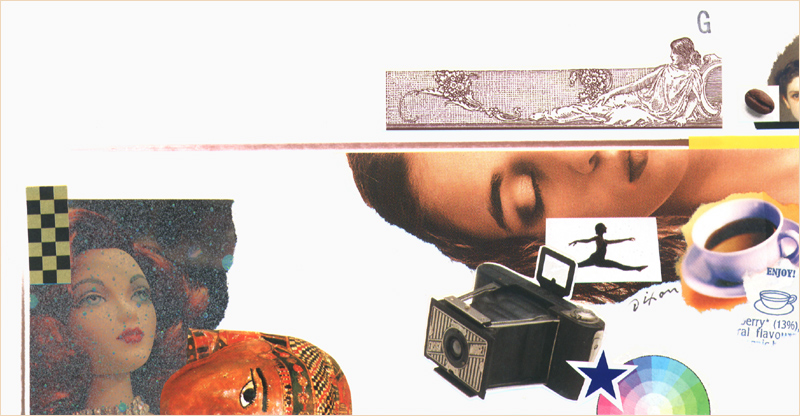
I just learned about the death of artist/illustrator Fred Otnes. I tend to focus here and in my own practice on the acknowledged masters of fine-art collage, but Mr. Otnes certainly had a greater influence on me during my formative years and during the period of my life devoted to “making it” as an independent illustrator and designer. He is rarely included among the seminal figures of 20th-century collage, but he should be. Allow me to back up a bit and reveal some of my own story.

In the 1960s I had four different art teachers in four years of high school. I resist being unkind, but each one of them was worthless. I had some talent, so there was no reason to spend time with me. I was left to fend for myself, because, apparently, it was more urgent to actively babysit the class goof-offs. By sixteen I was investigating the available correspondence coursework. No one thought to tell me about the Dayton Art Institute in the closest big city. I don’t think I even realized how desperate I’d become. What others might have viewed as crass merchandising was a Godsend for me. I responded to an advertisement from the Famous Artists School and completed the test. A representative actually paid a visit to discuss the home-study course that would provide the fundamental art instruction I’d been missing, and I begged my parents to let me give it a shot. They said, “Okay,” and I am grateful for this simple consent — access to legitimate art educators would be mine. I acknowledge now that their “Course For Talented Young People” was a marketing experiment, an attempt to leverage the successful adult course with a younger demographic. That meant nothing to me at the time. This was the school endorsed by Norman Rockwell, and I was a charter student! Although my Mom eventually had to cajole me into keeping abreast of the challenging lessons, a sea change had occurred. I was at long last formally introduced to the world of fine and applied artists. Among those that impressed me most was someone named Fred Otnes.

I was a peculiar kid who got more excited about magazine illustrations, corporate trademarks, television animation, and the Sunday comics than I did about “museum art.” The work of Otnes touched me in a way that would take decades for me to unravel. In my youth, not being able to figure out how an artist created something was usually paired with disinterest, but his work affected me in the opposite way. His graphic synthesis of images, engravings, diagrams, and language exposed a realm that I could aspire to enter. Even as an experienced pro, I continued to find his technique mystifying. I was relieved when legendary illustrator Mark English said, “I don’t even know how he did them, the mechanics of printing, photography and all the things he did to put them together.” Suffice it to say that in a profession biased against the creative explorer, Fred Otnes braved a path that few, if any, realized was there, successfully made it his own, and became one of the most distinctively recognizable, highly honored applied artists of his generation.
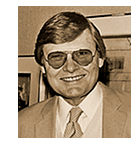
For many years, through the Illustrator’s Workshop, Otnes was a teacher and mentor, and, like others in the field, spent his later years expanding his personal style as a gallery artist. Whether applied to editorial or commercial use, the creations embody his profound respect for subject matter. If there is something elusive in his work that will continue to inspire me, it is this — I shall always hold in high regard the sense of “reverence” he brought to each layered plane of expression, to every choice of color or texture, to the symbolic meaning of each ingredient, and to the aesthetic harmony of the whole.
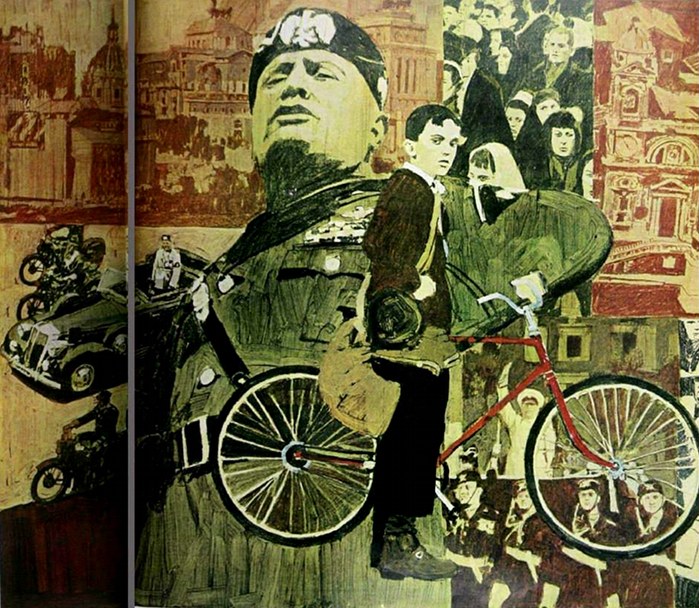
 

Otnes_Mussolini_1966

The Day Mussolini Dies . . .
Saturday Evening Post illustration by F Otnes, 1966
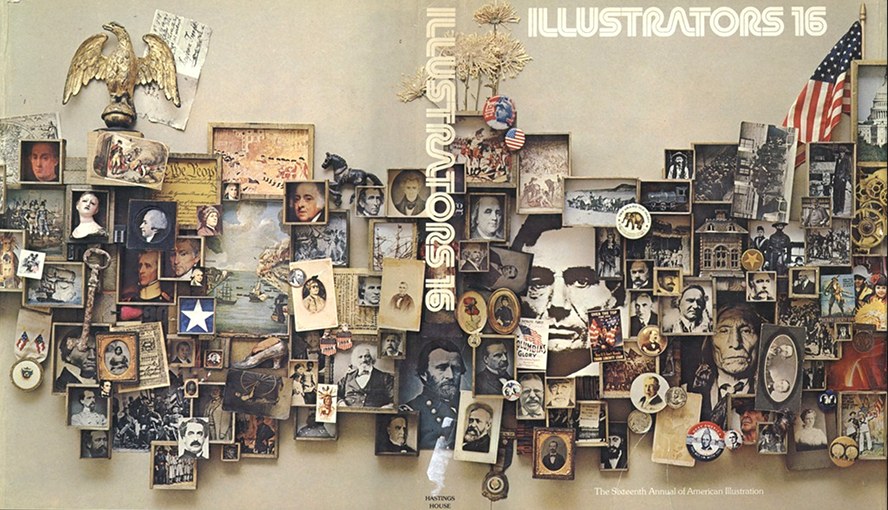
Society of Illustrators 16th Annual ~ cover by F Otnes

Illustrators 16
Society of Illustrators Annual cover by F Otnes, 1974
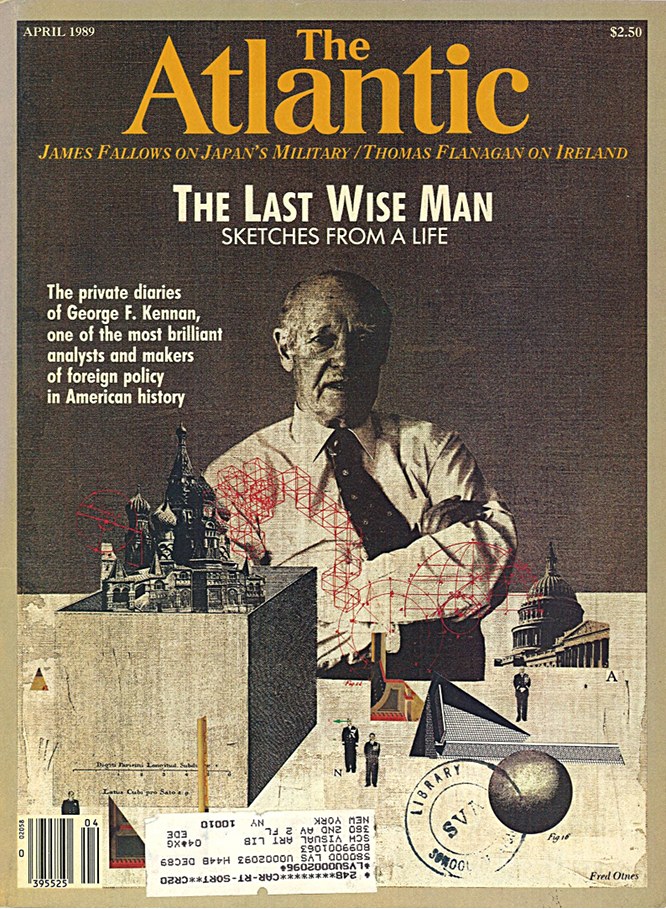
Atlantic cover by Fred Otnes, April, 1989

The Last Wise Man
Atlantic cover by F Otnes, 1989
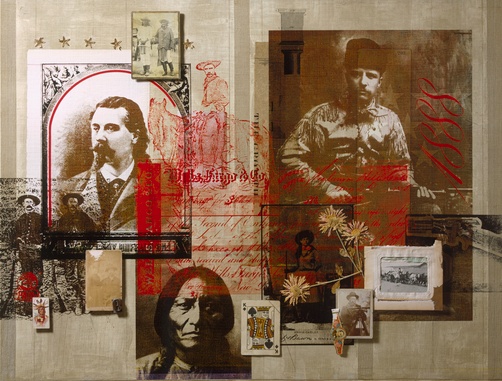
National Geographic illustration by Fred Otnes

(title unknown)
National Geographic illustration by F Otnes (rights managed)
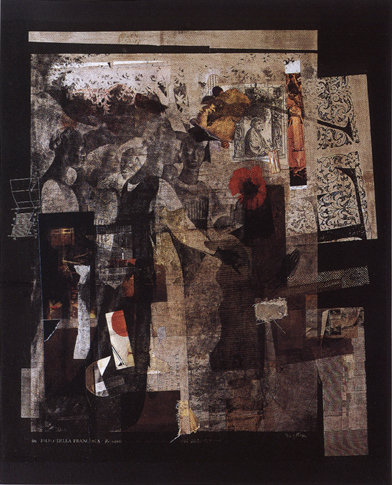
Piero ~ traditional collage by Fred Otnes

Piero
traditional collage by F Otnes, 1994
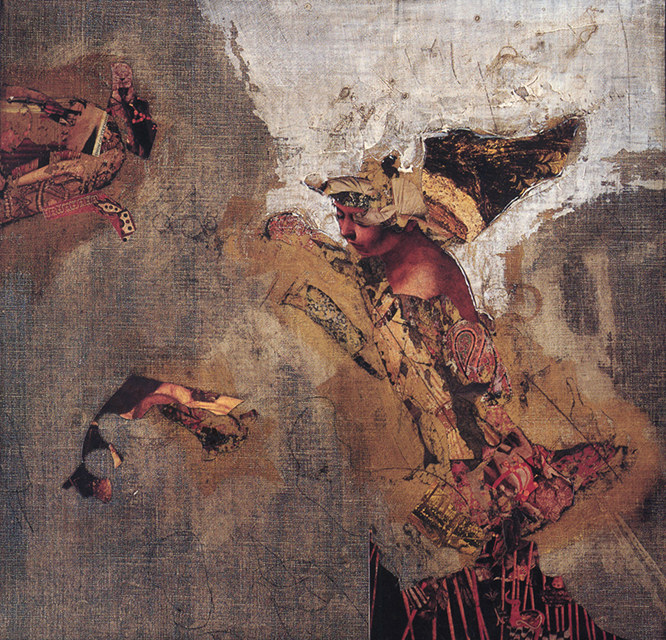
A Tragic Princess ~ collage painting by Fred Otnes

A Tragic Princess
collage painting by F Otnes, date unknown
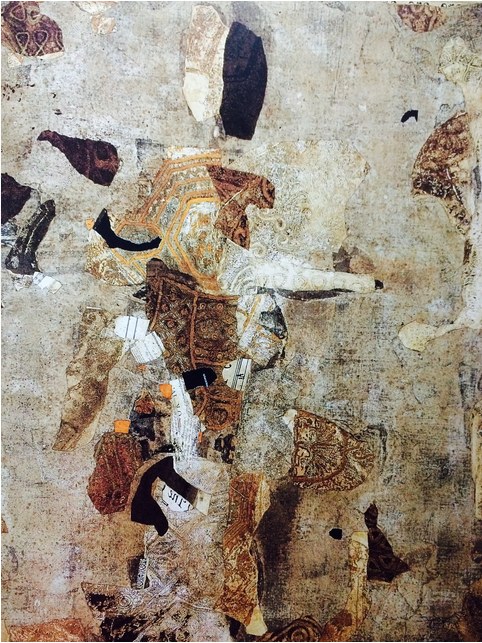
Liagre ~ Fred Otnes ~ 2002

Liagre
collage painting by F Otnes, 2002

Not So Big

Monday, August 3rd, 2015

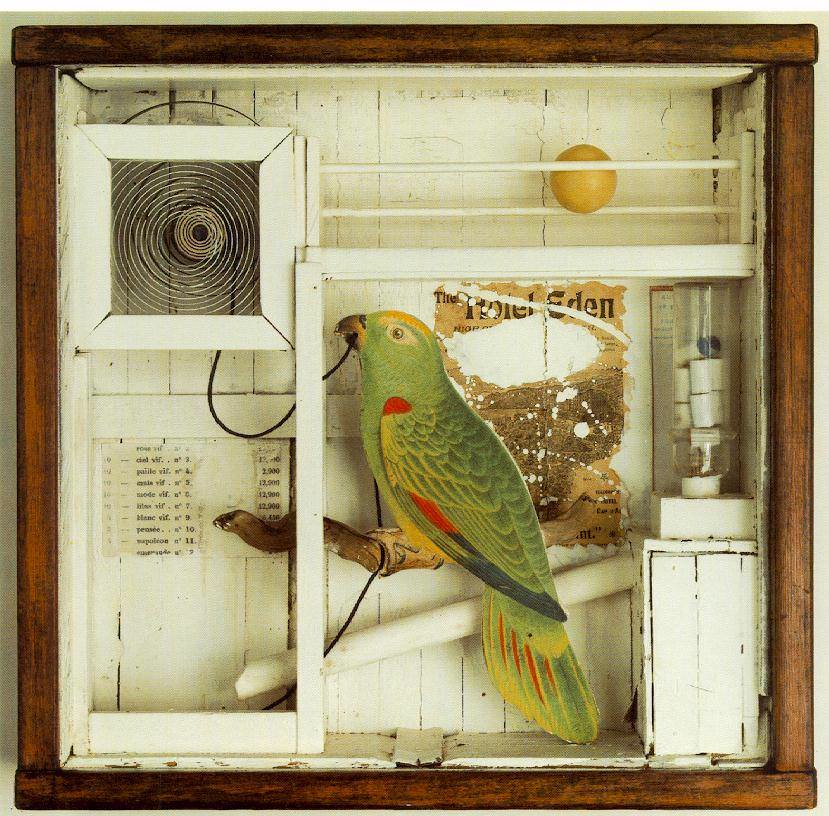
“Shadow boxes become poetic theater or settings wherein are metamorphosed the elements of a childhood pastime.”
— Joseph Cornell
 

The creations of Joseph Cornell are small, and remained so throughout his unusual life as an artist, even as many of his contemporaries responded to the fashion of producing ever larger works. For me, a salute to this influential American seemed like the fitting approach when I decided to enter notBIG(3), an annual juried exhibition devoted to small art. I am pleased to have had a piece accepted to this show, which hangs from 8/11 to 9/11 at Lexington’s M S Rezny Studio/Gallery.

The “poetic theater” of little shadow boxes is not an isolated medium in collage/assemblage. To consider one’s activity in this comprehensive oeuvre as anything but an homage to Cornell would be an act of mild self-delusion. His singular, enduring presence overarching the genre must be acknowledged. There was a concern that my taking this approach with the notBIG(3) entry might appear to the juror as too derivative, but I pushed ahead with the “sincere flattery” of my plan. I had failed to crack this competition in its previous calls to artists, and I had hopes that the third time would be a charm for me. In addition, I wanted to assemble a range of ingredients outside my norm, including metal, wood, organic material, glass vials, and vinyl dimestore figures.

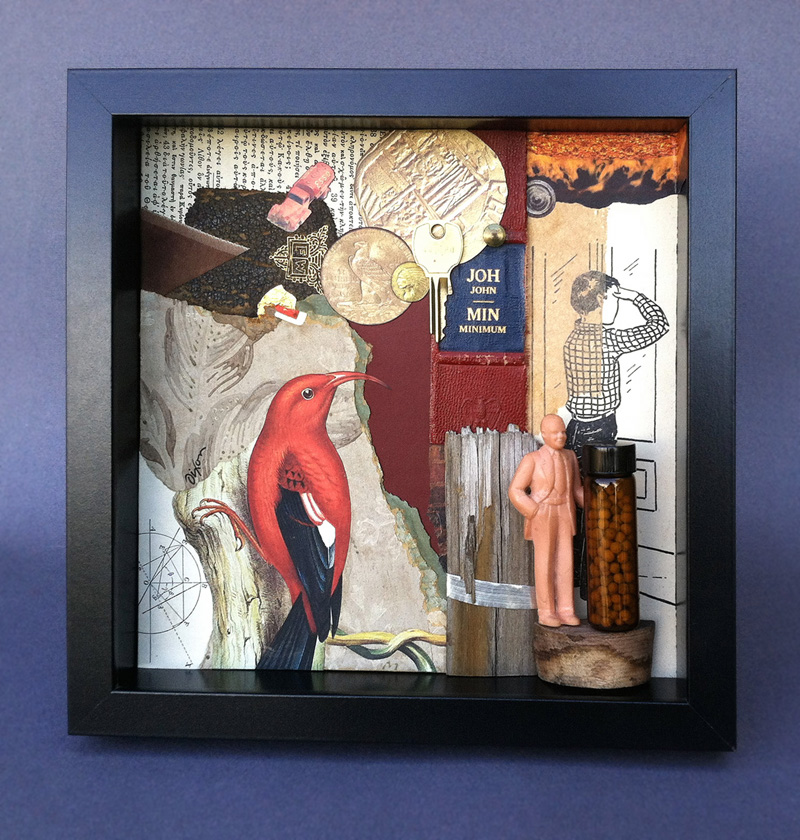
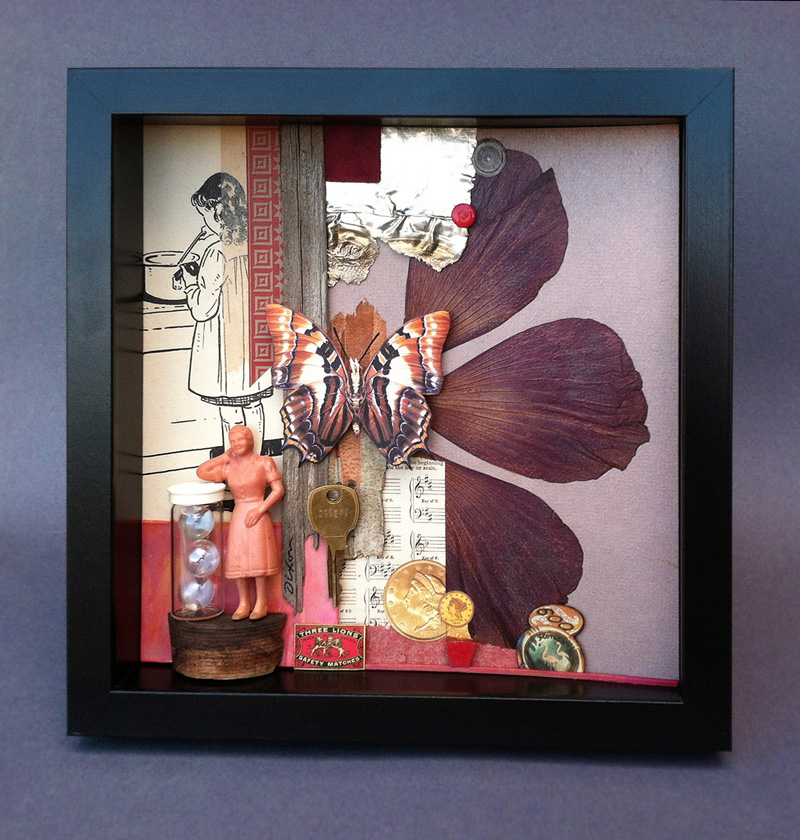
I created and entered two works as a pair — Histopia and Hertopia — a dual allusion to Utopia Parkway and its significance to the art history of the 20th century. It was not possible to enter both as a combined entry because the dimensions would have exceeded the size limitation of 12 x 12 inches. Only the first shadow box was selected. I was delighted to learn of my getting in the show, but it came with a small serving of disappointment, knowing that the gender balance of my overall idea would be lost with the “boy scene” presented to viewers by itself. It is something I can accept. Out of 380 works submitted, the 45 artists who make up the exhibition have a single artwork included. At any rate, this is what blogsites are for. Both pieces can be viewed together, and I have the opportunity to explain the whole thing to anyone kind enough to read this far. I also anticipate that many of you will be able to visit what appears to be shaping up as a strong exhibition. The opening reception is Friday evening, August 14th, 5 to 8 pm.
 

Histopia ~ collage/assemblage in shadow box frame by John Andrew Dixon

Histopia
collage/assemblage in shadow-box frame by J A Dixon
10 x 10 x 1.75 inches, available for purchase

Hertopia ~ collage/assemblage in shadow box frame by John Andrew Dixon

Hertopia
collage/assemblage in shadow-box frame by J A Dixon
10 x 10 x 1.75 inches, available for purchase

Selective Fusion

Monday, July 13th, 2015

“Schwitters subjected his bits of flotsam to an organizing principle resembling the vertical scaffolding of Analytic Cubism, thus transforming the diverse components into formal elements.”
— Nancy Spector

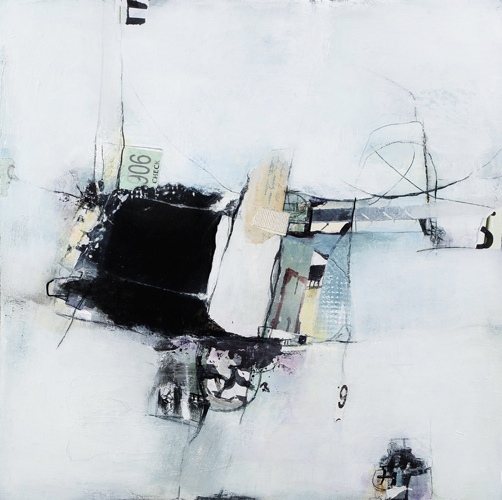
Color and composition may be the most common denominators of all visual art. Collage, by its nature, relies on a combination of separate, often disparate elements, and those two fundamentals generally play a more prominent role in the finished effect, but that does not make collage essentially a category of abstraction. A minimalist concept built on a provocative juxtaposition or image insertion can be a predominantly figurative or representational approach, even if symbolic or surreal ideas are introduced. On the other hand, collage artworks rooted in the seminal innovations of Kurt Schwitters pay primary tribute to a tradition of abstraction now more than a century old. Of course, the medium had other early pioneers, but it is difficult to imagine the trajectory that collage might have taken without his towering influence. Personally, I have no qualms about continuing to respectfully mine the rich vein of creative ore he helped to expose. Whether it proves to be a nonrenewable resource has yet to be shown.
 

Selective Fusion ~ John Andrew Dixon, collage artist

Selective Fusion
collage on structured panel by J A Dixon
13.375 x 11.75 inches
not for sale

Sunday, May 3rd, 2015

WYOMING
by Brendan Adkins

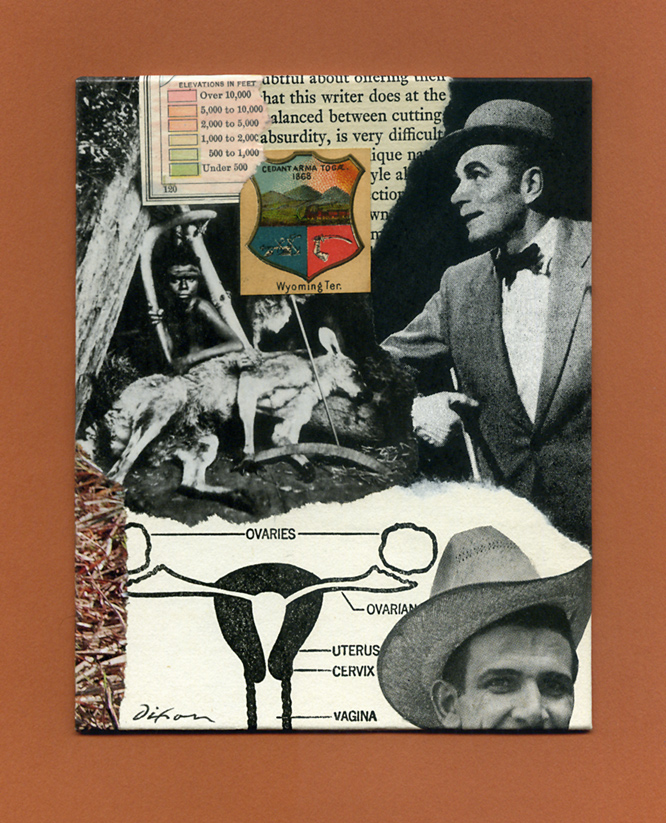
Leonard and I were in Wyoming just long enough to stop for gas off the Laramie exit.

The Vagina Monologues was my second college play, and The Laramie Project the second-to-last. They were the only times that I felt meaningful, in drama, loud and bright and kicking teeth. Every acting student in this decade has had those feelings about those plays. That doesn’t reduce their significance.

Laramie was an offhand pilgrimage, a place to throw the ashes of a twelve-year dream. I was done with acting. I’d begun to write.

Leaving, I bought a local newspaper: the Boomerang.

WYOMING is licensed under a
Creative Commons Attribution-Share Alike 3.0 License.


The Boomerang ~ J A Dixon

The Boomerang
collage miniature by J A Dixon, 4 x 5 inches
inspired by WYOMING
(Ommatidia, Thursday, January 26, 2006)
collection of B C Adkins

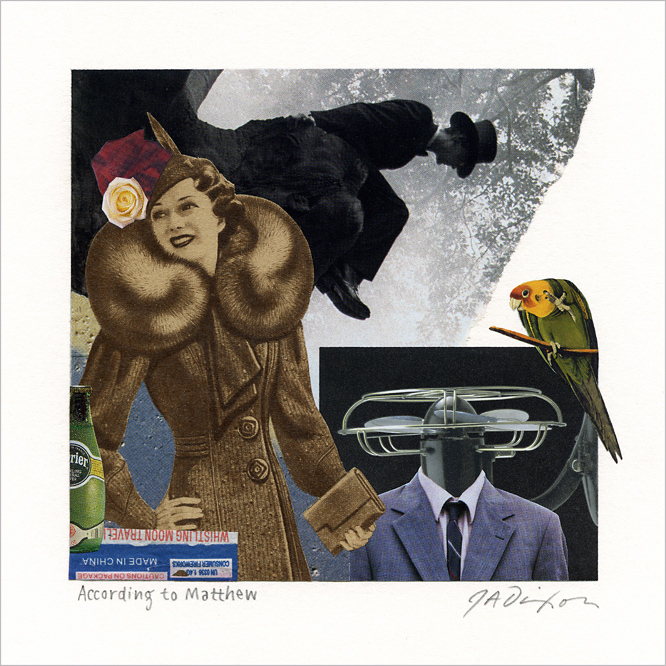
According to Matthew

Saturday, January 31st, 2015

 
According to Matthew ~ J A Dixon

According to Matthew
collage miniature on Bristol by J A Dixon
homage to Matthew Rose
collection of The Ontological Museum

A universal antidote . . .

Saturday, January 17th, 2015

“Self-consciousness is the enemy of all art, be it
acting, writing, painting, or living itself, which is
the greatest art of all.”
— Ray Bradbury

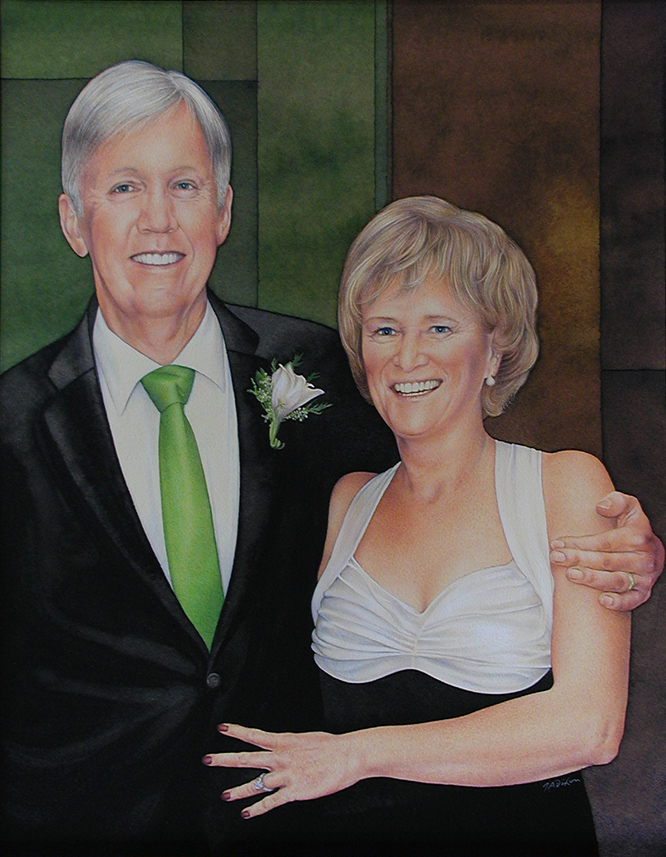
I was honored, but also thrilled, to accept my third invitation for the “New Year New Art” exhibition at our local Community Arts Center, one of the outstanding cultural institutions in Central Kentucky. The extraordinary thing about this annual show is a freedom to display, The Barretts ~ a portrait by John Andrew Dixonwithout juried appraisal, one or two pieces for which one has passion. The only restriction is that the work not be over four months old. I decided to create something around the holidays specifically for the opportunity, and, because I had just completed a difficult portrait commission in watercolor and pencil, a more personal form of expression was a welcome idea. I had used an illustrative, “news-magazine-cover” style that always has had great appeal to me, but that over the years has challenged my self confidence and repeatedly has put my perfectionist tendencies to a stress test. Fortunately, I have discovered a universal antidote for all that — collage.

For the January exhibition I wanted to do something fresh, to surprise myself, but also, as most artists prefer, to create something that would please others, that would excite an individual’s subjective response. Mixed-media collage is a medium that people find both provocative and delightful, and to which I am strongly committed, but that should be no surprise to anyone who follows this site. As a working designer and graphic artist, I return to collage on a nearly daily basis as fuel for my creative life and a potent solvent for that side of myself which continually flirts with self doubt if something might not turn out exactly as I imagine it should. All that nonsense fades away when I incite the spontaneity of this magnificent medium.

Of course, I remain captivated by the ability to make something of value from material that otherwise would be thrown away or recycled. I enjoy creating artwork that has bold visual appeal from across a room, but that also provides a depth of interest at close observation, with many stimulating details within an intimate viewing distance. “Matthew’s Touchonic Lodge” is primarily an abstract composition, and I salute two collage artists whose work I admire with my title and embedded allusions. “Apparition Rising” uses ingredients that are more whimsical, but perhaps slightly “spooky” at the same time. A phrase from a song that I like sparked the genesis of its assembly. Both are significantly larger than my typical miniature, more dimensional than a standard flat surface, and, as with all my designs, I worked intuitively with color, contrast, and the activation of space. In addition, I continue to push the effect of collage as a stand-alone treatment that does not demand the protective glass barrier. Please let me know what you think of these new works.
 

Dixon_TouchonicLodge

Matthew’s Touchonic Lodge
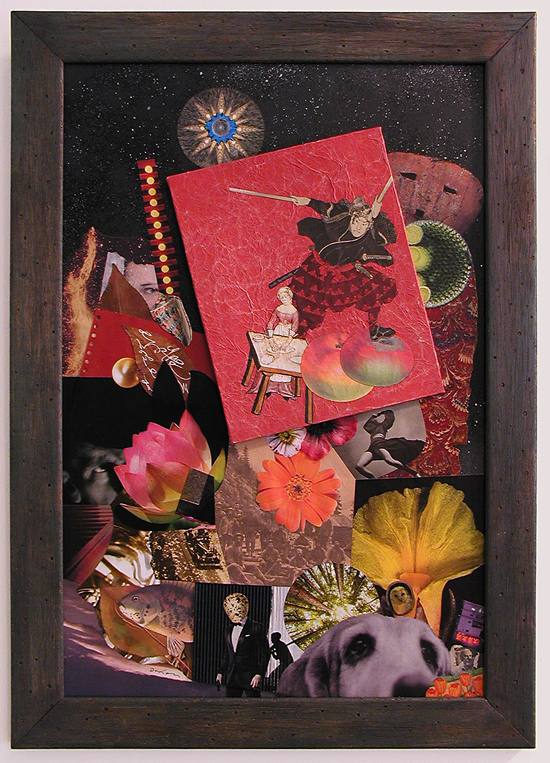
mixed-media collage by J A Dixon
22.5 x 20 inches, December 2014
title source: homage to artists M Rose and C Touchon
Purchase this artwork!

Dixon_ApparitionRising

Apparition Rising
mixed-media collage by J A Dixon
19.5 x 27.5 inches, December 2014
title source: from the song “Ghost Town” by J Brasfield
also available for purchase

On Nostalgia in Collage

Thursday, December 11th, 2014

“ . . . what I am hoping to do is discover if it is possible to separate nostalgia and collage art, or determine whether the two are inextricably entwined.”
— Joel Lambeth

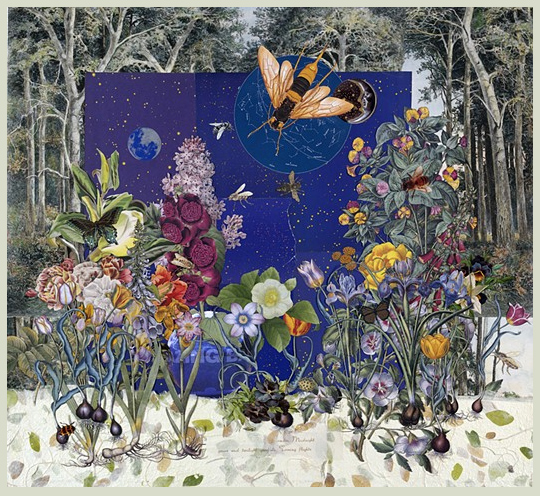
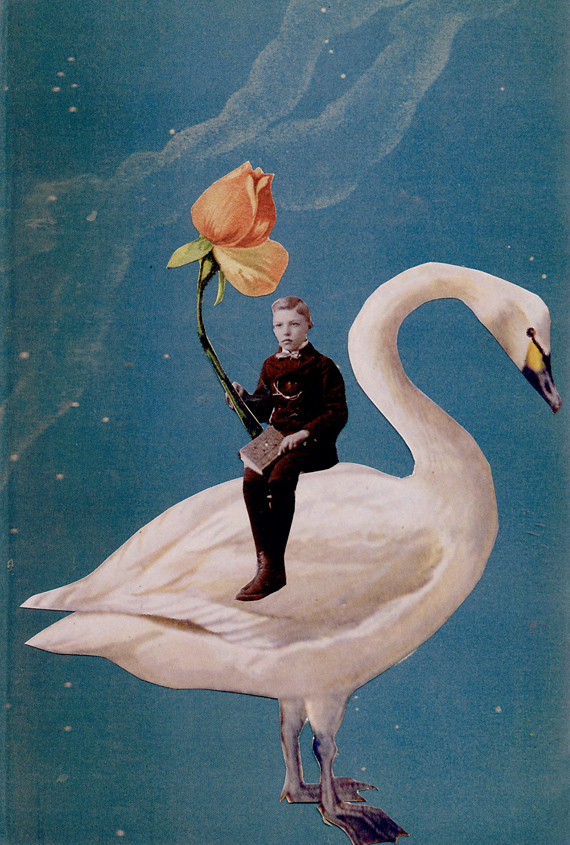
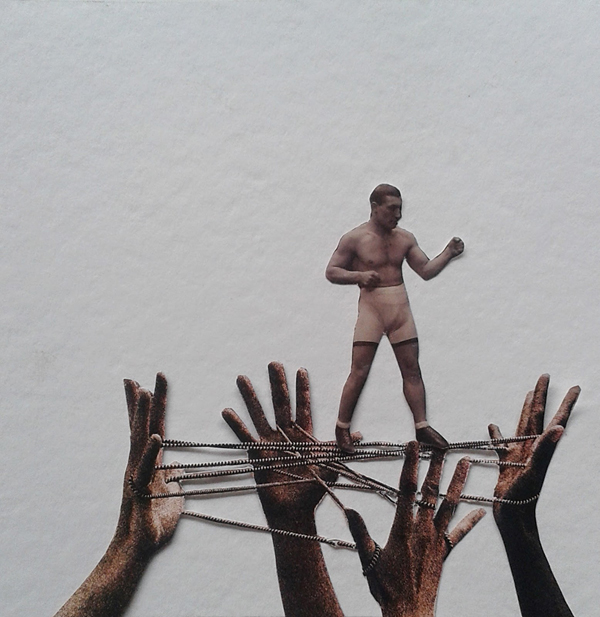
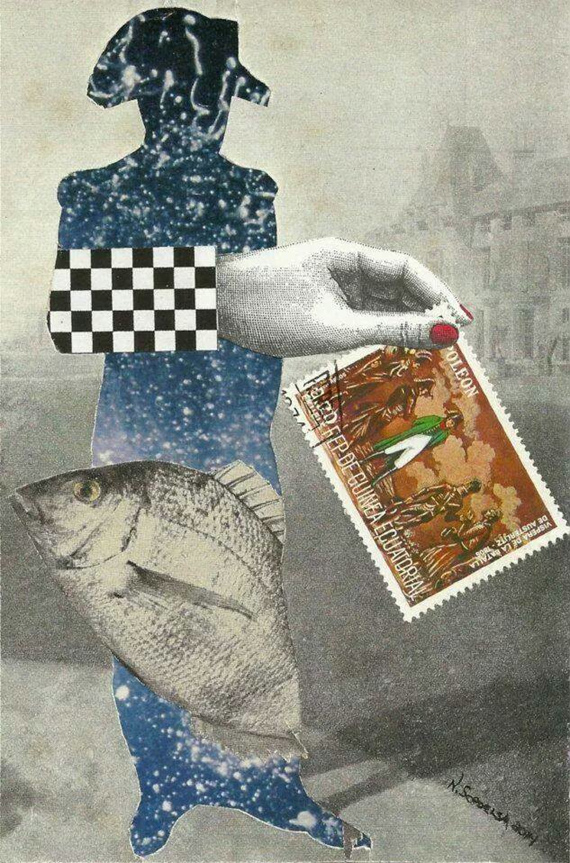
In a blog entry last month, collage artist Joel Lambeth asked the challenging question, “Is collage inherently nostalgic?” It is one of the more provocative pieces about our medium that I have read this year, although a bit wordy in places. Admittedly, most working collage artists like us who maintain blogs that purport to be more than an online portfolio are not the finest writers alive, and I salute him for not choosing to approach the topic in a superficial way. Nevertheless, it is always risky to generalize about anything, but Lambeth cuts deeply into the subject to probe the history and heart of collage as an art form, and he manages to avoid a semantic discourse on the definition of the word “nostalgia.” His thoughtful viewpoints have sparked a desire on my part to weigh in (with what also may prove to be an entry more verbose than usual).

The groundbreaker Max Ernst worked with vintage engravings, perhaps to emphasize his anti-traditionalist intentions.a Joseph Cornell aviary assemblage He influenced Joseph Cornell, who captured feelings of personal nostalgia with innovative effects that were as cutting-edge as they were fixated on musings about the past. When analyzing collage artwork with respect to the idea of nostalgia, we must take into consideration the artist’s motivation in addition to the overall character of the medium. When I look at current examples from the daily waves of creative output, it is clear that nostalgia in collage plays out along a spectrum or continuum like nearly every other feature of the process, whether it be minimalism/maximalism, realism/surrealism, or representation/abstraction.

It is surprising to me how many contemporary collage artists work exclusively with old ingredients, but that does not mean necessarily that their agenda is merely to traffic in sentimentality. Sara Caswell-Pearce and Nancy Gene Armstrong are among those who appear to harness nostalgia as a conscious objective in their work while achieving a broad balance of artistic creativity. Many collage artists, such as Carolina Chocron, Nikki Soppelsa, Ross Carron, Fred Litch, Laura Collins, and Frank Voigt are more apt to generate nostalgic tones as a byproduct of incorporating vintage ingredients into strong compositions. Only these individuals could clarify to what degree they actively try to convey impressions of an era gone by. The versatile Zach Collins and Randel Plowman, although they frequently work with obviously old paper, both seem to be engaged in ongoing visual investigations more primary than any sense of nostalgia embedded in their finished works.

Lambeth compares the nostalgic impulse to the process of collage itself and concludes by suggesting “that at a very base level collage and nostalgia have more in common than they do separating them.” He acknowledges the contemporary effort to transcend the inherent bias that the medium may have toward nostalgia. Perhaps he, Marc Deb, Launa Romoff, Andrew Lundwall, Teri Dryden, and numerous other artists are making the push beyond any fundamental nostalgic essence. If so, collage, after more than a hundred years, is cycling back to its roots, when Kurt Schwitters, who always considered himself a painter, became convinced that the pasted detritus of his environment was equally as legitimate as a brushstroke of oily pigment.
 

Midnight Gambol: Or Why The Bees Slept In Every Morning
mixed-media collage by Sara Caswell-Pearce

A Boy and a Swan
collage by Nancy Gene Armstrong

descosiendo el cuadrilátero
collage by Carolina Chocron

Napoleon shows his hand
collage by Nikki Soppelsa

untitled
collage by Fred Litch

Nubecula Cum Ovi
collage by Ross Carron

Jump
collage by Laura Collins

untitled
collage by Frank Voigt

141zc14
collage on wood panel by Zach Collins

August Night
collage by Randel Plowman

Ripping It Up
collage by Joel Lambeth

Imperfect Parallels
collage by Marc Deb

the parrot (detail)
mixed-media collage by Launa D Romoff

Substance
mixed-media collage by Andrew Lundwall

9 Lives
mixed-media collage by Teri Dryden

The Other Doorway

Tuesday, November 25th, 2014

“Art comes out of art, and you are just another stone in the wall.”
— Richard Serra

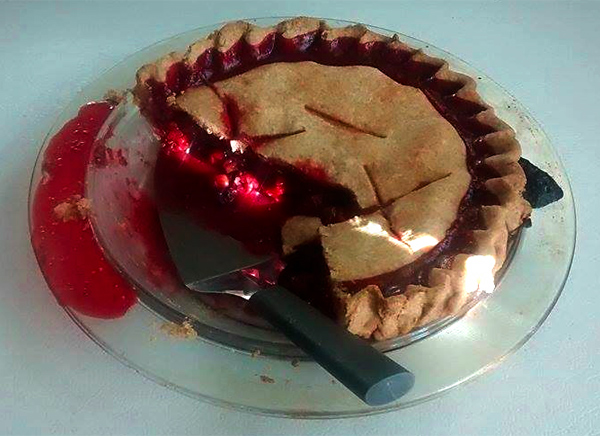
My “Partner In All Things” has outdone herself again. She prepared an outstanding dinner last night in celebration of our grandson’s 23rd birthday, including “game stew” with rabbit and venison, plus the tastiest cherry-raspberry pie ever.cherry-raspberry pie As for my part, I completed a collage miniature for him that took off on a phrase he said to me over a year ago while unraveling some difficult life choices. I am very proud of the young man, for many reasons having nothing to do with his being a great source of encouragement as I continue to create work that puzzles a majority of art buyers. Some time ago, L T Holmes introduced her online followers to the idea of producing a collage “under the influence” of a fellow artist. I admire her for elevating it to an exercise in perceptual focus. It is good to be mindful of influences, because they are not necessarily at a level of awareness. Today’s featured image is an example of how I have come to recognize the unconscious influence of peers after a work is finished. I am not sheepish about admitting it. Inviting the artistic strengths of others to rub off a bit is why we regularly partake of the excellence in our medium. The collage artworks of my friend Connie Beale, a retailer and accomplished interior designer, touch on the irrational aspects of environments and room-like enclosures with effects that are unsettling yet also whimsical. The prolific Eugenia Loli consistently captures the surreal potential of spatial contrasts and arresting juxtapositions. Perhaps a shade of both can be found in my grandson’s gift.
 

The Other Doorway ~ J A Dixon

The Other Doorway
collage miniature by J A Dixon
6.25 x 7.75 inches
collection of J M Strock, Jr

Arbitrary Mischief

Sunday, October 5th, 2014

“As we mature, all of us learn to ‘put away childish things.’ Often, though, we do such a good job of growing up that we lose contact with our spontaneity, teaching ourselves to follow rules and habits that inhibit us from acting on our hunches and intuition.”
— W. Clement Stone

One of my earliest entries at this site made mention of the intuitive response in our process of collage creation. I have continued to ponder this idea of making visual decisions without conscious thought, especially after a lengthy discussion at the Collage Critique group in the facebook realm. There is something to be said for intuitive spontaneity with no preconceived notions, in contrast to the methodical execution of a concept. Collage as a medium is diverse enough to embody both approaches and everything in between. In my opinion, there is ample “non-thought thinking” taking place, even when no “idea” is driving the process. On the other hand, most of us can tell when a piece is struggling to be more than a mere stew of ingredients and the temptation to declare it “finished” should be resisted.

Personally, it is no longer possible for me to imagine coming to this activity without the foundation of art education, a rigorous training in graphic design, and 40 years of practice as a creative professional. I suspect that I have internalized all this to become part of an inner resource, so that when, at the conscious level, I put all of it out of mind, it still informs each spontaneous visual choice and the sense of something appearing “right” to the eye. Deciding that “an ingredient in play” has the right color, the right value, the right shape, the right texture, or the right spatial role often happens without rational awareness. That is my goal, at any rate, to keep such “non-thinking thought” in motion for as long as possible before I find myself falling back into outer rumination. It is not only a matter of aesthetics. The same phenomenon applies to thematic or symbolic associations, and the overall process of ingredient acquisition and selection that initiates and sustains the whole affair. Not that there is anything undesirable or distasteful about planning, calculation, and a deliberate methodology. Far from it. Nearly every work of art will involve some of that. It just happens to be that what I am most hoping to take place is something else — that the flow of assembly leading to a stimulating but balanced effect is the result of an artistic intention deeper than conscious decision making.
 

hand-crafted collage by John Andrew Dixon, The Collage Miniaturist

Arbitrary Mischief
collage on panel by J A Dixon
8 x 10 inches
 
Purchase this artwork!

Feminine Fusion

Friday, July 11th, 2014

“Would you stay if she promised you heaven?”
— Stevie Nicks

One cannot have too many influences. I am like the musician who must hear many new notes each day. Hundreds of collage images pass before my eyeballs every week, but there are times when the best catalyst is a younger version of oneself. Much can be learned by reviewing former decisions or puzzling out past intuitions. Perhaps it is all a circular mystery. No doubt the Muse would not have it any other way.
 

Dixon_FeminineFusion

Feminine Fusion
collage miniature by J A Dixon
collection of B Griffin

Toll Taker

Monday, July 7th, 2014

With my birthday more than two months behind me, age 62 is now feeling old hat, but I have not forgotten about the gift from Ted Tollefson. His collage on beer coaster sparked a strong desire to reciprocate. Toll Taker is the result, and one could say I was “under the influence” of his cool style. It shall be sent it to him promptly with a couple more surprises.
 

Toll Taker
collage on Lore Brewing coaster
J A Dixon, 4 x 4 inches
collection of T Tollefson