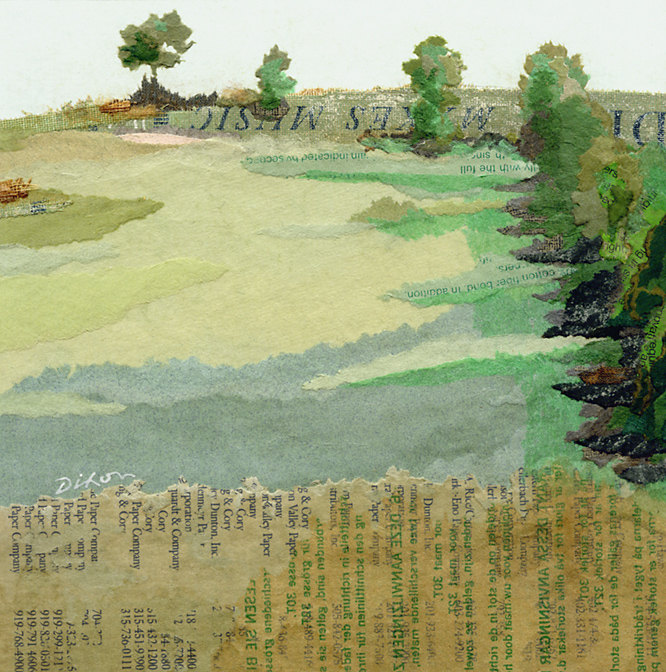
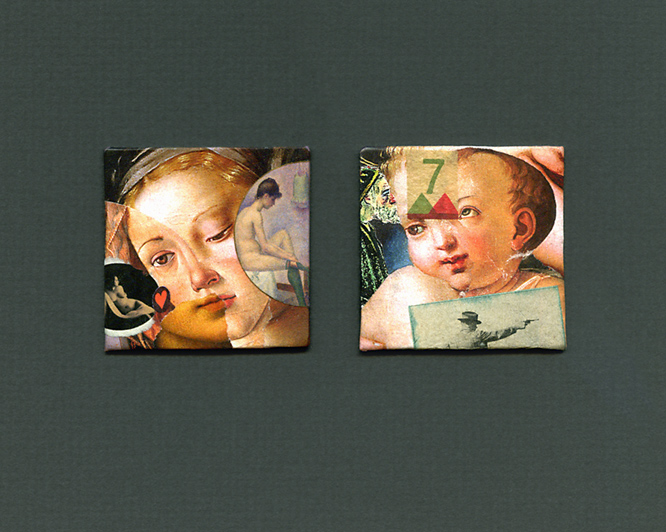
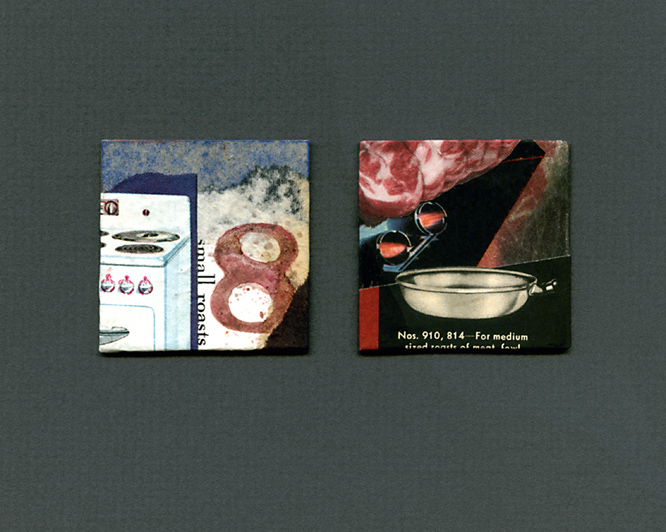
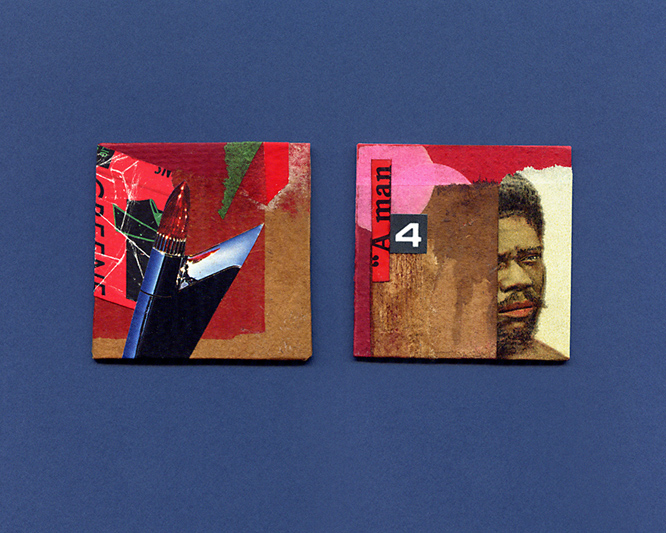
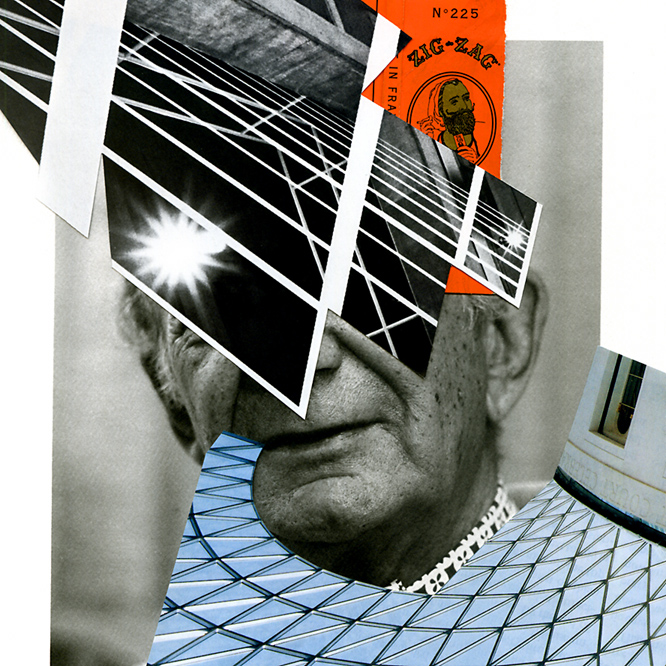
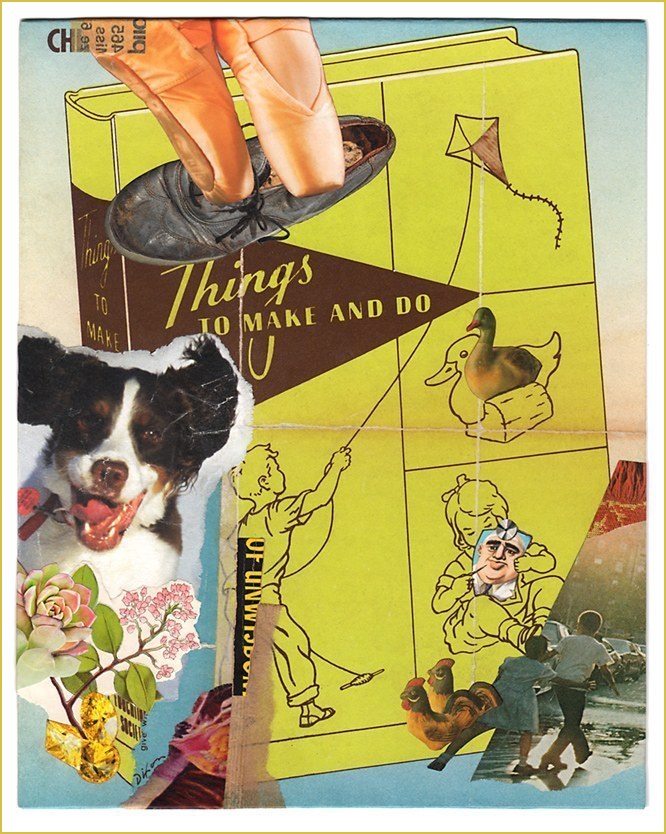
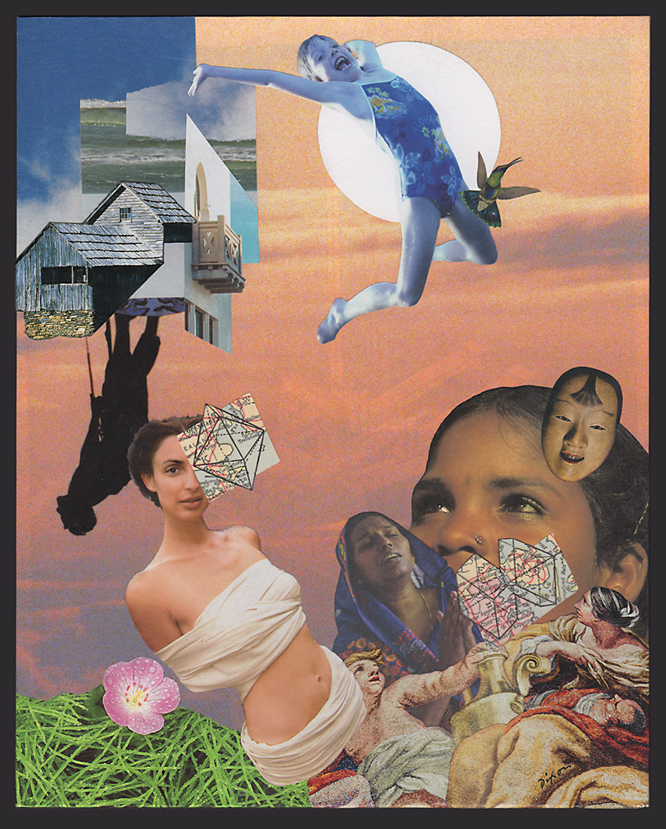
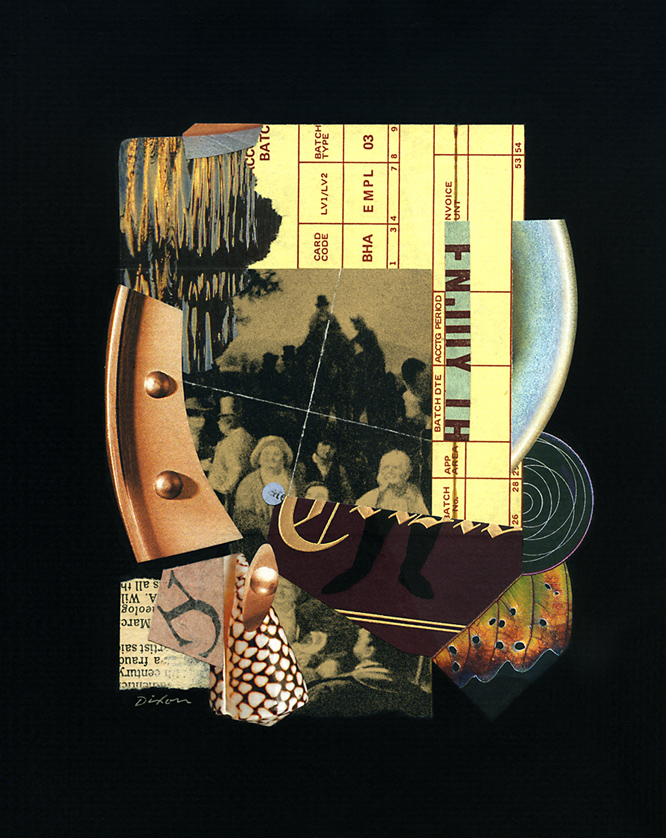
Convinced of Her Merit
collage miniature by J A Dixon
5.5 x 7 inches
available for purchase
Archive for the ‘Collage’ Category
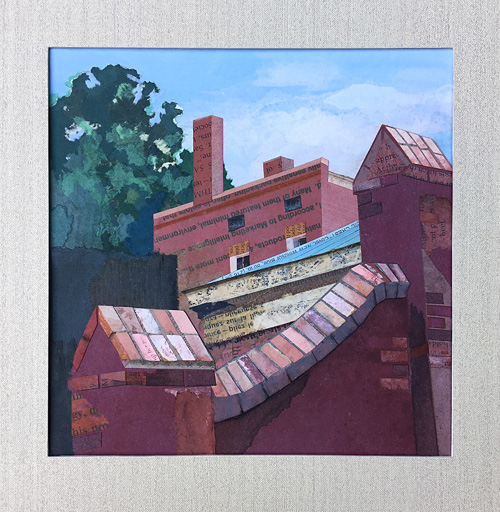
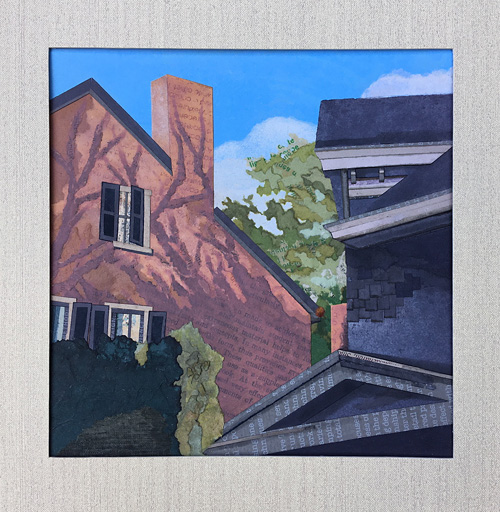
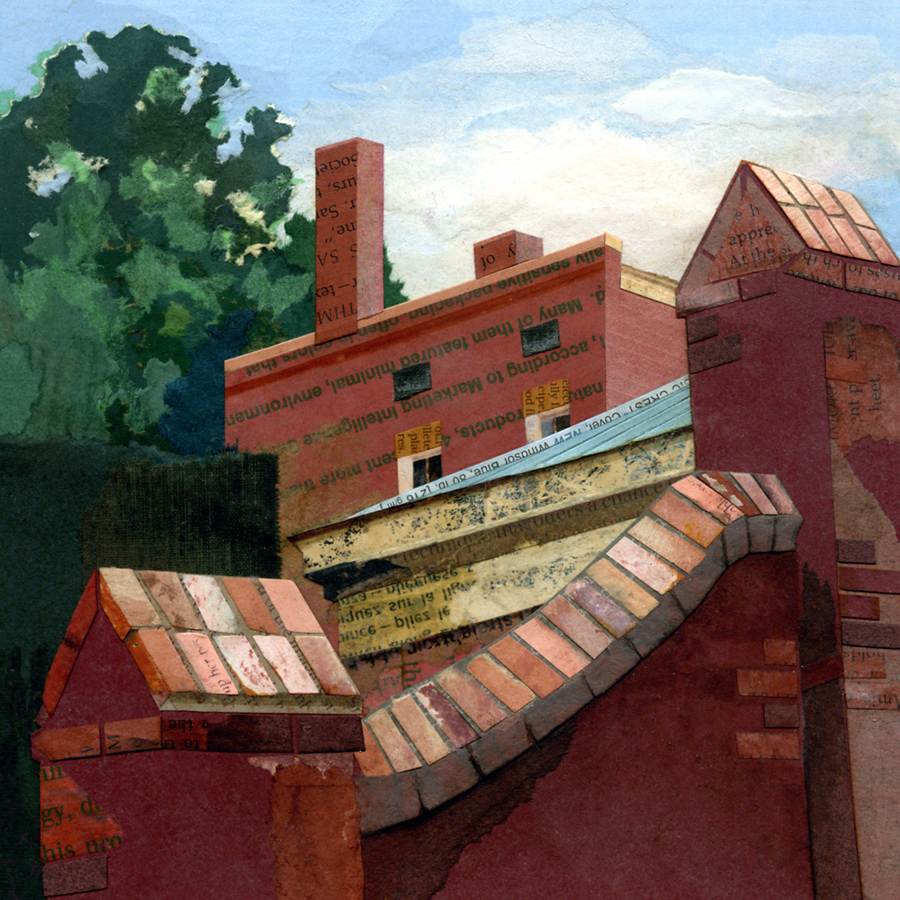
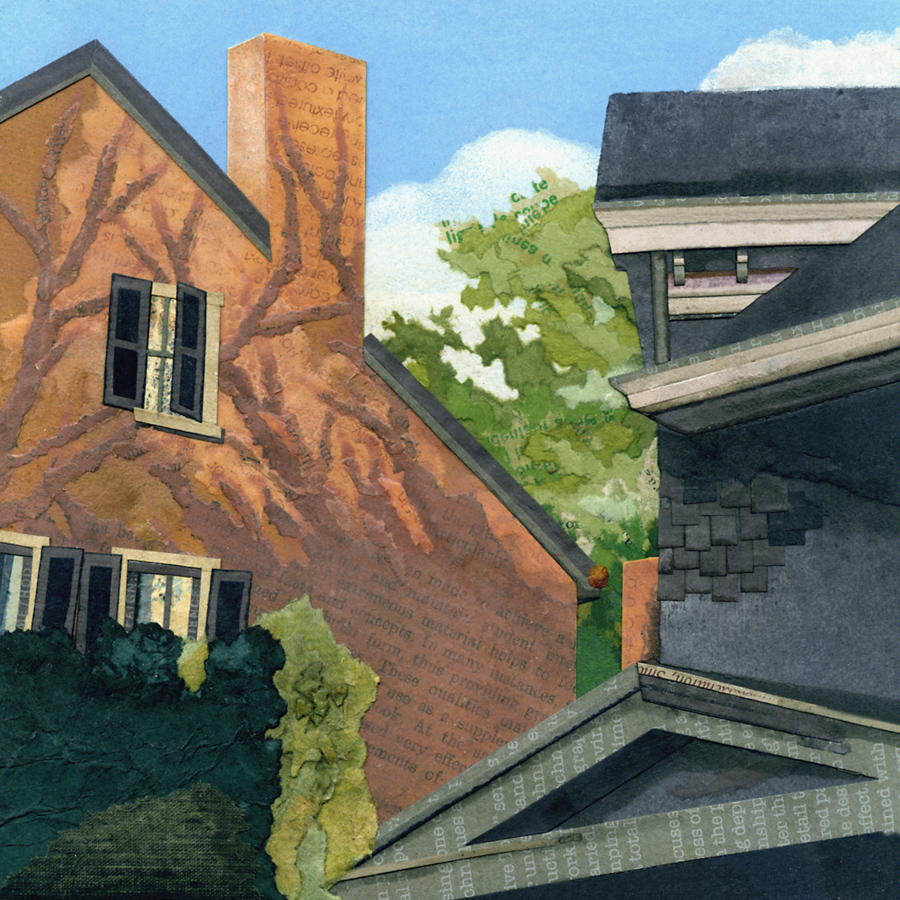
Convinced of Her Merit
Monday, February 17th, 2020Februllage ~ day ten
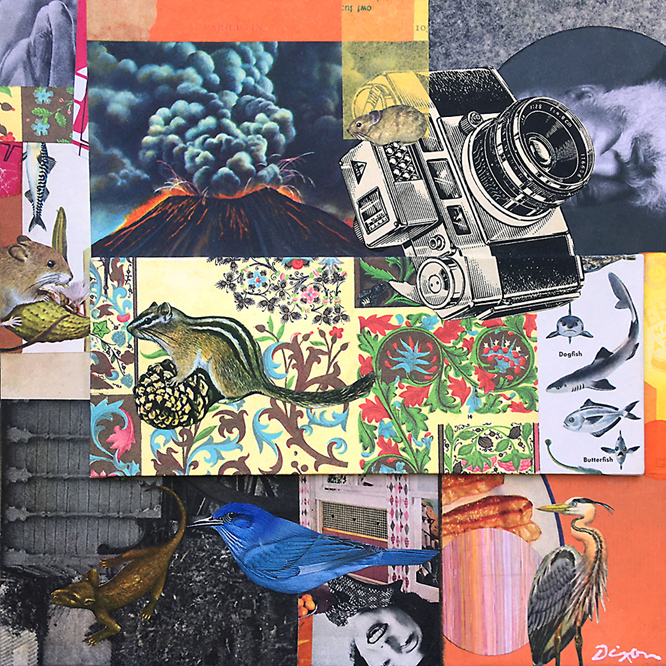
Monday, February 10th, 2020Personae
collage experiment by J A Dixon
5 x 6.25 inches
for Februllage 2020
Februllage ~ day nine
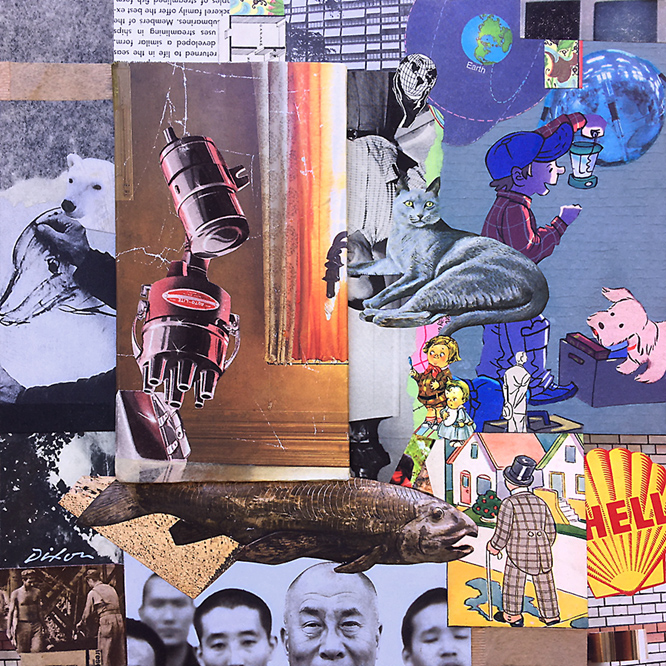
Sunday, February 9th, 2020Righteous Brutes
collage miniature by J A Dixon
6 x 5.875 inches
available for purchase
for Februllage 2020
Good Ol’ Boy Dada
Monday, January 27th, 2020“When Schwitters made the first collage by literally picking up a piece of rubbish, a sweet wrapper, a bus ticket and a piece of wood, that was pure invention.”
— Sir Peter Blake
For the many who revere his art, there’s a distinct Kurt Schwitters for each of us — rebellious creator, fearless performer, relentless out-of-the-boxer, proto-beatnik, or visionary theorist. In combination with his towering individualism, he was, by reports from those who knew him, affable, witty, optimistic, entertaining, and a practical joker. This is the Kurt who would be a pleasure to “hang” with, who others in the internment camp on the Isle of Man would hear each morning, barking like a dog.
In our local Bluegrass culture, there is a phrase for such a character. Around these parts, he likely would’ve been known as a “good ol’ boy.”
In response to the international call by Ric Kasini Kadour to build a Schwitters’ Army collection at MERZ Gallery, the two pieces I created pay tribute to this particular K.S. Both were fashioned from street debris and highway litter accumulated from my immediate vicinity. One of them was mailed to Sanquhar, Scotland. I haven’t decided what to do with “part 2.” Perhaps the series will continue.
In 2016, I wrote the following in my published essay on a hundred years of Dada: “Those of us who create collage art may not always describe our works as a tribute to the enduring, inclusive concepts of Merz, but that is precisely what they are, and we are indebted to that legacy.” As one who has never wearies of exploring the far-reaching innovations of K.S., I am content to describe myself unabashedly as a working “Merzologist.”
Schwitters may or may not have been the original artist to embed found detritus in collage, but certainly he was the first to fully master a modern-art version of the medium when it emerged at the close of the Great War. Embracing every conceivable source ingredient, he would codify the new visual vocabulary, give it an umbrella name, and bequeath the methodology to unborn generations.
He may have sensed that the window of opportunity for him to preside over such a grand human venture was closing. He never got to take by storm the art world of 1950s New York — something eminently suited to his personality. His work and writings have had to speak for themselves.
For me, the seminal creations that launched what we know as Merz can never be separated from the man himself — the one who directed subtle, irreverent jabs toward a gang of thugs who hijacked his culture, until it was impossible to stay put, and then, after facing further persecution in Norway with his son, reckoned that an icebreaker just might evade Nazi torpedoes long enough for them to reach the coast of Scotland. Probably that dauntless, wry, “Good Ol’ Boy” side of him was satisfied to leave us with this simple thumbnail declaration:
“My name is Kurt Schwitters.
I am an artist and I nail my pictures together.”

Good Ol’ Boy Dada, part 1
collage artifact by J A Dixon
7 x 9.25 inches
Good Ol’ Boy Dada, part 2
collage artifact by J A Dixon
7 x 9.25 inches
Schwitters’ Army Mobilized in Rural Scotland
Monday, January 20th, 2020“. . .this is what we do in the collage community: we engage, we exchange, we manifest with one another. We emerge into a new state of being together. That is what makes art powerful. It connects us and takes us into the future.”
— Ric Kasini Kadour
Any collage artist who maintains even a casual curiosity about the legacy of Kurt Schwitters has to be enthusiastic about developments in Sanquhar. As someone who employs this space to exalt the “Master of Merz” without apology, I now feel compelled to praise Ric Kasini Kadour and his worldwide call to built a Schwitters’ Army collection of collage artwork at the center for learning established by David Rushton in the Scots town. Needless to say to an audience that visits this site with an interest in all things collage, Ric has made an impressive effort
over the past few years to raise the level of discourse about a medium to which so many of us have dedicated ourselves. From Kolaj Magazine to Kolaj Institute to Kolaj Fest, he’s been making his mark for some time and clearly doesn’t intend to rest on his laurels.
As part of his curatorial efforts at MERZ Gallery, he has asked contributing collage artists to answer a few questions. As I prepare to ship my donation to the cause, I’ll publish my supporting remarks here for your potential interest.
Next time: a look at the artwork and my thoughts about the context of its creation.
What is your origin story? When did you first start making collage seriously?
The first collage art that I remember creating was in the 4th or 5th grade, probably in 1961 or 1962, when I used sample chips of color from a paint store to cut and paste a mosaic-like image that won the “Poppy Day” poster contest. It’s always stood out in my memory. I thought of myself as an artist from that point forward. Nevertheless, up into high school, I would feel the lack of any competent art instruction as a keen deprivation. I convinced my parents in 1967 to enroll me as a charter student in the home-study course co-founded by Norman Rockwell called “The Famous Artists Course for Talented Young People.” Unlike the successful version for adults on which it was patterned, the package of guided assignments for teens would fail in the marketplace, but not before exposing me to a diversity of fine and applied art mediums, including collage.
Who was the first collage artist you connected with?
The Famous Artists Course would bring to my awareness many influences in the area of collage and assemblage, including Fred Otnes, Robert Rauschenberg, Louise Nevelson, Joseph Cornell, and Kurt Schwitters. Although I didn’t understand his technical methods, I initially attached my affection to the visually comprehensible Otnes, and I’d emulate his montage approach throughout my years as a professional illustrator and designer. In contrast, a series of breakthroughs in my journey to unravel the Merz of Schwitters would take another forty years, culminating in my first solo exhibition as a collage artist in 2007.
How do you connect with the collage community?
I began writing about collage and showcasing my practice at “The Collage Miniaturist” in 2012. Since then, beginning with fellow artists in Kentucky who work in the medium, I’ve collaborated with a body of dedicated collage artists. I’ve also regularly entered pieces in national and international calls for collage and submitted my work to landmark exhibitions and permanent collections. Believing that cross-pollination in collage through worldwide virtual communities is a vital force in the so-called “Post-Centennial” collage movement, I follow hundreds of active collage artists through social networks. As much as possible for someone who continues to sustain an ongoing studio and exhibition schedule, I regularly comment on trending topics and answer questions in the digital realm.
The Apprentice Merzologist
Sunday, November 17th, 2019“For some time, we have been inspired by the work of mr.babies. He frequently uses large eyes and sweeping vistas. His work, while expressive and multicolored, also hints at the human longing for place. mr.babies is known for posting a series of images that integrate one shared element placed on a variety of backgrounds At the end of the series, the viewer often finds the completed piece. To us, this visually represents the (often lifelong) journey to find belonging.”
— Doug + Laurie Kanyer
Kindly take a look at my submission to the OPEN CALL opportunity by the Doug + Laurie Kanyer Art Collection on the theme of “finding a place of my own.” The Yakima-based couple are building a repository of contemporary collage and using Instagram, Facebook, and other devices to elevate their agenda in the art world.
My take on this idea is to turn inward on the medium of collage itself, with a veteran “Merzologist” mentoring his young protégé on the intricacies of the Kurt Schwitters legacy.
I’ve explored placing the central element against different backgrounds from my previous compositions, according to the constraints of the project. A final pasted version integrates the same subject within an entirely new “terrain” of ingredients created specifically for the entry. It’s my first official salute to a hundred years of Merz — in all likelihood, the most pioneering concept in the history of collage.
As an artist, Merz means more to me than finding a place of my own. In the words of the great innovator, it is about “creating relationships, preferably between all things in the world.” I know that I’ve used the quotation a number of times at this site, but is it not as true today as it ever has been? Upwards of 500 works have been submitted to the Kanyer exercise from artists worldwide, another indication of how collage has exploded in the emerging era of social networks.
The Apprentice Merzologist
collage on book cover by J A Dixon
8.5 x 11 inches
part of the #findingaplaceofmyown project
Fourth Chapter: Wasn’t this spot in the shade?
Tuesday, August 13th, 2019“I go to nature every day for inspiration in the day’s work.”
— Frank Lloyd Wright
After much too long a hiatus, I finally got back on location with the PAACK to resume my project to create collage en plein air. Setting out in the morning seemed like a “forced march,” including unwarranted worries that I’d forgotten something essential, but as soon as I got to the nearby Scott estate, I was at home scouting for a place to sit. The environment and hospitality were both exceptional. With the grounds in ideal shape,
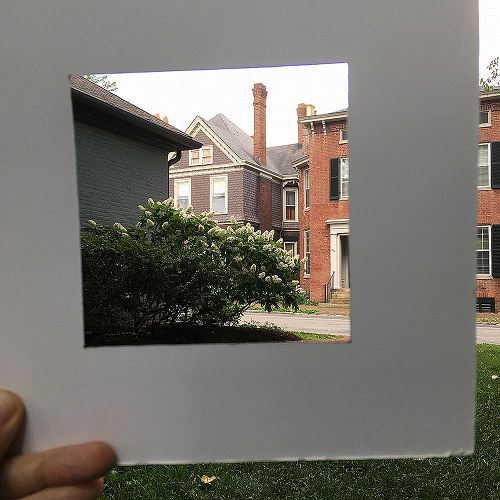
our hosts had offered many inviting points of view. Relying on my card with a square cutout, I fixated on a cluster of three outbuildings that would provide some desired depth (which I then proceeded to compress in space). I also was looking for a good opportunity to continue developing my technique for trees. I made a conscious effort to back off from a previous “fastidious” style and to evolve a looser method of “painting in papers.” I resisted concerns about the end result whenever I discerned a now-familiar tendency to tighten up. It was a solid, productive outing during the hottest chunk of a fine summer day.
An enjoyable discussion with the owner revealed the detail I would need for a fitting title. It was quite possible that the old, white-washed brick structure central to my composition had been the storehouse for a tannery in early Danville,
one of the original pioneer settlements in Kentucky. The small piece turned out to be a 50%-50% location-to-studio allocation. This same time formula (which still allows for a legitimate plein-air designation) was applied to another miniature that I finished next, a scene that overlooked a spot on Main Street (here in downtown Danville). The artwork was something I’d commenced before a knee injury sidelined my plein-air activity last year. After a double session in the open, I’d always intended the piece to be a hundred-percent outside solution. I surrendered that idea and decided to pull it out of storage for a studio conclusion, in order to make the deadline for our annual group exhibition. In a future entry, I’ll delve into additional aspects of what I’m discovering about this process and a few of the helpful techniques that I’ve learned.
The 2019 En Plein Air show is currently on display until the end of August. An opening reception this Saturday evening coincides with a festive name-change event for the local arts venue — now to be identified as Art Center of the Bluegrass. The prominent facility in a former federal post office has always felt like a “home stadium” to me, ever since my first solo collage exhibition was held there, not long after the building was acquired and restored as a focal point for the arts. Long-time followers of this humble blogsite will know that it has surfaced regularly in the yearly roster. My best to everyone on deck at this institution, as you chart new waters for a valuable community resource.

Perhaps a Tannery
plein air collage miniature by J A Dixon
7 x 7.25 inches
• S O L D
Across Main
plein air collage miniature by J A Dixon
7.875 x 9.125 inches
• S O L D
Spontaneity and adaptation
Saturday, July 27th, 2019“I never plotted anything out. I don’t believe in storyboarding. I think you have a very dull-looking movie. You have to take advantage of the moment. I’m the kind of person that loves what we call the fog of war. That when things are going, and opportunities present themselves, you use them, you know, and there’s a fluidity that occurs that way. Now, I’ll go to all the locations. I know what I’m going to shoot, and where I’m going to shoot it, but I’m always ready to change. I’m always ready to adapt to the situation as it develops, and I think that there’s a certain organic quality that occurs then.”
— John Milius
The incomparable Milius was obviously talking about his approach to crafting a film, but I find his description entirely appropriate when discussing the art of collage. There must be a balance of careful research, discernment, and preparation — to set in readiness the potential ingredients — combined with a difficult-to-articulate sense of walking into the studio with absolutely no idea what will happen next, or how one might adjust the wheel to a different point on the compass. He puts it into words as well as anyone. If current movies — or any art form based on visual montage — look more contrived than ever, all the clues we need to know why are in that quotation.
Aggravated Dissent
collage on pasteboard by J A Dixon
7.5 x 11.5 inches
Purchase this artwork.
Crucify Them
Saturday, July 6th, 2019Go on, get entangled!
Saturday, May 18th, 2019“Quantum entanglement is damn hard to explain in layman’s terms. Not because entanglement is complicated — it isn’t — but because entanglement is so dangerously close to some concepts we are familiar with in the classical world, like communication and common-cause correlation. And because it’s so close to these familiar concepts, it’s horribly easy to jump to the conclusion that entanglement is “like” one of these. But the whole point — the whole thing that makes entanglement uniquely quantum and interesting — is that entanglement isn’t like either of these things.”
— Paul Mainwood
I don’t think I’ve ever experienced such delight in a person wanting to own and live with one of my collage artworks, and that’s what made the live auction last night so memorable for me.
I brought a lot of pent-up energy to the piece, not having produced anything in my collage studio since the end of February. It was perhaps the longest layoff I’ve had in that line for a dozen years or so.
It was an ideal opportunity to face a blank canvas without a preconceived vision and no abundance of available time. I’m nearly as pleased as my new friend, Sarah, who made the winning bid!
Surely there are quantum mechanics at play in this kind of collage process (the quantum state of each particle cannot be described independently of the state of the other). Please take a look at a few of my contrasting crops, and share your observations with me.
Quantum Entanglement (three details)
collage on canvas by J A Dixon
28 x 22 inches
collection of Sarah Hamlin Kuchenbrod