Archive for the ‘Artists/Other’ Category

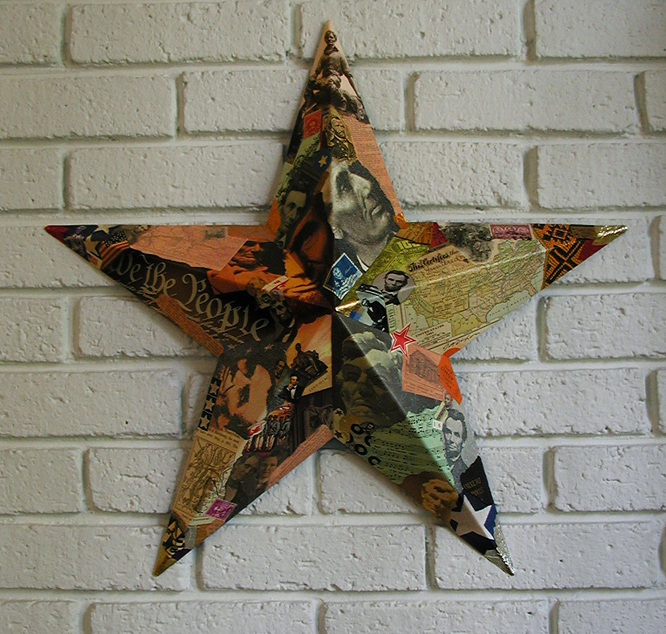
I Must Have Kentucky

Sunday, March 26th, 2017

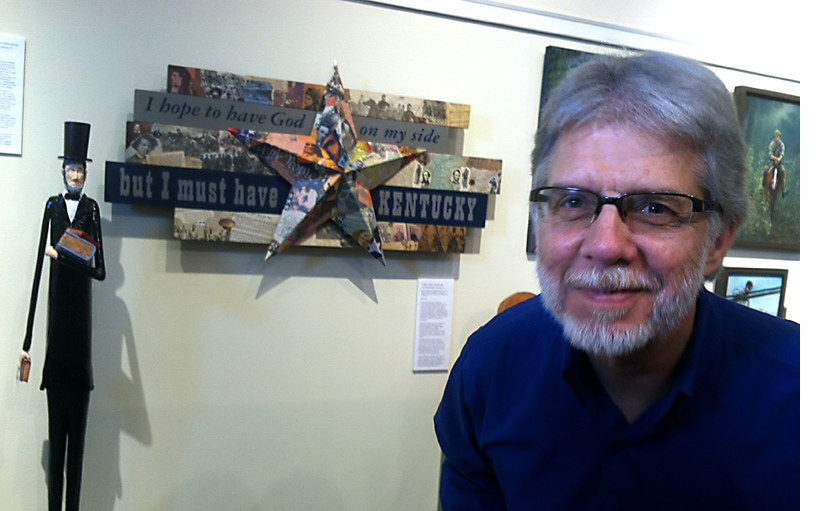
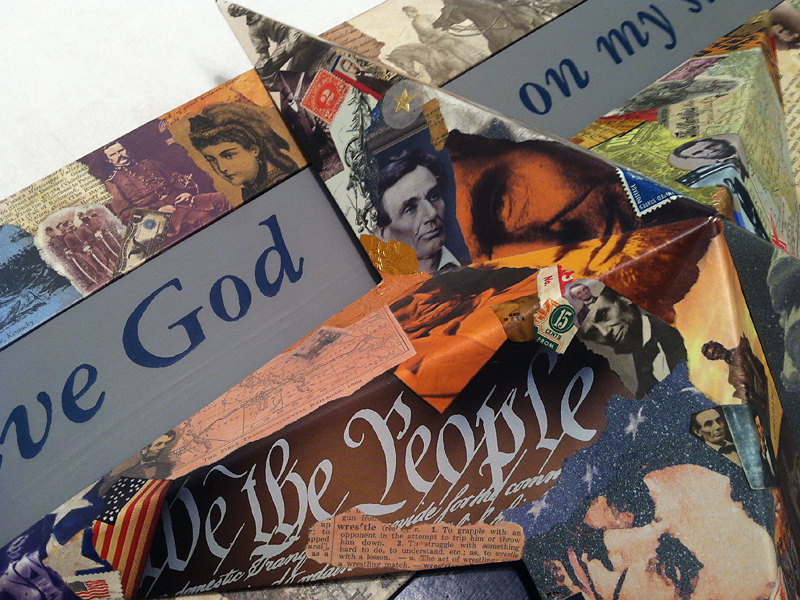
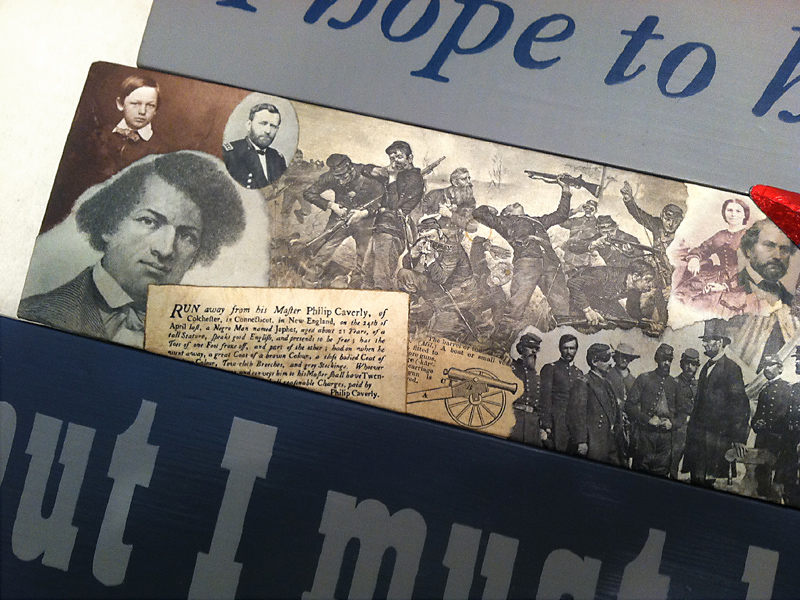
There is a new exhibition by the Kentucky Artisan Center at Berea — 225: Artists Celebrate Kentucky’s History — and I am proud to have my work as part of the display.paintings by Mark Selter and others at ‘225: Artists Celebrate Kentucky’s History’

My friend and fellow exhibitor Kathleen O’Brien wrote a fine account of the opening reception at her studio blog. She was kind enough to include some information about me.

From the KACB notice: “Kentucky has always cherished its history. The preservation of Kentucky stories, places and traditions has shaped its culture today. This exhibit includes over 60 works by 51 Kentucky artists who have recorded and celebrated numerous facets of Kentucky’s rich 225-year history. These works capture the essence of Kentucky — including its historical places, people, events, state commerce, agriculture and the state’s unique flora and fauna. Accompanied by written stories and histories in each artist’s words, this exhibit entices the viewer visually and verbally.” The show lasts until September 23, 2017.

My next entry will look a bit more closely at the work and its creation.

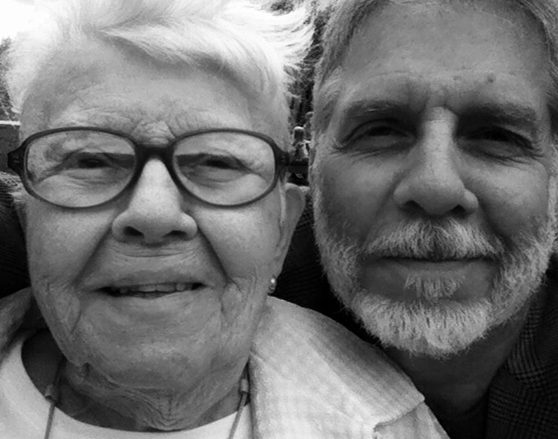
John Andrew Dixon with ‘I Must Have Kentucky’ ~ Kentucky Artisan Center at Berea

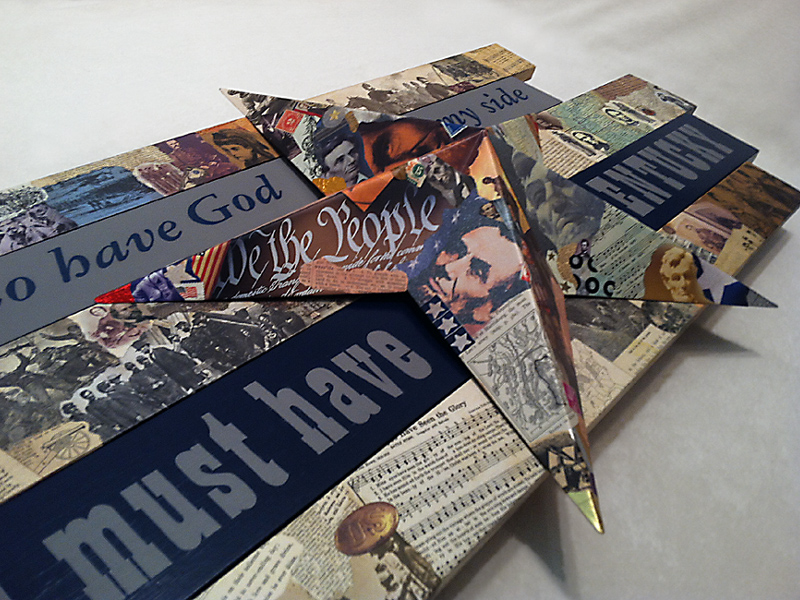
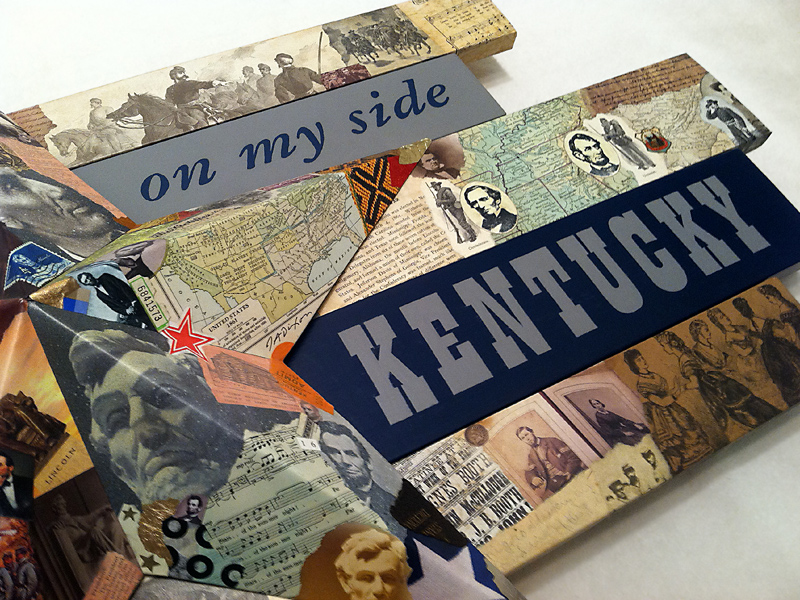
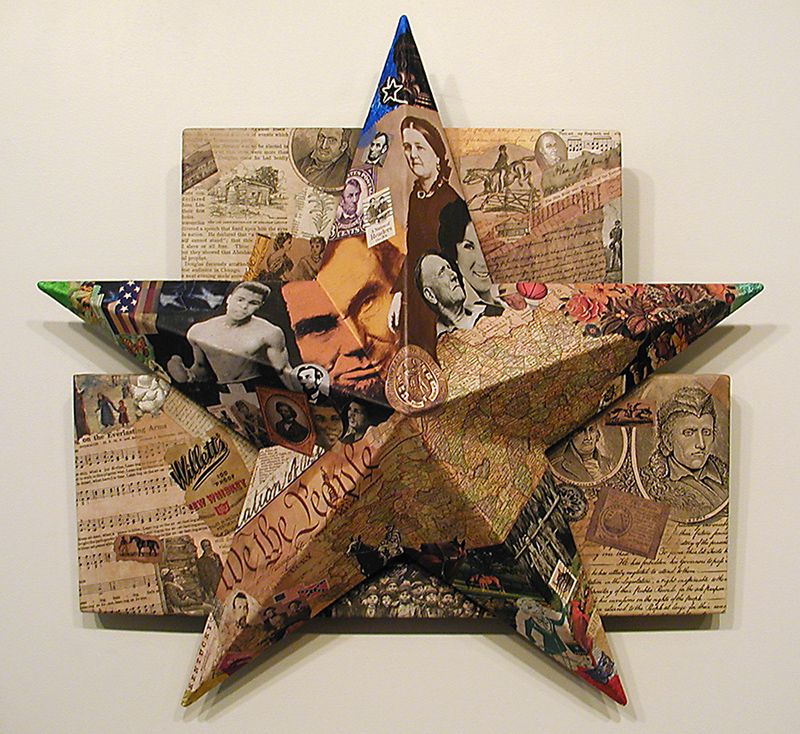
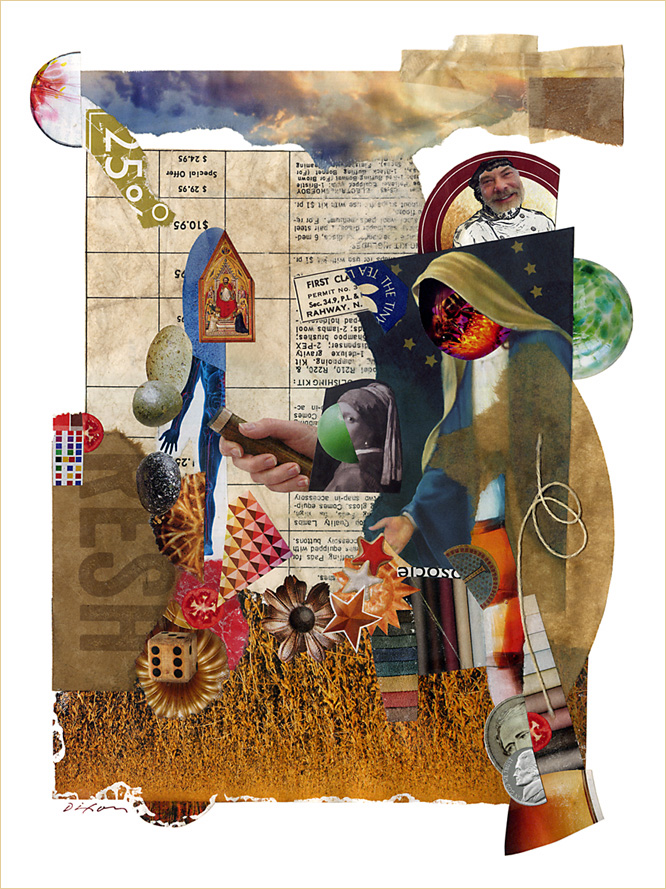
I Must Have Kentucky ~ John Andrew Dixon ~ collage construction ~ wood, metal, found printed material

I Must Have Kentucky
mixed-media collage construction by J A Dixon
42.75 x 20.5 inches

•  S O L D

Empress of Wings — When is the flight over?

Sunday, January 15th, 2017

“I tell you what gets harder over the years, it’s coming to grips with ‘is it finished yet or do I want to make one more change?’”
– B L Cummings
 

Being invited by our Community Arts Center to participate in the annual winter invitational of regional artists never fails to jump-start my burst of year-end activity. Submissions to the January-to-February show are required to have been completed after August. The request comes in late October, but, instead of selecting from completed works, I’ll typically commence a work specific to the exhibition in early November. I set a goal this time to produce my largest collage ever and to shoot some in-progress photos.

The first image below indicates how I blocked out the early composition with mostly larger elements. The second represents how the color-quantity contrasts and spatial manipulations resolved themselves. The last image is the finished work with final layering and a few closing refinements.

It is a challenge to maintain a high degree of spontaneity when creating so large a work (for me, the dedicated miniaturist). It helps to carry a momentum of small-scale experimentation into the process, plus there are things I do to boost an “organic” flow. For example, if there are aspects of the color scheme I want to enhance, rather than acquire and position new elements one by one and invite too much preoccupation with each, I will quickly prepare a batch of ingredients and place them into the composition as rapidly and as intuitively as possible, responding to my impression of the evolving totality. Instead of pondering two-dimensional locations, the eye or hand moves first, and one learns to trust whether something “belongs” or not. Also, it can be difficult to know when the winding down to conclusion should start. At a certain point, I become conscious of a natural progression toward closing refinements (more logical considerations for balancing and harmonizing the overall effect). Noticing an escalation of rational deliberation can be the reliable signal that a piece may nearly be done — almost time to “pull the plug and sign it.”

We are unlikely to hear any collage artist say that completing a work is an exact science. Personally, if I walk away from something that I suspect is finished, it is less probable that I will continue to monkey with it when I come back. It is beneficial to have an objective consultant — in my case, a trusted partner willing to instruct, “Don’t touch it!”

I also should note that the exhibition is an opportunity for Robert Hugh Hunt and me to unveil another major collaboration (more to say about that next time). Creating the interlocking mixed-media construction was an interesting process. The result is something unconventional, and we’re pleased that it was selected as the promotional image for the show.


an early and a late
stage of my largest
collage painting to date
 
(click each for larger view)


Empress of Wings ~ John Andrew Dixon

Empress of Wings
collage on canvas by J A Dixon
42.25 x 30.375 inches
available for purchase

Christmas Collage Experiments

Sunday, December 25th, 2016

“Time is so sneaky…don’t let it fool you into saying silly things. Your time here is yours…treasure it and enjoy it. It doesn’t ‘move’…it merely ‘exists’…period.”
— B L Cummings

I was thinking that the holiday season had gotten away from me, and that I had not had enough time to make the many hand-crafted things that usually capture my interest and comprise my gift giving. And then I saw a Christmas Eve comment from the incomparable Burton, who has a superlative knack for putting universal thoughts into words. The whole “ain’t got no time” notion dissolved and I realized, once again, that there’s always enough time for what’s important.

Wishing the joy of Christmas to all . . .
 

collage experiment by John Andrew Dixon

Untitled (nativity with serpent)
a Christmas collage experiment by J A Dixon
collection of C D Darst

collage experiment by John Andrew Dixon

Untitled (nativity with thorns)
a Christmas collage experiment by J A Dixon
collection of P B Seitz

collage experiment by John Andrew Dixon

Untitled (nativity with cherubim)
a Christmas collage experiment by J A Dixon
collection of K Simpson

Does this have anything to do with collage?

Friday, September 30th, 2016

 
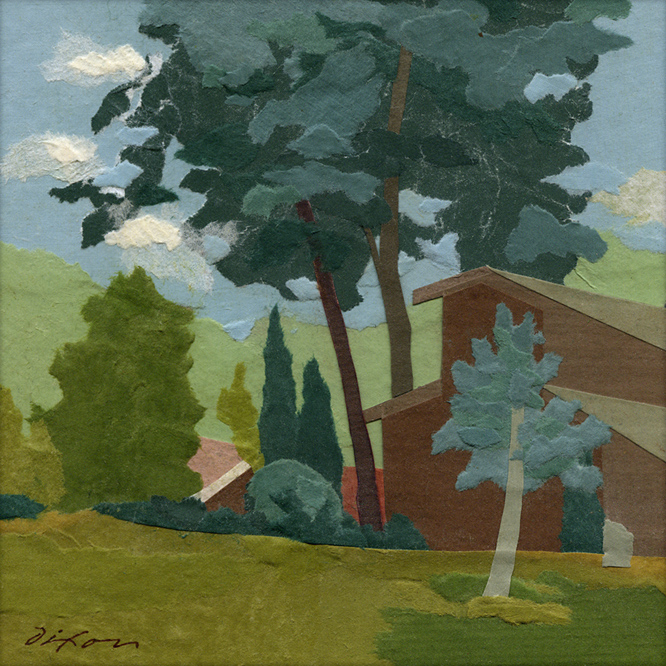
jadixon_waitingfordana
 

Waiting for Dana
combined mediums by J A Dixon
6.5 x 4.875 inches

My honest answer to the title question —
“We won’t know until I finish this post.”

During my annual “fishing retreat” in Les Cheneaux on Lake Huron, I convinced myself to make a small painting for the mate who holds our fort in Kentucky. It disturbed me to confront the idea that I had fallen woefully away from my practice of drawing or painting en plein air, so I found a spot to sit and scraped some rust off my lost habit. If a tradition of plein air collage exists, now or in the past, I so far have not discovered any evidence. One would think that the medium does not lend itself to it, but there is no fundamental reason why collage cannot be executed out of doors, or benefit from direct observation of nature or the built environment. If we are to think as the artists who “invented” it, collage is another variation of painting. And painting, as we know, is not about visual replication, but about capturing what the artist “sees” — in the fullest sense of the word.

As smiling fortune would have it, I had the opportunity to view a presentation of Painted Land at the Lake Superior State University Arts Center (in nearby Sault Ste. Marie) as a part of my visit to the Upper Peninsula. Proceeds from the screening of the new documentary helped benefit the Lake Superior Watershed Conservancy. The subject of the film is the Group of Seven, the twentieth-century artists who took the Canadian consciousness by storm when they rattled the national establishment with the first widely seen modern-art landscapes. The filmmakers successfully proved that the iconic paintings now revered by Canadians were created by the pioneering artists when they arduously discovered wilderness locations, and were not constructed from imagination, as many had previously believed. On top of that, most of these unspoiled sites in the vicinity of Lake Superior have the potential to remain so, if preserved and protected from development.

The breaking of my plein air dry spell, combined with a heightened awareness of how some of North America’s most daring artists actually made their works, has overwhelmed me with new ideas about ways to invigorate my approach to collage and its relationship to the seen image. I don’t know where these experiences will lead me, but those who follow my journey here no doubt will be the first to find out. Until then, thanks again for visiting.

 
“The most important thing a painter can do is
find a good place to sit.”
– J.E.H. MacDonald


Good Morning, Mrs. Bradshaw

Friday, September 2nd, 2016

“I have never let my schooling interfere with my education.”
— Mark Twain
 

My latest three-dimensional work, Good Morning, Mrs. Bradshaw, has been accepted for the new exhibition in the Kentucky Artisan Center at BereaHAVE A SEAT: Chairs by Kentucky Artisans. Gwen Heffner wears many hats at the Center, and she keeps coming up with strong ideas to showcase regional talent. She is not only an outstanding curator, but has become a significant catalyst for high-level artisanship in the Commonwealth. Her semi-annual calls for entry compel creative people across Kentucky to accept challenges they might not otherwise consider.

I chose the medium of collage to repurpose a child’s classroom chair that came into my possession as I debated with myself about whether this was a show I should enter. I was provoked to explore a time, not so long ago, when there was a well-understood line between what pupils should read and what they should not. Its vintage design took my imagination back to the earliest years of my public school education, with its sharp contrast between scholastic prescriptions and my personal interests.

“Dos and don’ts” have always been a part of the classroom, but times have changed. Nowadays, a youngster can find superhero stories and graphic novels in the school library. The goal was to capture what I remember as the tension that came with meeting an expectation of obedience to assignments, but always preferring to devote my attention to playful escapes. I decided to “resurface” the object with found material and mixed media — alphabetical specimens, printed text, game cards, book illustrations, calendar images, songbook fragments — plus colorful scrap from comic books and the Sunday funnies.
 

Good Morning, Mrs. Bradshaw
repurposed vintage classroom chair by J A Dixon
12 x 25 x 14 inches

A book of knowledge, a life of imagination

Friday, August 12th, 2016

“The real voyage of discovery consists, not in seeking new landscapes, but in having new eyes.”
—Marcel Proust

Book of Knowledge endpapers, 1951


Here are the illustrated endpapers and dust jacket from the 1951 edition of The Book of Knowledge set — my introduction to the concept of visual montage. These absurd juxtapositions compelled my first perceptual leap beyond the literal, and, to tell the truth, I don’t think that my innate creativity has been quite the same since. How far back can one trace these kinds of images? Did they precede collage and influence its development, or did they actually derive from the collage innovations of the early 1900s? At any rate, I was captivated by this particular painting and others like it. There is no doubt in my mind that a sweet obsession with the chaotic harmony of montage imagery began with childhood influences that came from unsung illustrators — such as the artist who came up with this extraordinary vision — long before I understood the visual mastery of a Fred Otnes, Bob Peak, or Paul Melia.


The Surreal Face, Part Two

Friday, August 5th, 2016

“If we adopt a surrealist viewpoint, art logically must be and naturally will tend to be surrealist, and thus be justifiable only in its ability to reveal the new, the ‘never seen,’ the parallel activity of thought and chance in consciousness.”
— Alan Gullette, 1979

You may recall, dear visitor, my June jaunt at this site into the staying power that “the surreal face” maintains in contemporary collage. I shall highlight a few more examples below. Old Mask II ~ John Stezaker ~ born 1949, Worcester, United KingdomWhen a distinct sub-genre of the medium intrigues me, as this one clearly does, I often attempt to “diagram its visual pedigree” through the history of modern art. This is not an easy task for a non-academic (nor one, perhaps, for a scholar). A “collage geneologist” can run the risk of getting sidetracked into Man Ray or René Magritte, only to question whether use of the word “surreal” is relevant at all. Does it make more sense to trace a connection from Picasso to Tatlin to Hausmann’s 1920 homage to the Russian Constructivist and thereby leap-frog André Breton’s “psychic automatism” entirely? As much as I love the history of collage, all that delineation is beyond the scope of your humble Collage Miniaturist. Pulcinella’s Secret ~ John Andrew DixonAskance ~ John Andrew DixonSuffice it to say that the gongs of Dada still reverberate. Ultimately, we are more concerned with a phenomenon that is alive and well among contemporary collage artists (and that long ago shed any musty trappings of Weimar Republic protest, Trotskyite dilettantism, or hostility toward religion). Even a cursory review of recent collage output exposes an enduring thread weaving its way through students, emerging professionals, veteran practitioners, and masters of the medium. Rather than muddy ourselves grubbing 20th-century roots, let us instead ask two important questions — What is the elusive essence of “the surreal face,” and why does its enduring appeal lack any sign of a downtrend?
 

Isabel Reitemeyer
Her consummate approach convinces me that less indeed can be more.

Robert Hugh Hunt
Fresh, intuitive, culturally aware. Robbo’s art springs from individuality.

Manu Duf
There is never a timid thing about his proficient approach to collage.

Eduardo Recife
The Brazilian illustrator sets a high standard for digital collage.

Erin Case
The Michigan-based artist is rapidly making her mark as a collage pro.

Claudia Pomowski
The versatile graphic artist is a “collage experimentalist.”

Jordana Mirski Fridman
This emerging designer/artist is “exploding” onto the medium.

Julia Lillard
The self-taught Oklahoma artist has nailed “the surreal face.”

Various and Sundry — Four Years and Counting . . .

Friday, July 29th, 2016

“I write because I don’t know what I think until I read what I say.”
— Flannery O’Connor

It looks as though I’m stepping into my fifth year writing about collage at this blogsite, and I hope that you’ve been with me for part of that enjoyable ride.

When I look back at my wish list for Year Four, I realize, not with any surprise, that my appetite for creating collage artwork has eclipsed a sometimes equally strong desire to delve verbally into the many interesting aspects of the medium. I would like to think that I met a few of the writing goals I set for myself last summer, and, of course, my ambitions to add to that list here in this post will be dutifully curbed. At any rate, I think that the best thing to do is to break this entry into a few parts that cover various and sundry topics on my mind.

The Social Network of Collage Artists
• For at least a couple of years I have wanted to write more about the influence of social media. Nearly every day I see a collage artist defeat the potential of a sharing platform with overexposure. Some may disagree and say, “the more, the merrier.” That is not a point I care to debate, because there may be something else to highlight more important than whether or not the quality-vs-quantity consideration can fall to the wayside — the vital role of networking among artists. I am more convinced than ever that the cross-pollination and mutual support of online networks has been of significant benefit to those of us working in the medium. Crystal Neubauer has one of the more interesting blogsites by a collage artist. She touched on the topic of creative communities so well that I direct you to her short essay at ClothPaperScissors.com. Another collage artist I admire who has recently made an impression as a strong blogger is Melinda Tidwell. I like her process-oriented posts. Although more of a mixed-media artist rather than a conventional collage practitioner, the versatile Kathleen O‘Brien maintains a steady flow of what I consider “must-read” entries at her studio blogsite. Create your own list of frequent art-blog destinations and branch out to new sharing platforms (I just learned about some new artist blogs from Caterina Giglio and opened a new account at Instagram.). As the entire evolving array of networking sites weeds out the fads, imitators and clunky interfaces (finding it difficult to tolerate LinkedIn as a user), you will settle into a community of online cohorts who reinforce your daily challenges as a creative person. When you come to know that someone else is on “the same wavelength,” reach out and make contact as an authentic being behind the profile. There are rewards to be discovered!

Cheap Collage Tricks
• Collage artist Allan Bealy seems to be everywhere, but, trust me, he is no gadfly. He recently raised a topic that struck a nerve with many. There are a lot of cheap tricks appearing in the medium, and most of them are harmless, if unimaginative, but the temptation to exploit visual ingredients readily available in our culture to “objectify women” is perhaps the most repugnant. Those of us who believe we are above that sort of thing need to think more deeply about how and why we use nudes in a collage. This suggests another potential self-assignment for my coming year — a “DON’T DO THIS” post illustrating the most prevalent cheap tricks in collage. (Not that there’s anything wrong with replacing a man’s head with a vulture to carry the banner of Dada during the art movement’s centennial year.) To be honest, I have nothing against a cliche, if it “works.” Isn’t that the reason something becomes a cliche in the first place? I say go for the cheap trick if you can score in the highest percentile (anyone who thinks it’s an easy thing to do is mistaken). I hope to post a follow-up look at the endurance of the surreal face in collage, so stay tuned. But let’s get back to Allan’s remonstrance. The woman as sex object can be traced back to long before the rise of Madison Avenue and Larry Flynt. Don’t bite the lure, folks. Everything one needs to dabble in this unworthy stunt abounds. Nevertheless, I long have been fascinated with the exemplars of erotic minimalism and their work in contemporary collage — those who transcend the cheap tricks to achieve a fine-art impression. Add another one to my wish list for Year Five of The Collage Miniaturist.

Priorities Get the Last Word
• My wife, Dana, and I managed to get two tickets to The Seer (a new documentary portrait of Kentuckian Wendell Berry, re-titled “Look & See” for Sundance Institute) before the Lexington screening sold out last night. It is a significant film that will become more widely available into next year, and it has my highest recommendation. Does it have anything to do with collage? Nothing at all, except for everything under the sun. If you haven’t discovered the poet, novelist, essayist, and farmer-philosopher, I have accomplished one meaningful thing with this site by inviting your interest. It was fitting that I got out of the studio and spent time at our farm. It was very hot work up on the shed roof, but pleasant to be away from all the noise (traffic, sirens, and incessant political jousting). Connecting with our rural place offered an opportunity, as it always does, to put priorities back into alignment. There is a place in the documentary when Laura Dunn (the filmmaker in voice-over) explains to Berry her motivation and how she looks “to places where there is still a remnant of togetherness, or unity, or community, of connection to the land, and I study those, because I don’t come from a place — I come from divorce …”
      “We all come from divorce!” her subject interrupts. “This is an age of divorce. Things that belong together have been taken apart. And you can’t put it all back together again. What you can do, is the only thing that you can do. You take two things that ought to be together and you put them together. Two things! Not all things.” It is his metaphor for the creative life, and a tremendously healing admonition to those of us with a tendency to become overwhelmed by the enormity of the world’s chaotic disintegration. Collage artists put things together to make something new, and often we are the ones who have taken apart discarded things to do it, but there is always a much larger phenomenon at work — one of discord vs harmony, wastefulness vs thrift, cynicism vs affection. When I return to the studio from a natural place that has responded to my care, I am in a better condition to ask myself, “To which side of the big equation are you making your contribution as an artist?”
 

Crystal Neubauer
Her blogging often touches on the complexity of a creative life.

Melinda Tidwell
Perhaps you will admire her solid abstractions as much as I do.

Kathleen O’Brien
Her art always nudges one toward a deeper sense of balance and wholeness.

Robert Hugh Hunt
Stay tuned for a continuation of my review of “the surreal face.”

Bene Rohlmann
Look ahead to my first discussion of erotic minimalism in collage.

John’s Haus of Cards ~ three series

Friday, July 22nd, 2016

“When I was younger, I could remember anything, whether it had happened or not; but my faculties are decaying now and soon I shall be so I cannot remember any but the things that never happened. It is sad to go to pieces like this but we all have to do it.”
— Mark Twain

My card-making activity stretches back before intact memories. How early? Press me too hard and you might hear me claim that I started before learning to write my name.

Currently, my crafted greetings tend to fall into one of three categories:

Series Alpha combines scrap letters, often with traditional hand lettering arts.

Series Omega features my conventional collage technique, applied directly to the folded card.

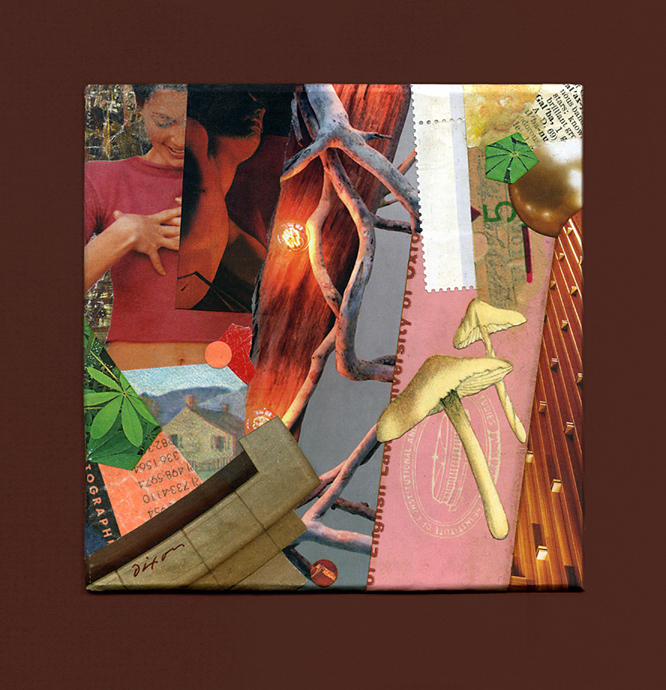
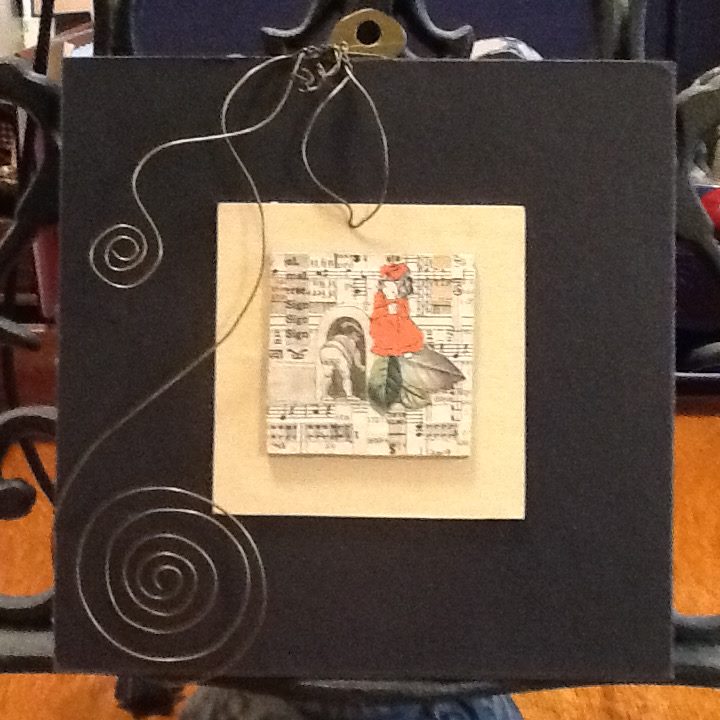
Series Pi attaches an ultra-miniature dimensional collage to the card, like a little square-cut slice of “Pizza Pi.”
 

collage greeting card by John’s Haus of Cards!

collage greeting card by J A Dixon
series Pi, collection of E E Smith

collage greeting card by John’s Haus of Cards!

collage greeting card by J A Dixon
series Omega, collection of G Zeitz

collage greeting card by John’s Haus of Cards!

collage greeting card by J A Dixon
series Pi, collection of J D A Wood

collage greeting card by John’s Haus of Cards!

collage greeting card by J A Dixon
series Alpha, collection of T Strock

collage greeting card by John’s Haus of Cards!

collage greeting card by J A Dixon
series Omega, collection of R W Breidenbach

collage greeting card by John’s Haus of Cards!

collage greeting card by J A Dixon
series Pi, collection of W W Bates

Collage Miniature Collaboration Number Five

Sunday, June 26th, 2016

“I love improvisation. You can’t blame it on the writers. You can’t blame it on direction. You can’t blame it on the camera guy… It’s you. You’re on. You’ve got to do it, and you either sink or swim with what you’ve got.”
— Jonathan Winters

“The thing about improvisation is that it’s not about what you say. It’s listening to what other people say. It’s about what you hear.”
— Paul Merton
 

Two of the things that distinguish the artwork of Mary Madelyn Carney are keen visual contrasts and an imaginative approach to choosing ingredients. Naturally, she brings these qualities into her collage collaborations, so I wanted to send her a couple of bold “starts” on book covers that might play to her strengths. In hindsight, perhaps I did not provide her as much “elbow room” as the ones she sent me. Collage collaboration is quite a bit like two actors doing a scene. The key is to enhance each other’s performance, and to avoid stepping on lines or physically upstaging the partner. Actually, it is even more like live improvisation, especially when it is understood that the result will be shared publicly, because the success of a collaboration depends on how well you “listen,” and very little on imposing your own thing.

I was delighted with the way that Mary responded. Her intuitive decisions blended skillful symbolic fusions with an evident personal quality, and the aesthetic nuances were superb. That the two of us might interact on the same “wavelength” was first suggested to me some time ago by veteran collaborator Allan Bealy, but I had not anticipated just how conscientious she would be with our joint venture. We may have to join forces again for another “jam session.”
 

A collage miniature collaboration by John Andrew Dixon and Mary Madelyn Carney

Robin’s Chest
a collage collaboration by J A Dixon and M M Carney
(start by Dixon, finish by Carney)
5 x 7 inches, collection of M M Carney

A collage miniature collaboration by John Andrew Dixon and Mary Madelyn Carney

Pickling My Husband
a collage collaboration by J A Dixon and M M Carney
(start by Dixon, finish by Carney)
5 x 7 inches, collection of J A Dixon

Dada and the Surreal Face in Contemporary Collage

Sunday, June 12th, 2016

“Nobody knows, and it is now too late to discover, who invented that most succinct of all art movement names.”
— Robert Hughes

“Style is not to be trusted.”
— Milton Glaser
 

As most of you know, 2016 marks the centennial of the art movement known as Dada. Although credit for originating collage is customarily granted to the Cubists, nobody shaped the emerging medium as powerfully as early 20th-Century Dadaists and their successors, the Surrealists. Very few traditions or conceptual approaches in contemporary collage have not navigated the tributaries they established, in spite of the fact that each of these artistic “schools of thought” had a relatively short apex. Much continues to be said and written about the catalytic Hugo Ball and the seismic effect after he opened Zurich’s Cabaret Voltaire with Emmy Hennings in February, 1916. Most of the work still being created under the banner of collage has not escaped the hundred-year shadow of inherent sensibilities unleashed on modern art by those who first uttered “Dada!” — spontaneity, chance, irreverence, consternation, and, perhaps foremost, a rejectionist posture. Without a doubt, most collage artists of our time would disagree with Ball’s exhortation to “burn all libraries and allow to remain only that which everyone knows by heart.” Nevertheless, they might indeed relate to his conclusion that “this humiliating age has not succeeded in winning our respect.”

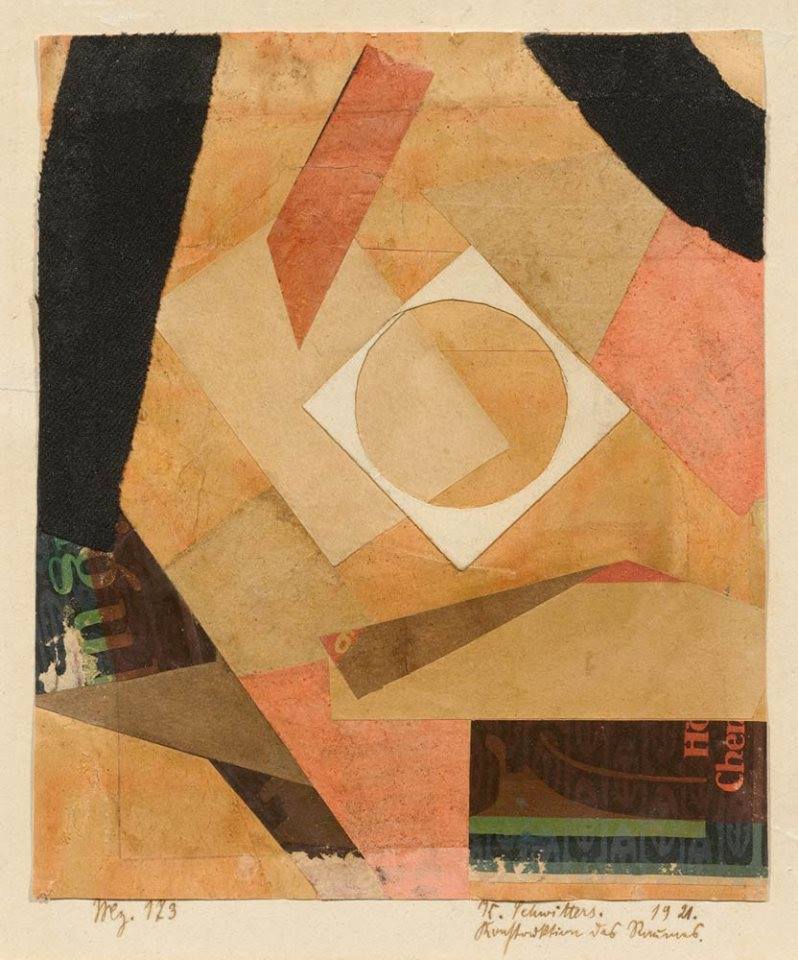
Warsaw-based designer/educator and blogger Annę Kłos describes Dada as a world view, that by its very nature could not be homogeneous, and that the seminal Merz of Kurt Schwitters was manifest within the context of internal incompatibilities. For the most part, however, many artists now tend to lump together the Dadaists, and emulate their visual and intellectual departures as an encompassing genre at best and a mere “style” at worst. — Time out. — This is when I grab myself by the scruff of the neck to keep from going off on an unnecessary tangent. My purpose is to share an ongoing fascination with how Dada continues to influence those of us working in the medium today. Permit me to highlight one particular “subject” that shows no sign of diminishing — the enduring exploration of the Surreal Face. René Magritte’s Le fils de l’homme immediately comes to mind (or his much earlier cover image for André Breton’s Qu’est-ce que le surréalisme?). One must follow their roots to Dada, and to the photomontages of Raoul Hausmann and Hannah Höch, (or her The Strong Guys, or his Tatlin at Home). For me, nothing exemplifies the unsettling, elusive qualities of the Dada phenomenon better than when a contemporary collage virtuoso captures that inexpressible twist of incongruity and aesthetic finesse with a surreal take on the human head. Just when I think there is nothing more to be tapped, I appreciate anew how inexhaustible this “renewable resource” can be.
 

Flore Kunst
From her extraordinary “sketchbook” (Page 1).

Katrien De Blauwer
From her Loin Series. Does anyone else do more with less?

Charles Wilkin
“For me clarity and relief is found solely through the process itself.”

Peggy Despres
The prolific Peggy Pop will find the sweet spot.

Pascal Verzijl
Never Saw It Coming (Did Dadaists see digital collage coming?)

Matthew Rose
My Advice (What would I actually give to get his advice?)

a surreal face by J Stezaker

John Stezaker
“It sometimes feels like I am cutting though flesh.”