-
Spider-Man: Far From: Home (20:19): You can probably skip down to Yojimbo (1961), this part is a nerd trap and I’m still caught in it. Also it’s full of spoilers, if you care about that.
This purports to be a movie about the consequences of Tony Stark’s death, but even more present are the ghosts Stan Lee and Steve Ditko, who created Spider-Man together and both died in 2018. Whatever any given audience thinks of Lee, the people behind the Marvel Spider-Man movies were clearly big fans; the license plate and wrestling poster Easter eggs alone are indication of that, and the big hallucinatory illusion sequence in the second act is a big ol’ fanvid drawn straight from the Lee/Romita on-page experiments of the early 70s. I think it does Doctor Strange, another Lee/Ditko creation, better than Doctor Strange (2016) did. Sooo when you include a subplot about disgruntled people whose work was subsumed or absorbed to promote one man’s self-made aura of genius, it’s hard not to see another side of that too. There might be a movie out there that can sell me on the idea that the correspondence was deliberate, but as much as I enjoyed it, Far From Home is not that.
There’s a lot going on in the movie thematically and none of it quite gels. Is this a movie about people needing to move on? That topic keeps coming up but never gets an emotional climax. Is it a movie about how drones are bad? It’s certainly not the first Marvel film to express that unease, but why does it go unremarked that Tony Stark apparently built a global pinpoint-assassination system just like the one Steve Rogers was willing to die to destroy in The Winter Soldier (2014)? Is it a movie about whether Peter Parker—who, in current comics canon, operates a multinational tech corp in very Starkian fashion—is meant to step into his dead mentor’s role? Kind of, but that shouldn’t even be a question the MCU has to ask, because the MCU already has an established born leader and tech wunderkind for its next phase of superheroes. Their names are T’Challa and Shuri!
Is it a teen road movie? No, it backgrounds all of that in favor of very expensive-looking effects sequences. Is it a love story? Almost, almost. Tom Holland and Zendaya have about three scenes together, and they’re electric! Those two people are very good at acting! You have to have something special to actually sell me on a Peter/MJ romance in two thousand damn nineteen, and they did, but in true Sirius Black fashion, we barely get to glimpse the good stuff before it’s gone. A big flaw in the movie is how it continues the timeworn MCU tradition of failing to foreground its women; it needs not only more Zendaya, but more Cobie Smulders, and any at all of Jennifer Connelly, and more Marisa Tomei. How are you going to make a movie set in Venice with Marisa Tomei and ghost Robert Downey Junior in it and not even throw in a sly reference to Only You (1994)?
Anyway, since I started drafting this post the movie made a billion dollars, so Marvel/Columbia/Sony are probably pretty happy with Jon Watts and his directorial choices overall. I just liked Homecoming so much, and thought this showed such potential to be a movie specifically suited to my tastes, that I have a hard time not wrestling with the things it wasted and missed. NERD TRAP OVER.
-
Yojimbo (1961): Man, just look at this.
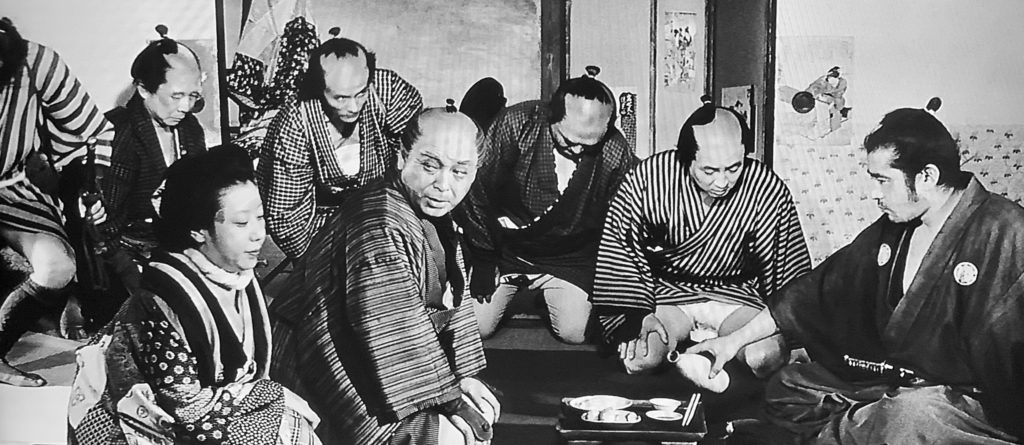
There are eight people in this shot, where one of the contenders for town boss is receiving Toshiro Mifune’s ronin and wheedling for his services. I didn’t do anything special to grab this frame—I just paused my player and took a photo of the TV with my phone, like a monster.
For the majority of people, color is a critical component of the way we separate shapes from each other, figure out what to pay attention to, and—like it or not—assess others. This image has no color dimension. But because its costume design is brilliant, my eyes immediately parse each person in the shot, and it’s even easy to grasp their ranks: the boss and his wife have the most ornate clothing, the ronin wears simple solids, and the background lieutenants each get a distinguishable but undistracting pattern. Because it’s blocked well, I know right away that Mifune is the center of the scene, with everyone else’s attitude cheated toward him. I happened to catch a frame where most of the lieutenants are looking down as they settle in, but the three principal characters always have their faces in full view or profile, so your brain can follow the conversation between them without the need to reverse between close-ups.
It’s fun to be able to break that out after the fact, and it’s even more fun to get picked up and carried along by it in motion. There’s all kinds of STUFF in Kurosawa movies: moving weather, moving fabric, bold expressions and exaggerated gestures and all kinds of people on the screen. Heck with minimalism! It’s great when the frame is busy, as long you can do it in a way that works for the viewer instead of against them. Anyway this movie is good and cool.
- The Old Man and the Gun (2018): I guess it could just be the Robert Redford fan in me speaking, but I certainly enjoyed this Robert Redford movie about movie star Robert Redford. It’s full of winks, but I was surprised to learn that casting Sissy Spacek opposite him was not one of them. They’d never been in a movie together before! They have wonderful chemistry, and I would have liked more of that instead of Casey Affleck’s dogged-mopey subplot, although his family was cute. When in doubt, always replace Casey Affleck with Sissy Spacek. Call that “the ek-eck rule.”
- Uncle Boonmee Who Can Recall His Past Lives (2010): This is a movie against which one critic’s epithet of “Uncle Bong Hit” can be… fairly applied. Also I really enjoyed it. The first shot in which the camera moves at all is fifty minutes in, and I’m not sure there was a single shot that lasted less than ten seconds in the whole thing; the median edit seemed somewhere around two minutes. It probably goes without saying that the only music is diegetic. Imagine those being your constraints. Imagine having that much confidence in your composition!
- Happy-Go-Lucky (2008): After talking a big game about my admiration for Sally Hawkins I decided I had to back it up by watching her breakout role, which is also my first Mike Leigh movie. Hawkins is extraordinary as expected. I knew that Leigh’s process of rehearse-improvise-rehearse-THEN write-THEN film was a whole unique thing; I did not know that the rehearsal process for this movie would have been happening while I lived in London in 2007. (I recognized zero locations aside from Hyde Park, but London is big and I lived south of the Thames.) This movie takes its time to get going, and anyone less charming than Hawkins in the lead could have grated a bit, but it’s lovely. Who else is going to make a movie that amounts to “a kind person politely and successfully asserts boundaries against hostile men, the end?”
- The Iron Monkey (1977): There are about forty movies called Iron Monkey and this is not the one directed by Yuen Woo-Ping, it’s one that was alternately titled Monkey Fist Vs. Eagle Claw and screened for the Hollywood’s monthly Kung Fu Theater night. Aside from the part where it shows a CHILD GETTING STRANGLED ON SCREEN in the first act, it’s pretty much what you’re there for.
-
Predator (1987): I love Alien (1979) and that franchise has long been a point of comparison against this one, so I decided to watch this. I didn’t like it. All right, John McTiernan, I hear your latter-day argument that this movie has some satirical intent behind it: the scene in which the bulging shout-men clear-cut an acre of rainforest using infinite bullets actually does trample right past power fantasy into grand display of impotence. It is goofy, but what does it end up saying by the end? That when the mechanized instruments of murder fail you, you must turn to… less mechanized instruments of murder? That beneath the ugly mask of sport hunting is… a face that is also ugly? I don’t buy it! This movie wants to stab its cake and shoot it too.
My favorite part was the special effects, which I think have now crossed a line from “dated” into “gloriously retro.” I spent most of the runtime thinking about the ways in which the Predator is shown to be a peerless hunter of men, to wit:
- outnumbered and outgunned at all times
- water-soluble camouflage
- glowing blood for convenient tracking
- slow-moving, light-up bullets for easy location in a firefight
- tall-ish?
- bound by strict rules of chivalry
- cannot chew food
- legally blind
- frequently sleepy
Damn, Arnold, you really skinned your teeth on that one.
-
Point Break (1991): See, with this one I can give credence to a certain archness of regard! Among Kathryn Bigelow’s other movies, I have only seen The Hurt Locker (2008), but that alone gave me reason to think she had a more nuanced understanding of masculinity than the other John McTiernan movie I have seen (Die Hard [1988]).
Contemporaneous reviews of this movie seem to have missed the homoerotic frisson that overlays the entire thing, not to mention the way the film keeps rolling its eyes at the incompetence of the FBI characters and the surfer gang’s bullshit philosophy. This is a movie shot by someone who had already watched many men’s eyes glaze over as they stopped listening because they believed they had something more important to say. The silent camera, in fact, plays with everyone here like a superior dance partner, and that’s one thing the reviews did notice—technically, the surfing and skydiving and chase sequences must have been fucking hard to shoot! There was no bullshitting with CGI in 1991, and no infinite digital storage either. For every perfect curl we get to see someone riding through in slow motion, someone else was doing the same thing, holding a camera, with a limited amount of celluloid film in a canister, backwards.
I loved this movie even though it had almost zero women in it. And having watched it, I’m now convinced that Bigelow invented the so-called Sorkin walk and talk!
- Perfect Blue (1997): It’s 1:30 in the morning and I really want to finish this roundup because it’s also almost September! This movie has sexual violence in it. It is really interesting to compare to Paprika (2006), not only for to see how far Satoshi Kon and Madhouse came as animators in ten years, but to see Kon developing what between them amounts to a career-length treatise on the Kuleshov Effect.
- High Flying Bird (2019): This movie was aaalmost ruined for me by an airbnb TV with motion smoothing turned on that I could not disable. It’s also one of two movies I watched this month that were shot on iPhones, and despite the fact that I love this cast (André Holland! Zazie Beats! Melvin Gregg from American Vandal!!) and this playwright (Tarell Alvin McCraney!!!) and of course this director, it was not the one I preferred. I enjoyed its subtle conceit about the long work of revolution, and its performances, but the decision to shoot everything in extreme wide angle with a single anamorphic lens is hard to handle. You can strap a telephoto onto an iPhone too, Steven! I really think at this point in his career that Soderbergh enjoys being able to execute what he wants very, very fast—they self-funded and shot a feature film on location in something like thirty days—and the result is not sloppy, but its spontaneity in form is a little at odds with its deliberate function.
- Tangerine (2015): See, now, this is how you shoot a movie on a phone. Grainy, artificially warm, hectic, rife with bad decisions, full of characters who see the world through this exact same lens, and fun as hell. There is homophobia in this movie and use of the n-word by white people, but it is not sexually violent, which was a relief to me. It’s on Hulu! Text me if you want my password.
Category: Pulverbatch
Kat sent me an article that bothered me, so I wrote a post for my employer’s blog about some of my favorite hobbyhorses. (I like my job; let me know if you want to work here.)
Filmbruary Circular
As I start to draft this post, I am basking in the confirmation bias that informs me that I am in fact good and smart for having watched almost none of the movies that were nominated for a Best Picture Academy Award, because obviously what do they know. (Green Book was not one of the movies I saw.) I did see Black Panther and Into the Spider-Verse, like all right-thinking humans, and I already knew they were wonderful! Who needs the Academy! Get outta here!
-
The Sweet Smell of Success (1957): In January I watched The Bad Sleep Well because of a brief Every Frame a Painting essay about one shot in it, and then shortly thereafter I went and got this from Movie Madness because that essay has a quick bit about it in the intro, and now I want to see everything Alexander Mackendrick ever made.
This is not a movie about good people, and is honest about the way selfish men treat women; I say that as context for this clip from early in the first act, as the protagonist is starting to reveal the nature of his character. It’s one of those little scenes—almost all in a single unassuming shot—where you can turn the dialogue off and still read all the emotional beats, but it’s also visually interesting in a way that I am learning to parse out. The whole thing is an exposition dump, but my eyes never get bored! The camera’s point of focus, the actors’ blocking and business, the swing back and forth in composition between crowd scene and private scene as Sidney’s attention wavers and resolves, and the parallax and bokeh happening along the longest axis of the room—all of that works together to make it fluid, interesting and alive, even if you never notice any given element.
The story is great too, contained within a very specific situation and time that are well-explained even fifty years later, and the love I have borne for Tony Curtis ever since Some Like It Hot is rekindled. There’s a whole chapter in Mackendrick’s book On Film-Making where he just breaks down how the script for one particular scene changed between two writers, and it’s illuminating.
- Better Off Dead… (1985): Watched on a date to help fill out my Cusack filmography. Not a classic. It might have been if it were a little more self-aware: it’s sort of a refined concentrate of all the ingredients in a “throw it at the wall and see” 1980s mid-budget comedy. I did like the part where the demonic newspaper boy does a chase scene on a BMX fitted with skis, which… you see what I mean about the concentrate.
- Mission: Impossible::Fallout: (2018): My brother has never forgiven this franchise for its first outing, but I have in time come to like them. This one is very capable and polished, but it’s also the first one in the series written/directed by someone who has directed one before, and it suffers for that! I have some cockamamie theories about the elements of creative works that drive them to popularity in fanfiction, but one of them is that a given book or movie, to get people really invested, has to leave gaps. People love to fill those in, and reveal exciting new connective tissue between disparate points. Sometimes that impulse is fine. Other times, it leads to internet articles about “fan theories,” which is not fine. But worst of all is when it leads a creator to perform… SELF-FANFIC. This is not quite the same thing as self-insert fanfic, and in fact might be worse. Get outta here, self-fanfic! Anyway, that’s what this movie is too, but the part where Henry Cavill cocks his fists is good.
- The Man Who Wasn’t There (2001): This movie made by Joel and Ethan Coen in the style of a noir from the 50s is a lot like a noir from the 50s made in the style of Ethan and Joel Coen. I found it really interesting to watch so soon after The Sweet Smell of Success, which is about a driven fast-talker on the make and has its own propulsive forward energy, contained in a single long night. This movie is about a man who is impassive and silent to a tragic fault, and it seems to stretch out over about a year. But they share the same fundamental law: thou shalt not try to step outside one’s station, even one freaking time. This also earned a rare exemption from my own fundamental law (“thou shalt not use voiceover narration”).
- Dogtooth (2009): Hoo boy. I saw The Lobster a couple of years ago and so had some hint of what I was in for, but the darkness of The Lobster is often funny, and gains some aesthetic distance from its magical-realist setting. No one seems to be able to agree about whether Dogtooth is a black comedy or a drama, but I didn’t laugh at it, and despite the absurdist false-vocabulary central device, it felt very close to real stories of captivity and abuse. All the long takes achieve the tension they aim for, and some are even beautiful, but the camera still feels like a blunt instrument.
-
The Parallax View (1974): I rented this movie because I vaguely thought it was a Cold War spy-chess-game thing. I don’t know what I was thinking of, because this is actually a meandering, paranoiac conspiracy thriller with a Sprockets video in the middle. I didn’t like it.
The most interesting part is how it attempts to evoke generational fears that are different from my own. It’s not much of a spoiler to say that, by my count, every living political candidate in the United States gets murdered by lone gunmen in this movie. (Don’t worry, there aren’t any well-drawn villains with comprehensible motivations behind that.) Meanwhile, in a scene that stunned me, Warren Beatty walks directly onto a tarmac from his parked car, gets on a plane, and then buys his ticket from a flight attendant while already airborne. And it’s not like the threat of hijacking didn’t exist already! The plane gets grounded by a bomb threat! But the configuration of our panic buttons has changed.
- The Emperor’s New Groove (2000): Rewatch. Reading a little about the background of the movie made me want very much to watch The Sweatbox, and learning that its in-flight course change was “hey what if we just made a Chuck Jones cartoon?” repositioned it in my estimation. It’s still a middling to fine movie with bright spots (Eartha Kitt), but it’s also the only time we will ever what the see 90s Disney animation corps makes of a feature-length Looney Tune! I’m glad it exists for that reason.
- How to Train Your Dragon (2010):
And with that, I will temporarily leave you, because I need to post this already and I watched FIFTEEN MOVIES in February. That trend will not continue, but now I do want to see if I can get through a hundred this year. I will write about the other seven later on, but for now… “get outta here!!” ;D
I often consider locking all the older entries on this blog
But that would prevent me from making deep cuts like this: Mitch McConnell spoke at my college graduation. I was very young and very tired when I wrote that entry, and McConnell, though well into his career, was not quite the architect of enormity he has since become. Elaine Chao spoke too, and it’s amusing to me now that I called her a “fervent liberal.” I wonder what I’ll have to laugh at fifteen years from now.
This came to mind because earlier this week, McConnell got harangued at a restaurant in Louisville, and because when I read the story I realized it was a restaurant I know. I feel compelled to explain why I find this amusing as well: the Bristol is maybe the worst place you could pick to eat on all of Bardstown Road.
It’s an iceberg-salad, sirloin-well-done kind of place, where everything costs about twice and tastes about half what it ought to. It’s also right in the middle of some of the best food in the city, and for that matter in the state. McConnell is among the most powerful living humans and a multimillionaire; he could afford to eat every night at Jack Fry’s, 80-odd years old and still killing it, or get the farm-to-table prix-fixe menu at Lilly’s, both within a few blocks of the Bristol. Those were once-a-year treats when I was digging myself a debt hole there back in grad school. McConnell could have thrown a stone and hit someone’s baked brie or lamb burger at Ramsi’s Cafe on the World, or turned the other way for a thick, crispy Louisville-style pizza at Impellizzeri’s, which still has an hour wait every night. He could have had the most delicate fish I’ve ever tasted at Seviche. He could have gotten his teeth stuck on the candied short ribs at North End Cafe. For fuck’s sake, he could have gotten better food at Burritos As Big As Your Head.
But he went to the Bristol, possibly because none of those other places would lower themselves to seat him. And he got overcharged for probably a tasteless beer and a milquetoast burger that would recoil from the notion of spice. Forgive me if I hope someone spat in it.
This post is mostly an excuse to make myself hungry thinking about how good it smells just to walk past open doors on that street, and how fond my heart is of that place and time. Lynn’s Paradise Cafe isn’t there anymore, or Nio’s 917, or Twice Told, and neither are most of the friends I used to sit down to dinner with. But Louisville is still home to much of my family and to a lot of restaurants that punch way above their weight. You have to really love something to make it that good, in a small city. If food is a way of feeling, then I think taste is a way of caring, and in at least those little ways, our little lives are better than his.
The past is a foreign country: I miss my friends who live there
In April my friend Russ Gilman-Hunt died. He was one of the first four people who worked at my job with me. He was funny, kind and clever. He was not very much older than me, but he had a deadpan world-weary affect and a quiet warmth that made him seem like everyone’s dad. I wish I had known him better, but most of his life was outside work, with his wife and two children and his community in the SCA. I wish they still had him.
In May I lost the job where I had worked with Russ, as did a number of my colleagues. I have a lot of support from people who care for me, and I am lucky in my socioeconomic class; that has allowed me to inform myself that this is an opportunity, more than a setback. (I have done so often and stridently.) I will probably have a new job soon. I like working, if not always working terribly hard. I hope I can make that work amount to something good.
It sometimes feels like the only things I write here are podcast show notes and epitaphs. I haven’t allowed myself much time to work on podcasts in the last month; hunting for what I perceive as a replacement means of survival has meant little available concentration for creative work. So this goes in the epitaph category. Sure wish there were fewer of those.
I didn’t always love my old job but I always liked it, and I took comfort in the idea that I was cultivating a good place to bring in new people and help them excel. I wanted to contribute patches to the leaky pipeline. I think Russ did too. I don’t know how much of that we managed. Some of the people I patched in got laid off with me. I’d say we did what good we could while seeing to our own survival, but. Well.
A job that you treat like just a job is, eventually, just a job. I want the work of my life to be more than that. Maybe in seven more years—if, God forbid, this WordPress install is still operating—I’ll tell you how that’s going.
In February I got an email from my old laptop, and then another, both suggesting that it was in Germany. I had not seen that laptop since it left the back of my car through a shattered window in 2010. The home page of its default browser, at the time, happened to be one I controlled and that was not linked anywhere else, so I told that page to blare alarms and notify me when and whence it was requested. It took seven years for that to (probably?) happen. I wonder if someone actually has that laptop, in more or less the same crumbling shape it was when it vanished. I wonder how well they read English, and what they can find out about me if they dig around on it. Surely nothing worse than the things I’ve written here myself.
I guess what I am doing here is reflecting, which is to say, looking for myself in a flawed surface. I started writing online in part because I wanted attention and in part because I already knew that my built-in memory could not be trusted to retain my life. My pipe is too leaky. All pipes are too leaky. Among my driving fears is the idea that anything I lose is lost forever, and that history unminded is a black hole, a /dev/null, a point of no return.
But to really believe that is to assert that I know the future, which is presumptive: the future and I have never met. Sometimes a setback is an opportunity. Sometimes the past writes you an email. Sometimes a kid whose dad dies grows up a whole person anyway. Even black holes leak back.

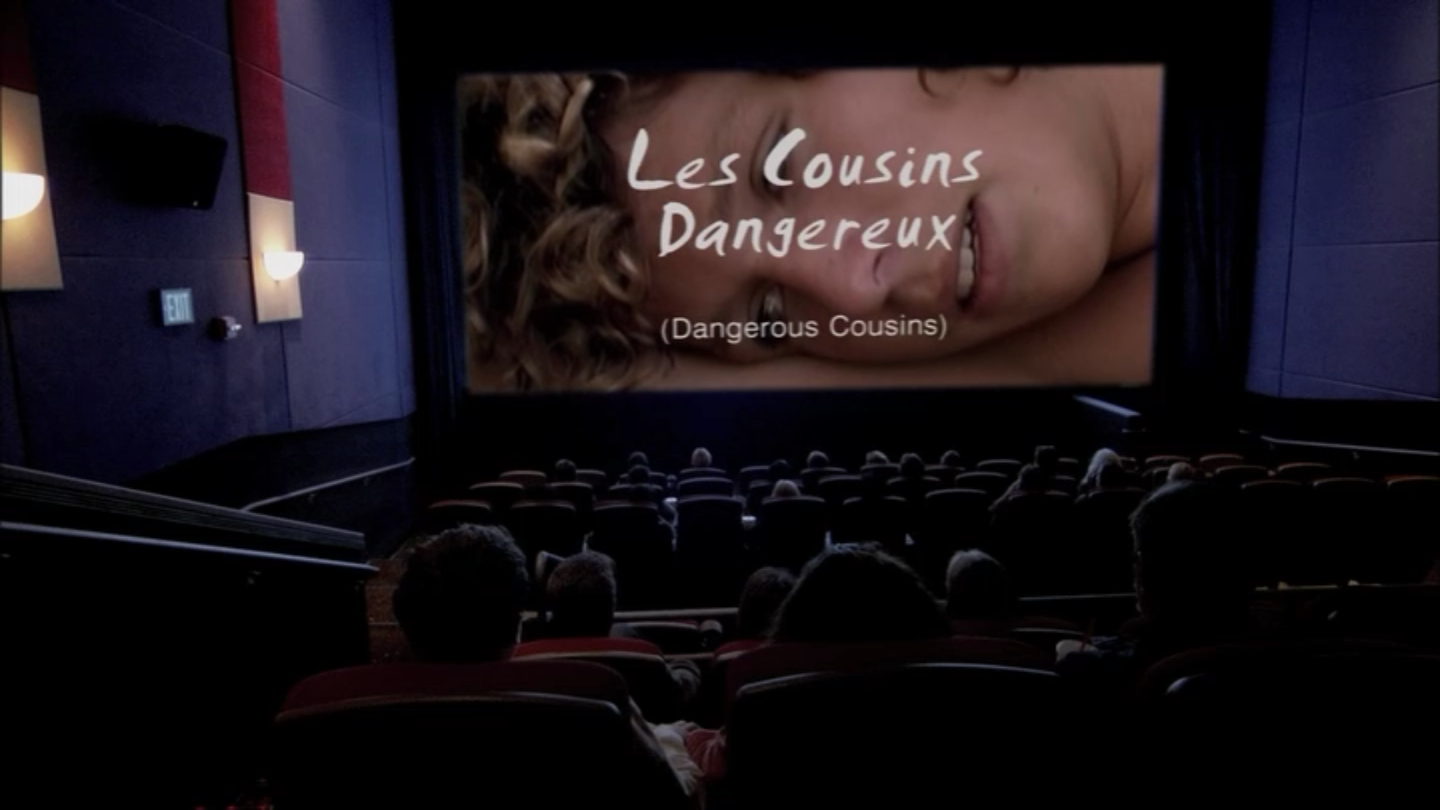
Dual Reflections on Cruel Intentions
It’s time once again for Reel 90s Kids, the podcast you have forgotten that we did one time! We have now done it again. Here is the audio click button thing that tells you the wrong file duration, and below it are the show notes.
0:00 – Thanks to Oliver Schories for this episode’s intro song, which I think has a 40% chance of deeply irritating my cohost.
5:23 – I could put links to the Wikipedia articles for Les Liaisons Dangereuses and Dangerous Liaisons here, but you can type names into Wikipedia as well as I can.
8:37 – 
10:48 – Sorry, Mr. Lester.
12:41 – Shooter the 2007 movie; Shooter the 2016 TV series. Since we recorded this episode, USA has apparently decided we’ve had a long enough gap between mass shootings to actually premiere and air it! Yaaaay
19:03 – I cannot put anything about the confluence of Bittersweet Symphony and Shakespeare in Love in the show notes, because my brain completely manufactured it. Why did I think this was a thing?! If you have a clue, please call our toll-free line.
20:13 – Audio taken from this Fusion interview.
22:48 – Movie studios were forced to stop running their own theaters by United States v. Paramount Pictures, Inc, in 1948.
24:36 –
28:44 – The eclectic production history of Cruel Intentions 2, a “2000 American comedy-drama prequel.”
31:13 – I neglected to congratulate her, but Anne batted a thousand on these!
35:55 – The Deadline story in question. Alas, Cruel Intentions was not picked up to series after all.
37:35 – See you back here for the Drive Me Crazy episode in June 2019!
38:11 – And thanks to Jade Berlin and her terrifying accompanist for our outro music:
A Timely Varsity Blues Podcast

Apparently the thing I do here now is, once a year, post a podcast I made with friends about a movie that already came out. This time I made one with my friend Anne! It’s about the non-classic 90s Teen Film Varsity Blues, for no clear reason that either of us could recall. Despite our claims at the beginning, we DID think of a belated title for it: Reel 90s Kids.
Because we remember.
I’m not going to link to the site we discuss for the latter half of the podcast because I don’t want to make anyone’s life sadder, including yours. I have faith in your ability to find it if you want to. Please don’t. Special thanks to small genius Aidan James for our outro music!
A Timely Captain America Podcast
I really love Captain America: The Winter Soldier, but my fondness is as nothing compared to that of my friend Rachel, even though she’s actually more a fan of a work derived from—well, we’ll get to that. Sometimes we exhort each other about it on twitter. Our mutual friend Sumana (star of many recent entries here) has found this charming, and a while back she urged us to record some kind of longer discussion and put it on the Internet; we did so, but not without making her complicit.
This is a podcast! It’s about 53 minutes long and covers a broad range of topics, which I have tried to annotate below. It is centered around the reasoning behind our affection for the movie, and especially the treatment of sexuality, gender and kyriarchy therein. I have been lax in my duty as its producer and am posting it months late, but fortunately it is now in time for Chris Evans and his portrayal of Steve Rogers to reënter our consciousness in Avengers: Age of Innocence. I found this conversation valuable and was grateful to be a part of it; I hope you like it too.
2:30 – The fanfic in question, the object of Rachel’s true fandom, is “Your Blue-Eyed Boy” by Feather.
3:40 – Steve has wood.
4:00 – Sumana’s reference to difficulty reading about torture “today” refers to when we recorded the podcast, in early December of 2014.
7:10 – Rachel and Sumana both knew the origin of the term “Winter Soldier” (it was news to me! I am a failed American).
10:30 – “Mothering versus Contract” by Virginia Held is an amazing piece of work, which came to me by way of my friend Monica; it first appeared in Beyond Self-Interest in 1990, and you can read some of it via Google Books.
17:30 – 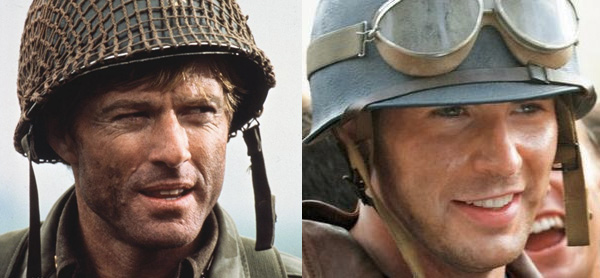
20:25 – Specifically, Captain America was created by Joe Simon and Jack Kirby in 1940. The joke about the title of this post is that they created him for a publisher known, at the time, as Timely Comics.
28:15 – The issue I am fumbling to recall was Captain America #292, from 1984, and the character was not a raven but Black Crow.
36:00 – 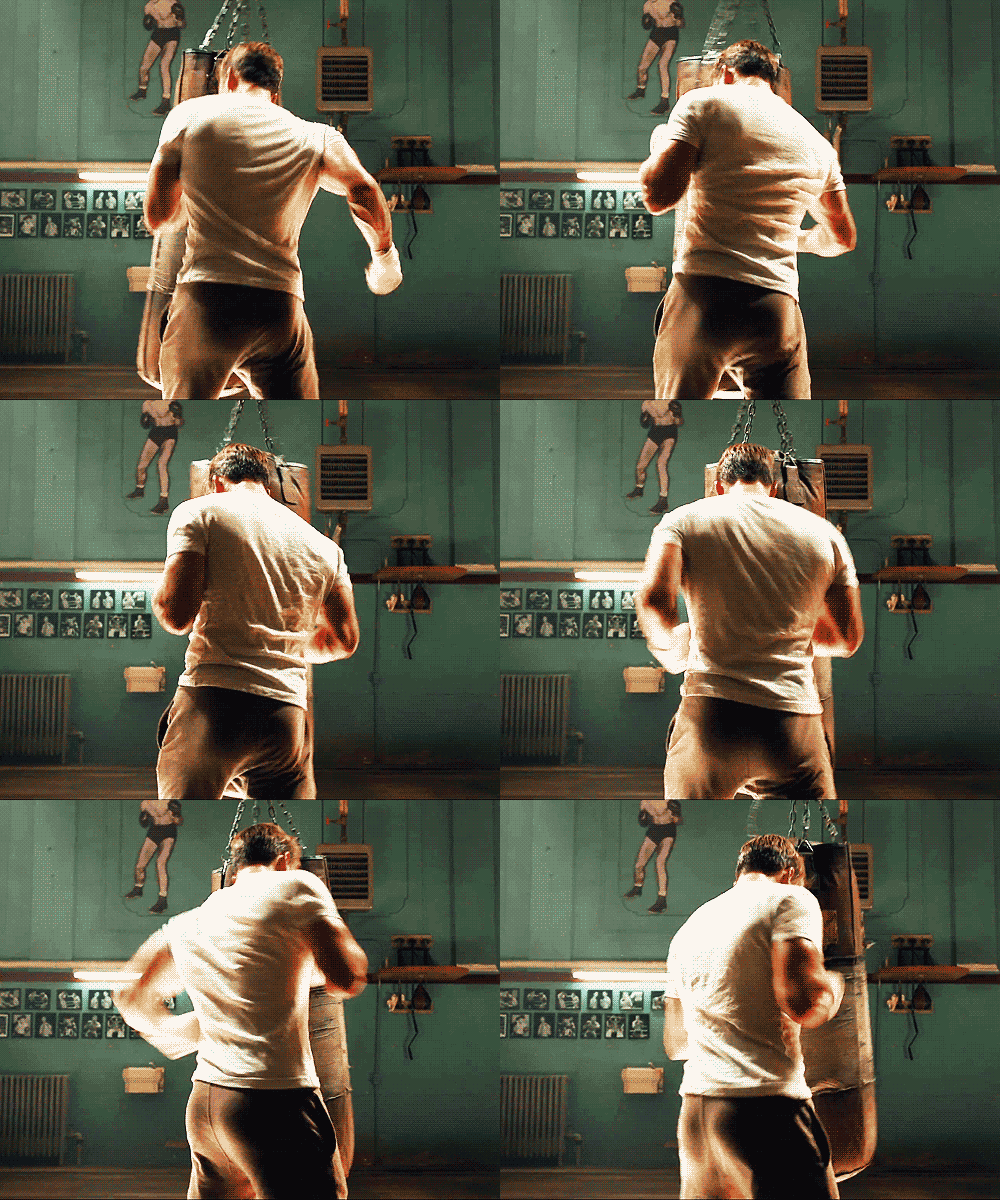
37:40 – Rachel here references Ursula K Le Guin’s classic short story (PDF): “Do you believe? Do you accept the festival, the city, the joy? No? Then let me describe
one more thing.“
39:00 – The Strong Female Characters are a joint creation of Kate Beaton, Meredith Gran and Carly Monardo.
40:15 – I couldn’t find an easily viewable version of the full pilot, but here’s a few minutes of footage from Global Frequency.
42:55 – Sumana is a graduate of Hacker School, now the Recurse Center, in Manhattan.
44:15 – I left this bit in because it has good comic timing.
46:05 – Sexy Murder Walk owes its name at least in part to Charlize Theron.
46:50 – The actress Rachel mentions, playing Bucky’s date and later starring in Doctor Who, is Jenna Coleman.
47:30 – Much of the inspiration for this podcast came from Sumana Meets Doctor Who!
52:35 – As requested. 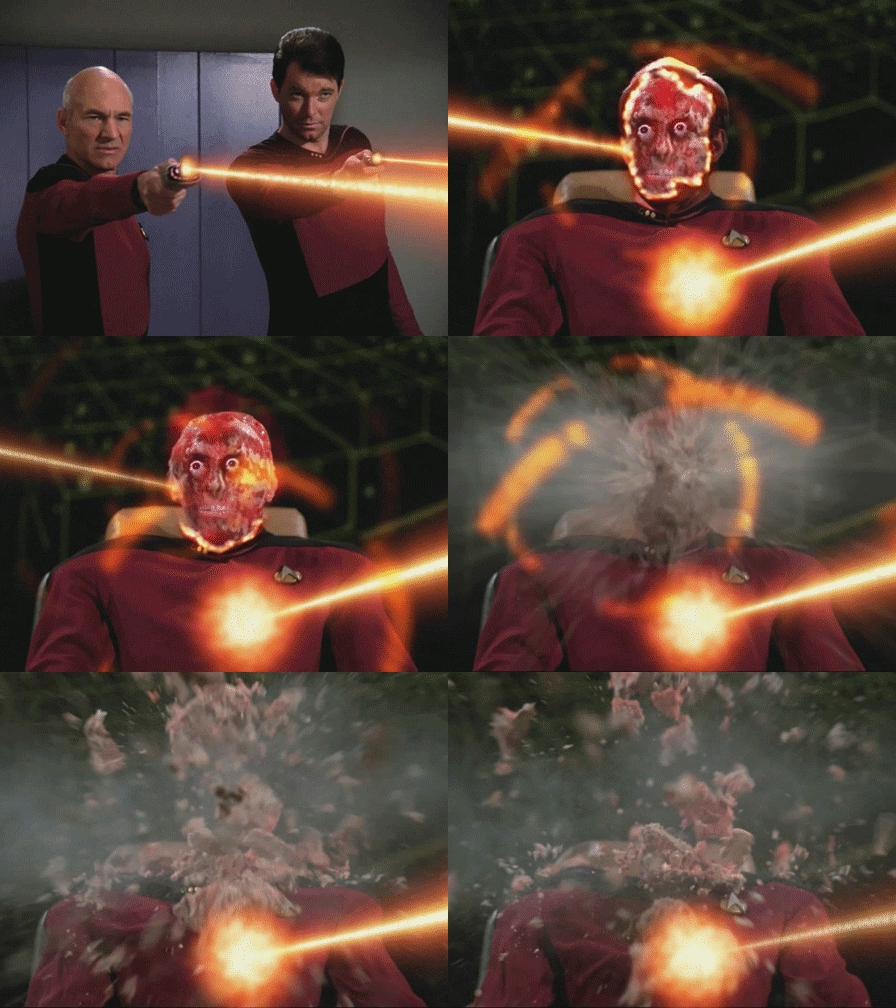
Sense Memory
In the spring of last year I was very ill. It got bad enough for long enough that I actually made and went to a doctor’s appointment, which found nothing wrong in any actionable way. Keep resting, drink fluids. As I lay wrung out on my couch, too sapped even to watch television, I stared at the tall ceiling above me and listened to the whining in my ears surge and fade, amplified by fever. For the first time, and at last, it occurred to me: I have had tinnitus my entire conscious life.
The next time I went to my doctor I asked about it, and she nodded. “Did you have a lot of ear infections as a kid?” she asked. I had. One of my earliest memories is of resting my head on the kitchen counter and feeling hot fluid drip out of my ear as my parents discussed what to do in low, worried tones. I ended up having surgery to implant temporary tubes in my eardrums. The infections stopped, but the damage lingered.
Tinnitus is usually called a “ringing” in one’s ears, but that makes me think of a bell or a telephone, which is why I never thought it described me. (Are you one of the people who can hear a persistent, faint eeeee when a CRT monitor or television turns on on? It’s like that, all the time.) The diagnosis explains a lot, actually—my preference for bass-heavy music, the way white noise helps me sleep, the staticky rush and roar I sometimes get in noisy crowds. My hearing is pretty good, considering, but the sound will be with me for the rest of my life, long after age takes that hearing from me. I’m listening to it right now, writing this. I will be as you read it. I will probably never experience silence. Yet I spent decades unaware, unable to distinguish this aspect of my life from that of everyone around me.
I am ashamed of much of what I’ve written here.
The consequence of publishing the things you think when you are twenty is that, later, people can read the things you thought when you were twenty. Most of these things were stupid. Some are toxic. Some are harmful. All were willfully deaf and blind to my own privilege. Several dear friends have turned up here in the last few years and started reading from the beginning, only to be embarrassed or repulsed by what they found. Despite the unbearable kindness of Sumana’s retrospective about this blog, I flinch to think of what it says about me.
All of this is a strong argument for the most obvious action, which is to delete nfd, or at least lock it: for the right to forget my previous self. I think I’m a better self than I used to be, and better at being human. But part of being better is honesty about everyone I’ve been. Ten years on, I still believe in transparency. To wipe this all away would be to brush out the trail marks I’ve left behind me, the stumbling footprint path from ignorance to… well, partial awareness of ignorance.
So I am letting the record stand. Maybe someone will read it and pick up a few of the things that cost me so much time and so much of others’ patience. Maybe you will read it, and grant me your own patience; or maybe you won’t. I wouldn’t blame you. I am flawed in every sense, but I will keep trying to learn to listen.