Category: Kat

Won’t you be mine

Block parties are popular in Chicago’s summer; the city will loan you a free bounce house for yours if you ask. But the block where Kat and I live had not held such a party, not that anyone can remember, up until this past September. That was when our neighbors decided to change things for the better. The party we organized together was late in the season, and it drizzled a bit. But we put some garbage bags on the PA speakers and took shelter in the great fortune of our street’s tree canopy. The trees are our neighbors too. We took care of each other, and we went on.

That block party will be a good memory for a long time. It was a great success, and we met almost everyone who lives within a stone’s throw of us, and some new friends who don’t. I took photos on my little thermal-paper toy camera and handed the printouts out to kids who were playing together. We had an excess of good food and almost enough good dogs. And now when I walk our own good dog, and see someone from across the street, I can put a name to a face, and we can trade smiles that mean something more than politeness.

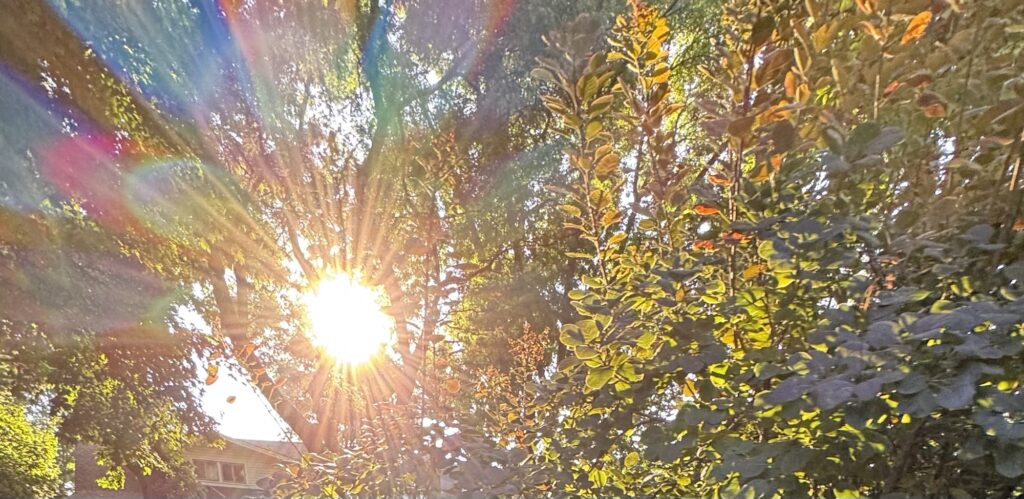
A sundog from my neighborhood, through trees, with identifying information cropped. I hope.

Less than three weeks later, masked federal agents abducted the first of their confirmed victims from the streets of Rogers Park. My mother was here visiting us. Some of my neighbors who were disappeared by the secret police were leaving the same church she attended. Some of them were trying to take their children to or from the nearby elementary school.

There has been excellent journalism showing that the kinds of people targeted in this way lacked arrest records, and had their documents, and were crucial parts of their communities. The fucking George W. Bush Center published an article this very year about how immigration benefits us all, but the truth is that people were targeted for their appearance, not their immigration status. And also: even if every one of the disappeared were an undocumented and solitary migrant with a history of arrests who took more from public resources than they returned, they would still be my neighbors. Evil committed against them is evil done to me and mine.

We wear plastic whistles when we go for walks these days. We got them from the bright warm queer coffee shop, or the physical therapist’s office, or the corner store, or the rally, or the evening crammed together in a restaurant. When we look across the street and see matching bright nylon strings looped around each other’s necks, we smile and nod, and it means much more than politeness. The smiles are tight, but they are sincere. Some say the moment of most acute terror here may have passed with the first touch of winter, at least for those of us not already detained or separated. I remain wary with pain in my heart. I have neighbors in Asheville, and Charlotte, and Baltimore, and Portland too.

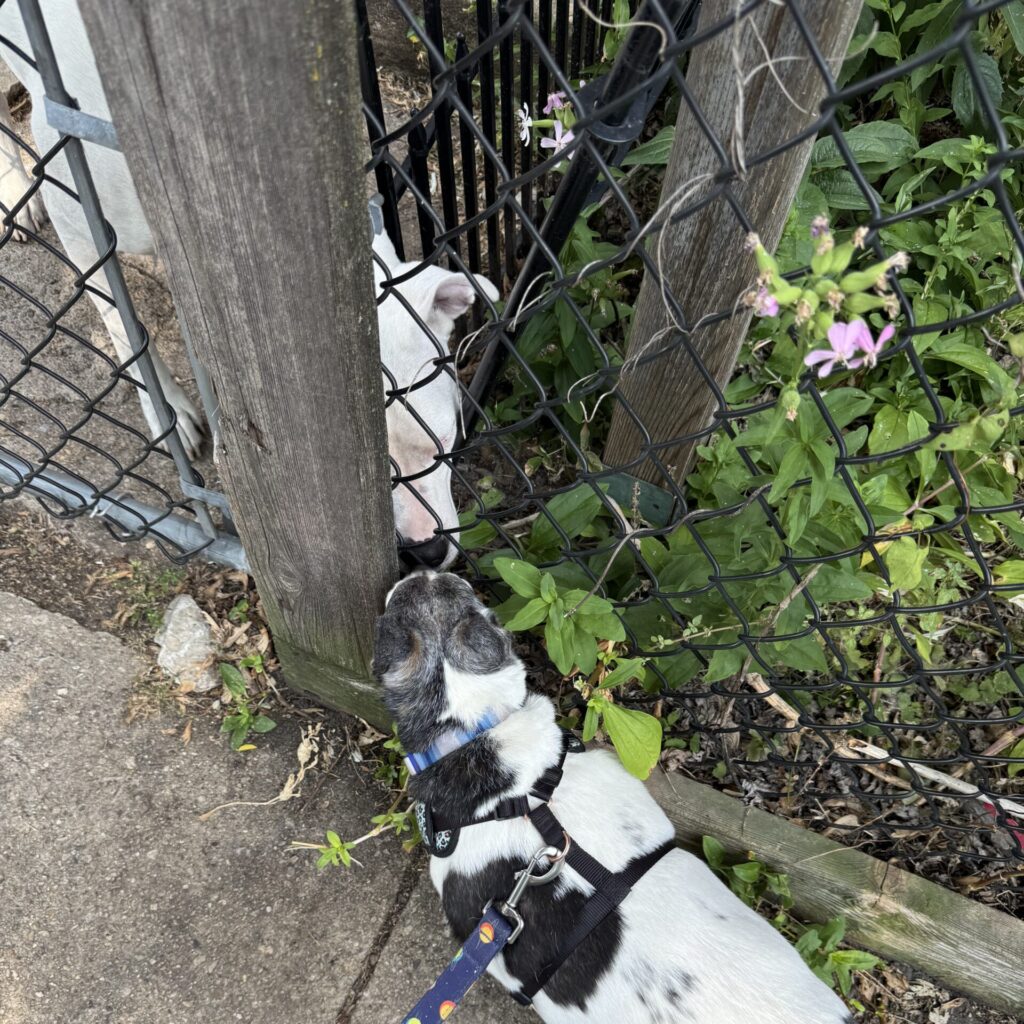
My dog and another dog touching noses through a chain-link fence

I moved a lot, when I lived in Portland: seven times in eleven years. I had the great fortune of many friends, but I didn’t get to know many of my neighbors. I often wanted to connect with them, but I was lacking in tools or time to do so, and then before long I’d be on to a different part of town. Now I live in the house I hope to keep until I can no longer climb its steps. I want the same roots the trees that line our street have grown. Yesterday I took care of an anxious dog from next door while his people were away, and when they came home they gave us a tub of beans and rice that I’m thinking of with hunger right now.

I lived decades with the terrible privilege of innocence to the way life proceeds under military enforcement. But proceed it does, for most of us. We trade favors and drink coffee. We hug each other tight at parties. We do the laundry and we watch the crosswalks. We keep our eyes up and our ears open. And when we hear the danger coming, we run toward it, not away.

A monarch butterfly perched on a sunflower in our neighborhood

The long, deep myth of the city as center and source of violence is so strange to me. Neighborhoods, even those where heat leads to suffering among missing trees, are places where people cooperate. Cities are nothing if not neighborhoods cooperating with each other. All the many benefits they offer are born of the choice to get along and share. I grew up in suburbs, a kind of place structured by a desire to be apart from other people. I mean no unkindness to my suburban loved ones when I make this generalization. But suburbs were built because people wanted to move away; cities like Chicago, for all their flaws and failures, are places people move to. The choice of a city is the choice to be close to people you don’t yet know.

On the weekend before Mom came to visit our home, Kat and I took the city light rail line to Chicago’s train station, and thereby went to Minneapolis to visit friends we have dearly missed. On the train back home I read through all of Sophie’s beautiful new book Kin. If you click on only one link from this blog post, it should be that one. I wish I could just read it aloud to all my loved ones, even the parts where Kat and I are mentioned. The book is so moving, and by that I mean I felt it move me to action. The subtitle of Kin is “the future of family.” It is a future I believe in, and one I am trying in my small way to make our present too.

When Mom saw an article about how her fellow parishioners here had been abducted, she sent the link to our relatives, and she wrote: “We took Communion together. They are my family.” It made my chest ache, and it made me so grateful that my family of origin has a mother who sees things clearly.

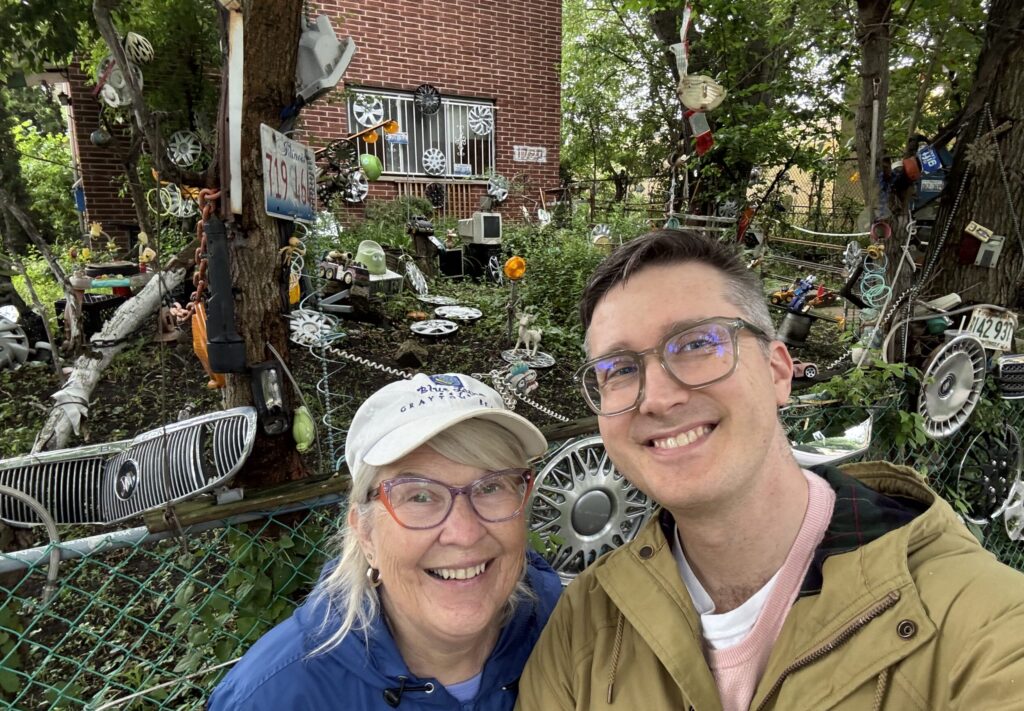
Mom and myself at a neighborhood landmark

I started writing this post because I wanted you, reading it, to take it as a sign to reach out to people where you live. It’s the only way to make strangers into neighbors and neighbors into friends. It is work I am still doing, and I have found it worth the effort many times over. I hope your neighbors don’t suck; I know some do. But even then there are more people in the next building down, and if you learn each other’s names, you can bring them cookies and trade numbers if you want to learn to like each other more.

We will only get through the worst together with those around us. Caring for each other is what makes us human, in a biological sense: prosocial behavior is the primary survival trait of our species. But it’s also the trait that brings us good dogs and pot luck and bounce houses on summer streets. I called them free bounce houses, but of course the reality is that everyone here pays for each other’s parties, just a little bit. I wish I could choose to pay for kids in bounce houses instead of in cages. I wish I could pay for my neighbors’ meals instead of tear gas. I wish that instead of paying people to set fire to our world, I could choose to keep the people around me warm.

It’s hard enough getting through a Chicago winter. It’s hard enough to feel one’s body aging, and to lose people by way of time and misfortune. It’s hard enough just doing the laundry and watching the crosswalks. It’s hard enough to care for the small and vulnerable in a family while budgeting time and money and effort to maintain oneself. It’s hard enough that work takes more and more from us, that trees and pets and people get sick, that the hours and the days slip from our grasp. It’s hard enough that things fall apart even with effort to keep them together.

Nobody needs cruelty and evil to make things harder on all of us, not even those who enact it. What we need is each other. We go on.

The Chicago skyline on a cloudy night, seen from the river

Composition

Nineteen years ago my friends got together, led by Maria (hi Maria), and chipped in to buy me my first single-lens reflex camera: a Canon Digital Rebel.
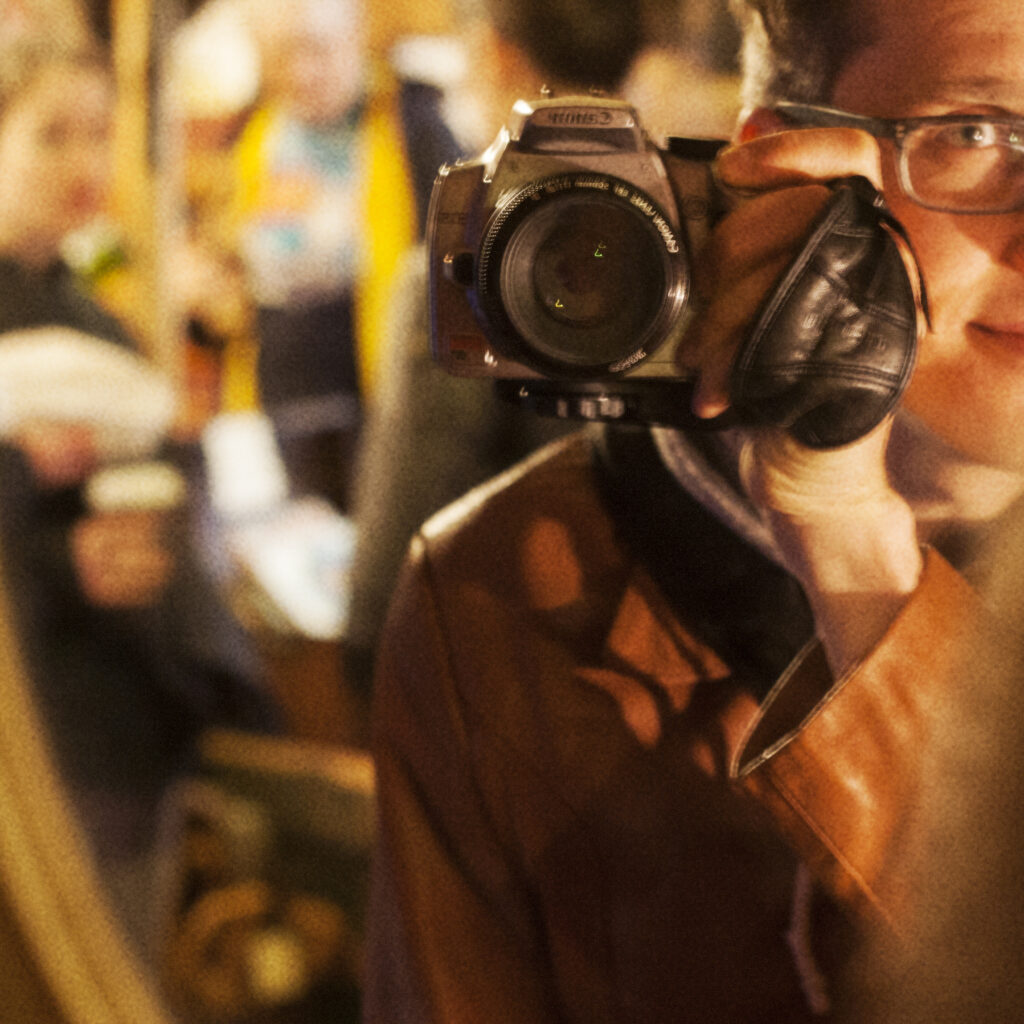
Myself in a mirror, at a plant shop in San Francisco, early 2016.I’d played with cameras since I was a kid, but until that year, I never had a solid understanding of what to do with them. Coming to that understanding took many years of developing taste for what I liked in pictures, and then more time studying the techniques involved, but mostly what I needed was a good way to experiment. My goofy webcam selfies aside, the time between taking a photo and looking at it had always been measured in weeks and dollars. But things changed once I could just snap, and chimp, and gauge what I had wanted against what I got. I needed feedback to learn.
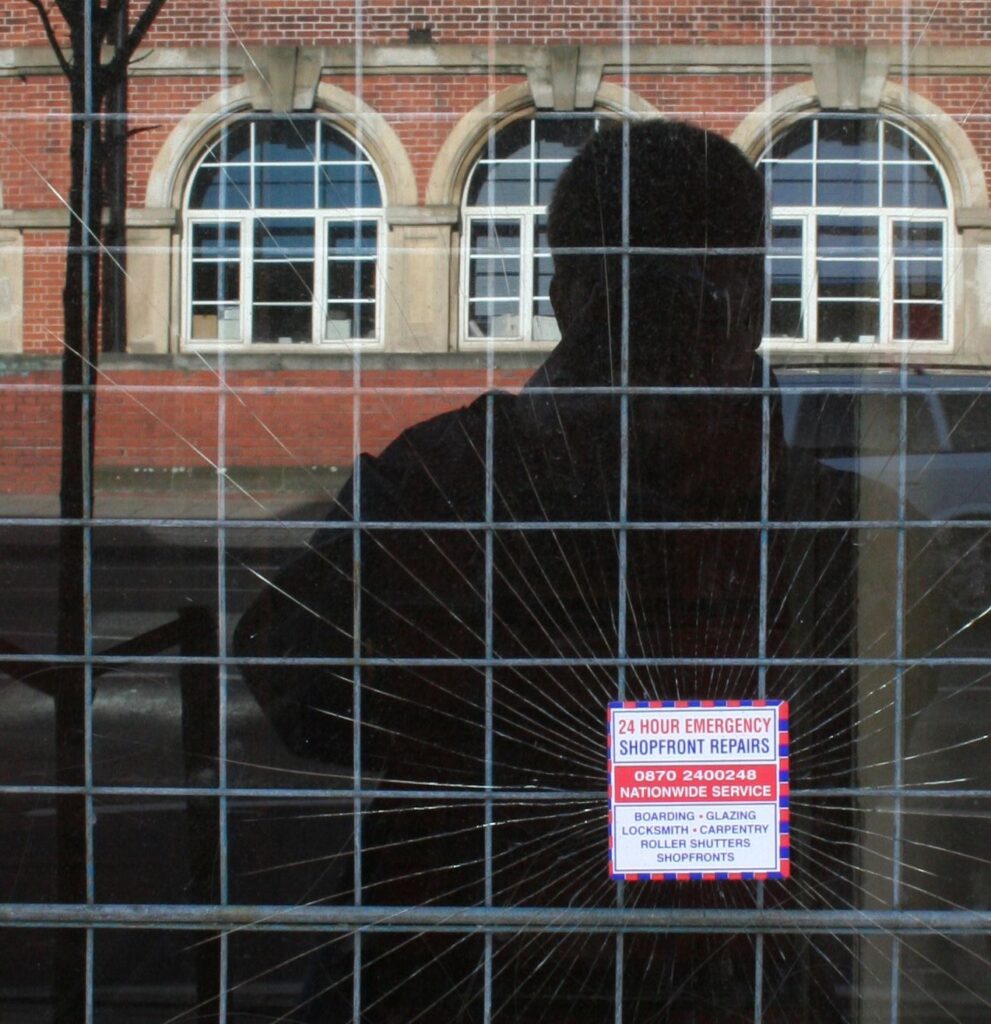
Self-portrait in shadow, reflected in shattered glass, somewhere on a Tube Walk in London.I’ve written about this in the past and I don’t want to keep retelling the same stories. But before I had a camera in my hand, I had no patience for the act of looking around me. It was only learning how to frame, evaluate light, and search for details to isolate that unlocked the pleasure of observation. After a while, I didn’t even need the camera to enjoy it! And now I prefer to shoot on film anyway, so the quick feedback loop is long gone. But the process of learning shaped me, and I still hold that shape.
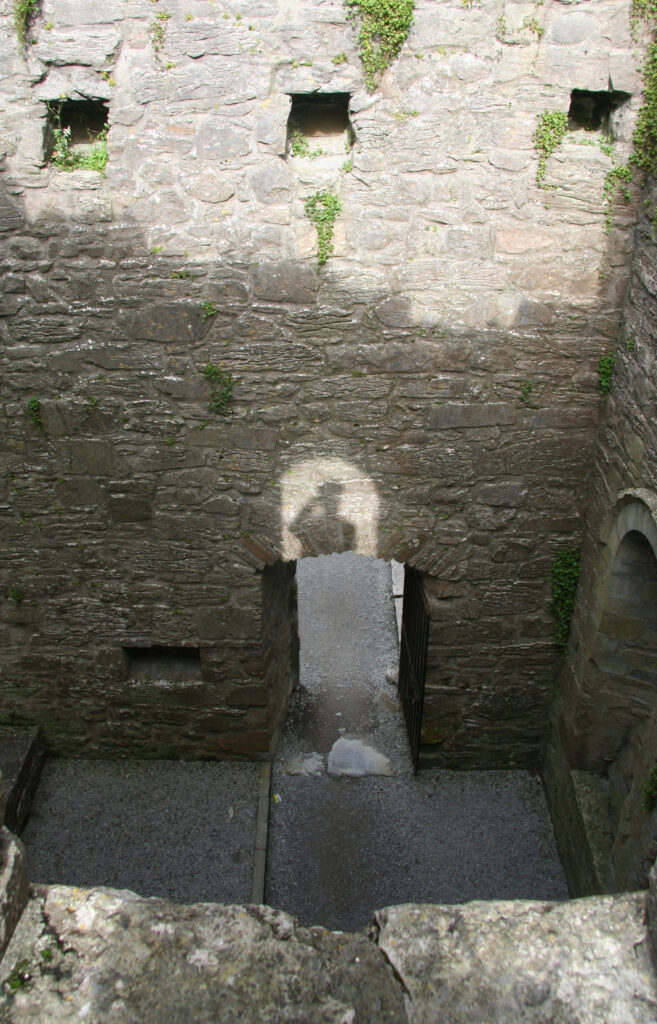
My shadow, on the wall of a castle in Ireland, wearing a silly hat.Photography changed my world by making any moment, anywhere, into something I could interact with. You should email a blogger today.

“It’s quite important to know that you are heard.”

Jenny’s post about metrics (and Lucy’s quotation of it) have been rattling around in my head for months now. In my mind that post links back to something that Avery Alder said on twitter many, many years ago, in response to a wave of scolding directed at allies who purportedly “wanted a cookie” for taking part in social justice activism. I can no longer access the original wording. What I recall is that Avery acknowledged that of course such work is worth doing regardless of reward. And then she added: but so what if I still want a cookie? I like cookies!

Jenny again, deliberately out of context, because it fits other contexts too:

First of all, so? And second of all, right, exactly.
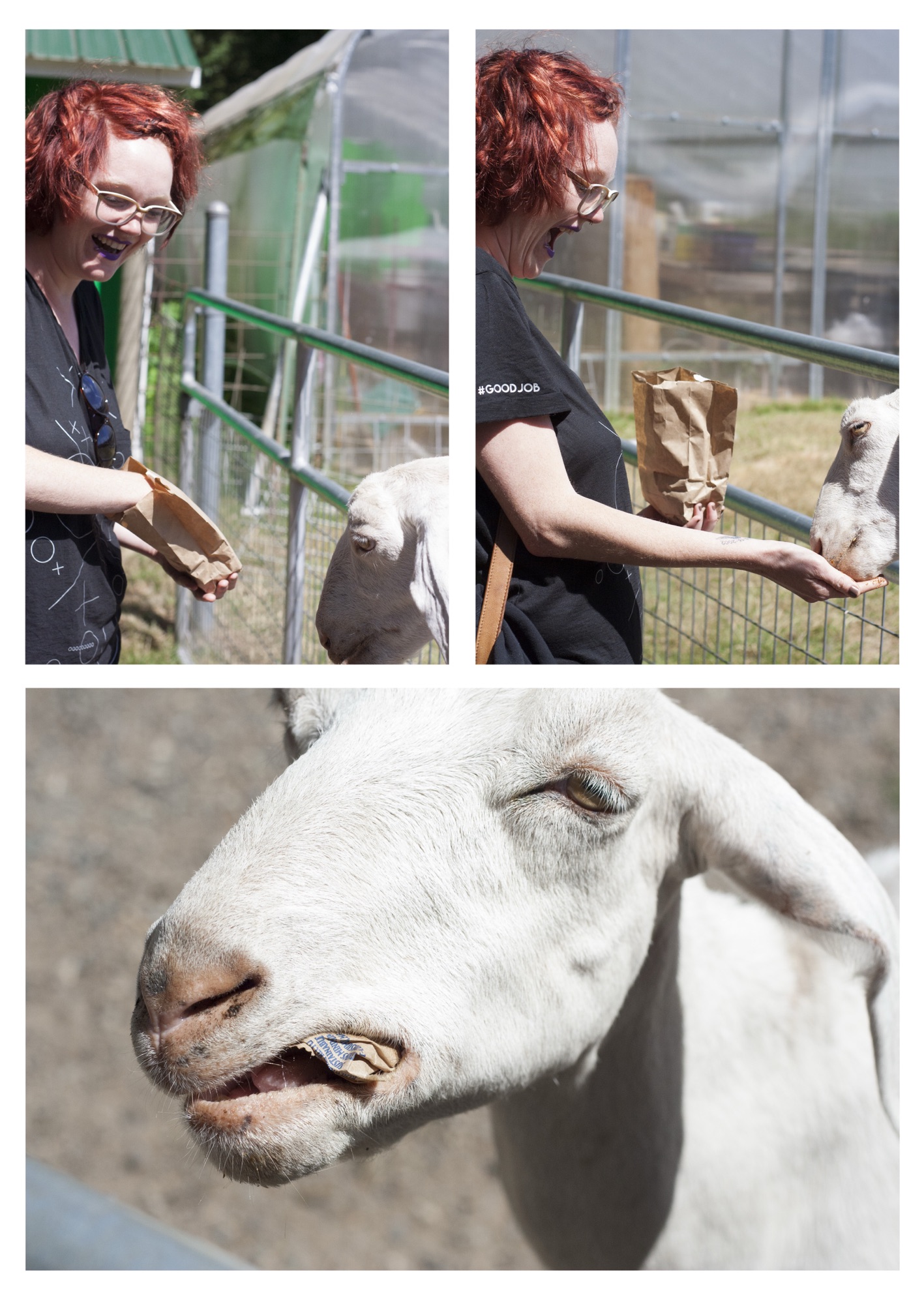
Mads feeding a goat from a bag. The goat ate the bag.

I like cookies too. And I’m a human, a social mammal whose development rests largely on the attention and response of other members of my species. It is important for humans that sometimes someone gives you a cookie. It is important to know that you are heard.

Analytics software offers numbers you can’t trust about visits you can’t see, which is not the same as being heard—in fact I think it might be the opposite. The illusion of attention contorts people into shapes that are not good for them. (I don’t even need to mention any prominent software platforms by name here, do I?)

I don’t use my degree in the dramatic arts for all that much, these days, but I am often grateful for what I learned in completing it. One of the things that Patrick Kagan-Moore said to me, the night before our play debuted, has stuck with me for 25 years. “We rehearse for months,” he said, “so we can try to find the right shape for the performance, and the first time you get a laugh from a crowd—” He snapped his fingers. “—they will train you, like that. You’ll do it the exact same way every show, trying to get that to happen again.”

Live performance is a hot medium, where response arrives quickly: snap, chimp, gauge. Writing online, and off social media, is a cold medium. That’s why the warmth of a good response matters so much.
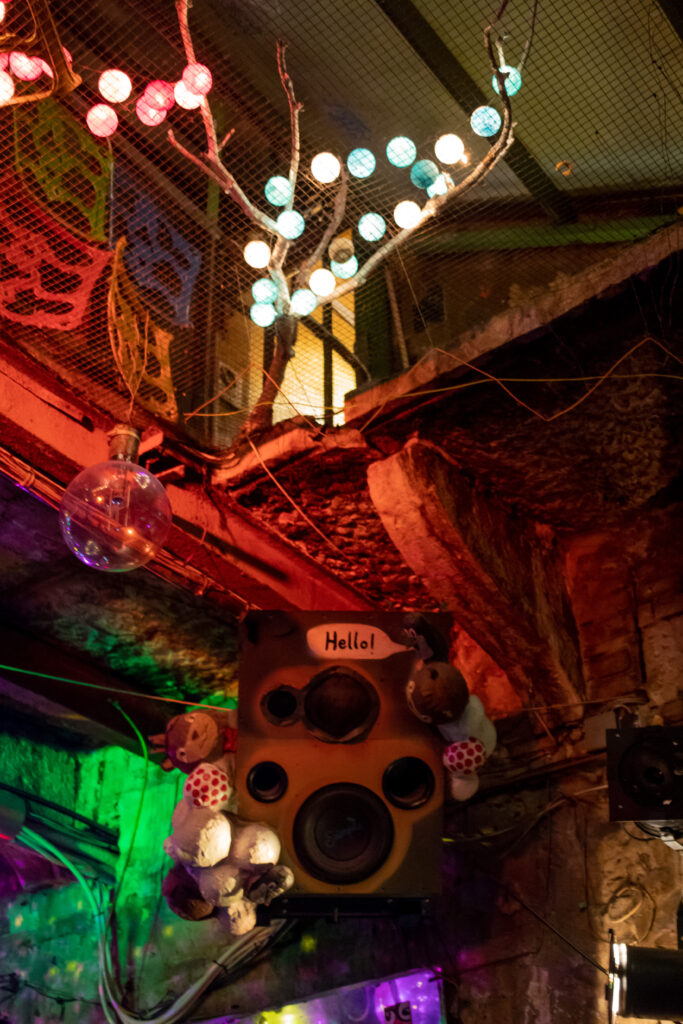
Lighted artwork from the ruin pub at Szimpla Kert, in Budapest, with an old speaker box facing the lens and a speech bubble above it saying

Sometimes I like to reach into my mental pocket and offer up chestnuts—I know I already used one food metaphor, stay with me—which I cannot promise will contain any meat. One such chestnut is that email is the infrastructure of the web. (In my grouchier moments, I say “failure state” instead.)

Infrastructure is what you fall back onto when a superstructure cannot support the load placed upon it. There are a million diagrams of the technical stack that underlies HTTP, and none of them includes a layer called “email.” But it is there, invisible, at the root of every auth request. And as direct communication over the web has been captured by those who do not wish good things for you or me, email remains the fallback there too: a crummy foundation that yet resists collapse.

When the web promised that you could subscribe directly to the words and work of people you found interesting, then broke that promise for extractive purposes, email newsletters sprang up to fit the popular demand to Just See The Goddamn People You Follow In Chronological Order God Dammit. Email is not well fit for this purpose, any more than it is for supporting the rest of the internet. The things you want to savor from your favorite writers get buried among “the to-do list that grows without your consent” (credit to Sumana). But it kind of works. And things that kind of work are what we have, online, these days.
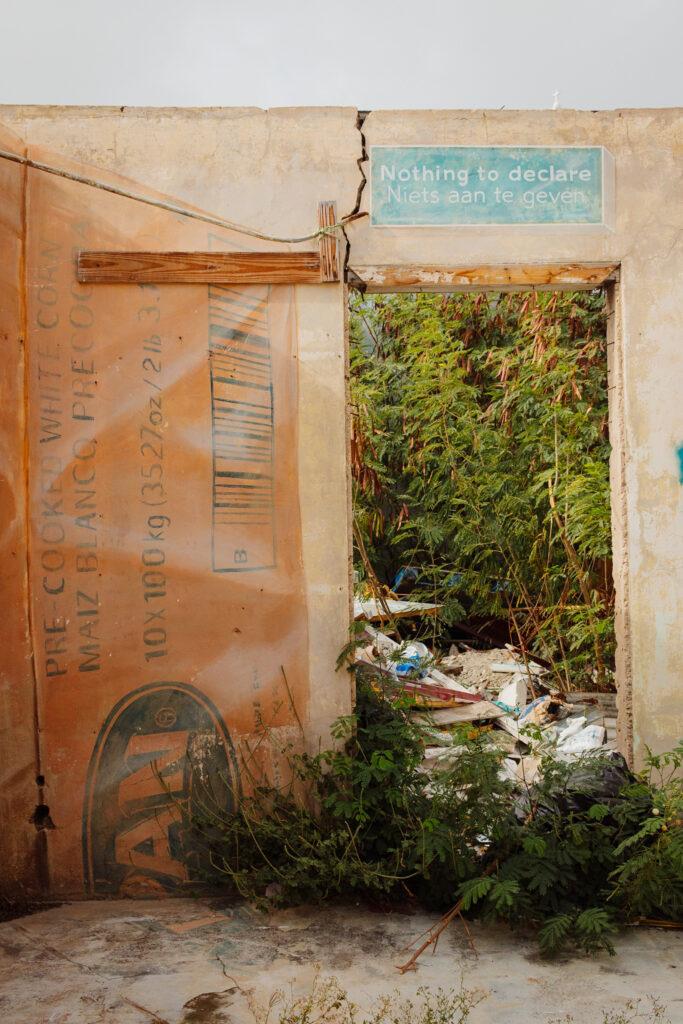
A photo from San Nicolas in Aruba, with a gaping abandoned doorway showing overgrown weeds behind it, and the words

Newsletters are blogs. Email kind of works as a way of both delivering and responding to blogs. I agree with Erin’s newsletter that writing letters is a wonderful practice too. And I don’t mean to dismiss the charm of a good comment, for blogs with comments! Comments are how I met Will, after all. But letters require physical acquaintance, and comments are a kind of public performance in their own right. Email is something else still.

The other day I had a question that was bugging me, and I looked up the relevant figure on Wikipedia. Wikipedia told me that he has a blog—a delightful blog about sailing in retirement, unrelated to the matter I had in mind. But that blog had an about page with an email address, so I wrote an email, and got a response right away.

From: Brendan (xorph@xorph.com)
To: ken@kensblog.com

Hello Mr. Williams! I’ve always wondered, why did you choose “on-line” for the original company name “On-Line Systems?” Was it derived from the idea of making software to be accessed on a mainframe through a terminal, or did the term mean something different to you at the time?

Thanks! Hope your seagoing adventures this year are wonderful.

—Brendan J

From: Ken Williams (ken@kensblog.com)
To: Brendan

You nailed it. Yes – I was doing freelance contract work on mainframe computers, specializing in large computer networks (literally on-line systems). When I started Sierra I kept the name I had been using for my contracting.

When we started getting larger I realized someone already owned the name and had to change our company name.

-Ken W

From: Brendan (xorph@xorph.com)
To: ken@kensblog.com

It’s so satisfying to have a clear answer to that after all these years. Thank you so much!

From: Ken Williams (ken@kensblog.com)
To: Brendan

🙂👍

The exchange was months ago, but I continue to enjoy the pleasant feeling of this tiny conversation. I have other emails I have received in years past that I keep close in my heart, just because they caught me at a good moment with a kind word. Even without much social media in my life, I do talk to people in other ways online, via Izzzzi and Peach and sometimes (sigh) Discord. But a few lines of thoughtful outreach, one to one, carry a warmth and weight of meaning that is singular.

I’ve taken a lot of photos over the last couple of decades. In doing so I have learned that I’m not particularly adept in most genres. Landscape and street photography don’t come naturally to me, posed portraiture remains elusive, and things like sports or wildlife photography are far beyond my abilities. What I like shooting most are candids. They require at least a little skill, a little preparation, a watchful eye, and luck: I shoot a dozen for every picture that turns out the way I want it. But there is nothing like that moment of resolution, when I see on a screen that taking the shot has succeeded.

A photo doesn’t really make a moment permanent. Our photos are ephemeral, just like our selves. They still matter. Ephemeral connections, one to one, are the material we use to construct meaning in our own stories. You and I were born in a time when there is no other choice but to find our lives shaped by emails. So pick a shape you like, and put something in it that you want to see again.
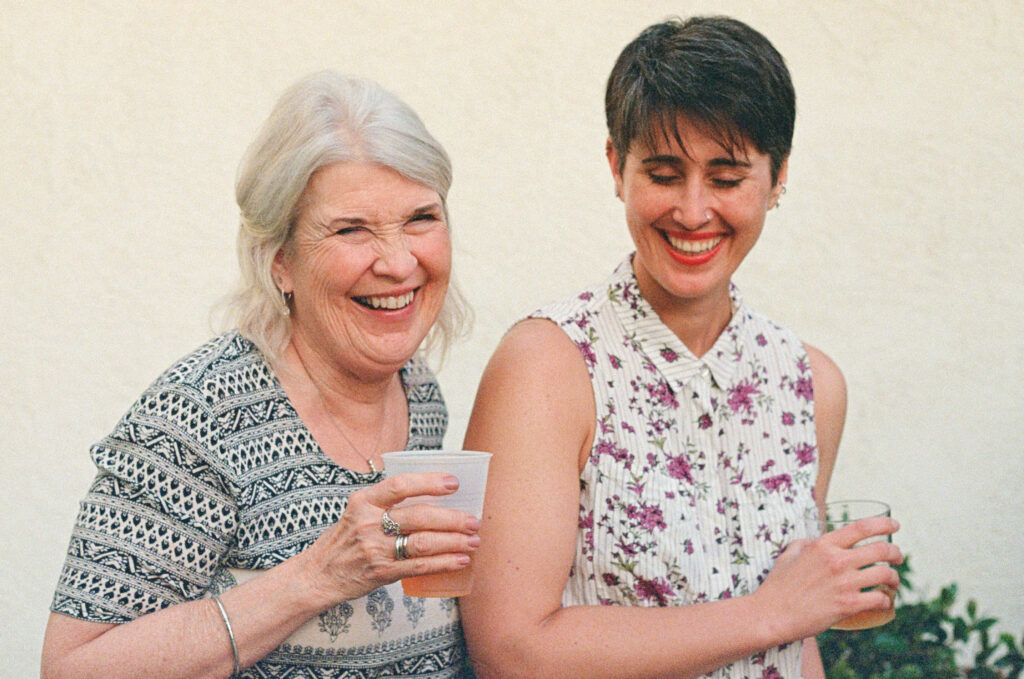
My wife and my mother, laughing together.

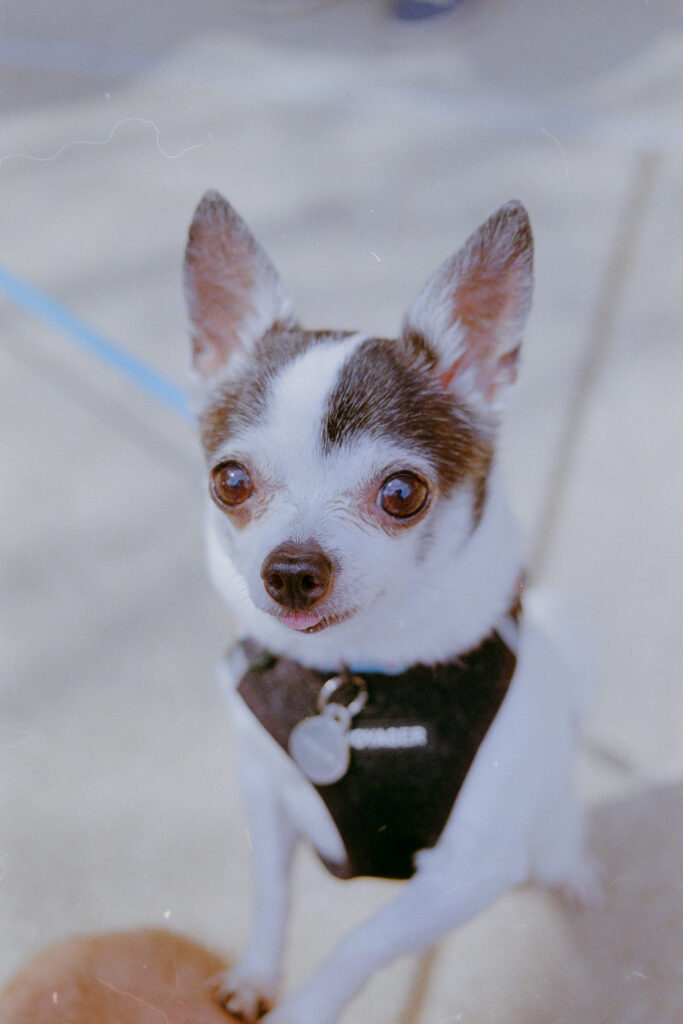
A very small dog named Chauncy blepping with his paw on my knee.

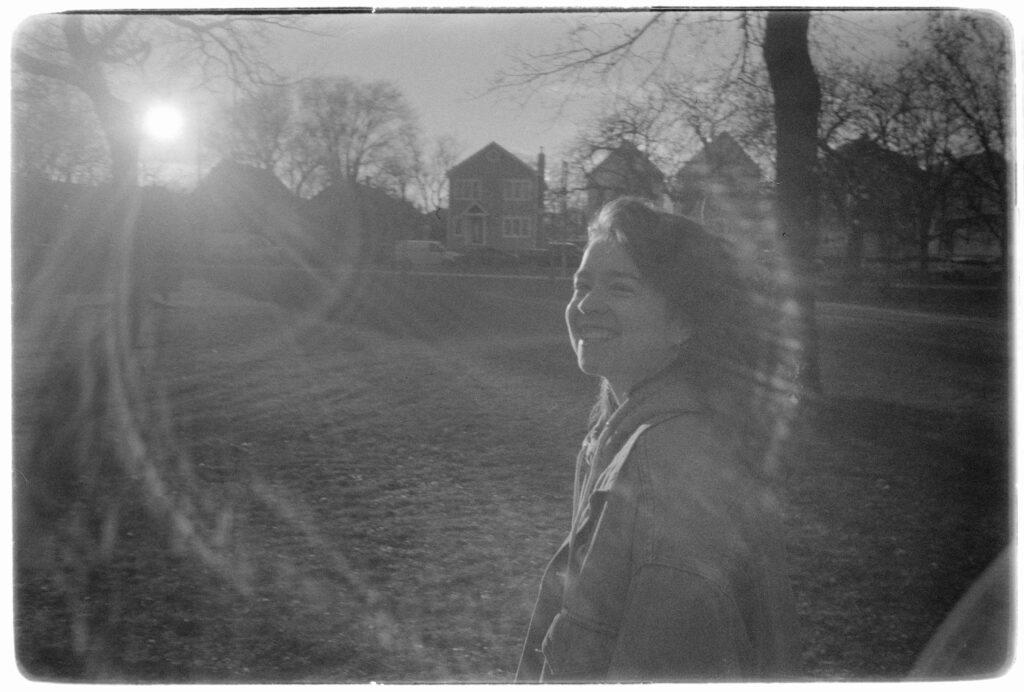
My partner Hannah in monochrome, obscured by a lens flare.

Sophie and Erin sitting in the sand and smiling, probably at Kat's beach birthday.

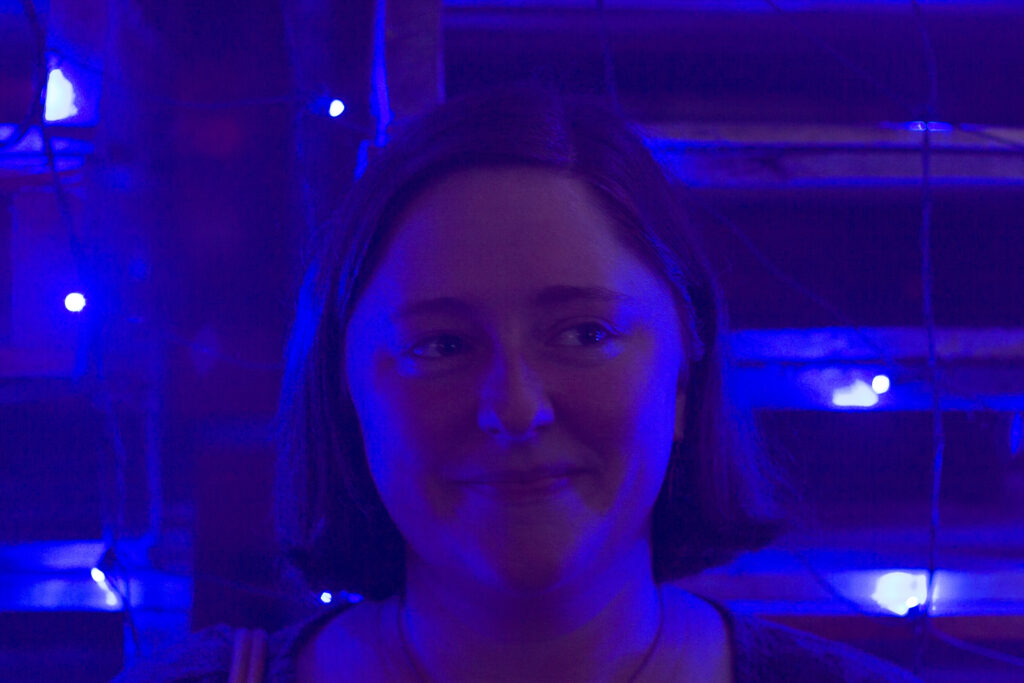
Erin at Bit Bash in 2015, lit entirely in blue.

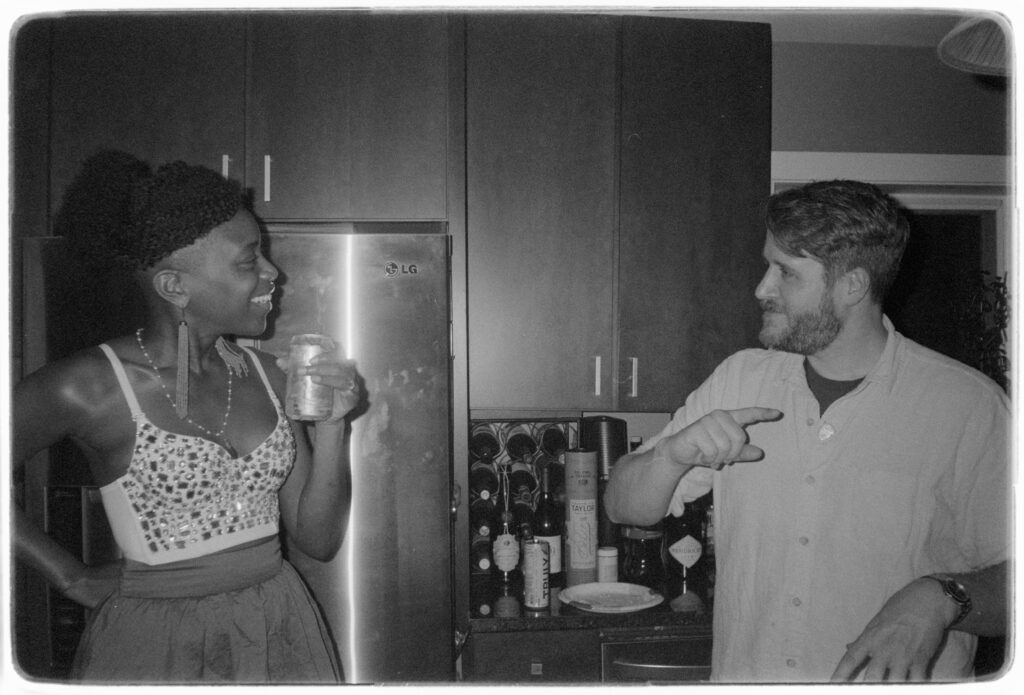
Ayo and Stephen, in a kitchen and monochrome, having a totally not posed conversation.

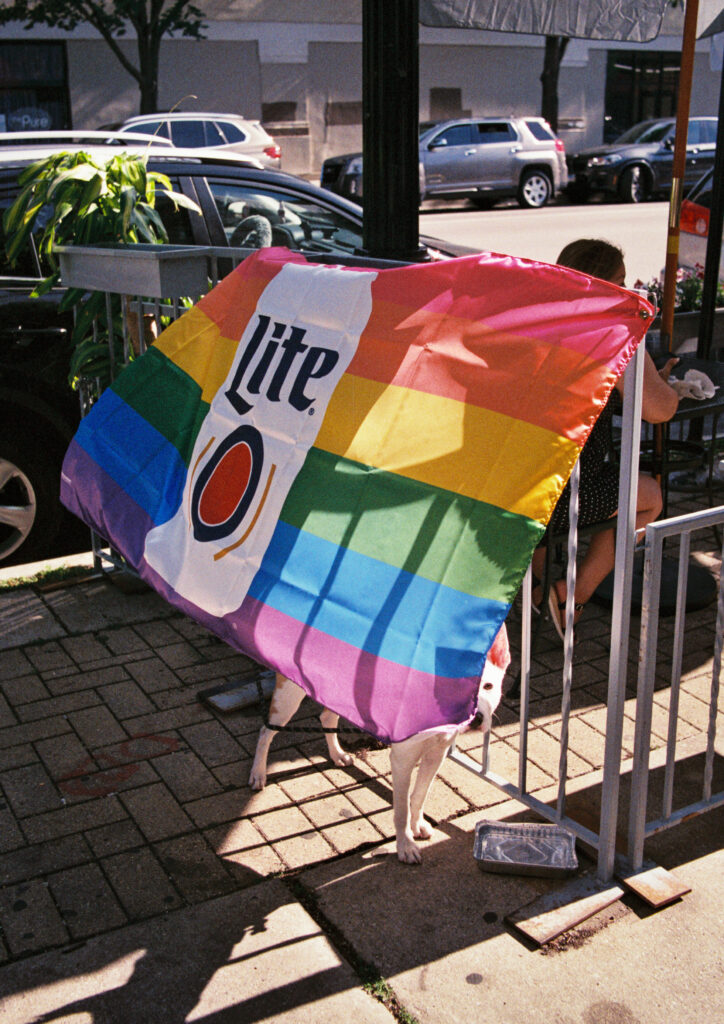
A small dog peeking nervously out from behind a Miller Lite rainbow pride flag.

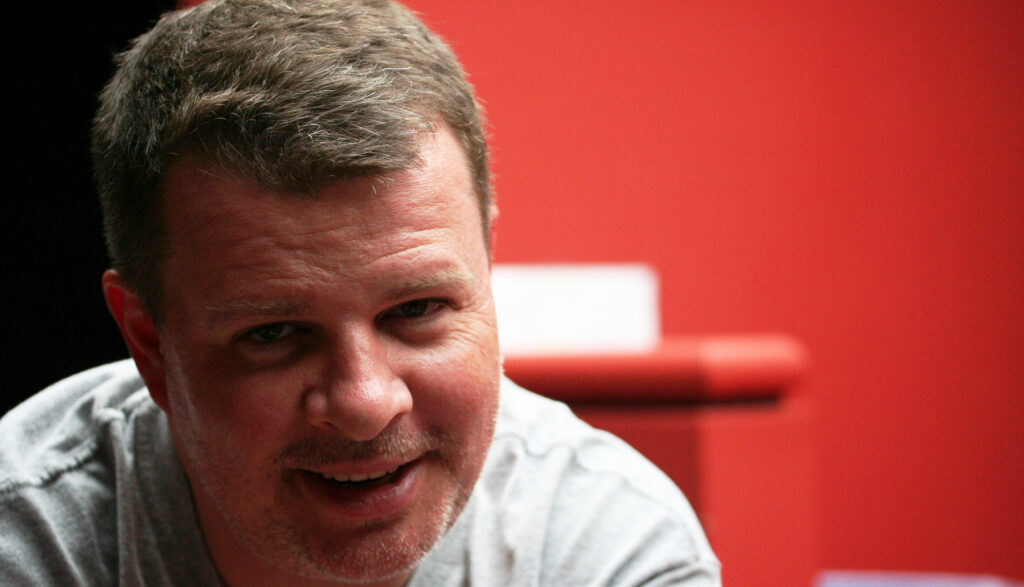
Chris, in a red room, weary in 2008.

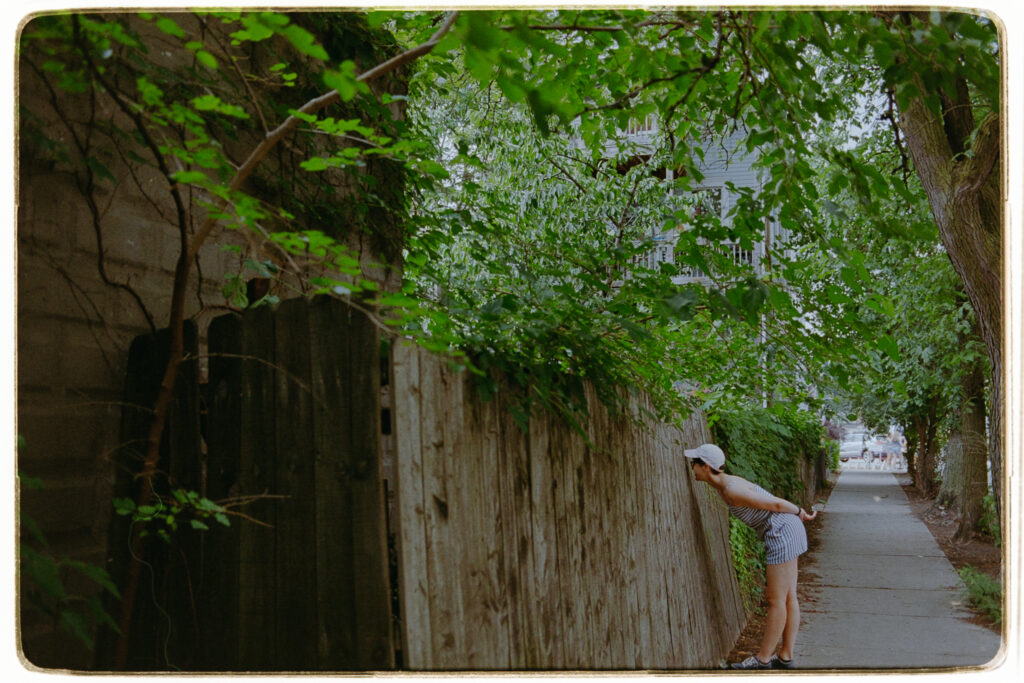
Kat at a distance, leaning down to peer through a hole in a fence.

A cluster of balloons escaping into the sky.

Ahiru no omocha

While I’ve never managed to finish my long-incubated and sprawling essay about large language models and Alfred Jarry, I think that if you know me, you already know my attitude toward the proponents of the former. Nevertheless, at the request of my employer, I have tried out a couple ways of using them in my work. I tested out cloud-driven code-completion interfaces long enough to learn that they hinder me more than they help, and anyway I don’t like constantly feeding our clients’ intellectual property back into someone else’s text corpus. And even if those things weren’t true, my concerns about the intake and exhaust of the server farms involved would have been enough to make the experience undesirable.

I have also tried running some open-weight models directly on my laptop, where I know my data will remain, and where I can observe that the power draw involved is not vaporizing any rivers. The results are slow and of middling quality, but good enough for things like “just tell me what fucking regex I need.” (I do still google things first, but at this point, I’m not sure using their search service is any more virtuous than using an LLM.)

It wasn’t so long ago that the people promulgating the ascendance of statistical models were attached to the term “machine learning.” Machines cannot learn, but humans can, even me. One of the things I am learning, along with Kat, is Japanese. I’ve made use of textbooks, mnemonics, evening classes, and apps to this end, and I’ve made a lot of progress, which is to say I’m about 1% of the way to being able to converse with a preschooler. Japanese is hard.

Textbooks are challenging to use without an instructor, and while I appreciated working with such an instructor for a remote course through our local cultural center, the video-call medium is pretty painful in a class setting. Apps are nice for building a habit and refreshing myself, but as I’m sure you know, they more or less all run on a model of drilling by way of quizzes. Like many people who were praised for youthful conformance to school standards, I retain the test-taking skills that were hammered into me at a formative age. That means my brain is tuned for using process of elimination and context clues to answer quizzes without learning anything new, which is a whole other essay I will never finish, but anyway this is why the apps yield only grudging progress.

I know enough about my own capabilities, and about general educational theory, to understand that if I want to learn something in a persistent way then the most valuable exercise is trying to explain it to someone else. When software nerds do this to solve a problem, we call it rubber-ducking. I don’t actually own a rubber duck. But I do have a laptop with an LLM runtime on it. You can see how I got here.

“The thing is there’s so much basic vocabulary to learn,” I told Kat, “and a lot of it is English loan words, but then a lot more isn’t. And so many of the words sound alike but mean such different things. So I thought, hey, I can just tell the computer to have a conversation with me, and I’ll have to explain the differences between the words and what they mean, and even use them in sentences. It’s a proven technique. I think it might actually help!”

Kat, who I believe I mentioned is also learning Japanese, gave me a steady look and replied: “or you could just tell those things to me.”

Sometimes the problem I solve by explaining myself aloud isn’t even the one I knew about.

We got a dog and his name is Max

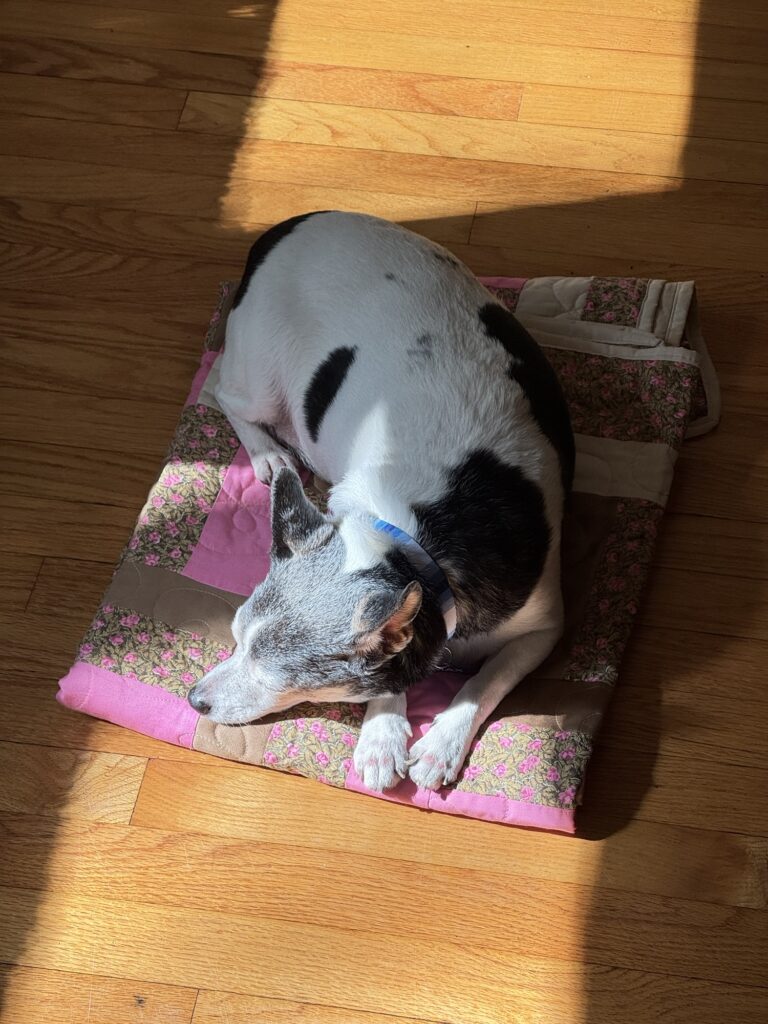
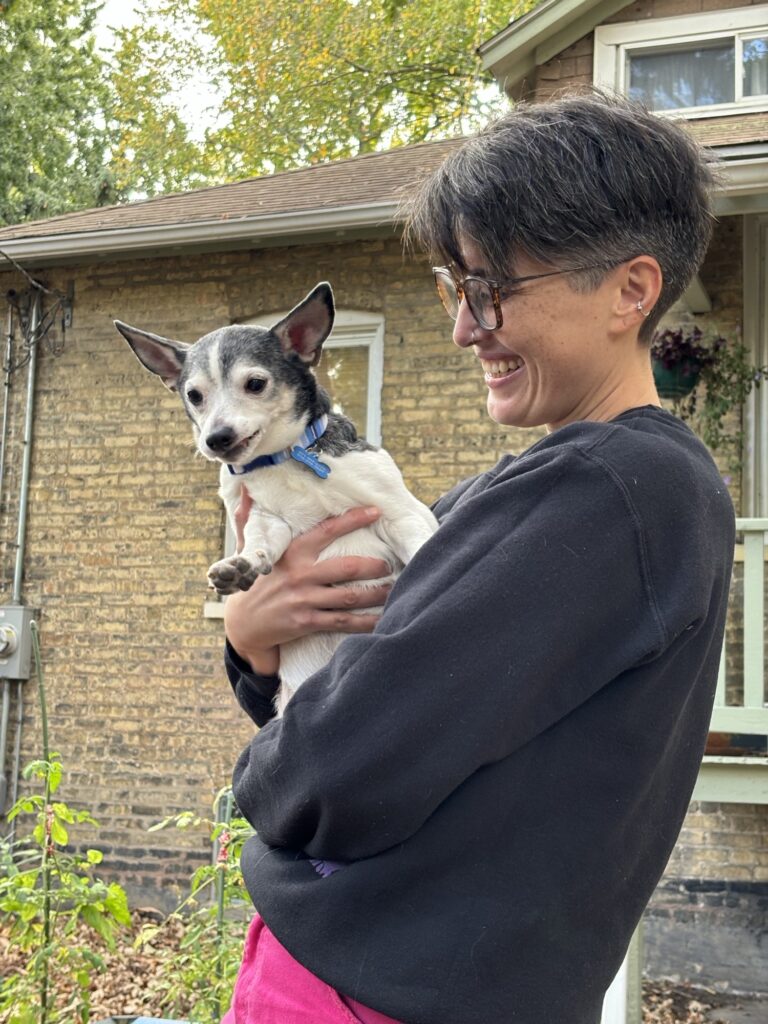
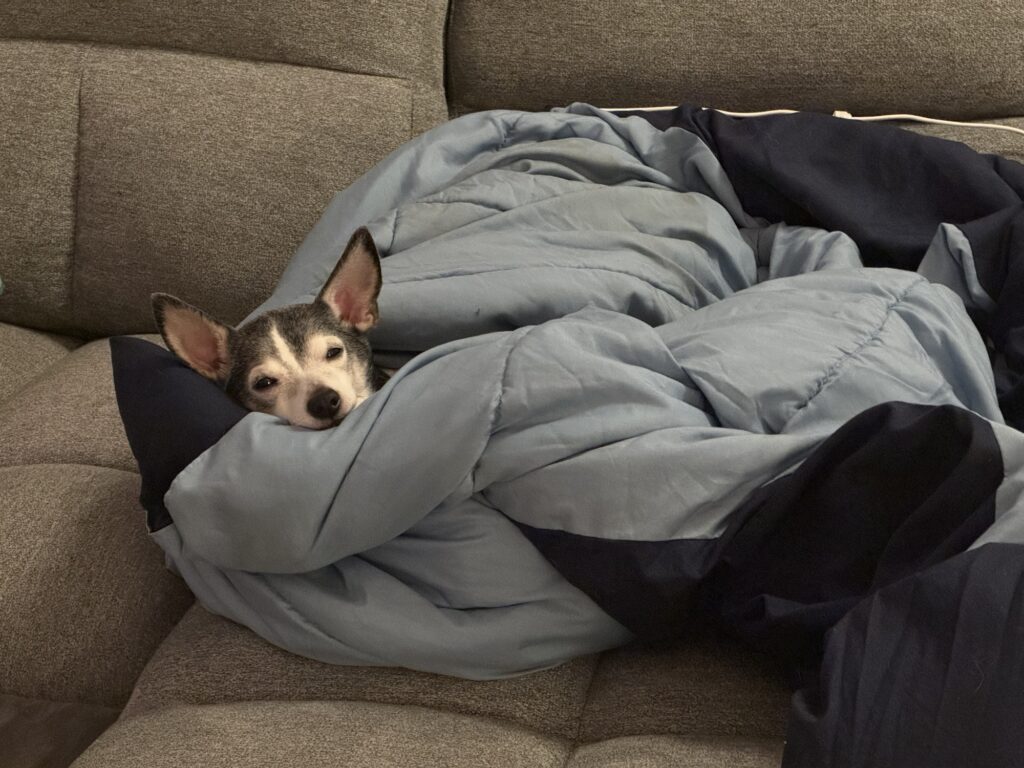
Hello, friend. My opinions are my own and do not represent those of my employer, but over the summer we got to meet the best dog in the world. Our friends were fostering him from a local shelter, so we had a few opportunities to get to know him, and each time we loved him more. When we bought a house (oh, also we bought a house) and moved out of our apartment, we adopted him as soon as we had a place to put his bed.

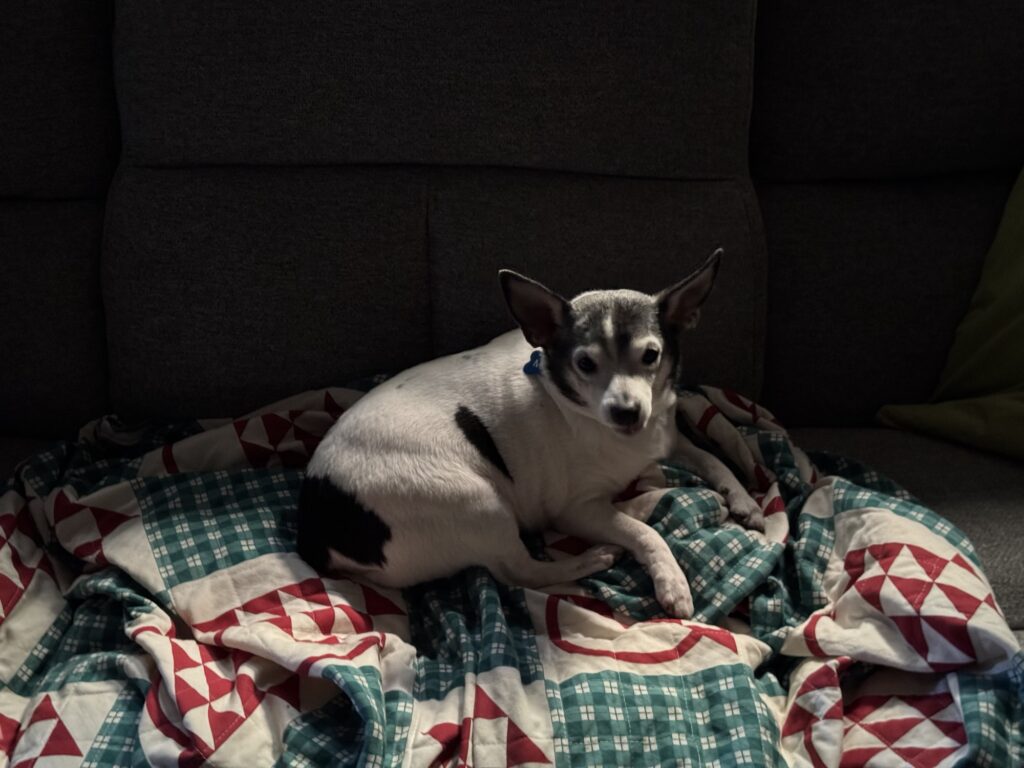
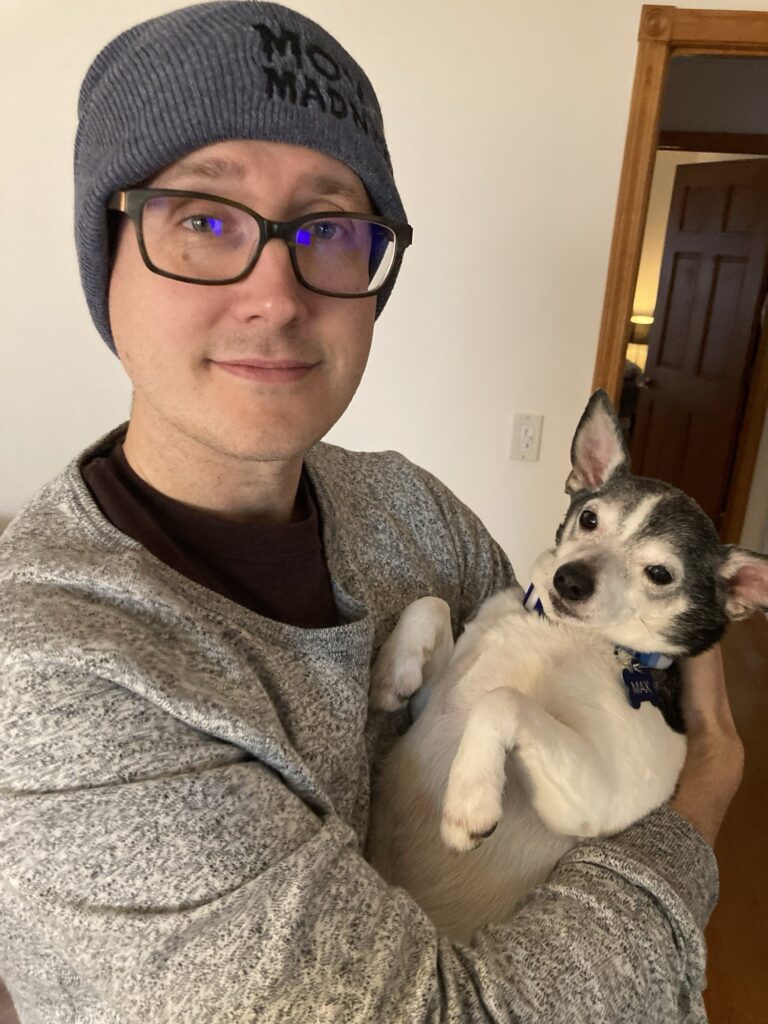
Max is a small chihuahua derivation of uncertain age, probably around 10 or 11, and shortly before we took him in he was relieved of most of his teeth. He is friendly, quiet, sleepy and calm. He is not a lap dog, but he loves to take the center seat on our couch and place his small warm flank against a person’s thigh. Then he will nudge his little head under that person’s hand and insist on having his scalp massaged.

I am relying on Max quite a bit for mental health support of late. He did not apply for this job but he bears it with grace. Here are some photos of him.

Two Books

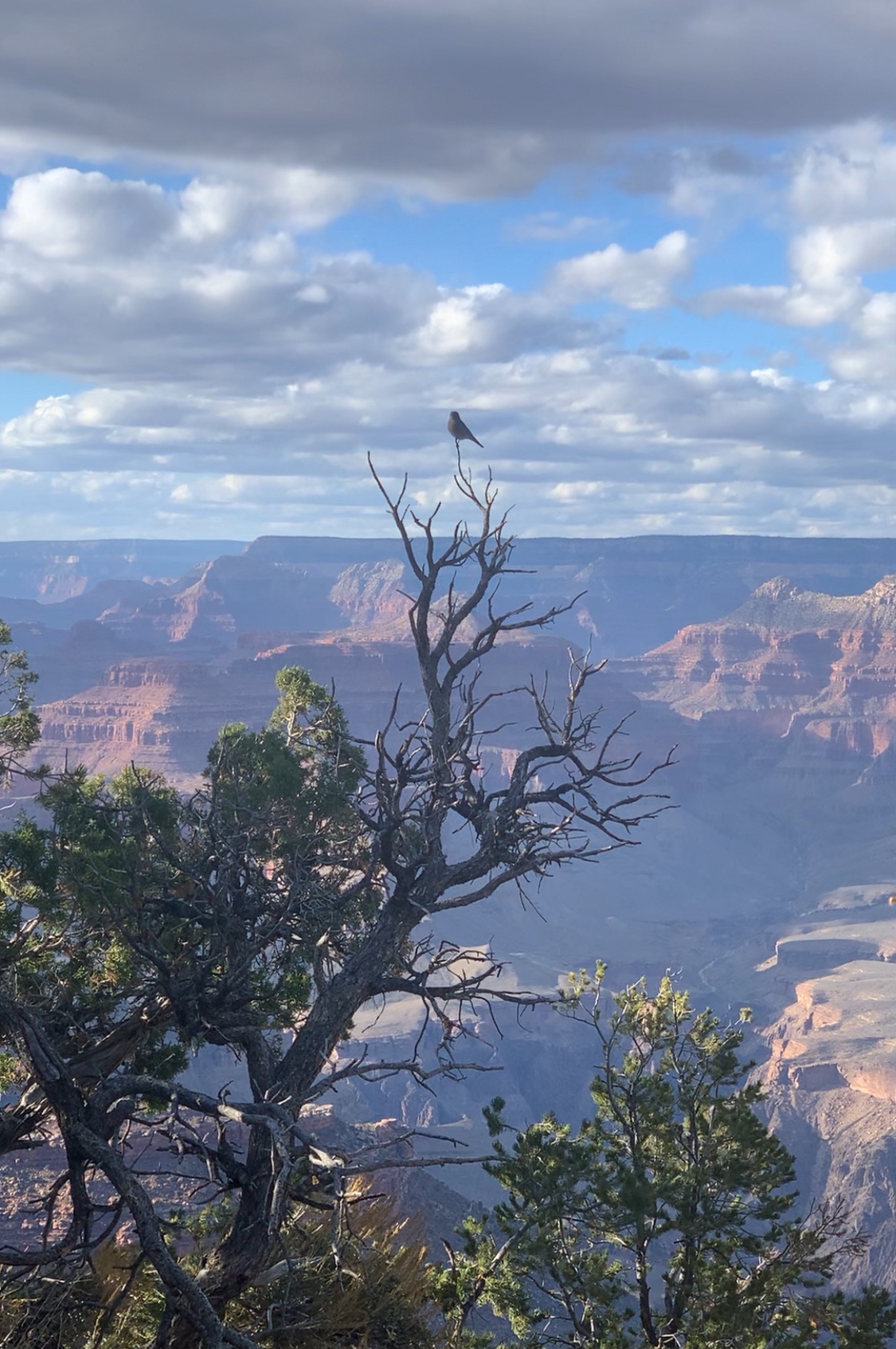
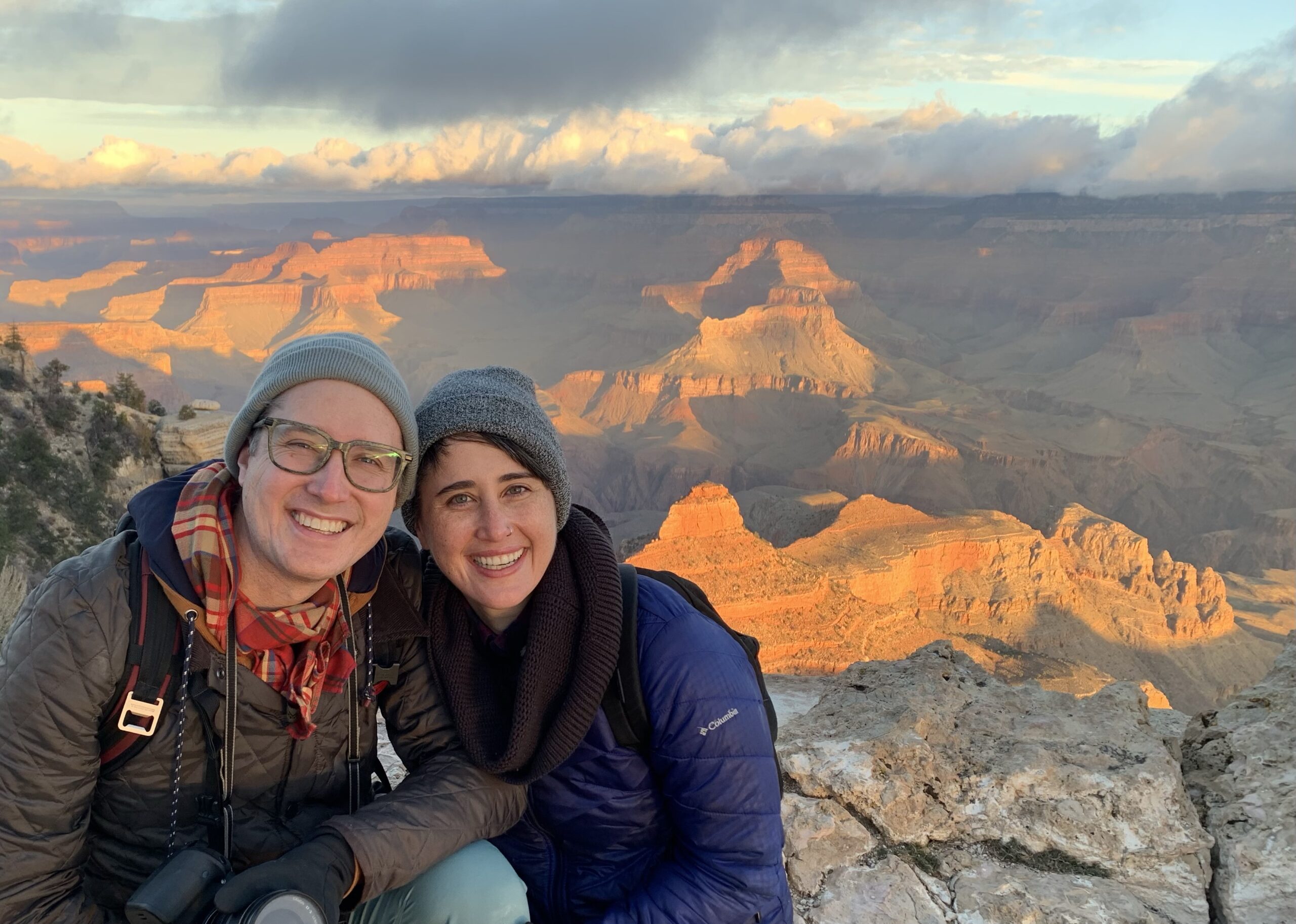
I became a fan of actor and writer Jo Firestone because of her role on someone else’s perfect television show, and when Kat made me watch her documentary Good Timing I became… uh, even more of a fan! Also, last month Kat and I went to the Grand Canyon. We saw this bird.

A bird perched on top of a tree in front of a vista.

We also got up early to see the sunrise and looked sleepy, which was accurate.

Brendan on the left, Kat in the middle, Grand Canyon sunrise on the right.

But to the point of this entry, on the drive to and from the canyon, we listened to almost all of an audiobook, and specifically an audiobook written and read by Jo Firestone. It’s called Murder on Sex Island and it lives up to its title. Also, it’s free to listen to! You can just put it in your podcast app and get the whole thing right now! And then you should pay for a copy also, because it is very good.

In news about books I have not read, but have purchased nonetheless, my longtime and dear friend Holly has her debut novel coming out next spring! It is called The Husbands and I am really excited to obtain and review it. It will be a positive review, so don’t expect me to be objective or anything, but it will be an accurate review too. Accuracy is the surprise emergent theme of this blog post.

In praise of the starship ceiling

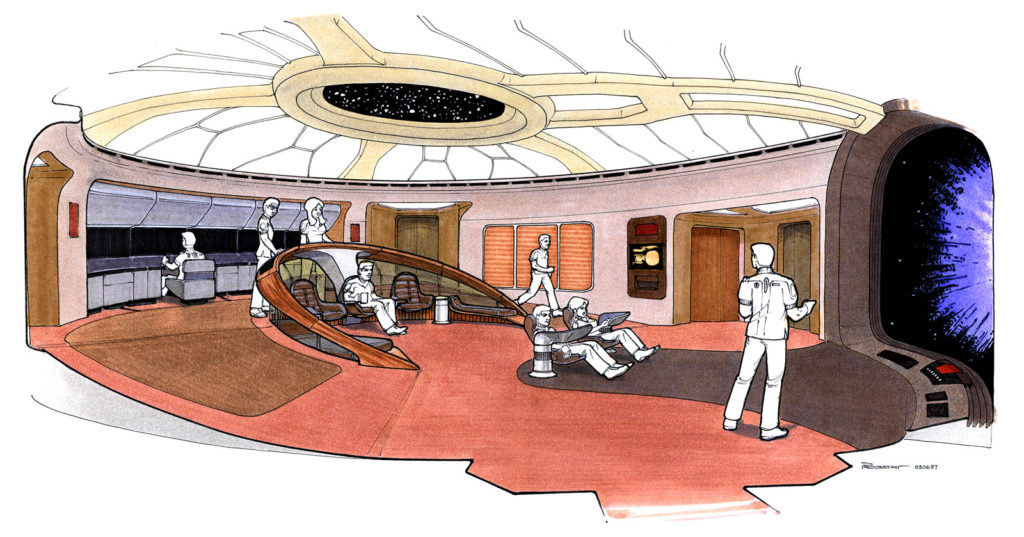
The ceiling of the bridge on the Enterprise 1701-D has not, I feel, had sufficient love bestowed upon it. I am very fond of all the purplish-gray, padded-upholstery, conference-hotel interior design elements of TNG, but their relationship with the progress of aesthetic trends in this century has not been entirely amicable or graceful. But the ceiling I’m talking about doesn’t seem dated or even retro, perhaps because it started as retro: I’m no expert, but to me this design reads as pretty much straight Art Nouveau.

Perspective from the view screen of the Enterprise-D bridge

That’s actually from the rebuild they did for Generations (1994), but it’s the best view I can find from an actual photo. Most of what shows up in image searches now is from fan CGI recreations, but I think the quality of light and material you can see there are an important part of what I’m talking about. It’s of a piece with the rest of the set, but it also looks like something set apart. Here’s a partial perspective from an actual episode.

Side view of the rear portion of the Enterprise-D bridge.

I noticed this angle while watching “Descent” with Kat, whose enjoyment of TNG is mild and reserved largely for the characters of Lore and Hugh. It was the first time I’d realized that the center of the ceiling is actually a porthole with stars in it. There’s a helpful writeup about the origins of the design on Forgotten Trek, but it focuses more on the production history than on concept artist Andrew Probert’s thought process.

Charming marker-art concept sketch for the bridge

It doesn’t address this either, but I suspect that the production function of the ceiling as a stage light was pretty helpful. While it looks like at least in the first season, they did set up lights for each individual shot the way one normally does on a soundstage, the show’s primary set also had a built-in hemispherical softbox! The crew could bounce flattering light on multiple sides of an actor’s face without having to do anything special or worry about lamp stands getting in the shot. Meanwhile, the science station alcoves in the back are shielded from that soft light by the overhang and can be lit by monitors, from underneath, for increased drama whenever Geordi tells the captain that teching the tech tech is worth a shot.

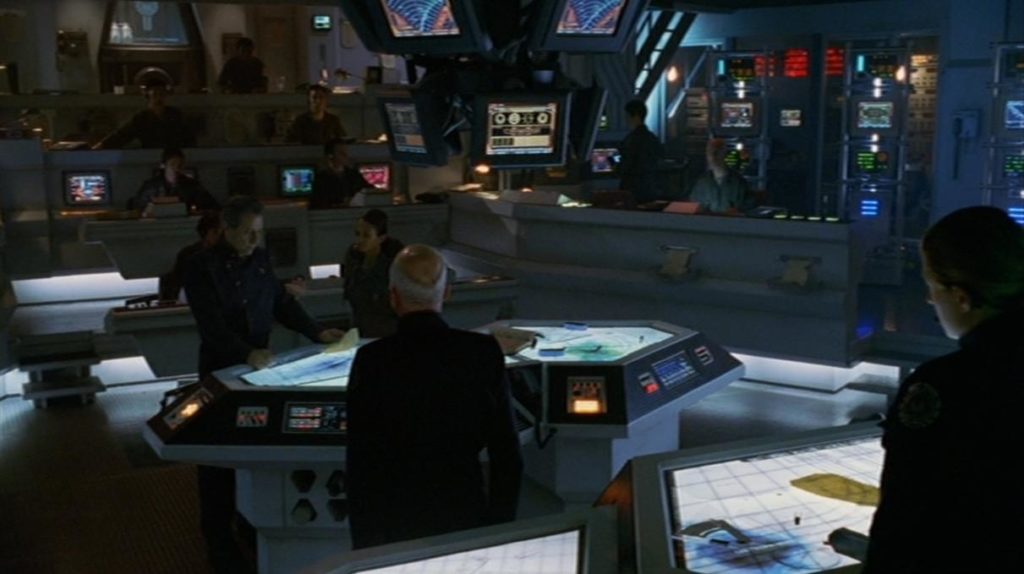
I really wonder if Ron Moore was thinking about the soft light of that design, two shows later, when they came up with the layout of the Battlestar Galactica CIC.

I say this with love: it is an inferior design, at least in terms of pure spatial reference. I watched every single episode and webisode of BSG, and I never had any idea what the horizontal axes of this room were supposed to be, or what most of the people on screen were doing. The nice thing about having all the chairs turned in the same direction as Picard when he points at his big tv-windshield and says “go” is that, as an audience member, you don’t have to guess whether that’s the front of the spaceship. Sure, maybe it makes military sense that the CIC would be buried in the deepest and most armored part of a battlestar, rather than having a big round window on top of it. But in effect it often felt more like they were sitting around somewhere underground, not charging into the fray or leaping through the fracking galaxy.

As pieces of functional stage go, though, the CIC poetically inverts the bridge in a way that works well. Its ceiling is a pit of darkness; almost every light on set faces upward or bounces off the floor, casting faces into shadow. Maximum drama at all times! In Star Trek, the captain can always look around and see the face of someone who’s going to give him a suggestion for the problem at hand. But in BSG, everyone keeps their eyes down, because they all know none of their answers are going to be good ones.

This is a content warning.

Last year I wrote about an Ars Technica article that appealed to technical experts for help perfecting every last possible system involved in emulating the Super Nintendo. I think it’s clear from that post that I felt a certain envy of the sense of purpose conveyed by its author, byuu, who also went by Near and by Dave. But I remember thinking, too, that their saying “I’m getting older, and I won’t be around forever” was a little surprising to read from someone deeply invested in a video game system from the 1990s. I’m getting older too, but not quite to the point of hurrying to put a capstone on my legacy yet.

Near was indeed not much older than me, but they meant what they said. This week, after years of organized and escalating cruelty directed at them and at their loved ones, they took their own life.

The purpose of a system is what it does. The purpose of the internet is in part to publish and distribute a unique and valuable life’s work. The purpose of the internet is also, in part, to torture people until they die. Sometimes it works.

Everybody I talked to in the course of reporting this story said some variation on “I hope Isabel is okay.” And she is. Sort of. In the months I’ve spent emailing Isabel Fall, she’s revealed herself to be witty and thoughtful and sardonic and wounded and angry and maybe a little paranoid. But who wouldn’t be all of those things? Yet I’m emailing with a ghost who exists only in this one email chain. The person who might have been Isabel has given up on actually building a life and career as Isabel Fall. And that is a kind of death.

Emily VanDerWerff, whose writing I have long enjoyed, has a piece of extraordinary nuance, precision and grace there. I’m grateful that Kat nudged me to read it. If you haven’t read it already, I would take it as a personal favor if you do.

Reverse Anniversary

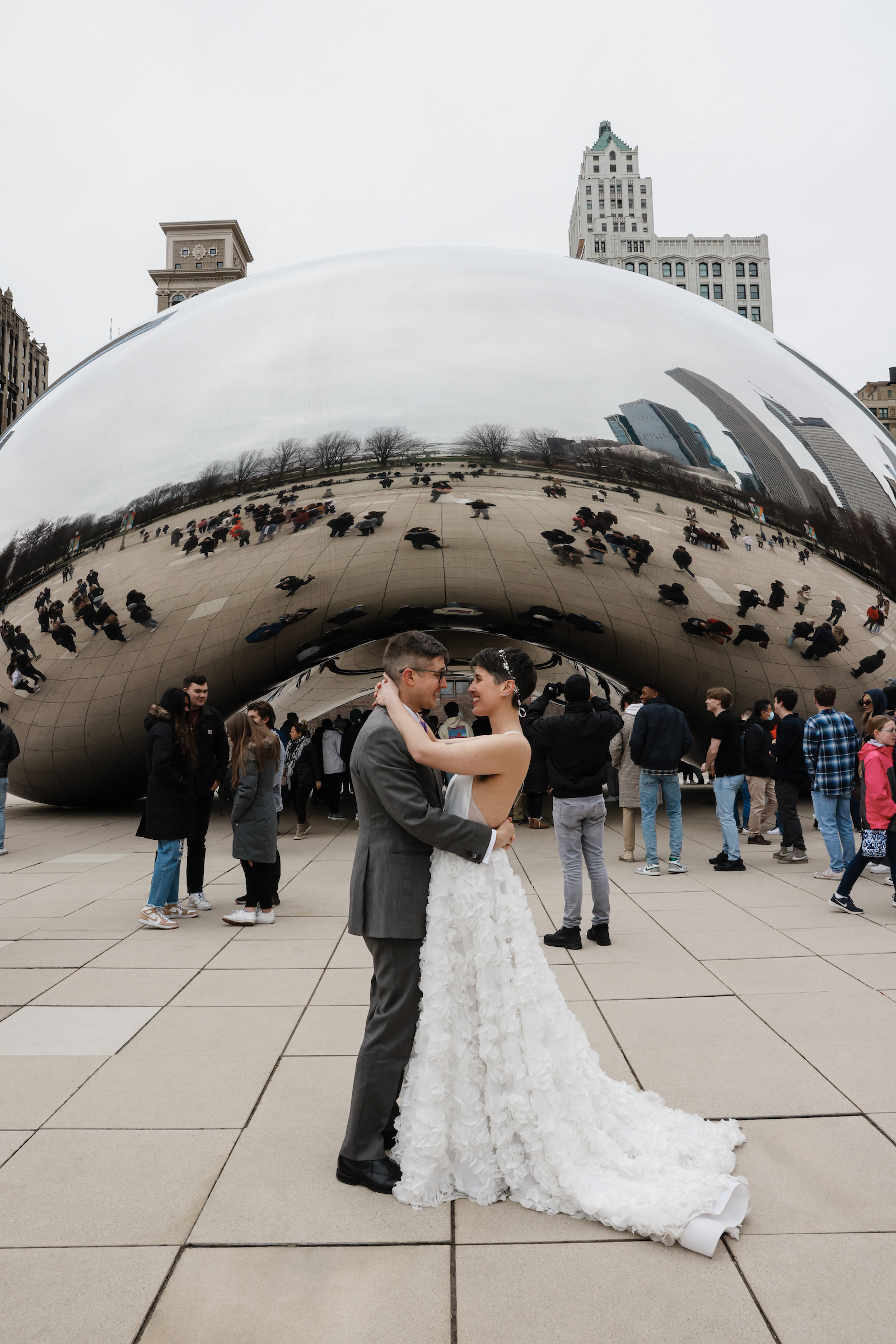
As of yesterday we were supposed to be married.

I didn’t even want to wait that long, really. After I proposed, Kat pointed out that a standard year of engagement and planning would put us right back in a Chicago winter, which offers logistical difficulties; I said, okay then, why can’t we just go ahead and get married in the fall? But Kat’s season is really summer. We settled on what is, often though not always, the first nice weekend in spring. We knew it was a gamble on the weather, but we didn’t know quite what else the stakes comprised.

It’s very beautiful outside right now. That die came up lucky. But late in the summer of 2020, with no coherent leadership and no clear timeline for when it might be safe to see our loved ones again, we took a deep breath and told our ceremony venue, our reception venue, and our caterer to kick us down the road to March 2022 instead.

There are few things I have ever wanted as much and as long as I have wanted to be married to Kat. I really hope this year won’t be quite as long as the past one, but it won’t be short. I’ll be forty before my wedding instead of after. It’s an arbitrary number, but it still brings home, to me, the cost of a lost year of one’s life.

Last night we got dressed up for a delivery dinner of fancy mushroom buns and congee, and Kat brought me a bouquet of flowers, surprising me the way she does every single time. Today we sat in the sun six feet from two of our closest Chicago friends and raised plastic cups of champagne. I still don’t feel quite to the point where I can even start grieving our losses. But oh, God, despite our shaggy hair and hollow eyes and aching hearts, I feel the sheer luck by which we have stayed well and safe this long as a weight upon me too.

Love Me

Here are some movies we watched in August

There was a span of about six hours after I posted my most recent entry where I used “former” in place of “latter” before I realized and edited it, and I’m still bothered about it. If you thought I was saying something weirder than usual last time, let’s just assume that was why.

  • The Man from Hong Kong (1975): Streamed via 36 Cinema with live commentary from returning champion Dan Halsted and this movie’s director, Brian Trenchard-Smith, who was considerably the more verbose of the two. Sammo Hung did the fight coordination (and appears as a character getting the crap kicked out of him by police) for this movie, its lead was a veteran Hong Kong superstar, and Trenchard-Smith clearly did his homework studying the Shaw Brothers canon. The fundamentals are all there: locked-down camera, wide angle to let the audience read the fights, respect for screen direction and the 180-degree rule, long shots with a tacit rhythm of impact, serious and committed stunt performances… but it doesn’t work. I can’t quite say why! Maybe because we’re not given much motivation for the action, and because the “hero” never pets a figurative dog. Or maybe there’s just an emergent magic in the mechanics of a good martial arts movie that is easier to notice when it’s missing than to parse out when it whisks you along.

    It is interesting that this Australian production from 45 years ago gave the Chinese star in a majority-white cast the kind of violent and sexual agency usually reserved for white characters like James Bond. But I don’t like most James Bond movies either.

  • My Lucky Stars (1985): This was another 36 Cinema stream, and it was even more disappointing! I was pretty excited that this one had not only Sammo Hung but Jackie Frickin Chan, and that it featured commentator Scott Adkins, a stuntman turned filmmaker who action nerds love to nerd out about for sparking a direct-to-video action movie renaissance. Adkins clearly does know his stuff, and I liked the details of stunt work he pointed out; his fellow commentator Frank Djeng filled in a lot of cultural context for the movie, its origins, and its place in the stars’ careers, which was a good balance.

    Unfortunately, the movie sucks, with all the stunts (and the entirety of Chan’s role) confined the intro and ending, while it spends the long middle section on broad comedy that features a lot of groping. Also, Adkins dropped an r-word joke which took my opinion of him right through the floor, and moderator Mustafa Shaikh failed to address it. Djeng was the only one who came off well.

  • The Holiday (2006): A feature film in which noted actor Jack Black portrays the human manifestation of someone typing the word “*smile*” into an email.
  • If Beale Street Could Talk (2018): I love James Baldwin, and I love Barry Jenkins, and it still took me two years to work up the courage to watch this.

  • Moonlight (2016) and Medicine for Melancholy (2008), for all that they put me through many feelings, seemed to me to feel gently toward the viewer. The dreamlike colors and structures and the occasional ellipsis offered me just enough aesthetic distance to take in the sweetness of their stories along with the pain. If Beale Street Could Talk is if anything more elliptic, more dreamlike, but I couldn’t find any emotional distance from its story at all! Jenkins situates some of the crueler events from the book (which include multiple sexual assaults and a suicide) behind verbal and facial implication, which I think earned him criticism because others read that as excising them. But the choice didn’t make them land any softer on me. This movie made me feel like pine under a chisel.

    And still, there’s nothing harsh about it. Jenkins makes beautiful people look halfway deific, and the skill with color, saturation and tone that you’d expect from him is all here. All the physical violence is kept offscreen–though there is one particular moment of violence deferred, when frustration leads Stephan James to smash a pack of hamburger against an alley wall, that feels like you could derive a full semester’s worth of film theory from it. The score by Nicholas Britell is tender, and has some of my favorite horns I’ve ever heard. It’s prominent, which I don’t always like, but in this case it’s almost used as a reassurance. Every time the narrative covers some cruelty and then jumps in time to a softer moment, the rising main melody is there to pick you up with it.

    My theater professor Tony used to talk about the temperatures of different media, in terms of the emotional intensity they readily evoke in an audience; a novel is a cool medium, television and film are warmer (and—he liked to say—live performance is the hottest of all). This is one of the Baldwin books I haven’t read yet, and he has a great sense of play in his language even when he’s driving things home, which you can hear in the lines excerpted as Kiki Layne’s voiceover narration. All of that is to say I don’t know if reading the original work is as hard-hammering, or hammers in the same way. I think it’s possible that Jenkins got this story boarded, took its temperature, and then worked on dialing it down a few degrees—implicating, reassuring, limning with gold. But in 2020, with the world on fire, it seared me anyway.

  • Weathering with You (2019): Whiiiiich brings us to this movie about youth, pain, and climate change. It is also fifth in a series of “bittersweet, moving anime movies about adolescent feelings as crystallized through a speculative fiction device which I watched with Kat and her friends Courtney and Kailey, which activity has delivered some of my favorite moments in the last few months.” Sort of a sequel to Your Name. (2016), in the same way that 2046 (2004) is considered a sequel to In the Mood for Love (2000), in that I-get-it-but-my-personal-canon-reserves-final-judgment.

    Your Name was striking for how well-balanced and commingled its bittersweetness was: both sides of that emotion arose from the same events. This movie has a bitter plot, and a sweet plot, and they are entwined, but that is different. There’s an anger running through it, as in “The Ones Who Walk Away From Omelas,” that demands its own space. I took Your Name. right on the chin, but this one goes for the gut.

    Quality animation takes so much time and labor that when I think about cartoons that enact their story beats in the first way that comes to mind—or the second, or third—I don’t get it. When the rate of production is measured in days per second, not books per year, why would a writer take shortcuts? Why resort to cliche—a term that now makes me envision a pre-set line of type—when people are going to take your plan and turn it into calligraphy? One of the tendencies of Makoto Shinkai’s work that I respect most, so far, is that he likes to set you up for a plot point, and deliver it—but take a fourth route to get there, or skip right by it to the consequence and let you fill in the missing frames. It demonstrates trust in the audience without resorting to the oblique or cryptic.

    I know (now) that Shinkai has been compared to Hayao Miyazaki, and has demurred about it, because he writes and directs popular animated features about young people with environmental messaging. That is a pretty small demographic to belong to, but their movies don’t look or sound very similar at all: they’re as different as they are alike on the surface. The directorial trait where they overlap most, to me, is that neither lingers on the downbeat of resolution that has already landed. They know how much each frame of the work costs, and when they need to stay with an emotion long enough for it to register, they tend to cut it close. They don’t seem to feel they have the luxury of grinding out their points; they just aim to pierce you.

  • A Goofy Movie (1995): I think Pocahontas (1995)—oh boy, speaking of cartoon scripts that resort to the trite—was the last Disney animated movie I saw in a theater until Frozen (2013). I never watched A Goofy Movie, because I never watched the Goof Troop TV series, and because of that in turn I didn’t remember that it actually came out two months before Pocahontas. This is a silly but sweet story about fathers and sons learning to listen to each other and express their love aloud, and that much holds up a lot better than…. you know, romanticized colonial violence. (Whether Max and Goofy are better read as Black characters or as minstrels is a debate I don’t think I can meaningfully contribute to.)

  • I was surprised that the studio was able to put out two theatrical animated features in the same year at all, though, on top of their direct-to-video schedule. It turns out this one was kind of an experiment—while the main Disney studio in Burbank was focused on Pocahontas, they put a crew of a dozen Burbank storyboard and key animators on this one, and outsourced the rest of the work to subsidiary studios in Paris, Sydney and Toronto. Pocahontas, which I think stands up much better visually, had a $55 million budget; A Goofy Movie was made for $36 million, which it just barely recouped in box office. International exchange rates, cheap voice actors, and ten minutes’ difference in runtime can account for some of that budget gap, but the rest of it makes for a very visible absence. One scene here will have stylized water animation, another will have character shading, but neither gets both. Remote work was a lot harder in 1994! The final product is a pretty valiant paste job, but it doesn’t cover the seams. As Shinkai and Miyazaki would likely point out, the cost-per-frame of solid technical animation seems resistant to compression, which reinforces my previously stated admiration for lower-budget work like The Girl Who Leapt Through Time (2006).

    I wonder how many times Disney tried this kind of outsourcing model for theatrical features between the late 90s and their return to form for The Princess and the Frog (2009). That line of thinking made me poke around again in the interest of digging up buried documentary The Sweatbox (2002), and just as of July, it seems to have reappeared on youtube! I’ll see if I can review that before it gets taken down again.