Category: Joan

Won’t you be mine

Block parties are popular in Chicago’s summer; the city will loan you a free bounce house for yours if you ask. But the block where Kat and I live had not held such a party, not that anyone can remember, up until this past September. That was when our neighbors decided to change things for the better. The party we organized together was late in the season, and it drizzled a bit. But we put some garbage bags on the PA speakers and took shelter in the great fortune of our street’s tree canopy. The trees are our neighbors too. We took care of each other, and we went on.

That block party will be a good memory for a long time. It was a great success, and we met almost everyone who lives within a stone’s throw of us, and some new friends who don’t. I took photos on my little thermal-paper toy camera and handed the printouts out to kids who were playing together. We had an excess of good food and almost enough good dogs. And now when I walk our own good dog, and see someone from across the street, I can put a name to a face, and we can trade smiles that mean something more than politeness.

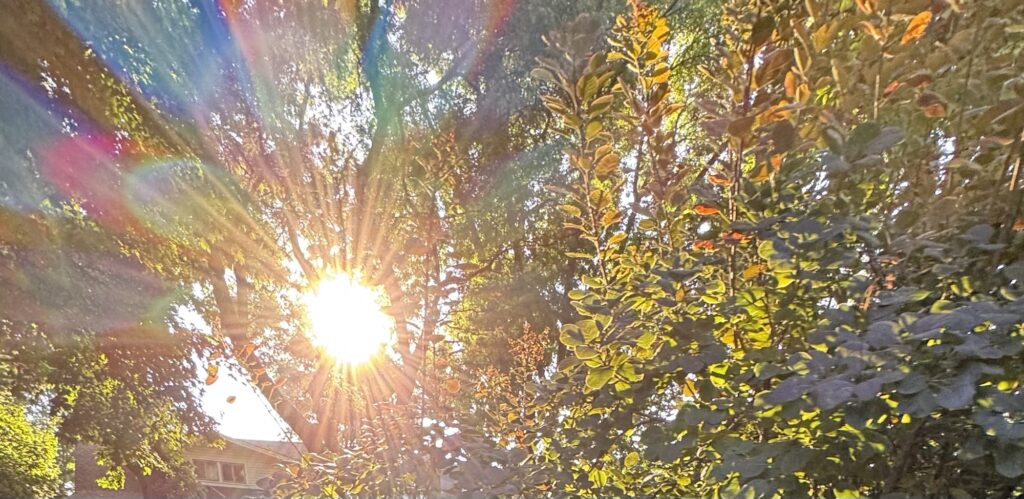
A sundog from my neighborhood, through trees, with identifying information cropped. I hope.

Less than three weeks later, masked federal agents abducted the first of their confirmed victims from the streets of Rogers Park. My mother was here visiting us. Some of my neighbors who were disappeared by the secret police were leaving the same church she attended. Some of them were trying to take their children to or from the nearby elementary school.

There has been excellent journalism showing that the kinds of people targeted in this way lacked arrest records, and had their documents, and were crucial parts of their communities. The fucking George W. Bush Center published an article this very year about how immigration benefits us all, but the truth is that people were targeted for their appearance, not their immigration status. And also: even if every one of the disappeared were an undocumented and solitary migrant with a history of arrests who took more from public resources than they returned, they would still be my neighbors. Evil committed against them is evil done to me and mine.

We wear plastic whistles when we go for walks these days. We got them from the bright warm queer coffee shop, or the physical therapist’s office, or the corner store, or the rally, or the evening crammed together in a restaurant. When we look across the street and see matching bright nylon strings looped around each other’s necks, we smile and nod, and it means much more than politeness. The smiles are tight, but they are sincere. Some say the moment of most acute terror here may have passed with the first touch of winter, at least for those of us not already detained or separated. I remain wary with pain in my heart. I have neighbors in Asheville, and Charlotte, and Baltimore, and Portland too.

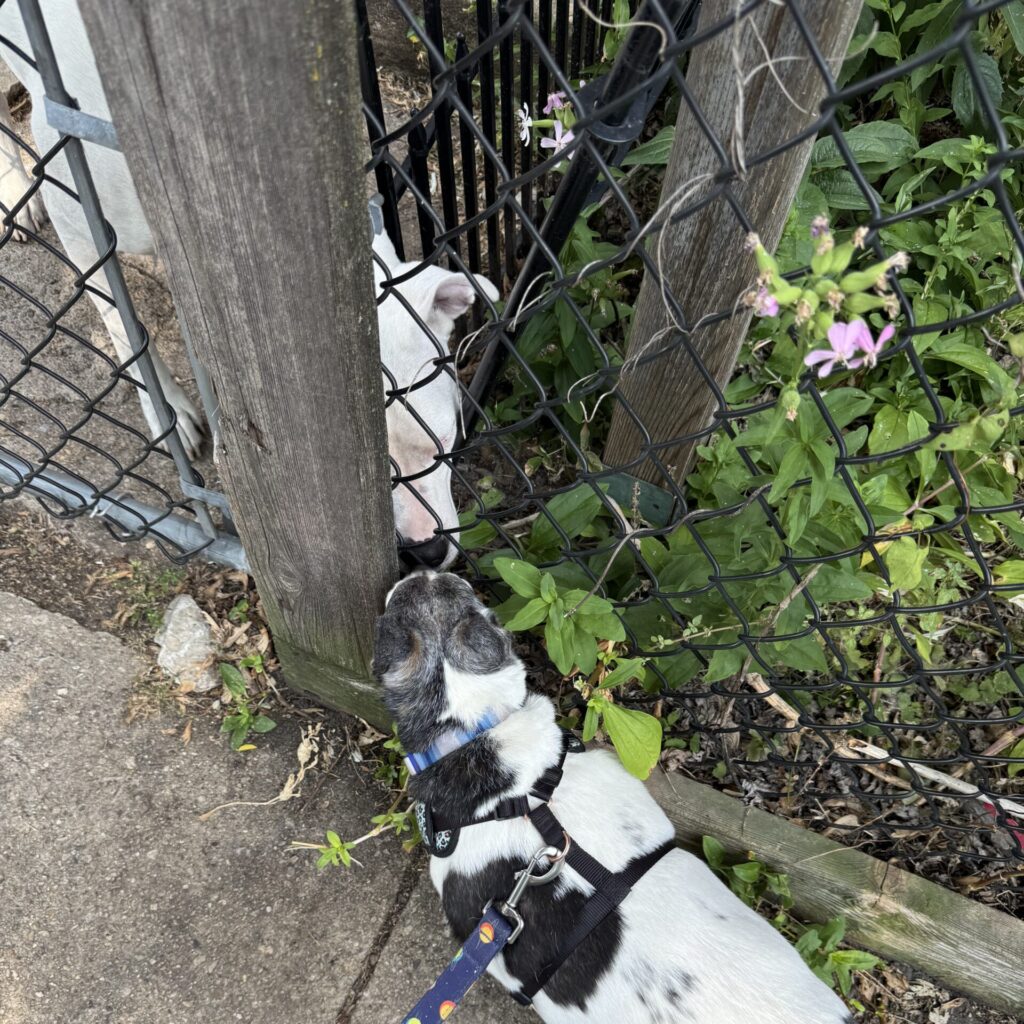
My dog and another dog touching noses through a chain-link fence

I moved a lot, when I lived in Portland: seven times in eleven years. I had the great fortune of many friends, but I didn’t get to know many of my neighbors. I often wanted to connect with them, but I was lacking in tools or time to do so, and then before long I’d be on to a different part of town. Now I live in the house I hope to keep until I can no longer climb its steps. I want the same roots the trees that line our street have grown. Yesterday I took care of an anxious dog from next door while his people were away, and when they came home they gave us a tub of beans and rice that I’m thinking of with hunger right now.

I lived decades with the terrible privilege of innocence to the way life proceeds under military enforcement. But proceed it does, for most of us. We trade favors and drink coffee. We hug each other tight at parties. We do the laundry and we watch the crosswalks. We keep our eyes up and our ears open. And when we hear the danger coming, we run toward it, not away.

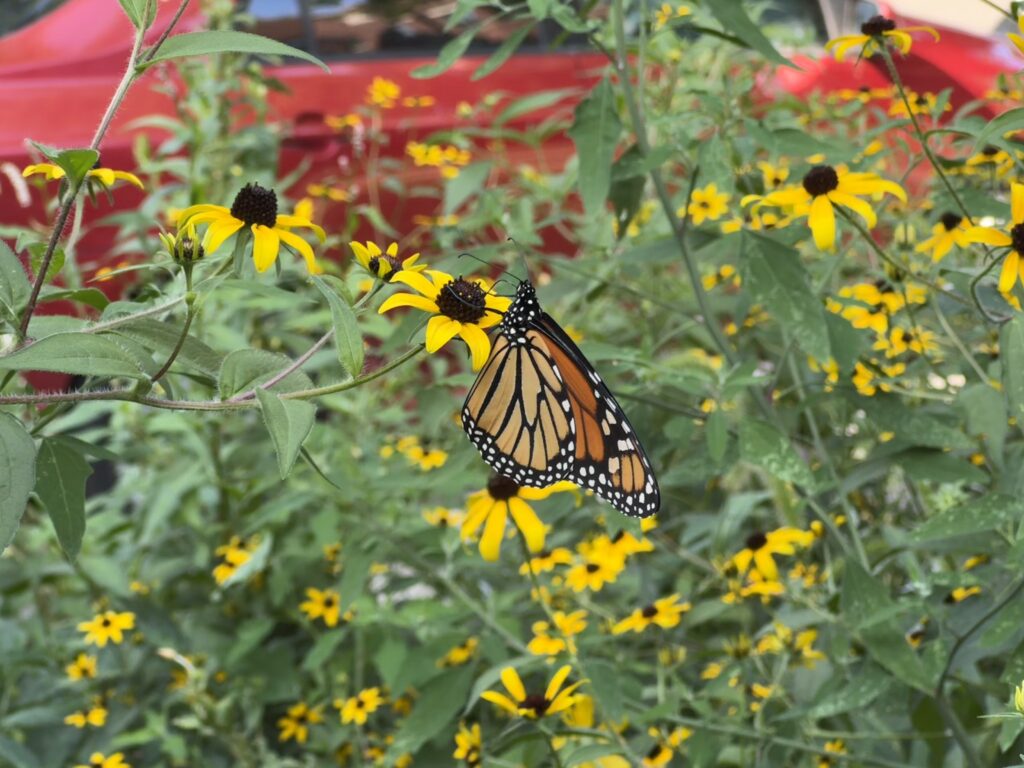
A monarch butterfly perched on a sunflower in our neighborhood

The long, deep myth of the city as center and source of violence is so strange to me. Neighborhoods, even those where heat leads to suffering among missing trees, are places where people cooperate. Cities are nothing if not neighborhoods cooperating with each other. All the many benefits they offer are born of the choice to get along and share. I grew up in suburbs, a kind of place structured by a desire to be apart from other people. I mean no unkindness to my suburban loved ones when I make this generalization. But suburbs were built because people wanted to move away; cities like Chicago, for all their flaws and failures, are places people move to. The choice of a city is the choice to be close to people you don’t yet know.

On the weekend before Mom came to visit our home, Kat and I took the city light rail line to Chicago’s train station, and thereby went to Minneapolis to visit friends we have dearly missed. On the train back home I read through all of Sophie’s beautiful new book Kin. If you click on only one link from this blog post, it should be that one. I wish I could just read it aloud to all my loved ones, even the parts where Kat and I are mentioned. The book is so moving, and by that I mean I felt it move me to action. The subtitle of Kin is “the future of family.” It is a future I believe in, and one I am trying in my small way to make our present too.

When Mom saw an article about how her fellow parishioners here had been abducted, she sent the link to our relatives, and she wrote: “We took Communion together. They are my family.” It made my chest ache, and it made me so grateful that my family of origin has a mother who sees things clearly.

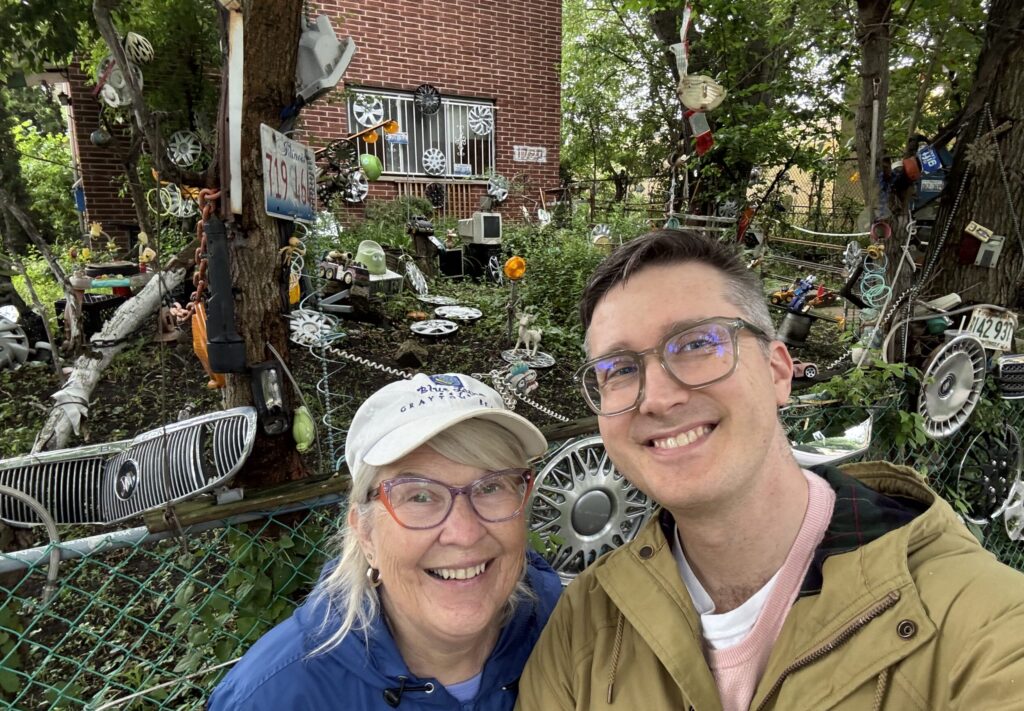
Mom and myself at a neighborhood landmark

I started writing this post because I wanted you, reading it, to take it as a sign to reach out to people where you live. It’s the only way to make strangers into neighbors and neighbors into friends. It is work I am still doing, and I have found it worth the effort many times over. I hope your neighbors don’t suck; I know some do. But even then there are more people in the next building down, and if you learn each other’s names, you can bring them cookies and trade numbers if you want to learn to like each other more.

We will only get through the worst together with those around us. Caring for each other is what makes us human, in a biological sense: prosocial behavior is the primary survival trait of our species. But it’s also the trait that brings us good dogs and pot luck and bounce houses on summer streets. I called them free bounce houses, but of course the reality is that everyone here pays for each other’s parties, just a little bit. I wish I could choose to pay for kids in bounce houses instead of in cages. I wish I could pay for my neighbors’ meals instead of tear gas. I wish that instead of paying people to set fire to our world, I could choose to keep the people around me warm.

It’s hard enough getting through a Chicago winter. It’s hard enough to feel one’s body aging, and to lose people by way of time and misfortune. It’s hard enough just doing the laundry and watching the crosswalks. It’s hard enough to care for the small and vulnerable in a family while budgeting time and money and effort to maintain oneself. It’s hard enough that work takes more and more from us, that trees and pets and people get sick, that the hours and the days slip from our grasp. It’s hard enough that things fall apart even with effort to keep them together.

Nobody needs cruelty and evil to make things harder on all of us, not even those who enact it. What we need is each other. We go on.

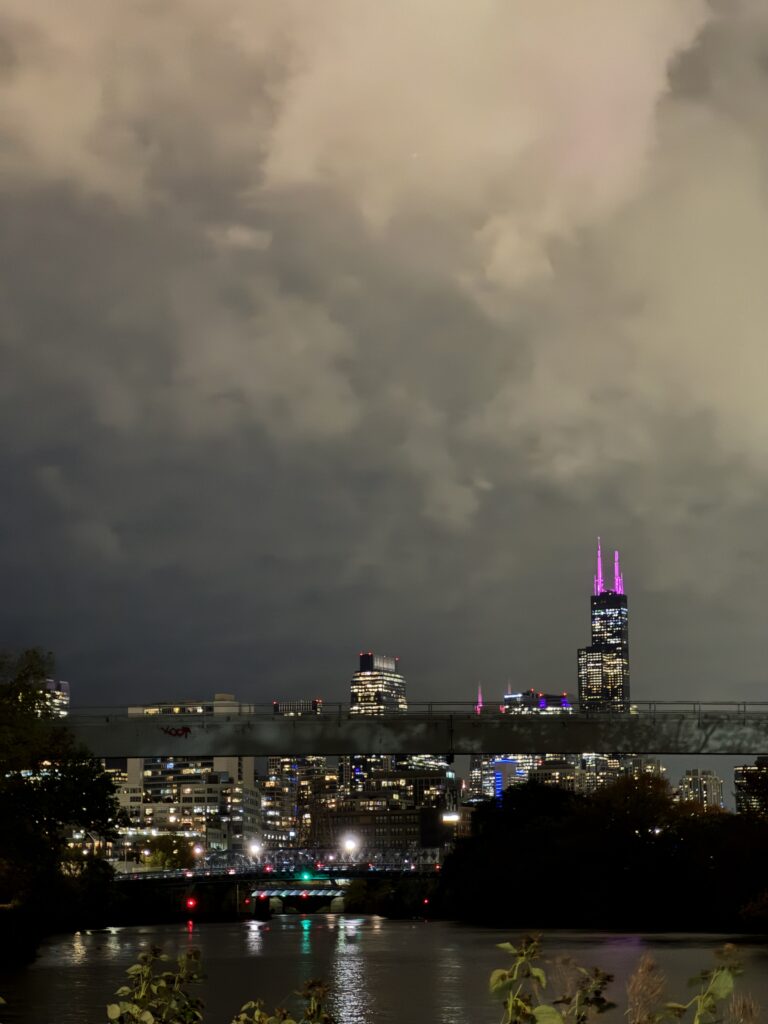
The Chicago skyline on a cloudy night, seen from the river

Composition

Nineteen years ago my friends got together, led by Maria (hi Maria), and chipped in to buy me my first single-lens reflex camera: a Canon Digital Rebel.
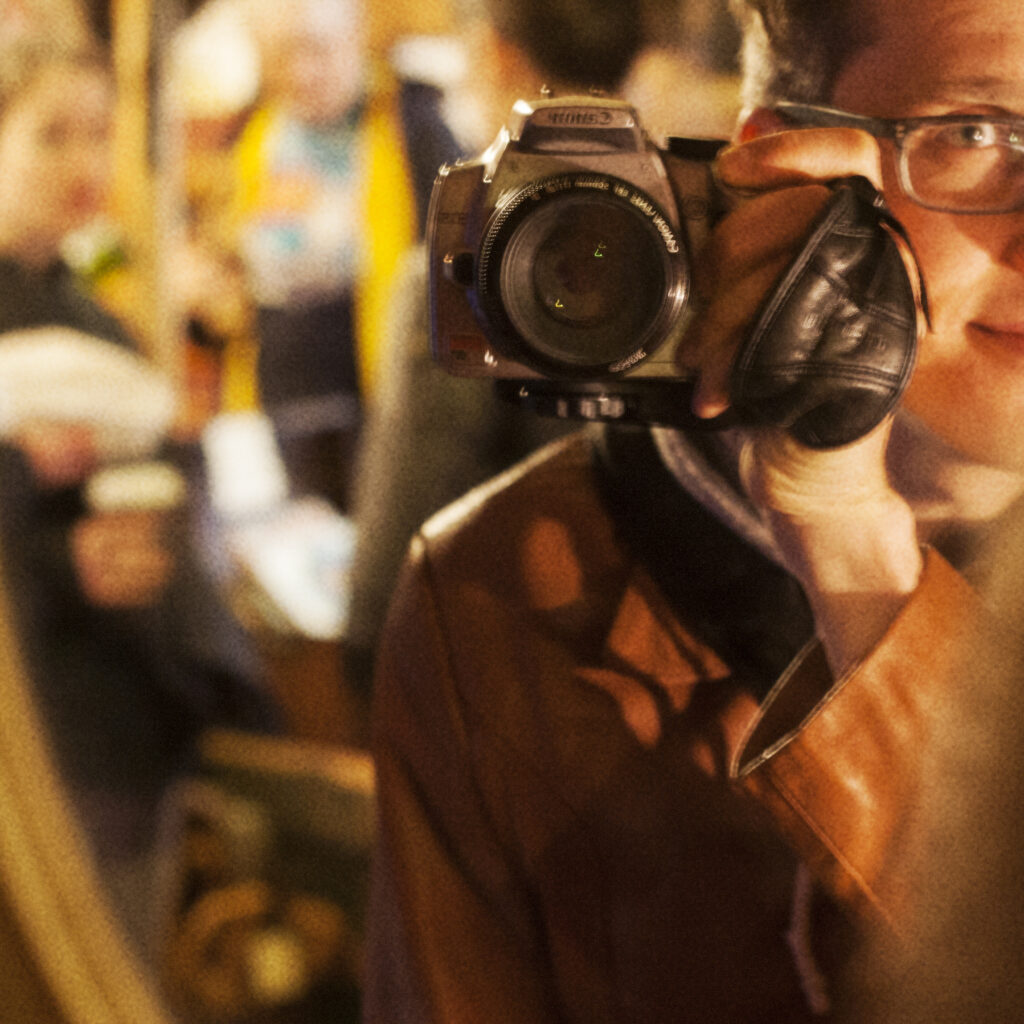
Myself in a mirror, at a plant shop in San Francisco, early 2016.I’d played with cameras since I was a kid, but until that year, I never had a solid understanding of what to do with them. Coming to that understanding took many years of developing taste for what I liked in pictures, and then more time studying the techniques involved, but mostly what I needed was a good way to experiment. My goofy webcam selfies aside, the time between taking a photo and looking at it had always been measured in weeks and dollars. But things changed once I could just snap, and chimp, and gauge what I had wanted against what I got. I needed feedback to learn.
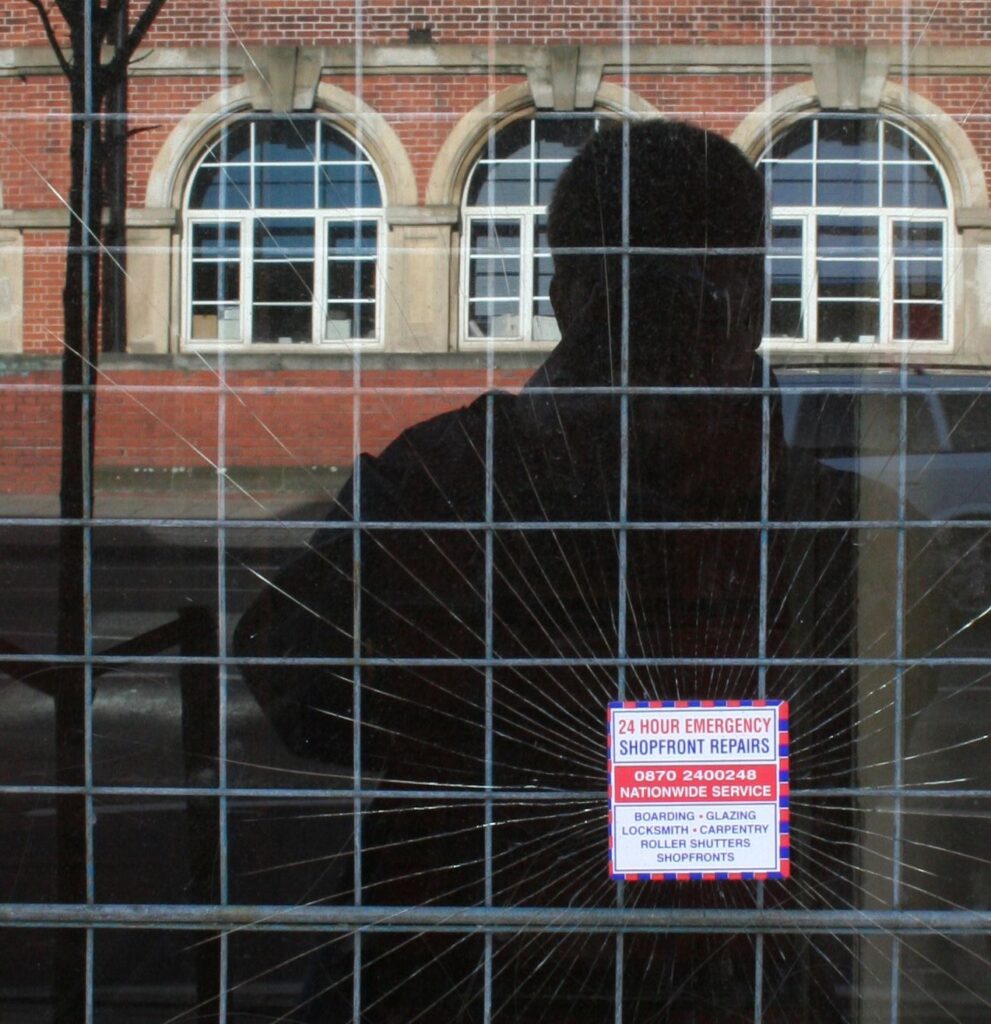
Self-portrait in shadow, reflected in shattered glass, somewhere on a Tube Walk in London.I’ve written about this in the past and I don’t want to keep retelling the same stories. But before I had a camera in my hand, I had no patience for the act of looking around me. It was only learning how to frame, evaluate light, and search for details to isolate that unlocked the pleasure of observation. After a while, I didn’t even need the camera to enjoy it! And now I prefer to shoot on film anyway, so the quick feedback loop is long gone. But the process of learning shaped me, and I still hold that shape.
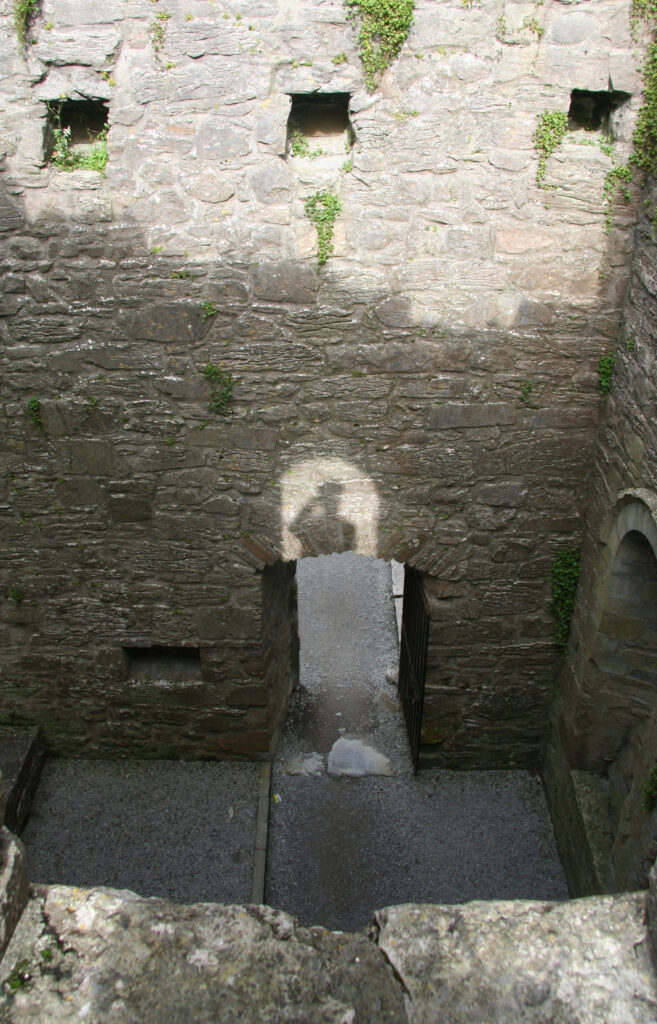
My shadow, on the wall of a castle in Ireland, wearing a silly hat.Photography changed my world by making any moment, anywhere, into something I could interact with. You should email a blogger today.

“It’s quite important to know that you are heard.”

Jenny’s post about metrics (and Lucy’s quotation of it) have been rattling around in my head for months now. In my mind that post links back to something that Avery Alder said on twitter many, many years ago, in response to a wave of scolding directed at allies who purportedly “wanted a cookie” for taking part in social justice activism. I can no longer access the original wording. What I recall is that Avery acknowledged that of course such work is worth doing regardless of reward. And then she added: but so what if I still want a cookie? I like cookies!

Jenny again, deliberately out of context, because it fits other contexts too:

First of all, so? And second of all, right, exactly.
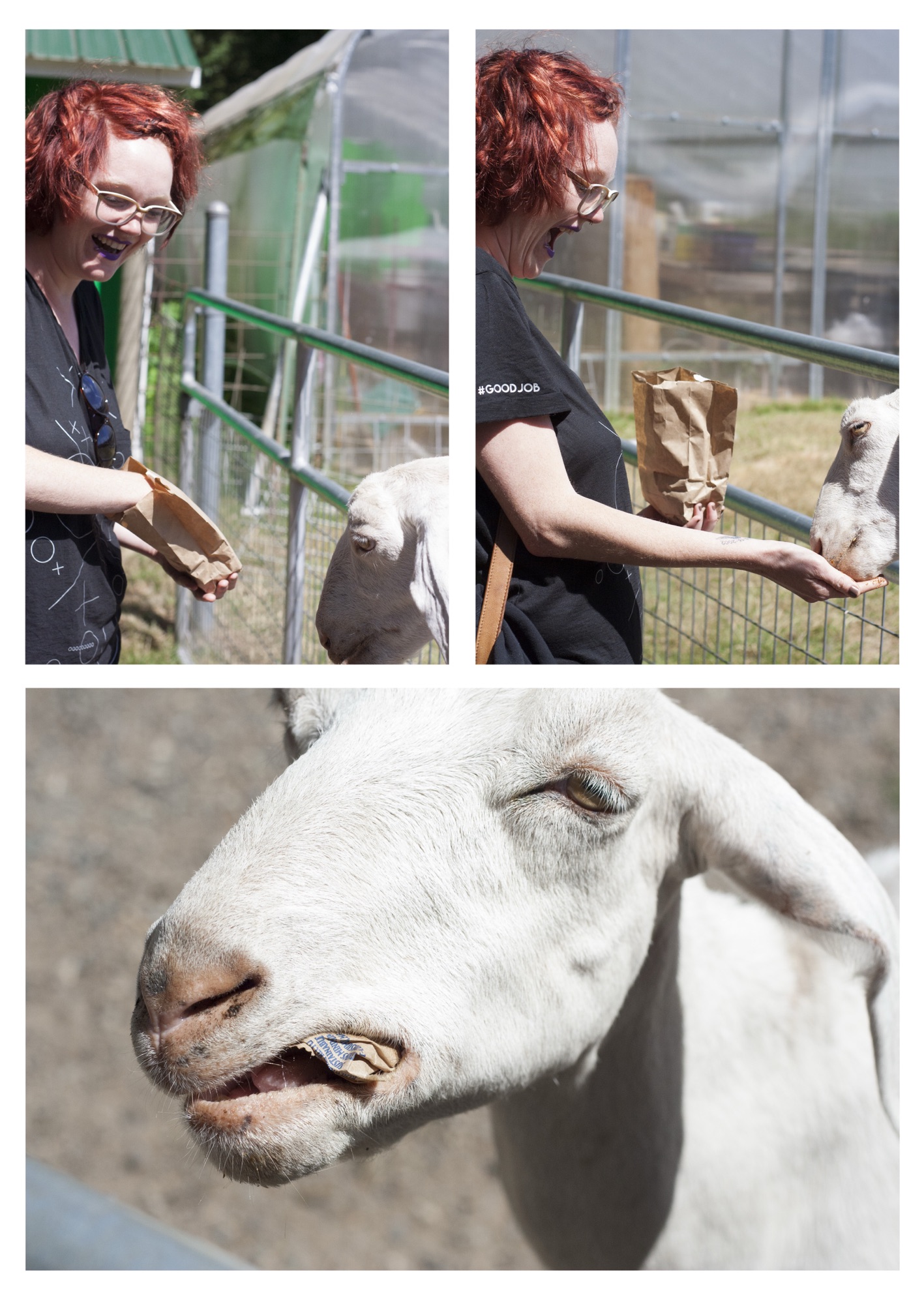
Mads feeding a goat from a bag. The goat ate the bag.

I like cookies too. And I’m a human, a social mammal whose development rests largely on the attention and response of other members of my species. It is important for humans that sometimes someone gives you a cookie. It is important to know that you are heard.

Analytics software offers numbers you can’t trust about visits you can’t see, which is not the same as being heard—in fact I think it might be the opposite. The illusion of attention contorts people into shapes that are not good for them. (I don’t even need to mention any prominent software platforms by name here, do I?)

I don’t use my degree in the dramatic arts for all that much, these days, but I am often grateful for what I learned in completing it. One of the things that Patrick Kagan-Moore said to me, the night before our play debuted, has stuck with me for 25 years. “We rehearse for months,” he said, “so we can try to find the right shape for the performance, and the first time you get a laugh from a crowd—” He snapped his fingers. “—they will train you, like that. You’ll do it the exact same way every show, trying to get that to happen again.”

Live performance is a hot medium, where response arrives quickly: snap, chimp, gauge. Writing online, and off social media, is a cold medium. That’s why the warmth of a good response matters so much.
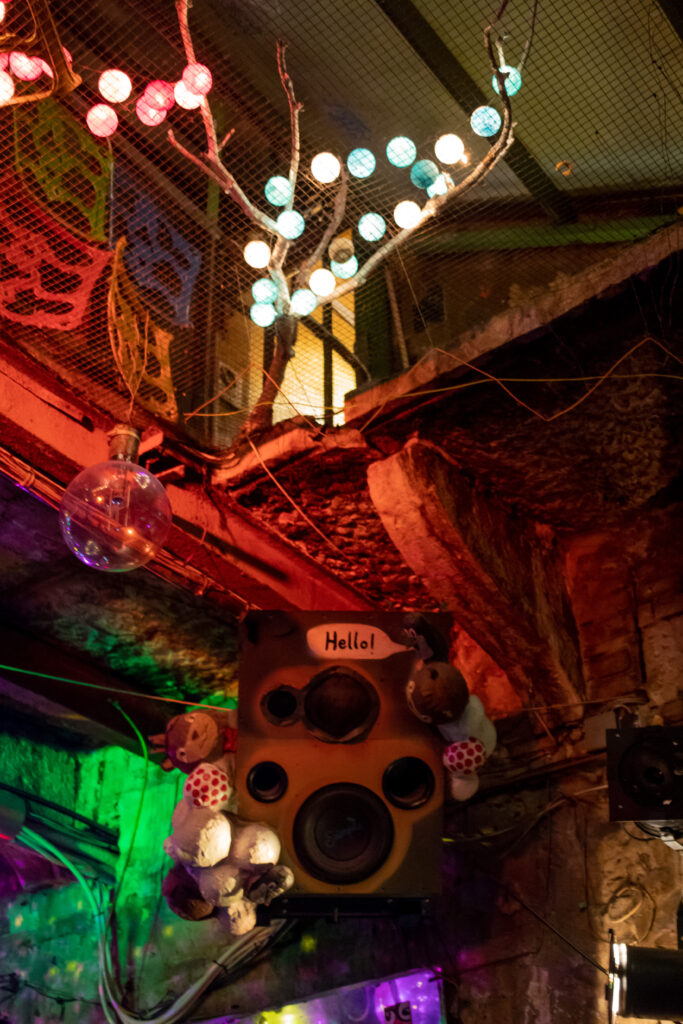
Lighted artwork from the ruin pub at Szimpla Kert, in Budapest, with an old speaker box facing the lens and a speech bubble above it saying

Sometimes I like to reach into my mental pocket and offer up chestnuts—I know I already used one food metaphor, stay with me—which I cannot promise will contain any meat. One such chestnut is that email is the infrastructure of the web. (In my grouchier moments, I say “failure state” instead.)

Infrastructure is what you fall back onto when a superstructure cannot support the load placed upon it. There are a million diagrams of the technical stack that underlies HTTP, and none of them includes a layer called “email.” But it is there, invisible, at the root of every auth request. And as direct communication over the web has been captured by those who do not wish good things for you or me, email remains the fallback there too: a crummy foundation that yet resists collapse.

When the web promised that you could subscribe directly to the words and work of people you found interesting, then broke that promise for extractive purposes, email newsletters sprang up to fit the popular demand to Just See The Goddamn People You Follow In Chronological Order God Dammit. Email is not well fit for this purpose, any more than it is for supporting the rest of the internet. The things you want to savor from your favorite writers get buried among “the to-do list that grows without your consent” (credit to Sumana). But it kind of works. And things that kind of work are what we have, online, these days.
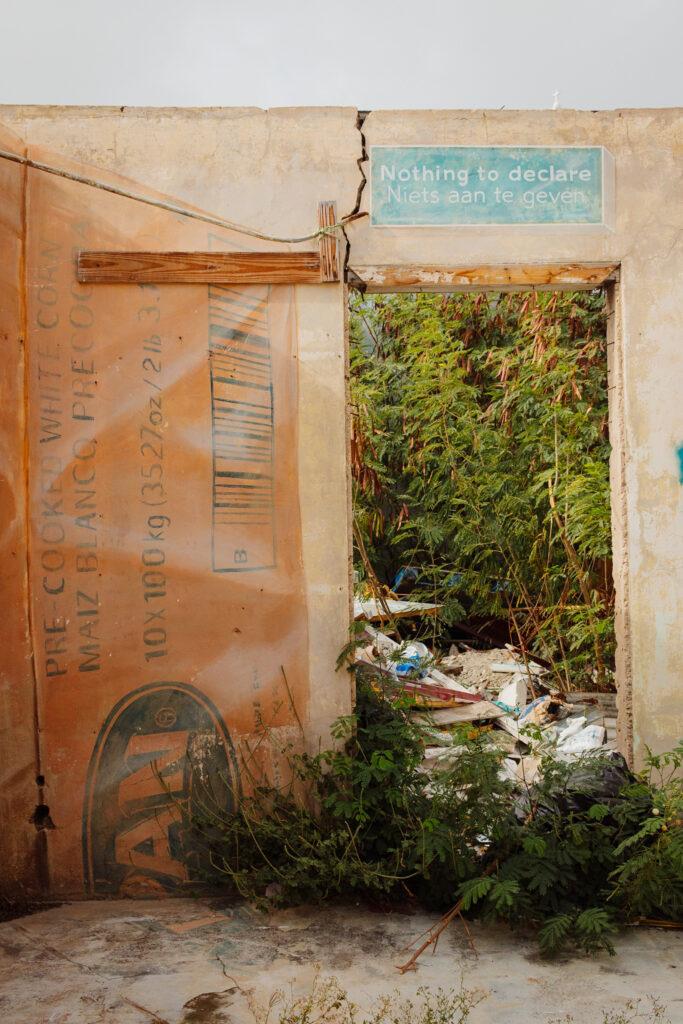
A photo from San Nicolas in Aruba, with a gaping abandoned doorway showing overgrown weeds behind it, and the words

Newsletters are blogs. Email kind of works as a way of both delivering and responding to blogs. I agree with Erin’s newsletter that writing letters is a wonderful practice too. And I don’t mean to dismiss the charm of a good comment, for blogs with comments! Comments are how I met Will, after all. But letters require physical acquaintance, and comments are a kind of public performance in their own right. Email is something else still.

The other day I had a question that was bugging me, and I looked up the relevant figure on Wikipedia. Wikipedia told me that he has a blog—a delightful blog about sailing in retirement, unrelated to the matter I had in mind. But that blog had an about page with an email address, so I wrote an email, and got a response right away.

From: Brendan (xorph@xorph.com)
To: ken@kensblog.com

Hello Mr. Williams! I’ve always wondered, why did you choose “on-line” for the original company name “On-Line Systems?” Was it derived from the idea of making software to be accessed on a mainframe through a terminal, or did the term mean something different to you at the time?

Thanks! Hope your seagoing adventures this year are wonderful.

—Brendan J

From: Ken Williams (ken@kensblog.com)
To: Brendan

You nailed it. Yes – I was doing freelance contract work on mainframe computers, specializing in large computer networks (literally on-line systems). When I started Sierra I kept the name I had been using for my contracting.

When we started getting larger I realized someone already owned the name and had to change our company name.

-Ken W

From: Brendan (xorph@xorph.com)
To: ken@kensblog.com

It’s so satisfying to have a clear answer to that after all these years. Thank you so much!

From: Ken Williams (ken@kensblog.com)
To: Brendan

🙂👍

The exchange was months ago, but I continue to enjoy the pleasant feeling of this tiny conversation. I have other emails I have received in years past that I keep close in my heart, just because they caught me at a good moment with a kind word. Even without much social media in my life, I do talk to people in other ways online, via Izzzzi and Peach and sometimes (sigh) Discord. But a few lines of thoughtful outreach, one to one, carry a warmth and weight of meaning that is singular.

I’ve taken a lot of photos over the last couple of decades. In doing so I have learned that I’m not particularly adept in most genres. Landscape and street photography don’t come naturally to me, posed portraiture remains elusive, and things like sports or wildlife photography are far beyond my abilities. What I like shooting most are candids. They require at least a little skill, a little preparation, a watchful eye, and luck: I shoot a dozen for every picture that turns out the way I want it. But there is nothing like that moment of resolution, when I see on a screen that taking the shot has succeeded.

A photo doesn’t really make a moment permanent. Our photos are ephemeral, just like our selves. They still matter. Ephemeral connections, one to one, are the material we use to construct meaning in our own stories. You and I were born in a time when there is no other choice but to find our lives shaped by emails. So pick a shape you like, and put something in it that you want to see again.
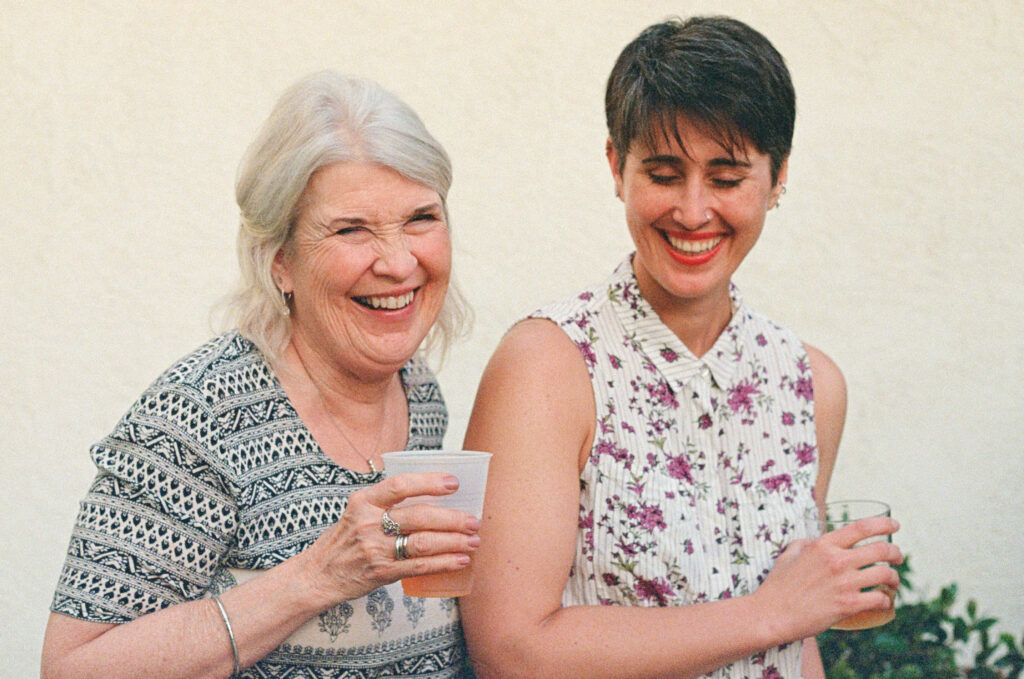
My wife and my mother, laughing together.

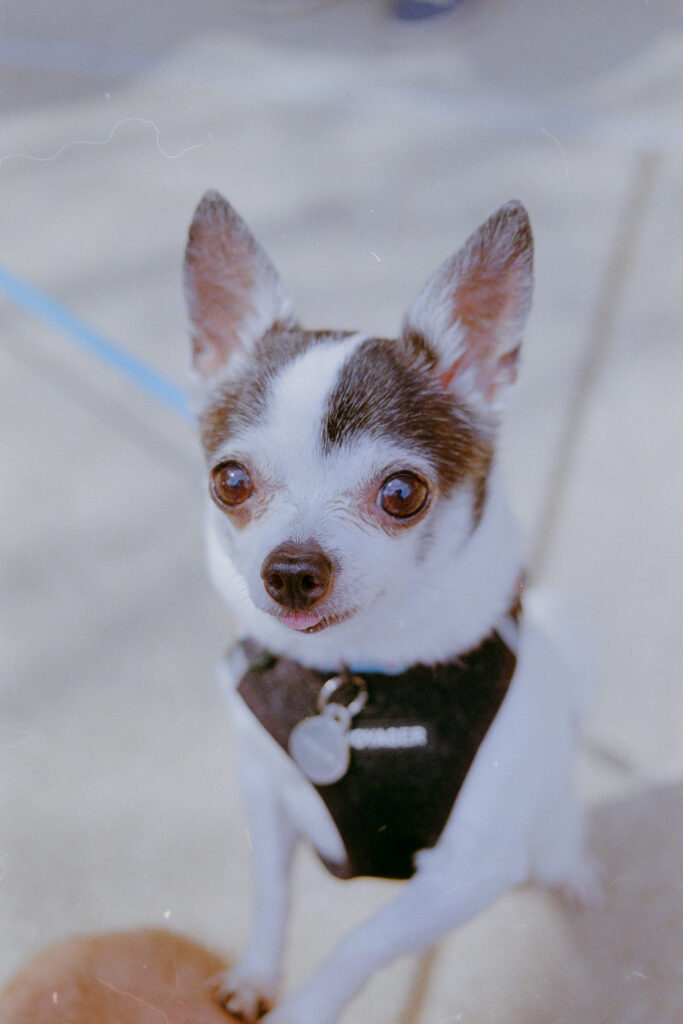
A very small dog named Chauncy blepping with his paw on my knee.

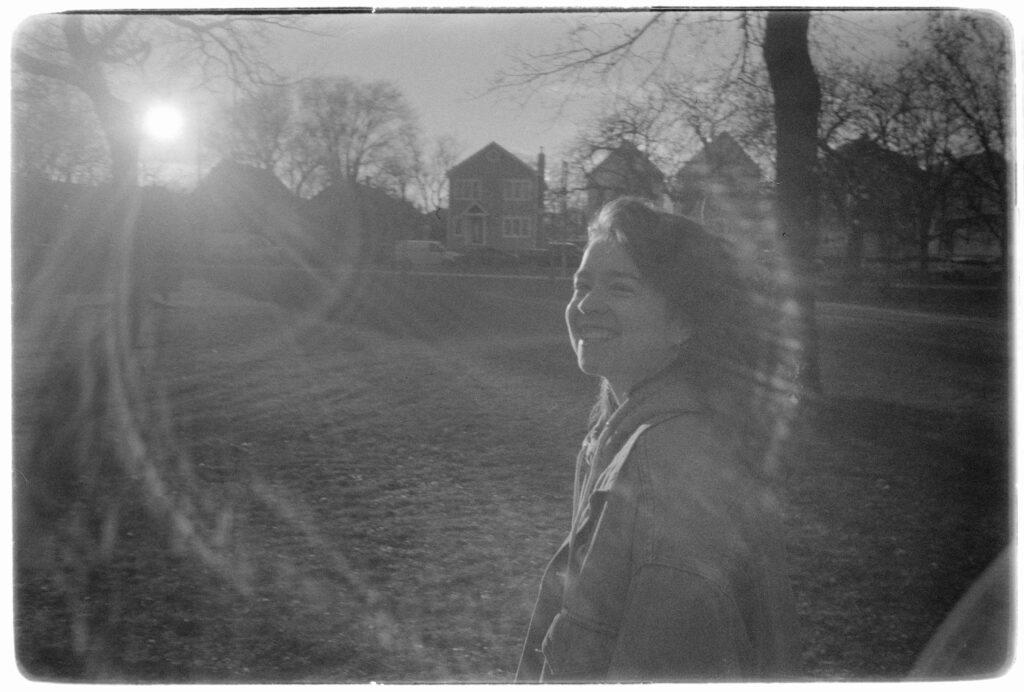
My partner Hannah in monochrome, obscured by a lens flare.

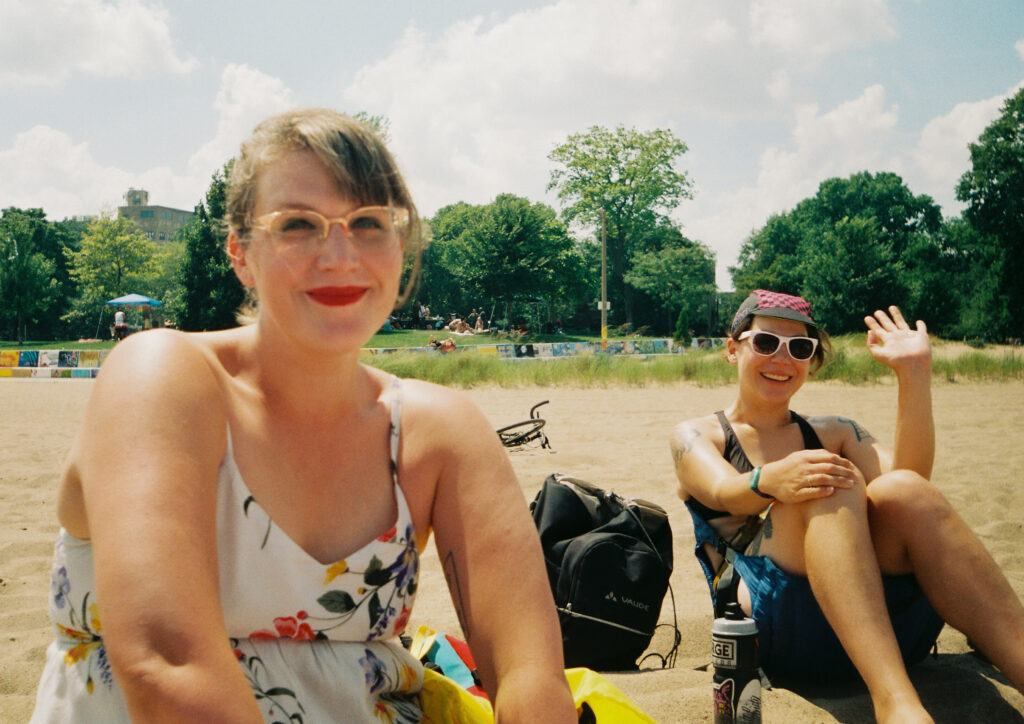
Sophie and Erin sitting in the sand and smiling, probably at Kat's beach birthday.

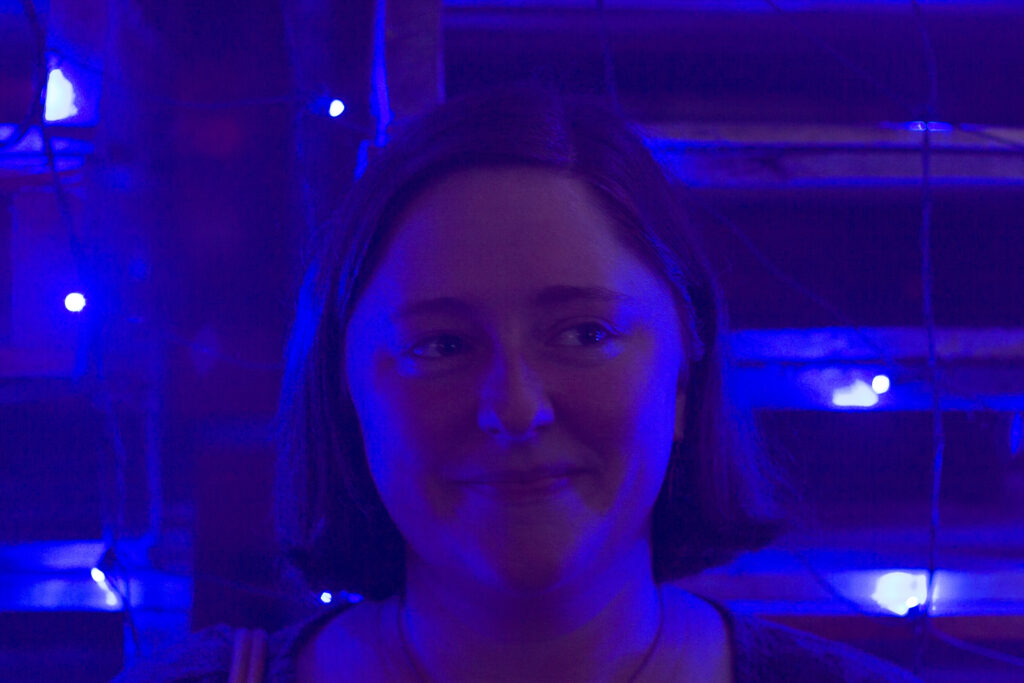
Erin at Bit Bash in 2015, lit entirely in blue.

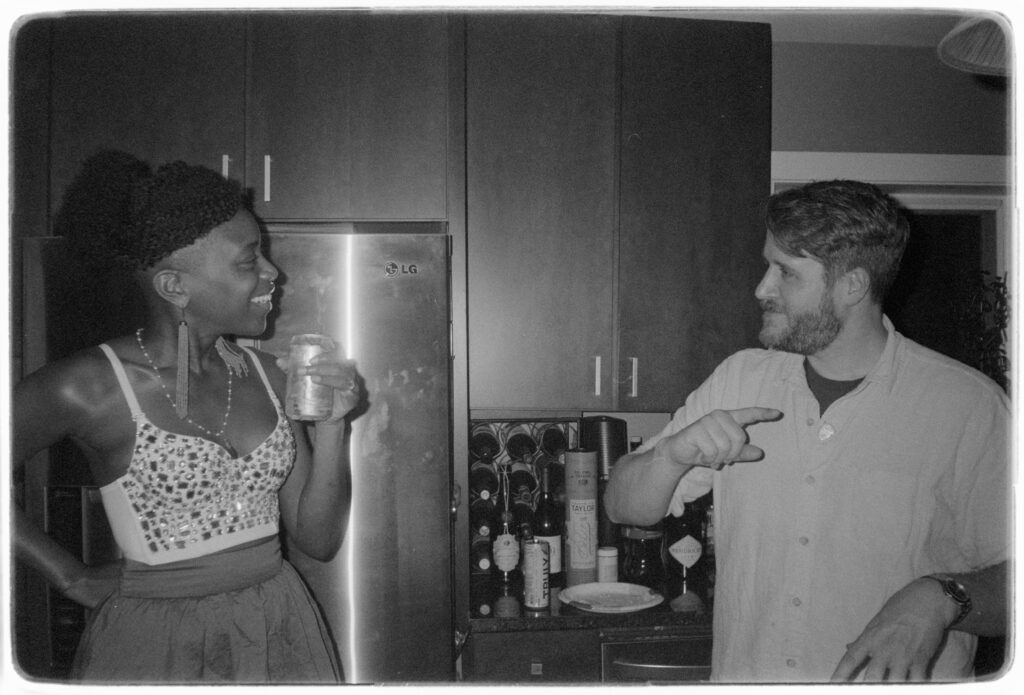
Ayo and Stephen, in a kitchen and monochrome, having a totally not posed conversation.

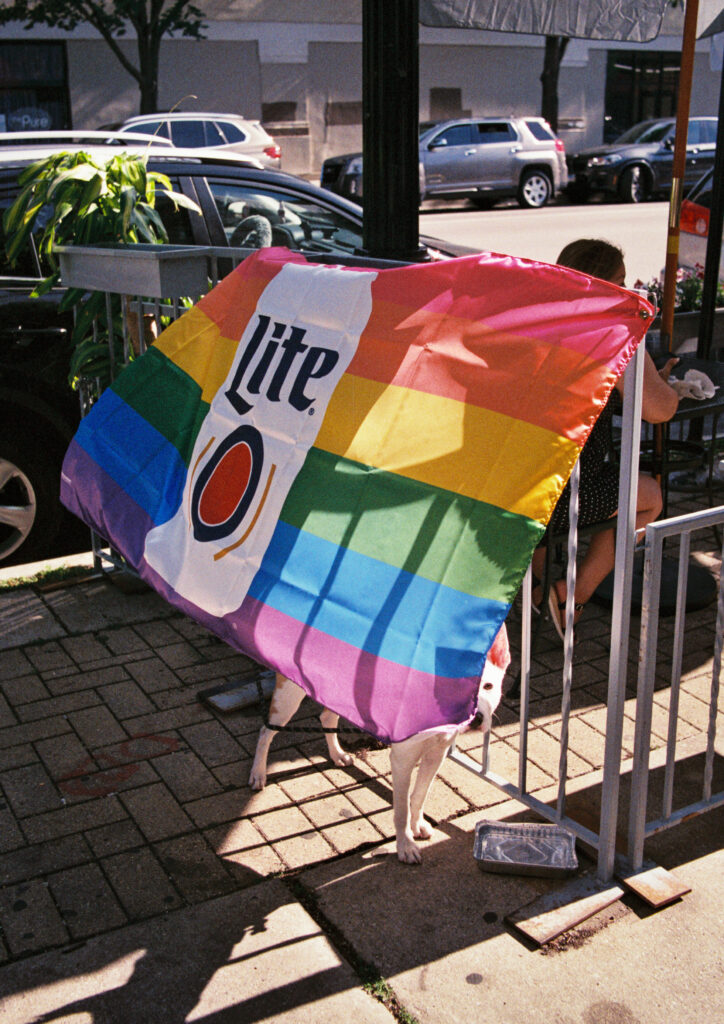
A small dog peeking nervously out from behind a Miller Lite rainbow pride flag.

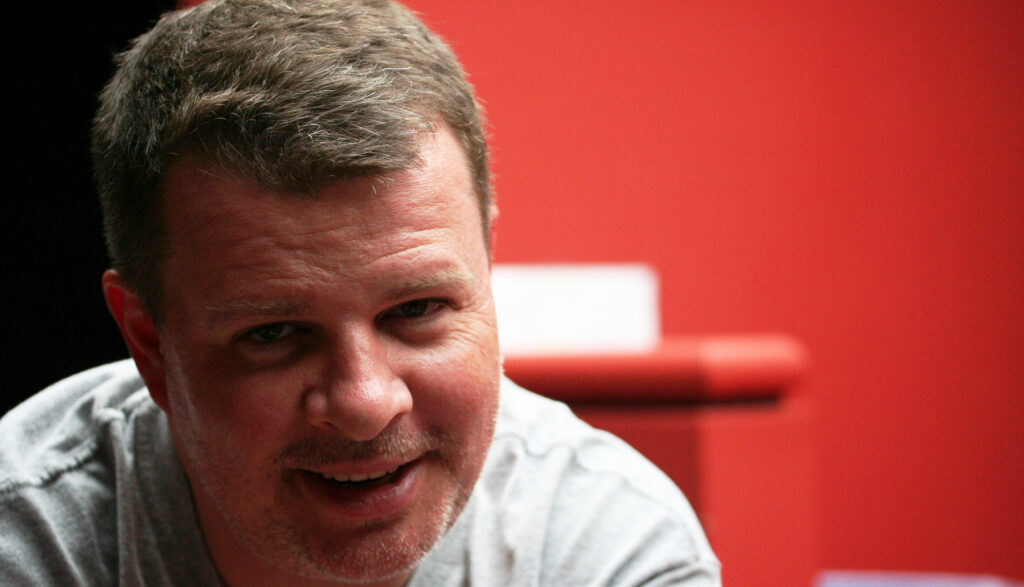
Chris, in a red room, weary in 2008.

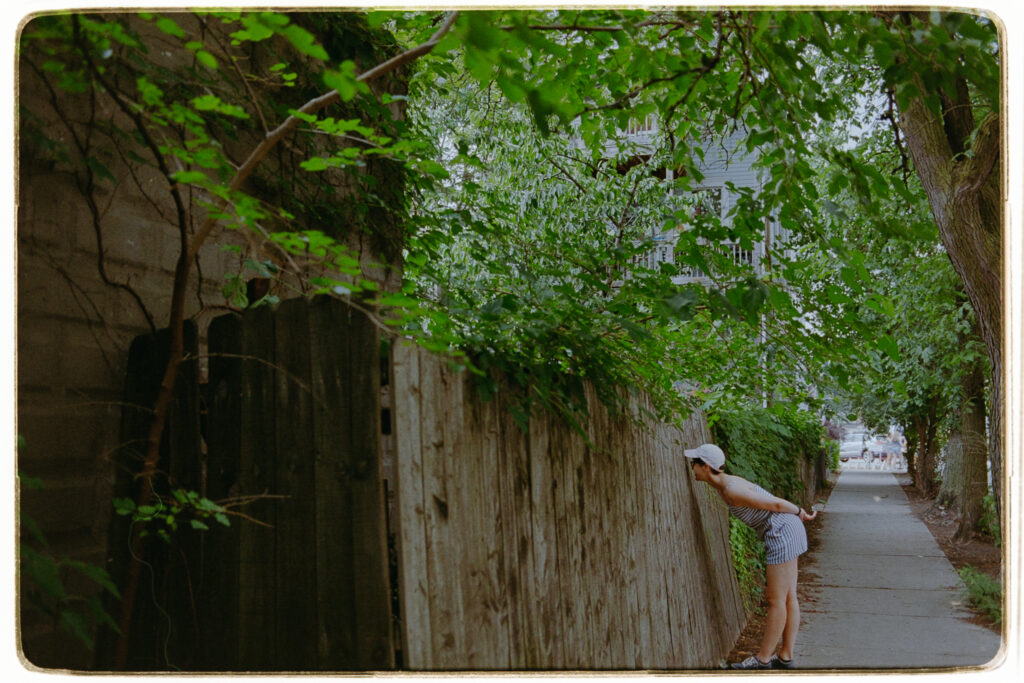
Kat at a distance, leaning down to peer through a hole in a fence.

A cluster of balloons escaping into the sky.

Mom’s boyfriend is named Jerry

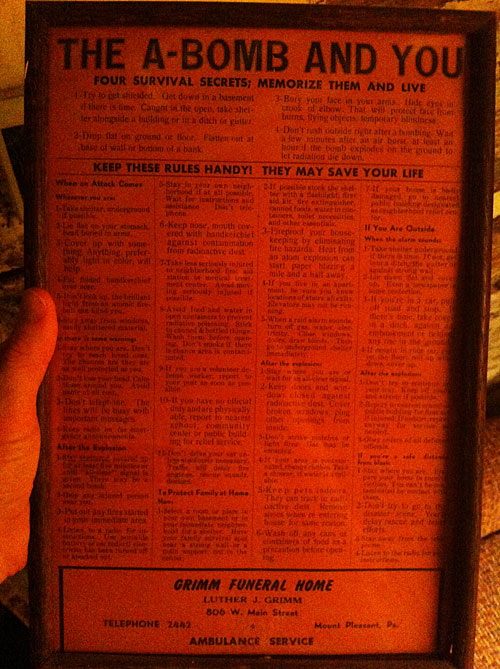
And he’s a museum curator, and his house (two authentic log cabins that he took apart and reconstructed with a new stone building between them) is filled with historical artifacts and ephemera. It is NOT exactly filled with light, because log cabins are not known for their vast expanses of window, but I tried to get a picture of one such artifact anyway.

The A-Bomb And You

It’s a framed flier full of survival tips for when you are struck by an atomic bomb, obviously from the 50s or 60s. These are unbelievably helpful tips; what’s really tragic is that they were kept secret.

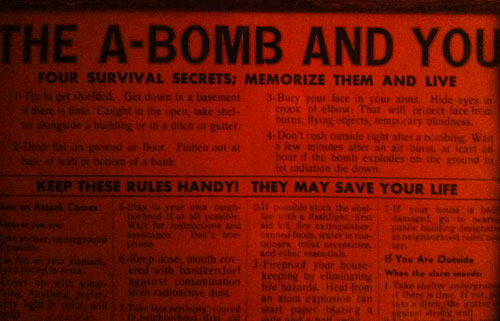
Four Survival Secrets

Allow me to transcribe:

  1. Try to get shielded. Get down in a basement if there is one. Caught in the open, take shelter alongside a building or in a ditch or gutter.
  2. Drop flat on ground or floor. Flatten out at base of wall or bottom of bank.
  3. Bury your face in your arms. Hide eyes in crook of elbow. That will protect face from burns, flying objects, temporary blindness.
  4. Don’t rush outside right after a bombing. Wait a few minutes after an air burst, at least an hour if the bomb explodes on the ground, to let the radiation die down.

I can’t figure out which words to emphasize for amazingness. Is it the admonition about “temporary blindness?” The advice to people caught in the open under a nuclear weapon, which is to go flop in a ditch for convenient body-collection? The idea that you must wait at least an hour for radiation to die down?

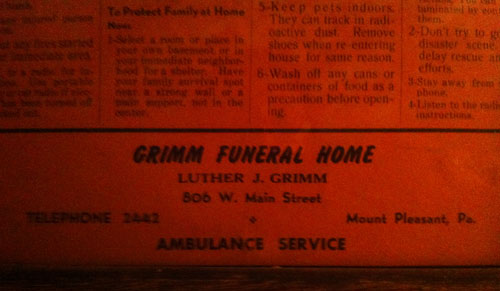
Anyway, the best part is the name of the establishment that brought this important, life-saving information to you, dear reader.

Grimm Funeral Home

In which I already break a promise

I know I said I wasn’t going to tell you every time we updated the podcast–I reserve that for spamming Facebook and Twitter–but seriously, you gotta listen to episode ten. One of the not-so-secret purposes behind the inception of the Hour of Knowledge was to help Stephen build a demo reel for his voice acting career, and this week’s show is a glorious vocal achievement. Even after engineering the audio (which means listening to every show, in chunks, about six hundred times), I still can’t make it through his half-improvised monologue without cracking up.

And Mom, this one doesn’t have any cusses!

I always thought Rowling gave arithmancy short shrift

Stories I have written that revolve around invented or reinterpreted methods of divination: Stella, Jaboullei, Rob, Shekel and Jewel. I was kind of surprised it was this few–I feel like it’s one of the structures to which I keep returning. There’s another one coming Monday, if you hadn’t guessed.

I think the reason I keep coming back to this is a variation on the existential dread I feel when considering the persistence of objects (eg the lives of sapient dishes): the amount of potential information in the world, and how quickly our ability to capture and interpret it is growing, and how insignificant that capability will always be–in an obscure way, these things terrify me. They also thrill me. Look at what we can discover! If time and distance are the universe’s crypto, divination is the original side channel attack.

I also live in constant fear of side channel attacks, by the way, to the point where I have resigned myself to much-more-likely primary channel attacks. I kind of never want to be even mildly famous, as that would destroy what flimsy comfort I take in anonymity.

Anyway, you’ll know I’ve gutted the shark on this theme when I write the one about logymancy. Meanwhile I want to do more of these little collect-and-explain entries; I think they’d be a better point of entry to Anacrusis for new or hesitant readers than just the sheer blank mass of the archives. When one of my best friends refers to my writing corpus as “a stupid amount” and my own mother is too intimidated to read them, I am pretty much failing to sell my product.

Remember my list of potential destinations? The least likely of them has become the best choice, and in fact the one I’m making: on March 3rd I’m flying to London, to live with Holly, Kevan and Catriona until Roz arrives in August to take their spare room for fall term. I’ve worked out the tax-related bits and I have my boss’s approval to keep working for Indelible on Greenwich time. I have purchased plane tickets and an iPod. This trajectory does not reverse.

The whole thing fell into place with a suspicious ease, as if we had assembled a Lego castle merely by shaking the bucket, but I am not looking askance. Five and a half years ago I was writing here about how I had to turn down my semester abroad to keep my Comp Sci degree; now that degree is making it possible to go after all, with people I like, and to hang out with my mom and sister and Maria there. Real life seems to have a plot.

I’m going to London!

My mother actually WASN’T very educated when she came up with this. UNH.

All the nine-planet mnemonics you learned were dumb, because mnemonics are dumb, period. Purge them from your brain. Good!

My mother taught me the planets in kindergarten or something, using a song she and her friend made up on the playground when they were in elementary school. It goes like this:

“Mercury, Venus, Earth

dah-dah nanananah

Mars, Jupiter, Saturn

dah-dah nanananah

Uranus, Neptune and–

Plu-to.”

And I have never forgotten them since. The best part is that now that the list has been shortened, it’s more easily converted than your elevated mastodon who just served you divorce papers or whatever.

Uranus, Neptune and–

That’s all.”

Hey Mom, let me know if you want this post to be #1 in the Google results for their names

There are certain words I never expected to see my mother use in print, and “pimped” is one of them. Just one reason why I’m happy to see her blogging again.

If you read Mo-Jo, you’re already aware that after years of mounting mismanagement, condescension and outright lies from the diocesan administration, my mother’s willingness to stand up for her school and her students finally got her fired. She has another job now, but (no offense to any booksellers present) she deserves a better one; if you happen to be aware of teaching or library-related jobs in central Kentucky for someone with an MAEd (but not an MLS), please let me know and I’ll pass the news to her.