Category: Drama

Composition

Nineteen years ago my friends got together, led by Maria (hi Maria), and chipped in to buy me my first single-lens reflex camera: a Canon Digital Rebel.
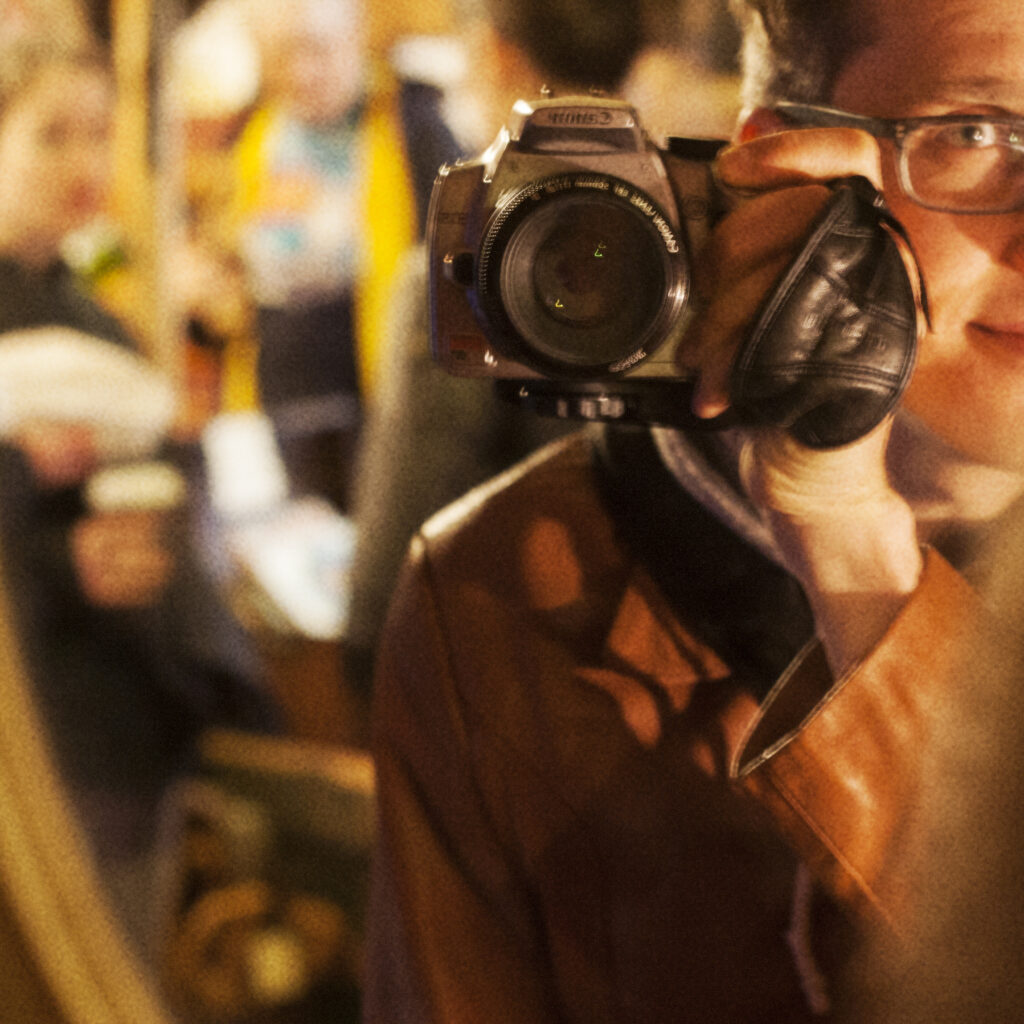
Myself in a mirror, at a plant shop in San Francisco, early 2016.I’d played with cameras since I was a kid, but until that year, I never had a solid understanding of what to do with them. Coming to that understanding took many years of developing taste for what I liked in pictures, and then more time studying the techniques involved, but mostly what I needed was a good way to experiment. My goofy webcam selfies aside, the time between taking a photo and looking at it had always been measured in weeks and dollars. But things changed once I could just snap, and chimp, and gauge what I had wanted against what I got. I needed feedback to learn.
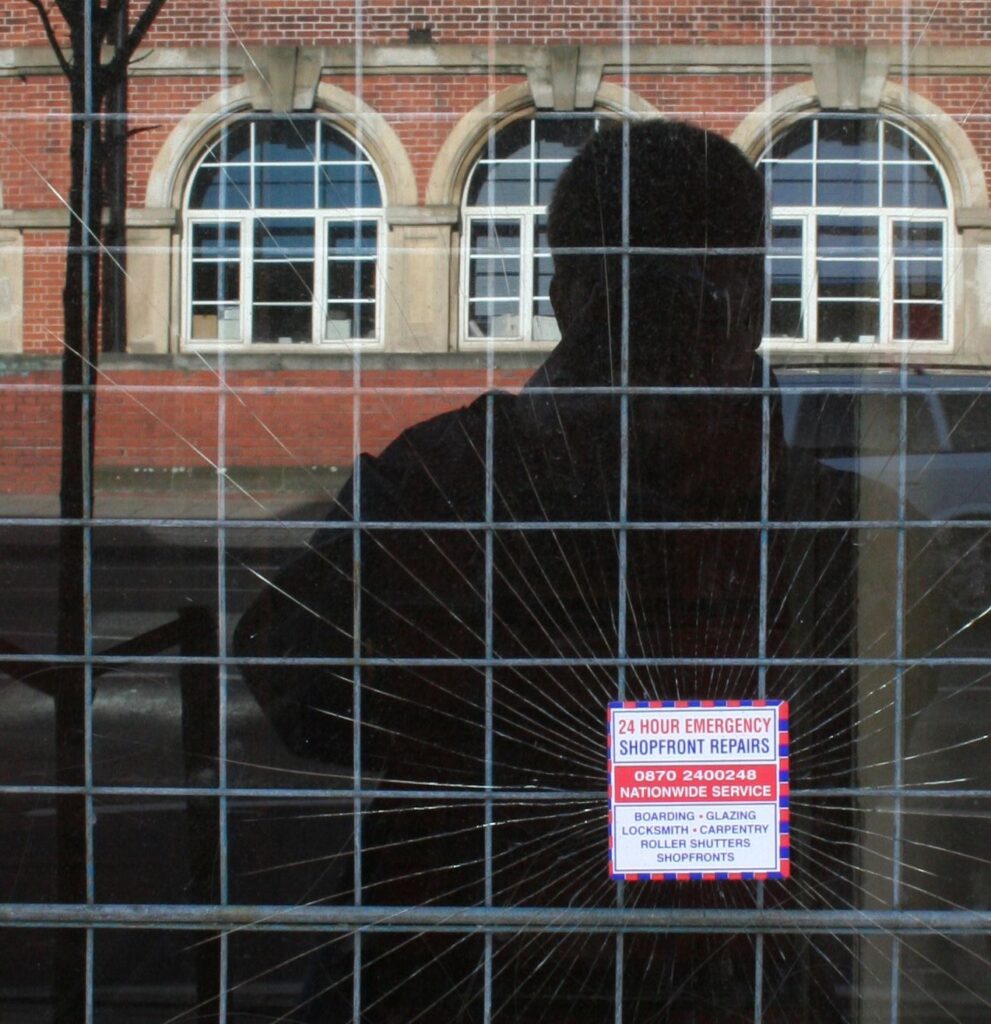
Self-portrait in shadow, reflected in shattered glass, somewhere on a Tube Walk in London.I’ve written about this in the past and I don’t want to keep retelling the same stories. But before I had a camera in my hand, I had no patience for the act of looking around me. It was only learning how to frame, evaluate light, and search for details to isolate that unlocked the pleasure of observation. After a while, I didn’t even need the camera to enjoy it! And now I prefer to shoot on film anyway, so the quick feedback loop is long gone. But the process of learning shaped me, and I still hold that shape.
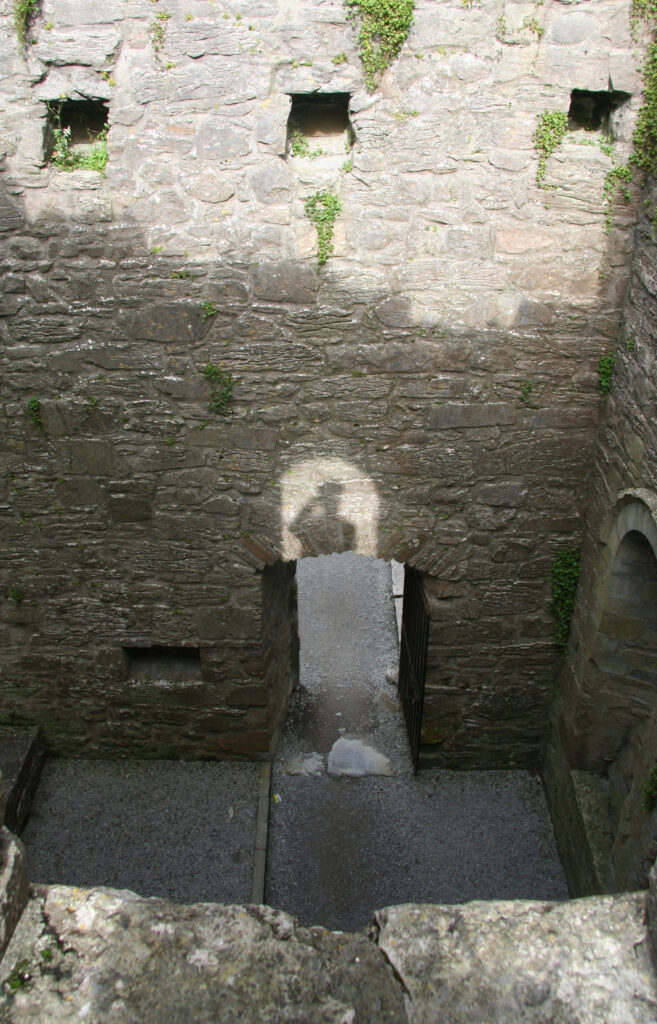
My shadow, on the wall of a castle in Ireland, wearing a silly hat.Photography changed my world by making any moment, anywhere, into something I could interact with. You should email a blogger today.

“It’s quite important to know that you are heard.”

Jenny’s post about metrics (and Lucy’s quotation of it) have been rattling around in my head for months now. In my mind that post links back to something that Avery Alder said on twitter many, many years ago, in response to a wave of scolding directed at allies who purportedly “wanted a cookie” for taking part in social justice activism. I can no longer access the original wording. What I recall is that Avery acknowledged that of course such work is worth doing regardless of reward. And then she added: but so what if I still want a cookie? I like cookies!

Jenny again, deliberately out of context, because it fits other contexts too:

First of all, so? And second of all, right, exactly.
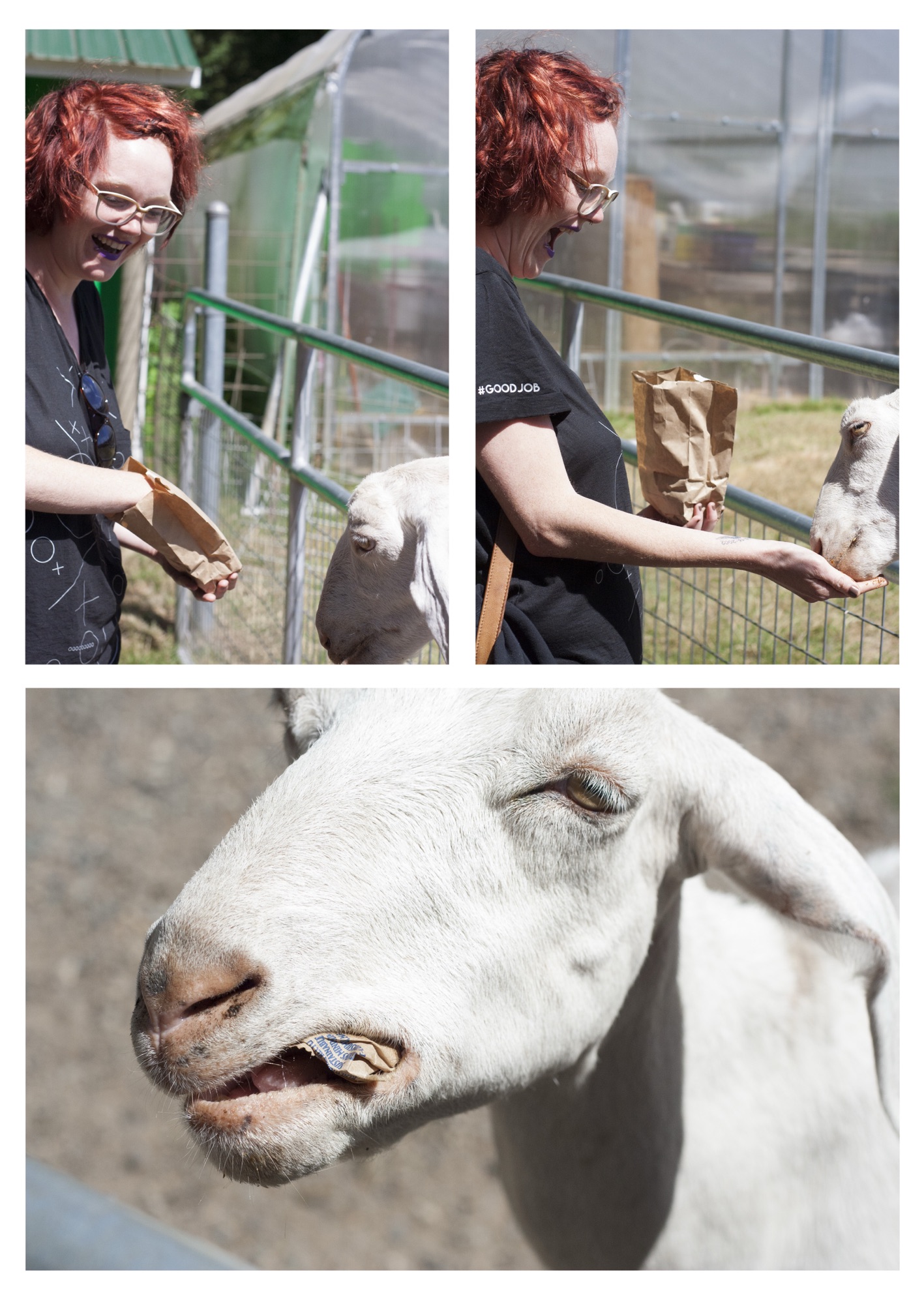
Mads feeding a goat from a bag. The goat ate the bag.

I like cookies too. And I’m a human, a social mammal whose development rests largely on the attention and response of other members of my species. It is important for humans that sometimes someone gives you a cookie. It is important to know that you are heard.

Analytics software offers numbers you can’t trust about visits you can’t see, which is not the same as being heard—in fact I think it might be the opposite. The illusion of attention contorts people into shapes that are not good for them. (I don’t even need to mention any prominent software platforms by name here, do I?)

I don’t use my degree in the dramatic arts for all that much, these days, but I am often grateful for what I learned in completing it. One of the things that Patrick Kagan-Moore said to me, the night before our play debuted, has stuck with me for 25 years. “We rehearse for months,” he said, “so we can try to find the right shape for the performance, and the first time you get a laugh from a crowd—” He snapped his fingers. “—they will train you, like that. You’ll do it the exact same way every show, trying to get that to happen again.”

Live performance is a hot medium, where response arrives quickly: snap, chimp, gauge. Writing online, and off social media, is a cold medium. That’s why the warmth of a good response matters so much.
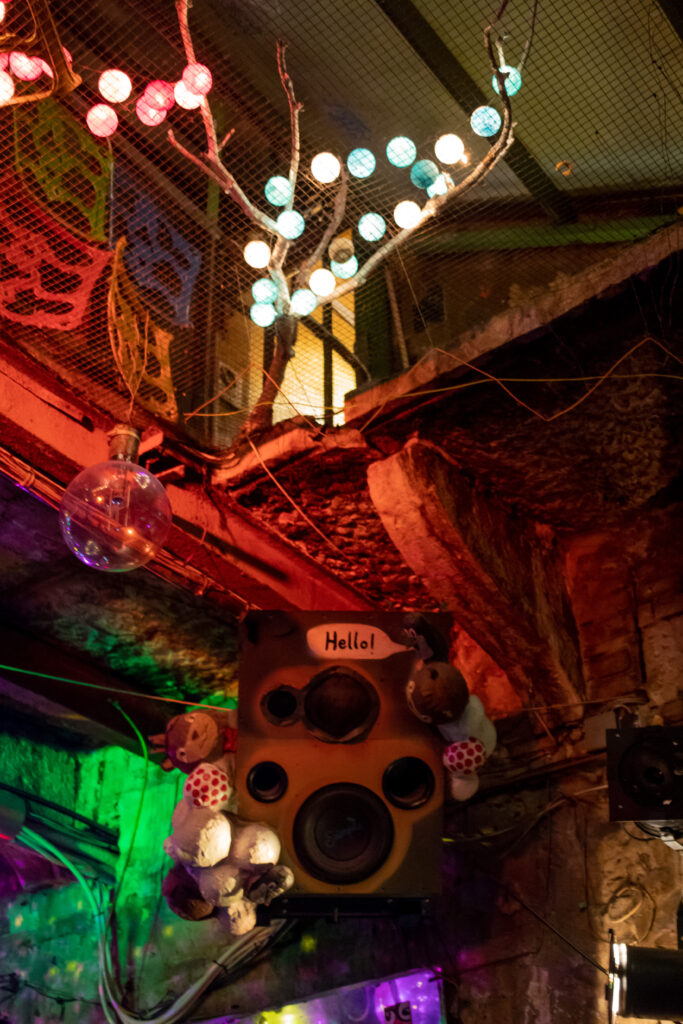
Lighted artwork from the ruin pub at Szimpla Kert, in Budapest, with an old speaker box facing the lens and a speech bubble above it saying

Sometimes I like to reach into my mental pocket and offer up chestnuts—I know I already used one food metaphor, stay with me—which I cannot promise will contain any meat. One such chestnut is that email is the infrastructure of the web. (In my grouchier moments, I say “failure state” instead.)

Infrastructure is what you fall back onto when a superstructure cannot support the load placed upon it. There are a million diagrams of the technical stack that underlies HTTP, and none of them includes a layer called “email.” But it is there, invisible, at the root of every auth request. And as direct communication over the web has been captured by those who do not wish good things for you or me, email remains the fallback there too: a crummy foundation that yet resists collapse.

When the web promised that you could subscribe directly to the words and work of people you found interesting, then broke that promise for extractive purposes, email newsletters sprang up to fit the popular demand to Just See The Goddamn People You Follow In Chronological Order God Dammit. Email is not well fit for this purpose, any more than it is for supporting the rest of the internet. The things you want to savor from your favorite writers get buried among “the to-do list that grows without your consent” (credit to Sumana). But it kind of works. And things that kind of work are what we have, online, these days.
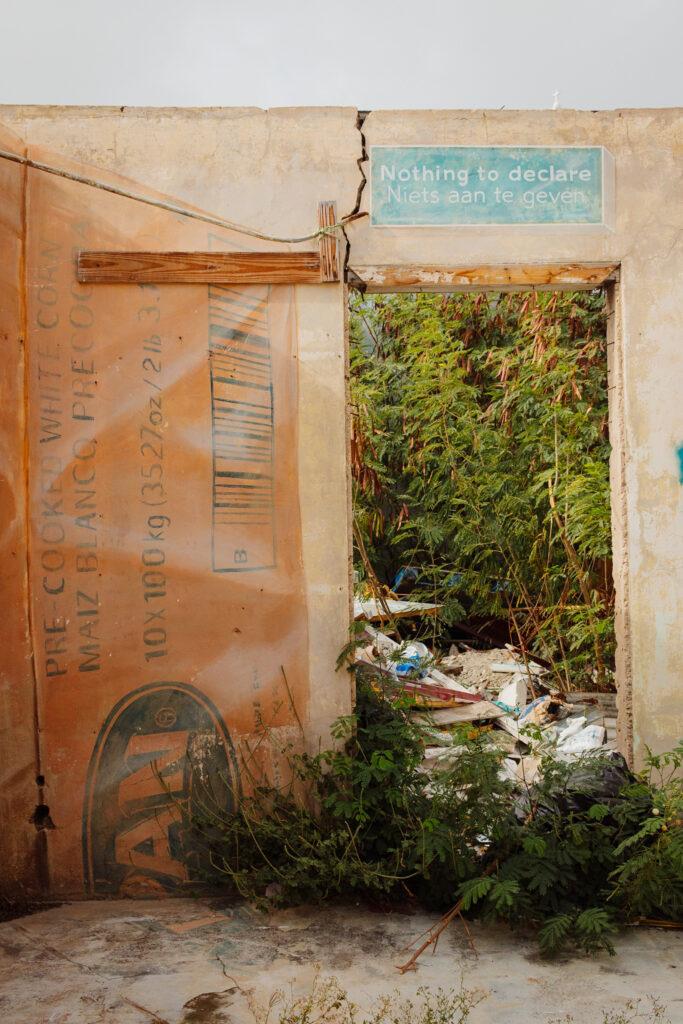
A photo from San Nicolas in Aruba, with a gaping abandoned doorway showing overgrown weeds behind it, and the words

Newsletters are blogs. Email kind of works as a way of both delivering and responding to blogs. I agree with Erin’s newsletter that writing letters is a wonderful practice too. And I don’t mean to dismiss the charm of a good comment, for blogs with comments! Comments are how I met Will, after all. But letters require physical acquaintance, and comments are a kind of public performance in their own right. Email is something else still.

The other day I had a question that was bugging me, and I looked up the relevant figure on Wikipedia. Wikipedia told me that he has a blog—a delightful blog about sailing in retirement, unrelated to the matter I had in mind. But that blog had an about page with an email address, so I wrote an email, and got a response right away.

From: Brendan (xorph@xorph.com)
To: ken@kensblog.com

Hello Mr. Williams! I’ve always wondered, why did you choose “on-line” for the original company name “On-Line Systems?” Was it derived from the idea of making software to be accessed on a mainframe through a terminal, or did the term mean something different to you at the time?

Thanks! Hope your seagoing adventures this year are wonderful.

—Brendan J

From: Ken Williams (ken@kensblog.com)
To: Brendan

You nailed it. Yes – I was doing freelance contract work on mainframe computers, specializing in large computer networks (literally on-line systems). When I started Sierra I kept the name I had been using for my contracting.

When we started getting larger I realized someone already owned the name and had to change our company name.

-Ken W

From: Brendan (xorph@xorph.com)
To: ken@kensblog.com

It’s so satisfying to have a clear answer to that after all these years. Thank you so much!

From: Ken Williams (ken@kensblog.com)
To: Brendan

🙂👍

The exchange was months ago, but I continue to enjoy the pleasant feeling of this tiny conversation. I have other emails I have received in years past that I keep close in my heart, just because they caught me at a good moment with a kind word. Even without much social media in my life, I do talk to people in other ways online, via Izzzzi and Peach and sometimes (sigh) Discord. But a few lines of thoughtful outreach, one to one, carry a warmth and weight of meaning that is singular.

I’ve taken a lot of photos over the last couple of decades. In doing so I have learned that I’m not particularly adept in most genres. Landscape and street photography don’t come naturally to me, posed portraiture remains elusive, and things like sports or wildlife photography are far beyond my abilities. What I like shooting most are candids. They require at least a little skill, a little preparation, a watchful eye, and luck: I shoot a dozen for every picture that turns out the way I want it. But there is nothing like that moment of resolution, when I see on a screen that taking the shot has succeeded.

A photo doesn’t really make a moment permanent. Our photos are ephemeral, just like our selves. They still matter. Ephemeral connections, one to one, are the material we use to construct meaning in our own stories. You and I were born in a time when there is no other choice but to find our lives shaped by emails. So pick a shape you like, and put something in it that you want to see again.
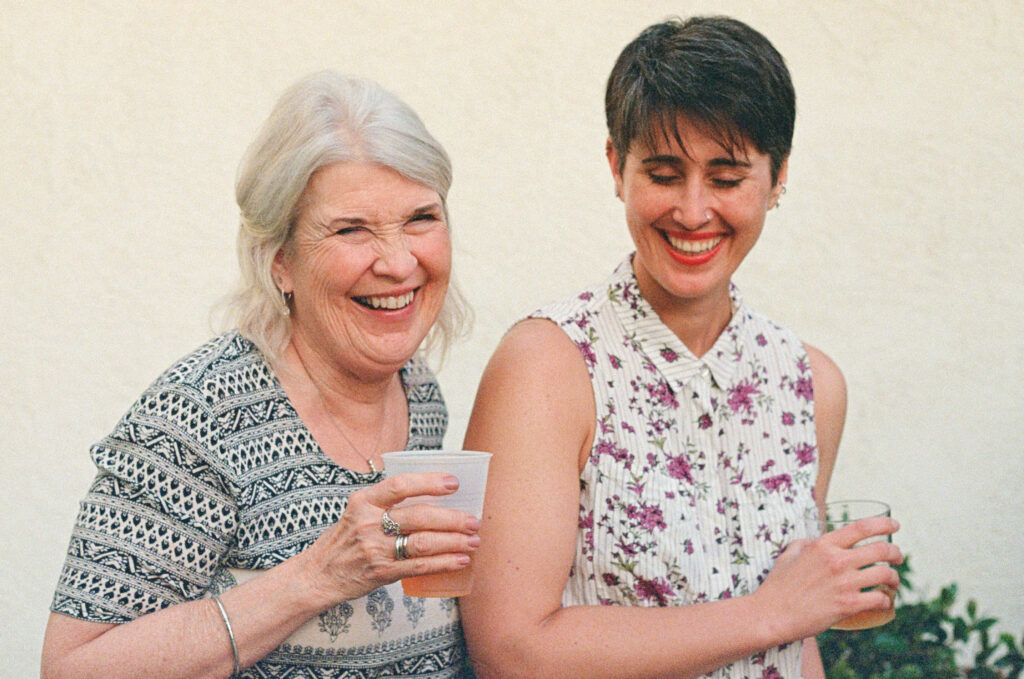
My wife and my mother, laughing together.

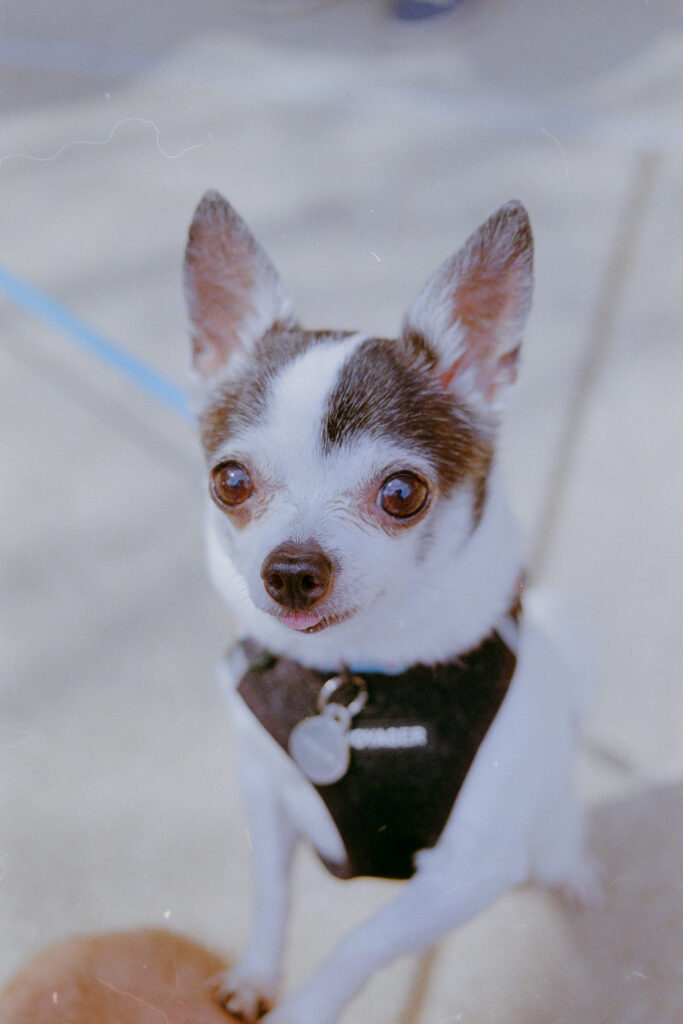
A very small dog named Chauncy blepping with his paw on my knee.

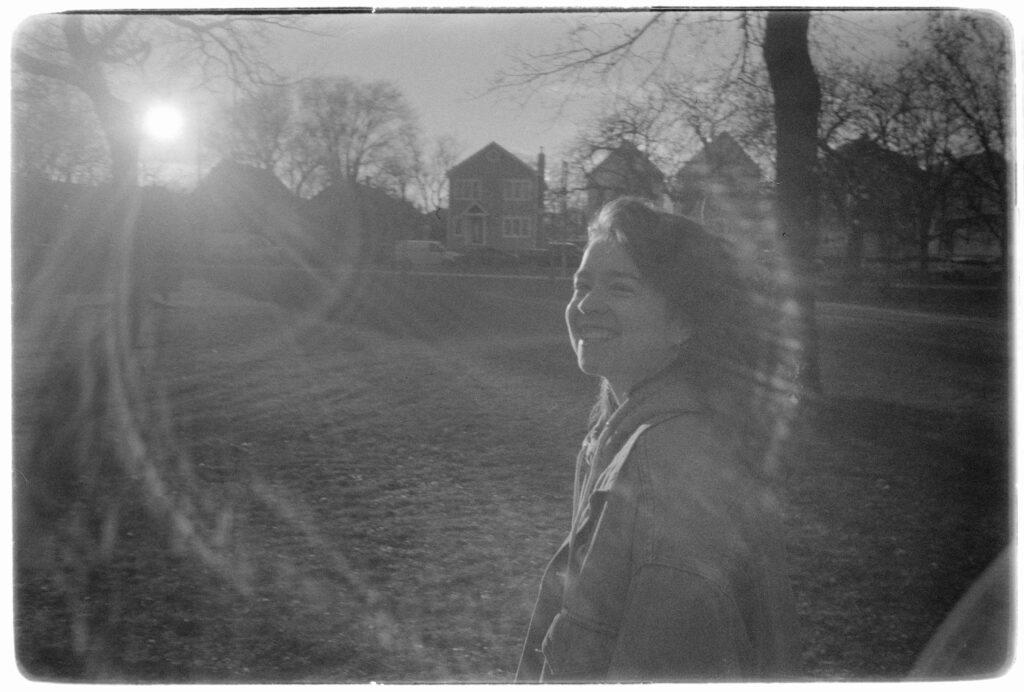
My partner Hannah in monochrome, obscured by a lens flare.

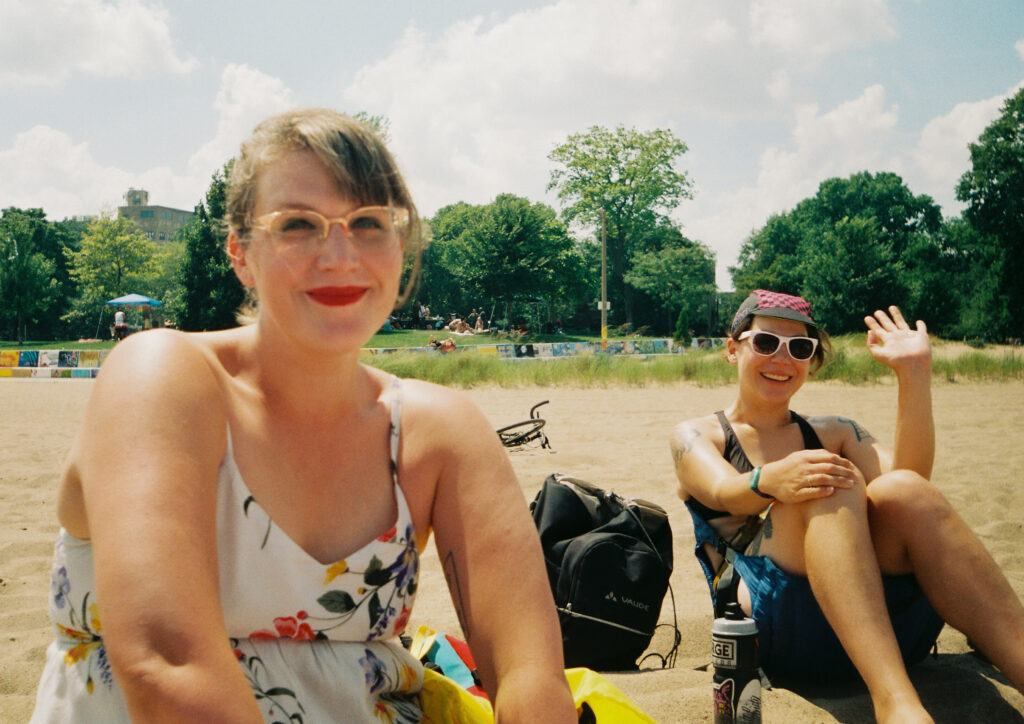
Sophie and Erin sitting in the sand and smiling, probably at Kat's beach birthday.

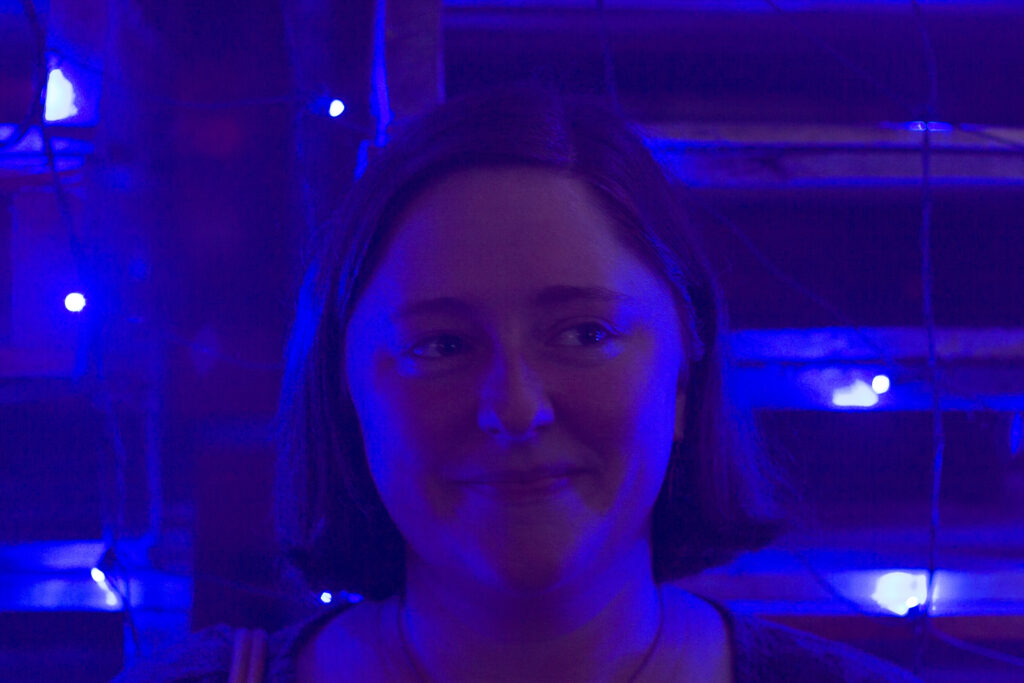
Erin at Bit Bash in 2015, lit entirely in blue.

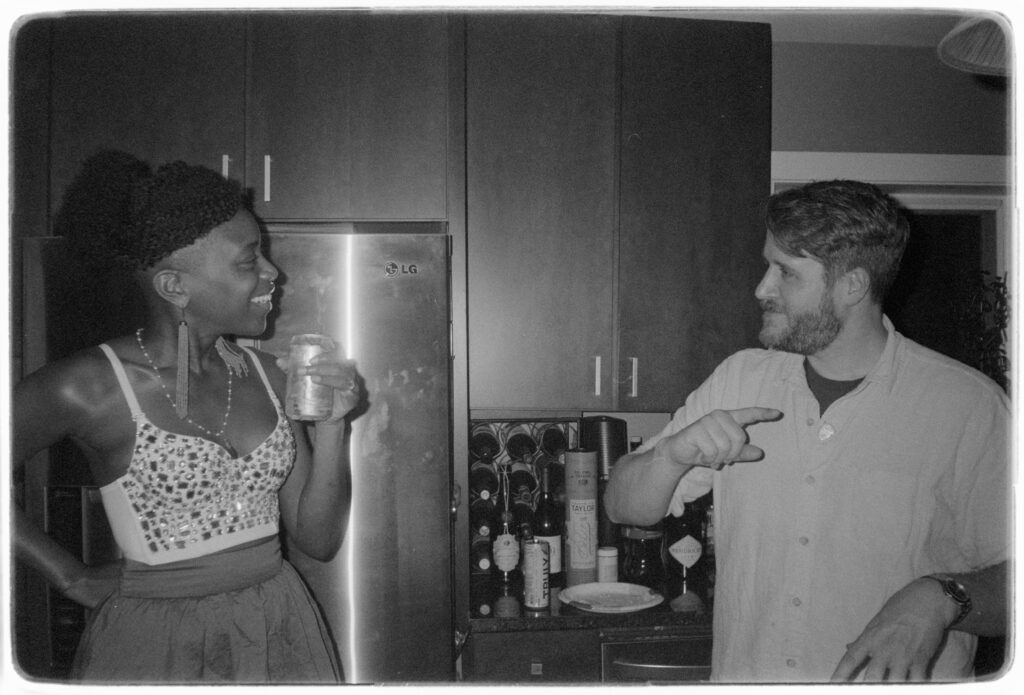
Ayo and Stephen, in a kitchen and monochrome, having a totally not posed conversation.

A small dog peeking nervously out from behind a Miller Lite rainbow pride flag.

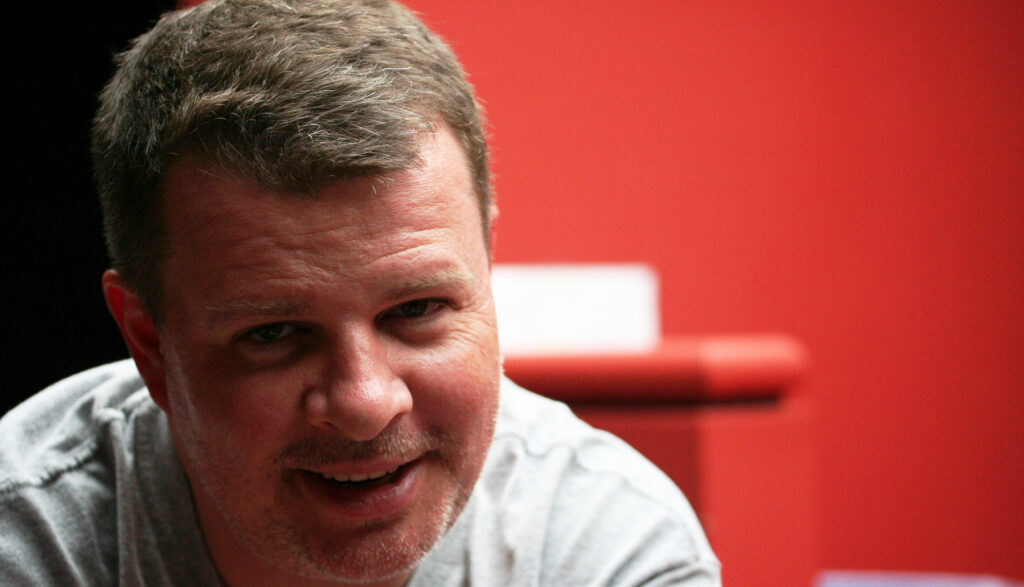
Chris, in a red room, weary in 2008.

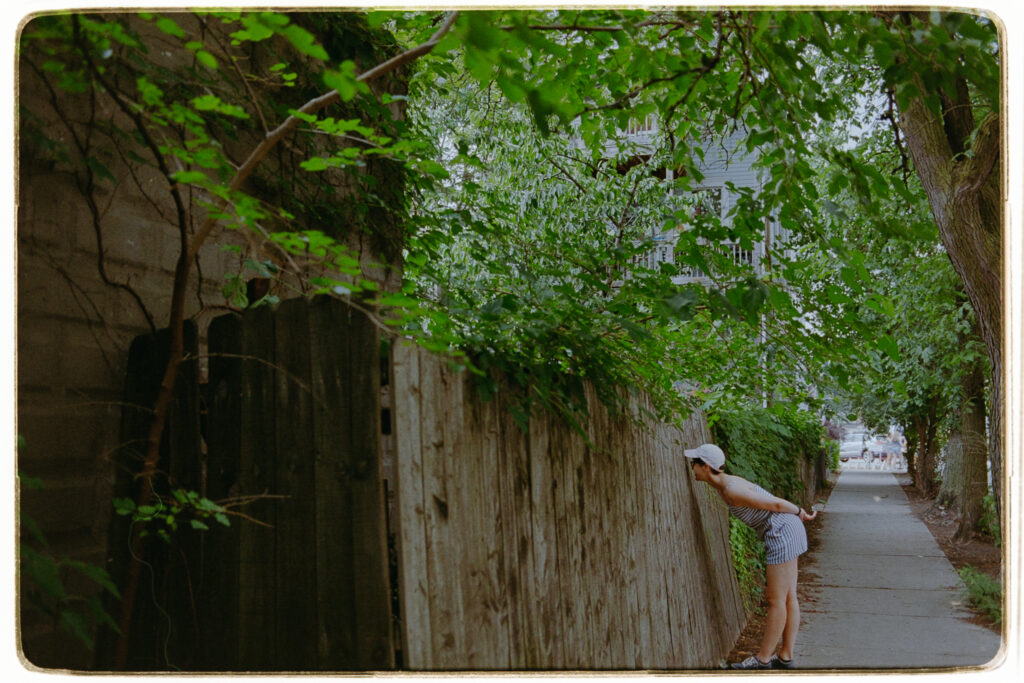
Kat at a distance, leaning down to peer through a hole in a fence.

A cluster of balloons escaping into the sky.

“It’s actually Jacobean rather than Shakespearean.”

Ian and I are a bit obsessed with Brian Cox, and I was very happy to notice that the AV Club had done a Random Roles bit with him (an excellent interview schema, which takes the annoying bolded reporter-voice almost entirely out of it and just leaves the meat of the subject rambling about cool stuff). I was not disappointed. You might say I was reappointed. I mean, read this stunningly clear and concise evaluation of American film versus British theatre, prompted by a little question about his career arc post-Rob Roy:

If you grow up in these islands—especially where I grew up in these islands—the theatre is very powerful, very potent. It’s a part of our heritage. Our culture is really a theatrical culture, not a cinematic culture. Feudal societies don’t create great cinema; we have great theatre. The egalitarian societies create great cinema. The Americans, the French. Because equality is sort of what the cinema deals with. It deals with stories which don’t fall into ‘Everybody in their place and who’s who,’ and all that. But the theatre’s full of that. Especially in Shakespeare. So in a way, it behooves you as a British actor to try and master the classics and become a classical player. I got caught up in it. It wasn’t something I wanted to do, but I was too late.

“You see, the free cinema, the cinema of Albert Finney, Peter O’Toole, Alan Bates, Tom Courtenay… That all ended by the time I came along. So I went to work in the Royal Court, because they weren’t going to be making any more of those movies.”

I saw the Neo-Futurists doing their show Too Much Light Makes The Baby Go Blind last Saturday night, courtesy of Unstoppable David Clark. I am going to see them again next weekend, at the 2:30 matinee on either Saturday or Sunday. Tickets are $25-$28 and you, you personally, had damn well better come with me. We can get a 10% discount if we scrape together ten people.

The Neo-Futurists are fucking amazing.

You can find all this out by going to their website, but because other humans are apparently lazy about clicking, here’s what happens: there are five performers and thirty (original) plays. They do, or try to do, all thirty plays in sixty minutes. They’re microplays. You understand why I am smitten.

The thirty plays may happen in any order, because they’re numbered and the troupe will do whatever number they hear the audience yell out as soon as the previous play is over. They also swap out 1d6 plays every night and replace them from a larger pool, so by this Saturday it might be a completely different show from what I saw.

As if this wasn’t enough, there is a seven-item checklist that I personally keep for determining whether or not any given show qualifies as performance art. The list is as follows:

  • A person under a black cloth hood doing something ridiculous
  • Giant diapers
  • Performers dancing in the aisles and trying to get audience members to dance too
  • Large pictures of female genitalia
  • People eating money
  • A man rubbing his nipples with an expression of fiendish glee
  • The throwing of raw meat

And I shit you not, the version of the show I saw included six of those seven items. And it worked, because they were completely self-aware and loved it and laughed at themselves. They made metahumor work on stage. This is a feat akin to picking up litter with the pointy part of the Chrysler Building, and I’d only previously seen it done by the pre-Intel Blue Man Group.

I am completely serious about you coming with me to the show this weekend. Call or email me if you want me to add you to the possible-group roster, and I’ll tell you by Wednesday whether we have enough people. If the show sells out they’ll buy us pizza. I’m serious about that too.

Ian, I wish you could have been there. David Flora, the Neo-Futurists are from Chicago and they do this every week up there, you bastard, why haven’t you seen it yet?

I made myself wait two days to write this up because I didn’t want to rave and gibber and then be embarrassed when the high wore off. I’m raving and gibbering anyway. If you’re in Louisville, you need to come see the show.

Earlier entry explained

Almost my entire extended family on my mom’s side–the Dixons & Company–went to the Ohio Renaissance Festival as a crew of pirates, in full costume and character. There were forty-one of us. Some of the grownups started drinking at nine in the morning. The Dixons don’t actually drink very often, but when we do we are Catholic about it.

They knew we were coming, but I don’t think they were quite prepared.

There was a lot of shouting and ARRing and attempting to sing shanties to which we had managed to learn about one line each. The first of many attempts to break into song came as we crossed under the portcullis to enter the festival proper, and it went like this:

“Well the ship set sail with a lusty crew

ROLL, ME HEARTIES, ROLL

The hmm a grr and rum da dum

ROLL, ME HEARTIES, ROLL

And they all got something mumble barnacles

ROLL, ME HEARTIES, ROLL

ROLL, ME HEARTIES, ROLL

What’s the one about the cabin boy? Let’s sing that one.”

I am not kidding when I say costume and character, either. We all had handmade outfits courtesy of my aunt Lea and my cousin Jerusha, plus jewelry, flintlocks and cutlasses. Sneakers were not permitted. We were the crew and wench-brigade of the Slime Dragon, under command of Cap’n–no, Adm’ral!–Lice. When Queen Elizabeth I made a personal visit that afternoon, she was quite impressed with our display of fealty.

There were vague-but-fervent plots of mutiny and assassination all day, but–just like with real pirates–it’s tough to stay on track with drunk ringleaders. It was like the world’s least-organized LARP. I just tried to keep afresh of the prevailing wind, and I gave some money to the poor stage juggler after he endured a good deal of the crew yelling that wasn’t handling enough blades.

It should be noted that this was not a spontaneous occurrence. In addition to an extraordinary amount of planning and effort by my uncle Jeff’s family, we have a shared pirate-story canon as documented by multiple home movies dating back to the late Sixties. Though those scurvy dogs were also led by a Cap’n Lice, yesterday’s crew was missing several key members and had gained a number of new ones. It also seemed to be rooted in a different time and place. Perhaps this (sea-based) Cap’n Lice was an ancestor of the later lake-based one?

Anybody who wonders why I became a drama major and a role-playing nerd doesn’t have far to look for an explanation. The same goes for my fervent belief in art as commons and shared creativity. And pirates. My family is amazing.

I would like to see their webmaster’s face when he checks the referral logs

Oh man oh man. Neil Gaiman has discovered Jennifer Brummett.

This may not mean much to you, but it’s pretty glorious for those of us who endured her “reviews” for four years of DramaCentre (aka CentreDrama). Brummett is the Advocate-Messenger’s theatre “critic,” and the depth of research and literary acuity you see in that article was exactly what she applied to our work. I’m not trying to say we were de Sade at Arenton, but the things we did took time and thought and pain. Brummett could be replaced a rubber cup on the end of a stick.

It’s nice to have some validation that the woman has no business putting two words together, whether it has any practical effect or not. Dear Jennifer Brummett: Welcome to the interweb! I hope you like being the message boards’ new darling.

The inspiration was pretzel nuggets

I just had a great idea: if I ever direct a play again, which I won’t, because I’m a bad director, I wouldn’t have my actors warm up by doing exaggerated facial stretches and silly consonant sequences. (If you have a theatrical background you know what I’m talking about; if you don’t, rest assured that this is typically the case.) Instead, I would have them run through lines they hadn’t quite memorized anyway with grapes in their mouths. Or marshmallows, but grapes would be better for their vocal cords. See, it would force them to do all that stretching anyway to get around the grapes, and they’d be working on lines, and it’d be delicious! All at the same time!

Maybe this is one of those ideas that turn out not to be so great later.

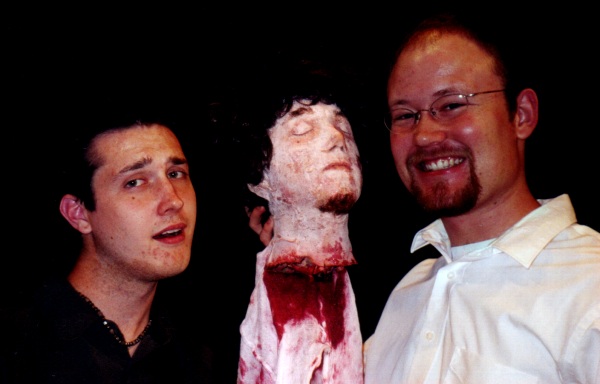
Spring of my junior year of college, I played Hastings in our school production of Richard III, a fun role in which I got to chew scenery, wear an enormous bathrobe and get my head cut off. The guy who was supposed to take the mold of my real head for that last one bungled it pretty badly; he bought this fancy molding compound, let it harden before applying it, and ended up having to mold my head with really cheap plaster.

Regardless, it was my severed head, and I really wanted it after the play was over. The drama department denied me this, of course–they already had a longstanding tradition of crushing my dreams by then.

When we went to see Lisa’s show last Friday, I got to see Flora, who showed me his senior-presentation scrapbook. It was really nice work, and he was kind enough to give me a piece of it, something I will now treasure as if it were the real thing:

David and Brendan with Brendan's head.

Yeah, I told you it was a pretty bad mold. There’s a reason they kept it in a bag most of the time.

Hey, I show up in a Google News search! Thanks to those plays we did. I mentioned I was going to help out with some plays a while back, didn’t I? They went well. The audiences were small but nice. I only missed one sound cue in six performances, so I feel okay about that.

We debuted our little improv troupe, too, which also went fairly well. We did have to deal with a horrible performance space and karaoke downstairs (we asked them to, oh, turn it down a bit just from 2300 to 2400 hrs, and they agreed, and then turned it way the hell up), but we did well all the same. Our last show, this past Saturday, was probably our best yet. I was glad that was the one to which most of my friends came. I rode Greg the Terminator to Wal-Mart after drinking twelve tubs of movie butter, and Nicole and Richard were psychic. Evan was so emo it hurt (for that matter, Evan was so emo he got a LiveJournal but won’t tell me his name).

On a completely unrelated topic, I really, really need to draw comics again.

Tonight, trying to get to rehearsal, in the dark and the cold and the rain, I walked from Bearno’s to Bellarmine. The other side of Bellarmine.

Anyway, if you understand what that means and you’ve got a minute, I could use some chicken soup.