Category: Maria

Composition

Nineteen years ago my friends got together, led by Maria (hi Maria), and chipped in to buy me my first single-lens reflex camera: a Canon Digital Rebel.
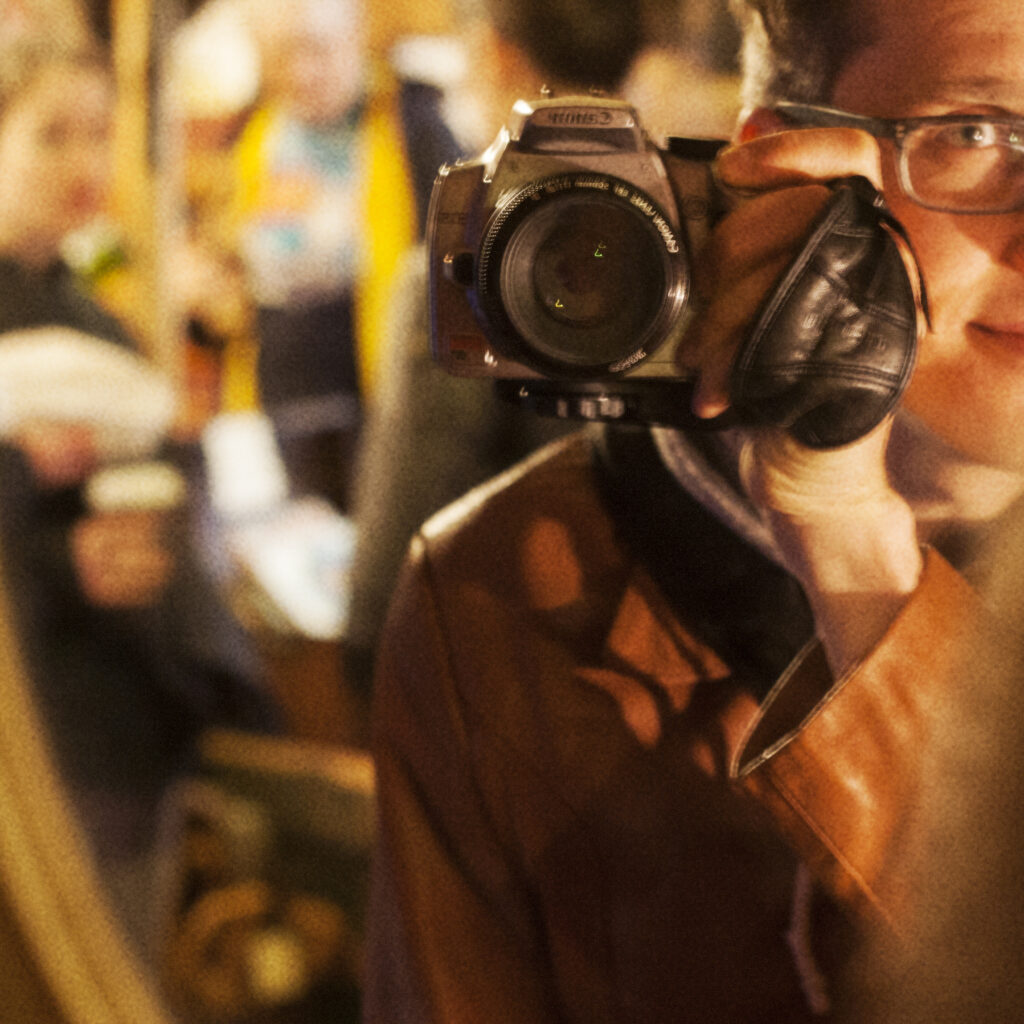
Myself in a mirror, at a plant shop in San Francisco, early 2016.I’d played with cameras since I was a kid, but until that year, I never had a solid understanding of what to do with them. Coming to that understanding took many years of developing taste for what I liked in pictures, and then more time studying the techniques involved, but mostly what I needed was a good way to experiment. My goofy webcam selfies aside, the time between taking a photo and looking at it had always been measured in weeks and dollars. But things changed once I could just snap, and chimp, and gauge what I had wanted against what I got. I needed feedback to learn.
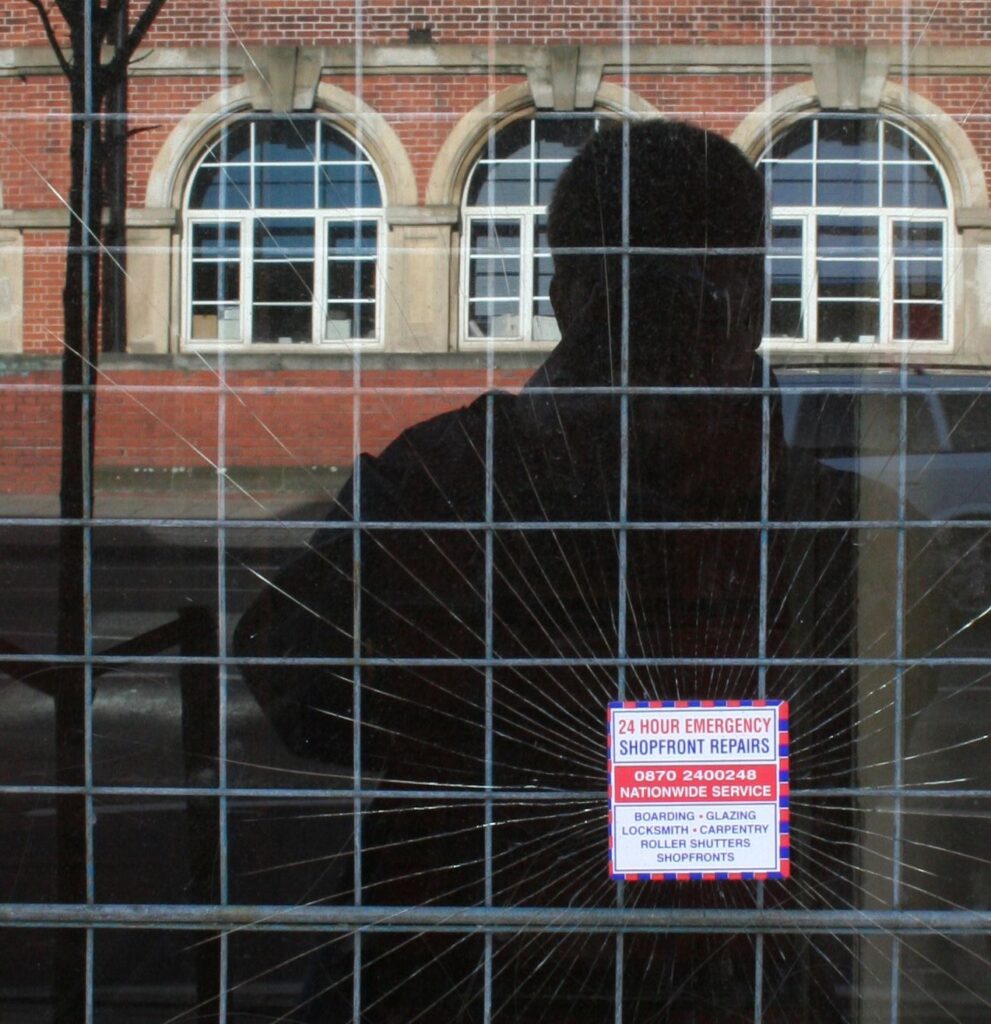
Self-portrait in shadow, reflected in shattered glass, somewhere on a Tube Walk in London.I’ve written about this in the past and I don’t want to keep retelling the same stories. But before I had a camera in my hand, I had no patience for the act of looking around me. It was only learning how to frame, evaluate light, and search for details to isolate that unlocked the pleasure of observation. After a while, I didn’t even need the camera to enjoy it! And now I prefer to shoot on film anyway, so the quick feedback loop is long gone. But the process of learning shaped me, and I still hold that shape.

My shadow, on the wall of a castle in Ireland, wearing a silly hat.Photography changed my world by making any moment, anywhere, into something I could interact with. You should email a blogger today.

“It’s quite important to know that you are heard.”

Jenny’s post about metrics (and Lucy’s quotation of it) have been rattling around in my head for months now. In my mind that post links back to something that Avery Alder said on twitter many, many years ago, in response to a wave of scolding directed at allies who purportedly “wanted a cookie” for taking part in social justice activism. I can no longer access the original wording. What I recall is that Avery acknowledged that of course such work is worth doing regardless of reward. And then she added: but so what if I still want a cookie? I like cookies!

Jenny again, deliberately out of context, because it fits other contexts too:

First of all, so? And second of all, right, exactly.
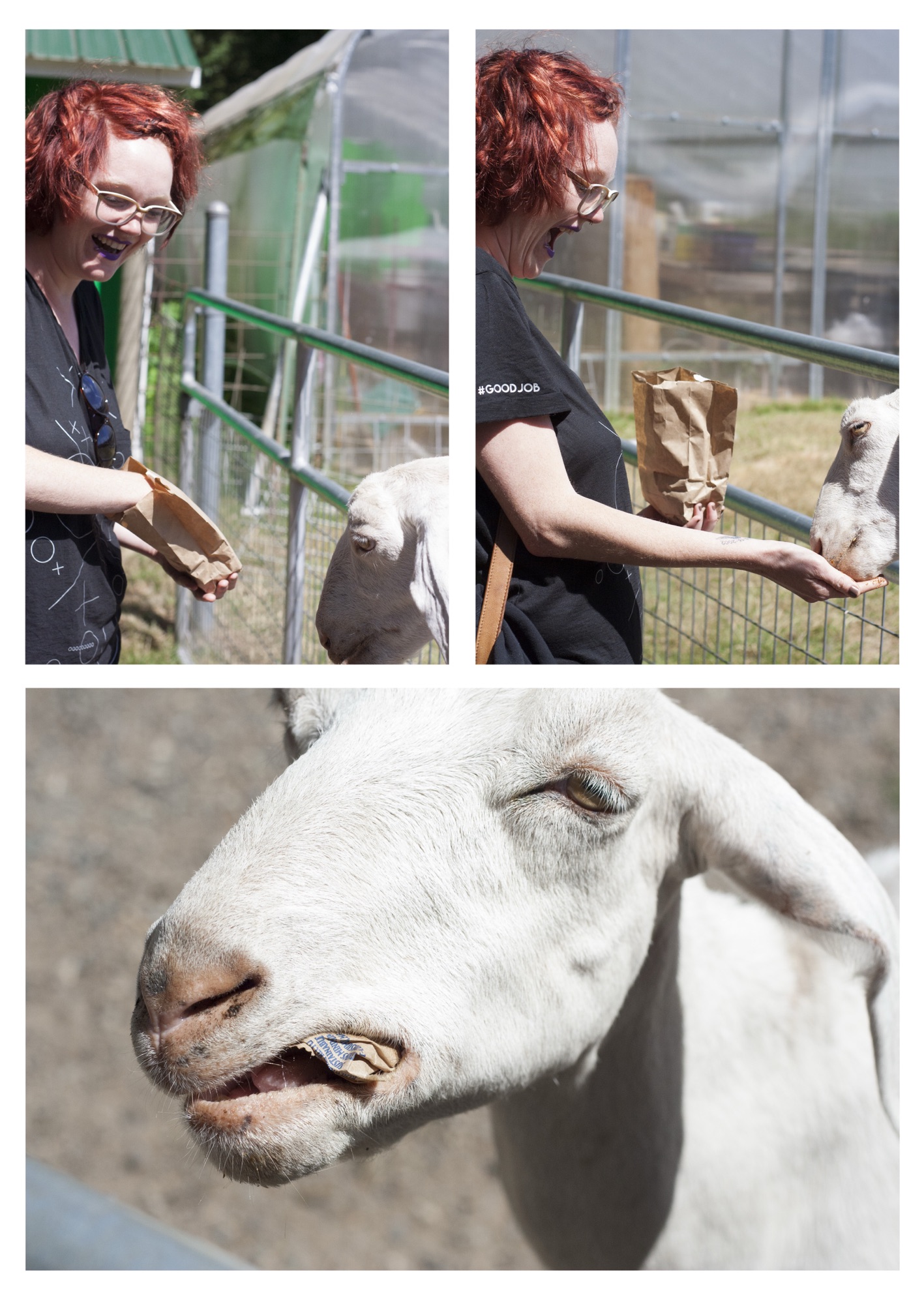
Mads feeding a goat from a bag. The goat ate the bag.

I like cookies too. And I’m a human, a social mammal whose development rests largely on the attention and response of other members of my species. It is important for humans that sometimes someone gives you a cookie. It is important to know that you are heard.

Analytics software offers numbers you can’t trust about visits you can’t see, which is not the same as being heard—in fact I think it might be the opposite. The illusion of attention contorts people into shapes that are not good for them. (I don’t even need to mention any prominent software platforms by name here, do I?)

I don’t use my degree in the dramatic arts for all that much, these days, but I am often grateful for what I learned in completing it. One of the things that Patrick Kagan-Moore said to me, the night before our play debuted, has stuck with me for 25 years. “We rehearse for months,” he said, “so we can try to find the right shape for the performance, and the first time you get a laugh from a crowd—” He snapped his fingers. “—they will train you, like that. You’ll do it the exact same way every show, trying to get that to happen again.”

Live performance is a hot medium, where response arrives quickly: snap, chimp, gauge. Writing online, and off social media, is a cold medium. That’s why the warmth of a good response matters so much.
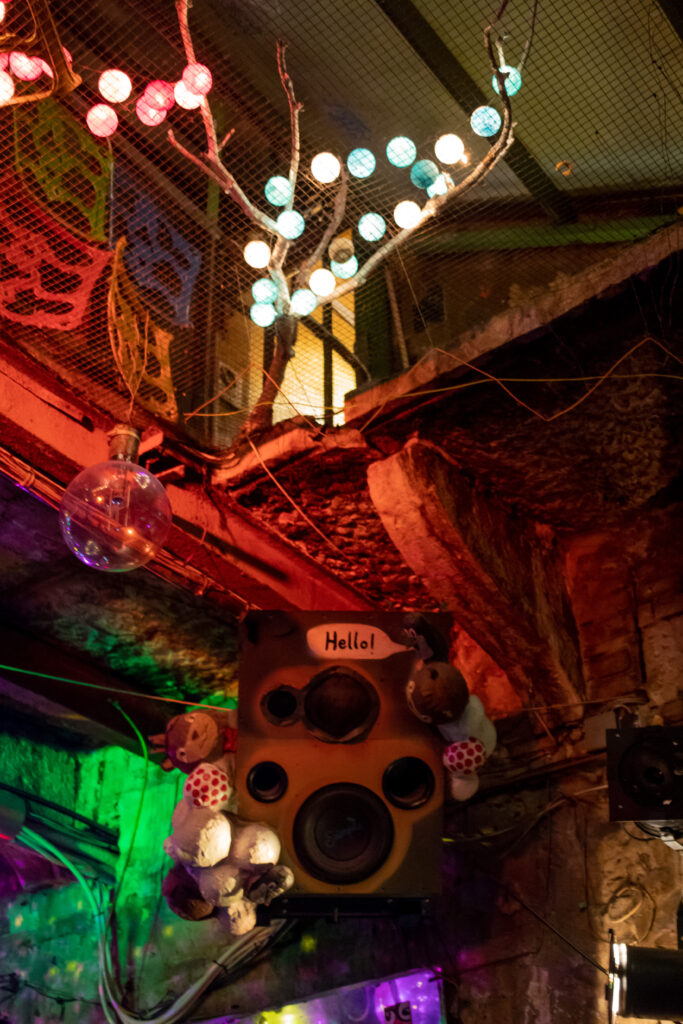
Lighted artwork from the ruin pub at Szimpla Kert, in Budapest, with an old speaker box facing the lens and a speech bubble above it saying

Sometimes I like to reach into my mental pocket and offer up chestnuts—I know I already used one food metaphor, stay with me—which I cannot promise will contain any meat. One such chestnut is that email is the infrastructure of the web. (In my grouchier moments, I say “failure state” instead.)

Infrastructure is what you fall back onto when a superstructure cannot support the load placed upon it. There are a million diagrams of the technical stack that underlies HTTP, and none of them includes a layer called “email.” But it is there, invisible, at the root of every auth request. And as direct communication over the web has been captured by those who do not wish good things for you or me, email remains the fallback there too: a crummy foundation that yet resists collapse.

When the web promised that you could subscribe directly to the words and work of people you found interesting, then broke that promise for extractive purposes, email newsletters sprang up to fit the popular demand to Just See The Goddamn People You Follow In Chronological Order God Dammit. Email is not well fit for this purpose, any more than it is for supporting the rest of the internet. The things you want to savor from your favorite writers get buried among “the to-do list that grows without your consent” (credit to Sumana). But it kind of works. And things that kind of work are what we have, online, these days.
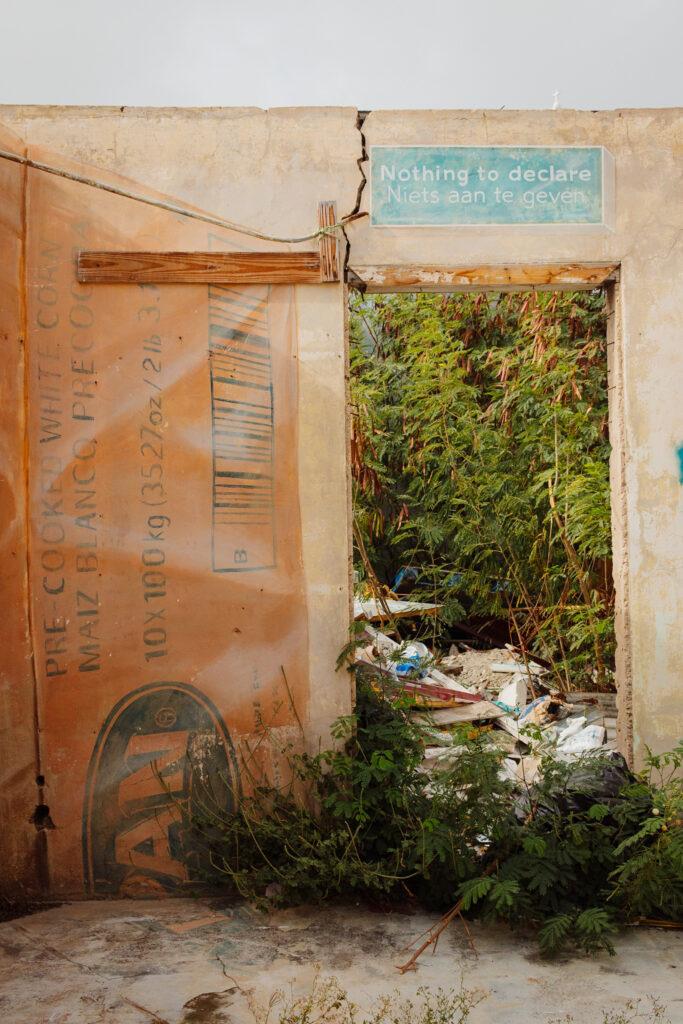
A photo from San Nicolas in Aruba, with a gaping abandoned doorway showing overgrown weeds behind it, and the words

Newsletters are blogs. Email kind of works as a way of both delivering and responding to blogs. I agree with Erin’s newsletter that writing letters is a wonderful practice too. And I don’t mean to dismiss the charm of a good comment, for blogs with comments! Comments are how I met Will, after all. But letters require physical acquaintance, and comments are a kind of public performance in their own right. Email is something else still.

The other day I had a question that was bugging me, and I looked up the relevant figure on Wikipedia. Wikipedia told me that he has a blog—a delightful blog about sailing in retirement, unrelated to the matter I had in mind. But that blog had an about page with an email address, so I wrote an email, and got a response right away.

From: Brendan (xorph@xorph.com)
To: ken@kensblog.com

Hello Mr. Williams! I’ve always wondered, why did you choose “on-line” for the original company name “On-Line Systems?” Was it derived from the idea of making software to be accessed on a mainframe through a terminal, or did the term mean something different to you at the time?

Thanks! Hope your seagoing adventures this year are wonderful.

—Brendan J

From: Ken Williams (ken@kensblog.com)
To: Brendan

You nailed it. Yes – I was doing freelance contract work on mainframe computers, specializing in large computer networks (literally on-line systems). When I started Sierra I kept the name I had been using for my contracting.

When we started getting larger I realized someone already owned the name and had to change our company name.

-Ken W

From: Brendan (xorph@xorph.com)
To: ken@kensblog.com

It’s so satisfying to have a clear answer to that after all these years. Thank you so much!

From: Ken Williams (ken@kensblog.com)
To: Brendan

🙂👍

The exchange was months ago, but I continue to enjoy the pleasant feeling of this tiny conversation. I have other emails I have received in years past that I keep close in my heart, just because they caught me at a good moment with a kind word. Even without much social media in my life, I do talk to people in other ways online, via Izzzzi and Peach and sometimes (sigh) Discord. But a few lines of thoughtful outreach, one to one, carry a warmth and weight of meaning that is singular.

I’ve taken a lot of photos over the last couple of decades. In doing so I have learned that I’m not particularly adept in most genres. Landscape and street photography don’t come naturally to me, posed portraiture remains elusive, and things like sports or wildlife photography are far beyond my abilities. What I like shooting most are candids. They require at least a little skill, a little preparation, a watchful eye, and luck: I shoot a dozen for every picture that turns out the way I want it. But there is nothing like that moment of resolution, when I see on a screen that taking the shot has succeeded.

A photo doesn’t really make a moment permanent. Our photos are ephemeral, just like our selves. They still matter. Ephemeral connections, one to one, are the material we use to construct meaning in our own stories. You and I were born in a time when there is no other choice but to find our lives shaped by emails. So pick a shape you like, and put something in it that you want to see again.
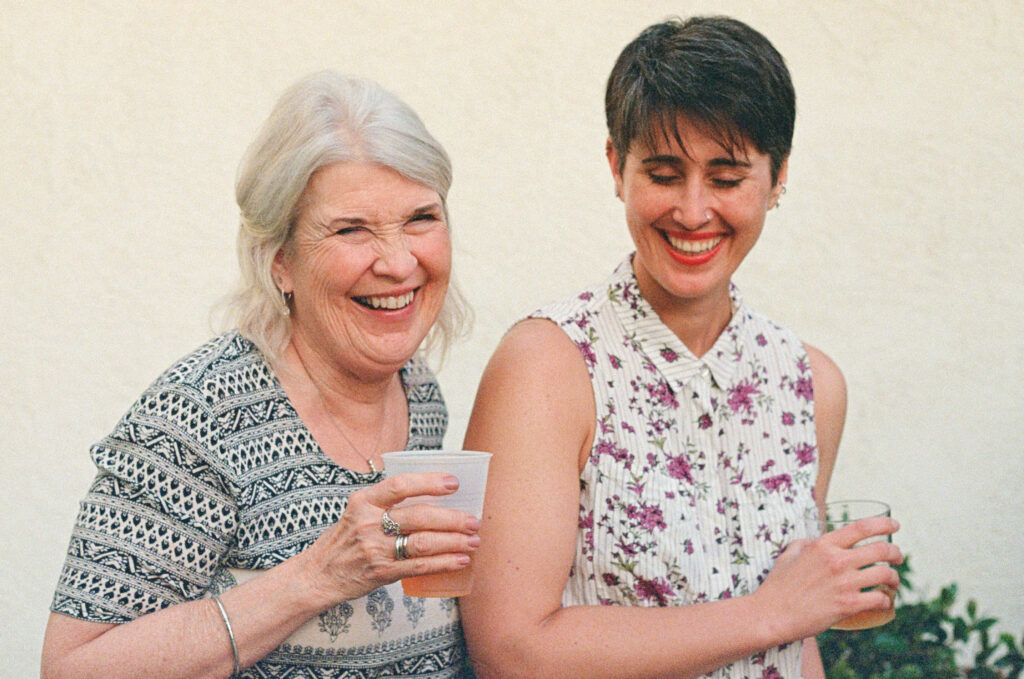
My wife and my mother, laughing together.

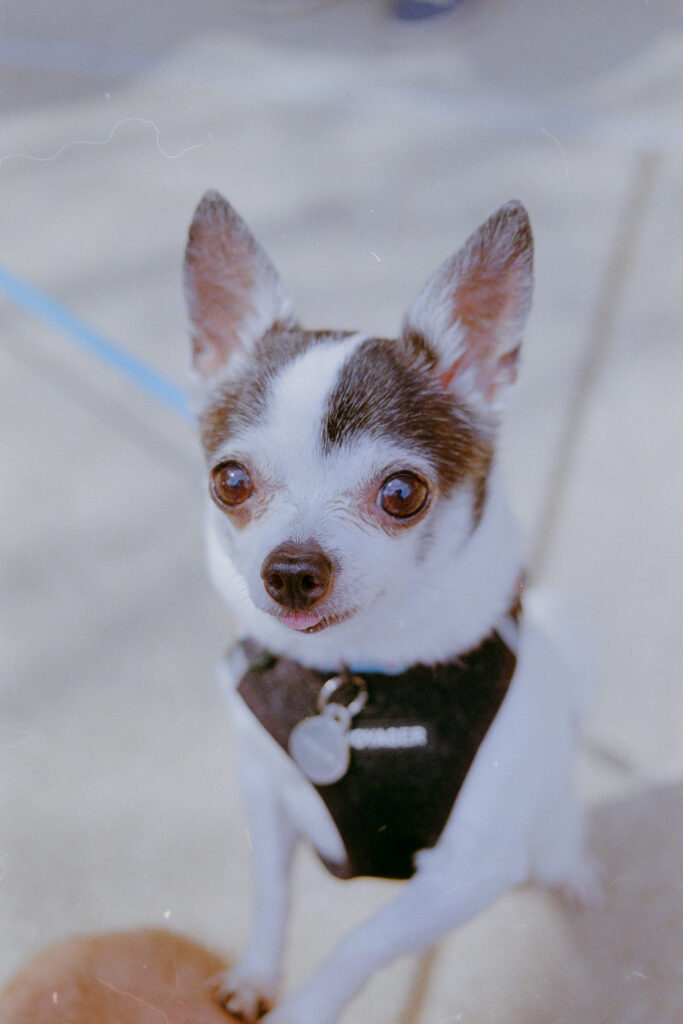
A very small dog named Chauncy blepping with his paw on my knee.

My partner Hannah in monochrome, obscured by a lens flare.

Sophie and Erin sitting in the sand and smiling, probably at Kat's beach birthday.

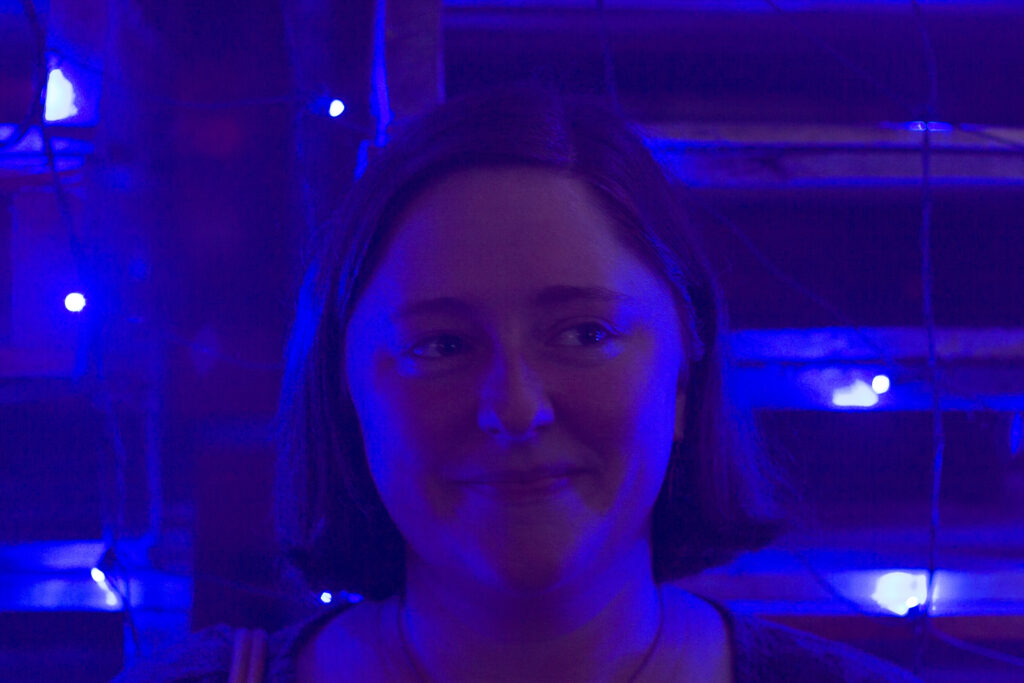
Erin at Bit Bash in 2015, lit entirely in blue.

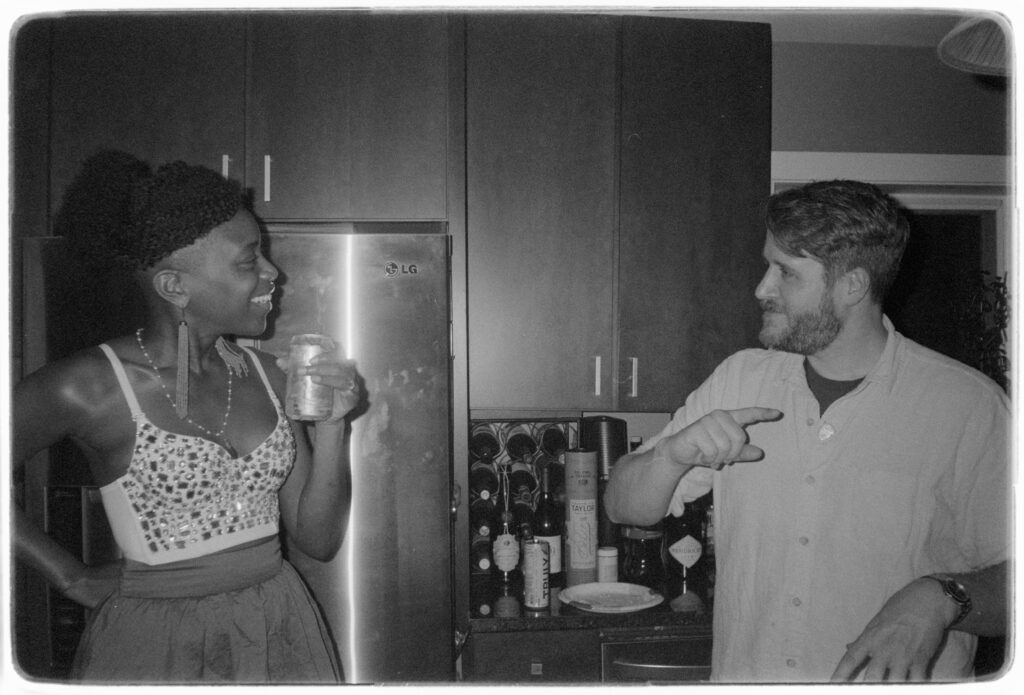
Ayo and Stephen, in a kitchen and monochrome, having a totally not posed conversation.

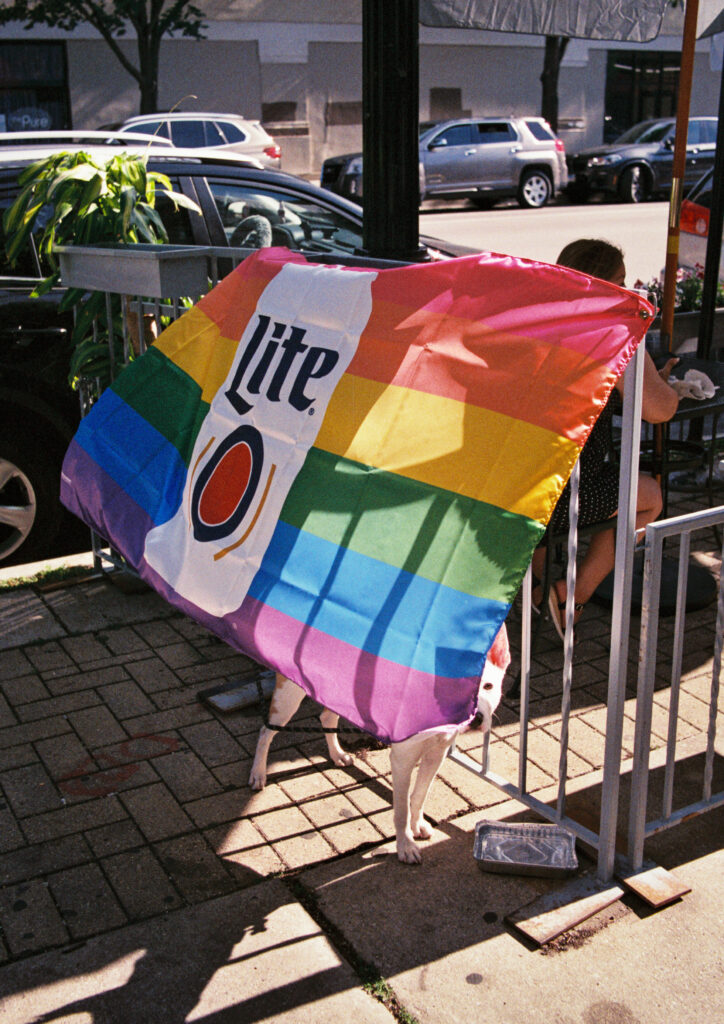
A small dog peeking nervously out from behind a Miller Lite rainbow pride flag.

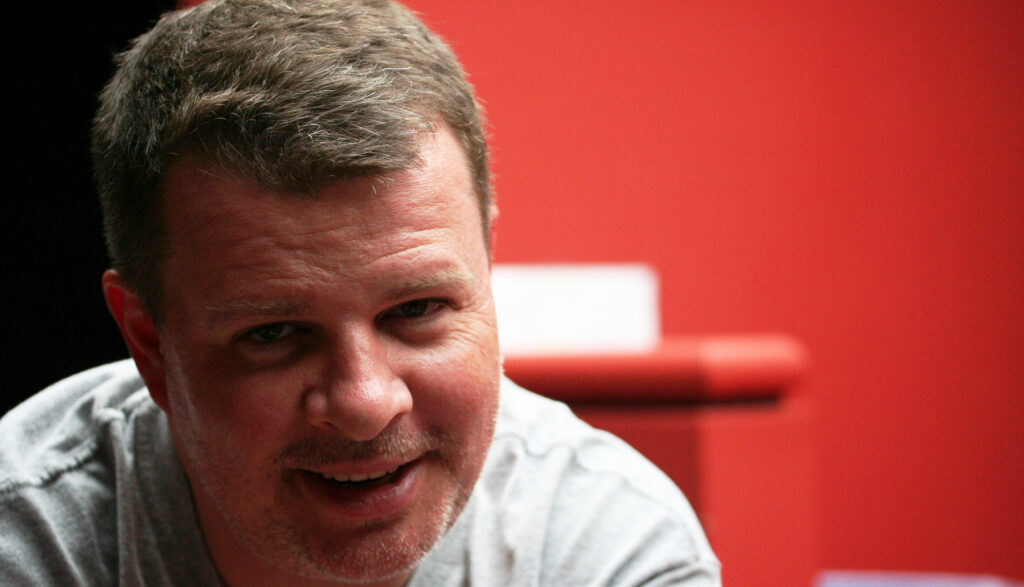
Chris, in a red room, weary in 2008.

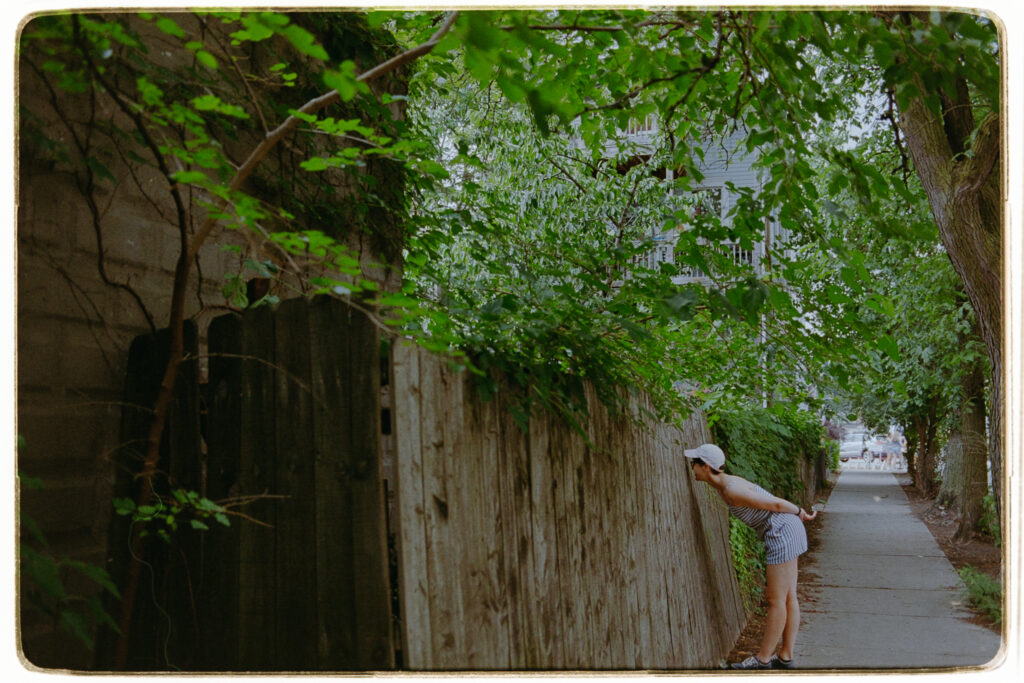
Kat at a distance, leaning down to peer through a hole in a fence.

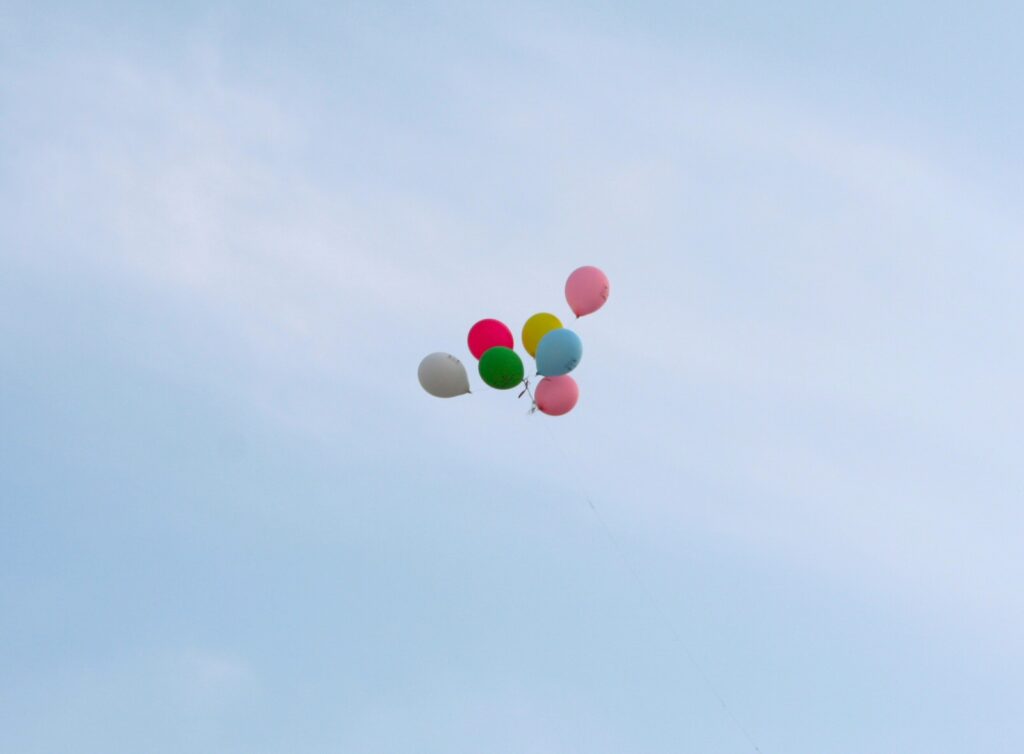
A cluster of balloons escaping into the sky.

Notes from the New Normish

Hi, we’re alive and fine. My privilege is as evident as ever, as my daily routine of isolation with Kat resembles what Maria called “an extended snow day,” mostly but not entirely without snow. I hurt for the sick and grieving; I worry for the essential and vulnerable; I watch Bon Appetit and experiment with vegan baking; I do my internet job and I watch out my window and wait. Here are some things that have held my interest in the last little while.

  1. As mentioned in asides, I read too much about menswear online and off these days. My favorite habit is to bargain-hunt for clothes from Japan on eBay, prance around the living room in them to aggravate Kat, and then secret them away so I can buy more. But the emergent result is that I’ve learned a lot about things I might have disdained ten years ago. I don’t have any special interest in James Bond, for instance, but Matt Spaiser’s blog about the tailoring of the films has taught me a ton about men’s fashion in the last sixty years. His post on how Cary Grant’s suit in North by Northwest (1959) went on to influence Bond’s costuming is a great example of the dry clarity of his writing.
  2. It seems like I’ve never written about Porpentine Charity Heartscape here before, which is strange, as her work has loomed large in my view and admiration for… seven years? Eight? Her work in writing and game design blends the sweet, the filthy, the transgender and transhuman, the pure and the skin-crawlingly cute in a way I find singular in every sense. If that sentence doesn’t hint at some content warnings, then I hope this one does. But that boundary is very much worth braving if you are so emotionally equipped. Her recent story “Dirty Wi-Fi” on Strange Horizons is a good introduction to her prose and perspective.
  3. Despite my limited dabbling in microelectronics, I can’t follow many of the technical specifics in this review of process and call for aid on a final, perfect Super Nintendo emulator. But the SNES was a system that still informs my design and aesthetic sensibilities, twenty-seven years later, and I respect the author’s work very much. The most striking quote to me:

    “I can tell you why this is important to me: it’s my life’s work, and I don’t want to have to say I came this close to finishing without getting the last piece of it right. I’m getting older, and I won’t be around forever. I want this final piece solved.”

    What an extraordinary thing it seems, to me, to know what your life’s work is. I hope one day I do.

“Who’s the agent in charge to get my sister-in-law into bed these days.”

In the grand tradition of Dada Everything, and appropriately via Adam Parrish, comes Josh Millard’s Previously, on the X-Files… It’s fun! In a few minutes of hitting refresh to perform my valuable human function of sorting random nonsense from random inspiration, I was able to generate some pretty great stuff, like Dana Lebowski, Scully’s Terrible Realization and Scully/Langly: Dance Remix. But the best part about it is that the transcripts from which it draws seem to include a great many standalone ellipses, which work beautifully in the context of textual noise. Besides creating these amazing awkward moments, you also get tense standoffs and very confused Mulders and this spectacular failure to communicate.

Someone make one of these for Next Generation now please yes.

Rock Band Wishlist

My phone has no ringtones and I’ve never owned a CD I didn’t rip, but the record industry has finally found a way to get even me to pay for songs I already own: Rock Band. At least the downloadable tracks have the value-add of being interactive at multiple levels. What they do not have, sadly, is a way to cater exclusively to my taste. Until now!

I put these together working on the three-songs-per-band model they’ve established on Live so far, and basically within the creators’ bent toward three- or four-piece groups and a fairly narrow definition of “rock.” Also with the fact that I don’t really know anything about music before 1998.

Semisonic:

  • “Brand New Baby”
  • “Closing Time” (well, I mean, come on)
  • “Get a Grip”

Queen, although I know these are all impossible for one reason or another:

  • “Bohemian Rhapsody”
  • “Under Pressure”
  • “Killer Queen”

Jimmy Eat World:

  • “Lucky Denver Mint”
  • “Sweetness”
  • “Nightdrive”

Barenaked Ladies (man, this is hard):

  • “Brian Wilson (live)”
  • “Too Little Too Late”
  • “Maybe You’re Right”

Ted Leo and the Pharmacists:

  • “Me and Mia”
  • “Counting Down the Hours”
  • “La Costa Brava”

I know there are already a million Foo Fighters songs, but still:

  • “Everlong”
  • “Breakout”
  • “All My Life”

The New Pornographers:

  • “Mass Romantic”
  • “Letter from an Occupant”
  • “Sing Me Spanish Techno”

And, finally, U2 (yeah, I know they’re working on it):

  • “Desire”
  • “Mysterious Ways”
  • “If God Will Send His Angels”

I invite you to eviscerate me in commentary, or post your own wishlists. Maria, for example: Prince? Lisa: TMBG? Someone: Beck or the Decemberists?

Update 1432 hrs: Andy suggests replacing “Sing Me Spanish Techno” with “The Bleeding Hearts Show,” and offers a Tragically Hip three-pack:

  • “New Orleans Is Sinking”
  • “38 Years Old”
  • “Fireworks”

And Ken, inevitably, has a list with a lot more depth than mine:

Jamiroquai:

  • “Canned Heat”
  • “Alright”
  • “Black Capricorn Day”

Smashing Pumpkins:

  • “Cherub Rock”
  • “Bullet With Butterfly Wings”
  • “Today”

Guns N Roses:

  • “Welcome to the Jungle”
  • “Live and Let Die”
  • “Nighttrain”

Pearl Jam:

  • “Life Wasted”
  • “Alive”
  • “Rearviewmirror”

Talking Heads:

  • “Psycho Killer”
  • “Uh Oh, Love Comes to Town”
  • “Take Me to the River”

Beck (most doesn’t translate well to guitar, bass and drums):

  • “Loser”
  • “E-Pro”
  • “The New Pollution”

Spoon:

  • “Don’t You Evah”
  • “I Turn My Camera On”
  • “Sister Jack”

Jimi Hendrix:

  • “Spanish Castle Magic”
  • “Voodoo Chile (Slight Return)”
  • “Fire”

Pink Floyd:

  • “Comfortably Numb”
  • “Money”
  • “Arnold Layne”

Sublime:

  • “Smoke Two Joints”
  • “Santeria”
  • “Pawn Shop”

And single songs:

  • The Dandy Warhols – “Bohemian Like You”
  • TV on the Radio – “Wolf Like Me”
  • !!! – “Must Be the Moon”
  • Arctic Monkeys – “I’ll Bet You Look Good on the Dancefloor”
  • Styx – “Renegade”

And Scott put up a list for Bryan Scary and the Shredding Tears, who would be insanely fun (and REALLY HARD) to play in RB–not impossible, either, as Harmonix has been pretty good to indie rock:

  • Flight of the Knife
  • Imitation of the Sky
  • Son of Stab

This is for everybody who misses how the Internet used to bag on Studio 60

The sitcom is killing sketch comedy.

Maria was emailing around this one Muppets bit from Seth Rogen’s stint on SNL and she apologized if anyone had already seen it, but, as she pointed out, “nobody watches SNL anymore.” This is hardly news. SNL’s function now is not so much to be watched as to give Andy Samberg Emmys for songs that have a penis joke. The only reason I’d even set it playing on the Tivo was because they had Spoon on, marking the first and only time I’ve deliberately watched the show for the music.

The rest of the show was factory standard, a very careful reenactment of the weekly SNL ritual (is it really a coincidence that part of the show actually airs on Sunday?). The freshest joke was a Macgyver reference. Macgyver ceased production before some of you were born.

I’ve mentioned here before that sketch comedy is unprofitably hard; not coincidentally, I was talking about Studio 60 at the time, like I’m about to do now.

Studio 60 had a running thing where one of the writer-performers wrote and led a commedia dell’arte sketch in several episodes, evidently so Aaron Sorkin could demonstrate that he took Intro to Theater History. The focus groups hated it but the head writer heroically kept it in until it could build an audience (“Matt, Matt! This week two guys in Dallas liked it!”). There are a few problems here.

  1. Commedia dell’arte isn’t funny.
  2. At least, not in and of itself, and not anymore; humor needs context, and a modern audience–even an audience that took Intro to Theater History–doesn’t have the same context as one composed of 16th-century Venetians.
  3. Dated and ritualized forms of comedy getting inexplicably more popular every week is the kind of thing that can only happen in fiction.
  4. Unfortunately for Studio 60, it can’t happen believably even there.

Now, could you write a funny sketch that incorporated the stock types and exaggerated physicality of commedia dell’arte? I doubt it. What you could do is write a ten-minute play or one-act, which gives you the time to introduce the conventions to the audience, set things up going in a direction that the tropes predict, upend the whole thing and finish with a telling and funny point about the form’s influence on modern writing.

Studio 60 tried to go a lot of places, but that wasn’t one of them. Sorkin, bless him, doesn’t do reexamination; he does reverence.

This is where I get back to SNL, as revered an institution as exists in modern television, nowhere moreso than within itself. Like Studio 60, it can’t bear self-examination; the brand of comedy in which it traffics is built high and shakily on mannerisms that date back to Dean Martin and Jerry Lewis, or even Abbott and Costello. It persists entirely due to inertia and the occasional breakout YouTube bit (ever noticed, by the way, that those look and sound like nothing else on the show?).

Now, when every network ran three or four sitcoms and they all made use of the same stylized rhythm as sketch, that was enough: they supplied each other with context. But sitcoms don’t work that way anymore. Poetically, it’s due in part to Aaron Sorkin’s Sports Night that shows like Arrested Development, The Office and My Name is Earl were able to take hold and eventually shatter the studio-audience / three-camera format.

I misstated my thesis at the beginning; it’s not so much that sitcoms are killing sketch as that sitcoms have been its life support, and now they’re pulling plugs out, one by one. If the dependency holds, SNL has about as much time left as Two and a Half Men. Both of them are rigid guardians of their genre and flagship shows. Personally, as Matt Boyd once said about syndicated comics, I want to punch a hole in that boat.

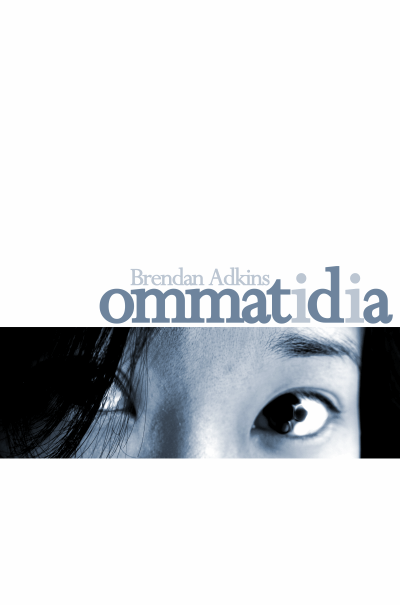
Ommatidia cover mockup round 2 go!

Brendan Adkins: Ommatidia

The images I wanted to use have since been withdrawn from CC license and weren’t working out right anyway; this one is from this lovely composite shot by DimSumDarren and it’s a lot subtler, I think. Possibly too subtle. Maria pointed out that those are not technically ommatidia, but she also pointed out that “eww,” which is a better reaction than anything I managed with the bug-eye attempts.

So close, guys, we are so close to a finished book. Quick poll (and yes, COMMENTS ARE ACTUALLY OPEN): how long did it take you to notice that something in the picture was a little off?

And now it is later

I read the arrival time on my ticket as the departure time. That is what I did. That is the stupidest and most expensive mistake I have ever made.

My housemates kindly refused to let me heave all my luggage to Heathrow myself, and so we set out together with a bag apiece at a little after 10 am. We took the express and I was at the check-in counter by 11:15, smirking at the former self who had worried about transportation time and long lines. There was no line! There was only a brusque man explaining that my flight was not at 1:00, it had been at 10:30.

I explained that I had still been on the first of several public transportation routes at 10:30.

The brusque man directed me to the ticketing counter.

I got on standby for the next flight for 200 bucks, and I did end up on it, and my seat was actually one of the best on the plane. I completely missed the last plane to Louisville from O’Hare, of course, but got on a different standby flight to Lexington and Saint Maria drove out to those hinterlands in the middle of the night to pick me up.

It should be noted that my seat on the Lexington flight was also impossibly good. Here’s what I have learned about American Airlines: reserve a seat and get fucked, or get on standby for infinite leg room and an unobstructed window view. I’m never flying on a reserved ticket again! Wait, no, I said “on a reserved ticket” when I meant “anywhere.”

My original mistake almost ended up much more costly than I anticipated. The somewhat hilarious coda is that, during my panicky evening in O’Hare, I had to make a number of pay phone calls to David Flora and Maria, trying to figure out whether I would have to stay overnight in Chicago in order to get a morning flight to Louisville. I had forgotten that trying to call a nonlocal number (like, say, any cell phone ever) from a pay phone requires more quarters than I could have held in my cupped hands, so I had to charge all these to my credit card. This meant swiping the card directly on the phone, punching in the number on the keypad, and reading it aloud to the operator before I could connect.

Apparently someone wandered by and listened to me obligingly reading out the number, expiration date, CV2, et cetera, and proceeded to charge an amount greater than my entire credit limit to the card. Capital One actually noticed and denied it; their overenthusiastic fraud department often made things inconvenient in London, but my attitude toward them is much warmer now. I’ll miss my old card number, though, which I’ve had memorized for almost ten years. Farewell, 5291071505966037! May you serve Internet in poor decision-making as well as you did me.

There is a subtext to this story: I had three friends in London to help take my luggage all the way to Heathrow, buy me yogurt and let me send emergency emails from their phones. Those emails went to more friends, one of whom was willing to put me up in Chicago, another of whom was willing to drive to tiny airports late at night just so I could get home when I wanted. I traveled across seven time zones and I had people offering me help at every step. Who cares how much ticket changes or credit card scammers might cost me? I’m rich.

The insignificance of numbers

Today I posted the 1001st story in Anacrusis, and I wanted to do something a little different for the occasion: an audio story, read aloud by a startling array of generous people. I thought the hardest part would be actually asking them to read the silly little thing without cringing, and the next-hardest would be the actual mixing process. It turns out that the hard part is not being able to use all the material from everyone for the whole thing. They were all so good!

Thanks to Robert Baker-Self, Maria Barnes, Amanda and Jon Brasfield, David Clark, Amanda Dale, Kevan Davis, John Dixon, Holly Gramazio, Josh Hadley, Sumana Harihareswara, Stephen Heintz, Catriona Mackay, William O’Neil, Leonard Richardson, Kristofer Straub, and everyone who’s had a kind or critical word to say about Anacrusis. Let’s do this again when we hit 10,201.

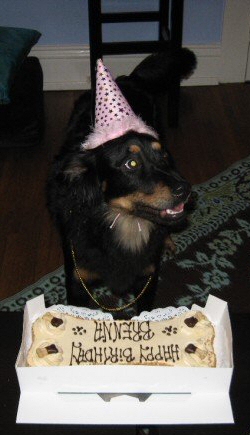
Brenna

The animal turned one year old on Tuesday; there was a party with cake and everything, which I got to attend via webcam. We live in the future.

Wednesday night (or Thursday morning) I was too exhausted to write another story for the Anacrusis queue, so Maria wrote one for me. You probably cannot guess what it is about.

Once there was the puppiest chomper in all the land. She woke up in
her chompy bed scratching her chompy head. Today was an especially chompy day.

She climbed into all the windows and looked out. She took all the
socks from the hamper and hid them. She sniffed.

Something was off.

The chomper followed Person to the car. They went adventuring!
Person bought a large box.

They got home. All of the chomper’s friends sang songs to her and
gave her stuff and there was a cake with her name on it!

It was the chompiest. She went to sleep.

Brenna is concerned about the cake.