Category: People

Won’t you be mine

Block parties are popular in Chicago’s summer; the city will loan you a free bounce house for yours if you ask. But the block where Kat and I live had not held such a party, not that anyone can remember, up until this past September. That was when our neighbors decided to change things for the better. The party we organized together was late in the season, and it drizzled a bit. But we put some garbage bags on the PA speakers and took shelter in the great fortune of our street’s tree canopy. The trees are our neighbors too. We took care of each other, and we went on.

That block party will be a good memory for a long time. It was a great success, and we met almost everyone who lives within a stone’s throw of us, and some new friends who don’t. I took photos on my little thermal-paper toy camera and handed the printouts out to kids who were playing together. We had an excess of good food and almost enough good dogs. And now when I walk our own good dog, and see someone from across the street, I can put a name to a face, and we can trade smiles that mean something more than politeness.

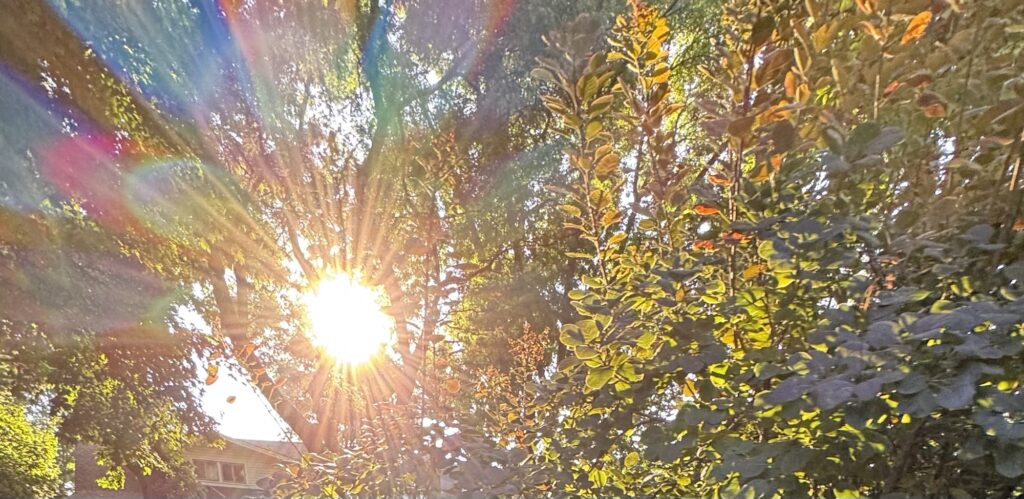
A sundog from my neighborhood, through trees, with identifying information cropped. I hope.

Less than three weeks later, masked federal agents abducted the first of their confirmed victims from the streets of Rogers Park. My mother was here visiting us. Some of my neighbors who were disappeared by the secret police were leaving the same church she attended. Some of them were trying to take their children to or from the nearby elementary school.

There has been excellent journalism showing that the kinds of people targeted in this way lacked arrest records, and had their documents, and were crucial parts of their communities. The fucking George W. Bush Center published an article this very year about how immigration benefits us all, but the truth is that people were targeted for their appearance, not their immigration status. And also: even if every one of the disappeared were an undocumented and solitary migrant with a history of arrests who took more from public resources than they returned, they would still be my neighbors. Evil committed against them is evil done to me and mine.

We wear plastic whistles when we go for walks these days. We got them from the bright warm queer coffee shop, or the physical therapist’s office, or the corner store, or the rally, or the evening crammed together in a restaurant. When we look across the street and see matching bright nylon strings looped around each other’s necks, we smile and nod, and it means much more than politeness. The smiles are tight, but they are sincere. Some say the moment of most acute terror here may have passed with the first touch of winter, at least for those of us not already detained or separated. I remain wary with pain in my heart. I have neighbors in Asheville, and Charlotte, and Baltimore, and Portland too.

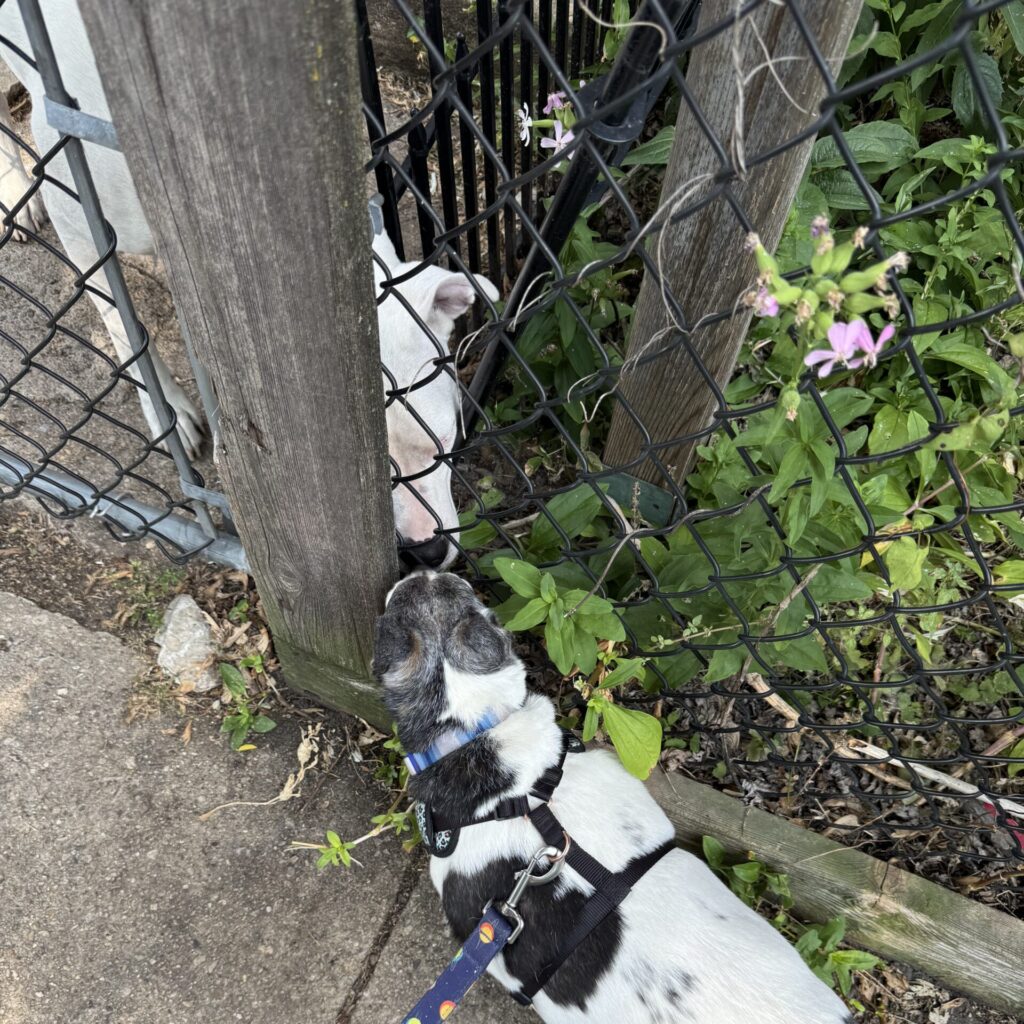
My dog and another dog touching noses through a chain-link fence

I moved a lot, when I lived in Portland: seven times in eleven years. I had the great fortune of many friends, but I didn’t get to know many of my neighbors. I often wanted to connect with them, but I was lacking in tools or time to do so, and then before long I’d be on to a different part of town. Now I live in the house I hope to keep until I can no longer climb its steps. I want the same roots the trees that line our street have grown. Yesterday I took care of an anxious dog from next door while his people were away, and when they came home they gave us a tub of beans and rice that I’m thinking of with hunger right now.

I lived decades with the terrible privilege of innocence to the way life proceeds under military enforcement. But proceed it does, for most of us. We trade favors and drink coffee. We hug each other tight at parties. We do the laundry and we watch the crosswalks. We keep our eyes up and our ears open. And when we hear the danger coming, we run toward it, not away.

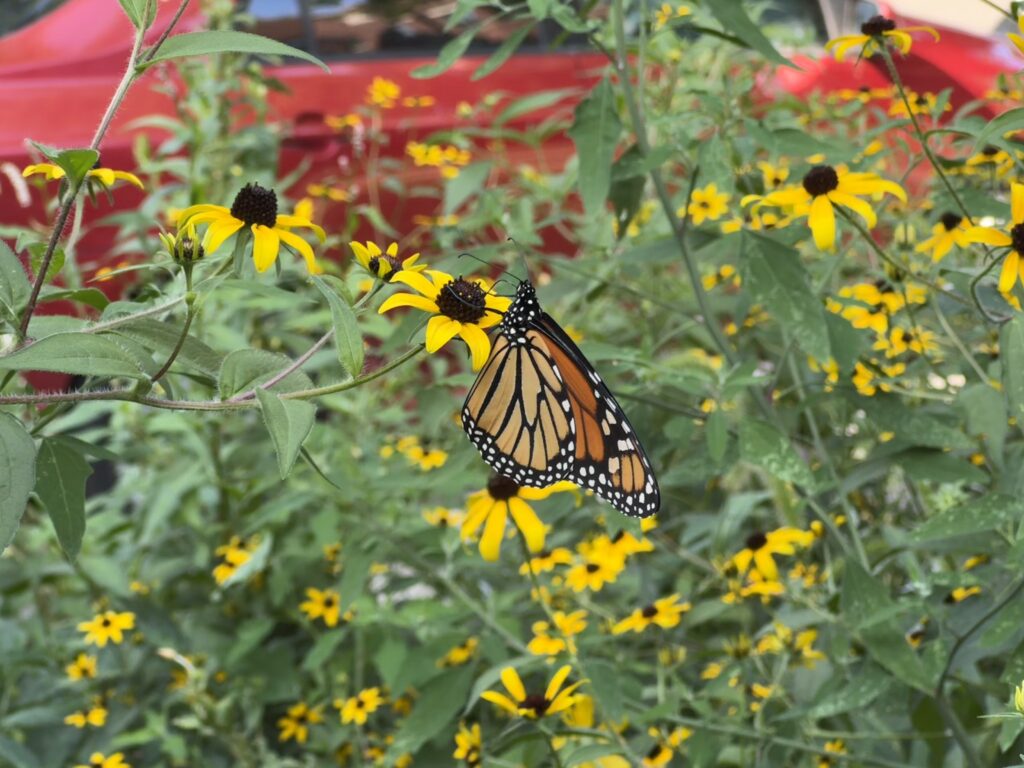
A monarch butterfly perched on a sunflower in our neighborhood

The long, deep myth of the city as center and source of violence is so strange to me. Neighborhoods, even those where heat leads to suffering among missing trees, are places where people cooperate. Cities are nothing if not neighborhoods cooperating with each other. All the many benefits they offer are born of the choice to get along and share. I grew up in suburbs, a kind of place structured by a desire to be apart from other people. I mean no unkindness to my suburban loved ones when I make this generalization. But suburbs were built because people wanted to move away; cities like Chicago, for all their flaws and failures, are places people move to. The choice of a city is the choice to be close to people you don’t yet know.

On the weekend before Mom came to visit our home, Kat and I took the city light rail line to Chicago’s train station, and thereby went to Minneapolis to visit friends we have dearly missed. On the train back home I read through all of Sophie’s beautiful new book Kin. If you click on only one link from this blog post, it should be that one. I wish I could just read it aloud to all my loved ones, even the parts where Kat and I are mentioned. The book is so moving, and by that I mean I felt it move me to action. The subtitle of Kin is “the future of family.” It is a future I believe in, and one I am trying in my small way to make our present too.

When Mom saw an article about how her fellow parishioners here had been abducted, she sent the link to our relatives, and she wrote: “We took Communion together. They are my family.” It made my chest ache, and it made me so grateful that my family of origin has a mother who sees things clearly.

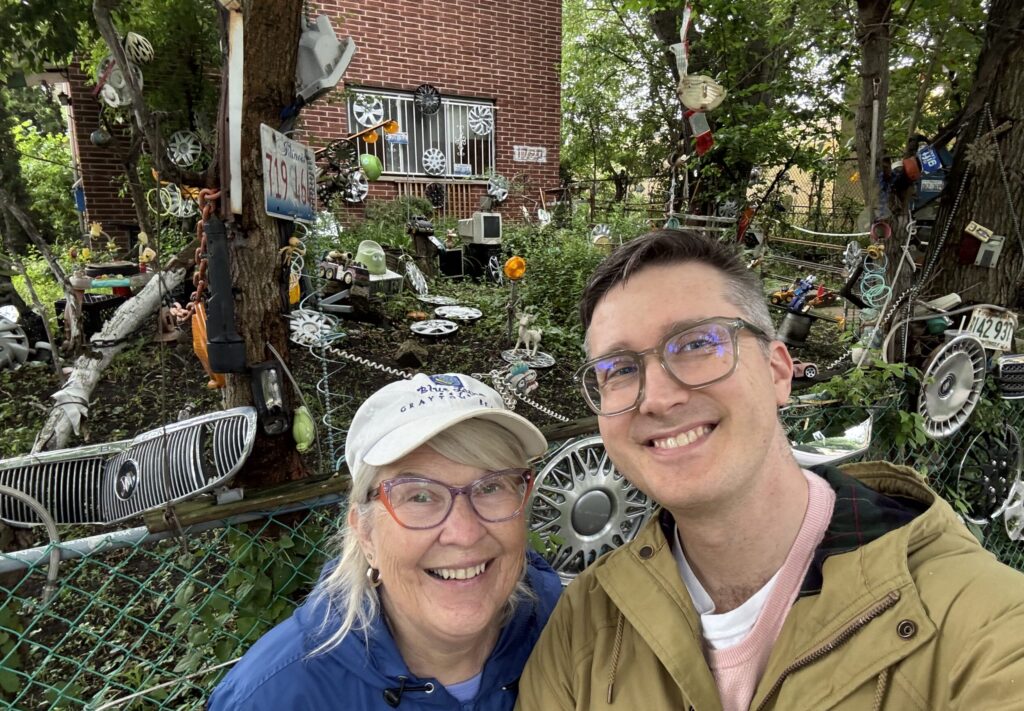
Mom and myself at a neighborhood landmark

I started writing this post because I wanted you, reading it, to take it as a sign to reach out to people where you live. It’s the only way to make strangers into neighbors and neighbors into friends. It is work I am still doing, and I have found it worth the effort many times over. I hope your neighbors don’t suck; I know some do. But even then there are more people in the next building down, and if you learn each other’s names, you can bring them cookies and trade numbers if you want to learn to like each other more.

We will only get through the worst together with those around us. Caring for each other is what makes us human, in a biological sense: prosocial behavior is the primary survival trait of our species. But it’s also the trait that brings us good dogs and pot luck and bounce houses on summer streets. I called them free bounce houses, but of course the reality is that everyone here pays for each other’s parties, just a little bit. I wish I could choose to pay for kids in bounce houses instead of in cages. I wish I could pay for my neighbors’ meals instead of tear gas. I wish that instead of paying people to set fire to our world, I could choose to keep the people around me warm.

It’s hard enough getting through a Chicago winter. It’s hard enough to feel one’s body aging, and to lose people by way of time and misfortune. It’s hard enough just doing the laundry and watching the crosswalks. It’s hard enough to care for the small and vulnerable in a family while budgeting time and money and effort to maintain oneself. It’s hard enough that work takes more and more from us, that trees and pets and people get sick, that the hours and the days slip from our grasp. It’s hard enough that things fall apart even with effort to keep them together.

Nobody needs cruelty and evil to make things harder on all of us, not even those who enact it. What we need is each other. We go on.

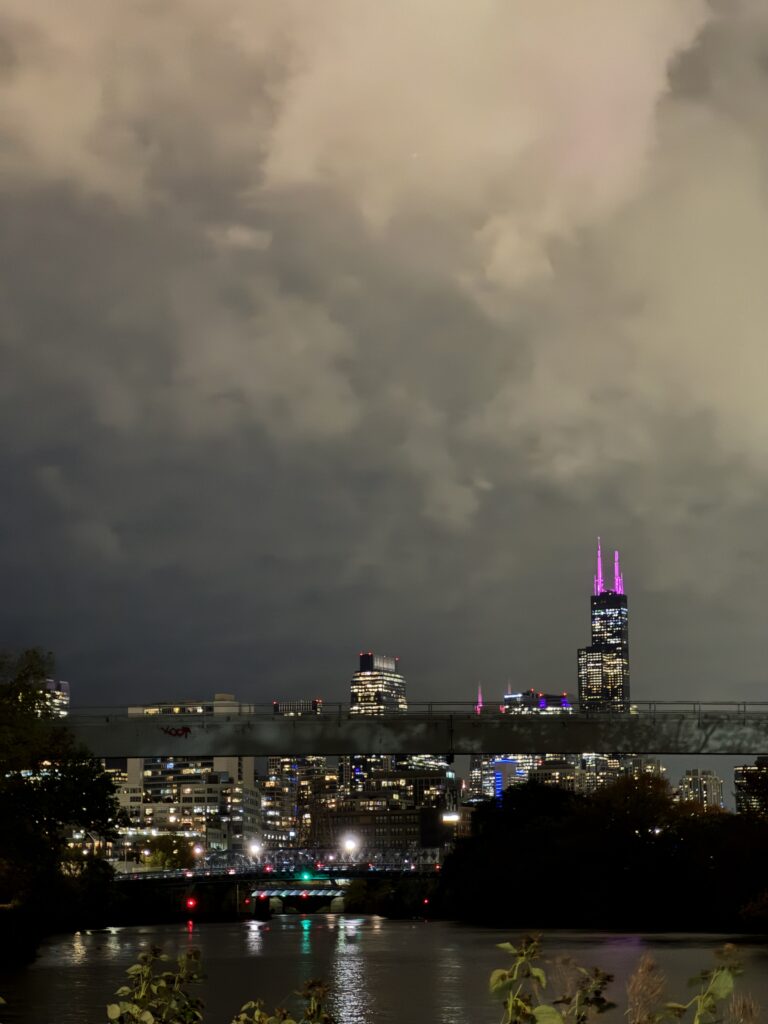
The Chicago skyline on a cloudy night, seen from the river

Composition

Nineteen years ago my friends got together, led by Maria (hi Maria), and chipped in to buy me my first single-lens reflex camera: a Canon Digital Rebel.

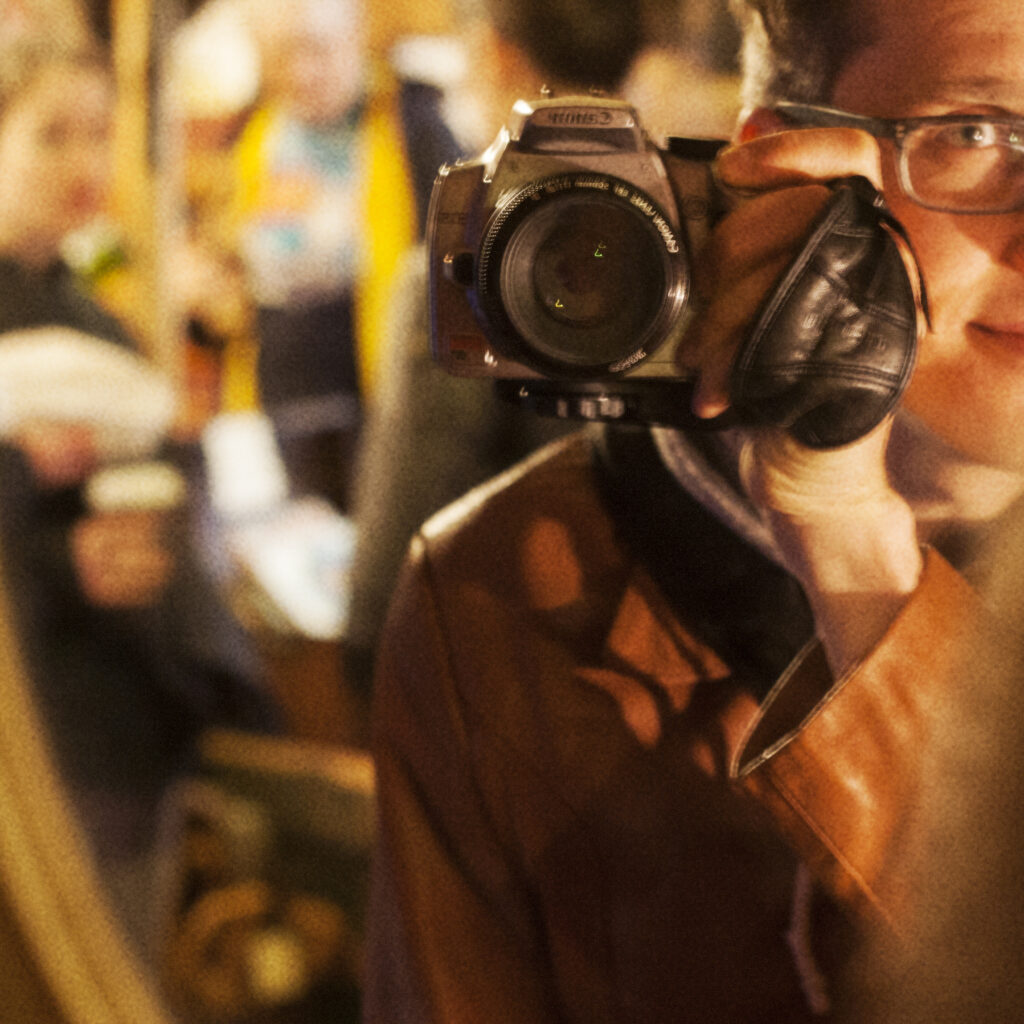
Myself in a mirror, at a plant shop in San Francisco, early 2016.I’d played with cameras since I was a kid, but until that year, I never had a solid understanding of what to do with them. Coming to that understanding took many years of developing taste for what I liked in pictures, and then more time studying the techniques involved, but mostly what I needed was a good way to experiment. My goofy webcam selfies aside, the time between taking a photo and looking at it had always been measured in weeks and dollars. But things changed once I could just snap, and chimp, and gauge what I had wanted against what I got. I needed feedback to learn.

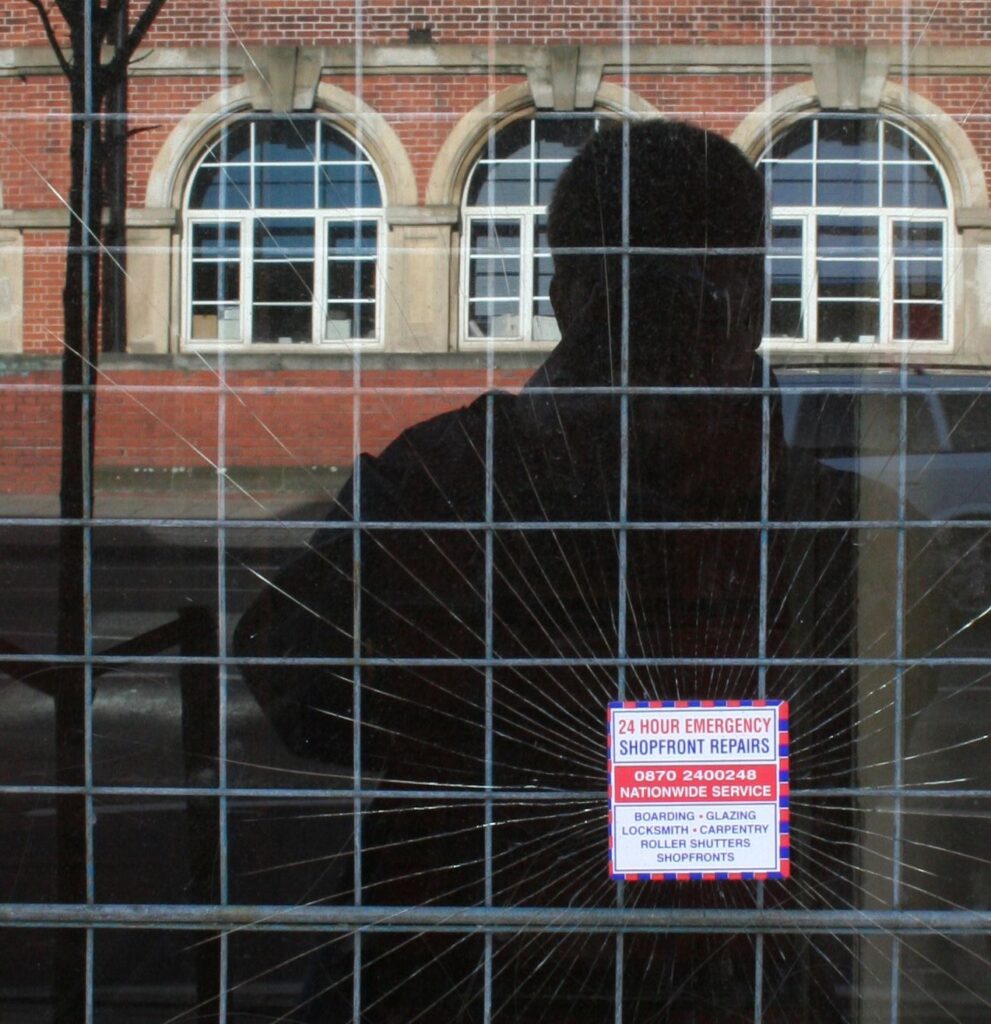
Self-portrait in shadow, reflected in shattered glass, somewhere on a Tube Walk in London.I’ve written about this in the past and I don’t want to keep retelling the same stories. But before I had a camera in my hand, I had no patience for the act of looking around me. It was only learning how to frame, evaluate light, and search for details to isolate that unlocked the pleasure of observation. After a while, I didn’t even need the camera to enjoy it! And now I prefer to shoot on film anyway, so the quick feedback loop is long gone. But the process of learning shaped me, and I still hold that shape.

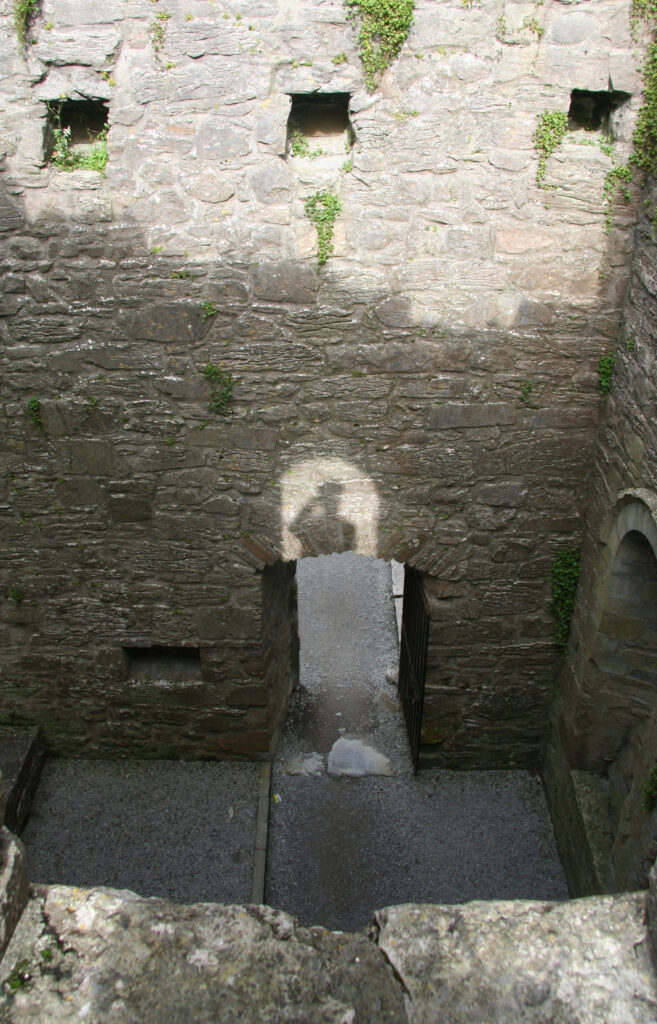
My shadow, on the wall of a castle in Ireland, wearing a silly hat.Photography changed my world by making any moment, anywhere, into something I could interact with. You should email a blogger today.

“It’s quite important to know that you are heard.”

Jenny’s post about metrics (and Lucy’s quotation of it) have been rattling around in my head for months now. In my mind that post links back to something that Avery Alder said on twitter many, many years ago, in response to a wave of scolding directed at allies who purportedly “wanted a cookie” for taking part in social justice activism. I can no longer access the original wording. What I recall is that Avery acknowledged that of course such work is worth doing regardless of reward. And then she added: but so what if I still want a cookie? I like cookies!

Jenny again, deliberately out of context, because it fits other contexts too:

First of all, so? And second of all, right, exactly.

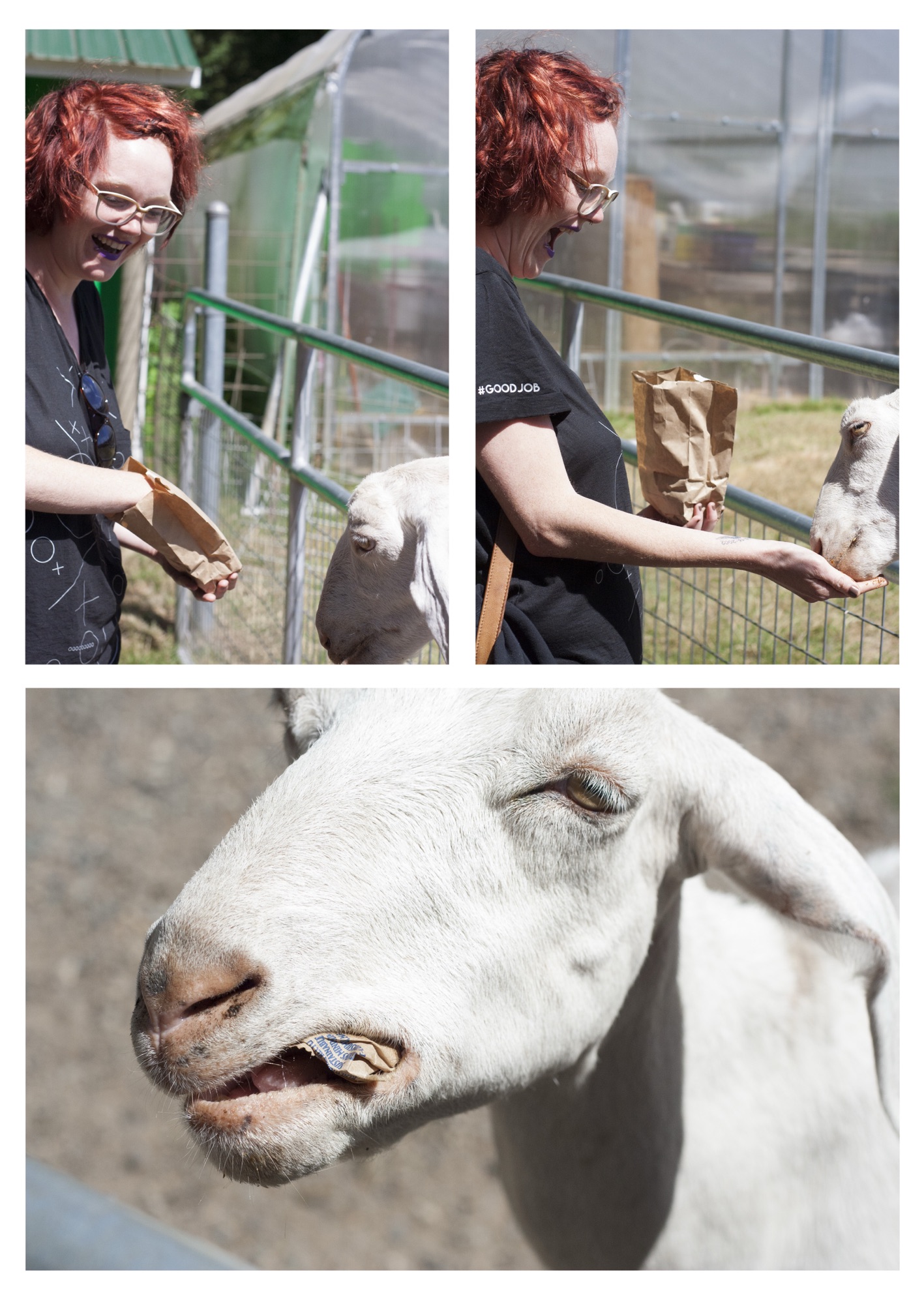
Mads feeding a goat from a bag. The goat ate the bag.

I like cookies too. And I’m a human, a social mammal whose development rests largely on the attention and response of other members of my species. It is important for humans that sometimes someone gives you a cookie. It is important to know that you are heard.

Analytics software offers numbers you can’t trust about visits you can’t see, which is not the same as being heard—in fact I think it might be the opposite. The illusion of attention contorts people into shapes that are not good for them. (I don’t even need to mention any prominent software platforms by name here, do I?)

I don’t use my degree in the dramatic arts for all that much, these days, but I am often grateful for what I learned in completing it. One of the things that Patrick Kagan-Moore said to me, the night before our play debuted, has stuck with me for 25 years. “We rehearse for months,” he said, “so we can try to find the right shape for the performance, and the first time you get a laugh from a crowd—” He snapped his fingers. “—they will train you, like that. You’ll do it the exact same way every show, trying to get that to happen again.”

Live performance is a hot medium, where response arrives quickly: snap, chimp, gauge. Writing online, and off social media, is a cold medium. That’s why the warmth of a good response matters so much.

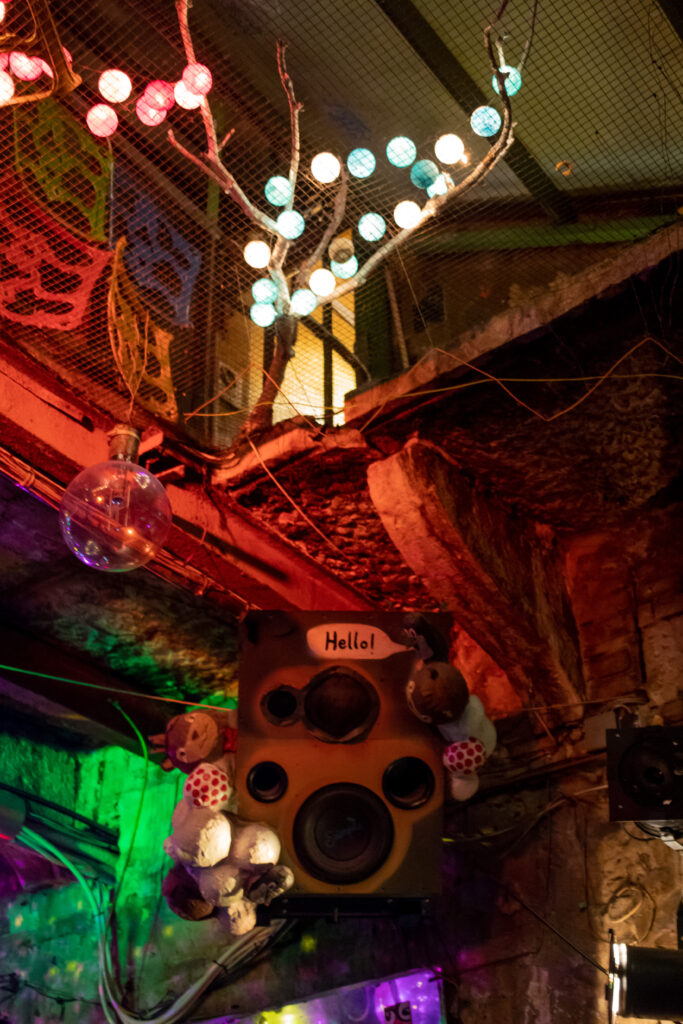
Lighted artwork from the ruin pub at Szimpla Kert, in Budapest, with an old speaker box facing the lens and a speech bubble above it saying

Sometimes I like to reach into my mental pocket and offer up chestnuts—I know I already used one food metaphor, stay with me—which I cannot promise will contain any meat. One such chestnut is that email is the infrastructure of the web. (In my grouchier moments, I say “failure state” instead.)

Infrastructure is what you fall back onto when a superstructure cannot support the load placed upon it. There are a million diagrams of the technical stack that underlies HTTP, and none of them includes a layer called “email.” But it is there, invisible, at the root of every auth request. And as direct communication over the web has been captured by those who do not wish good things for you or me, email remains the fallback there too: a crummy foundation that yet resists collapse.

When the web promised that you could subscribe directly to the words and work of people you found interesting, then broke that promise for extractive purposes, email newsletters sprang up to fit the popular demand to Just See The Goddamn People You Follow In Chronological Order God Dammit. Email is not well fit for this purpose, any more than it is for supporting the rest of the internet. The things you want to savor from your favorite writers get buried among “the to-do list that grows without your consent” (credit to Sumana). But it kind of works. And things that kind of work are what we have, online, these days.

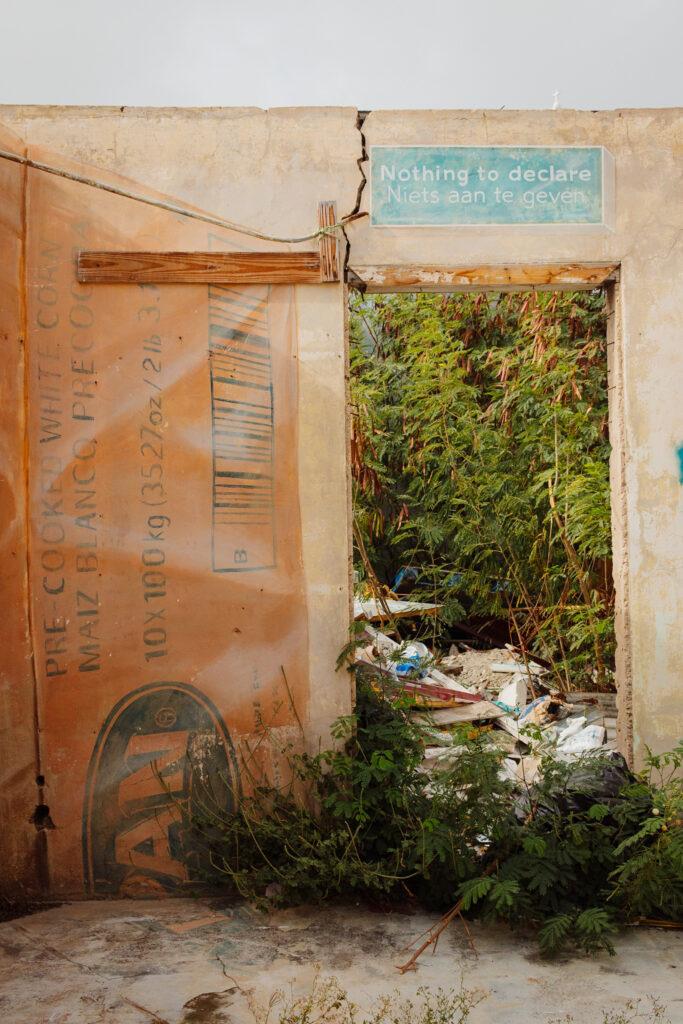
A photo from San Nicolas in Aruba, with a gaping abandoned doorway showing overgrown weeds behind it, and the words

Newsletters are blogs. Email kind of works as a way of both delivering and responding to blogs. I agree with Erin’s newsletter that writing letters is a wonderful practice too. And I don’t mean to dismiss the charm of a good comment, for blogs with comments! Comments are how I met Will, after all. But letters require physical acquaintance, and comments are a kind of public performance in their own right. Email is something else still.

The other day I had a question that was bugging me, and I looked up the relevant figure on Wikipedia. Wikipedia told me that he has a blog—a delightful blog about sailing in retirement, unrelated to the matter I had in mind. But that blog had an about page with an email address, so I wrote an email, and got a response right away.

From: Brendan (xorph@xorph.com)
To: ken@kensblog.com

Hello Mr. Williams! I’ve always wondered, why did you choose “on-line” for the original company name “On-Line Systems?” Was it derived from the idea of making software to be accessed on a mainframe through a terminal, or did the term mean something different to you at the time?

Thanks! Hope your seagoing adventures this year are wonderful.

—Brendan J

From: Ken Williams (ken@kensblog.com)
To: Brendan

You nailed it. Yes – I was doing freelance contract work on mainframe computers, specializing in large computer networks (literally on-line systems). When I started Sierra I kept the name I had been using for my contracting.

When we started getting larger I realized someone already owned the name and had to change our company name.

-Ken W

From: Brendan (xorph@xorph.com)
To: ken@kensblog.com

It’s so satisfying to have a clear answer to that after all these years. Thank you so much!

From: Ken Williams (ken@kensblog.com)
To: Brendan

🙂👍

The exchange was months ago, but I continue to enjoy the pleasant feeling of this tiny conversation. I have other emails I have received in years past that I keep close in my heart, just because they caught me at a good moment with a kind word. Even without much social media in my life, I do talk to people in other ways online, via Izzzzi and Peach and sometimes (sigh) Discord. But a few lines of thoughtful outreach, one to one, carry a warmth and weight of meaning that is singular.

I’ve taken a lot of photos over the last couple of decades. In doing so I have learned that I’m not particularly adept in most genres. Landscape and street photography don’t come naturally to me, posed portraiture remains elusive, and things like sports or wildlife photography are far beyond my abilities. What I like shooting most are candids. They require at least a little skill, a little preparation, a watchful eye, and luck: I shoot a dozen for every picture that turns out the way I want it. But there is nothing like that moment of resolution, when I see on a screen that taking the shot has succeeded.

A photo doesn’t really make a moment permanent. Our photos are ephemeral, just like our selves. They still matter. Ephemeral connections, one to one, are the material we use to construct meaning in our own stories. You and I were born in a time when there is no other choice but to find our lives shaped by emails. So pick a shape you like, and put something in it that you want to see again.

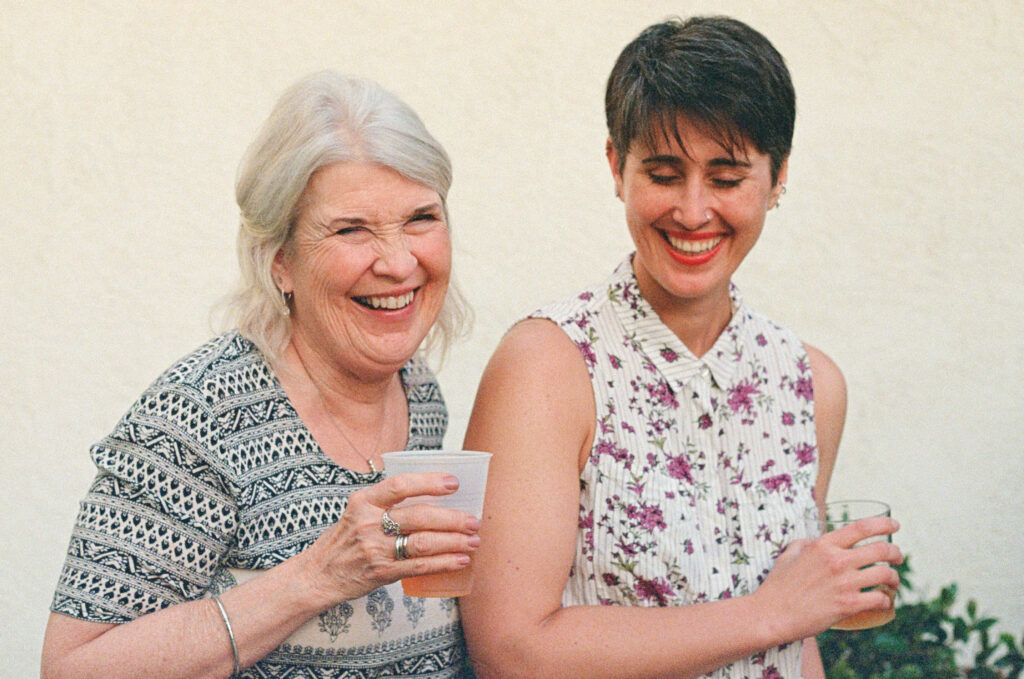
My wife and my mother, laughing together.

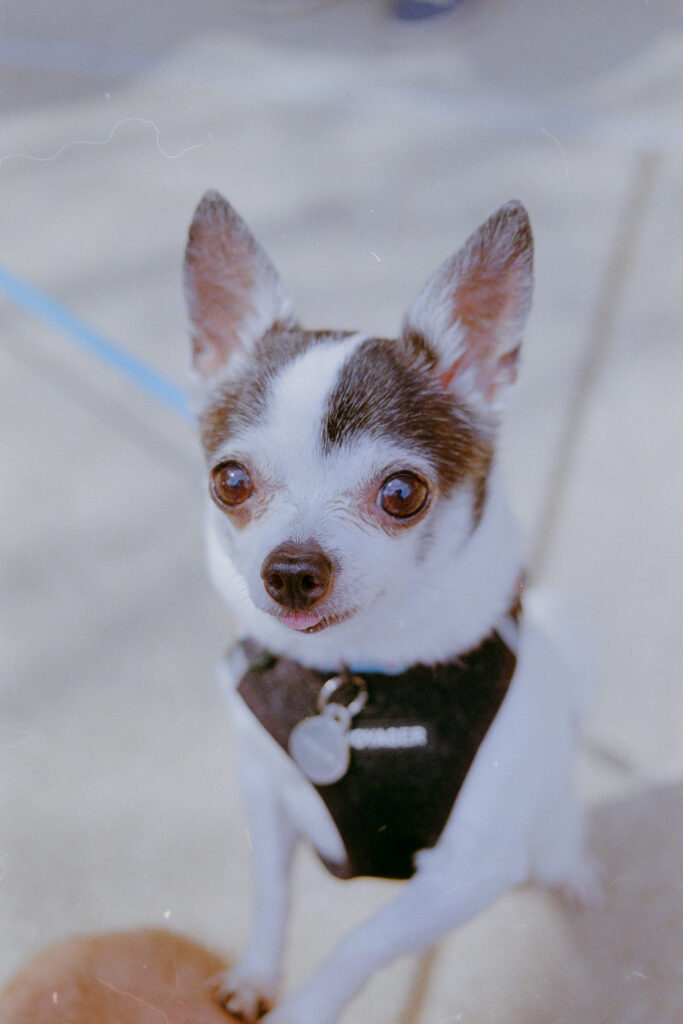
A very small dog named Chauncy blepping with his paw on my knee.

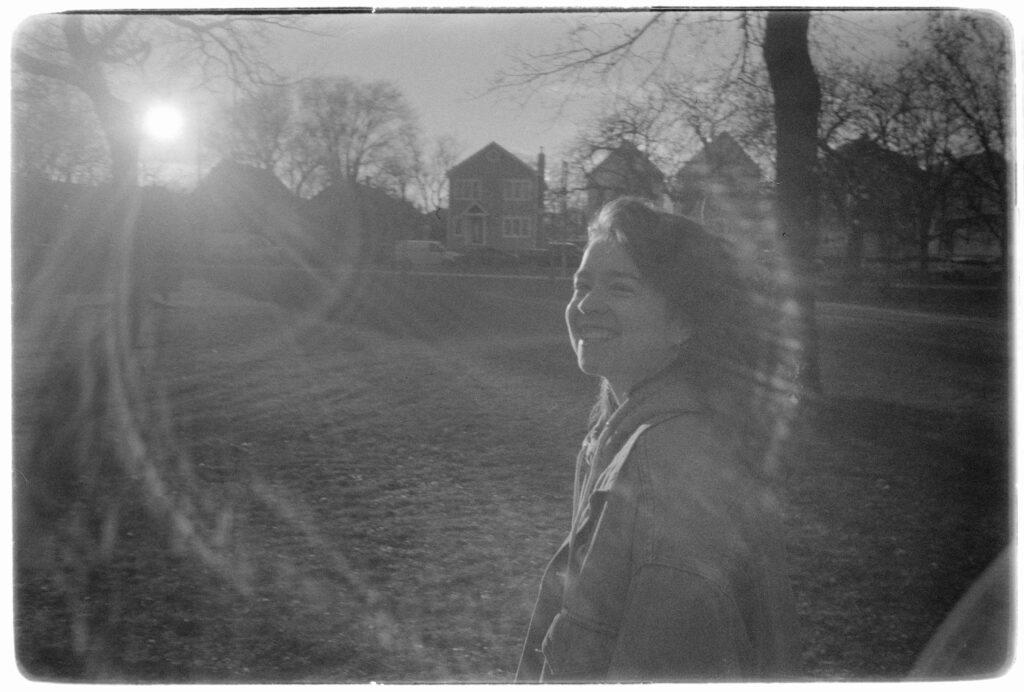
My partner Hannah in monochrome, obscured by a lens flare.

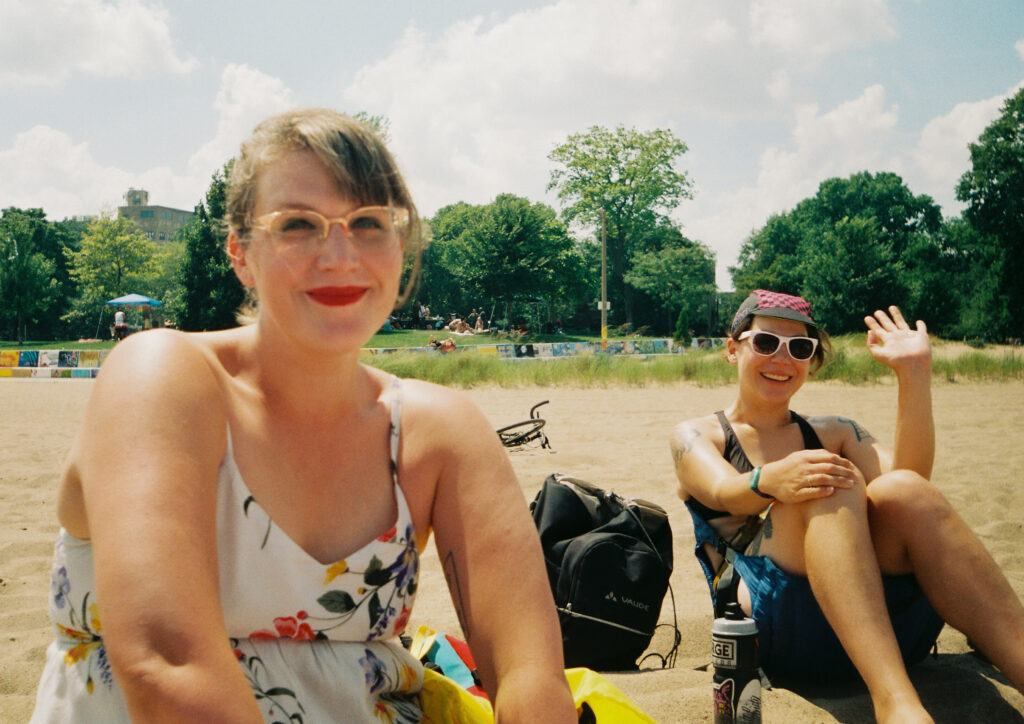
Sophie and Erin sitting in the sand and smiling, probably at Kat's beach birthday.

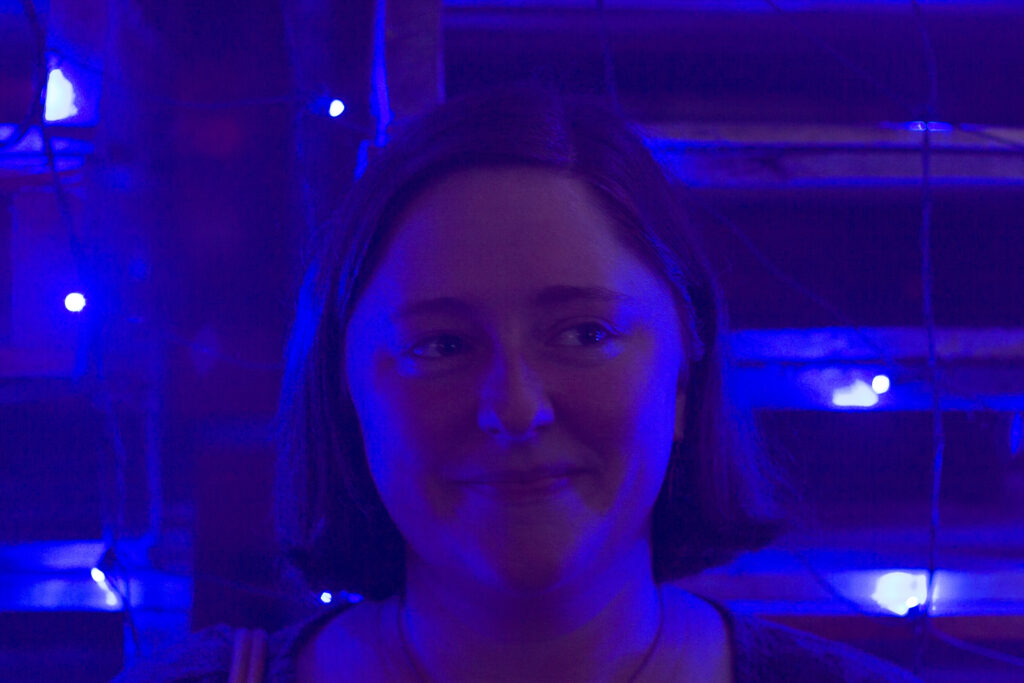
Erin at Bit Bash in 2015, lit entirely in blue.

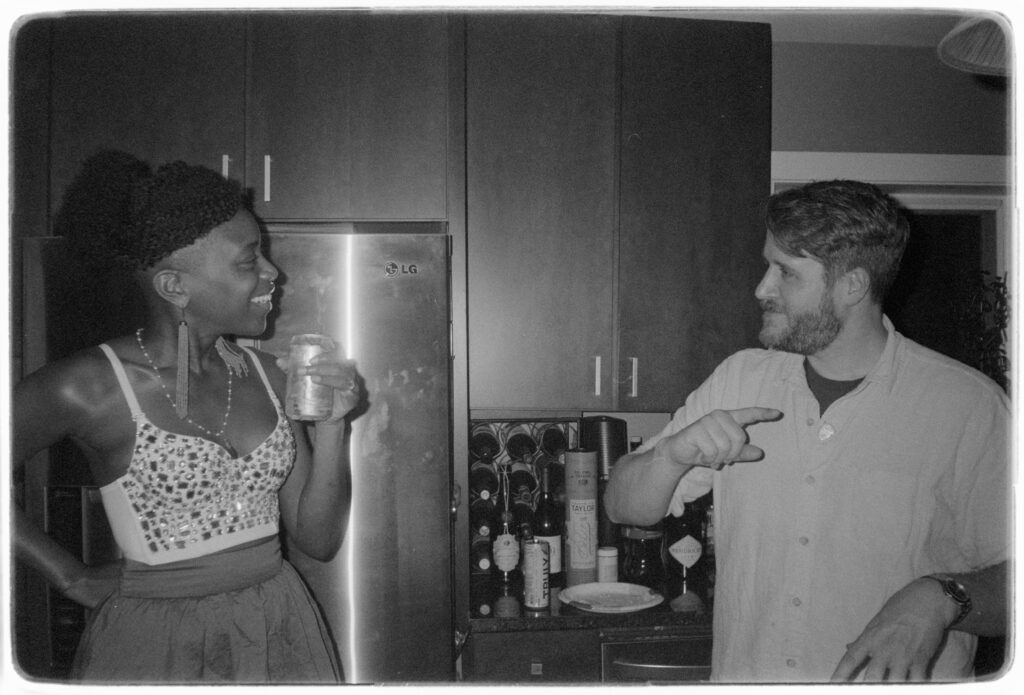
Ayo and Stephen, in a kitchen and monochrome, having a totally not posed conversation.

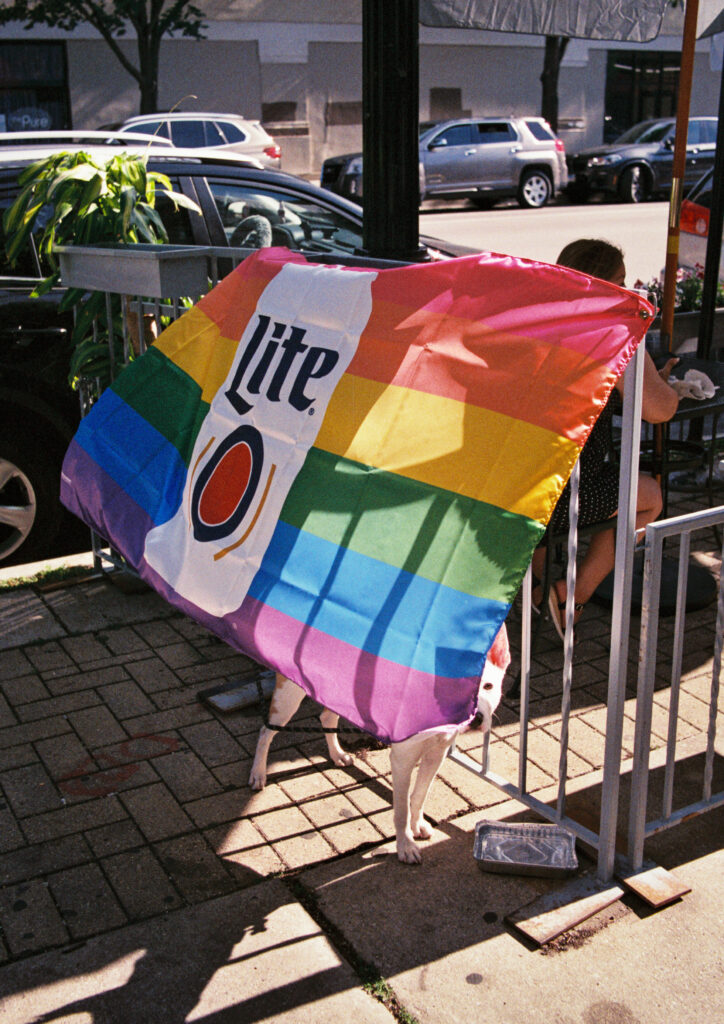
A small dog peeking nervously out from behind a Miller Lite rainbow pride flag.

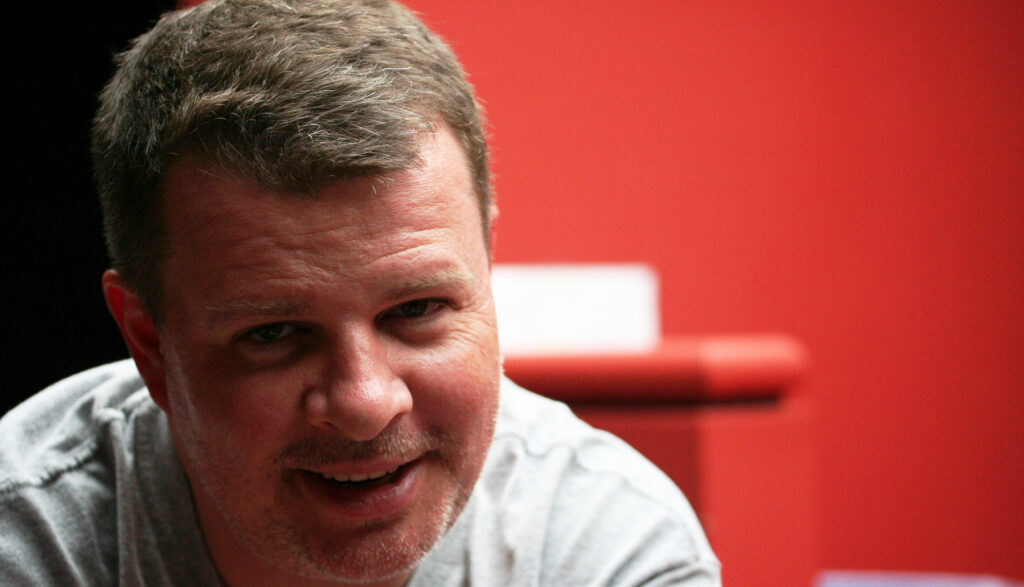
Chris, in a red room, weary in 2008.

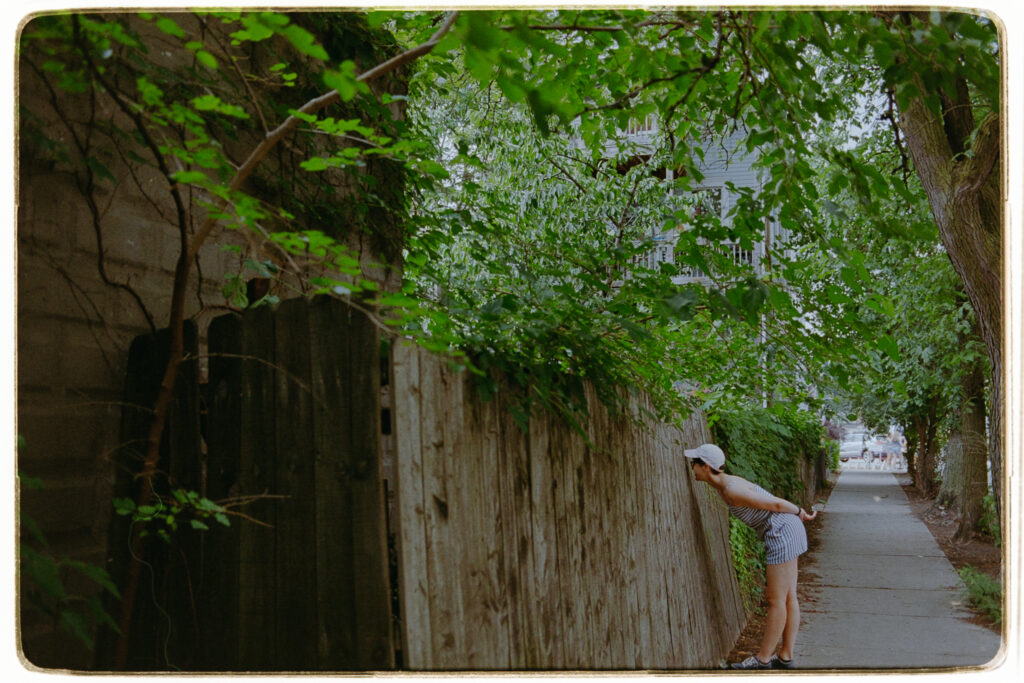
Kat at a distance, leaning down to peer through a hole in a fence.

A cluster of balloons escaping into the sky.

An interview with an injection test

There was a moment in time when, thanks to a kind reader named Allison, this blog got its updates syndicated to a Livejournal account. People there could see my offsite posts integrated into their friend-feed and even post comments. It is hard to convey just how dominant LJ was in early Web 2.0 if you weren’t there for it, but that feed was significant avenue of audience. I’ve never been much for the threaded-comment model of interaction, but I did enjoy them on the LJ feed, especially because the syndicated posts existed in an ephemeral 20-slot buffer and would vanish once they got pushed out. This was back when 20 blog posts was a matter of weeks for me, not years. I want to backspace now and turn those numerals into spelled-out numbers but I am going to move on to the next paragraph instead.

It was these ancient territories wherein I came to know a delightful person named Will (probably, we’ll address that later) O’Neil, and learned to place great store in his taste, talent for prose, and thoughtful regard. Because I have not yet pressed my luck too far on this concept, I asked him some emails! I then edited and rearranged them to such a degree that a postscript became an antescript. Each of our hyperlinks are our own, almost; all photo credits to my kindred spirit.


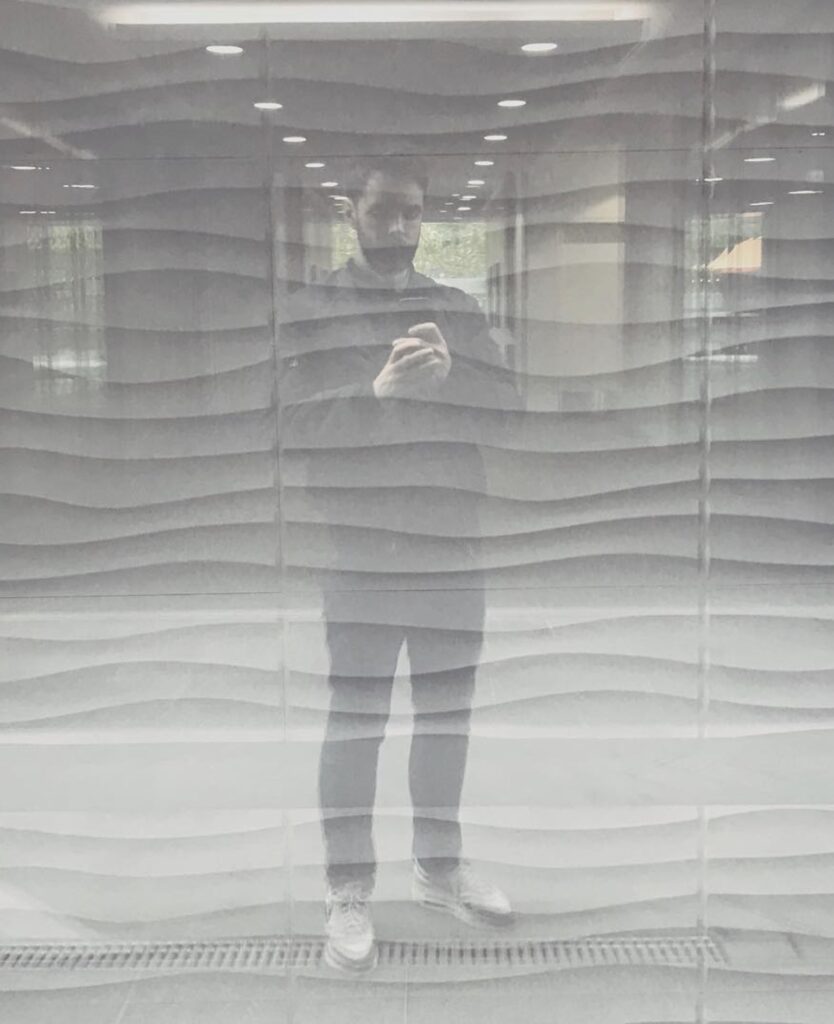
Will's reflection in a glass wall with wavy bands behind it

(This isn’t actually prompted by a question, it’s the postscript I just mentioned above.)

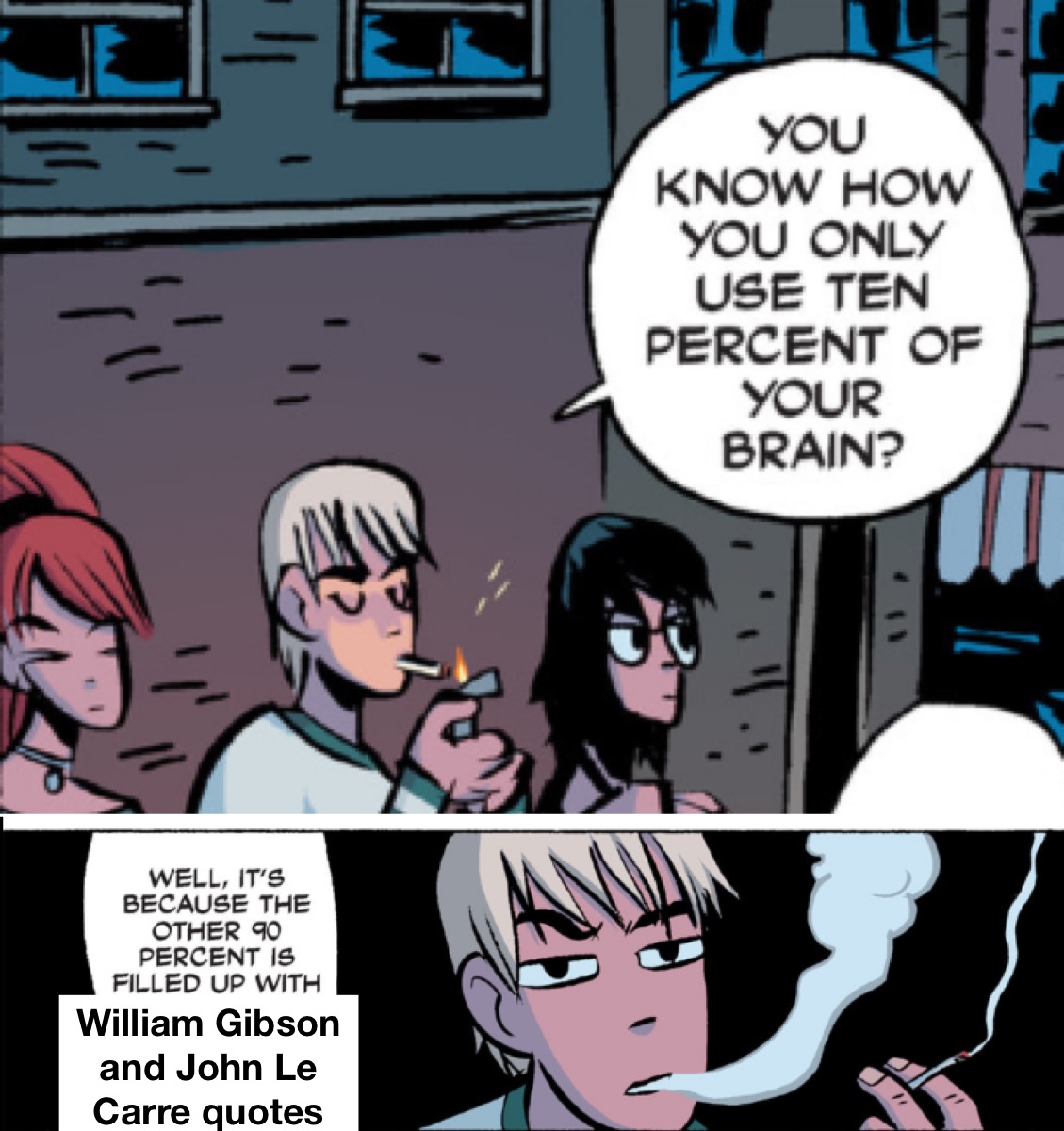
On the subject of kindred spirits, I shared your Scott Pilgrim meme with Jojo when you first messaged me about this project, and she replied, “Is your friend Brendan… you?”

There’s ONLY ONE WAY TO BE SURE, Jojo. (See below.)

Hello. I can no longer find evidence of this amid the decay of the indexed internet, but once upon a time, I believe you titled yourself “a walking SQL injection test.” Did you withdraw that epithet from circulation because you stopped destroying SQL, or because you stopped walking, or is it just that my failing memory is vulnerable to injections itself?

I went to school with someone who became a software penetration tester, and he once told me that he liked to use Irish names when testing web forms because it was a plausibly deniable way of testing a web form for vulnerabilities. If they didn’t handle them well it was an indication that the form might be exploitable. But the main reason I recall calling myself this was that there was a period of time where I seemed to keep breaking websites.

Do you remember the early-ish wild-west “Web 2.0” days of Facebook? Where there were all those apps and plugins you could install? I used to have a heck of a time with those. You’re trying to jump on the same fad as all your friends but then all you get is “check the manual that corresponds to your MySQL server version for the right syntax to use near ‘Neil'”.

For years when flying certain airlines I’d have to go up to the desk instead of checking in at the little touchscreen kiosk because the keyboards wouldn’t have an apostrophe. Please enter your name exactly as it appears on your passport. Ok sorry but not that character. You know?

Do I know? Certainly I believe. I myself have merely labored under a set of names that are consistently misheard by one letter or, in the wake of my wedding, three. I do want to challenge you to write a short story based on The Right Syntax To Use Near Neil, but this is an interview, not a duel. We both know which of us can actually duel people.

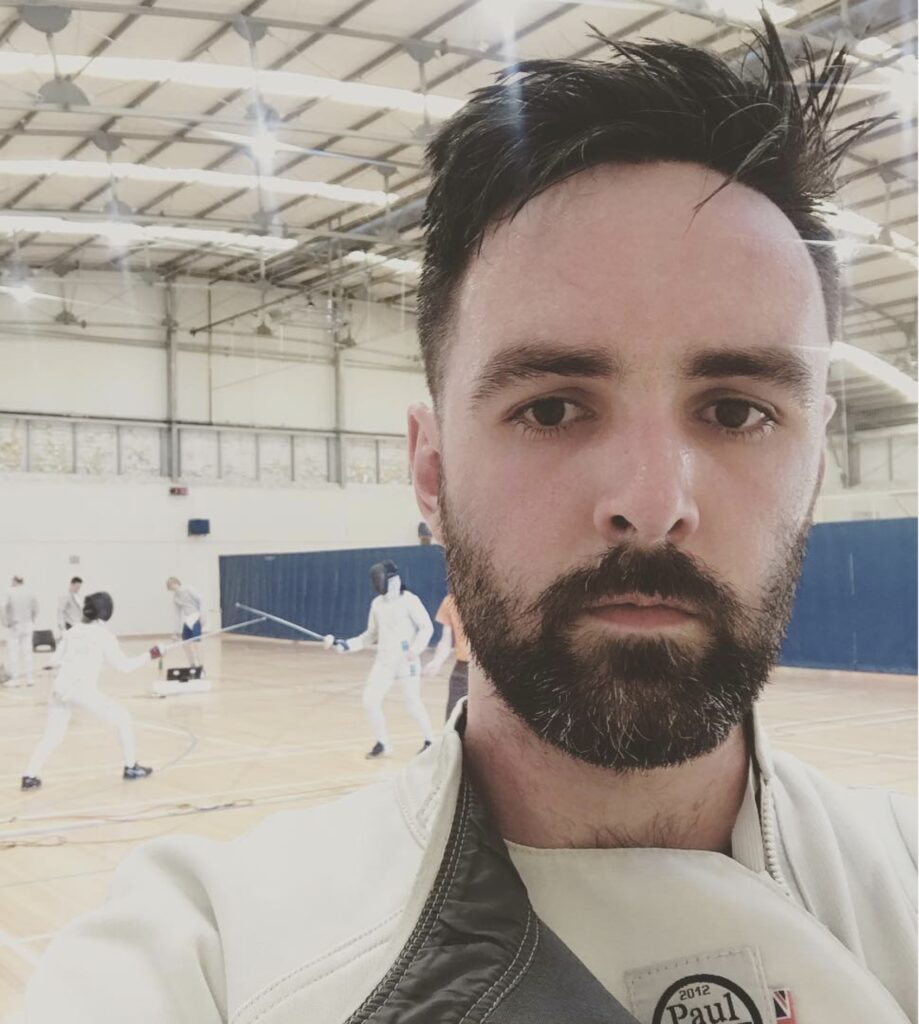
Will in fencing gear, in front of fencers

But your use of the term “kiosk” reminds me of my very favorite sentence in all of fiction, which is of course a William Gibson original. Do you have a cellar-door sentence or phrase or fragment yourself that you turn over and over in your mind like a careworn stone? If not, where would you look for one? You can’t use mine.

The first one that leaps to mind is also a Gibson original: Odile, in Spook Country, gnomically pronouncing “see-bare-espace”. Aside from it being a fun set of syllables to turn over in your mind, the notion of cyberspace everting is something I’ve been coming back to more and more over the past few years. I remember firmly thinking when that novel came out that it was too big a reach, and that the internet would always be a different space. But now I’m not so sure.

You and I became internet friends over a shared love of microfiction, and yes, I am going to link to your semi-decommissioned story blog unless you delete it before this interview is published. I still think of it, and the way you sketched out your ideas, with fondness and curiosity. So wait, do you prefer Hey Will (like your domain name) or Hey William (like your about page)? Or Hey Bill (as you seem to address yourself on Instagram)? Or some secret fourth thing?

I still have extremely fond memories of crafting those tiny stories, and it’s weird to re-read them now and only half-remember the things that were going on in my life at the time that inspired them. Fun fact: this one is an extremely transparent reference to the tumblr I maintained devoted to my friend Hayden, who was a supporting actor in a short-lived fantasy television show, and from whom I deliberately and carefully kept my authorship for several years.

A lot of the stories I wrote were me putting things that were happening in my life into a different set of clothes and making them dance, so I’m afraid that if I tried to pick it up again I’d inevitably just be writing allegories for my ethical wrestling with LLMs. But maybe I should anyway.

Something that has lived rent free in my head for what is now many many years is from The Chosen Ones – “I reject all nicknames that do not reduce aggregate syllable count“. William, I suppose, is a comparatively nicknameable name, and I recite this to myself mentally whenever someone asks “hey so haha does anyone call you Billiam?”. The best one was probably the first, though – my brother, as he was learning to speak, used to refer to me as “Woe”. I found this very appropriate during my angsty teenage years.

A statue of a hand with a face, on top of a library

When I was growing up, the only people who called me Will were my immediate family, and everyone else called me William. But at some point in my early twenties, someone asked me “Do you prefer William, or Will?” and I said, “Will’s fine.” and suddenly that was that. At my First Proper Web Development Job I purchased that domain as a joke because it seemed for a while like every complicated debugging question would come to me led by a comparatively innocuous “Hey, Will…”

(This is the same job where one of our customers was from the finance company William O’Neil + Co, who replied, baffled, to my initial onboarding email assuming that we had messed up a mail merge somehow)

Two of my grandparents were also nicknamed Bill, so I suppose it is somehow genetic. But the real reason that Bill happened because at university I did two things: 1, I grew a beard, and 2, perhaps more critically, I managed to surround myself with a community of professional and professional-aspiring theatremakers. I started helping out in shoestring productions as a lighting designer and operator, mainly to have something to do with my time that didn’t involve spending all of my waking hours in a computer lab. A director I was working with suggested that Bill was an appropriate nickname for a grumpy, bearded lighting tech, and suddenly I was Bill to a specific constellation of people in my life. It felt very nice to have a core group of friends who had a special name for me, and for a few years I tried to protect that by being very careful how I introduced myself to people. I think it was because it felt like some kind of weird circle of trust where if someone unworthy knew me as Bill the magic would suddenly collapse.

This did eventually happen — specifically, that I had a falling out with someone and felt like as a result I should be able to rescind their calling me Bill — but by the time it did I think I had grown into the name enough that I just had to lean into it.

Now I live in Sydney and, aside from two friends I’ve known for as long as I’ve known you, nobody here has ever known me as anything else. So maybe that’s the answer. But I don’t think I’ve actually answered your question, have I?

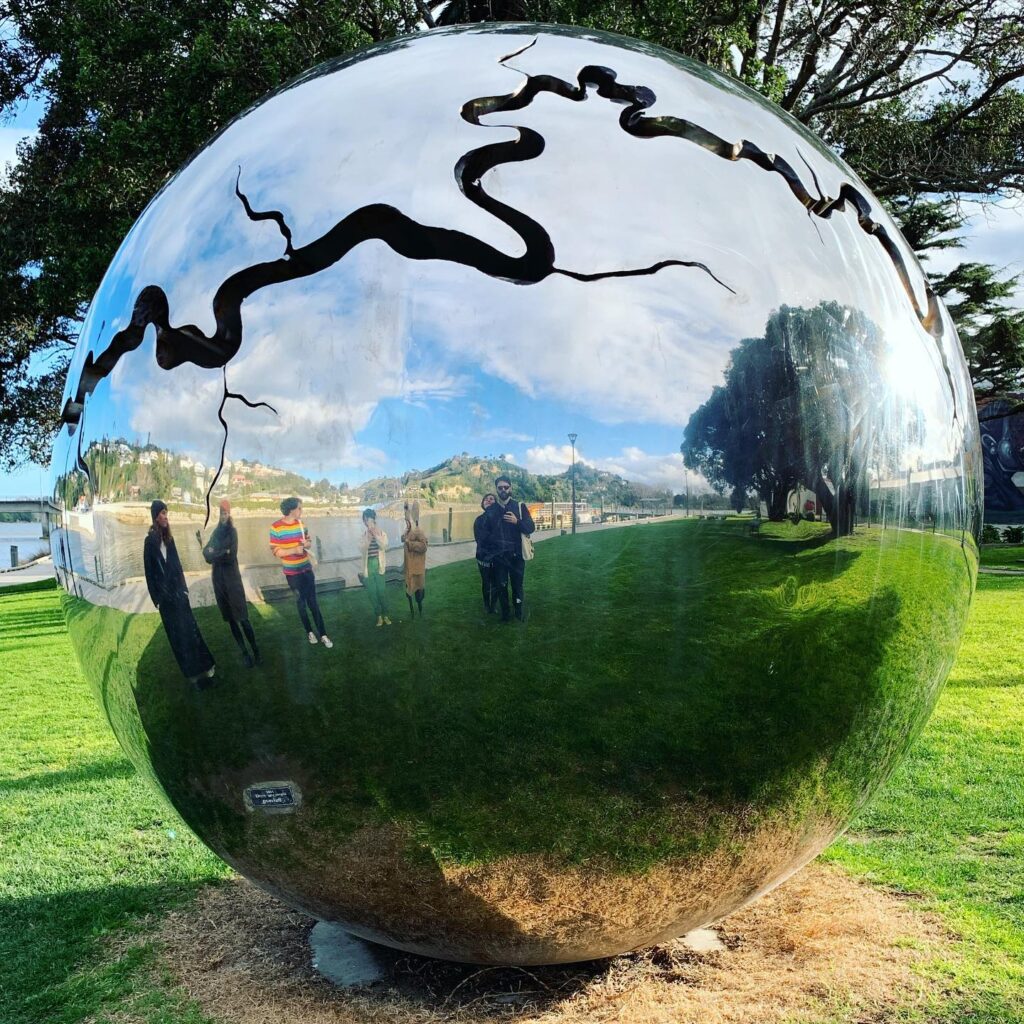
Spherical park mirror with a dark squiggle across the top and Will et all reflected in it

If I was going to grade you on whether you answered the questions, then I should have asked more cogent ones to begin with. I only ever took one lighting design class in college myself, but I really enjoyed it, and it might have been the zenith of my theatrical career. Are there things you notice, or things that bother you, about light that are informed by your technical experience? (I like to complain that social media video ring lights give people eerie snake pupils and someone should have just told them all about standard two-point setups instead.)

Something I think I’ve been able to appreciate more deeply, as someone who has pointed lights at people and surfaces before, is the work of James Turrell.

I’m sure someone who doesn’t understand anything about light could still certainly marvel at or appreciate his work. But having seen far enough behind the curtain to be aware of the kind of work that would have to be involved to create some of his pieces, makes me feel like I understand them in a different way than if I had never pointed a light at a surface before myself.

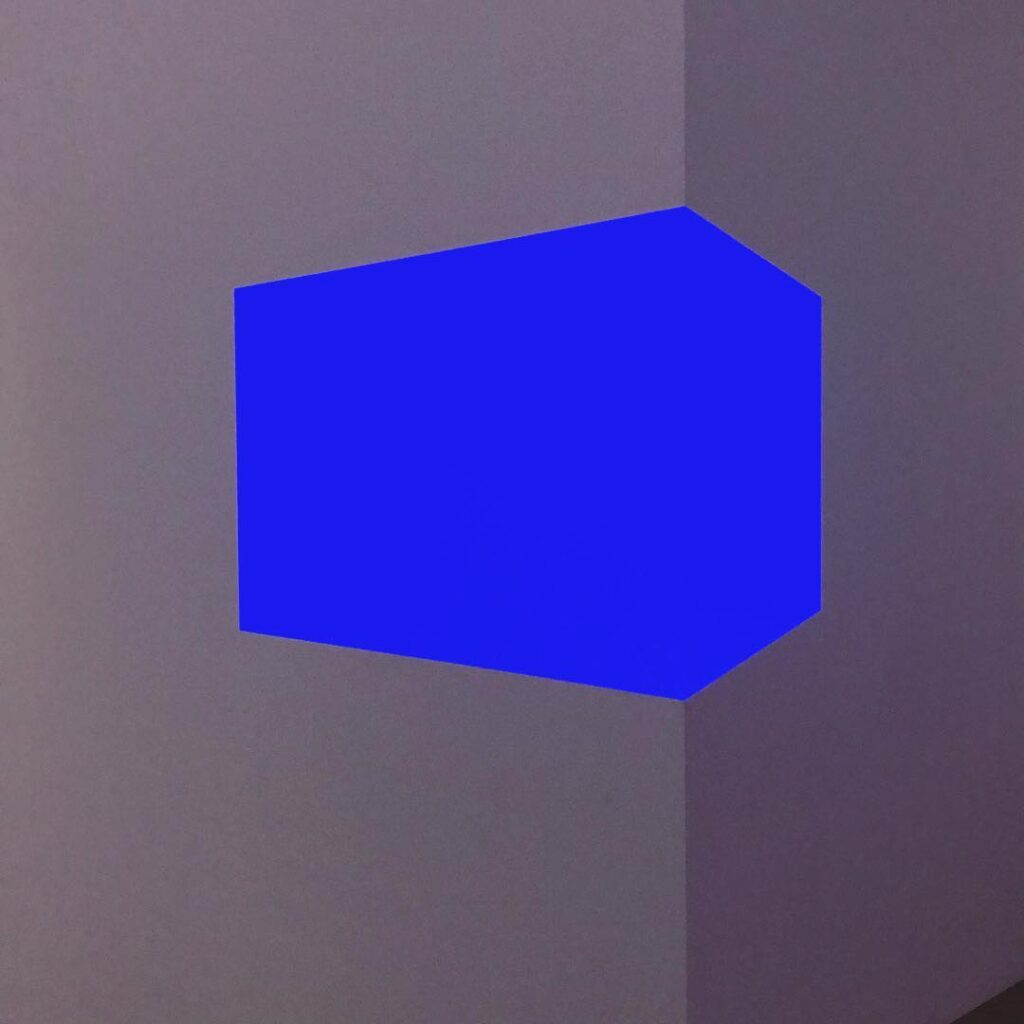
The way that his Ganzfeld series of works light a space so evenly that it makes your skin look uncanny when you’re standing in it is something that images can’t really prepare you for. It’s like IKB. Even something as conceptually simple as his projection pieces, where a two dimensional shape thrown into a corner feels like a window into a three-dimensional space, have a magic to them that evades being photographed.

Will's photo of James Turrell's geometric light art.

Will's photo of James Turrell's geometric light art.

Will's photo of James Turrell's geometric light art.

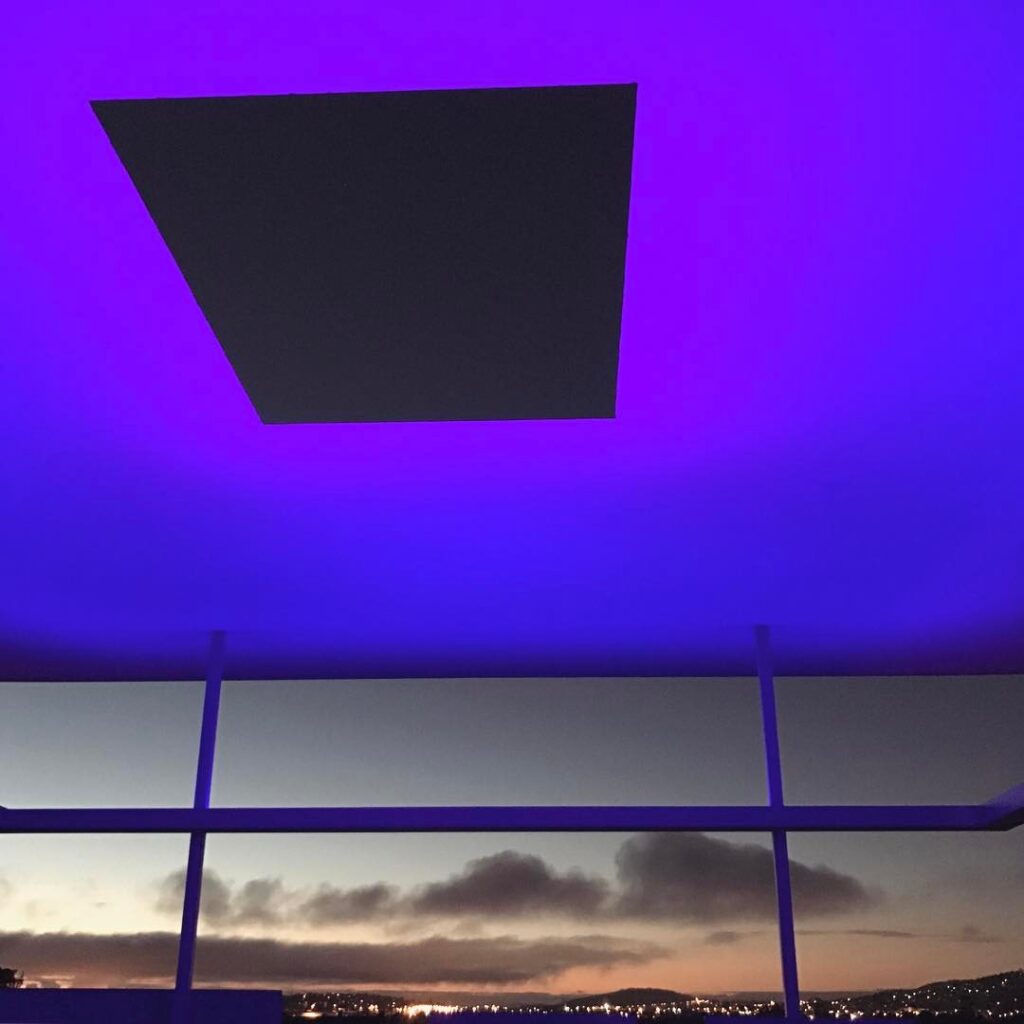
Part of the reason I first went to Japan was actually to see two of his Sky Space works (there’s one in Kanazawa, and another on Naoshima, at the Chi Chu art museum). Going to the one in Canberra while the sunset light show was happening was something we used to do quite regularly when I lived there, and sitting there looking up at the sky as it slowly darkens is the closest I’ve ever come to having what I’d call a religious experience.

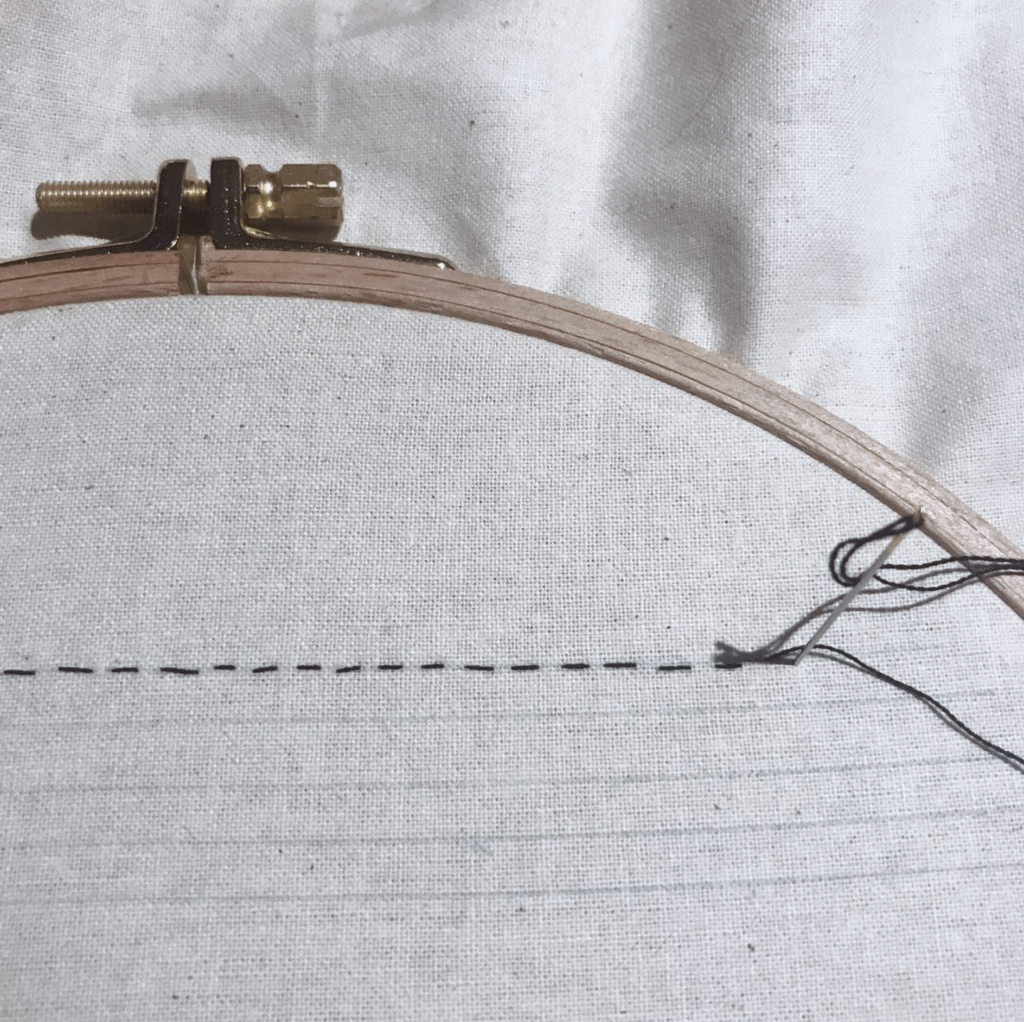
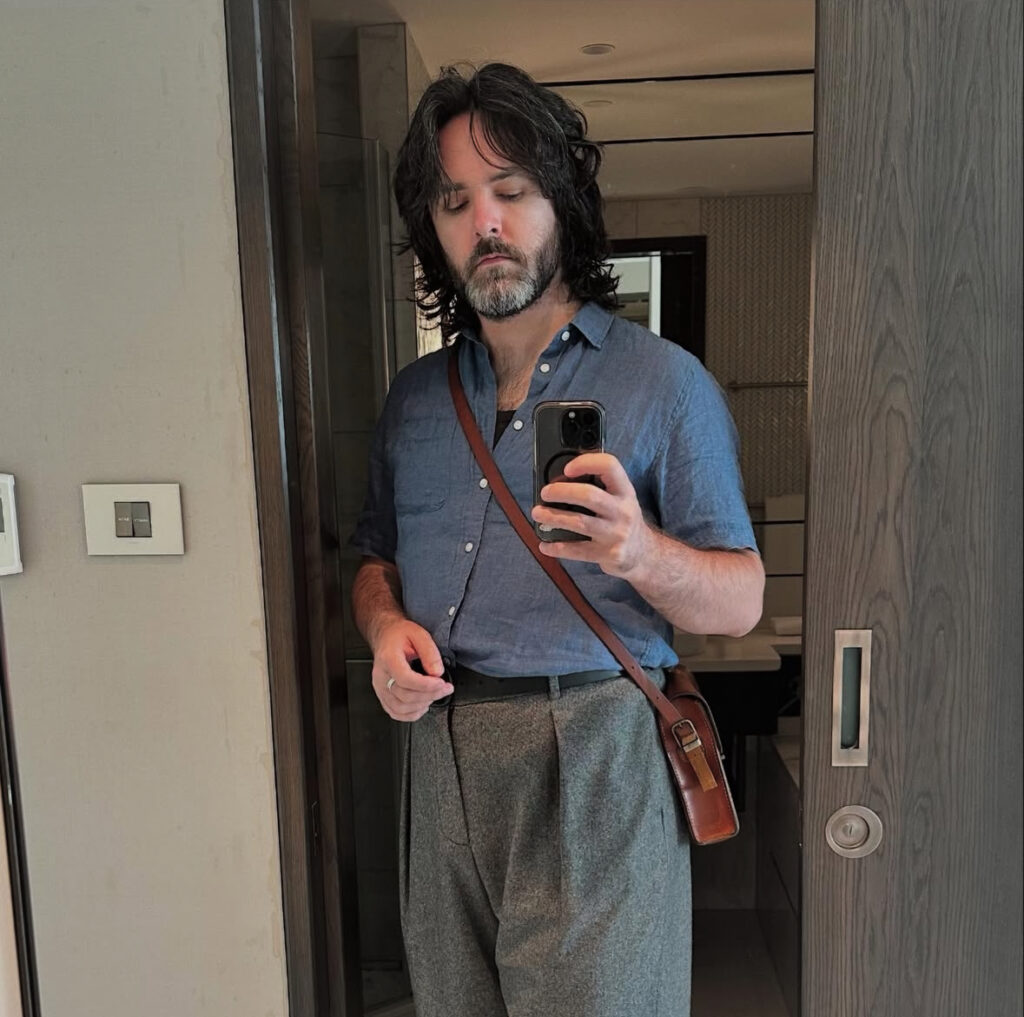
Unlike you, I never studied the blade, but I’m glad to know that we have each taken up our own embroidery projects as we enter our salt-and-pepper years. My focus has largely been cross stitch, as well as some visible mending on the pairs of drawstring pants (*trousers) that accommodate me in forgiving ways. Meanwhile I have gleaned from your mirror self-portraits that you can pull off the Cary Grant natural-waist silhouette with panache and aplomb, a feat I’ve never yet managed. Where do you get your clothes? Can I have some?

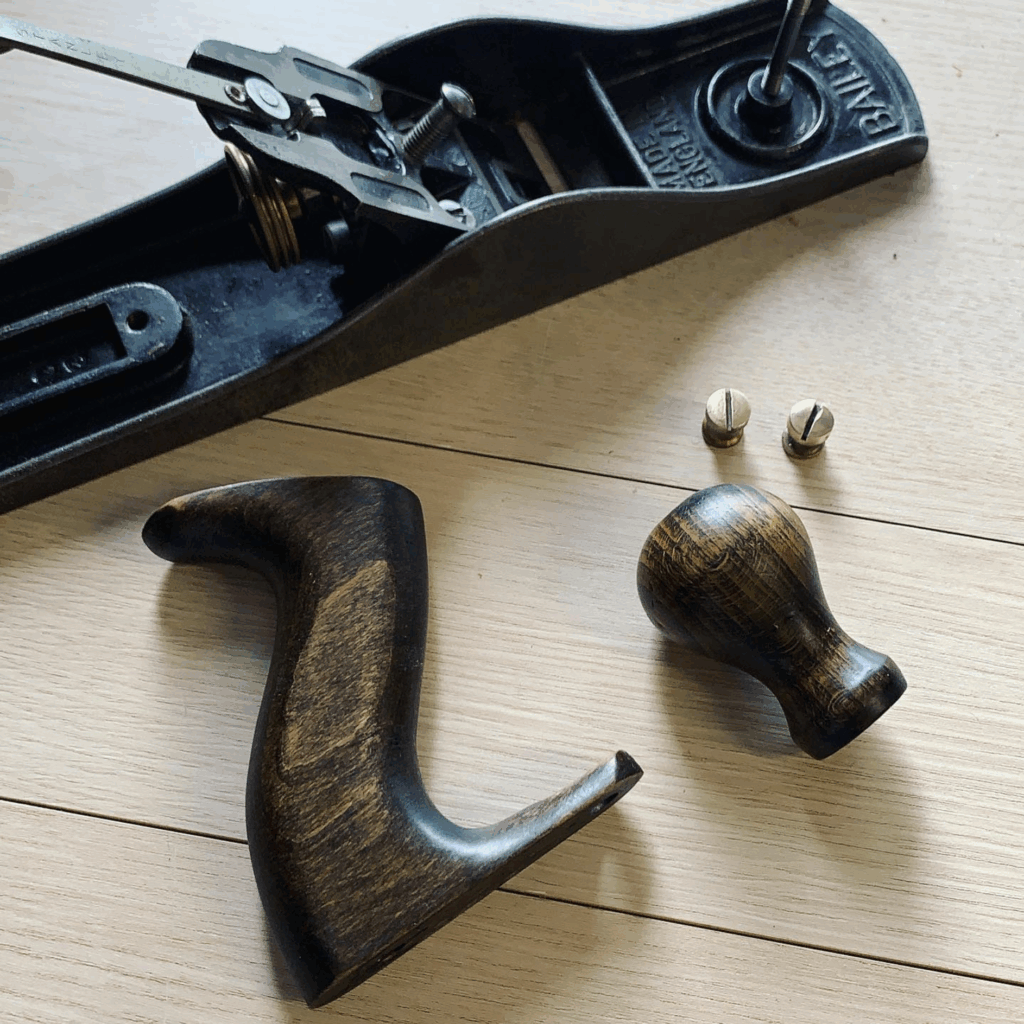
Something I appreciate about crafts like embroidery, leathercraft, and hand-tool woodworking is that the feedback you get on your increasing skill and capability is immediate and obvious. The first time you do it probably isn’t great, but each additional stitch or swipe of the handplane gives you immediate feedback and shows you how you’re getting incrementally better, or what adjustment you need to make in order to get there. As a javascript developer I never really had a good handle on the pace at which I was improving; as a manager of developers, now, even less so. I think I enjoy these kinds of hobbies because I don’t get that kind of feedback in my professional life.

Both of my partners are very capable seamstresses, and find a similar joy in the process of making their own clothes. Maybe that’s what I should try my hand at next. But so far I’ve resisted adding yet another hobby to the pile.

Will's handplane, in the process of repair.

Will's embroidery hoop, with one running stitch along the top of a linear stencil.

Sidebar: something tangentially embroidery-related which I hope will tickle your particular sensibilities is a website that Hera and I both used to find uproariously funny, called Embroidery Troubleshooting. It no longer exists except for the wayback machine snapshots, but for several years the consequences of those unclosed H3 tags were possibly one of my favourite things on the entire internet. Please let me know how far down you are able to scroll before you burst out laughing: for me, I struggle to get past “empty bobbin: replace” without at least smiling.

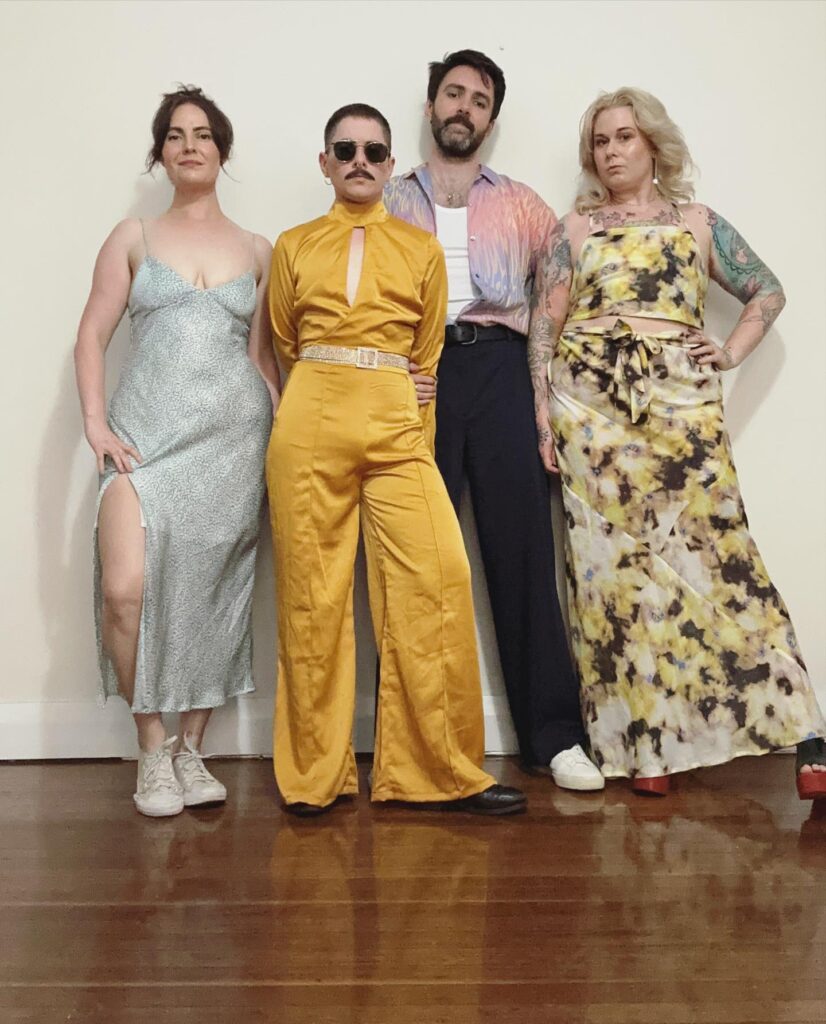
Anyway, the secret to my descent into the pocket of Big Pants was through a better understanding of my own queer identity and realising that I’d been spent much of my life styling myself to make myself as default and unremarkable as possible in order to not give any girls who might possibly think I was cute the impression that I might be gay. Obviously this is a silly thing to be concerned about in retrospect, but becoming more comfortable with who I am was a necessary first step to dressing how I wanted to dress. In Hackers (1995) terms, this was me realising that I could be Matthew Lillard rather than Jonny Lee Miller.

Jojo, Tim, Will, and Vee, in cool outfits.

The Bill that only wore one kind of levis jeans and only owned one style of t-shirt would never have branched out into interesting pants, and certainly wouldn’t have taken up the offer from the very helpful shop assistant who said “you should try these on, even though they are technically from the Women’s section”. Suddenly, I’m being stopped in stores by people who want to tell me that my pants are cool. I didn’t even realise that this was something people did.

A brand I have been lately in love with is Front Office, who are based out of Melbourne. I have their Mid-Weight Portugal Trousers and they are probably one of my favourite things in my wardrobe. Ken also has a great youtube channel and newsletter where he talks about his design process – if you haven’t already come across this you should check it out.

Will, in a doorway and high-waisted pants.

First of all, yes, I think of Embroidery Troubleshooting (damn that would be a good character name) often, and with joy, and always associate it with you! Second, thank you for mentioning Hera and allowing me this segue.

Many, MANY years ago, before HBO even caught wind of them, you told me to listen to Flight of the Conchords, which was correct. Years later, you told me to read Hera Lindsay Bird, which was perhaps even more correct. Your instincts are so unerring in matters of lyrical taste that I also attributed to you my original interest in Frightened Rabbit, and then I think later I asked you about that and you gently told me that I made that up. What band or poet should I get into next?

Hera actually has a new US-published book out recently, Juvenilia, which this question reminds me to tell you about. The cover art is so good that I feel obliged to recommend it on that basis alone. She also edits the Friday Poem for the website The Spinoff where she also has an agony aunt column (Help me Hera) which is exceptional.

But the poet I would recommend to you next is my dear friend Freya Daly Sadgrove.

Here is Thin Air.

Here is Horse Polo Tongue Swallow:

When I tell you I love you I mean oh my god I mean holy fucking shit.
I mean, there you are,
your whole own thing.
When I tell you I love you I mean I
wanna get in the Magic School Bus and hoon around inside you.

As I’ve hinted here and there on this blog at times, Kat and I each have a romantic partner of our own in addition to our marriage with each other, but the story of how that happened is terribly prosaic: we went to some parties together, we each met someone and hit it off, we started dating them, we kept dating them, we love each other. Everyone involved is happily married, which is a sentence that could have a complex illegal meaning but in fact does not. Is your (plural) story simple or complicated? Can I ask what term (or terms) each of you use for your gender?

  • Jojo: she/her.
  • Vee: they/them; “she” occasionally but only in the abstract way that one might refer to a ship, or e.g. Shania Twain announcing “Let’s Go, Girls”.
  • I’m a he/they but with the caveat that I still feel included when someone refers to a group that I’m with collectively as “ladies”.

Jojo and I had been together for over a decade when we decided to explore other relationships – driven mainly by being two bisexuals in a very heterosexual-looking relationship, and just generally wanting to be able to have the space to explore other experiences. Vee had been a mutual friend of ours for many years, but it wasn’t until I moved home to Wellington in 2019 that we had the opportunity to understand that there was something deeper there and start to explore it. What sounds simple but was in retrospect quite unlikely was that Jojo and I managed to meet people, start dating them, and fall in love, both on very similar timeframes. I think that certainly made it easier to navigate than if it had been one and then the other, because we were both working out what it meant for us all at once.

Vee and Jojo.

The one wrinkle is that the person Jojo met was in Sydney, and so for Pandemic-related reasons she ended up moving back there permanently pretty much as soon as the Australian border reopened. This meant that for much of my relationship with Vee, my relationship with Jojo was a long-distance one, and we each ended up building our own separate lives together with new people. So now even though we’re living in the same city again, I don’t live with the partner I have the longest association with. But we rent an office space together that we both work remotely from, and live about a ten minute walk from each other, which means we still get plenty of ambient time together.

While this arrangement has worked out very well for me, personally, I occasionally have friends reach out to me asking how they might also make it work, and it brings me no joy to say that the correct thing for those people to have done each and every time was to just break up.

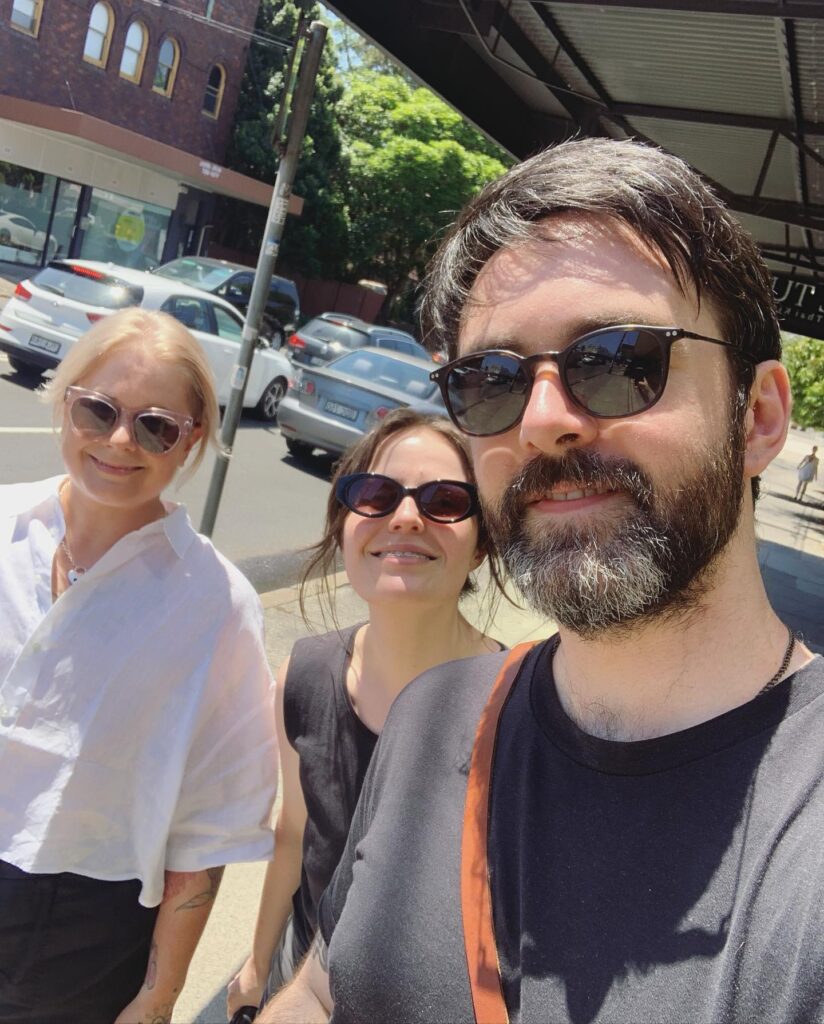
Vee, Jojo, and Will, in sunglasses.

Will, or possibly William/Bill depending on your earlier answer [NOTE: FIX THIS], why is it that I have been hoping to meet you since the strange days of the nascent millennium and yet we’ve (I’ve) never made it happen? I don’t expect you to have an answer to this, I just want to voice it plaintively, because I consider you such a lovely person from my distant perspective and kindred spirits are rare and life is short. You know?

I’m very glad to hear that you feel this way because I feel very much the same, and I’m glad to consider you a friend.

Okay great. By the law of verbal traps, this means you and yours have to come meet up with me in Japan in the autumn of 2027 and finally discover all the tiny ways in which you and I might detest one another in person. Kat and I did a brisk two-week trip earlier this year and I am already desirous of return. What do you say, Kamakura? Takehara? Takayama? Or somewhere else?

Deal.

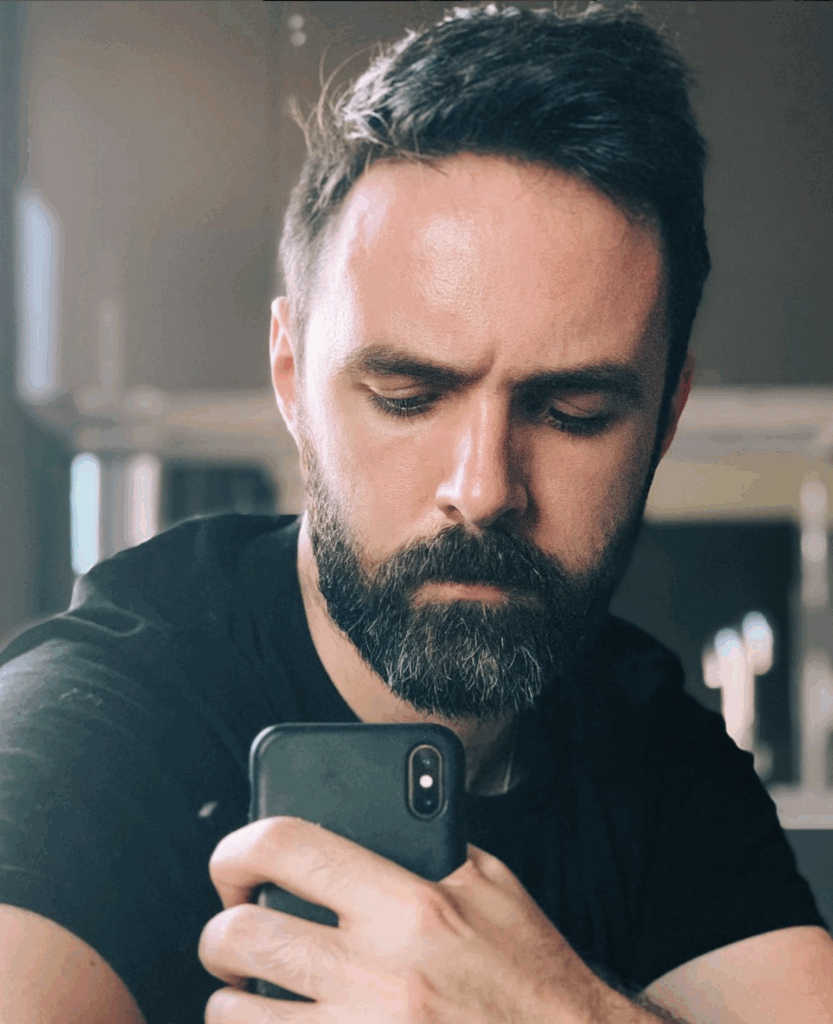
Will frowning and gripping a phone with ferocity.

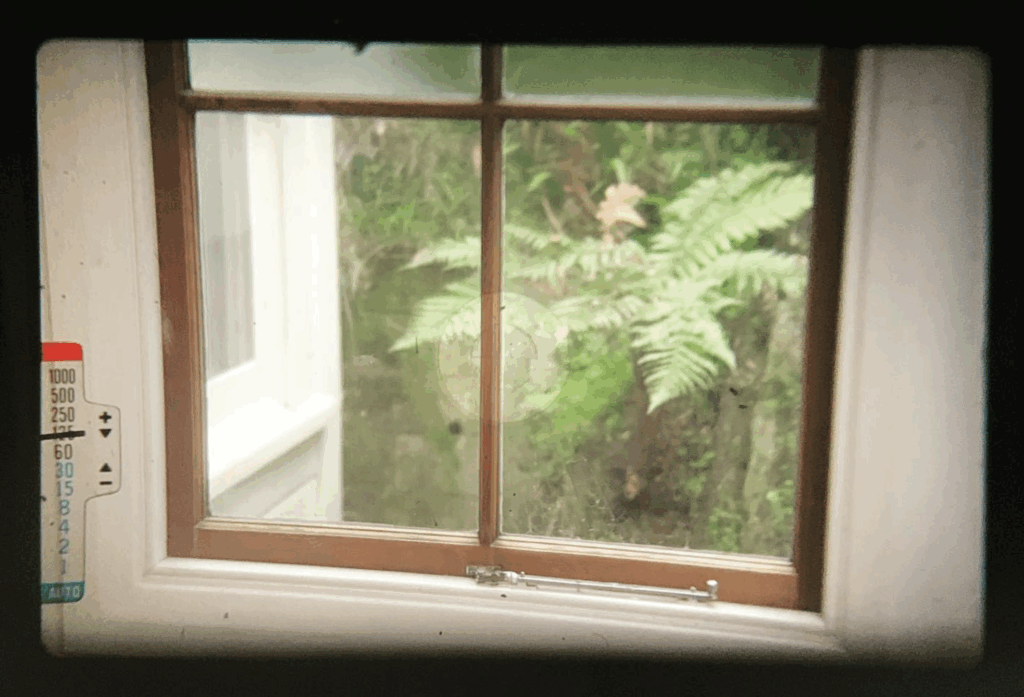
A soft-edged film photo of some ferns through a window.

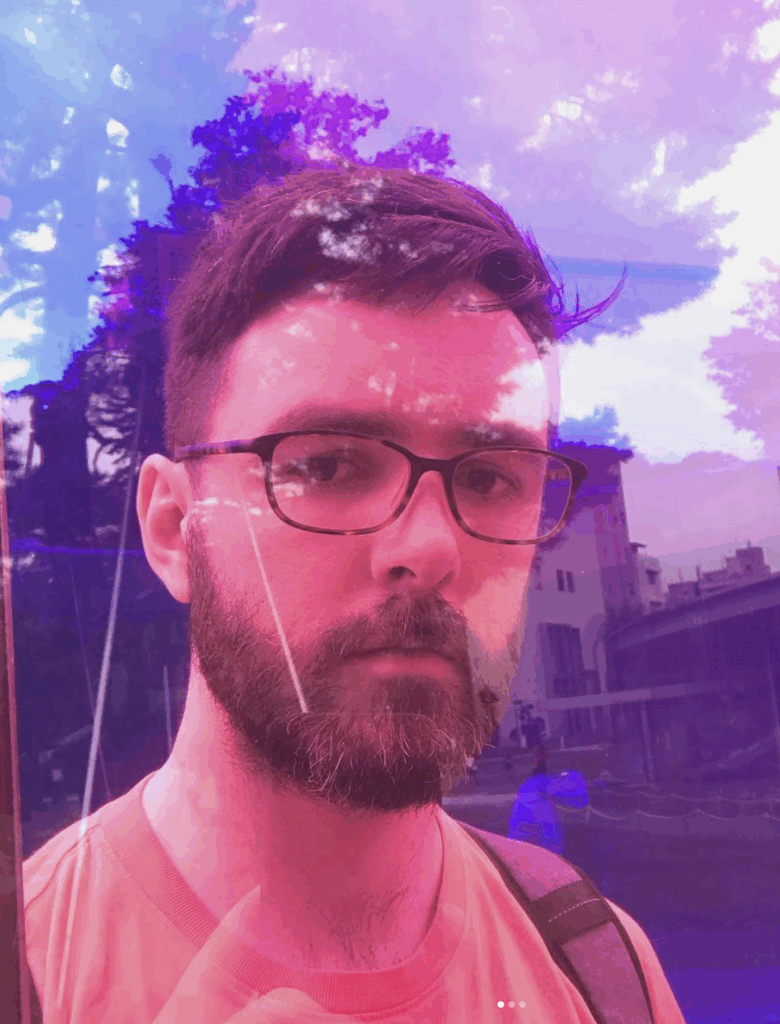
A double-exposure photo of Will, in glasses and bisexual colors.

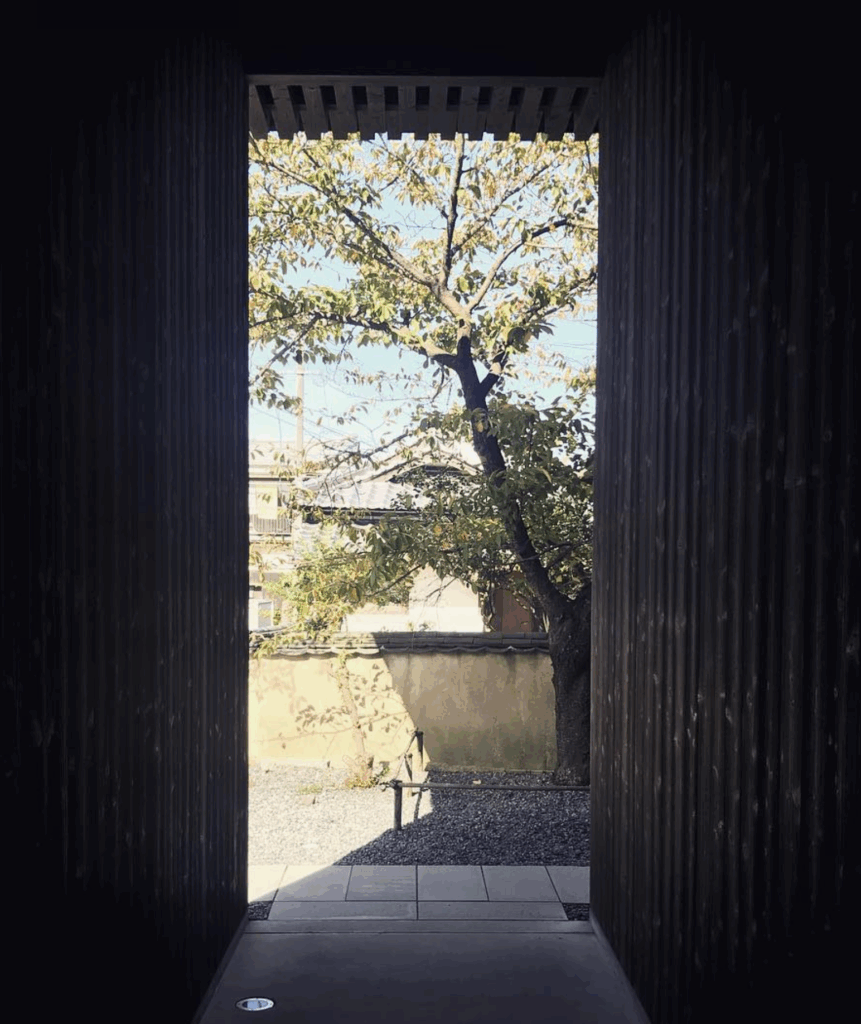
A photo of a bright doorway showing a garden wall, from inside a dark room.

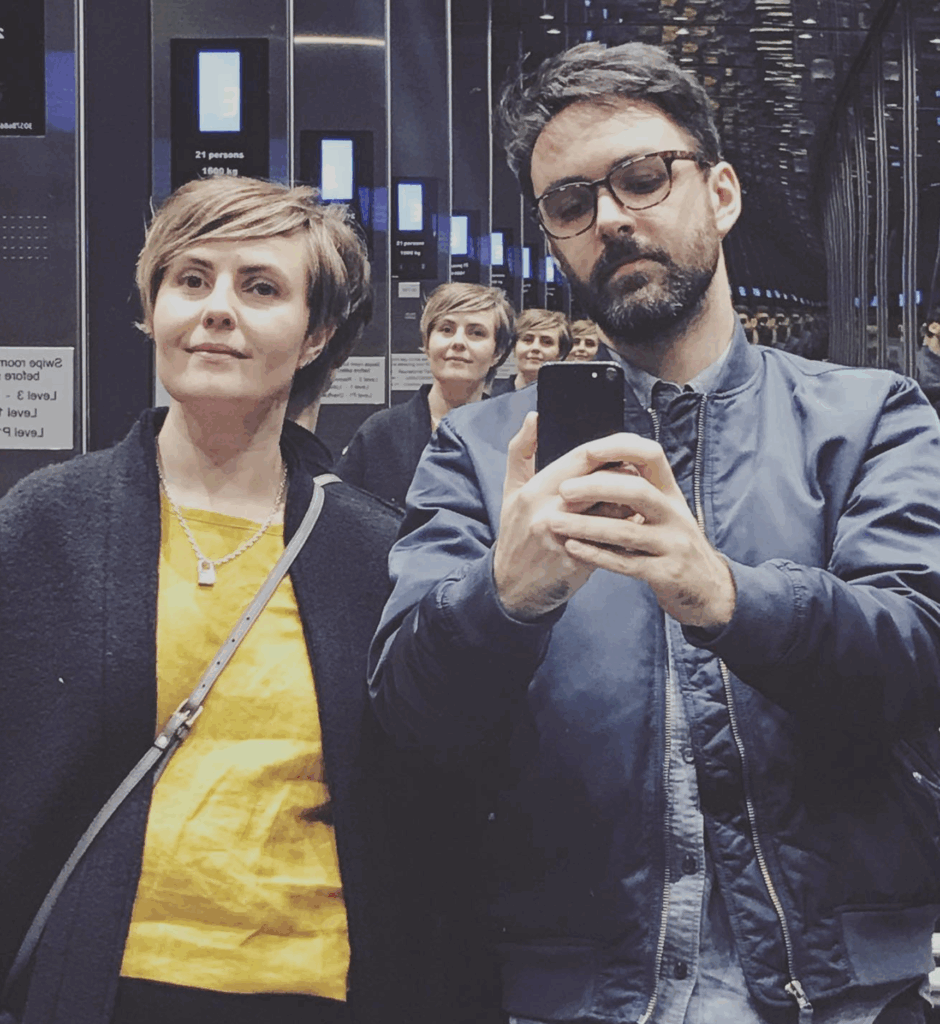
An endless series of Wills and Jojos, in parallel mirrors.

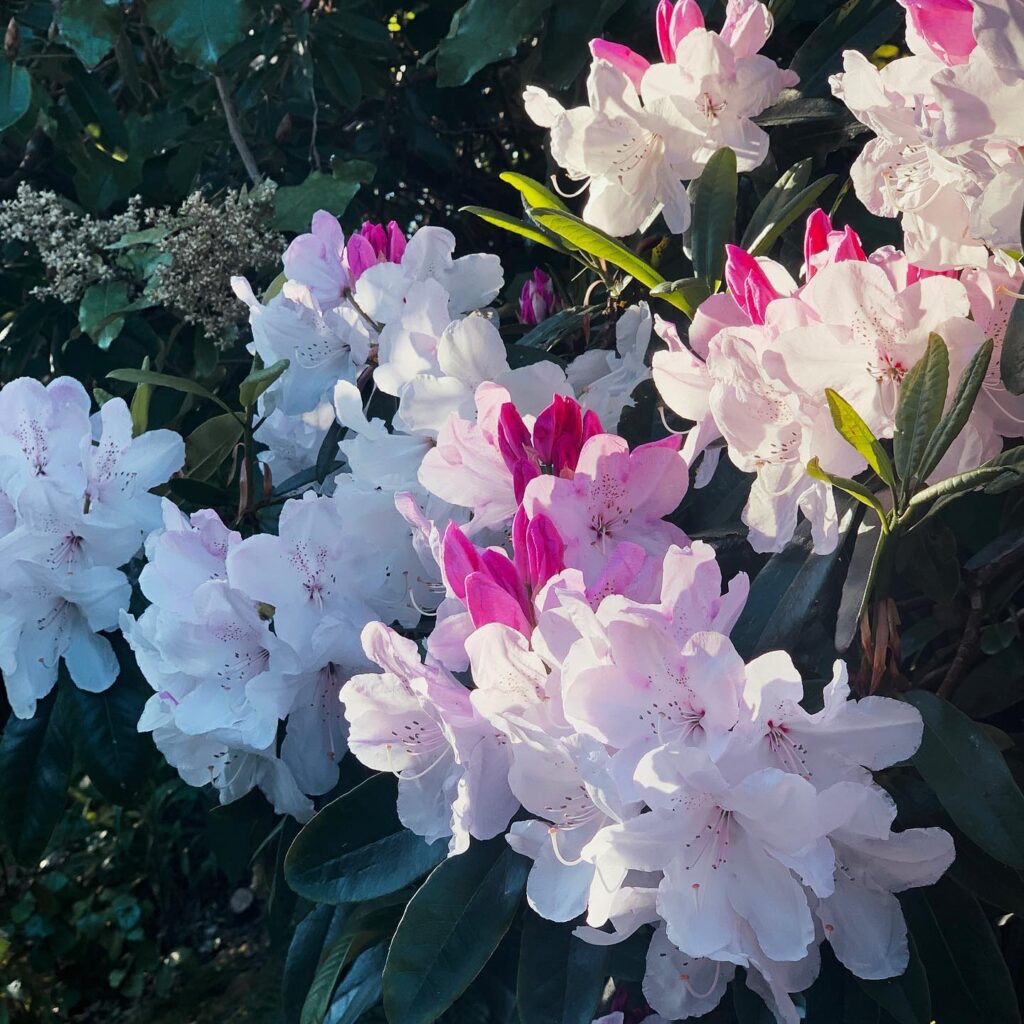
Some lovely flowers, of what variety I do not know.

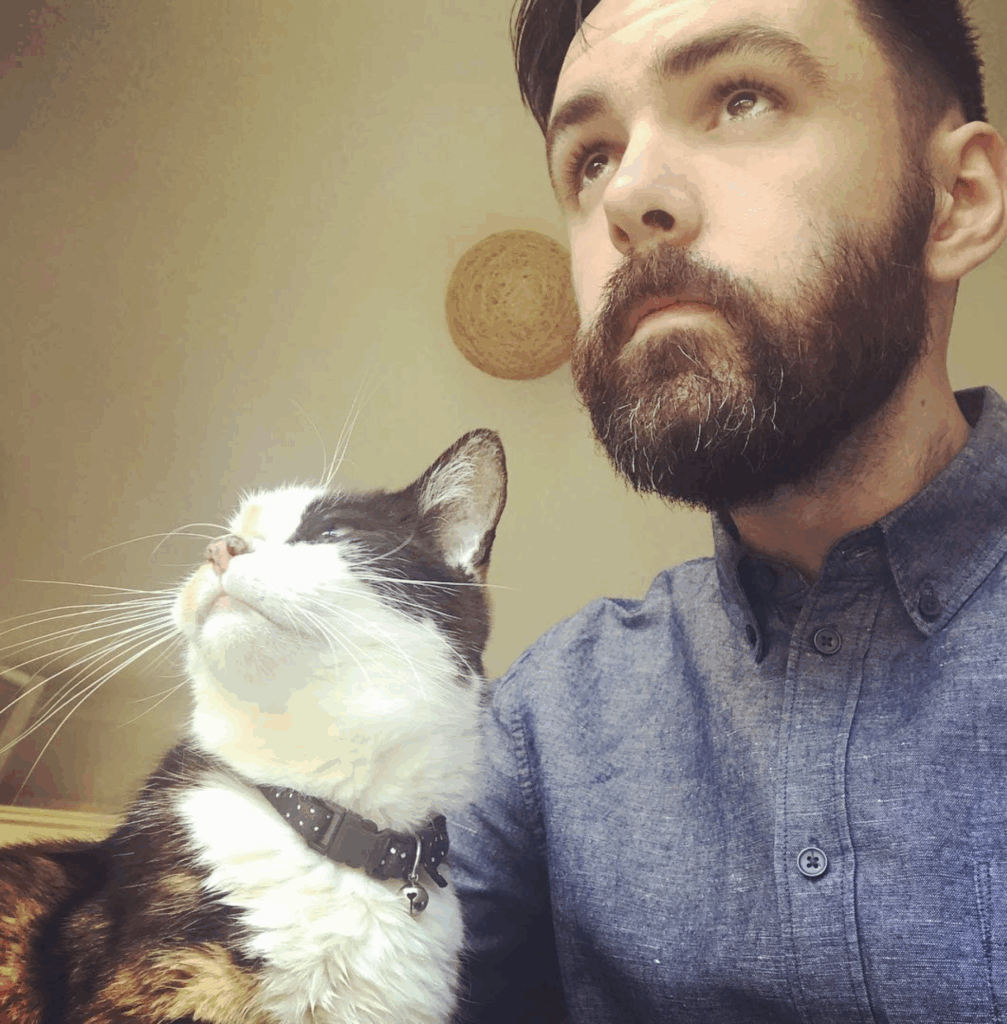
Will with his late cat Leela, looking off into the distance together.

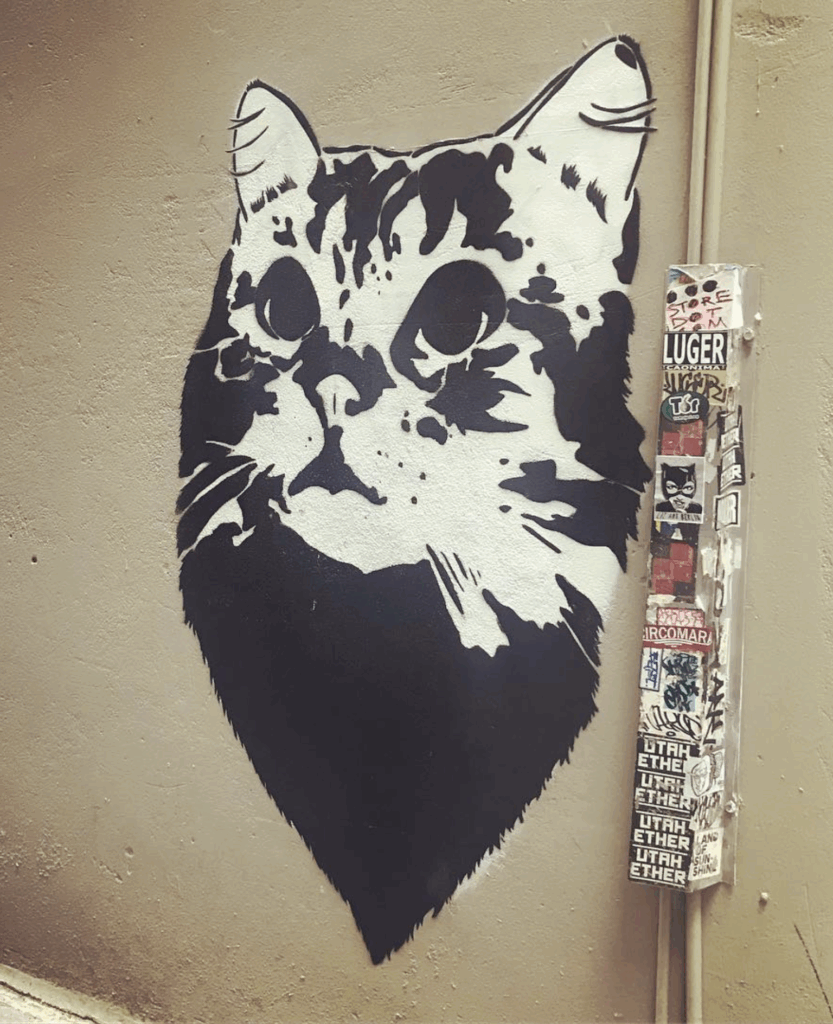
A large paste-up of a surprised cat, next to a utility box covered in sticker graffiti.

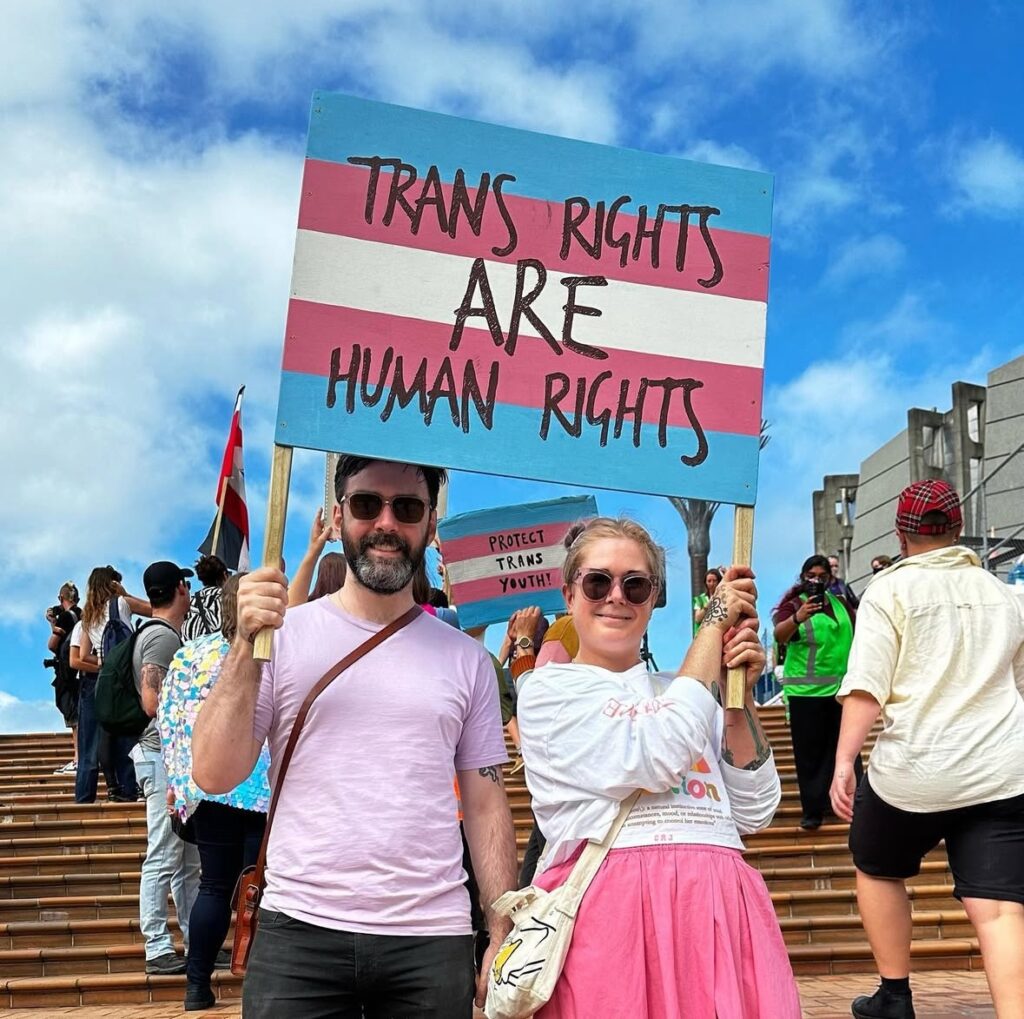
Will and Vee, holding a "trans rights are human rights" sign together.

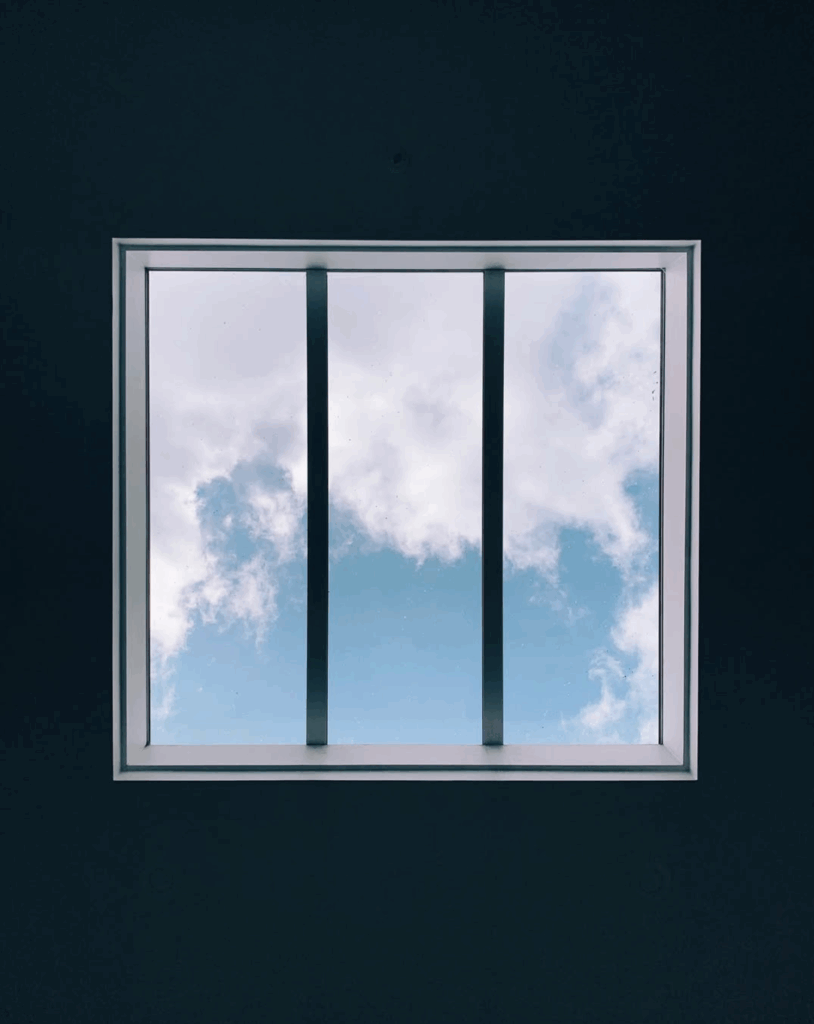
A skylight against a dark ceiling, with two vertical bars against bright clouds in a blue sky. This might also be James Turrell artwork, I'm not sure.

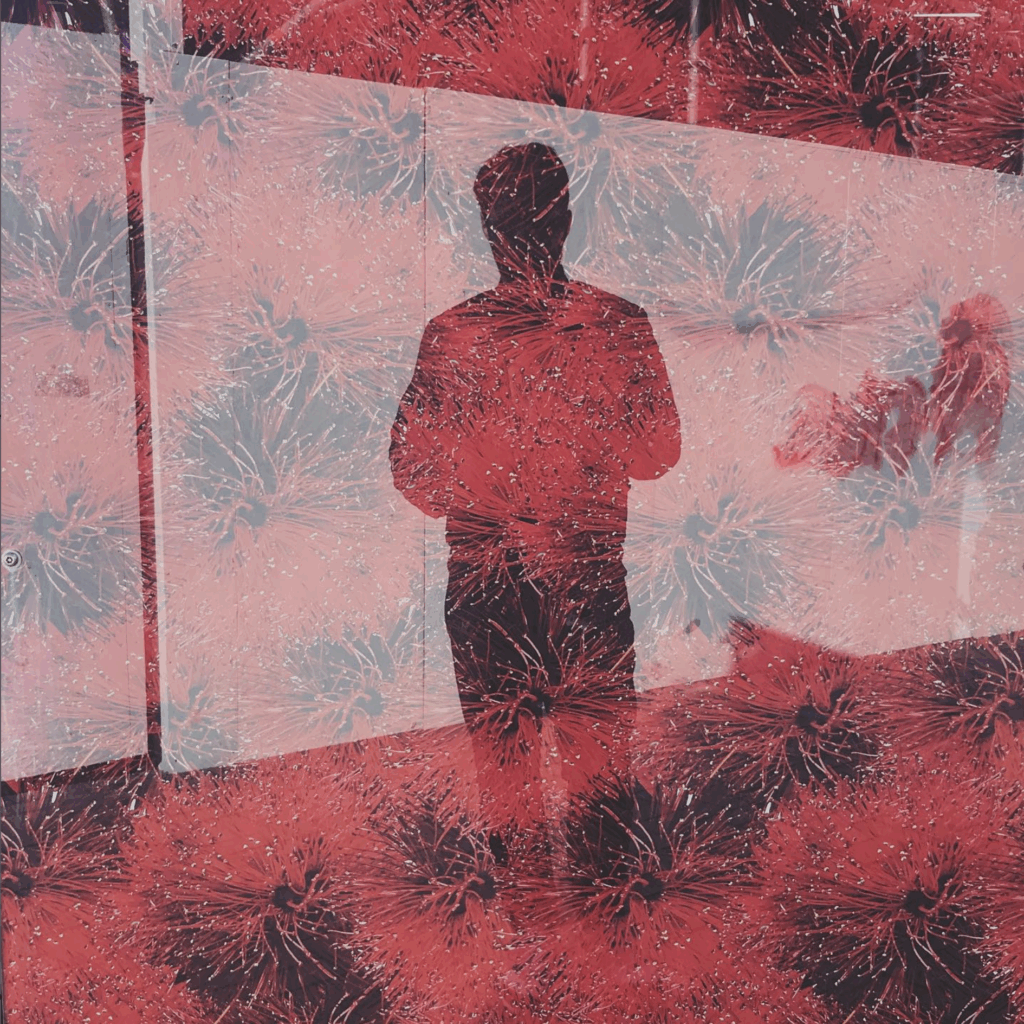
Will's silhouette in reflection against scattered bursts of red on black.

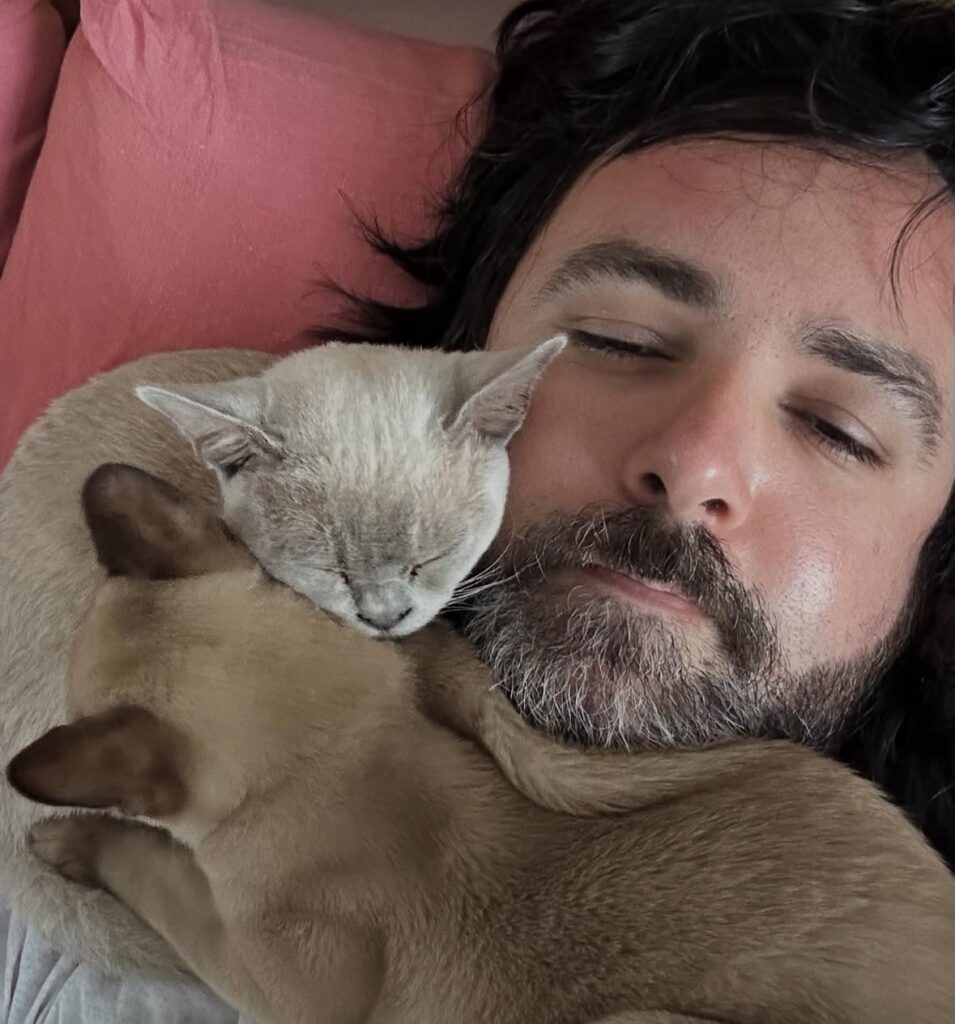
Will being lightly smothered by his cats Budino and Tortina.

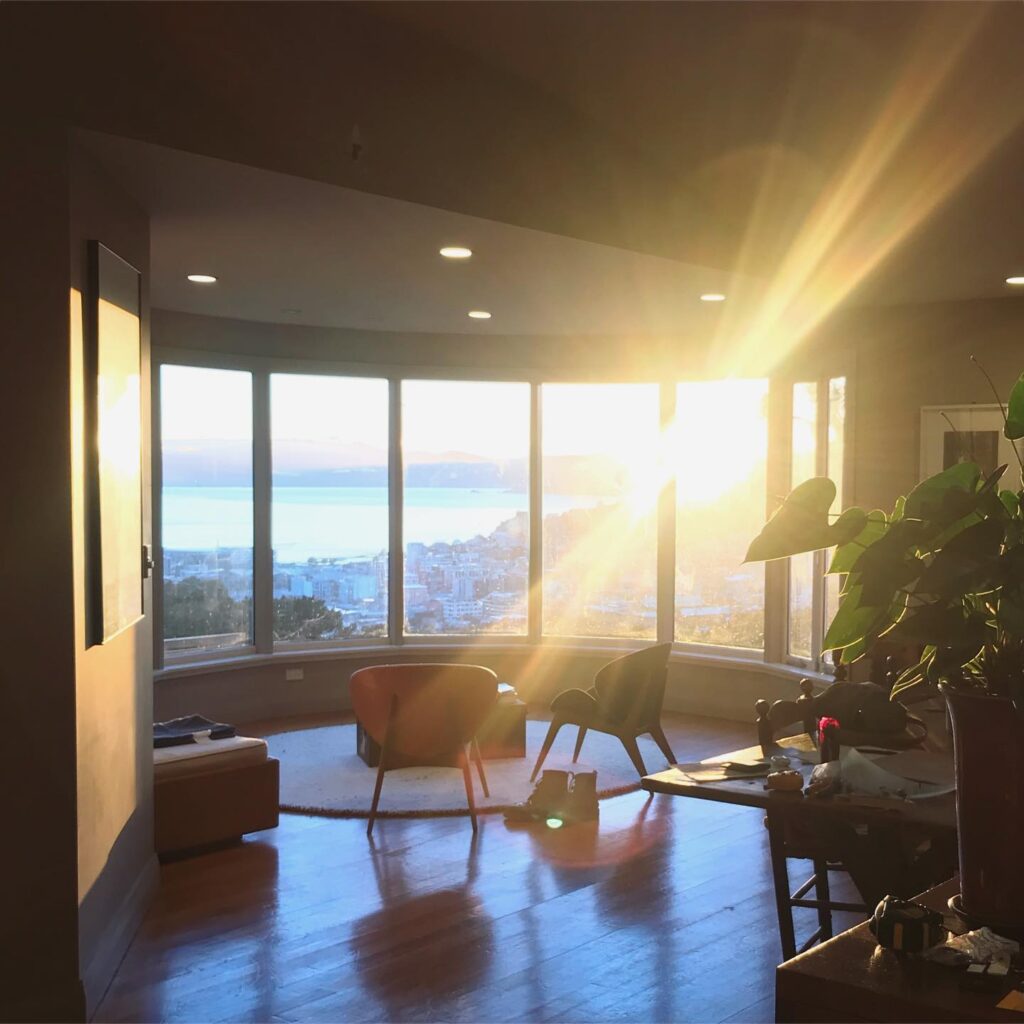
Lens flare through the panoramic windows of a living room with a view.

Ahiru no omocha

While I’ve never managed to finish my long-incubated and sprawling essay about large language models and Alfred Jarry, I think that if you know me, you already know my attitude toward the proponents of the former. Nevertheless, at the request of my employer, I have tried out a couple ways of using them in my work. I tested out cloud-driven code-completion interfaces long enough to learn that they hinder me more than they help, and anyway I don’t like constantly feeding our clients’ intellectual property back into someone else’s text corpus. And even if those things weren’t true, my concerns about the intake and exhaust of the server farms involved would have been enough to make the experience undesirable.

I have also tried running some open-weight models directly on my laptop, where I know my data will remain, and where I can observe that the power draw involved is not vaporizing any rivers. The results are slow and of middling quality, but good enough for things like “just tell me what fucking regex I need.” (I do still google things first, but at this point, I’m not sure using their search service is any more virtuous than using an LLM.)

It wasn’t so long ago that the people promulgating the ascendance of statistical models were attached to the term “machine learning.” Machines cannot learn, but humans can, even me. One of the things I am learning, along with Kat, is Japanese. I’ve made use of textbooks, mnemonics, evening classes, and apps to this end, and I’ve made a lot of progress, which is to say I’m about 1% of the way to being able to converse with a preschooler. Japanese is hard.

Textbooks are challenging to use without an instructor, and while I appreciated working with such an instructor for a remote course through our local cultural center, the video-call medium is pretty painful in a class setting. Apps are nice for building a habit and refreshing myself, but as I’m sure you know, they more or less all run on a model of drilling by way of quizzes. Like many people who were praised for youthful conformance to school standards, I retain the test-taking skills that were hammered into me at a formative age. That means my brain is tuned for using process of elimination and context clues to answer quizzes without learning anything new, which is a whole other essay I will never finish, but anyway this is why the apps yield only grudging progress.

I know enough about my own capabilities, and about general educational theory, to understand that if I want to learn something in a persistent way then the most valuable exercise is trying to explain it to someone else. When software nerds do this to solve a problem, we call it rubber-ducking. I don’t actually own a rubber duck. But I do have a laptop with an LLM runtime on it. You can see how I got here.

“The thing is there’s so much basic vocabulary to learn,” I told Kat, “and a lot of it is English loan words, but then a lot more isn’t. And so many of the words sound alike but mean such different things. So I thought, hey, I can just tell the computer to have a conversation with me, and I’ll have to explain the differences between the words and what they mean, and even use them in sentences. It’s a proven technique. I think it might actually help!”

Kat, who I believe I mentioned is also learning Japanese, gave me a steady look and replied: “or you could just tell those things to me.”

Sometimes the problem I solve by explaining myself aloud isn’t even the one I knew about.

An interview with a laser

Almost fourteen years ago, in the summer of a quieter and cooler world, I seized upon a social media post from my old friend John suggesting that a musician who lived in my city might want to play his game Lady Blackbird. I can run Lady Blackbird, I typed into a vanished website. Okay, a stranger responded. In this now-antique fashion I gained a new friend, whose nom de loi is Laser, and whose work I have followed with joy and admiration ever since.

Because Laser, despite gaining world-trotting fame and keeping very cool company, will still return my text messages, I thought I would press my luck and send him some questions to officially (?) make this series something that I do maybe (??). The following has been edited for tk tk tk come up with joke later. Hyperlinks are my own; photos are not.


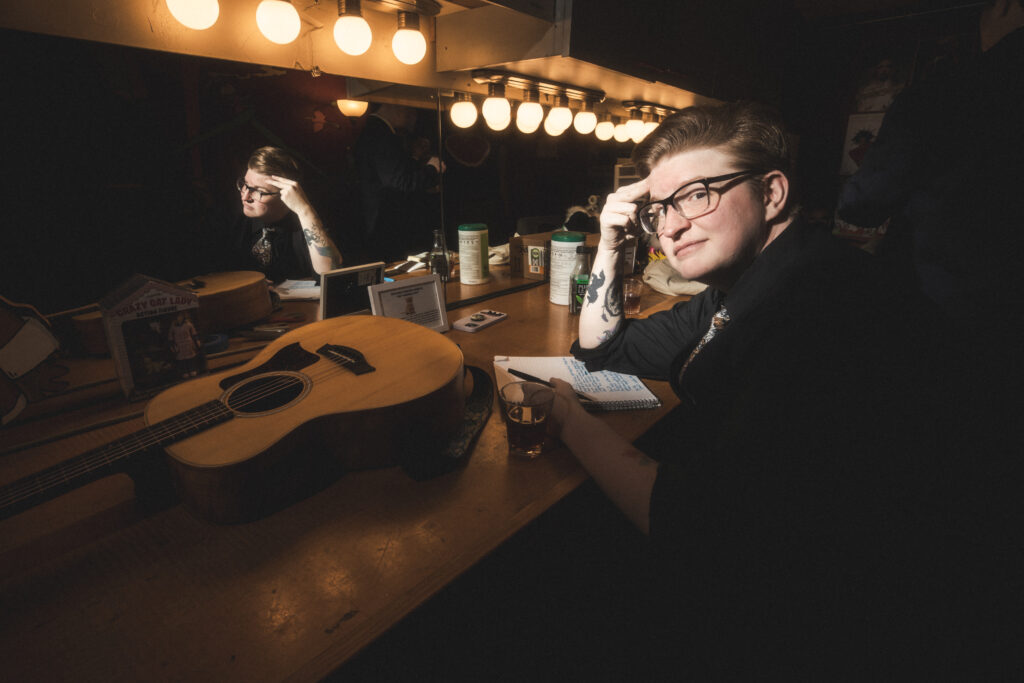
Laser with a guitar in front of a dressing room mirror

I’m maybe trying out this thing on my blog where I interview people about their tastes without ever actually using the word “masculinity” but just dance around it instead and then trust that both of my readers will get bored and close the tab before they realize that I’m trying this hard to be oblique and clever. So I guess my first question is, how come when you wear a black vest over a black shirt with a contrast tie you look like you might be in Superchunk, and when I do it I look like a wedding DJ who plays all the novelty songs back to back?

A lot of it is swagger, unfortunately.

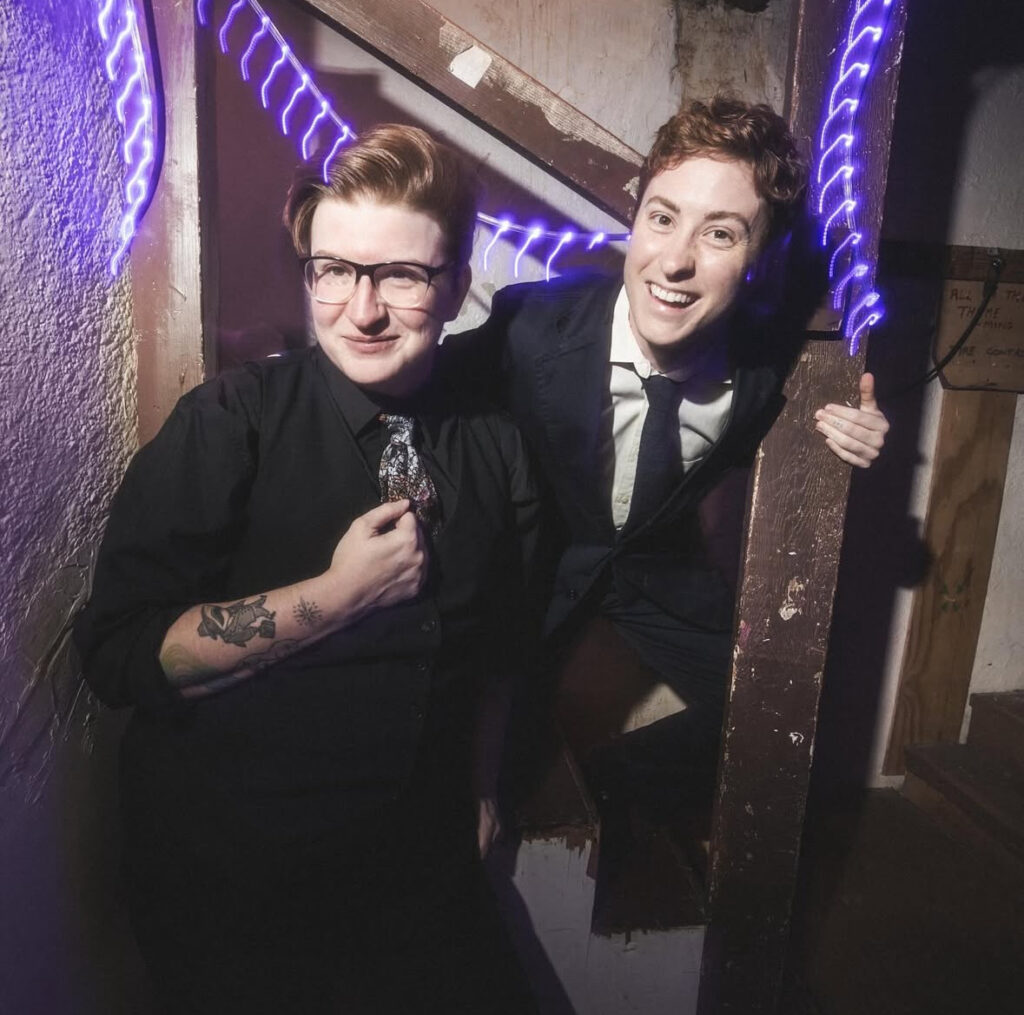
Laser with Charlie James wearing a black shirt and vest with a contrast tie, and also 'swagger'

Bless you for the succinctness of this answer. I feel as if I have been struck apart by a katana so razor-sharp that I will not topple into two cleanly separated halves for an unknown length of time. While I await my doom… your new podcast, Not Real Men, has recently covered a couple of important topics: perseverance in the face of abrupt sociopolitical trauma overload by finding a niche to make a difference, and also Chad, the imaginary testosterone dude who lives in your brain and tries to seize the steering wheel of your libido. Who’s the most boinkable actor in your personal history of cinema, and would they post bad takes on the internet? Has this answer changed over time?

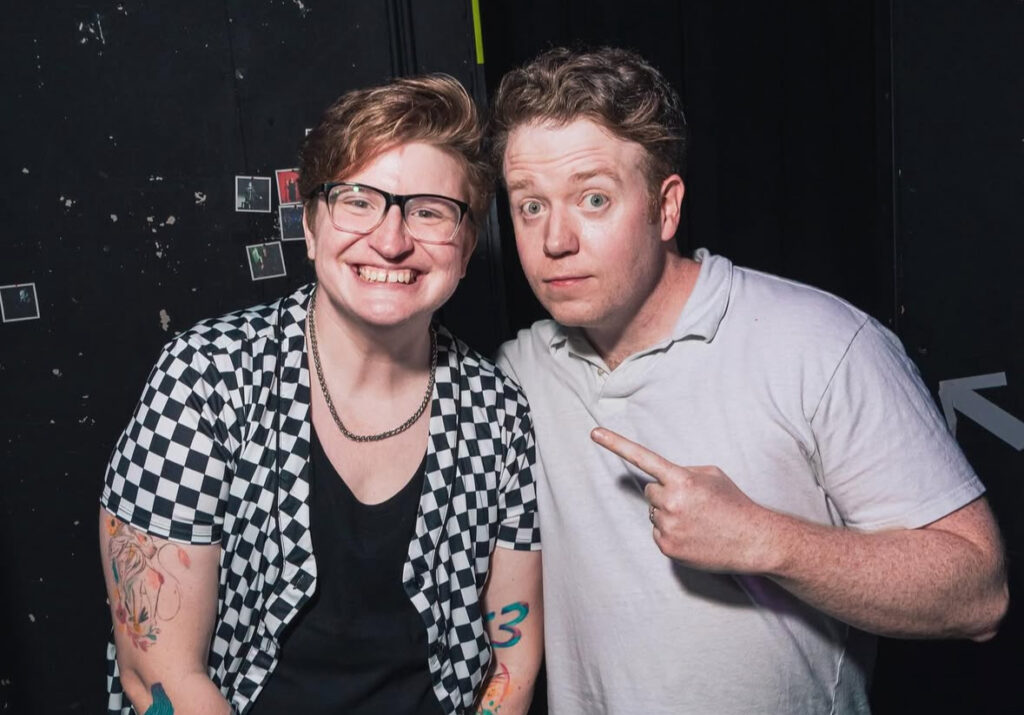
Laser next to Captain Phasma (I think?) with the caption Not Real Men: The Podcast

most boinkable? oh wow. I mean, colin firth is top always. I like to believe he would be wildly strong while also checking in constantly. He stays away from the internet, fortunately. this hasn’t really changed over time, I think because it’s easier to gain an imaginary crush, like music taste, when you are 14 and your brain is soft and nothing is real.

Speaking of movies, which I did because I wanted to ask this question, what kind of film nerd have you turned into? Like, we originally met because we both wanted to play a tabletop RPG that was more or less Firefly fanfic, which is in turn Star Wars fanfic, which is in turn kind of Kurosawa fanfic; these days I myself enjoy spending attention on Kurosawa more than I do on Star Wars. Meanwhile you live in LA, travel the world doing original shows, and probably hang out with a lot more working filmmakers than I do. What kind of work from the past do you like to study? What’s a movie or show you’re looking forward to in the future?

I do not really watch a lot of movies because sitting down to watch something is hard (ADHD) and exploring new stories is stressful (autism). But I do hang out with filmmakers, and when they make something that is really, really, personal, I like it. My favorite movie is Ghostbusters: Answer the Call because it shows the most realistic funny women I’ve seen (eating pizza) and all the men are stupid, which is a huge relief to me. I saw Wicked twice in theaters. I’m looking forward to Wicked part 2. I like it when people sing in theaters.

Speaking of tabletop RPGs, which I did because I wanted to ask this question, what secret ideas do you have in the back of your mind for an actual play series? What system would you want to use for it, and what tiny pet peeve of yours about the existing landscape of gameplay media would it fix?

I am not the target audience for Actual Play. Possibly I am spoiled because I have plenty of people to play games with, but honestly I don’t need to watch Actual Play – if I wanted to sit quietly while other people take their turns playing a game, I would just invite 4-5 people over to my home. SORRY.

I do enjoy improv because I love being bewildered by the act of creation, so when people play Fiasco or other rules-light games, I’m very, very in. I did produce an all-trans actual play series a couple years ago called Strumpets and Flagons, and that was a delight. That fixed the problem of non-trans people talking. I’ve really enjoyed watching Dimension 20 — primarily because it is edited. I guess my dream actual-play show would be a season of Dimension 20 with an all-transmasc cast aggressively flirting with Brennan Lee Mulligan. Like Dungeons and Drag Queens for boys.

Laser smiling next to Brennan Lee Mulligan

I remembered that you once had a Fiasco podcast, which is what inspired this question, but despite my best efforts to follow your work I did not know about Strumpets and Flagons! I really like how you phrased being bewildered by the act of creation. Do you ever feel bewilderment in retrospect when you revisit your old songs or other creative work? Alternatively: can you give me any advice on how to develop taste without also cultivating chagrin toward one’s younger self?

Haha – I mean I am impressed with the young version of myself. He wrote over one hundred songs. What a talented, hard-working freak! I do need to take a couple years at least to look back on my art and enjoy it… but the further away I am, the more I am truly impressed.

I think there was a wonderful advantage that younger me had, lacking the self-censorship that comes from being rejected by gatekeepers, from being around people who are judgy about other people’s art, from having a lot of negative youtube comments thrown at him. He just made stuff that made him happy and it was so much easier for him than for me.

Laser smiling in a very classy rugby shirt

A lack of self-judgment is a huge gift. You have to make a lot of “bad” things to make good things… but also… some simple things are good. So why don’t you just make things and watch the puzzle fall into place? HUH? BRENDAN?!!! And don’t forget that you need to listen to the people who are encouraging you. When you don’t believe in yourself, you’re calling them liars. Don’t do that to people who love you!

Well, on that note, many years ago you had me moderate a panel for your band at Stumptown Comic Con, and I was so delighted and proud to even have been asked. Then you continued to be a musician for many years without requesting that I represent you in any way ever again, which was undoubtedly wise. Can you think of other areas of taste you have developed by learning from mistakes?

Hahaha I love you Brendan, you are incredible, and I am sure I only didn’t ask you again because I wasn’t given the chance to pick my own moderator. Also I got very tired of doing panels. Because of you. And how much asking you to moderate was a huge mistake. Wait…

I’ll be honest, I don’t spend a lot of time dwelling on “mistakes,” I like to think of them as “lessons.” Living a life with regret as an option just makes decisions harder to make—and when I was a full-time self-employed artist, everything is always a difficult decision with high stakes. But I have learned many things. Be nice to the sound guy, even when he is clearly a sexist prick. Make a schedule that leaves lots of time for flexibility. Give yourself a little treat when things go wrong. Don’t write songs just because you think other people will like them.

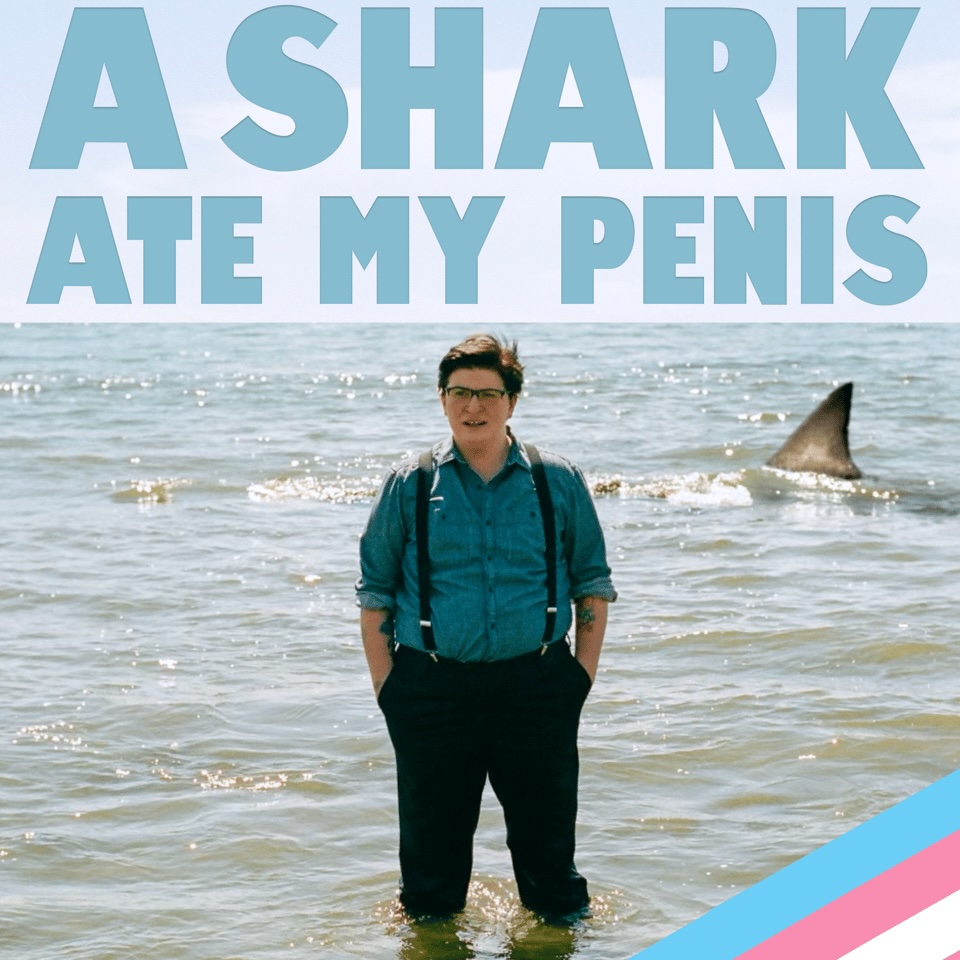
Laser standing in the sea with a shark fin behind him, with a trans flag and a caption reading "A Shark Ate My Penis"

The more specific you are when you write, even to the point of being specific only to yourself — the more relatable it will be, and the more other people relating to it will mean to you. If like 30%+ of your fans are trans, you are too, actually. And also 20% more of them are closeted trans people. Figure out ways to collaborate that don’t involve you bankrupting yourself (this is not a thing I am good at). Keep all of your emails and documents somewhere searchable. Live, laugh, love.


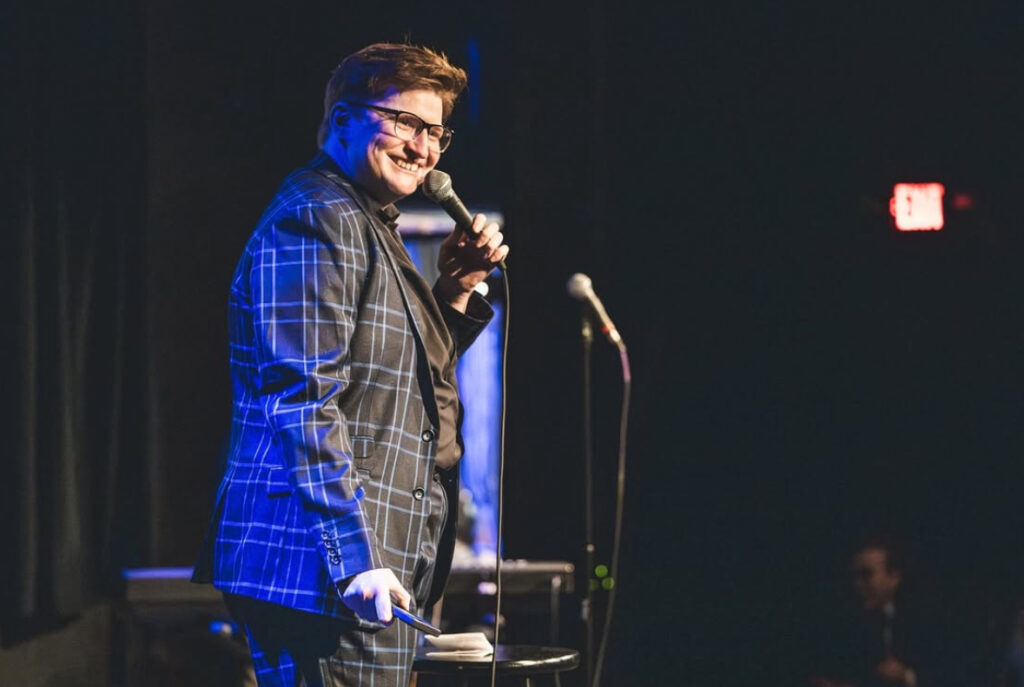
Laser in a windowpane suit, grinning with a microphone on a stage

Laser showing off tattoos with a denim shirt and a dragon jacket

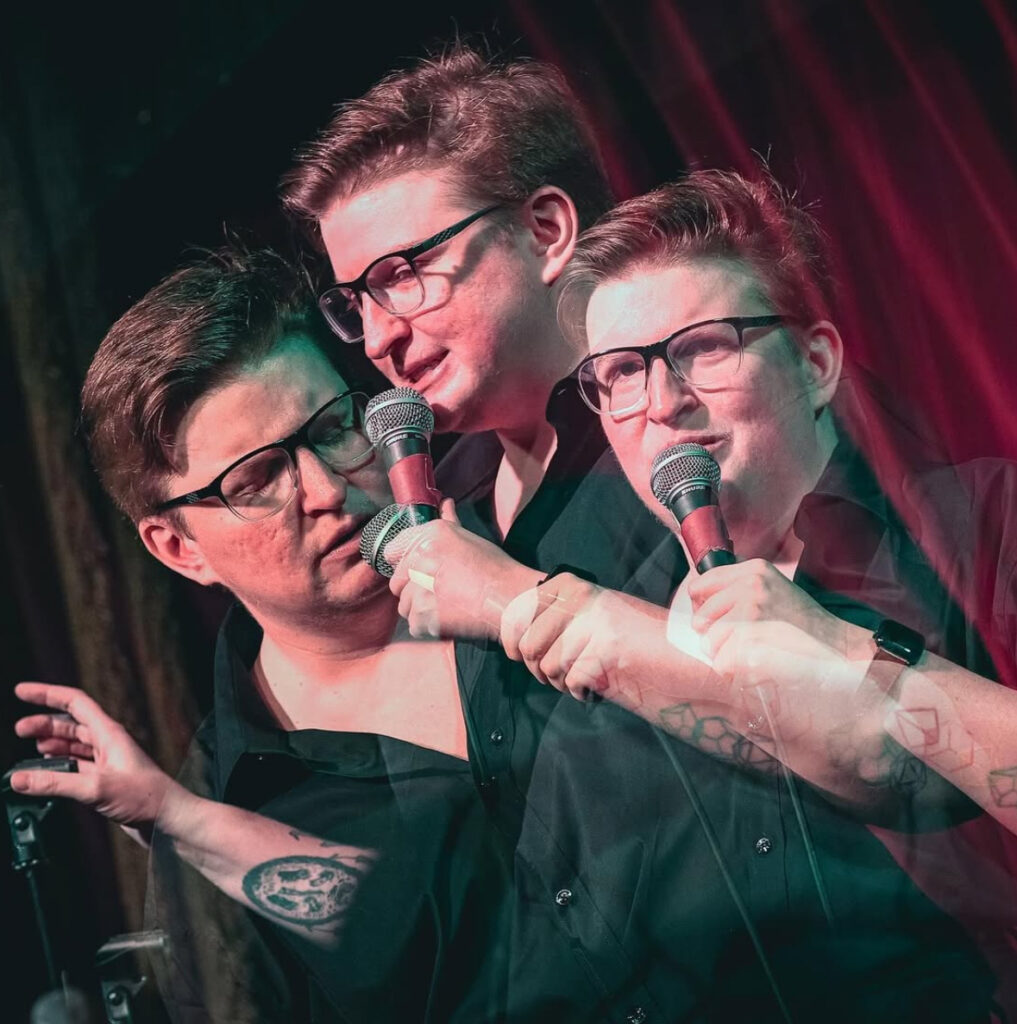
Three Lasers superimposed on each other with a microphone in front of a red velvet curtain

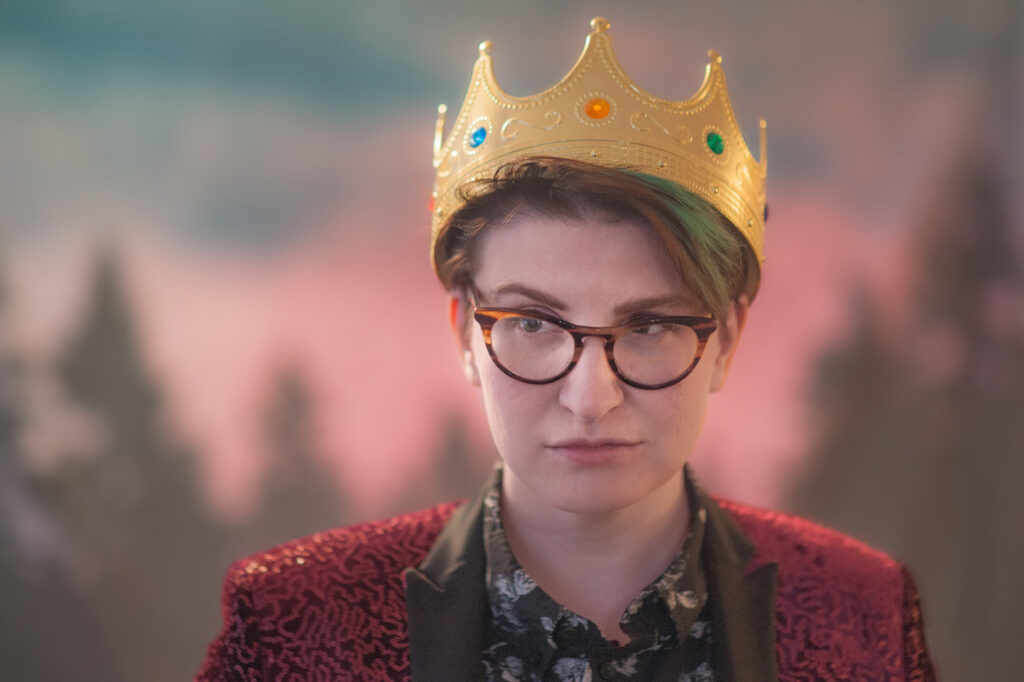
Laser wearing a crown

Laser with his boyfriend Maddox and a dog in a sweater of unknown provenance

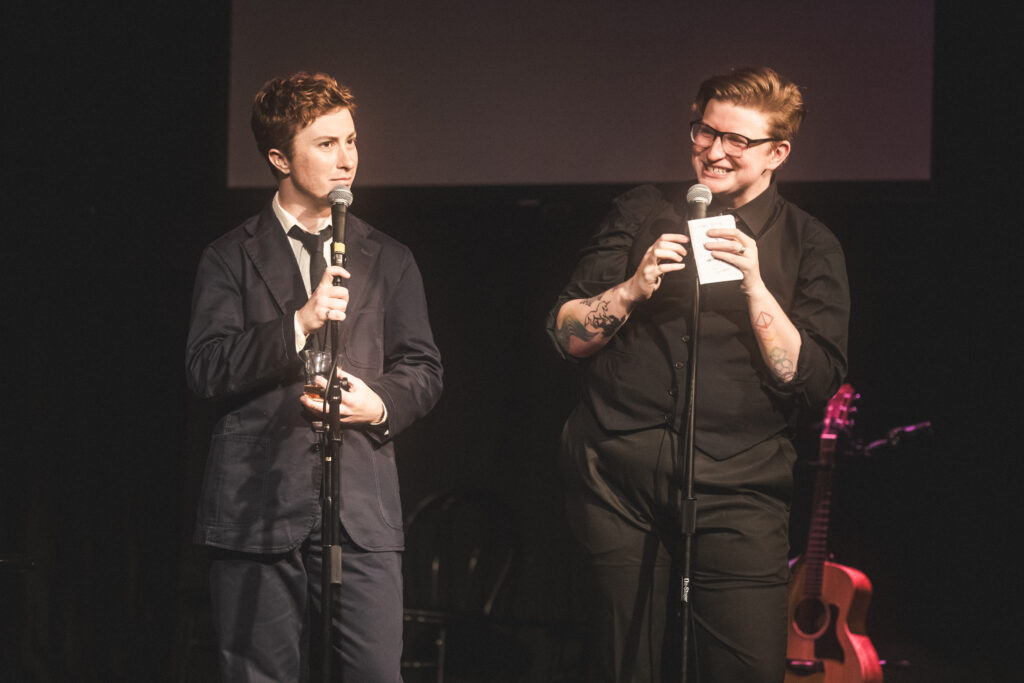
Laser with Charlie James at standup microphones on stage

Laser doing social media poses with Amy Vorpahl and a Tyrannosaur

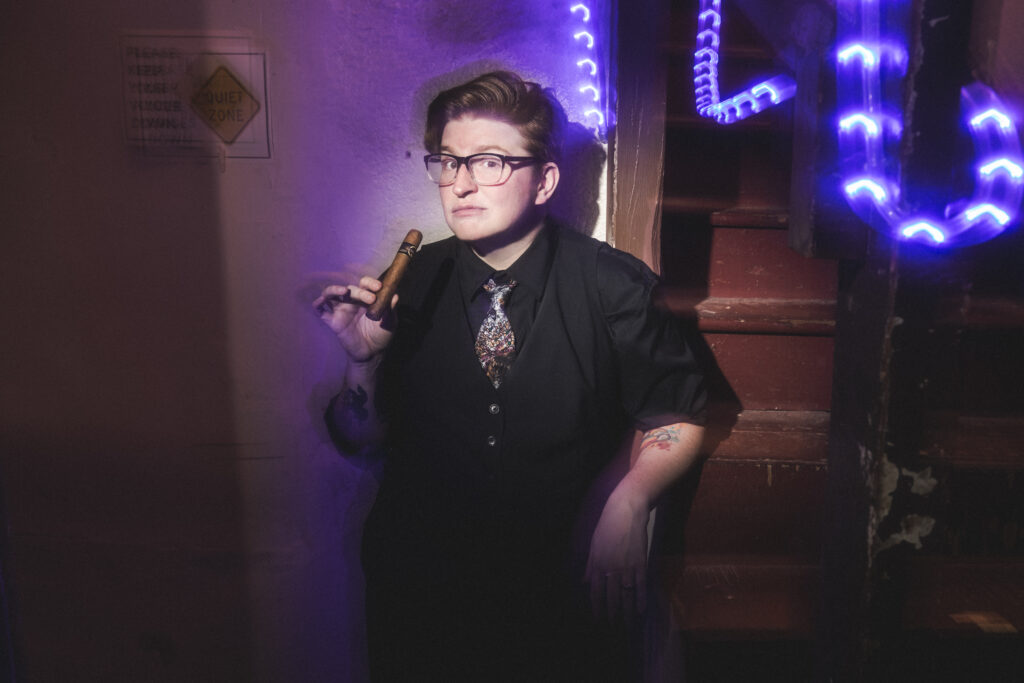
Laser with blurry rope lights and a cigar in the black-on-black outfit, looking more like Groucho than a member of Superchunk

Laser in a black shirt and black vest with a contrast tie

An interview with a tuna salad

In my mortal frailty, I am still known to frequent the social media platform “Instagram,” where daily I strive to evade a thicket of deceptions in vain labor to indulge my own voyeurism. Over time the adversarial servers marshaled there against me have determined that I will interact with their advertising metrics if they show me posts by a man named @tuna_salad_on_white. I no longer remember how we first encountered one another, but I do find his expressive taste and reserved captions welcome, as they constitute a fine astringent for my daily portion of social media slop.

Because Tuna—whose nom de loi is Andrew—has kindly responded to a few of my messages over the years, I thought I would press my luck and ask to know him better by way of an interview. Is this a thing I do on my blog now? I guess so! The following is haphazardly collaged from a brief series of emails, which I say because “edited for length and clarity” makes me sound much more professional than I am. Hyperlinks are my own; all photo credits to my interlocutor except the one I took.
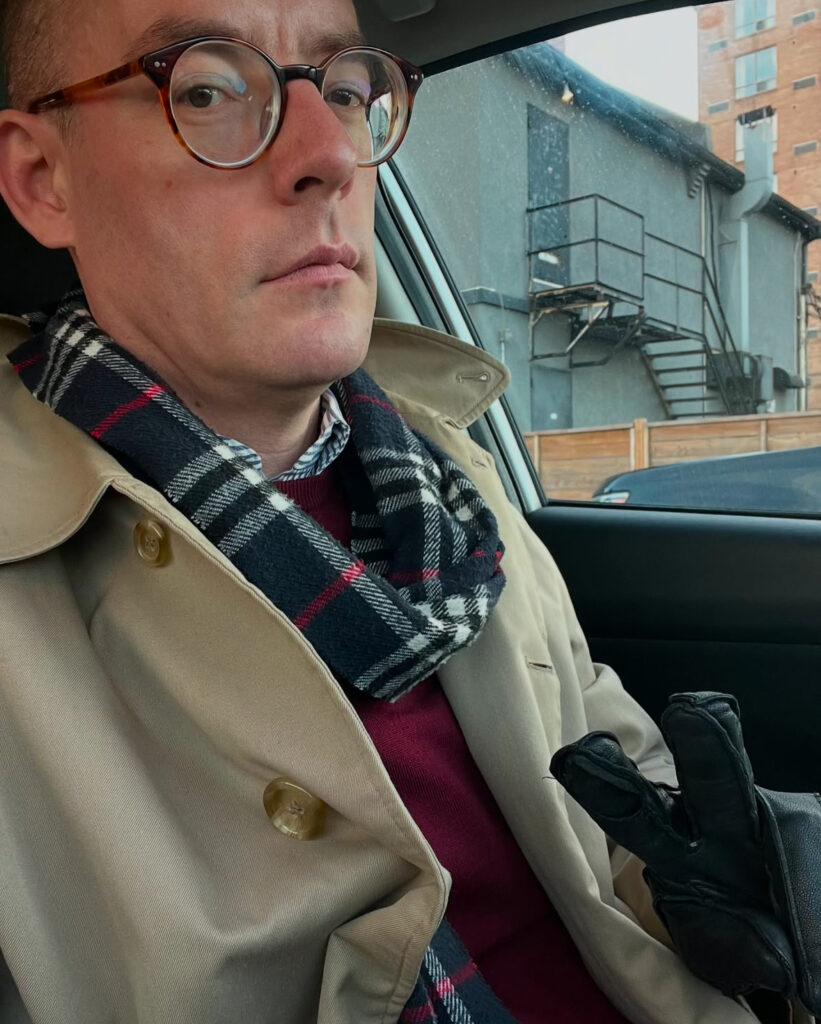

a car selfie of a sober, well-dressed man giving a peace sign with gloved fingers

I was going to ask you about whether you would consider yourself an aesthete, but then I looked up the word to make sure I was using it right, and it turns out it can mean either one who appreciates artistic qualities and beauty in all things OR someone who values the qualities of appearance in things above all else, including their function: which is to say I’m not sure what I would be implying if I led off with that. So, is Phantom Thread (2017) your favorite movie?

[Hits play on Philip Glass’s Music in 12 Parts, cracks knuckles, opens laptop]. So Brendan you’re coming in strong with that first one, let’s see if I can give an answer worthy of the question. I would say that instead of an aesthete, what I aim to be is an ascete, forever seeking to simplify my life to the essentials—cats, good food, a modicum of physical activity, human contact and art (and work on occasion of course to pay for all of that). Of course trying and succeeding are very different things.

I don’t know that I would qualify as an aesthete, as I am simply not capable of achieving the total effect. I feel like a true aesthete is someone who maintains a perfect apartment with that one perfect chair, that one perfect vintage Chabrol poster, and a clothes rack with exactly three shirts, two pairs of pants and two pair of shoes, everything else ruthlessly edited out to maintain perfect taste. I am pretty much the opposite!

I find artistic expression in individual objects, whether a vintage paperback, a classic movie, a collected book of paintings, a pair of just so black penny loafers, or an old record, and simply cannot edit my collection with the severity of a true aesthete. In short, my bookshelves are heaving, my shoe rack is groaning and the dead media objects are everywhere. I also tend by disposition to be happiest in a properly cluttered space (to the chagrin of my significant other, who really wishes I would sell off or at least store more objects out of view).

A potted plant, a teddy bear, several books and a stack of CDs

Forgive the digression, but I was always struck by a scene in Walter Isaacson’s Jobs biography, where he describes how Jobs chose to have an empty living room for years because he would rather have no couch than a couch that was less than perfect. That’s not me! I would definitely prefer to have a ratty, tatty old couch than live one day without a place to sit.

So in short, if I am an aesthete it would be in my appreciation of items in their individual beauty (which is why I have an absurdly large number of vintage teddy bears) but I am incapable of editing this down to any essentials, and my aesthetic, insofar as I have one, scans as dusty bookshop prep.

As for Phantom Thread, I’d probably give the edge to The Red Shoes, but that is by no means a slight on a perfect film. Anderson showed a level of quiet mastery, a detailed knowledge of tailoring, and an understanding of the finer points of relationship power dynamics that does make for a very satisfying movie. As someone who is often equally obstinant and curmudgeonly as Woodcock, I also very much enjoy his wit.

This is such a more thorough and well-considered answer than I could have hoped for! Among several good turns of phrase here, I have to ask more about “dead media objects.” What forms of media do you gather under the umbrella of that term? In the theater of my mind I’m starting from Hirayama’s cassette tapes and dime novels from Perfect Days (2023), adding in your import magazines and vinyl, and then embellishing with reels of 8mm celluloid and a few racks of letterpress type.

I have a lot of friends who are dedicated media collectors, and I definitely don’t think I take it as seriously as they do. I don’t watch VHS tapes or laserdiscs at home for instance, and am more than happy streaming nearly all of my movies these days. That said, I do still listen to records and CDs, but I try not to be too precious about that and am also happy listening to music streaming too.
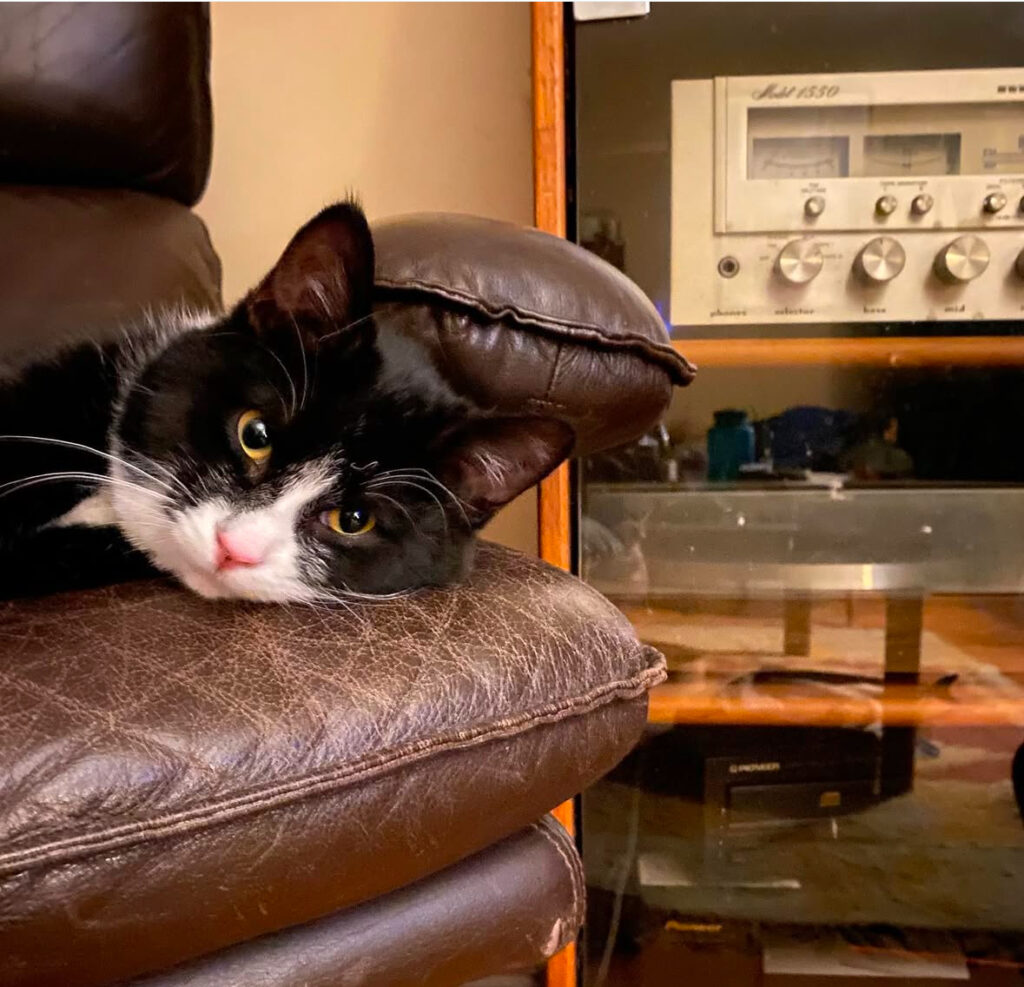
a disgruntled cat lying on a leather chair next to a stereo

But returning to the question, I like the expression dead media objects as it captures something about the fact that a lot of these objects have lost or seen their cultural capital change with time. It was not that many years ago where we all watched Sopranos on DVD whereas now I think that is much more limited to a dedicated few. One thing it also captures for me is that the objects themselves have to some extent lost their practical value.

For instance, I have been kicking myself for years now for not buying a copy of Brian Eno’s Music for Airports on cassette. It was such a perfect object—I loved the dimensions, the way the art was reduced in that way that tapes (a vertical object) had to figure out a way to fit the square record cover art usually somewhat awkwardly on the front—but also totally useless. I have the album on CD (and possibly on record—been awhile since I checked), and it’s on Spotify and likely YouTube. Why would I want that cassette? But I totally do, and I still think about it all the time.

So for me, dead media objects captures these physical items that were once ubiquitous, now past their prime but still attractive to me. There is a tension I find myself thinking about a lot between these items having artistic and aesthetic merit but always at risk of marking one as an anachronism, which I try to avoid, at least partially and not always with much success.

Years ago, we had a brief discussion of imported menswear magazines, I think specifically Free & Easy or Popeye. You said you used to order them at a Hong Kong magazine shop in Toronto; I wondered then and wonder still whether the shop closed, or its selection changed, or you simply moved on in the circumstances of your life. When you post ephemeral stories to social media, do you consider their impermanence a kind of tribute to the vanishing artifacts of the past?

So the story behind this is a fun one. Toronto and its various suburbs and metropolitan neighbours are very much multicultural and constantly in flux. One example of this is Pacific Mall in nearby Richmond Hill, which serves the ex-pat Hong Kong and Chinese communities. Buried at the edge of its food court with the various hand-made noodle and dumpling shops was a Cantonese / Mandarin book and magazine shop.

The woman who ran it did not generally stock Japanese magazines, but on a hunch, I asked if she could get Free & Easy, Lightning, Brutus, Fudge and the like, and it turned out she could. We then made a deal in which she would order new issues for me, and I would show up every other month or so, and then buy a pile of them. They were not cheap however and at a certain point, I had enough issues to make furniture stacks from the piles, so I had to stop. Sadly, that shop is no longer around. I suspect that she retired, closed the shop and moved back to Hong Kong, which is where her children were living, so she could be with her grandchildren.
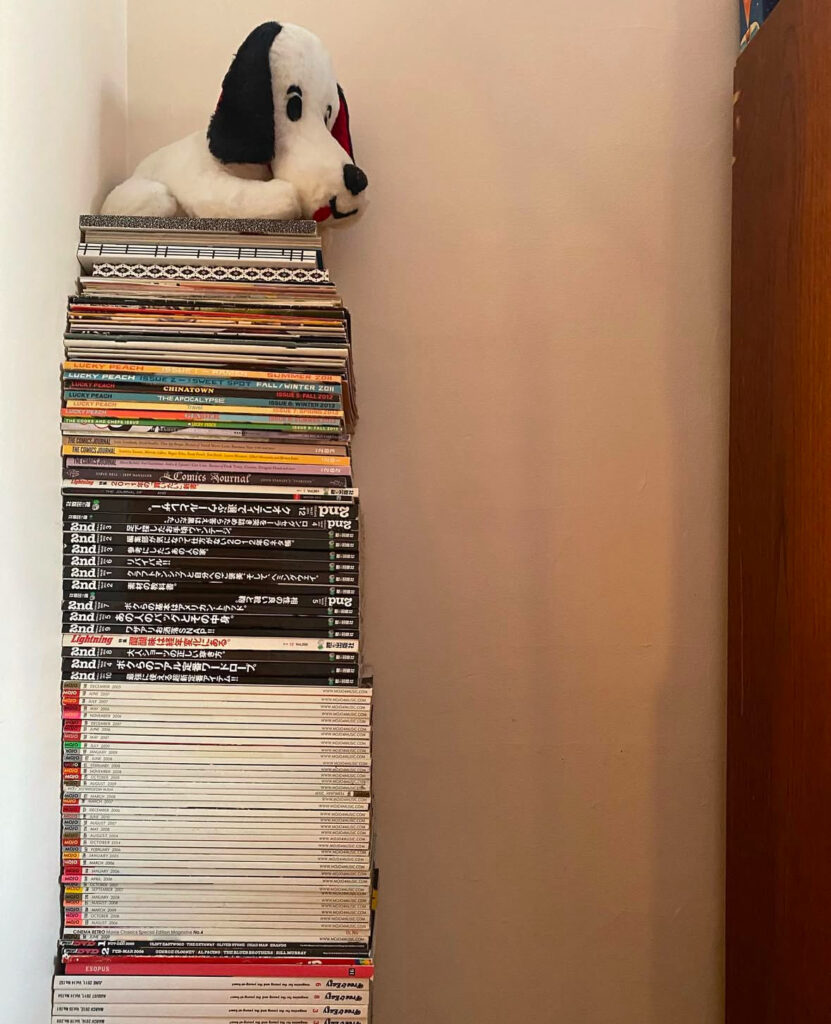
a stuffed white dog sitting atop a stack of magazines at least waist height

Those magazines played a major role in establishing my taste in style, which definitely gravitates towards older men’s style based on mostly American and British sensibilities, which of course it takes someone who does not live in either country to reduce to their essentials.

This led me down a thread of thought about what American and British sensibilities in their turn have done with the culinary products of—you know what, never mind. The question I actually want to ask is about your username, which is to say, what qualities do you think are of chief importance to a perfect sandwich?

So actually, for the first few years of my account, it was called @Andrew_in_TO. I moved to Hamilton though making the name a bit misleading. A friend used to tease me about it, so I decided to change it to its current @tuna_salad_on_white, which with the benefit was a much better name. Of course, I now get called Tuna all the time, which mystifies my irl friends (those who know I have an online presence anyway).

As for sandwiches, I love them, but I actually do not think I make a very good tuna salad! Left to my own devices, I’m generally a cheese, tomato and feta guy with lots of mayo on sourdough. If however I am out and about, tuna salad is my go-to. I have little patience for huge, too hefty sandwiches, and tuna salad on boring, non-exciting bread is a reliable, comfortable fave.
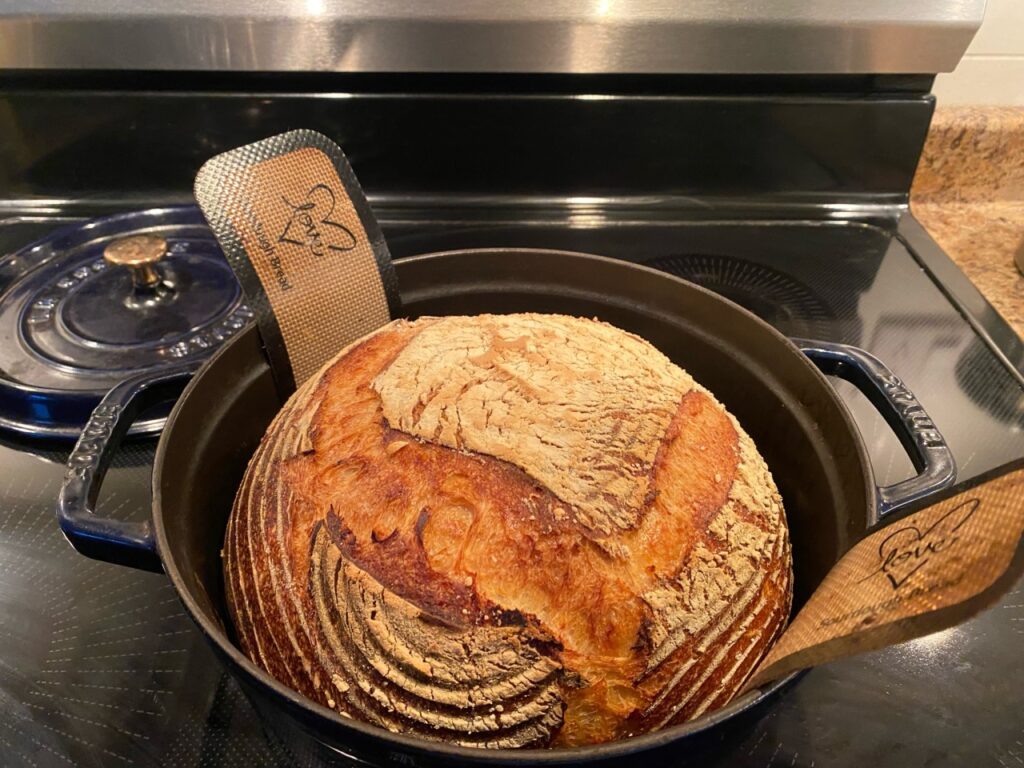
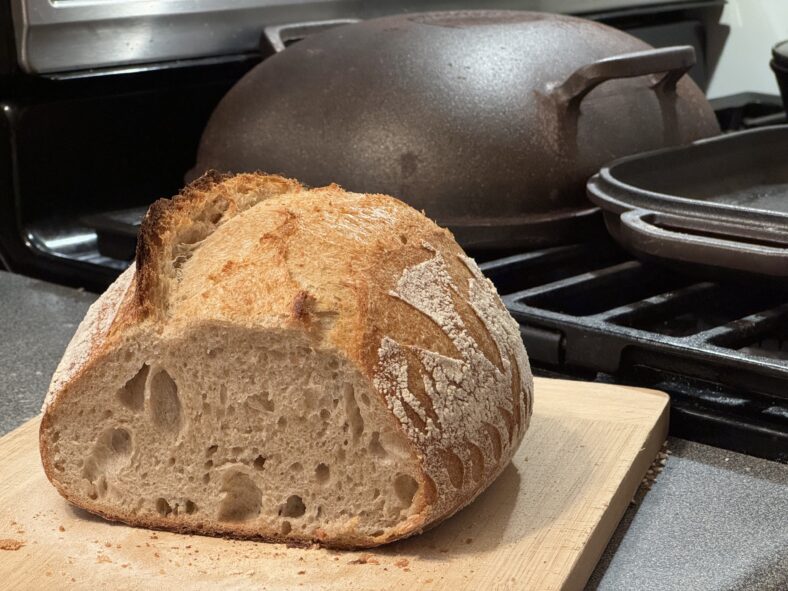
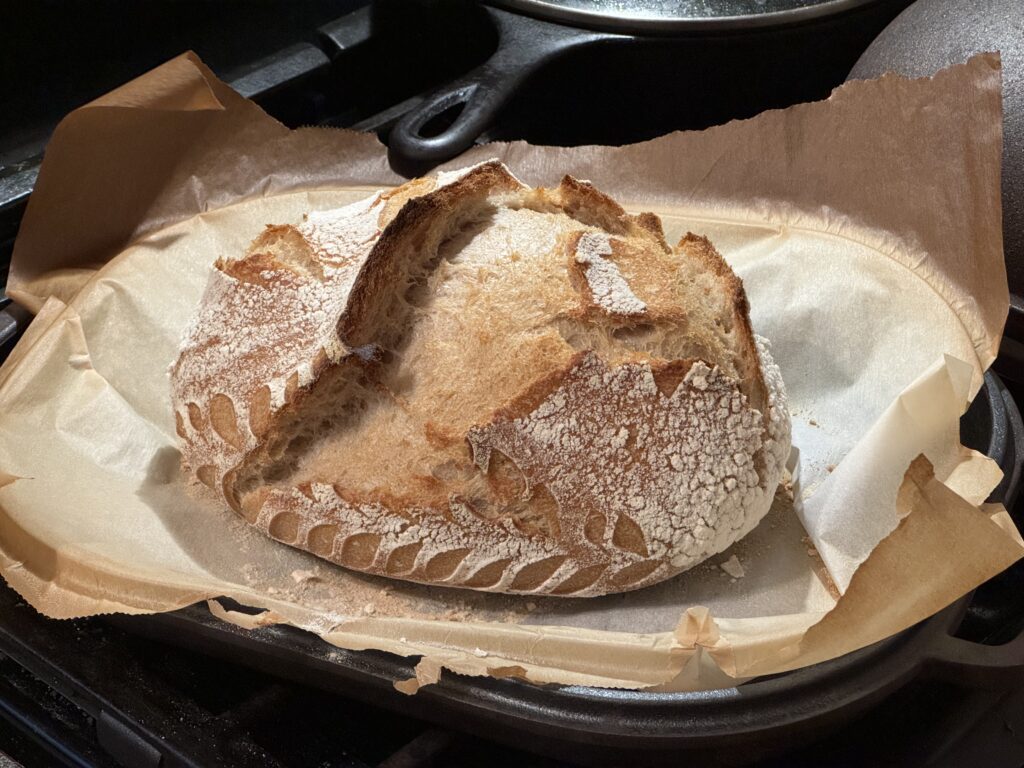
bread in a dutch oven

You have mentioned that at different points in your rakish past you maintained both a blog and a zine, two media which had their moments of mainstream ascendancy and have since been largely dismissed even though their respective subcultures refuse to die. So what were you going to call your podcast?

Like most people, I am defined by my contradictions, which in my case include the warring tension between my desire to be left alone to pursue my passions in private away from bother (reading novels and watching movies does generally require locking the smartphone away) and my love for communicating with others who share my passions (or at least tolerate my nonsense by keeping their negative opinions to themselves).

In short, it is really hard not to care as deeply about art, aesthetics, culture and all that as I do and not have an outlet for sharing that passion with others. As a kid in high school, I published a few issues of a zine, which consisted mostly of my scribblings (I drew a lot more then), pilfered photocopied art from old movie posters and indie comics, and lengthy reviews on whatever I was obsessed with then—1950s-70s b movies, garage rock and exotica, all things Hong Kong and Japan, and Columbo (not much different than now!). I circulated this among my peer group, who were bewildered by my tastes but did get a laugh from my evident passion. Later in my 20s, I did a blog that was pretty much more of the same, adding some local Toronto content, and while I very much got something from writing it, my audience was entirely bots and bewildered strangers who had found the page by accident. I was shouting in the void, as they say.

Instagram works for me, though I think I use it differently than most people, as I basically just treat it as a blog or zine and exploit the fact that people follow me out of a perverse sense of social obligation to have a ready audience.

Regarding podcasts, you’ll never find me there. To refer to the work of a fellow Canuck, in Marshall McLuhan’s terms, I am a cold media guy. I like my discourse dispassionate and not especially exciting, with a definite preference for the written word (with some visuals for illustration). I recoil from the podcast / YouTube world of excessive “hot takes”, exaggerated facial expressions, and loud voices. If more podcasts felt like a BBC broadcast, I might feel differently.

Now see, this is such an interesting note because my acquaintance with you up to this point has been visual-first, text-second. I enjoy the dry urbanity of your Instagram captions, but of course those are only for grid posts! I find your stories more like a wordless collage, with images composed in linear sequence rather than two-dimensional juxtaposition. Do you have a guiding principle for how you order them, or is it more intuitive?

The story posts are pure id. I try not to overthink them, though there is usually a bit of logic in that I try to get something in there that is vaguely ivy / trad / menswear-ish, some retro culture / Hollywood, a chiseled ab or two, definitely some cluttered interiors, and a cheeky shot or two because life is short, and the human body is refreshing. Of course, if I had any real impulse control, I would show some restraint and cut that off after 3-4 pics, but by the time I am done, my stories are running 20+ posts long—which even I roll my eyes about. I just hope that my friends enjoy the ride, drop a comment or two, and find some inspo in the posts that work for me.

The tone of this email, which I hope comes across as affably caffeinated and not just unnecessarily combative, was spurred on by the stimulative effects of my favorite frou-frou coffee drink, called the Fireside Latte because it includes a spoonful of lapsang souchong syrup and a sprinkle of smoked salt on the foam. What is the closest beverage to you as you read this, and should I capitalize “lapsang souchong” as part of my house style or not?

That Fireside Latte sounds delicious!

In my older, wilder days, it would have been a very crisp gin martini with French vermouth and a twist (well, not at 8:00 am—I was never that wild). These days, it is coffee in the morning (stove top moka during the week; French press or pour-over on weekends), sparkling water during the day and maybe Earl Grey or Sleepy Time at night.

A cat, a wristwatch, and a Charlie Brown mug.

Oh right, the whole impetus for emailing you was to ask about how you collect, store, and organize your visual materials for inspiration and review. Also, what’s up with this photo you posted and this bizarrely similar, more slapdash iteration of the same concept I photographed twelve years ago? Like, what? Why? Is this a thing??

That image cracked me up, and to see that you have encountered a similar model cracks me up. That brings me as much pleasure as someone spray-painting the word Porsche on the side of a Ford Tempo.
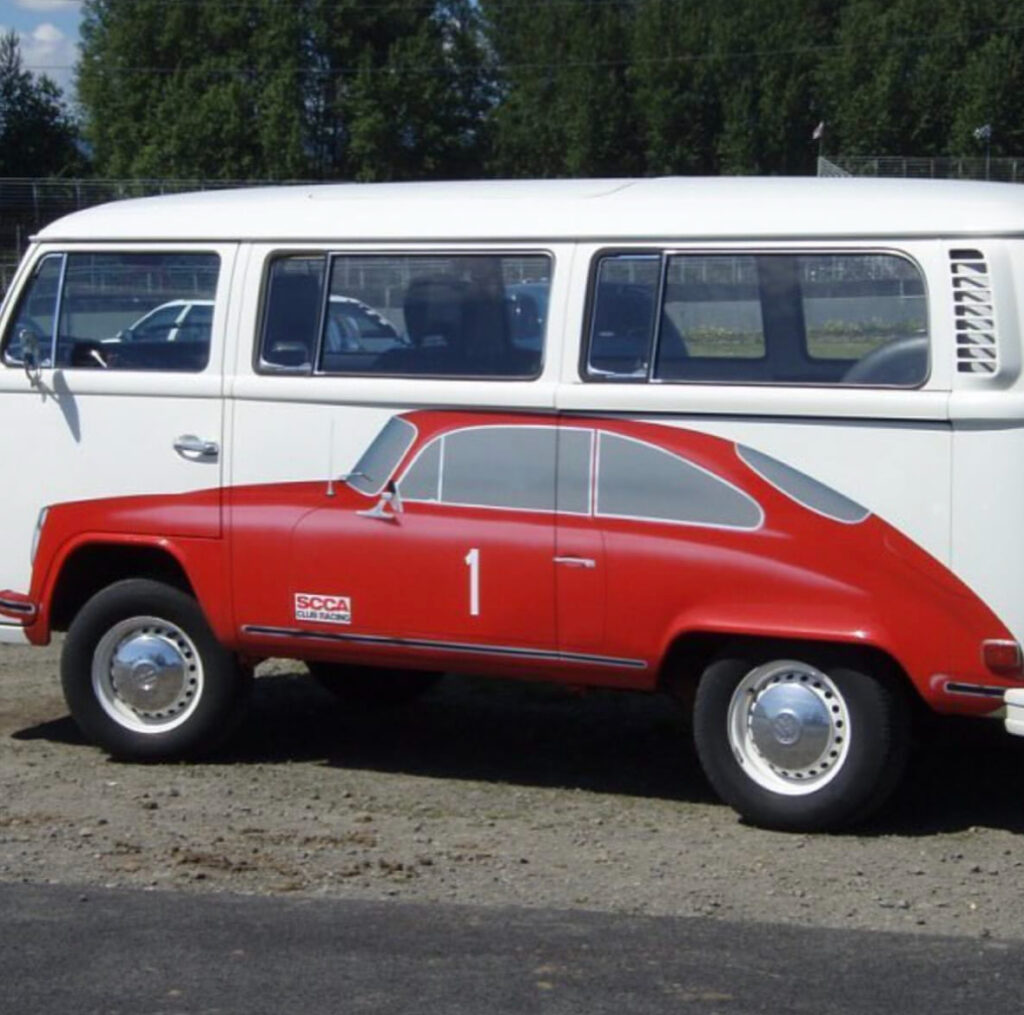
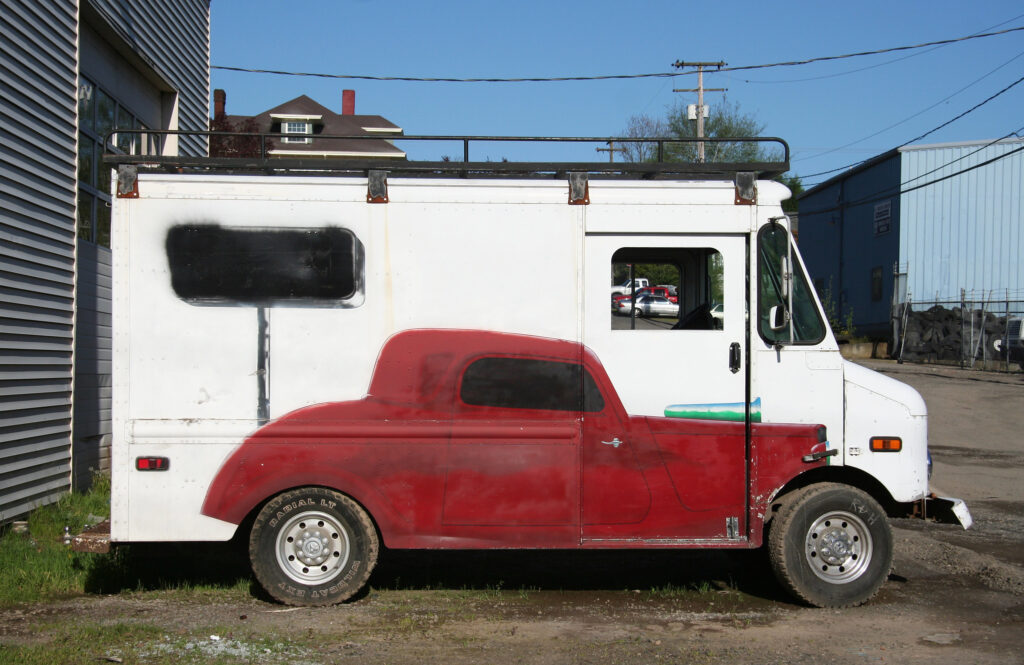
a white van with a red sports car painted on its site
a white van with a red sports car painted on its side

Back when I first got my own computer (an Apple G4—I had high hopes then of possibly exploring a career as a graphic designer), I systematically set about acquiring a deep library of mood board images (mostly old hardboiled novel cover art and the paintings of Toshio Saeki) mainly as Apple had this great feature where it would turn saved photos into a cycling screensaver.

In later years, I became obsessed with a blog that prefigured both Tumblr and Instagram—If Charlie Parker Was a Gunslinger. It was basically a mood board site that got updated daily with anything and everything the bloggers who contributed were obsessed with, everything from pics of various artists and writers and film directors to screen shots to fine art to comic book panels to you name it, and it was meticulously indexed, which made for endless scrolling.

A lot of the time, I had no idea who the people were who were pictured, but I would look them up and then explore, so it had a lot to do my burgeoning tastes.

Since then, I have always maintained an active folder of pics that hit that just right button for me of cultural interest, aesthetic perfection, erotic potential, or dada-esque irrational hilarity. Of course, I have a recurring problem of cats wrecking my external hard-drives by knocking them over, forcing me to start all over again, but that’s half the fun.

I abhor all forms of organization, which means anytime I am looking for a book on the shelf or a saved pic on my computer, it’s a real journey, and half the time I forget what I was looking for as I find something else that distracts me.

So I feel I should ask a question in response to this (being only fair)–what led to your interest in this area? I always find it interesting how people’s tastes develop and what acts as the initial trigger.

At 43, I sometimes feel like I’m just beginning to develop taste, but I mean that in a net positive way. One of my favorite anecdotes is about David Letterman calling “Everlong” his favorite song, which doesn’t seem odd until you do the math and realize that it came out when he was 50 years old. How unusual and open to the world one must be to find one’s favorite song after you turn 25, much less while recovering from heart surgery in middle age! Another of my favorite anecdotes is about the time my friend Mike, feeling a little exasperated with me, laid me bare by saying “when Brendan acquires a taste, he feels that the world has defeated him.”

To the latter point, an ex of mine used to get very weary of my complete disregard for dressing myself in anything but t-shirts and ragged cargo pants. Because I can be pretty mulish, it was only after we broke up that I allowed myself to furtively google “how to wear clothes adult man” and came across Put This On. That led me to Derek Guy, back in the days before he was a social media phenomenon, and he in turn tipped me off to the aesthetics of Popeye, Akamine Yukio, Brut Archives, David Marx’s Ametora, Emilie Casiez (and thereby the beautifully unhinged captions of Nigel Cabourn), FRUiTS, Wooden Sleepers, etc etc.

That list might make it sound like I am constantly getting off choice fits when the reality is that I have worked from home for five years and almost never wear a belt. But I suppose the takeaway is that RSS feeds in the declining era of the fashion blog allowed me at last to consider self-cultivation as a project I could pursue.

Wait, strike everything I said earlier. Now that I think about it, the actual seed of all my interest in the audible, visual and physical—many years though it took to germinate—was Hackers (1995), costume design by Roger Burton, my favorite movie for almost 30 years.

I certainly did not grow up organically knowing any of this stuff. I was a skater teen and grew up versed in the fashion rules of that set. Later that shifted to dressing like a slightly nerdy britpop / indie rock guy (big shock I know). I suspect that it was in my 20s that I systematically began trying to make some sense of how to dress better and looking things up online. That started as more of a post-mod Britpop thing (lots of Fred Perry and Ben Sherman and parkas and all that) before transitioning into ivy, button downs and khakis that didn’t strangle my thighs. That meant a lot of time on message boards, which was great for learning things and also for realizing that I have zero patience for bizarre online troll wars. At a certain point, I just stopped posting things myself and just lurked for the good intel so as to avoid all that other weird, unhealthy online behaviour.

Put This On came late in the game for me. I had already mostly figured out my game by then, but it was a welcome discovery. First, the writing on that and Derek Guy’s solo Die, Workwear! blog was among the best writing on menswear to be found anywhere. I grew up reading GQ and Esquire, and while I still read those magazines, their advice is often dead-on-arrival, being a mix of extremely au courant fashion updates or very blatant advertorial to sell clothes, which I get since the bottom fell out of magazines long ago (they still both publish great features though, so I don’t sleep on them). Second, I am also fanatical about Ryan Smith and Dick Carroll’s comic strips.

Of course, Die, Workwear! deserves credit for interviewing Yukio Akamine, who gave the best advice on menswear I have ever read: “You don’t have to read fashion magazines. Open the window and look outside when you wake up in the morning. A man who can cook rice is a hundred times cooler.”
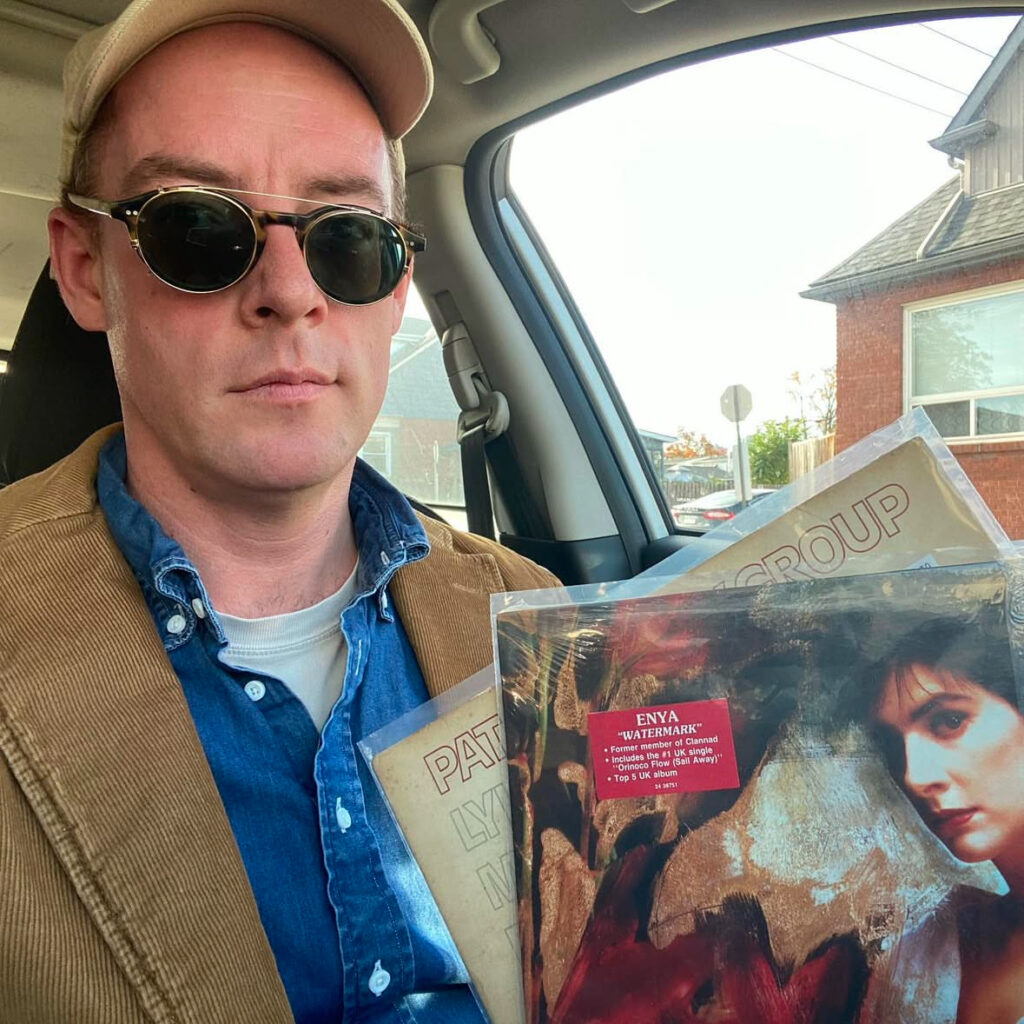
A man in sunglasses and a corduroy cap holding an Enya album

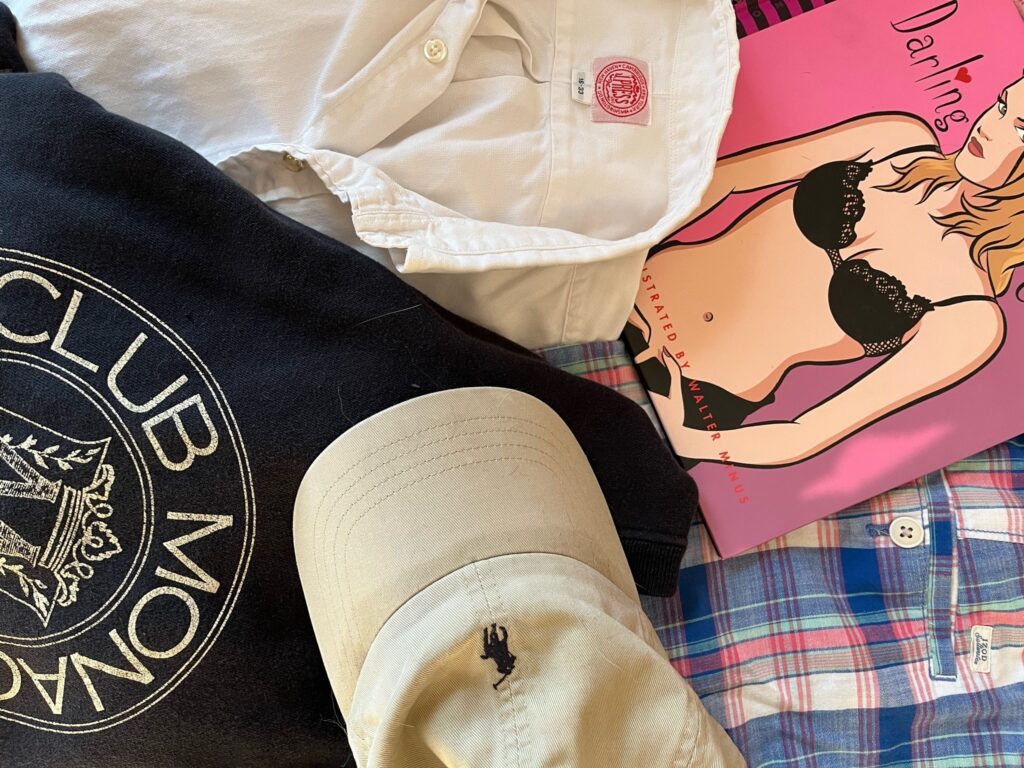
A shirt, a crew neck, a Polo cap, and a saucy magazine cover

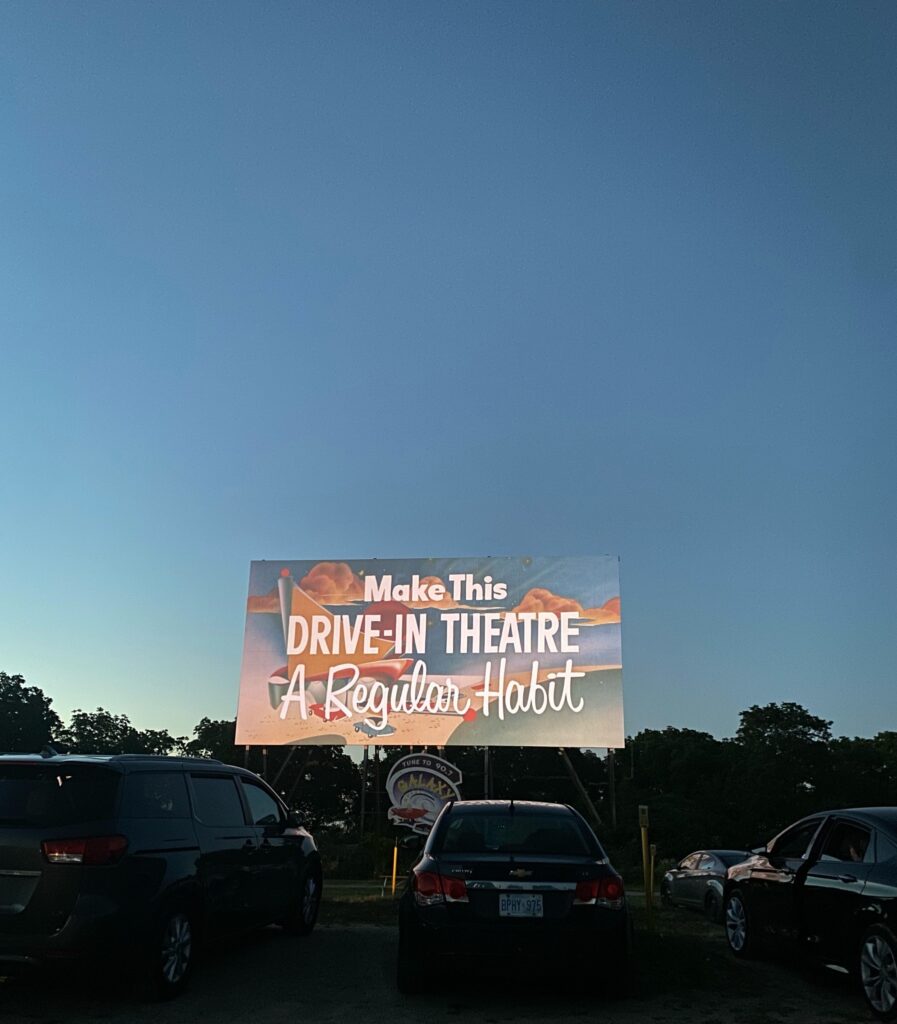
An evening at a drive-in theater with a sign recommending the viewers make it a habit

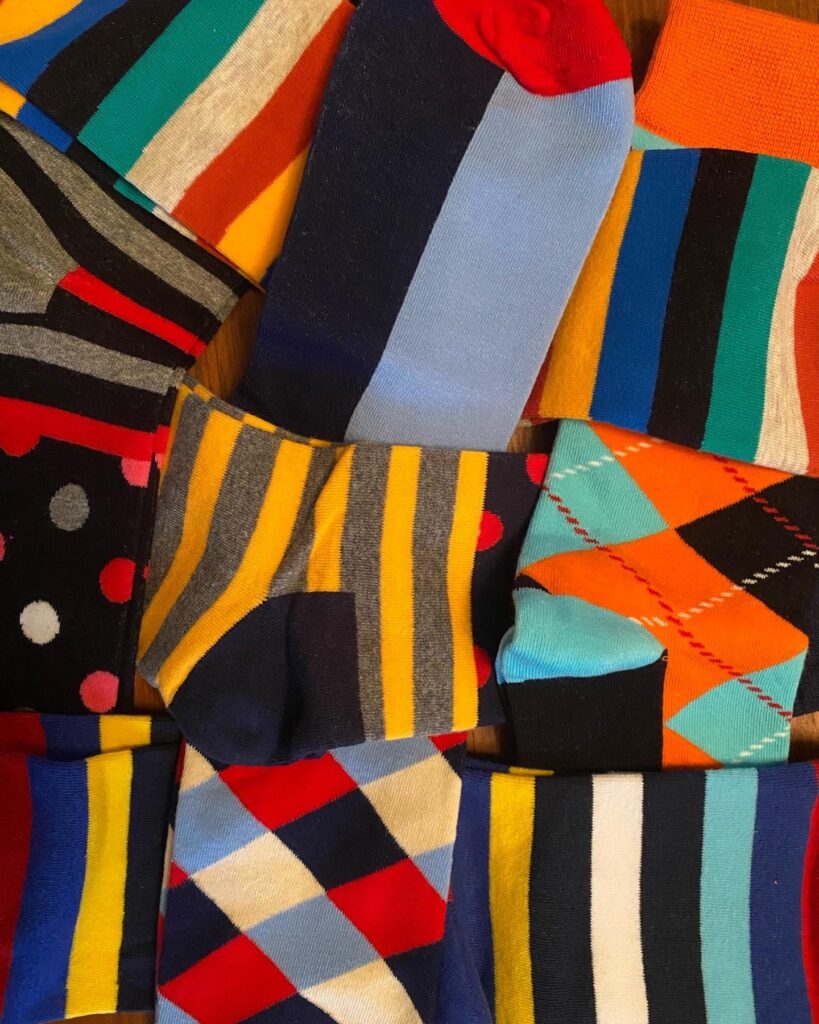
A collection of brightly colored socks

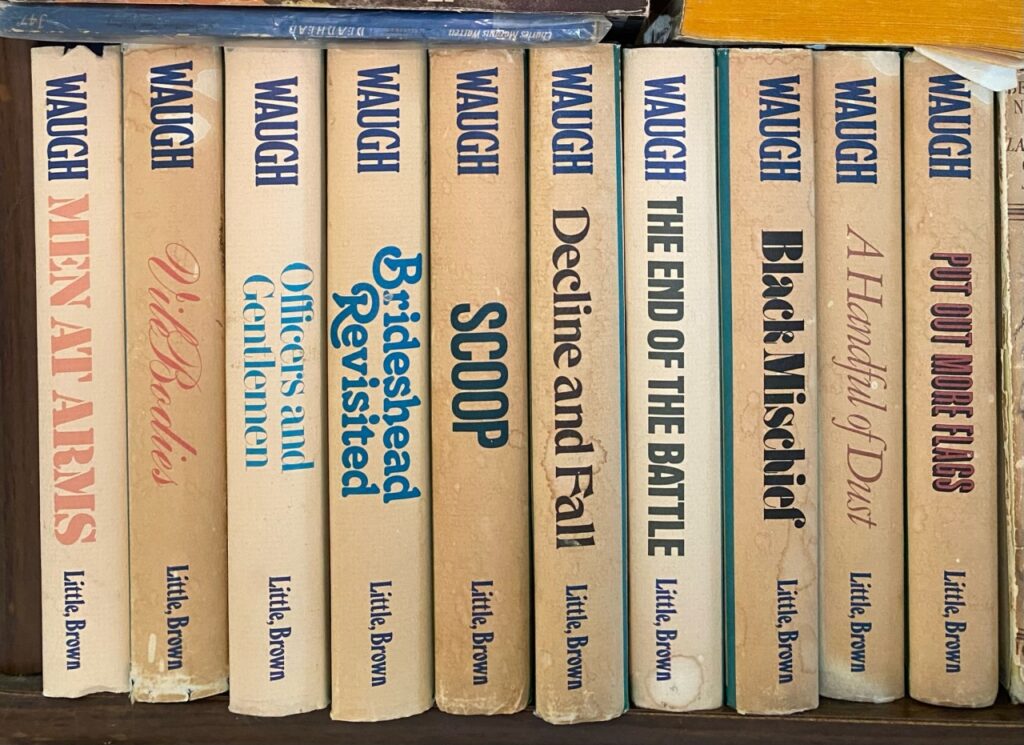
A series of Evelyn Waugh book spines

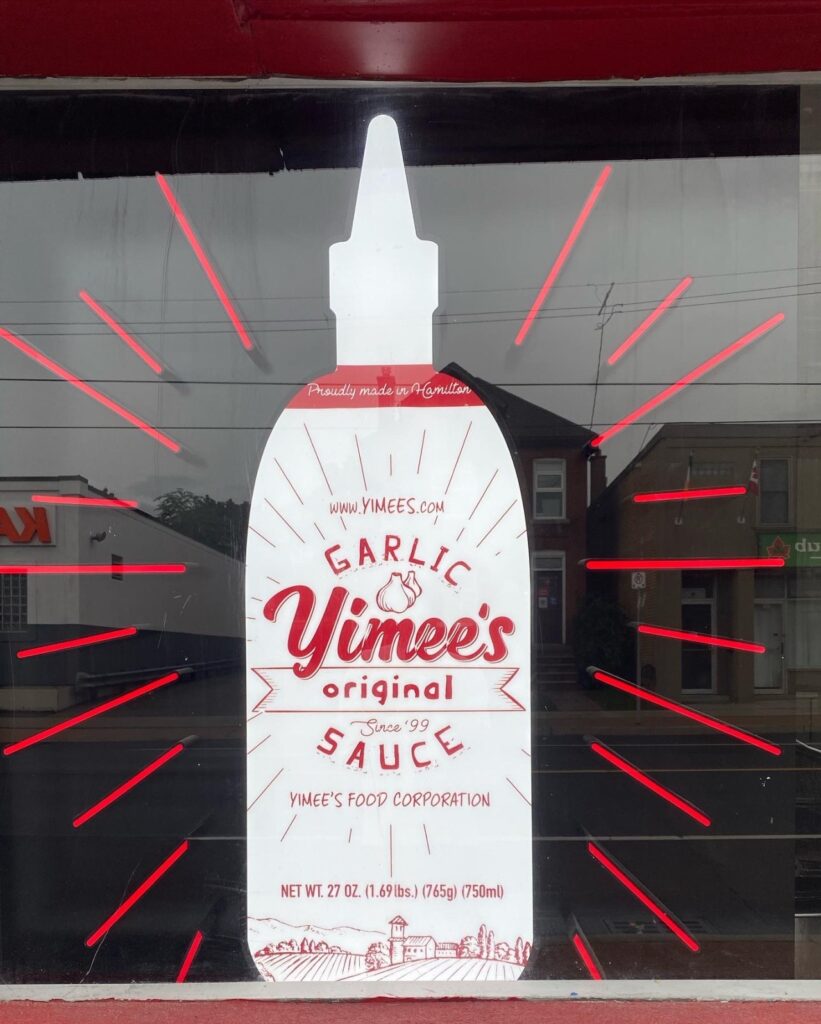
A window advertisement for Yimee's garlic sauce

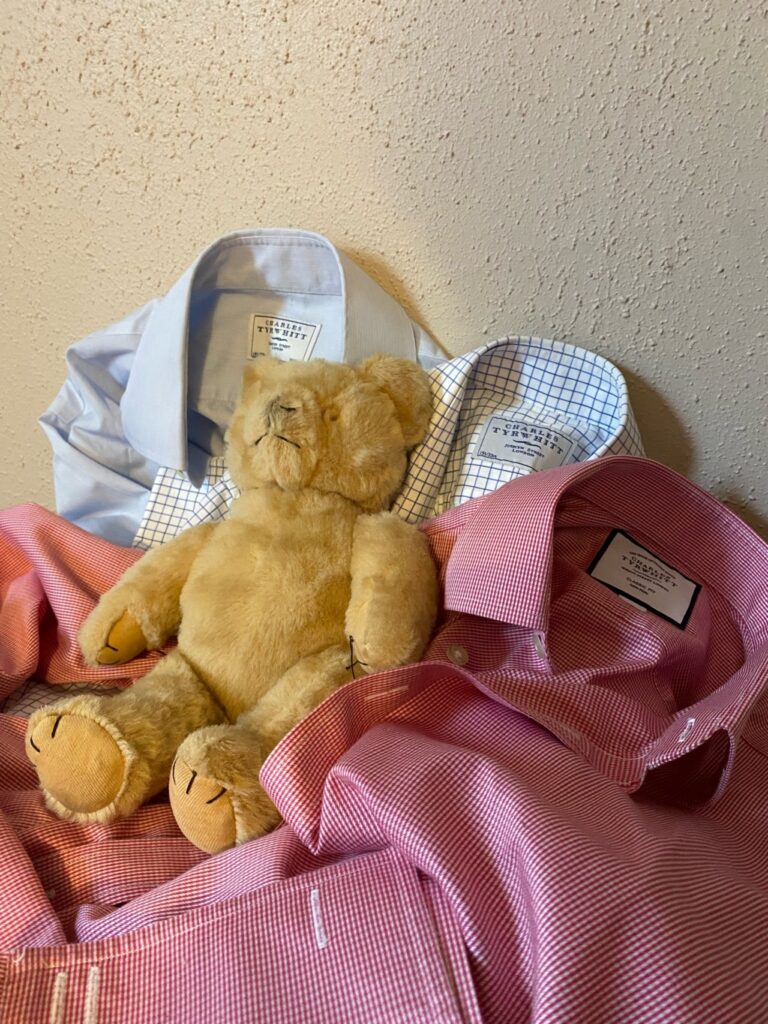
Three Charles Tywrhitt shirts in pink and white and a teddy bear

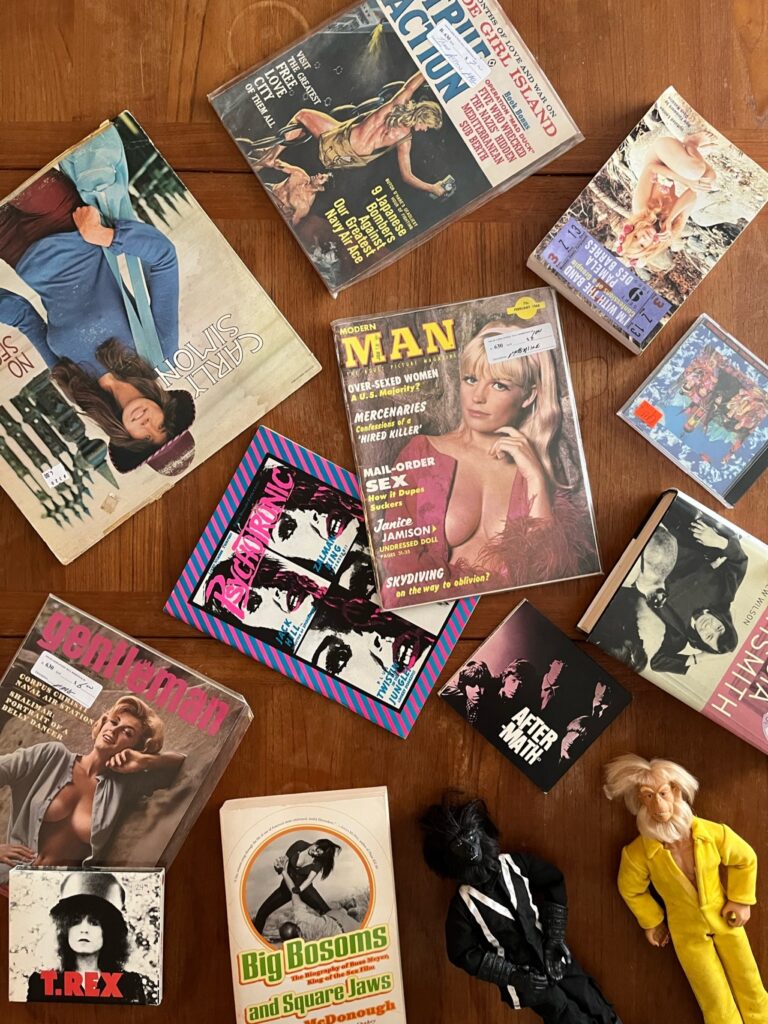
An assortment of mildly ribald vintage magazines and a Dr. Zaius doll

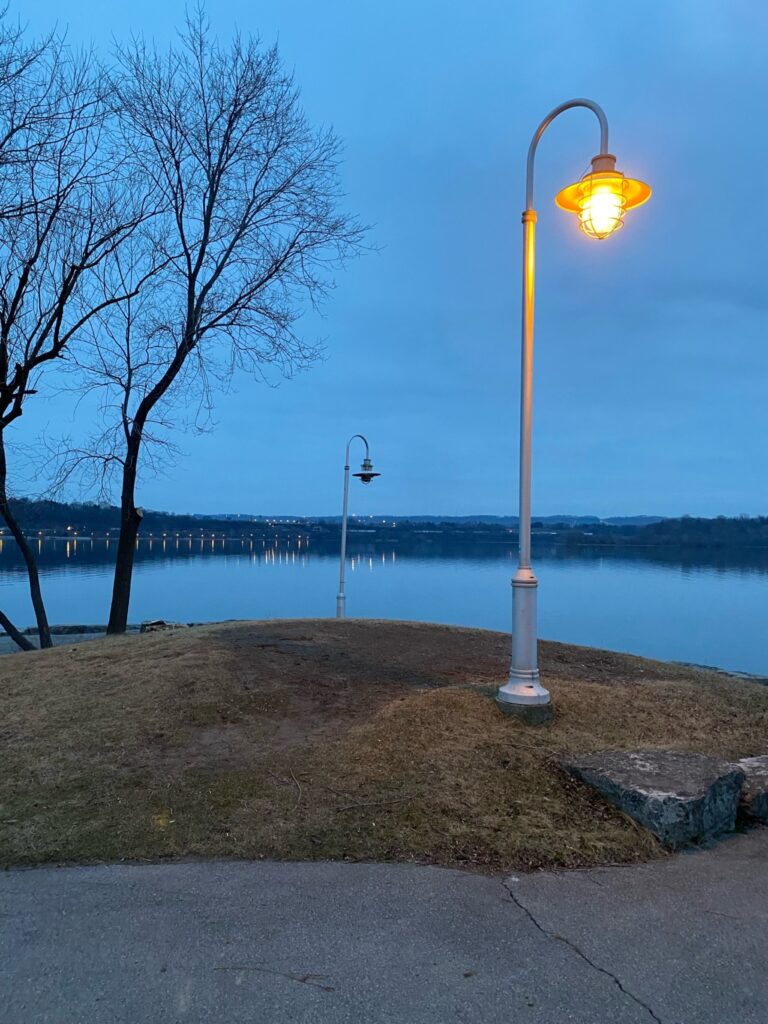
An evening looking out over a lake with a warm streetlamp in the foreground

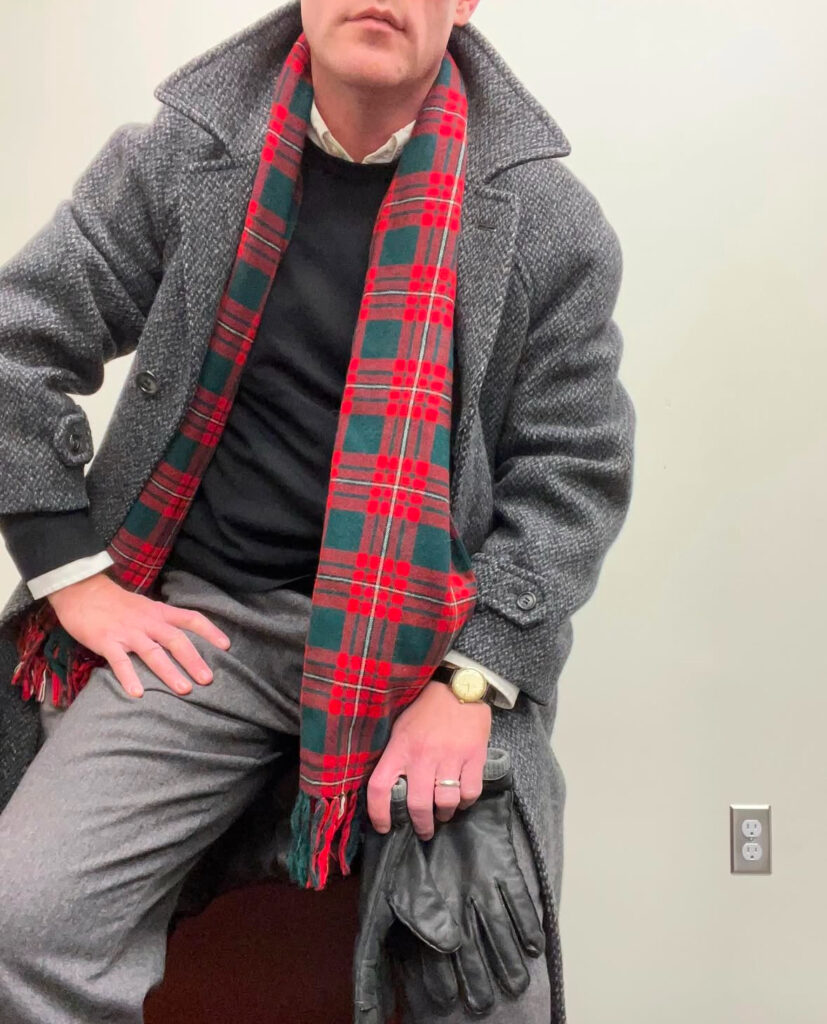
A man wearing an excellent balmacaan, tartan scarf, and wristwatch

We got a dog and his name is Max

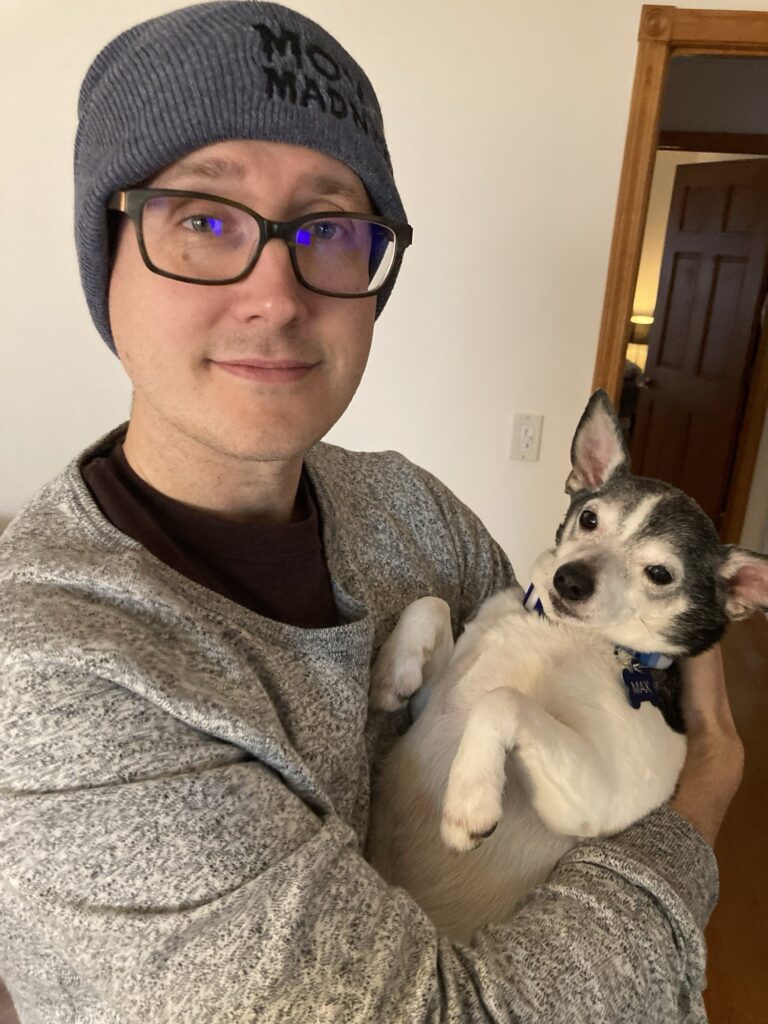
Hello, friend. My opinions are my own and do not represent those of my employer, but over the summer we got to meet the best dog in the world. Our friends were fostering him from a local shelter, so we had a few opportunities to get to know him, and each time we loved him more. When we bought a house (oh, also we bought a house) and moved out of our apartment, we adopted him as soon as we had a place to put his bed.

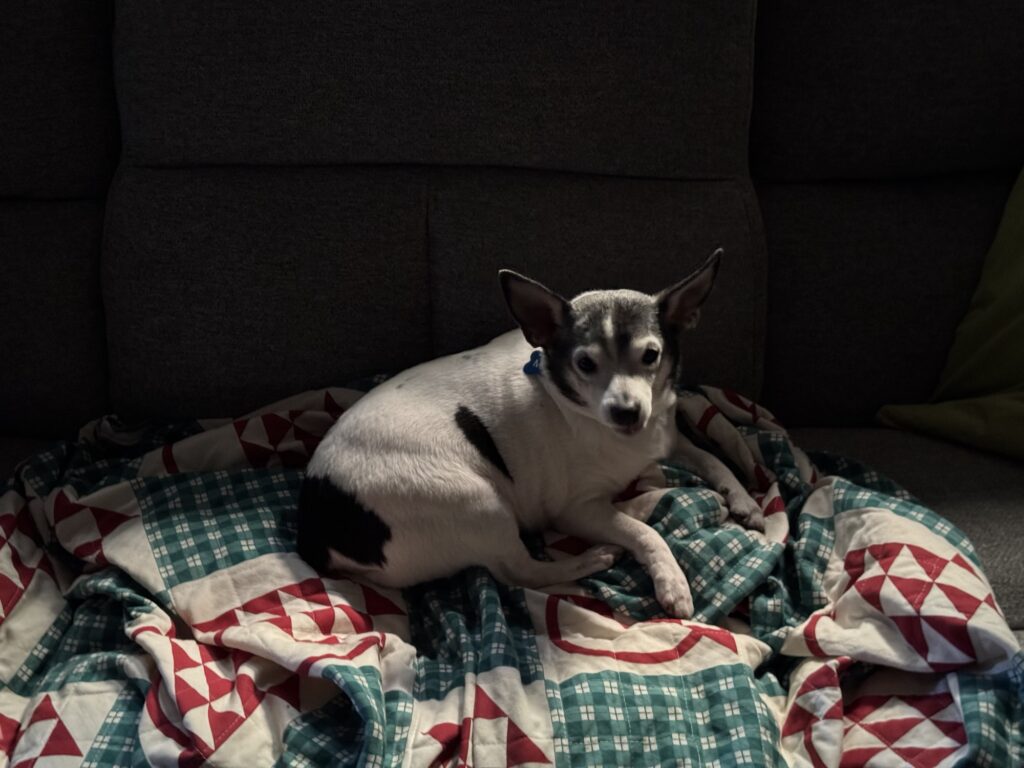
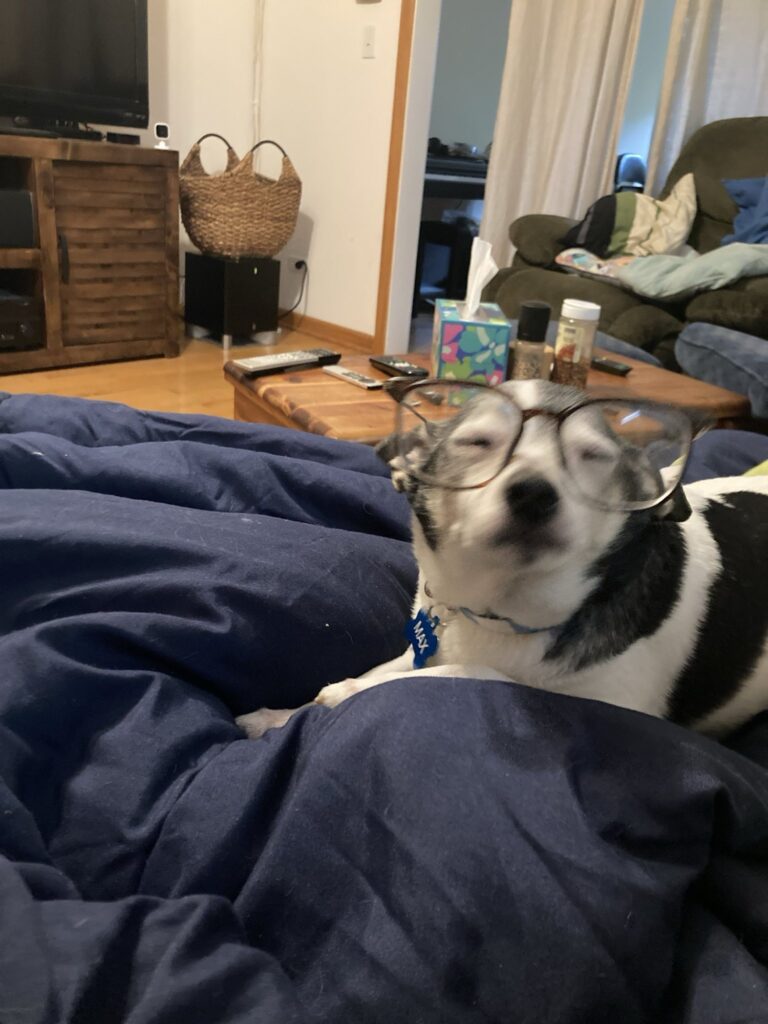
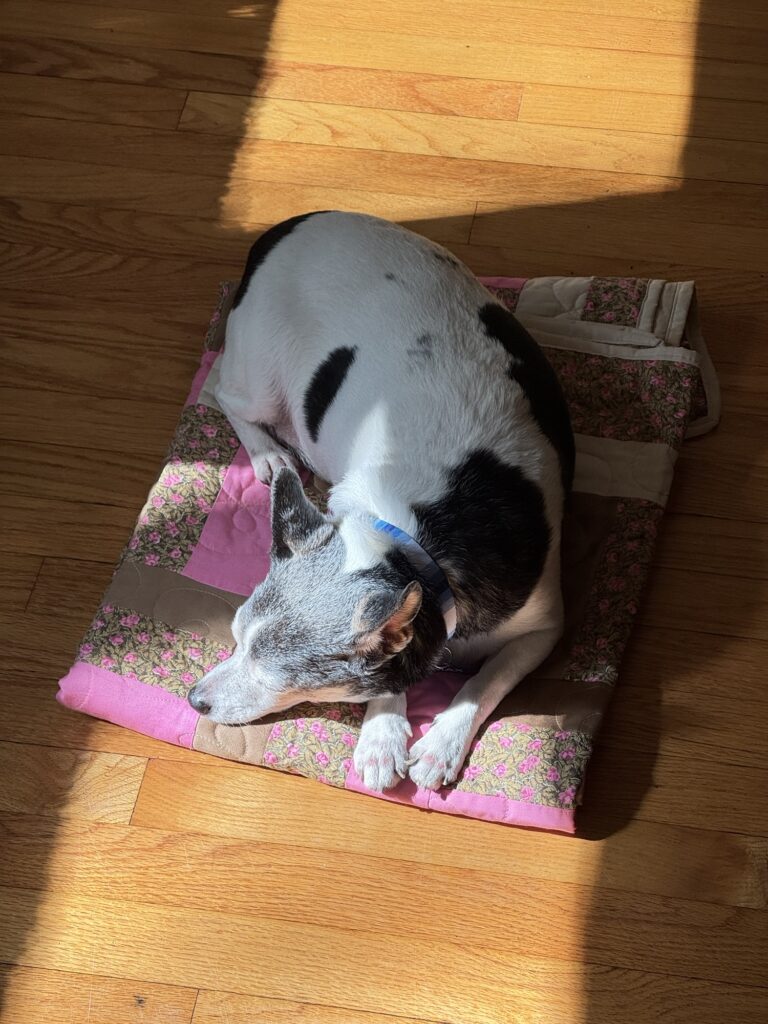
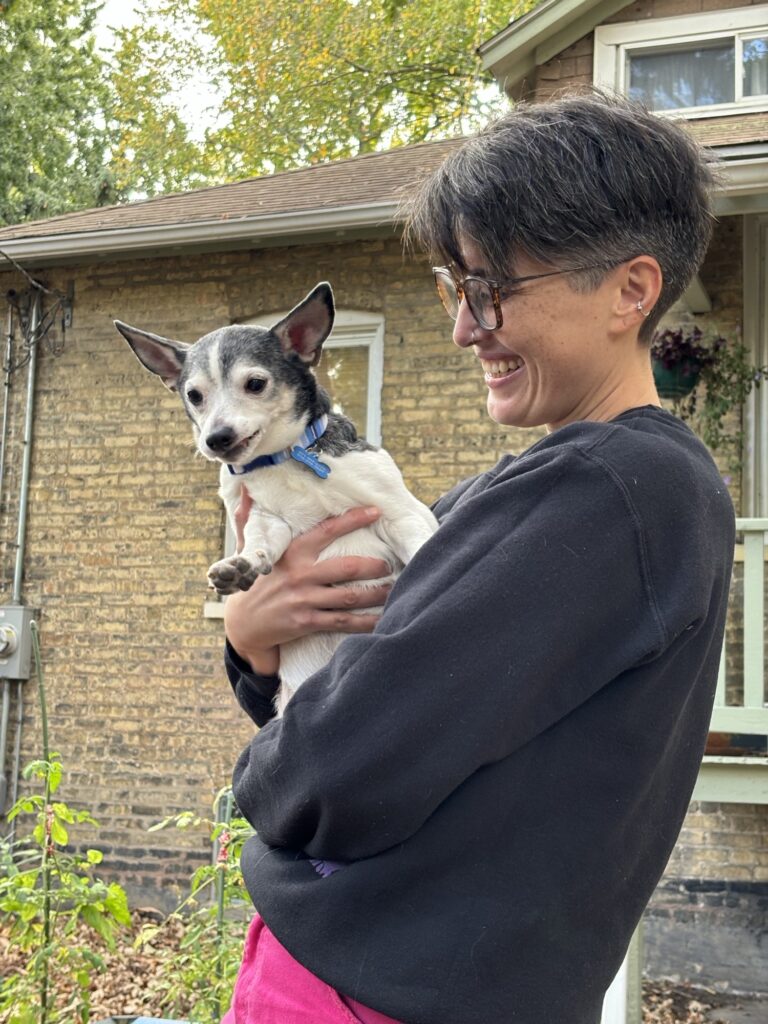
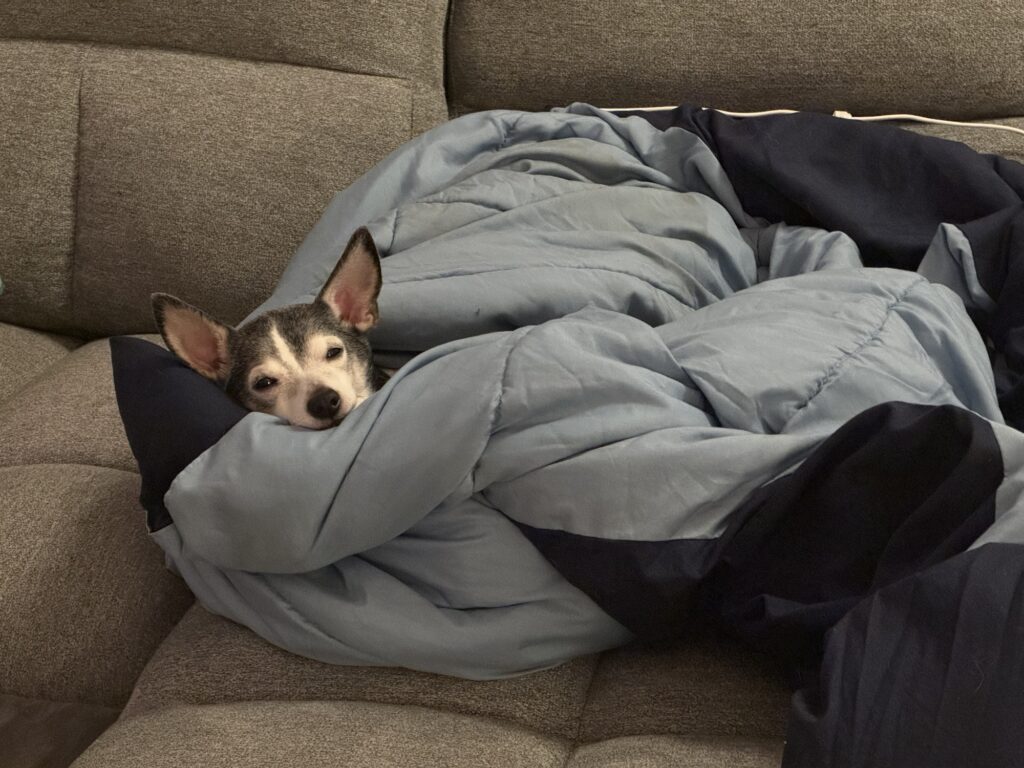
Max is a small chihuahua derivation of uncertain age, probably around 10 or 11, and shortly before we took him in he was relieved of most of his teeth. He is friendly, quiet, sleepy and calm. He is not a lap dog, but he loves to take the center seat on our couch and place his small warm flank against a person’s thigh. Then he will nudge his little head under that person’s hand and insist on having his scalp massaged.

I am relying on Max quite a bit for mental health support of late. He did not apply for this job but he bears it with grace. Here are some photos of him.

“When you’re young, you think there are probably not that many people privately beating themselves up, but actually, there are tons of us. We walk every kind of life path, united by the sheer brutality of our self-deprecation. The most confident-seeming people are often screaming at themselves inside their own heads! This might be you. Or maybe you’re a lobster. Lobsters are so zen.”