Category: Joy

Hearty peasant fare

My hard copy of the A Couple Cooks sourdough bread recipe, sitting in plastic page protectors in a black binder, lists its printing date as 6/11/20. A lot of people decided to get into sourdough early in that year, of course; I’m one of the subset who managed to make a habit of it. The frequency of my baking varies inversely with Chicago’s ambient temperature, but over the course of the year I produce a simple, crusty boule more weeks than not.

I have some friends who are enviable bakers, braiding loaves and turning out flaky pastries and producing all kinds of desserts. That’s not me. Aside from the odd batch of cookies for neighbors, I make one kind of artisan bread, one kind of thin-crust pizza—about which more some other time—and a pan of focaccia or dinner rolls for special occasions. My ambitions are modest but I take pride in my consistency.

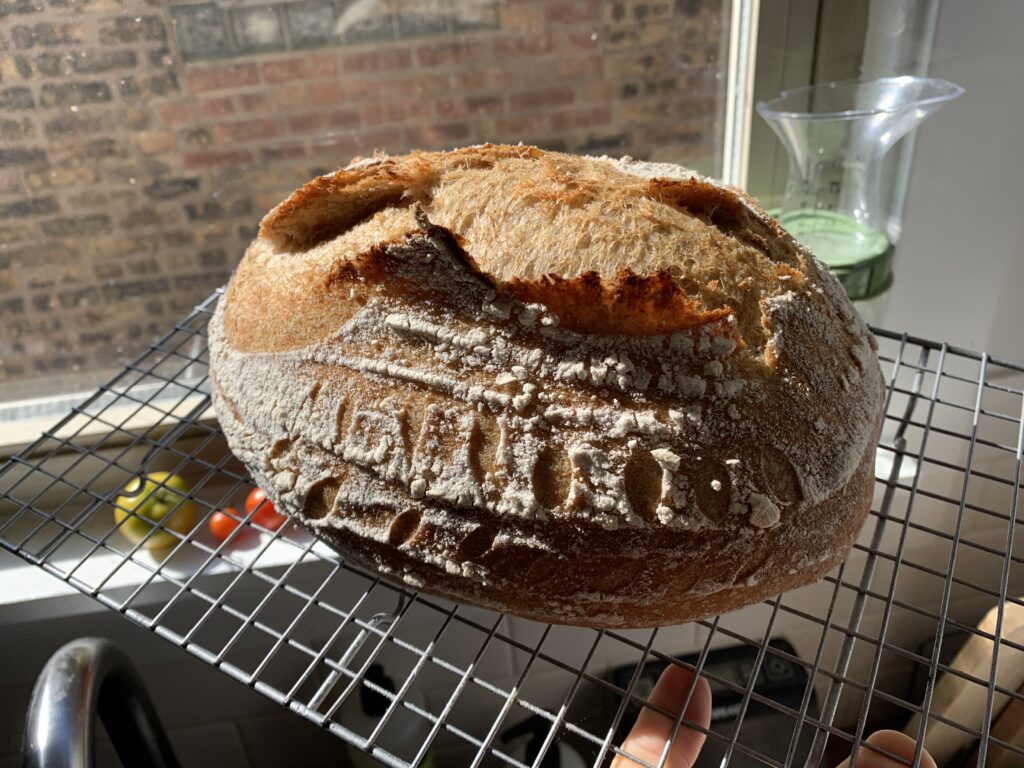
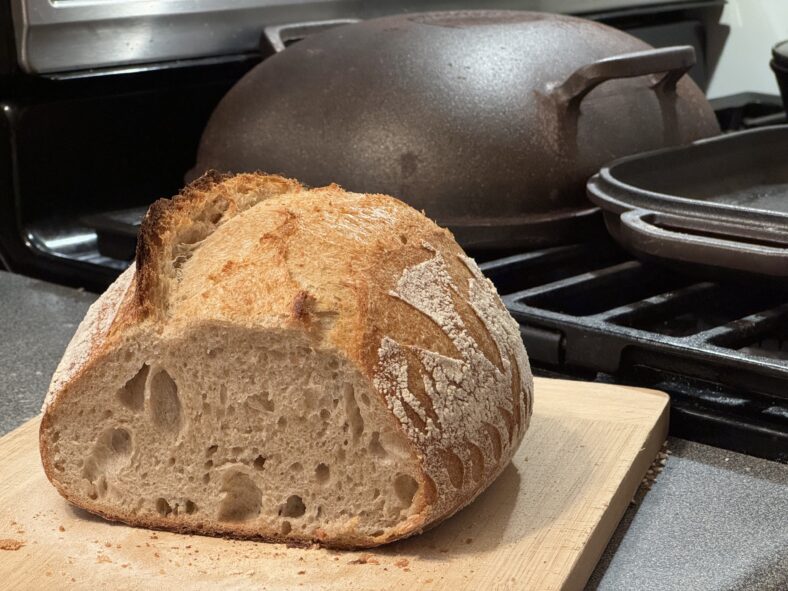
But I reflected this morning, as I let the loaf shown above cool on the rack, that the way I make bread is both uniquely mine and bound up in my relationships. Mom was the one who first directed me to that recipe, almost six years ago, and also the one who encouraged me to experiment with the much simpler Bread In Five Minutes book eight years before that. I still follow the ACC steps for bulk fermentation and folding, but my flour mix and hydration are quite different, and so are my in-oven temperatures and timing. Both of those I adapted from Ken Forkish, whose book my boss recommended, and whose pizza I was sharing with my friend Matthew a decade ago.

When I score my loaves for baking, I use a three-slashes-and-wheat-stalks pattern I borrowed from my friend Bronté. One big assist in getting me to a consistent practice was the surprise gift of a cast-iron bread pan from my friend Josh. My 2020 sourdough culture itself, still going strong, grew from a mix of wild yeasts in a bag of Sir Galahad flour and the air near the shore of Lake Michigan. And nothing has contributed more to successful habit-forming than the kind words of Kat, who gave me my nice bread knife, and who always gets the first slice.

Pretend I put something poetic here about breaking bread and community and whatever, you get the point. I spent most of my adult life avoiding baking, out of background intimidation and anxiety about getting it wrong. I have indeed gotten things wrong, quite a few times, especially in the early goings. But over the years, my sense that I owed it to my loved ones to keep trying helped sustain my efforts. What else is that but the staff of life?
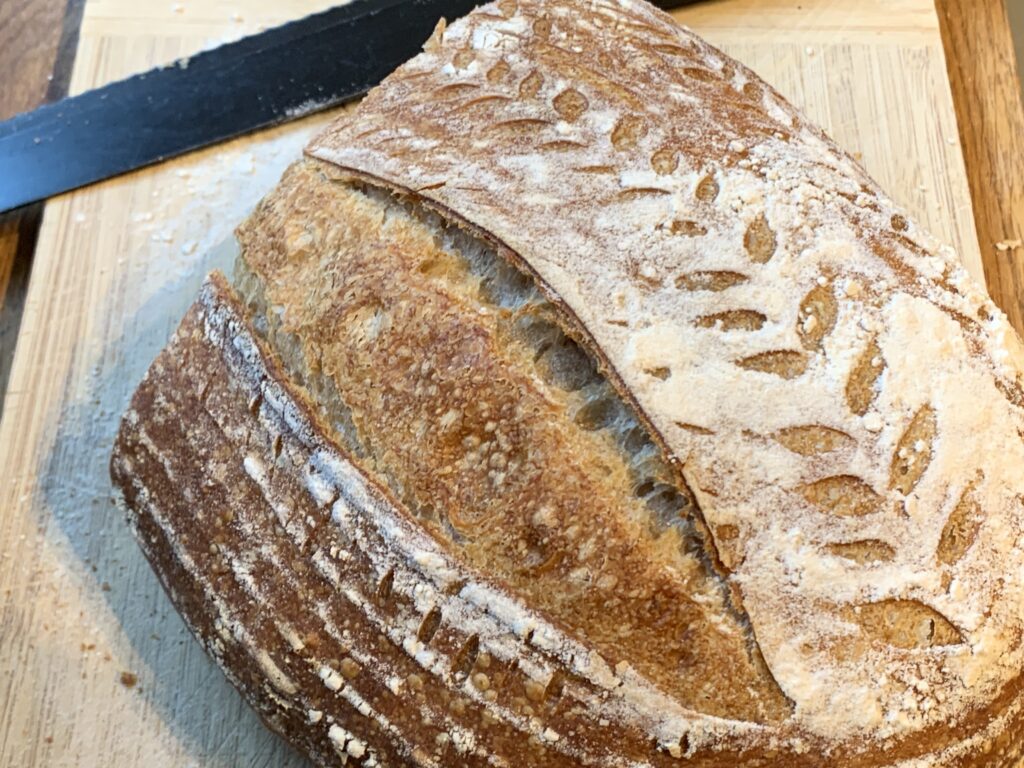
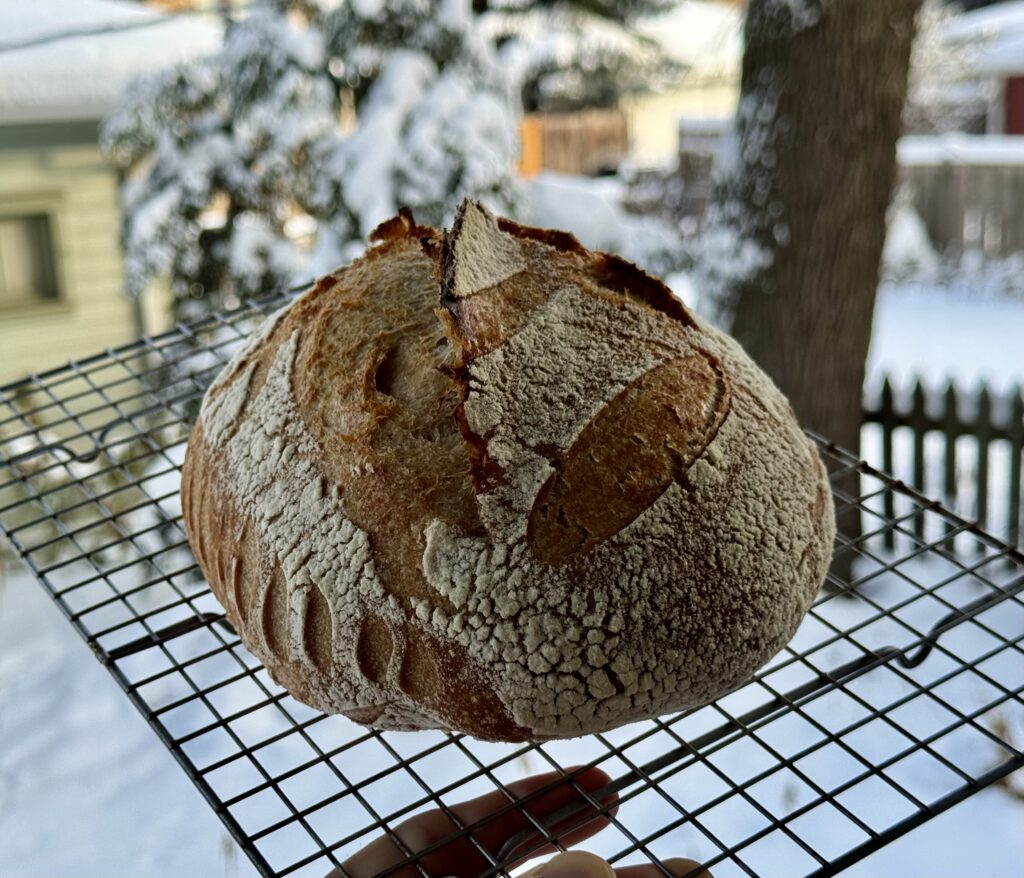
A top-down view of one of my very first really successful loaves, showing where the crust has split longitudinally with a wheat-stalk scoring pattern alongside the fissure.

A sourdough boule on a cooling rack, held up against a snowy back yard.

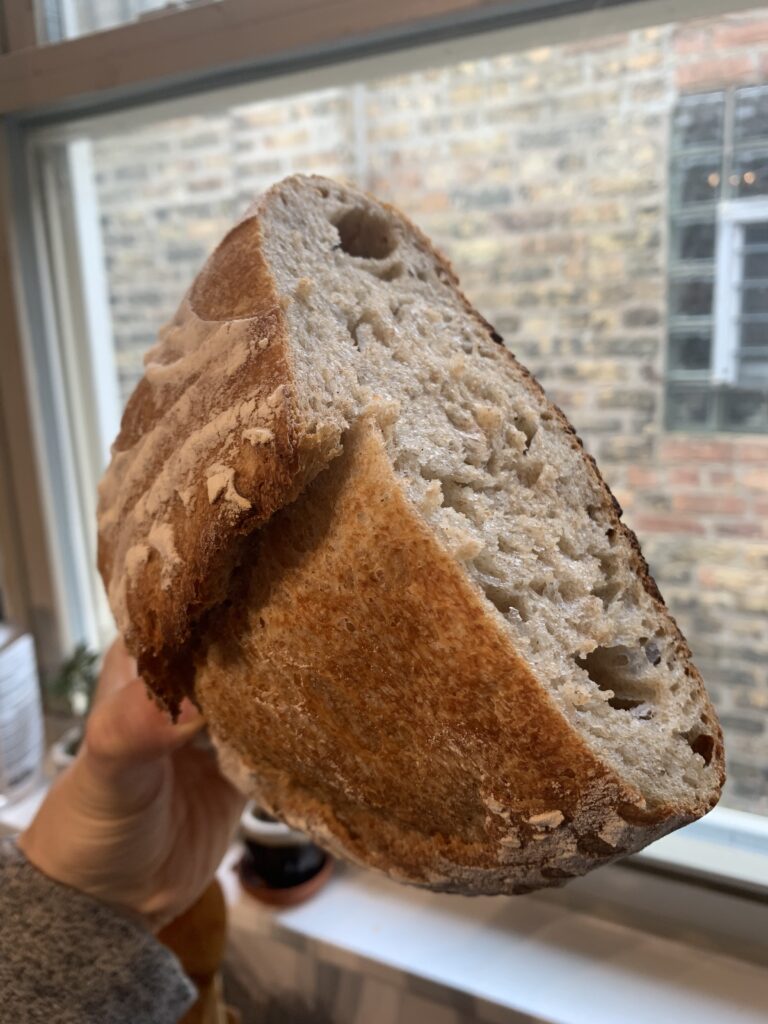
Half a loaf of sourdough bread, held up by hand in front of a window showing a brick wall opposite.

A sourdough boule held up on a cooling rack, dramatically lit from a window.

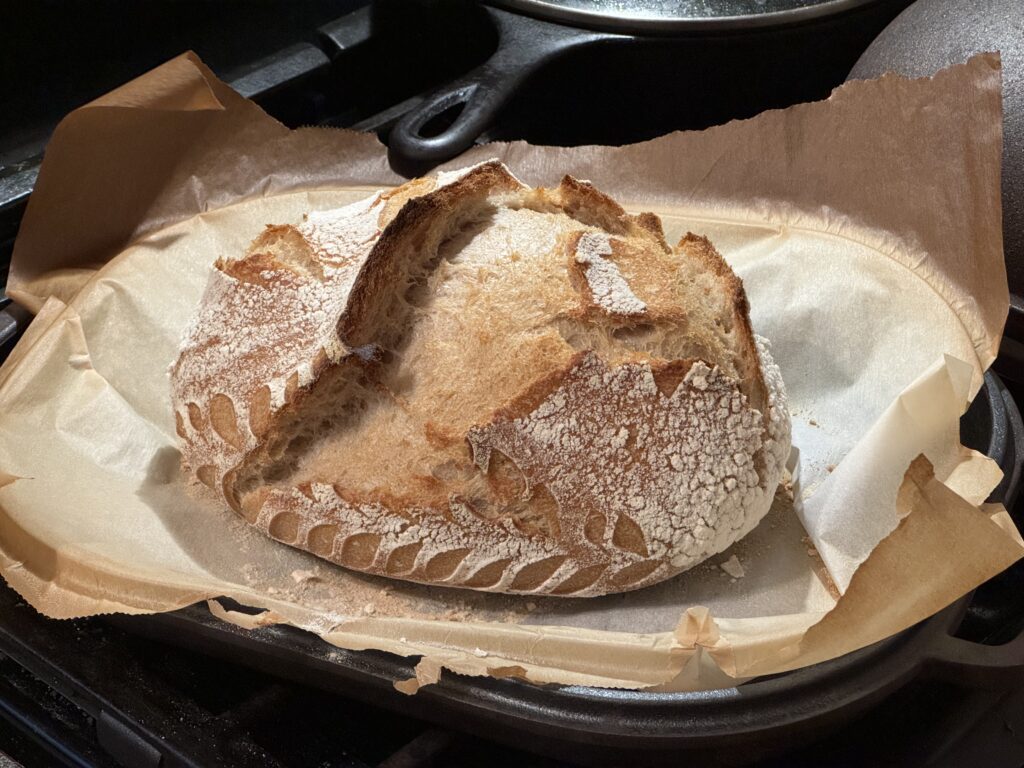
A cracked sourdough boule still sitting on parchment paper in the cast-iron pan.

We got a dog and his name is Max

Hello, friend. My opinions are my own and do not represent those of my employer, but over the summer we got to meet the best dog in the world. Our friends were fostering him from a local shelter, so we had a few opportunities to get to know him, and each time we loved him more. When we bought a house (oh, also we bought a house) and moved out of our apartment, we adopted him as soon as we had a place to put his bed.

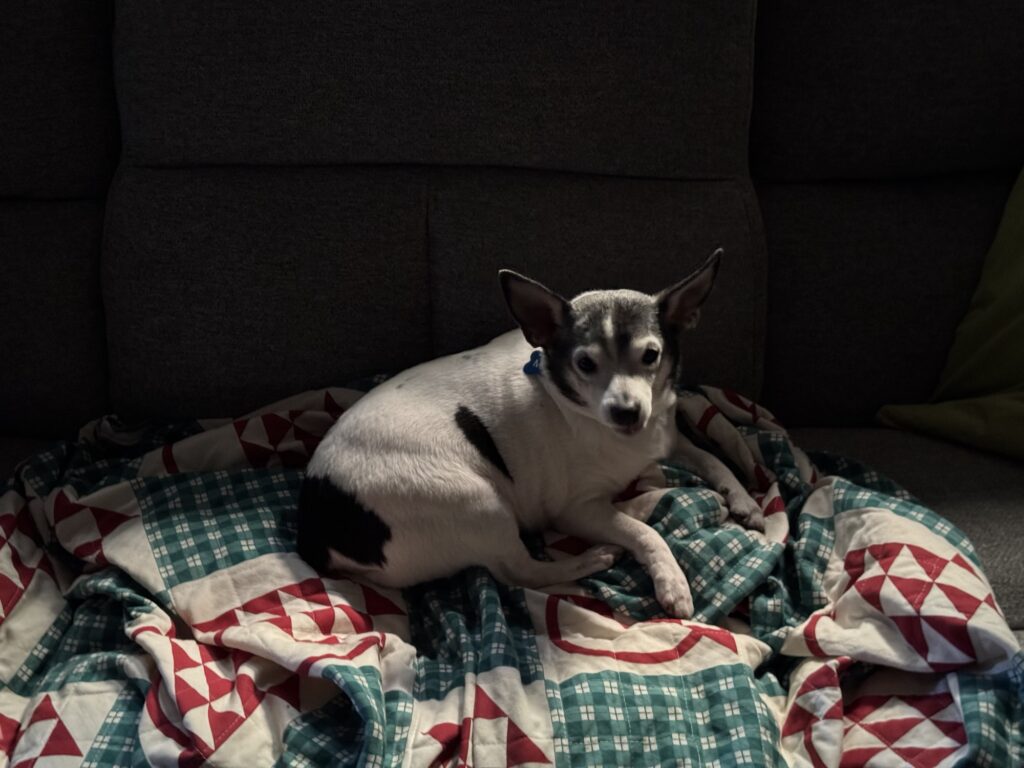
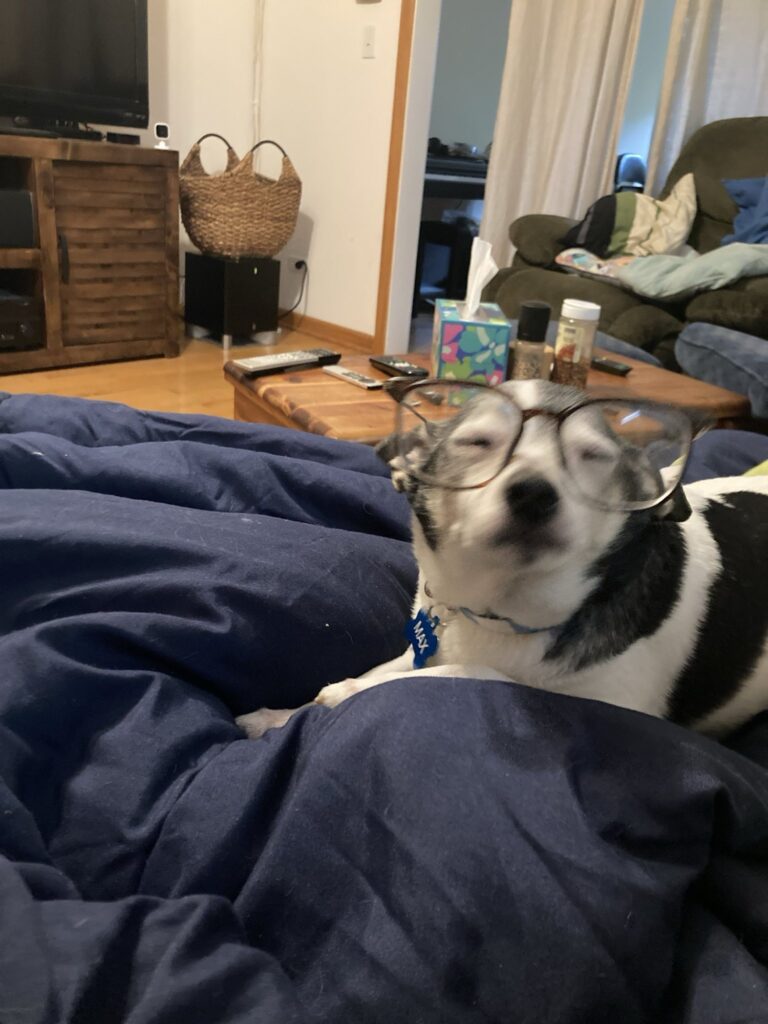
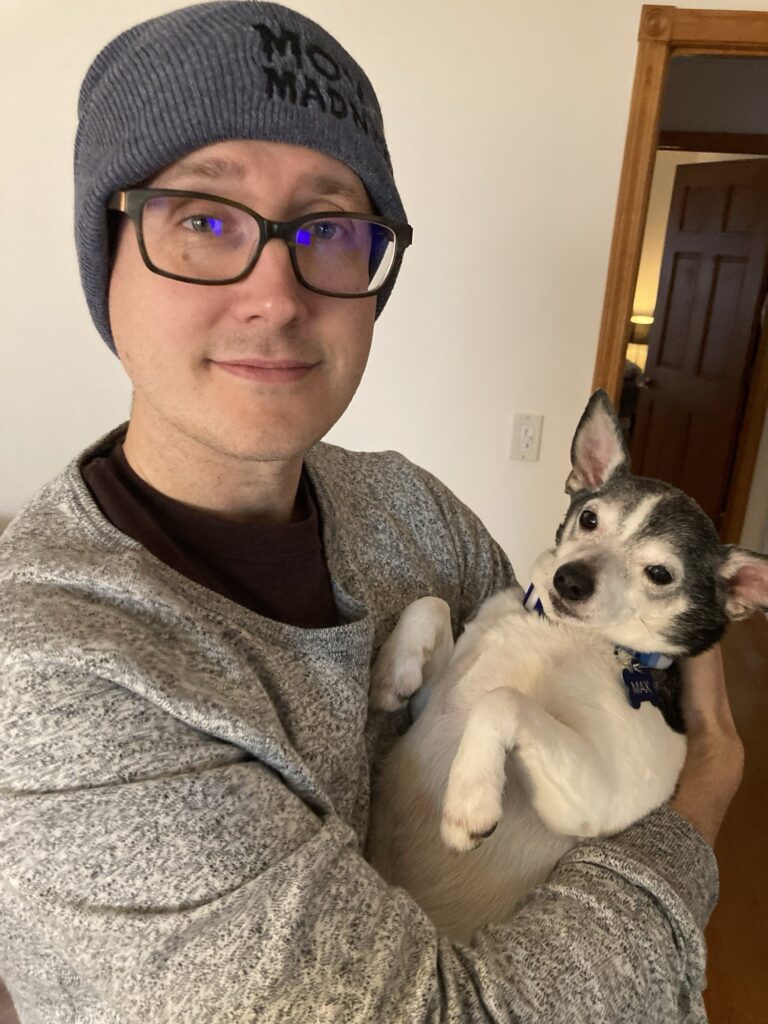
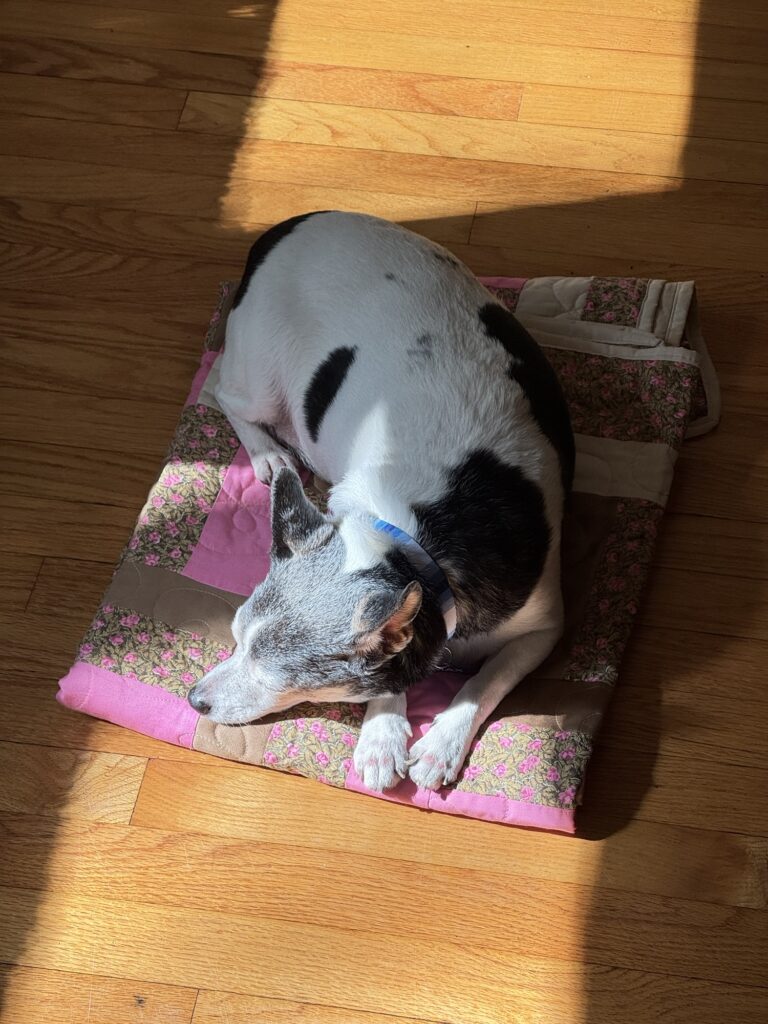
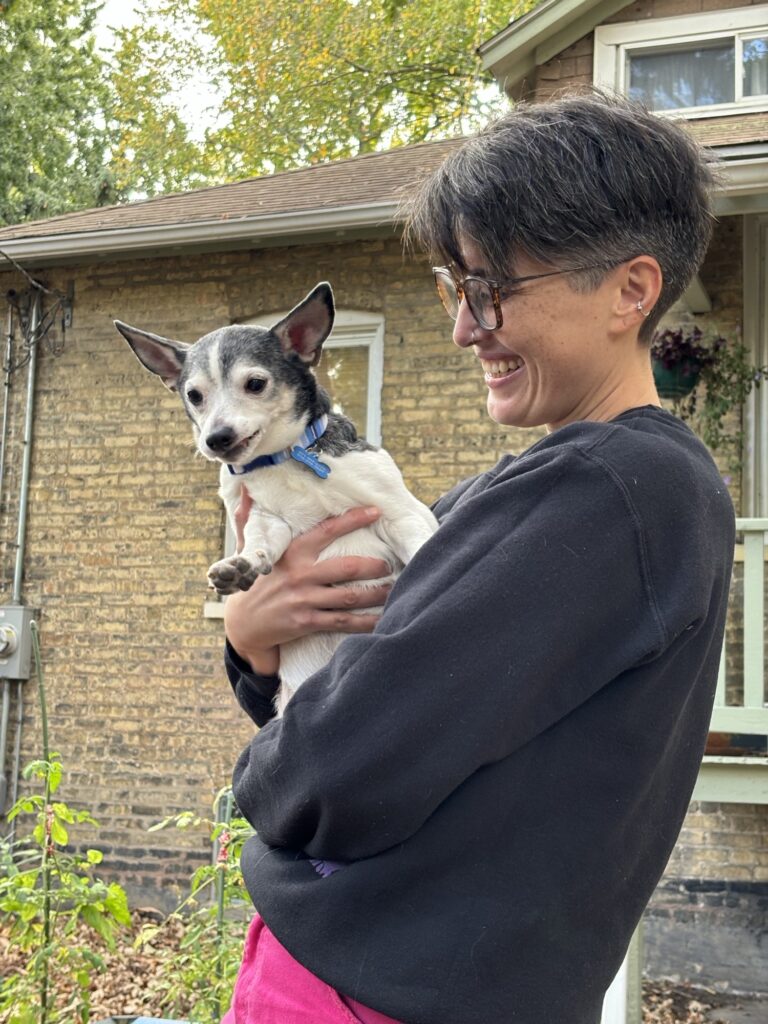
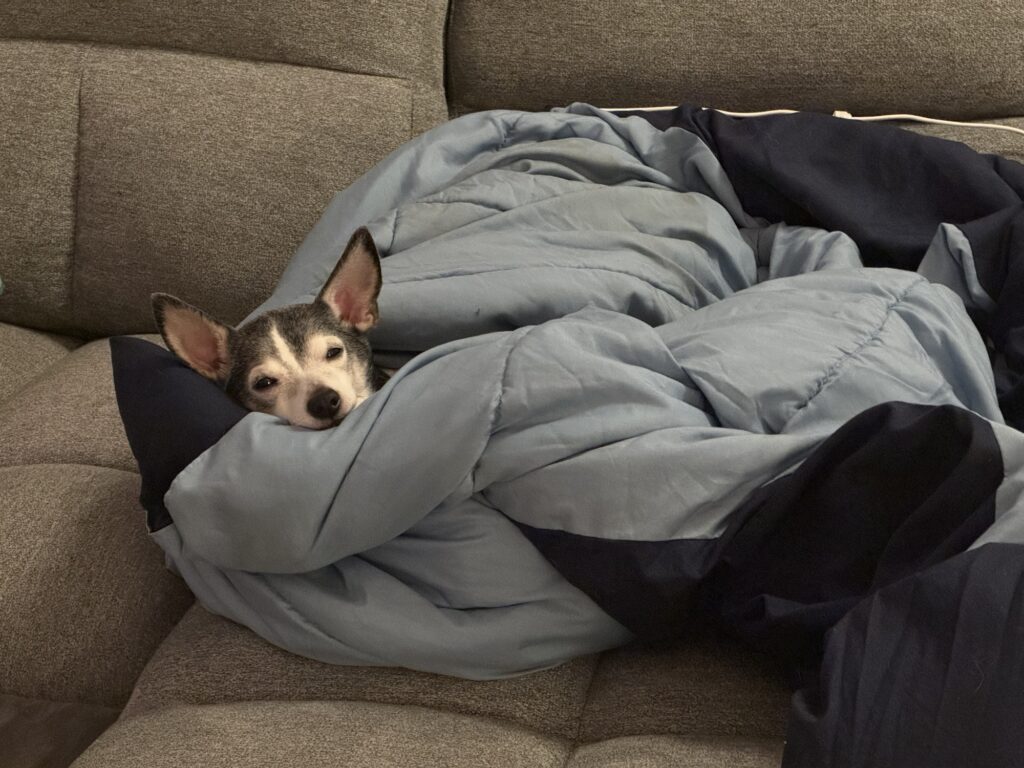
Max is a small chihuahua derivation of uncertain age, probably around 10 or 11, and shortly before we took him in he was relieved of most of his teeth. He is friendly, quiet, sleepy and calm. He is not a lap dog, but he loves to take the center seat on our couch and place his small warm flank against a person’s thigh. Then he will nudge his little head under that person’s hand and insist on having his scalp massaged.

I am relying on Max quite a bit for mental health support of late. He did not apply for this job but he bears it with grace. Here are some photos of him.

Two Books

I became a fan of actor and writer Jo Firestone because of her role on someone else’s perfect television show, and when Kat made me watch her documentary Good Timing I became… uh, even more of a fan! Also, last month Kat and I went to the Grand Canyon. We saw this bird.

A bird perched on top of a tree in front of a vista.

We also got up early to see the sunrise and looked sleepy, which was accurate.

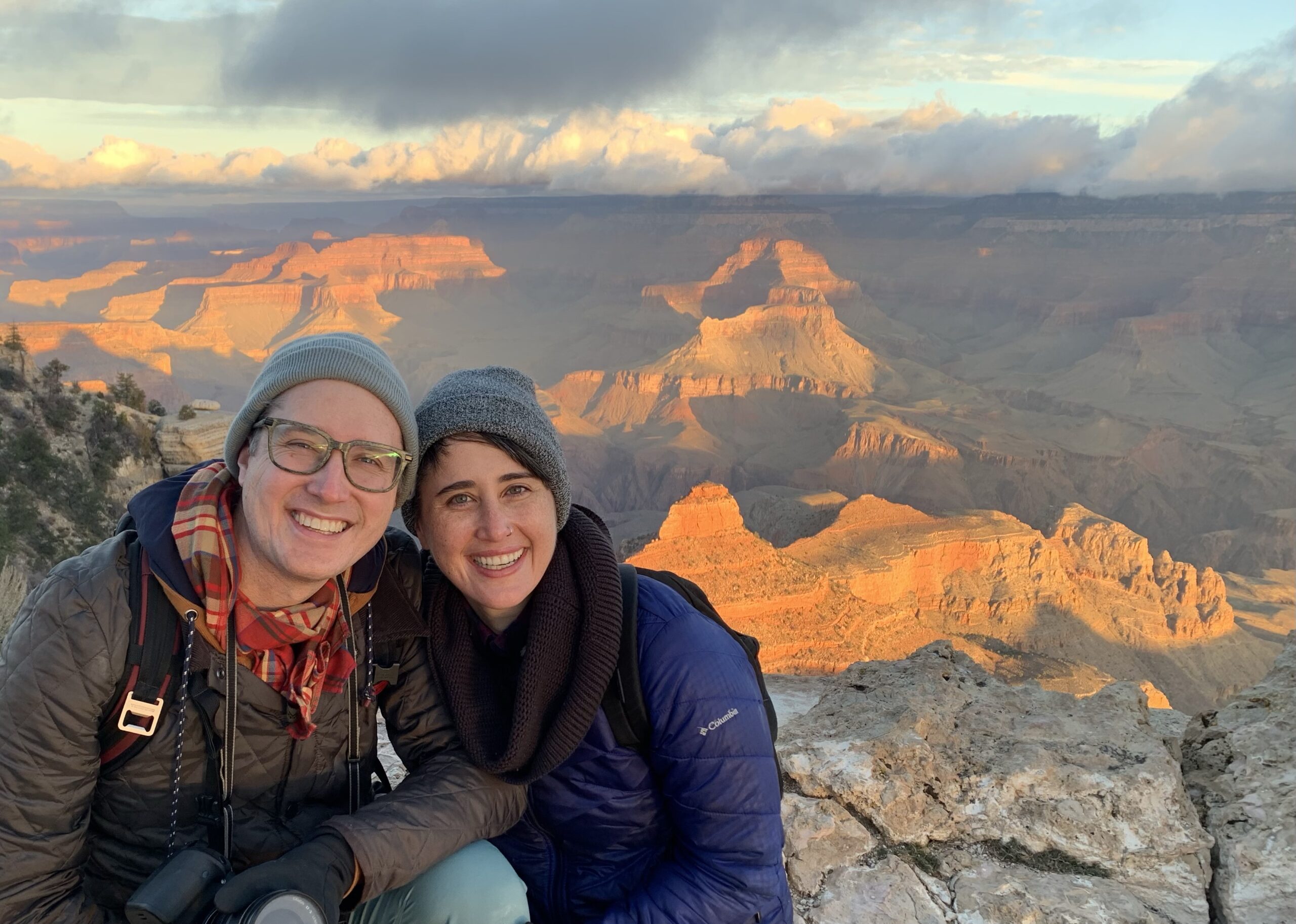
Brendan on the left, Kat in the middle, Grand Canyon sunrise on the right.

But to the point of this entry, on the drive to and from the canyon, we listened to almost all of an audiobook, and specifically an audiobook written and read by Jo Firestone. It’s called Murder on Sex Island and it lives up to its title. Also, it’s free to listen to! You can just put it in your podcast app and get the whole thing right now! And then you should pay for a copy also, because it is very good.

In news about books I have not read, but have purchased nonetheless, my longtime and dear friend Holly has her debut novel coming out next spring! It is called The Husbands and I am really excited to obtain and review it. It will be a positive review, so don’t expect me to be objective or anything, but it will be an accurate review too. Accuracy is the surprise emergent theme of this blog post.

“The stars that night were glinting, and the bonfire on the shore waited like a beacon, but the brightest shimmer was running down my forearms, spiraling behind my palms.”

My most meaningful work of 2021

Last year, in cooperation with many of my friends on a private social network, I took an idea from neighborhood organizations here in Chicago and started a small online-only mutual aid fund. Over twelve months, we distributed more than seven thousand dollars from some friends to others, mostly in increments of $100 USD. I want to be clear that everyone involved in that system was of equal importance to its operation: people have to identify and articulate their need for help in order for donations to have a place to go, and both asking and donating take courage and labor. A number of the people involved made requests at one point and donations at another, which I think illustrates how important the fluidity of a mutual aid project can be. Here are the steps we took to get it running.

  1. In the fall of 2020 I started a new PayPal account, connecting it to a small, otherwise-unused free checking account I had signed up for when I arrived in Chicago so I could use local ATMs.
    • The login email address was the incoming-mail address for a mailing list I created with Mailman. While having a mailing list was good, I wouldn’t actually recommend taking this particular step–it became a headache. Instead, it would have been better to get a free email account and set that account to automatically forward messages to everyone who wanted to help with admin.
  2. For a few months, we kept the idea of the fund quiet. I would put a little money in the PayPal account each time I got paid, and others on the admin team did the same. By January, we started reaching out in private to friends in our networks who had mentioned feeling squeezed financially, and made our first couple of disbursements. We chose $100 as our standard disbursement arbitrarily, but it’s worked out okay: it’s a round number, easy to remember, both significant enough to be helpful and relatively easy to raise.
  3. We set up the account’s paypal.me vanity URL with both “send” and “request” buttons, which made it easy for anyone who knew about the fund to interact with it, including people in countries outside the US.
  4. My friend Vanessa spent months working on a quilt and kindly offered it as a prize for donations. This was when we started telling more friends (still only by word of mouth) about the fund, and offered up to five raffle tickets per person at $5 each. Many friends gave more than $25 just because they were glad to offer it, and the days leading up to the raffle became the most significant week for donations all year. But it also spread word that the fund existed, so we got a number of requests that week too, allowing for the redistribution of most of the donated money quickly.
  5. To keep track of our numbers, we set up a simple check-register-style shared spreadsheet with one column for date/time, one for the admin making the entry, one for credits, one for debits, one for the updated account balance, and one for an MD5 hash of the name of the donor or requester. Several of us, with strong mutual trust, shared the password for the PayPal account. (I was glad to have that trust, since it was still technically linked to my bank account. No money entered or left the bank, though; we only worked out of the PayPal balance.)
    • The reason for those hashed names was to protect privacy to some degree while still keeping an eye out for weird patterns, since many people who interacted with the fund were more than one degree of separation from the admin team. No such patterns emerged, I believe thanks the network of social trust already in place.
  6. Once in a while, one of the admins would mention the fund and note whether it had some unused cash or was tapped out, which tended to produce a small bump in requests or donations. As soon as there was enough money in the account to fulfill an outstanding request, we did so, without asking for justification or calculating who requested how often. When someone asked for more than the standard $100, we would try to fulfill it if the balance was high enough and there were no other outstanding requests; otherwise, we would cancel the initial request and send $100 in its place.
  7. By glad coincidence, our number of donations and requests balanced out very well, and at the end of the year there was a balance of $30 left in the account.

I sincerely don’t know if we were operating within the PayPal terms of service, so I’m not advising you to replicate the steps above yourself, but I think I can say that the flow of money was small enough that we didn’t seem to attract any scrutiny. There are a number of consumer fake-bank services in the PayPal space now, of course, but the single memorable URL endpoint and the ability to transfer money across borders were useful features. In future, we’re hoping to shift the account to a cheap corporate entity and let an accountant figure out any potential tax situations, but this setup worked well enough to prove the concept.

I want to emphasize again that a crucial factor in the operation of this plan, perhaps only second to people’s willingness to ask and to give, was the existing network of trust among interconnected small groups of friends. The fund is a tech solution to a social problem, but it would be no solution at all without people’s strong and meaningful ties to one another. Once my friends and my friends’ friends had done the work of building those bonds, all we needed was free tools, grace, and will. No blockchain ledger, no web3, no crypto, no “trustless” transactions. All of our transactions were made firmly on a foundation of trust. Even here in the Shrieking Twenties, when a million people are poised to jump down your throat insisting that mathematically-provable Beanie Babies are the infinite solution to all human problems, ordinary friends can still cobble things like this together out of the Web We Lost. It isn’t all lost yet.

Reverse Anniversary

As of yesterday we were supposed to be married.

I didn’t even want to wait that long, really. After I proposed, Kat pointed out that a standard year of engagement and planning would put us right back in a Chicago winter, which offers logistical difficulties; I said, okay then, why can’t we just go ahead and get married in the fall? But Kat’s season is really summer. We settled on what is, often though not always, the first nice weekend in spring. We knew it was a gamble on the weather, but we didn’t know quite what else the stakes comprised.

It’s very beautiful outside right now. That die came up lucky. But late in the summer of 2020, with no coherent leadership and no clear timeline for when it might be safe to see our loved ones again, we took a deep breath and told our ceremony venue, our reception venue, and our caterer to kick us down the road to March 2022 instead.

There are few things I have ever wanted as much and as long as I have wanted to be married to Kat. I really hope this year won’t be quite as long as the past one, but it won’t be short. I’ll be forty before my wedding instead of after. It’s an arbitrary number, but it still brings home, to me, the cost of a lost year of one’s life.

Last night we got dressed up for a delivery dinner of fancy mushroom buns and congee, and Kat brought me a bouquet of flowers, surprising me the way she does every single time. Today we sat in the sun six feet from two of our closest Chicago friends and raised plastic cups of champagne. I still don’t feel quite to the point where I can even start grieving our losses. But oh, God, despite our shaggy hair and hollow eyes and aching hearts, I feel the sheer luck by which we have stayed well and safe this long as a weight upon me too.

Love Me