Author: Brendan

Won’t you be mine

Block parties are popular in Chicago’s summer; the city will loan you a free bounce house for yours if you ask. But the block where Kat and I live had not held such a party, not that anyone can remember, up until this past September. That was when our neighbors decided to change things for the better. The party we organized together was late in the season, and it drizzled a bit. But we put some garbage bags on the PA speakers and took shelter in the great fortune of our street’s tree canopy. The trees are our neighbors too. We took care of each other, and we went on.

That block party will be a good memory for a long time. It was a great success, and we met almost everyone who lives within a stone’s throw of us, and some new friends who don’t. I took photos on my little thermal-paper toy camera and handed the printouts out to kids who were playing together. We had an excess of good food and almost enough good dogs. And now when I walk our own good dog, and see someone from across the street, I can put a name to a face, and we can trade smiles that mean something more than politeness.

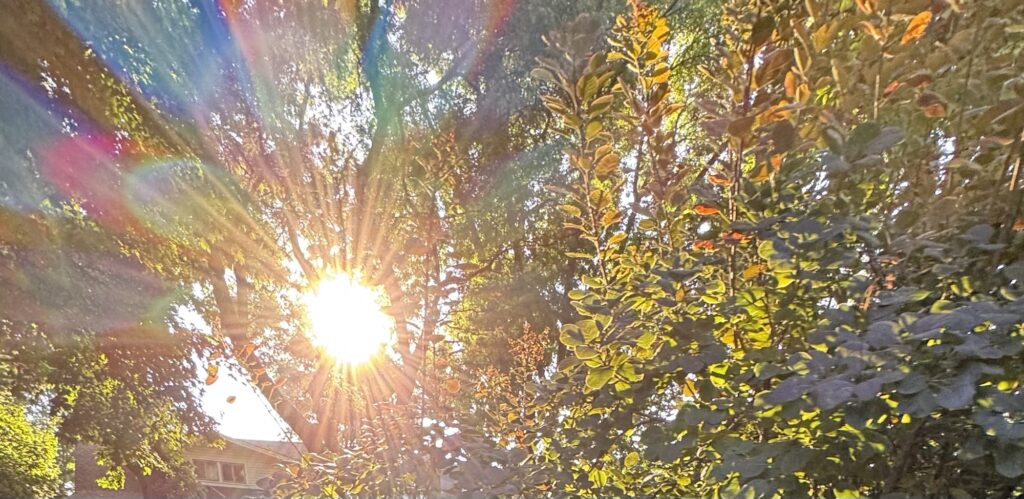
A sundog from my neighborhood, through trees, with identifying information cropped. I hope.

Less than three weeks later, masked federal agents abducted the first of their confirmed victims from the streets of Rogers Park. My mother was here visiting us. Some of my neighbors who were disappeared by the secret police were leaving the same church she attended. Some of them were trying to take their children to or from the nearby elementary school.

There has been excellent journalism showing that the kinds of people targeted in this way lacked arrest records, and had their documents, and were crucial parts of their communities. The fucking George W. Bush Center published an article this very year about how immigration benefits us all, but the truth is that people were targeted for their appearance, not their immigration status. And also: even if every one of the disappeared were an undocumented and solitary migrant with a history of arrests who took more from public resources than they returned, they would still be my neighbors. Evil committed against them is evil done to me and mine.

We wear plastic whistles when we go for walks these days. We got them from the bright warm queer coffee shop, or the physical therapist’s office, or the corner store, or the rally, or the evening crammed together in a restaurant. When we look across the street and see matching bright nylon strings looped around each other’s necks, we smile and nod, and it means much more than politeness. The smiles are tight, but they are sincere. Some say the moment of most acute terror here may have passed with the first touch of winter, at least for those of us not already detained or separated. I remain wary with pain in my heart. I have neighbors in Asheville, and Charlotte, and Baltimore, and Portland too.

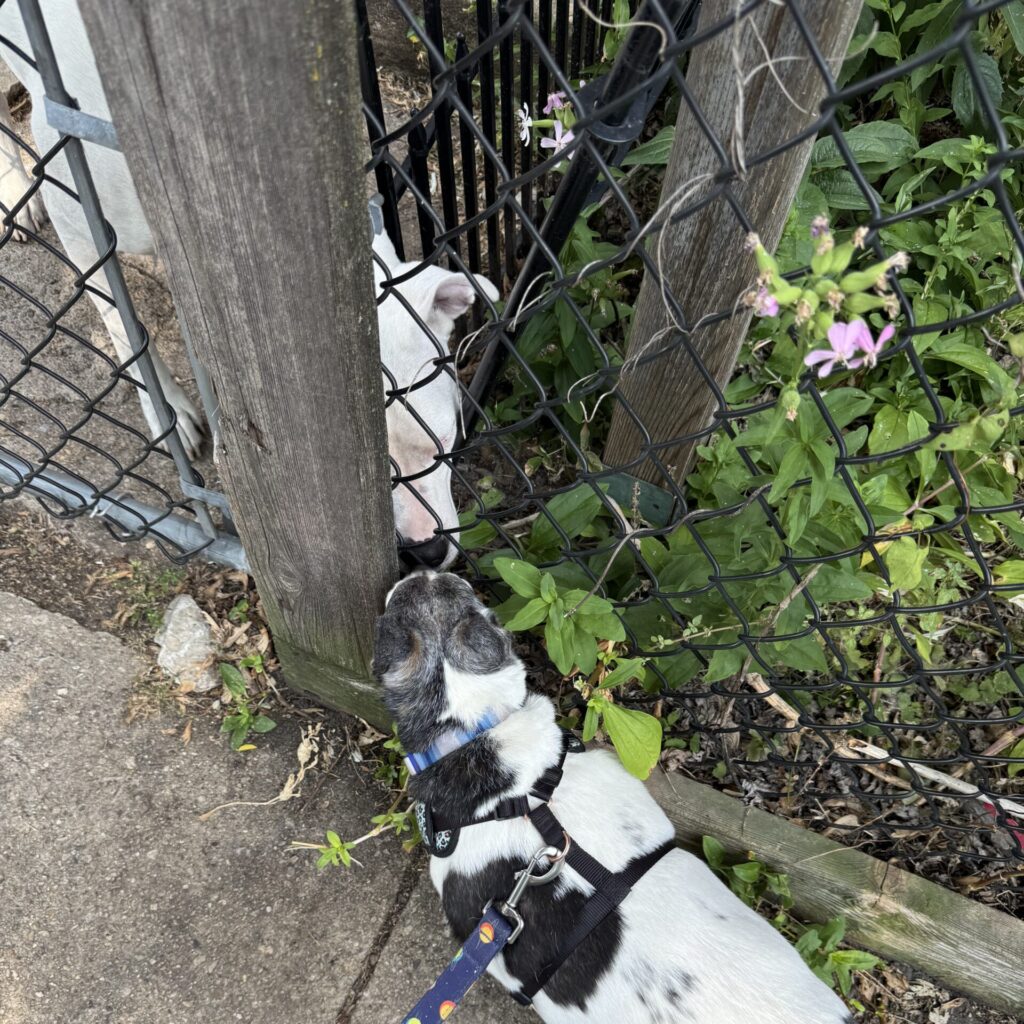
My dog and another dog touching noses through a chain-link fence

I moved a lot, when I lived in Portland: seven times in eleven years. I had the great fortune of many friends, but I didn’t get to know many of my neighbors. I often wanted to connect with them, but I was lacking in tools or time to do so, and then before long I’d be on to a different part of town. Now I live in the house I hope to keep until I can no longer climb its steps. I want the same roots the trees that line our street have grown. Yesterday I took care of an anxious dog from next door while his people were away, and when they came home they gave us a tub of beans and rice that I’m thinking of with hunger right now.

I lived decades with the terrible privilege of innocence to the way life proceeds under military enforcement. But proceed it does, for most of us. We trade favors and drink coffee. We hug each other tight at parties. We do the laundry and we watch the crosswalks. We keep our eyes up and our ears open. And when we hear the danger coming, we run toward it, not away.

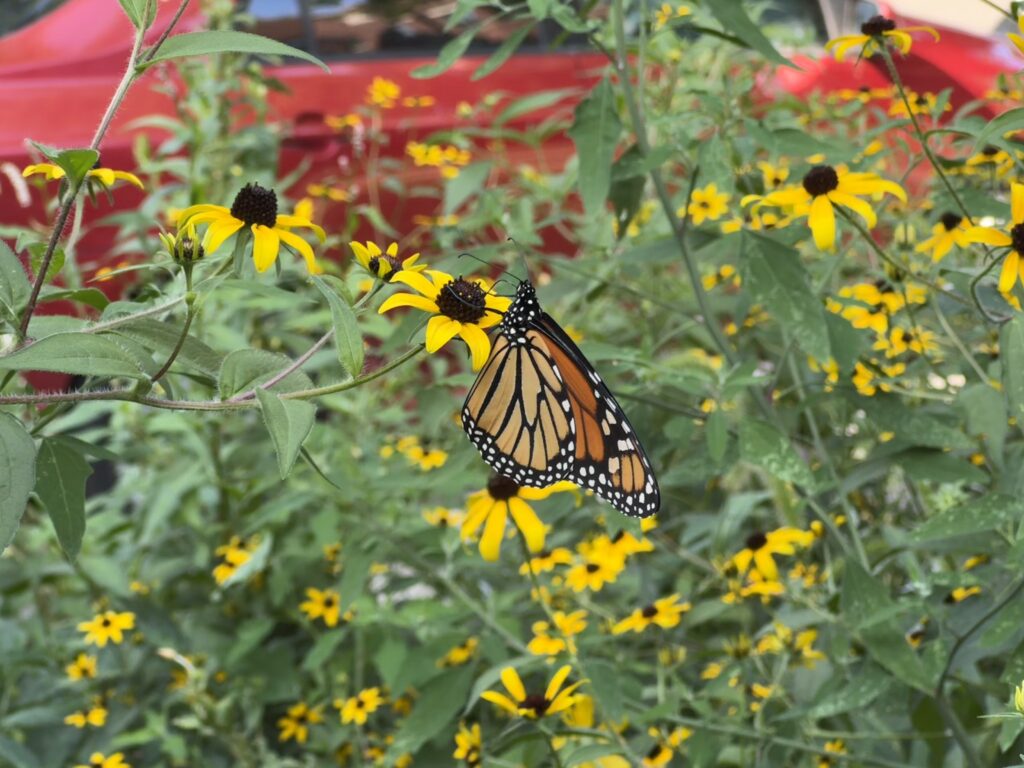
A monarch butterfly perched on a sunflower in our neighborhood

The long, deep myth of the city as center and source of violence is so strange to me. Neighborhoods, even those where heat leads to suffering among missing trees, are places where people cooperate. Cities are nothing if not neighborhoods cooperating with each other. All the many benefits they offer are born of the choice to get along and share. I grew up in suburbs, a kind of place structured by a desire to be apart from other people. I mean no unkindness to my suburban loved ones when I make this generalization. But suburbs were built because people wanted to move away; cities like Chicago, for all their flaws and failures, are places people move to. The choice of a city is the choice to be close to people you don’t yet know.

On the weekend before Mom came to visit our home, Kat and I took the city light rail line to Chicago’s train station, and thereby went to Minneapolis to visit friends we have dearly missed. On the train back home I read through all of Sophie’s beautiful new book Kin. If you click on only one link from this blog post, it should be that one. I wish I could just read it aloud to all my loved ones, even the parts where Kat and I are mentioned. The book is so moving, and by that I mean I felt it move me to action. The subtitle of Kin is “the future of family.” It is a future I believe in, and one I am trying in my small way to make our present too.

When Mom saw an article about how her fellow parishioners here had been abducted, she sent the link to our relatives, and she wrote: “We took Communion together. They are my family.” It made my chest ache, and it made me so grateful that my family of origin has a mother who sees things clearly.

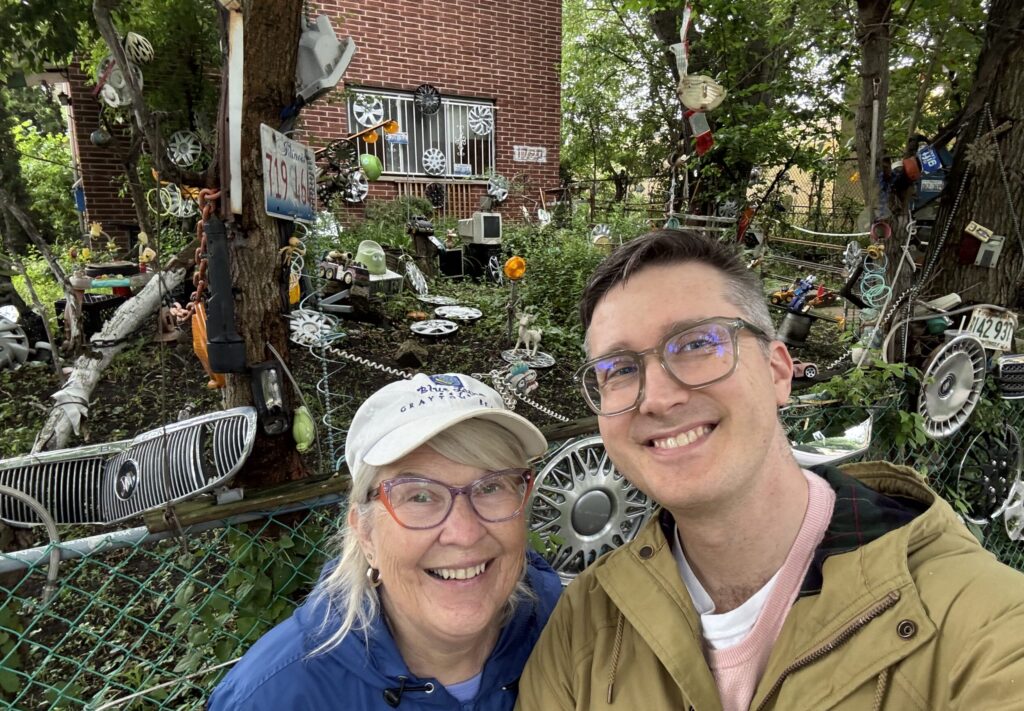
Mom and myself at a neighborhood landmark

I started writing this post because I wanted you, reading it, to take it as a sign to reach out to people where you live. It’s the only way to make strangers into neighbors and neighbors into friends. It is work I am still doing, and I have found it worth the effort many times over. I hope your neighbors don’t suck; I know some do. But even then there are more people in the next building down, and if you learn each other’s names, you can bring them cookies and trade numbers if you want to learn to like each other more.

We will only get through the worst together with those around us. Caring for each other is what makes us human, in a biological sense: prosocial behavior is the primary survival trait of our species. But it’s also the trait that brings us good dogs and pot luck and bounce houses on summer streets. I called them free bounce houses, but of course the reality is that everyone here pays for each other’s parties, just a little bit. I wish I could choose to pay for kids in bounce houses instead of in cages. I wish I could pay for my neighbors’ meals instead of tear gas. I wish that instead of paying people to set fire to our world, I could choose to keep the people around me warm.

It’s hard enough getting through a Chicago winter. It’s hard enough to feel one’s body aging, and to lose people by way of time and misfortune. It’s hard enough just doing the laundry and watching the crosswalks. It’s hard enough to care for the small and vulnerable in a family while budgeting time and money and effort to maintain oneself. It’s hard enough that work takes more and more from us, that trees and pets and people get sick, that the hours and the days slip from our grasp. It’s hard enough that things fall apart even with effort to keep them together.

Nobody needs cruelty and evil to make things harder on all of us, not even those who enact it. What we need is each other. We go on.

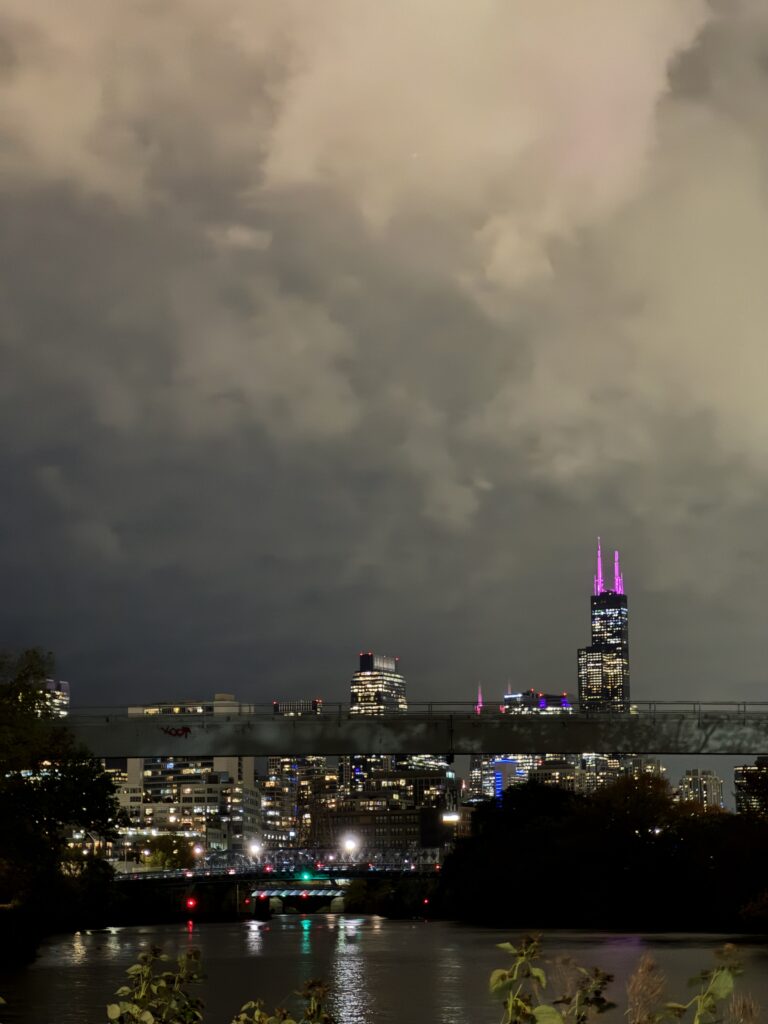
The Chicago skyline on a cloudy night, seen from the river

Composition

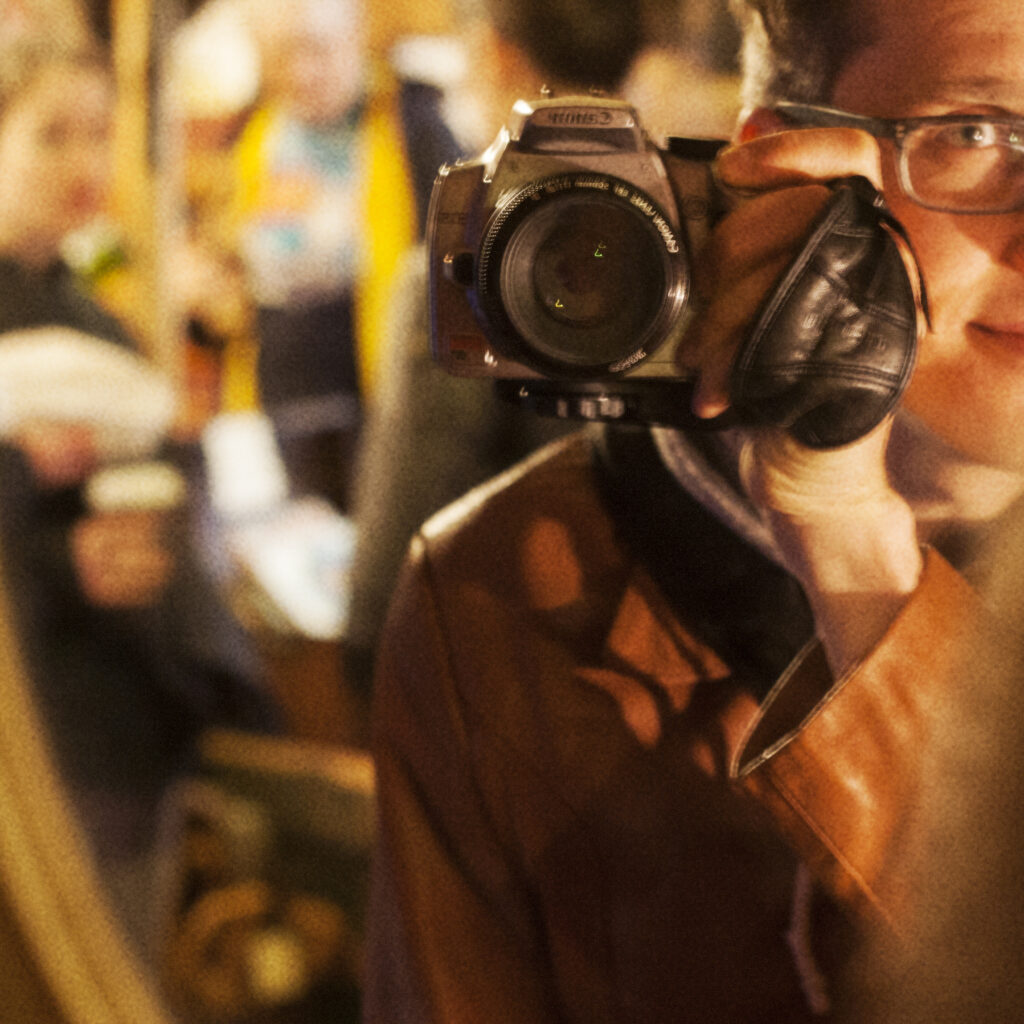
Nineteen years ago my friends got together, led by Maria (hi Maria), and chipped in to buy me my first single-lens reflex camera: a Canon Digital Rebel.

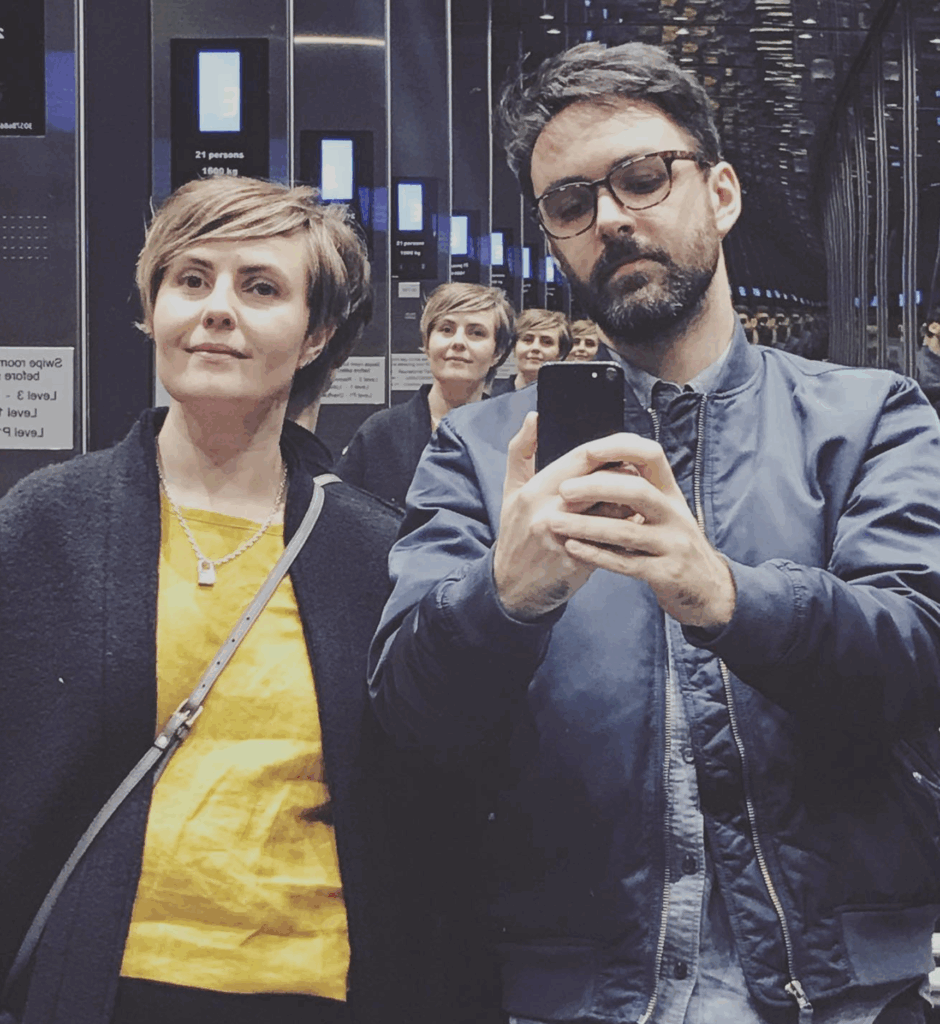
Myself in a mirror, at a plant shop in San Francisco, early 2016.I’d played with cameras since I was a kid, but until that year, I never had a solid understanding of what to do with them. Coming to that understanding took many years of developing taste for what I liked in pictures, and then more time studying the techniques involved, but mostly what I needed was a good way to experiment. My goofy webcam selfies aside, the time between taking a photo and looking at it had always been measured in weeks and dollars. But things changed once I could just snap, and chimp, and gauge what I had wanted against what I got. I needed feedback to learn.

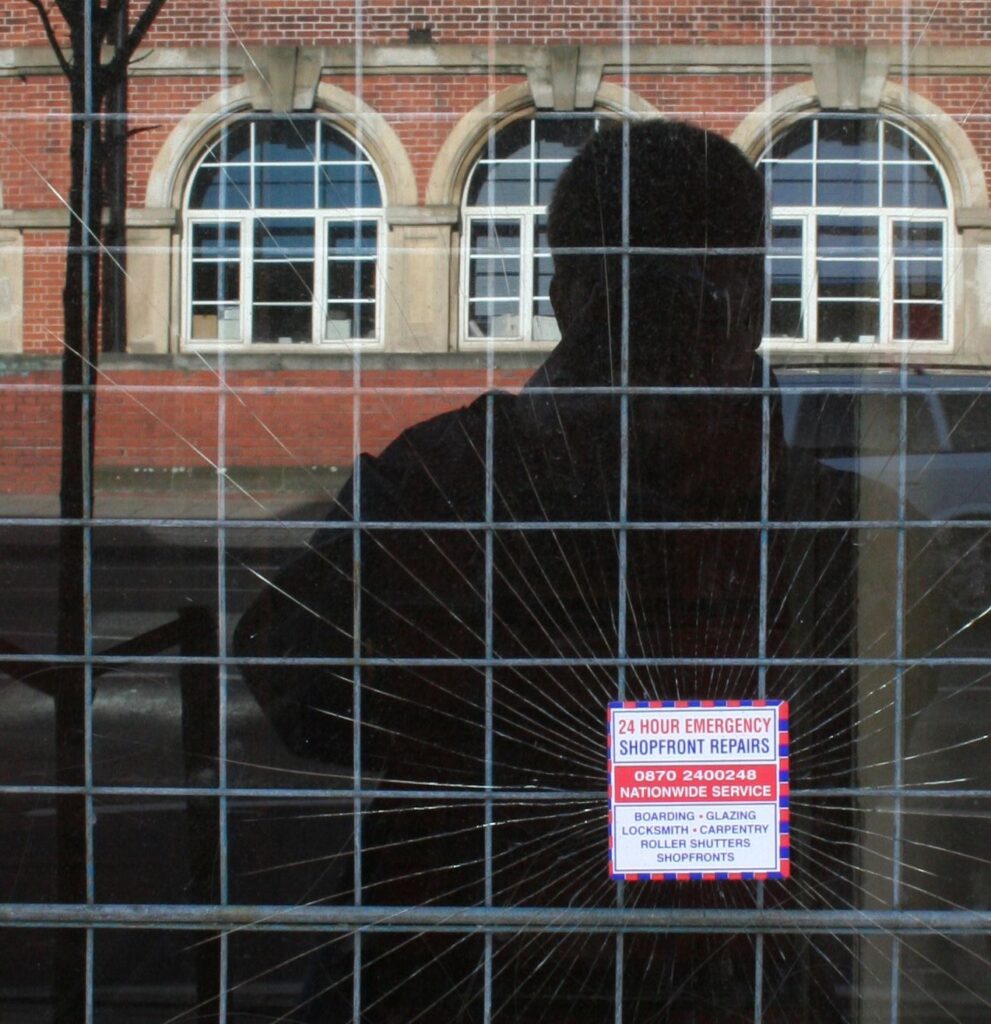
Self-portrait in shadow, reflected in shattered glass, somewhere on a Tube Walk in London.I’ve written about this in the past and I don’t want to keep retelling the same stories. But before I had a camera in my hand, I had no patience for the act of looking around me. It was only learning how to frame, evaluate light, and search for details to isolate that unlocked the pleasure of observation. After a while, I didn’t even need the camera to enjoy it! And now I prefer to shoot on film anyway, so the quick feedback loop is long gone. But the process of learning shaped me, and I still hold that shape.

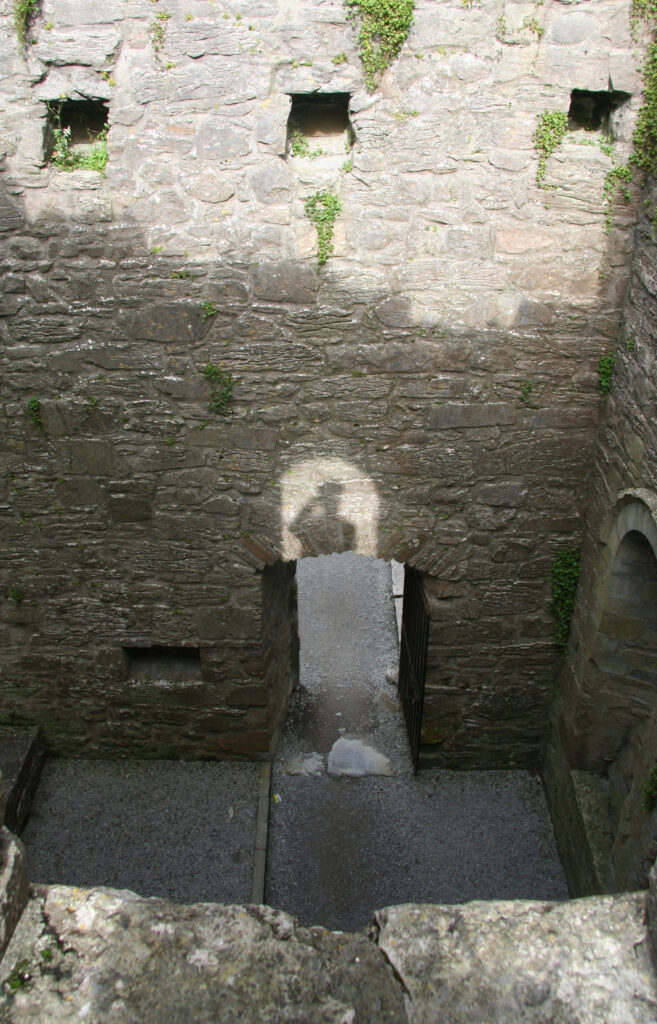
My shadow, on the wall of a castle in Ireland, wearing a silly hat.Photography changed my world by making any moment, anywhere, into something I could interact with. You should email a blogger today.

“It’s quite important to know that you are heard.”

Jenny’s post about metrics (and Lucy’s quotation of it) have been rattling around in my head for months now. In my mind that post links back to something that Avery Alder said on twitter many, many years ago, in response to a wave of scolding directed at allies who purportedly “wanted a cookie” for taking part in social justice activism. I can no longer access the original wording. What I recall is that Avery acknowledged that of course such work is worth doing regardless of reward. And then she added: but so what if I still want a cookie? I like cookies!

Jenny again, deliberately out of context, because it fits other contexts too:

First of all, so? And second of all, right, exactly.

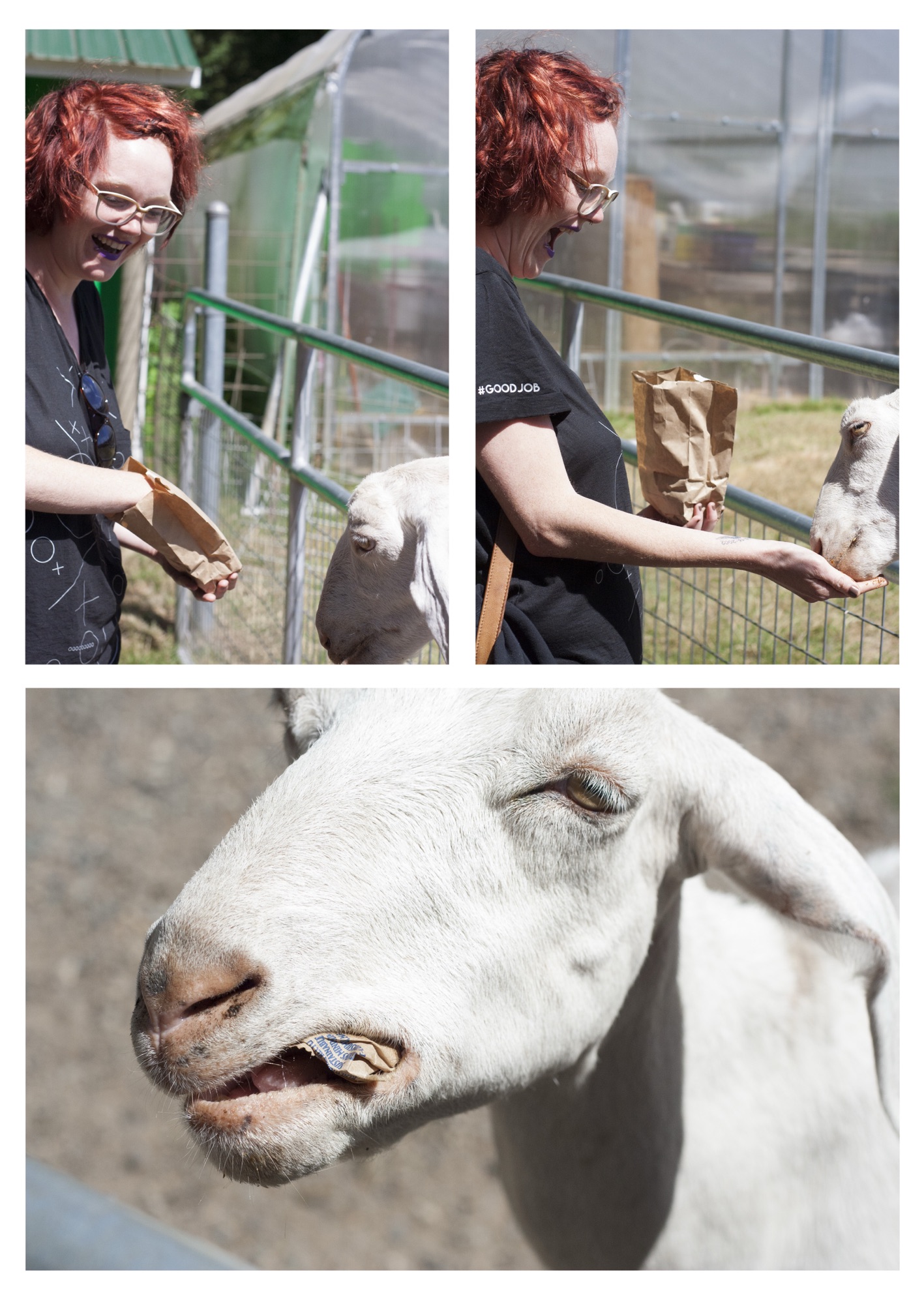
Mads feeding a goat from a bag. The goat ate the bag.

I like cookies too. And I’m a human, a social mammal whose development rests largely on the attention and response of other members of my species. It is important for humans that sometimes someone gives you a cookie. It is important to know that you are heard.

Analytics software offers numbers you can’t trust about visits you can’t see, which is not the same as being heard—in fact I think it might be the opposite. The illusion of attention contorts people into shapes that are not good for them. (I don’t even need to mention any prominent software platforms by name here, do I?)

I don’t use my degree in the dramatic arts for all that much, these days, but I am often grateful for what I learned in completing it. One of the things that Patrick Kagan-Moore said to me, the night before our play debuted, has stuck with me for 25 years. “We rehearse for months,” he said, “so we can try to find the right shape for the performance, and the first time you get a laugh from a crowd—” He snapped his fingers. “—they will train you, like that. You’ll do it the exact same way every show, trying to get that to happen again.”

Live performance is a hot medium, where response arrives quickly: snap, chimp, gauge. Writing online, and off social media, is a cold medium. That’s why the warmth of a good response matters so much.

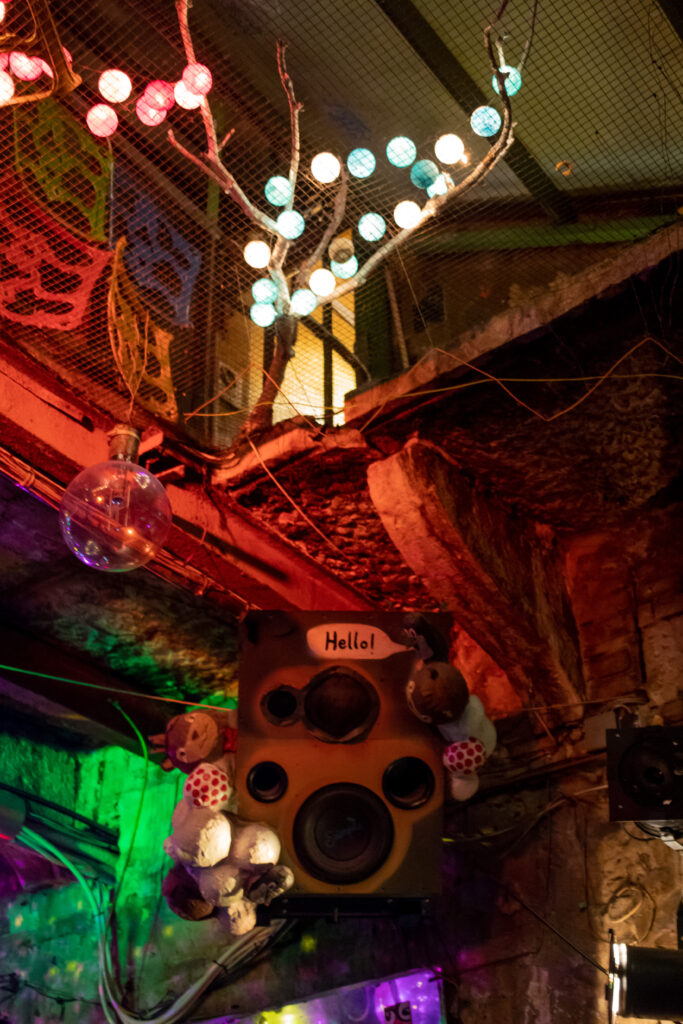
Lighted artwork from the ruin pub at Szimpla Kert, in Budapest, with an old speaker box facing the lens and a speech bubble above it saying

Sometimes I like to reach into my mental pocket and offer up chestnuts—I know I already used one food metaphor, stay with me—which I cannot promise will contain any meat. One such chestnut is that email is the infrastructure of the web. (In my grouchier moments, I say “failure state” instead.)

Infrastructure is what you fall back onto when a superstructure cannot support the load placed upon it. There are a million diagrams of the technical stack that underlies HTTP, and none of them includes a layer called “email.” But it is there, invisible, at the root of every auth request. And as direct communication over the web has been captured by those who do not wish good things for you or me, email remains the fallback there too: a crummy foundation that yet resists collapse.

When the web promised that you could subscribe directly to the words and work of people you found interesting, then broke that promise for extractive purposes, email newsletters sprang up to fit the popular demand to Just See The Goddamn People You Follow In Chronological Order God Dammit. Email is not well fit for this purpose, any more than it is for supporting the rest of the internet. The things you want to savor from your favorite writers get buried among “the to-do list that grows without your consent” (credit to Sumana). But it kind of works. And things that kind of work are what we have, online, these days.

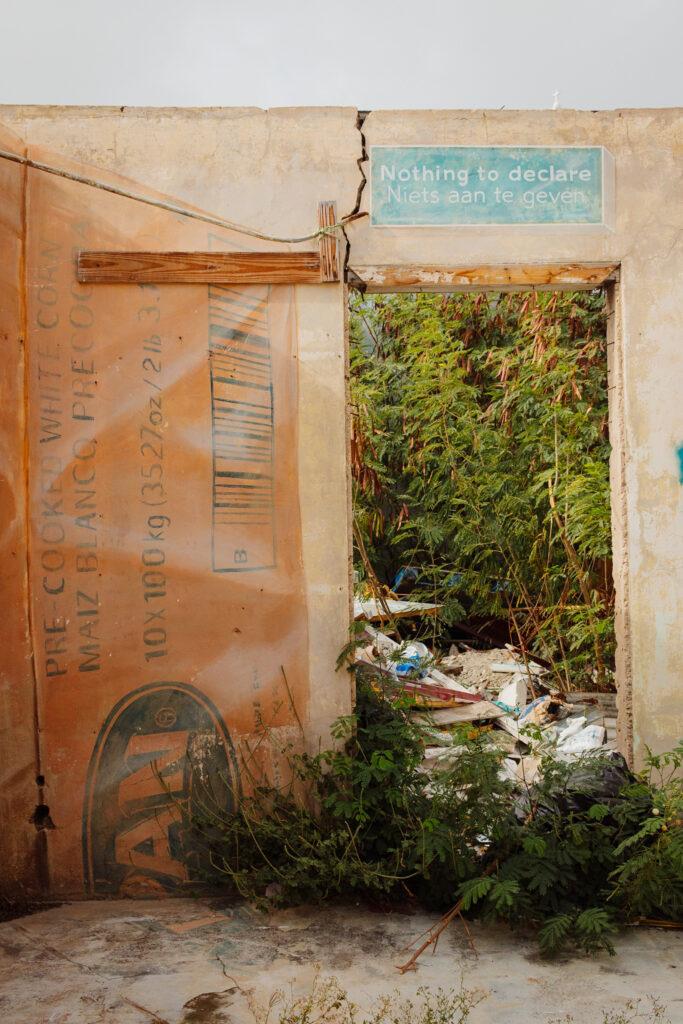
A photo from San Nicolas in Aruba, with a gaping abandoned doorway showing overgrown weeds behind it, and the words

Newsletters are blogs. Email kind of works as a way of both delivering and responding to blogs. I agree with Erin’s newsletter that writing letters is a wonderful practice too. And I don’t mean to dismiss the charm of a good comment, for blogs with comments! Comments are how I met Will, after all. But letters require physical acquaintance, and comments are a kind of public performance in their own right. Email is something else still.

The other day I had a question that was bugging me, and I looked up the relevant figure on Wikipedia. Wikipedia told me that he has a blog—a delightful blog about sailing in retirement, unrelated to the matter I had in mind. But that blog had an about page with an email address, so I wrote an email, and got a response right away.

From: Brendan (xorph@xorph.com)
To: ken@kensblog.com

Hello Mr. Williams! I’ve always wondered, why did you choose “on-line” for the original company name “On-Line Systems?” Was it derived from the idea of making software to be accessed on a mainframe through a terminal, or did the term mean something different to you at the time?

Thanks! Hope your seagoing adventures this year are wonderful.

—Brendan J

From: Ken Williams (ken@kensblog.com)
To: Brendan

You nailed it. Yes – I was doing freelance contract work on mainframe computers, specializing in large computer networks (literally on-line systems). When I started Sierra I kept the name I had been using for my contracting.

When we started getting larger I realized someone already owned the name and had to change our company name.

-Ken W

From: Brendan (xorph@xorph.com)
To: ken@kensblog.com

It’s so satisfying to have a clear answer to that after all these years. Thank you so much!

From: Ken Williams (ken@kensblog.com)
To: Brendan

🙂👍

The exchange was months ago, but I continue to enjoy the pleasant feeling of this tiny conversation. I have other emails I have received in years past that I keep close in my heart, just because they caught me at a good moment with a kind word. Even without much social media in my life, I do talk to people in other ways online, via Izzzzi and Peach and sometimes (sigh) Discord. But a few lines of thoughtful outreach, one to one, carry a warmth and weight of meaning that is singular.

I’ve taken a lot of photos over the last couple of decades. In doing so I have learned that I’m not particularly adept in most genres. Landscape and street photography don’t come naturally to me, posed portraiture remains elusive, and things like sports or wildlife photography are far beyond my abilities. What I like shooting most are candids. They require at least a little skill, a little preparation, a watchful eye, and luck: I shoot a dozen for every picture that turns out the way I want it. But there is nothing like that moment of resolution, when I see on a screen that taking the shot has succeeded.

A photo doesn’t really make a moment permanent. Our photos are ephemeral, just like our selves. They still matter. Ephemeral connections, one to one, are the material we use to construct meaning in our own stories. You and I were born in a time when there is no other choice but to find our lives shaped by emails. So pick a shape you like, and put something in it that you want to see again.

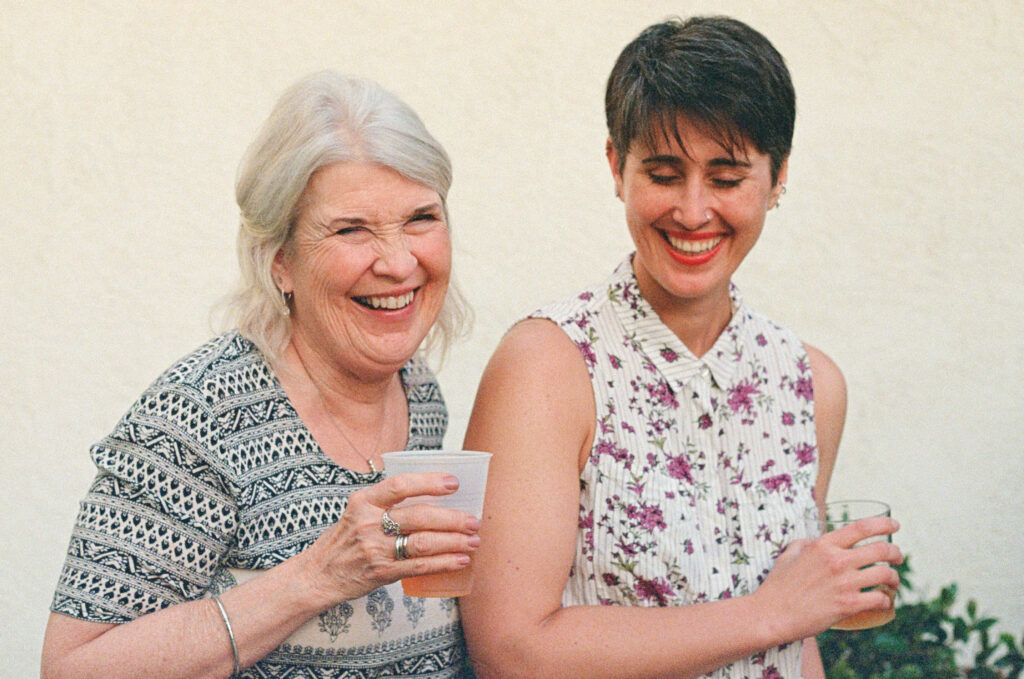
My wife and my mother, laughing together.

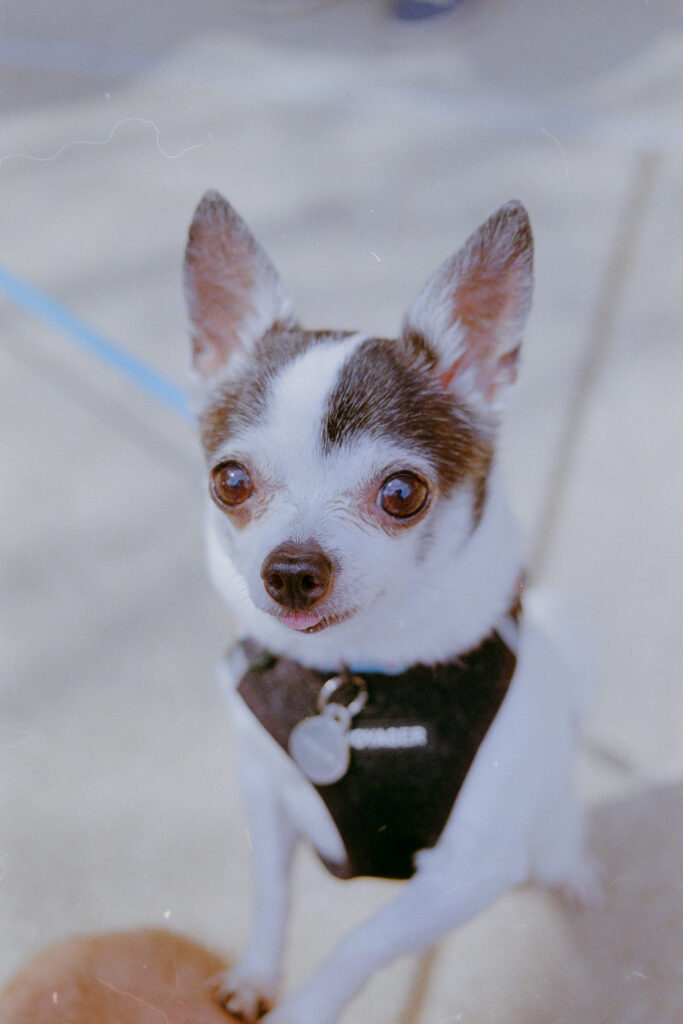
A very small dog named Chauncy blepping with his paw on my knee.

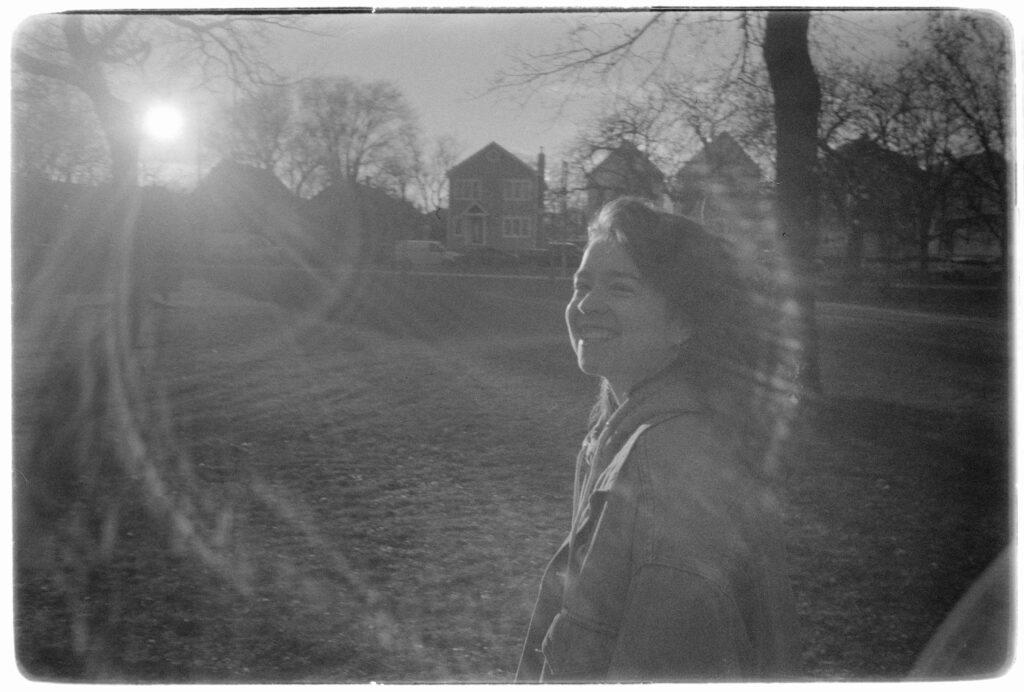
My partner Hannah in monochrome, obscured by a lens flare.

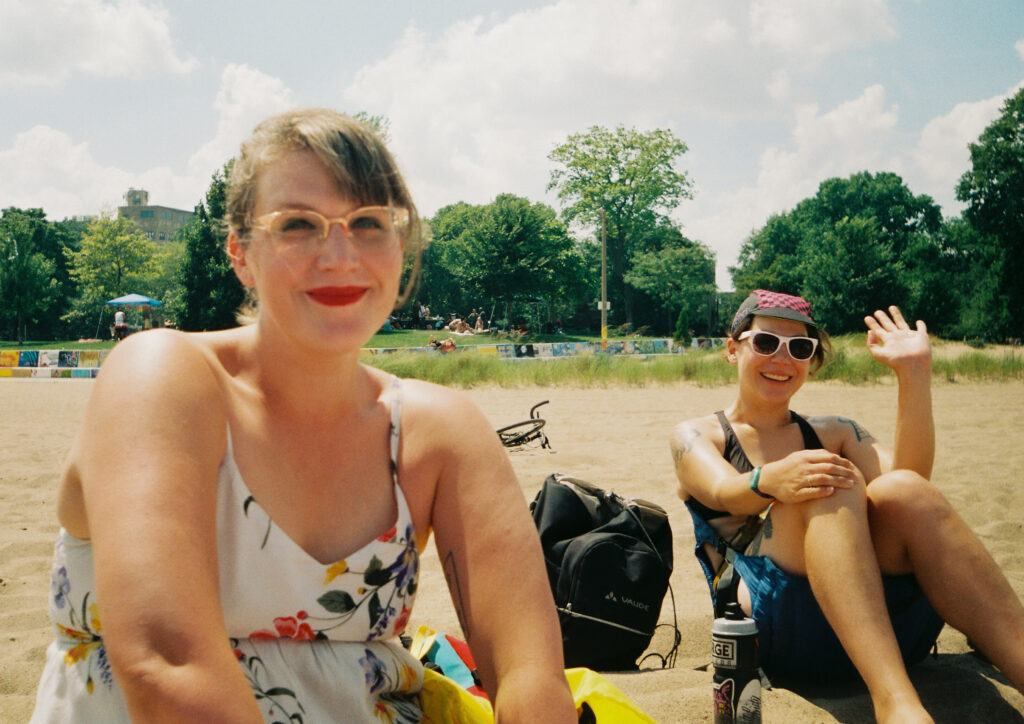
Sophie and Erin sitting in the sand and smiling, probably at Kat's beach birthday.

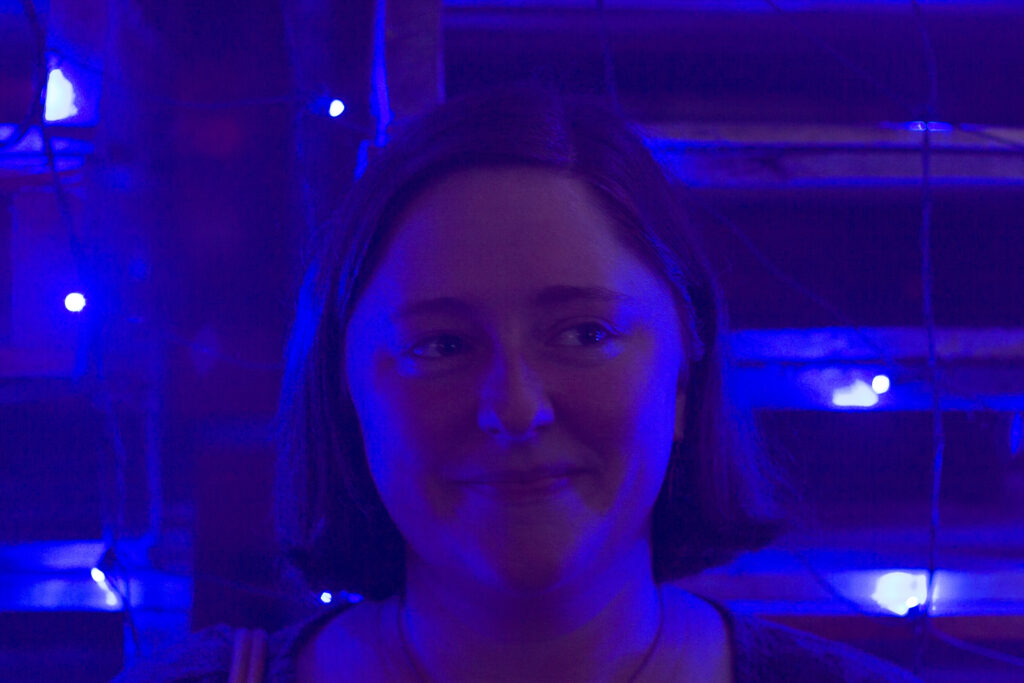
Erin at Bit Bash in 2015, lit entirely in blue.

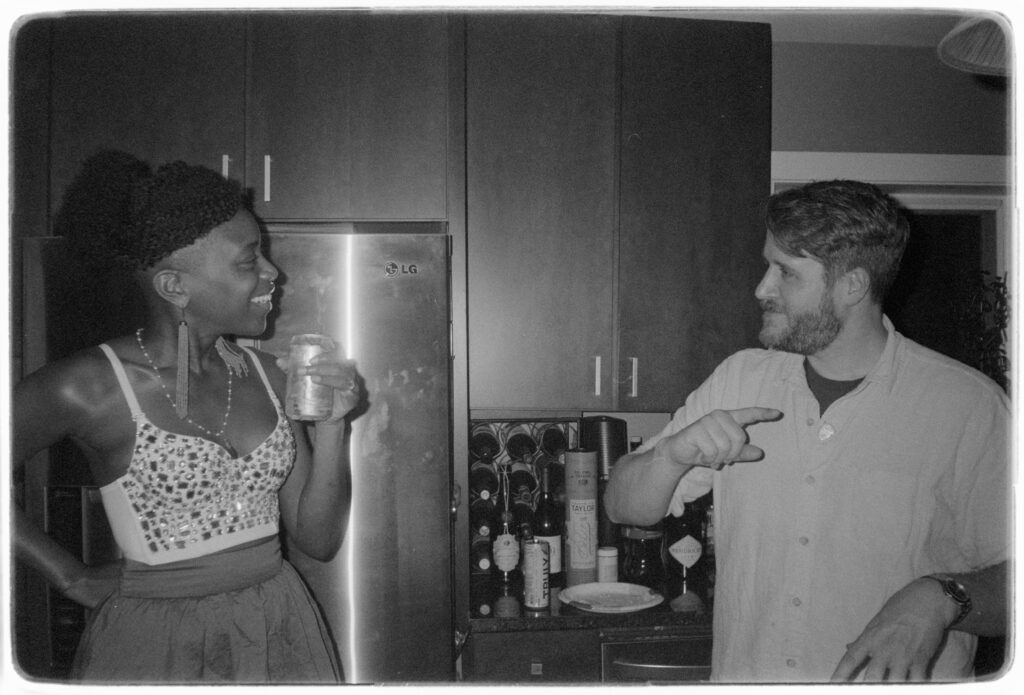
Ayo and Stephen, in a kitchen and monochrome, having a totally not posed conversation.

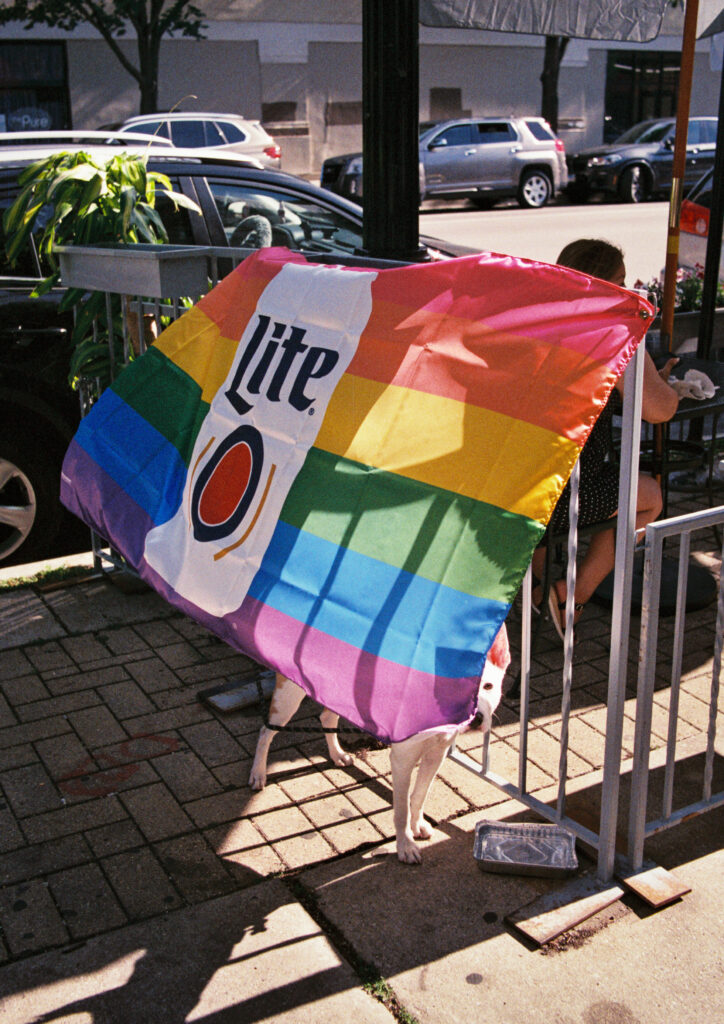
A small dog peeking nervously out from behind a Miller Lite rainbow pride flag.

Chris, in a red room, weary in 2008.

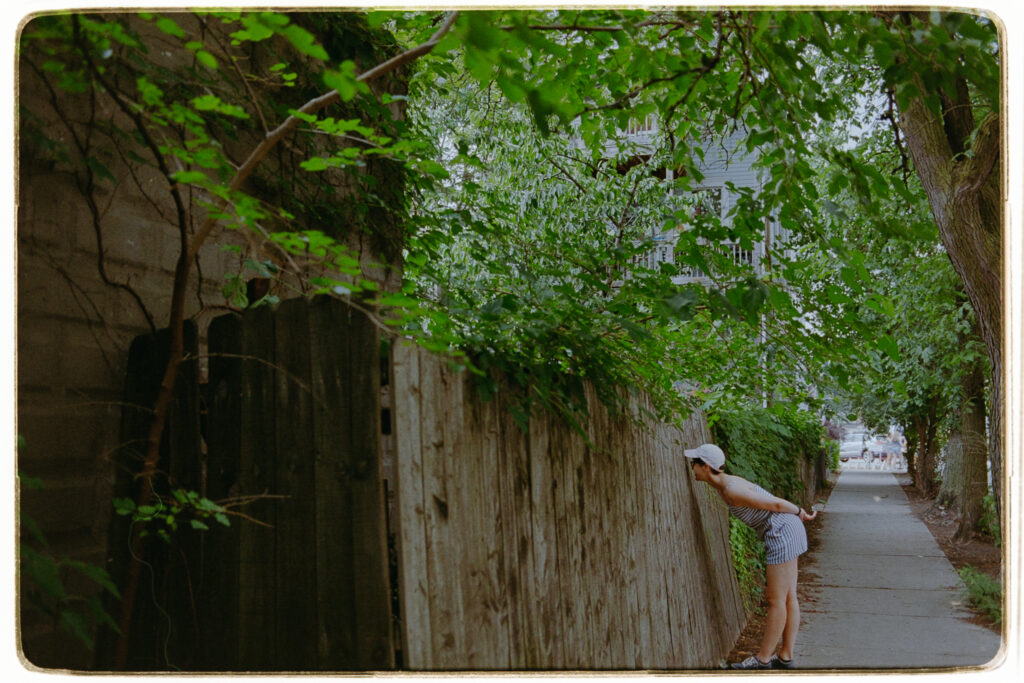
Kat at a distance, leaning down to peer through a hole in a fence.

A cluster of balloons escaping into the sky.

An interview with an injection test

There was a moment in time when, thanks to a kind reader named Allison, this blog got its updates syndicated to a Livejournal account. People there could see my offsite posts integrated into their friend-feed and even post comments. It is hard to convey just how dominant LJ was in early Web 2.0 if you weren’t there for it, but that feed was significant avenue of audience. I’ve never been much for the threaded-comment model of interaction, but I did enjoy them on the LJ feed, especially because the syndicated posts existed in an ephemeral 20-slot buffer and would vanish once they got pushed out. This was back when 20 blog posts was a matter of weeks for me, not years. I want to backspace now and turn those numerals into spelled-out numbers but I am going to move on to the next paragraph instead.

It was these ancient territories wherein I came to know a delightful person named Will (probably, we’ll address that later) O’Neil, and learned to place great store in his taste, talent for prose, and thoughtful regard. Because I have not yet pressed my luck too far on this concept, I asked him some emails! I then edited and rearranged them to such a degree that a postscript became an antescript. Each of our hyperlinks are our own, almost; all photo credits to my kindred spirit.
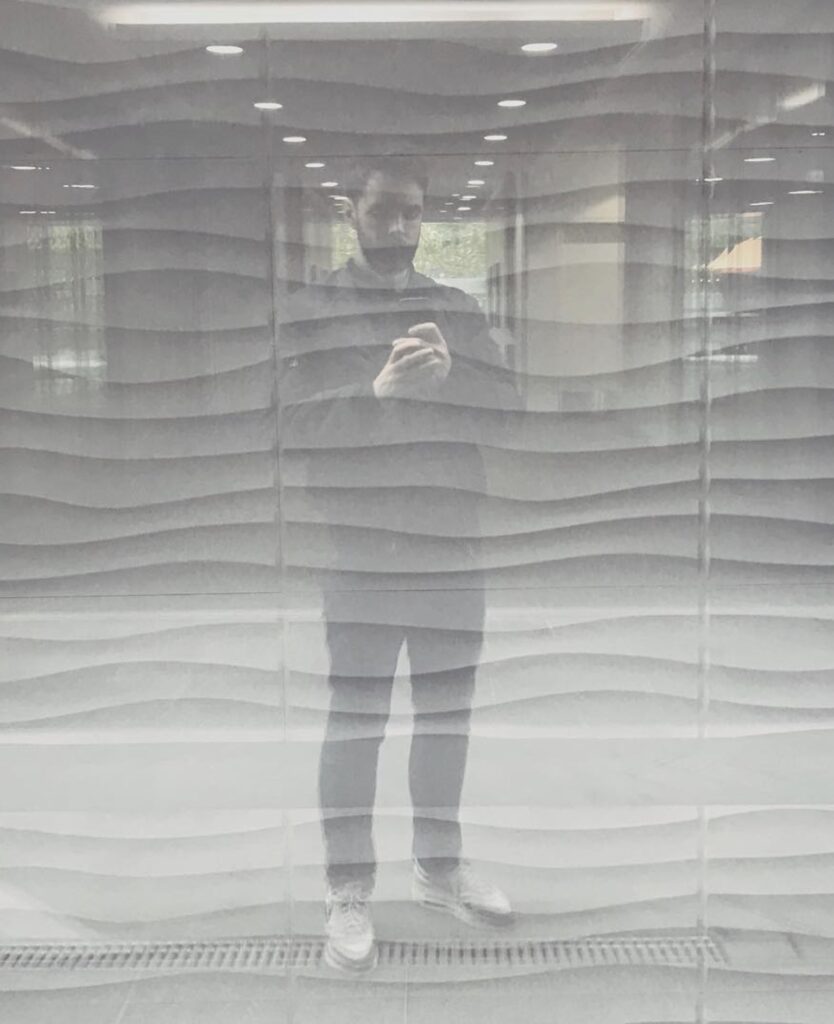

Will's reflection in a glass wall with wavy bands behind it

(This isn’t actually prompted by a question, it’s the postscript I just mentioned above.)

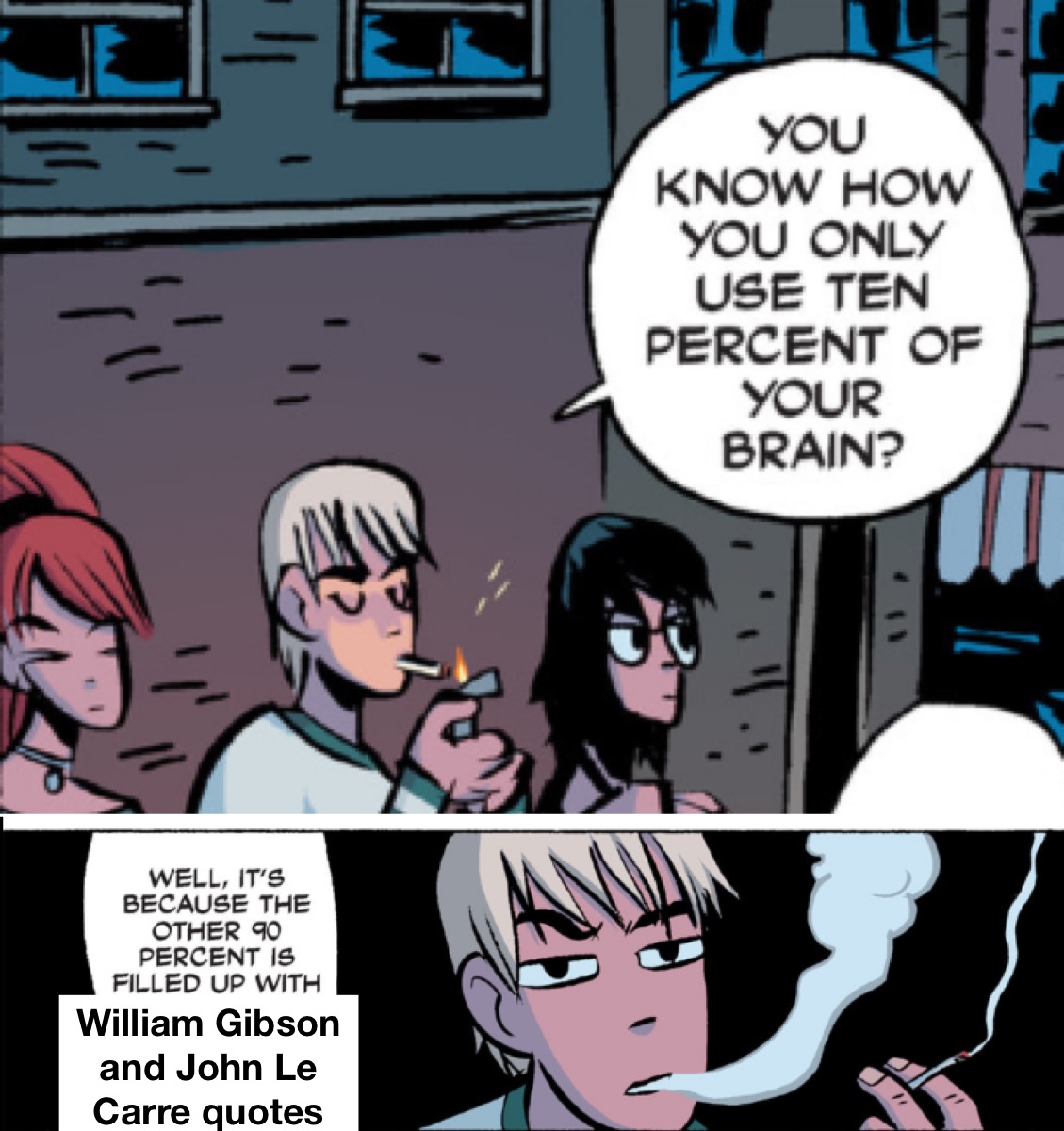
On the subject of kindred spirits, I shared your Scott Pilgrim meme with Jojo when you first messaged me about this project, and she replied, “Is your friend Brendan… you?”

There’s ONLY ONE WAY TO BE SURE, Jojo. (See below.)

Hello. I can no longer find evidence of this amid the decay of the indexed internet, but once upon a time, I believe you titled yourself “a walking SQL injection test.” Did you withdraw that epithet from circulation because you stopped destroying SQL, or because you stopped walking, or is it just that my failing memory is vulnerable to injections itself?

I went to school with someone who became a software penetration tester, and he once told me that he liked to use Irish names when testing web forms because it was a plausibly deniable way of testing a web form for vulnerabilities. If they didn’t handle them well it was an indication that the form might be exploitable. But the main reason I recall calling myself this was that there was a period of time where I seemed to keep breaking websites.

Do you remember the early-ish wild-west “Web 2.0” days of Facebook? Where there were all those apps and plugins you could install? I used to have a heck of a time with those. You’re trying to jump on the same fad as all your friends but then all you get is “check the manual that corresponds to your MySQL server version for the right syntax to use near ‘Neil'”.

For years when flying certain airlines I’d have to go up to the desk instead of checking in at the little touchscreen kiosk because the keyboards wouldn’t have an apostrophe. Please enter your name exactly as it appears on your passport. Ok sorry but not that character. You know?

Do I know? Certainly I believe. I myself have merely labored under a set of names that are consistently misheard by one letter or, in the wake of my wedding, three. I do want to challenge you to write a short story based on The Right Syntax To Use Near Neil, but this is an interview, not a duel. We both know which of us can actually duel people.
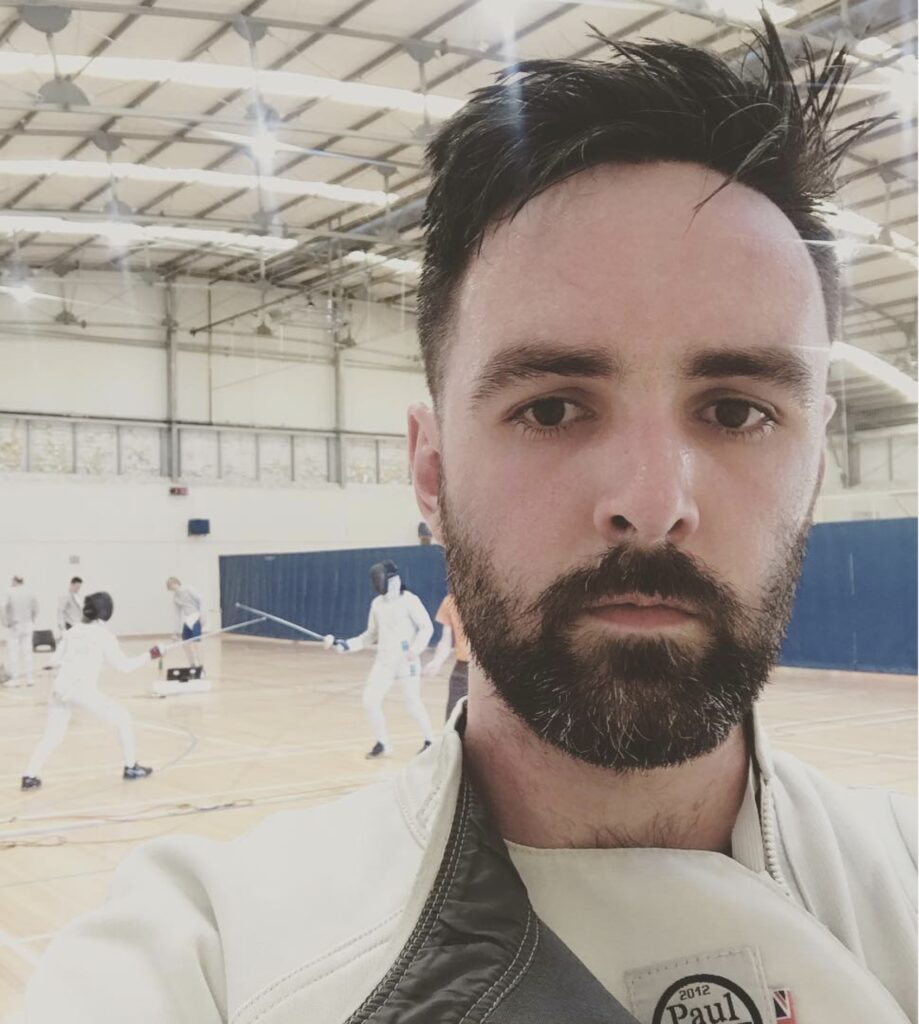
Will in fencing gear, in front of fencers

But your use of the term “kiosk” reminds me of my very favorite sentence in all of fiction, which is of course a William Gibson original. Do you have a cellar-door sentence or phrase or fragment yourself that you turn over and over in your mind like a careworn stone? If not, where would you look for one? You can’t use mine.

The first one that leaps to mind is also a Gibson original: Odile, in Spook Country, gnomically pronouncing “see-bare-espace”. Aside from it being a fun set of syllables to turn over in your mind, the notion of cyberspace everting is something I’ve been coming back to more and more over the past few years. I remember firmly thinking when that novel came out that it was too big a reach, and that the internet would always be a different space. But now I’m not so sure.

You and I became internet friends over a shared love of microfiction, and yes, I am going to link to your semi-decommissioned story blog unless you delete it before this interview is published. I still think of it, and the way you sketched out your ideas, with fondness and curiosity. So wait, do you prefer Hey Will (like your domain name) or Hey William (like your about page)? Or Hey Bill (as you seem to address yourself on Instagram)? Or some secret fourth thing?

I still have extremely fond memories of crafting those tiny stories, and it’s weird to re-read them now and only half-remember the things that were going on in my life at the time that inspired them. Fun fact: this one is an extremely transparent reference to the tumblr I maintained devoted to my friend Hayden, who was a supporting actor in a short-lived fantasy television show, and from whom I deliberately and carefully kept my authorship for several years.

A lot of the stories I wrote were me putting things that were happening in my life into a different set of clothes and making them dance, so I’m afraid that if I tried to pick it up again I’d inevitably just be writing allegories for my ethical wrestling with LLMs. But maybe I should anyway.

Something that has lived rent free in my head for what is now many many years is from The Chosen Ones – “I reject all nicknames that do not reduce aggregate syllable count“. William, I suppose, is a comparatively nicknameable name, and I recite this to myself mentally whenever someone asks “hey so haha does anyone call you Billiam?”. The best one was probably the first, though – my brother, as he was learning to speak, used to refer to me as “Woe”. I found this very appropriate during my angsty teenage years.
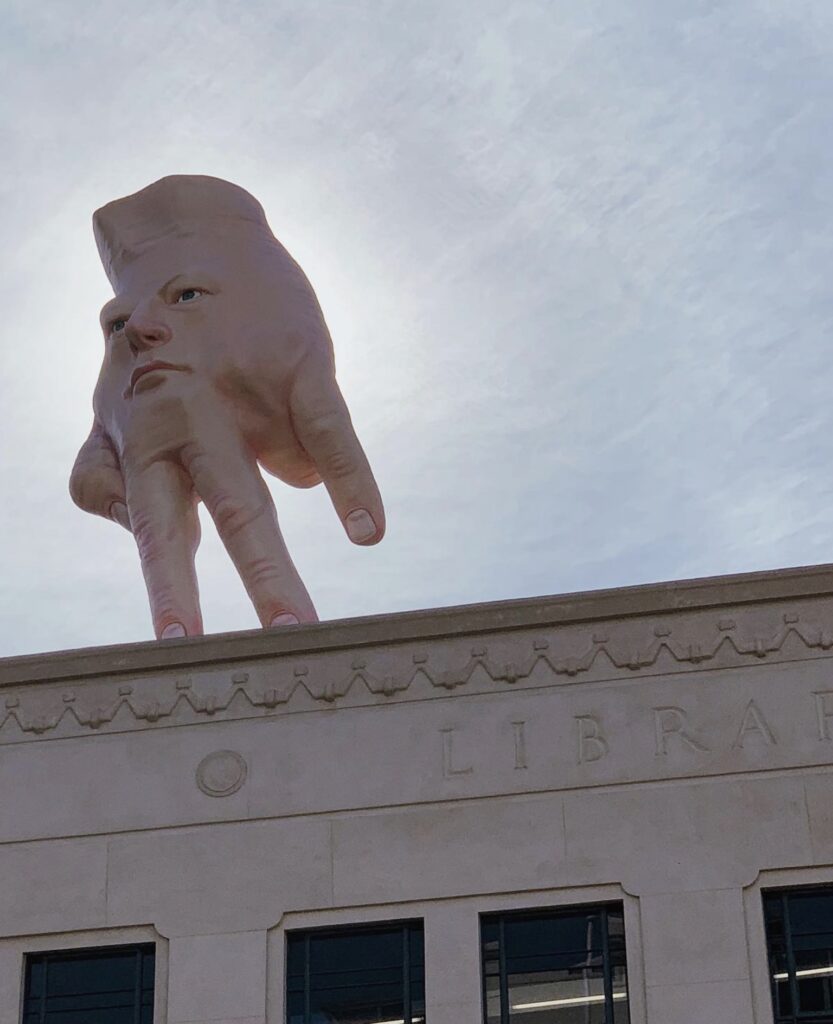
A statue of a hand with a face, on top of a library

When I was growing up, the only people who called me Will were my immediate family, and everyone else called me William. But at some point in my early twenties, someone asked me “Do you prefer William, or Will?” and I said, “Will’s fine.” and suddenly that was that. At my First Proper Web Development Job I purchased that domain as a joke because it seemed for a while like every complicated debugging question would come to me led by a comparatively innocuous “Hey, Will…”

(This is the same job where one of our customers was from the finance company William O’Neil + Co, who replied, baffled, to my initial onboarding email assuming that we had messed up a mail merge somehow)

Two of my grandparents were also nicknamed Bill, so I suppose it is somehow genetic. But the real reason that Bill happened because at university I did two things: 1, I grew a beard, and 2, perhaps more critically, I managed to surround myself with a community of professional and professional-aspiring theatremakers. I started helping out in shoestring productions as a lighting designer and operator, mainly to have something to do with my time that didn’t involve spending all of my waking hours in a computer lab. A director I was working with suggested that Bill was an appropriate nickname for a grumpy, bearded lighting tech, and suddenly I was Bill to a specific constellation of people in my life. It felt very nice to have a core group of friends who had a special name for me, and for a few years I tried to protect that by being very careful how I introduced myself to people. I think it was because it felt like some kind of weird circle of trust where if someone unworthy knew me as Bill the magic would suddenly collapse.

This did eventually happen — specifically, that I had a falling out with someone and felt like as a result I should be able to rescind their calling me Bill — but by the time it did I think I had grown into the name enough that I just had to lean into it.

Now I live in Sydney and, aside from two friends I’ve known for as long as I’ve known you, nobody here has ever known me as anything else. So maybe that’s the answer. But I don’t think I’ve actually answered your question, have I?
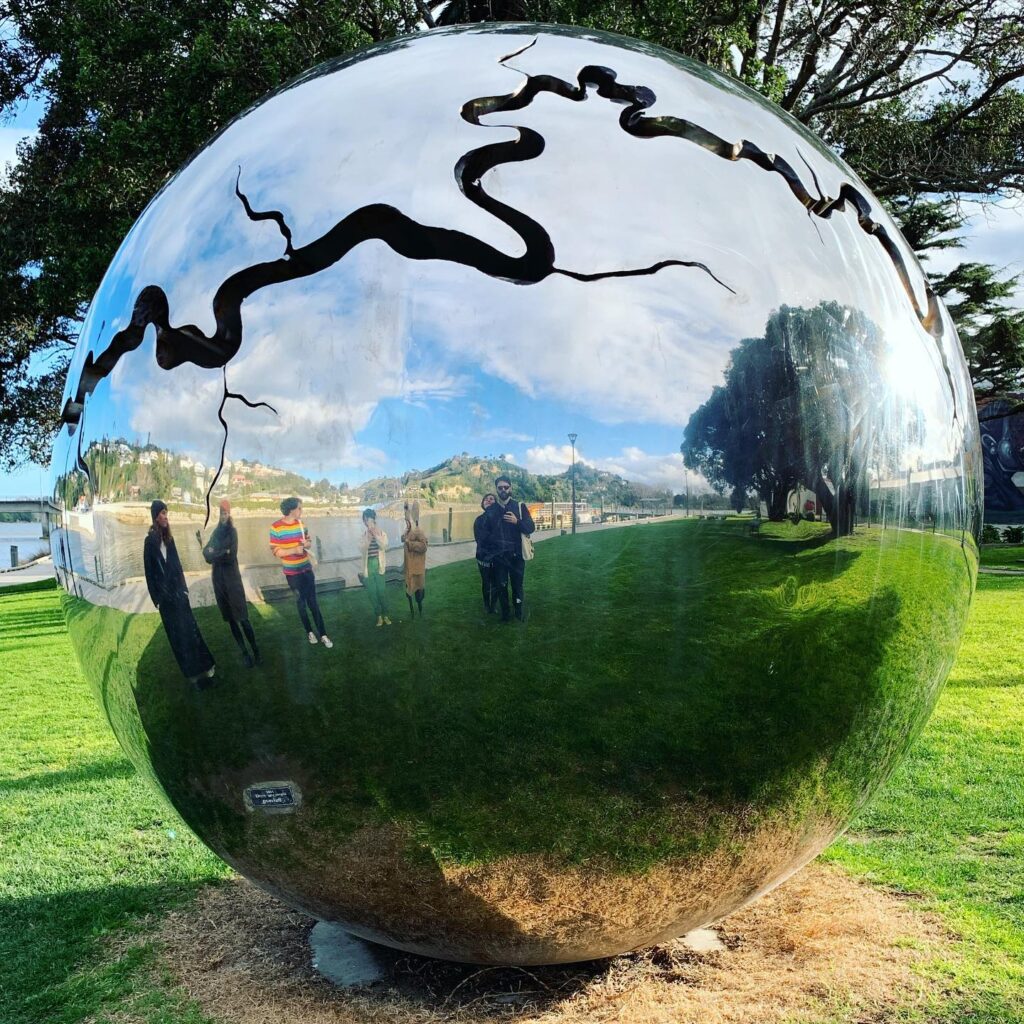
Spherical park mirror with a dark squiggle across the top and Will et all reflected in it

If I was going to grade you on whether you answered the questions, then I should have asked more cogent ones to begin with. I only ever took one lighting design class in college myself, but I really enjoyed it, and it might have been the zenith of my theatrical career. Are there things you notice, or things that bother you, about light that are informed by your technical experience? (I like to complain that social media video ring lights give people eerie snake pupils and someone should have just told them all about standard two-point setups instead.)

Something I think I’ve been able to appreciate more deeply, as someone who has pointed lights at people and surfaces before, is the work of James Turrell.

I’m sure someone who doesn’t understand anything about light could still certainly marvel at or appreciate his work. But having seen far enough behind the curtain to be aware of the kind of work that would have to be involved to create some of his pieces, makes me feel like I understand them in a different way than if I had never pointed a light at a surface before myself.

The way that his Ganzfeld series of works light a space so evenly that it makes your skin look uncanny when you’re standing in it is something that images can’t really prepare you for. It’s like IKB. Even something as conceptually simple as his projection pieces, where a two dimensional shape thrown into a corner feels like a window into a three-dimensional space, have a magic to them that evades being photographed.
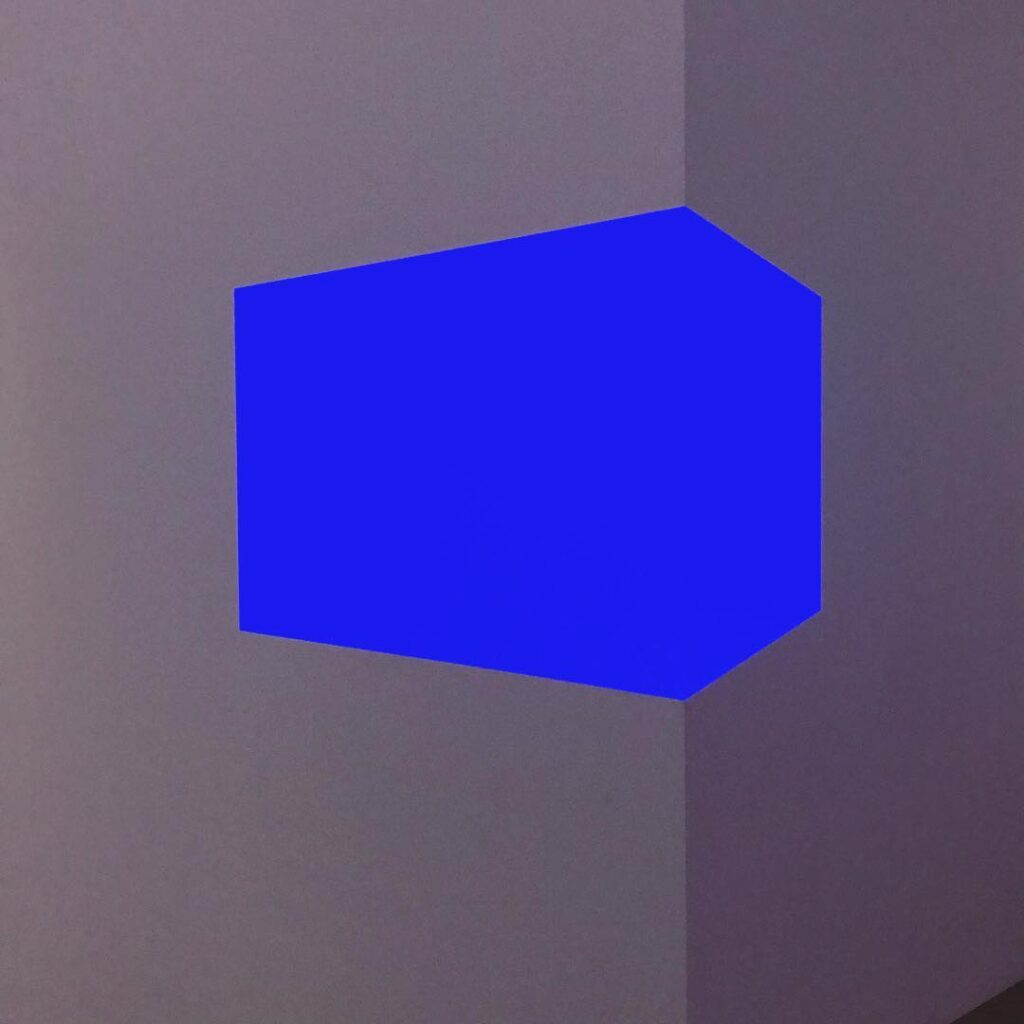
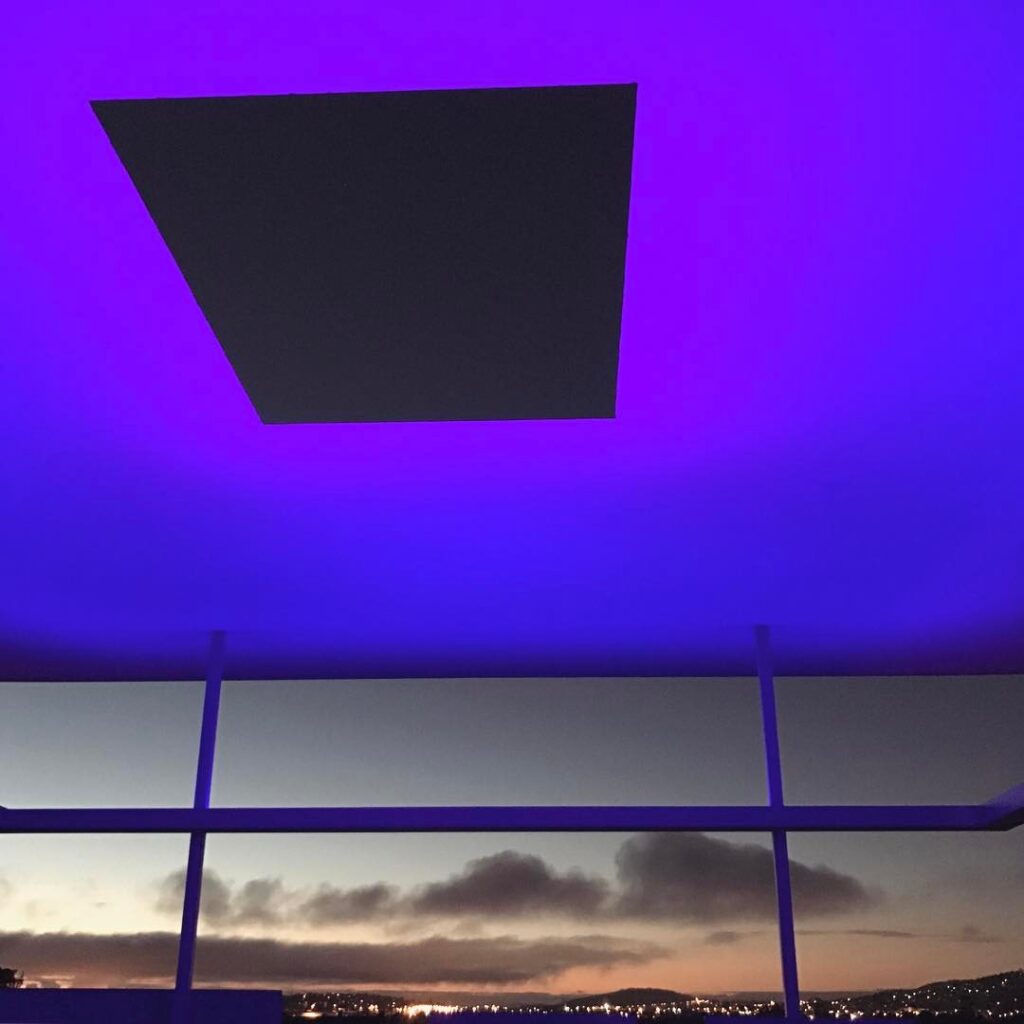
Will's photo of James Turrell's geometric light art.

Will's photo of James Turrell's geometric light art.

Will's photo of James Turrell's geometric light art.

Part of the reason I first went to Japan was actually to see two of his Sky Space works (there’s one in Kanazawa, and another on Naoshima, at the Chi Chu art museum). Going to the one in Canberra while the sunset light show was happening was something we used to do quite regularly when I lived there, and sitting there looking up at the sky as it slowly darkens is the closest I’ve ever come to having what I’d call a religious experience.

Unlike you, I never studied the blade, but I’m glad to know that we have each taken up our own embroidery projects as we enter our salt-and-pepper years. My focus has largely been cross stitch, as well as some visible mending on the pairs of drawstring pants (*trousers) that accommodate me in forgiving ways. Meanwhile I have gleaned from your mirror self-portraits that you can pull off the Cary Grant natural-waist silhouette with panache and aplomb, a feat I’ve never yet managed. Where do you get your clothes? Can I have some?

Something I appreciate about crafts like embroidery, leathercraft, and hand-tool woodworking is that the feedback you get on your increasing skill and capability is immediate and obvious. The first time you do it probably isn’t great, but each additional stitch or swipe of the handplane gives you immediate feedback and shows you how you’re getting incrementally better, or what adjustment you need to make in order to get there. As a javascript developer I never really had a good handle on the pace at which I was improving; as a manager of developers, now, even less so. I think I enjoy these kinds of hobbies because I don’t get that kind of feedback in my professional life.

Both of my partners are very capable seamstresses, and find a similar joy in the process of making their own clothes. Maybe that’s what I should try my hand at next. But so far I’ve resisted adding yet another hobby to the pile.
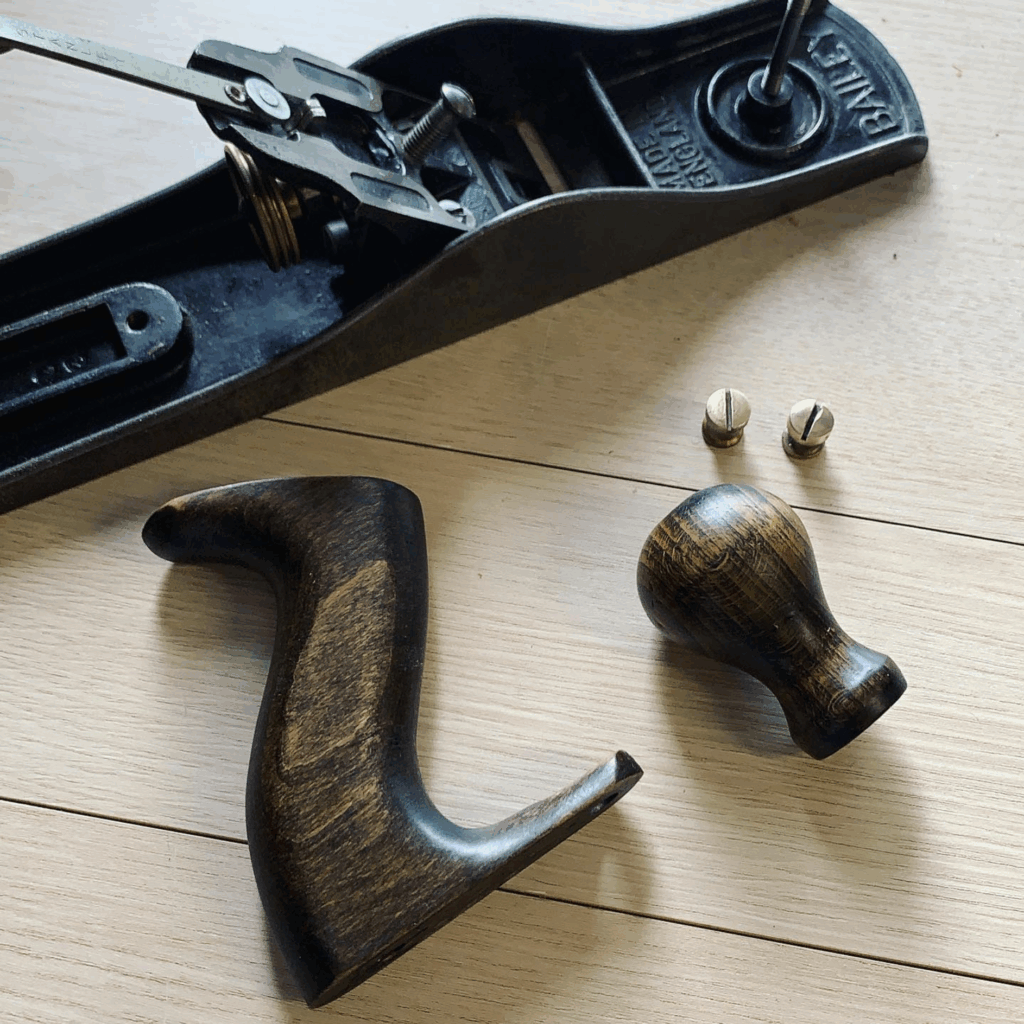
Will's handplane, in the process of repair.

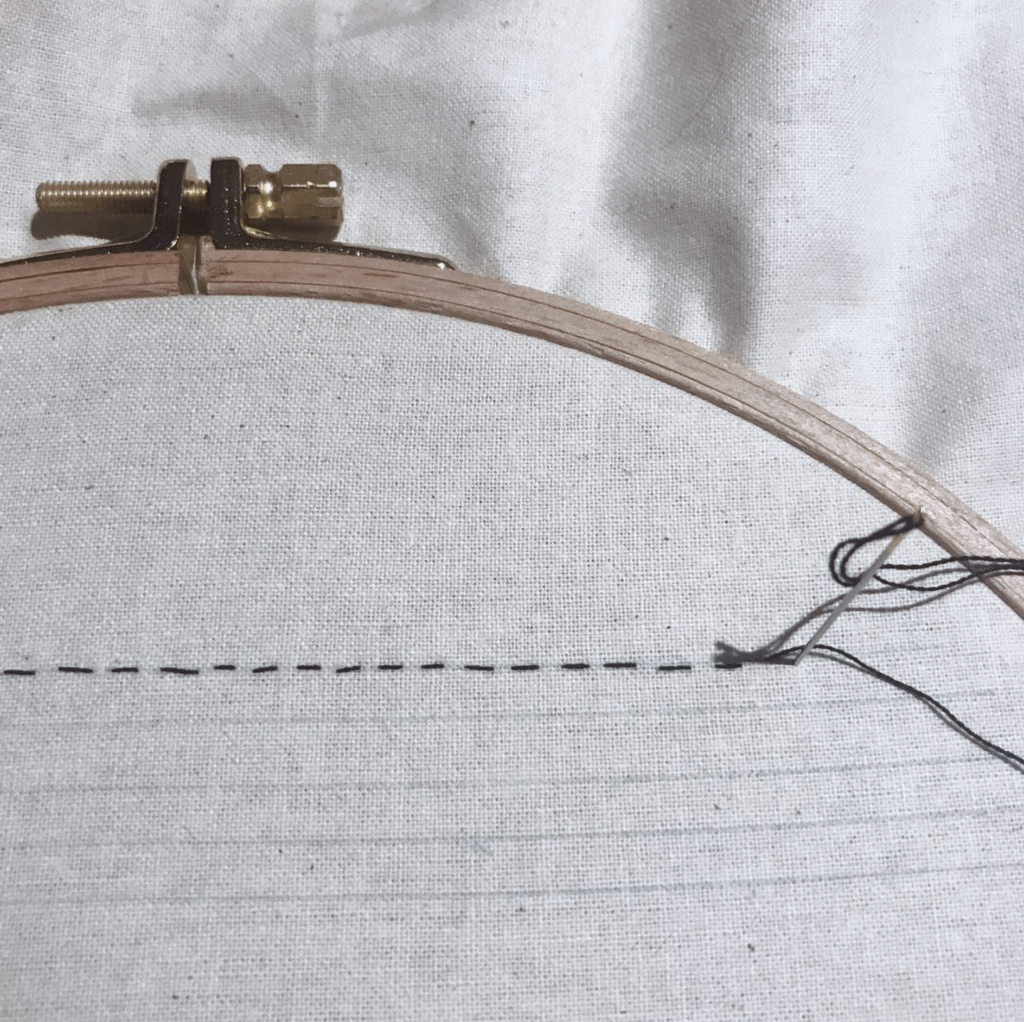
Will's embroidery hoop, with one running stitch along the top of a linear stencil.

Sidebar: something tangentially embroidery-related which I hope will tickle your particular sensibilities is a website that Hera and I both used to find uproariously funny, called Embroidery Troubleshooting. It no longer exists except for the wayback machine snapshots, but for several years the consequences of those unclosed H3 tags were possibly one of my favourite things on the entire internet. Please let me know how far down you are able to scroll before you burst out laughing: for me, I struggle to get past “empty bobbin: replace” without at least smiling.

Anyway, the secret to my descent into the pocket of Big Pants was through a better understanding of my own queer identity and realising that I’d been spent much of my life styling myself to make myself as default and unremarkable as possible in order to not give any girls who might possibly think I was cute the impression that I might be gay. Obviously this is a silly thing to be concerned about in retrospect, but becoming more comfortable with who I am was a necessary first step to dressing how I wanted to dress. In Hackers (1995) terms, this was me realising that I could be Matthew Lillard rather than Jonny Lee Miller.
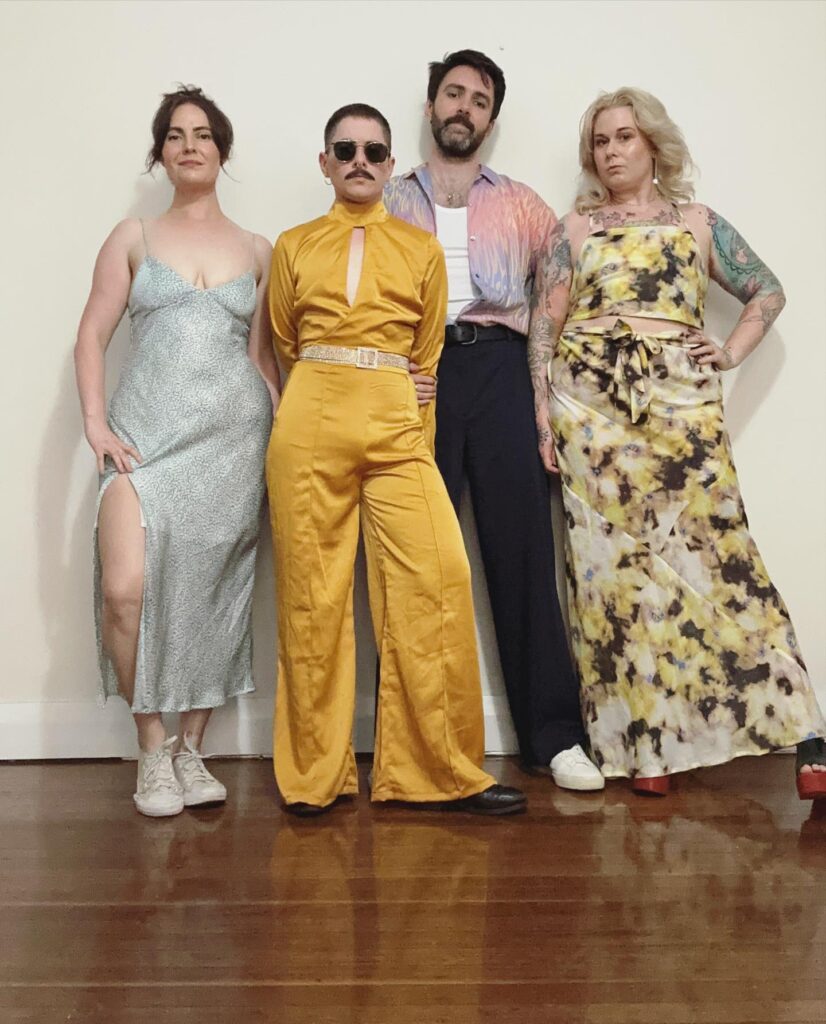
Jojo, Tim, Will, and Vee, in cool outfits.

The Bill that only wore one kind of levis jeans and only owned one style of t-shirt would never have branched out into interesting pants, and certainly wouldn’t have taken up the offer from the very helpful shop assistant who said “you should try these on, even though they are technically from the Women’s section”. Suddenly, I’m being stopped in stores by people who want to tell me that my pants are cool. I didn’t even realise that this was something people did.

A brand I have been lately in love with is Front Office, who are based out of Melbourne. I have their Mid-Weight Portugal Trousers and they are probably one of my favourite things in my wardrobe. Ken also has a great youtube channel and newsletter where he talks about his design process – if you haven’t already come across this you should check it out.
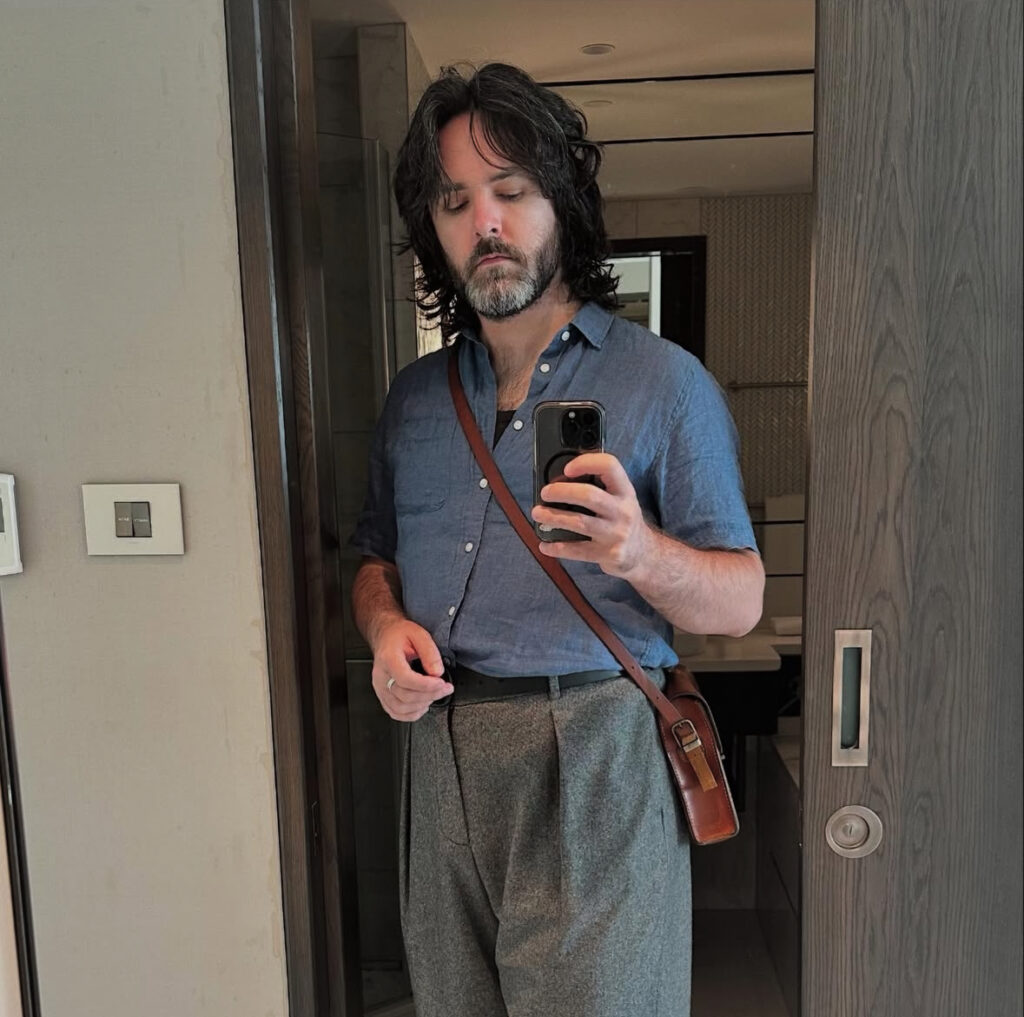
Will, in a doorway and high-waisted pants.

First of all, yes, I think of Embroidery Troubleshooting (damn that would be a good character name) often, and with joy, and always associate it with you! Second, thank you for mentioning Hera and allowing me this segue.

Many, MANY years ago, before HBO even caught wind of them, you told me to listen to Flight of the Conchords, which was correct. Years later, you told me to read Hera Lindsay Bird, which was perhaps even more correct. Your instincts are so unerring in matters of lyrical taste that I also attributed to you my original interest in Frightened Rabbit, and then I think later I asked you about that and you gently told me that I made that up. What band or poet should I get into next?

Hera actually has a new US-published book out recently, Juvenilia, which this question reminds me to tell you about. The cover art is so good that I feel obliged to recommend it on that basis alone. She also edits the Friday Poem for the website The Spinoff where she also has an agony aunt column (Help me Hera) which is exceptional.

But the poet I would recommend to you next is my dear friend Freya Daly Sadgrove.

Here is Thin Air.

Here is Horse Polo Tongue Swallow:

When I tell you I love you I mean oh my god I mean holy fucking shit.
I mean, there you are,
your whole own thing.
When I tell you I love you I mean I
wanna get in the Magic School Bus and hoon around inside you.

As I’ve hinted here and there on this blog at times, Kat and I each have a romantic partner of our own in addition to our marriage with each other, but the story of how that happened is terribly prosaic: we went to some parties together, we each met someone and hit it off, we started dating them, we kept dating them, we love each other. Everyone involved is happily married, which is a sentence that could have a complex illegal meaning but in fact does not. Is your (plural) story simple or complicated? Can I ask what term (or terms) each of you use for your gender?

  • Jojo: she/her.
  • Vee: they/them; “she” occasionally but only in the abstract way that one might refer to a ship, or e.g. Shania Twain announcing “Let’s Go, Girls”.
  • I’m a he/they but with the caveat that I still feel included when someone refers to a group that I’m with collectively as “ladies”.

Jojo and I had been together for over a decade when we decided to explore other relationships – driven mainly by being two bisexuals in a very heterosexual-looking relationship, and just generally wanting to be able to have the space to explore other experiences. Vee had been a mutual friend of ours for many years, but it wasn’t until I moved home to Wellington in 2019 that we had the opportunity to understand that there was something deeper there and start to explore it. What sounds simple but was in retrospect quite unlikely was that Jojo and I managed to meet people, start dating them, and fall in love, both on very similar timeframes. I think that certainly made it easier to navigate than if it had been one and then the other, because we were both working out what it meant for us all at once.
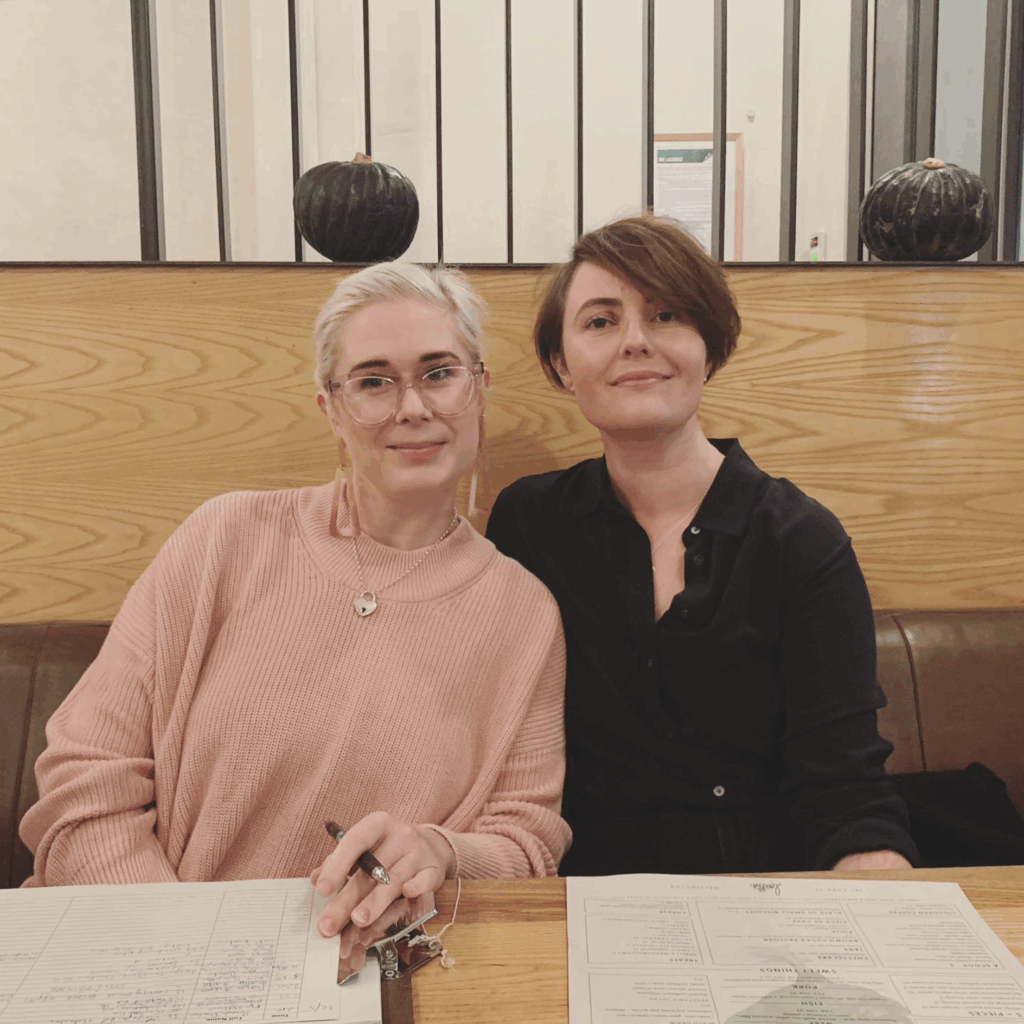
Vee and Jojo.

The one wrinkle is that the person Jojo met was in Sydney, and so for Pandemic-related reasons she ended up moving back there permanently pretty much as soon as the Australian border reopened. This meant that for much of my relationship with Vee, my relationship with Jojo was a long-distance one, and we each ended up building our own separate lives together with new people. So now even though we’re living in the same city again, I don’t live with the partner I have the longest association with. But we rent an office space together that we both work remotely from, and live about a ten minute walk from each other, which means we still get plenty of ambient time together.

While this arrangement has worked out very well for me, personally, I occasionally have friends reach out to me asking how they might also make it work, and it brings me no joy to say that the correct thing for those people to have done each and every time was to just break up.
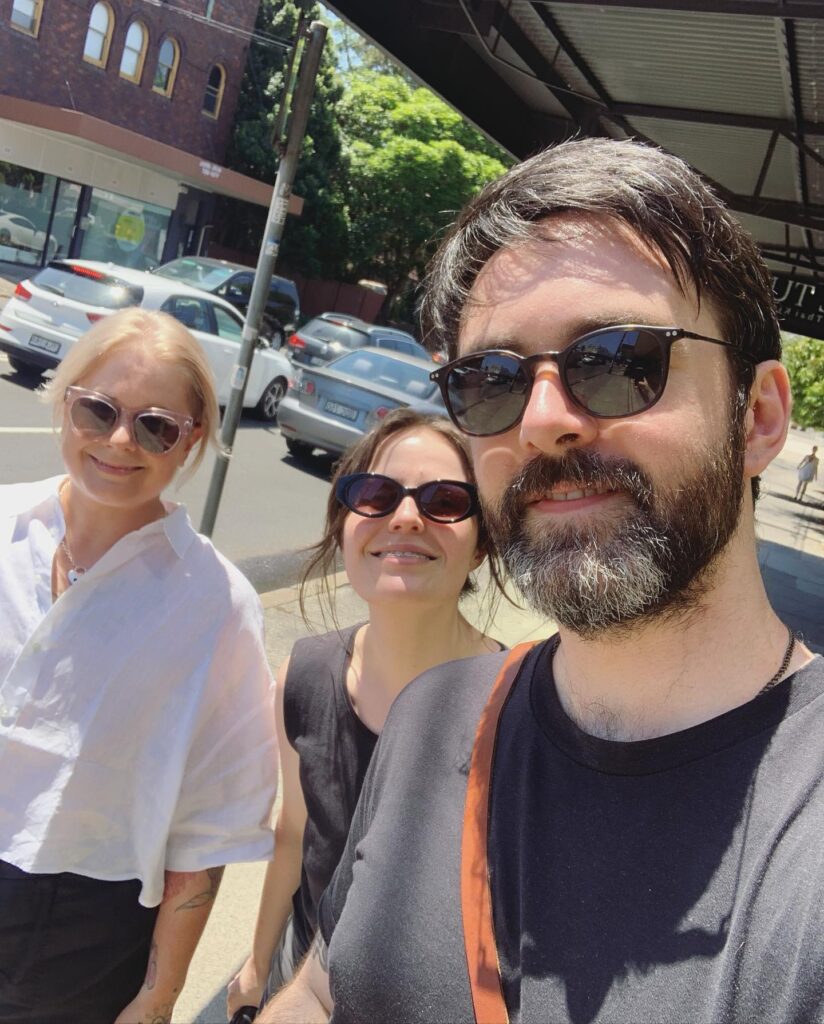
Vee, Jojo, and Will, in sunglasses.

Will, or possibly William/Bill depending on your earlier answer [NOTE: FIX THIS], why is it that I have been hoping to meet you since the strange days of the nascent millennium and yet we’ve (I’ve) never made it happen? I don’t expect you to have an answer to this, I just want to voice it plaintively, because I consider you such a lovely person from my distant perspective and kindred spirits are rare and life is short. You know?

I’m very glad to hear that you feel this way because I feel very much the same, and I’m glad to consider you a friend.

Okay great. By the law of verbal traps, this means you and yours have to come meet up with me in Japan in the autumn of 2027 and finally discover all the tiny ways in which you and I might detest one another in person. Kat and I did a brisk two-week trip earlier this year and I am already desirous of return. What do you say, Kamakura? Takehara? Takayama? Or somewhere else?

Deal.
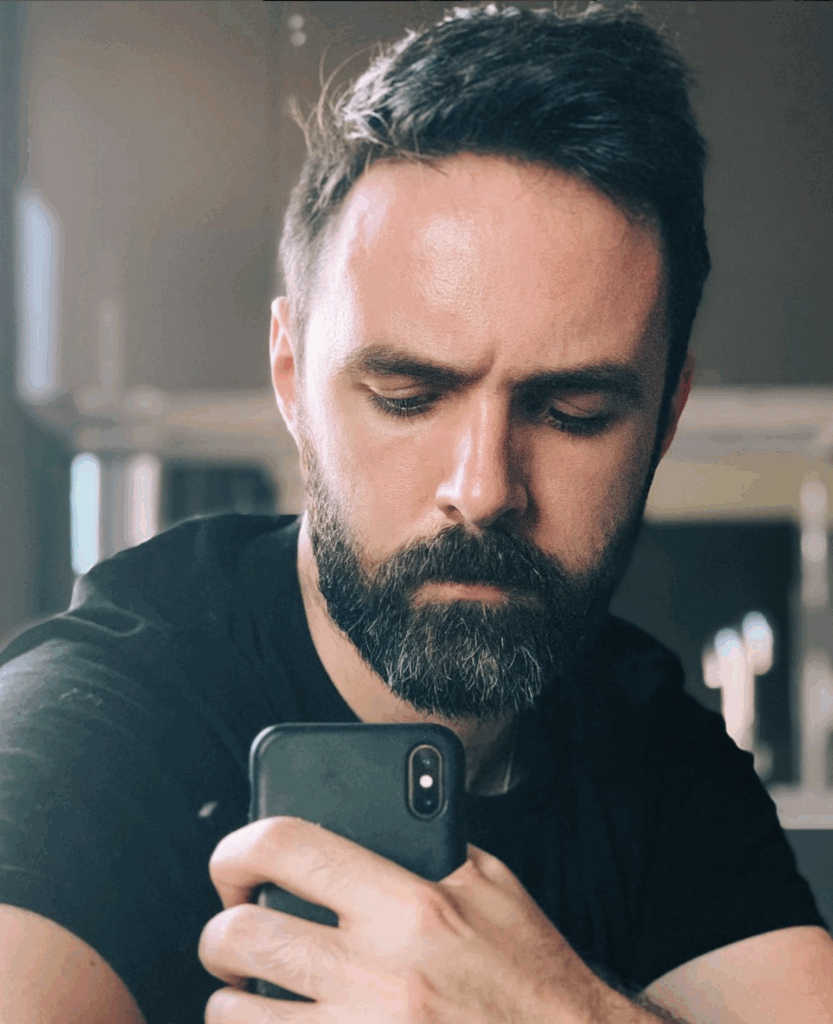
Will frowning and gripping a phone with ferocity.
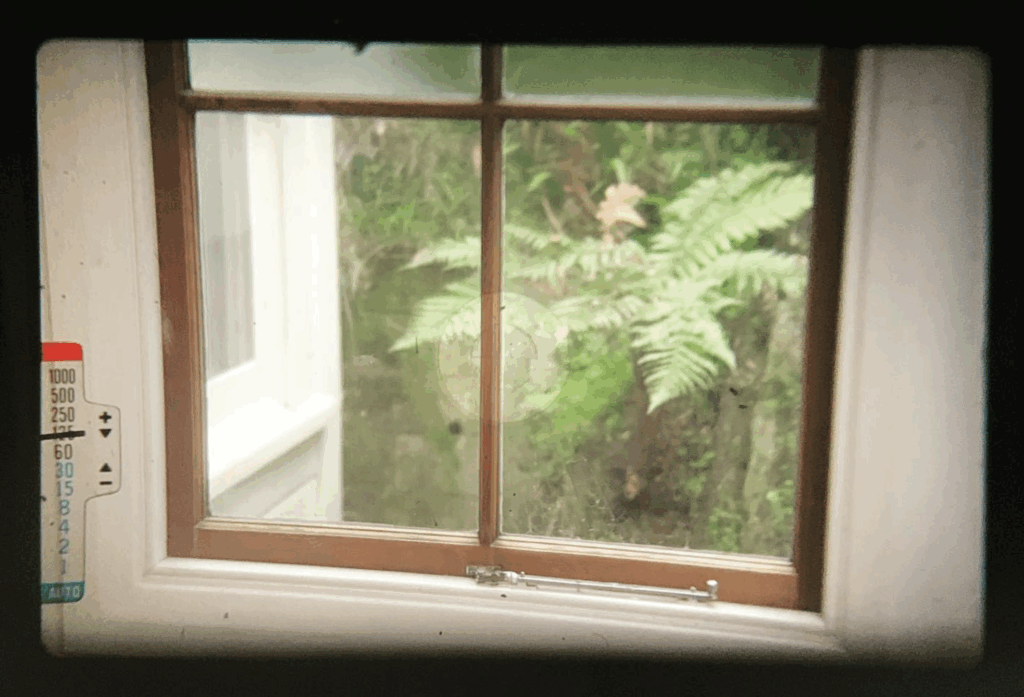
A soft-edged film photo of some ferns through a window.

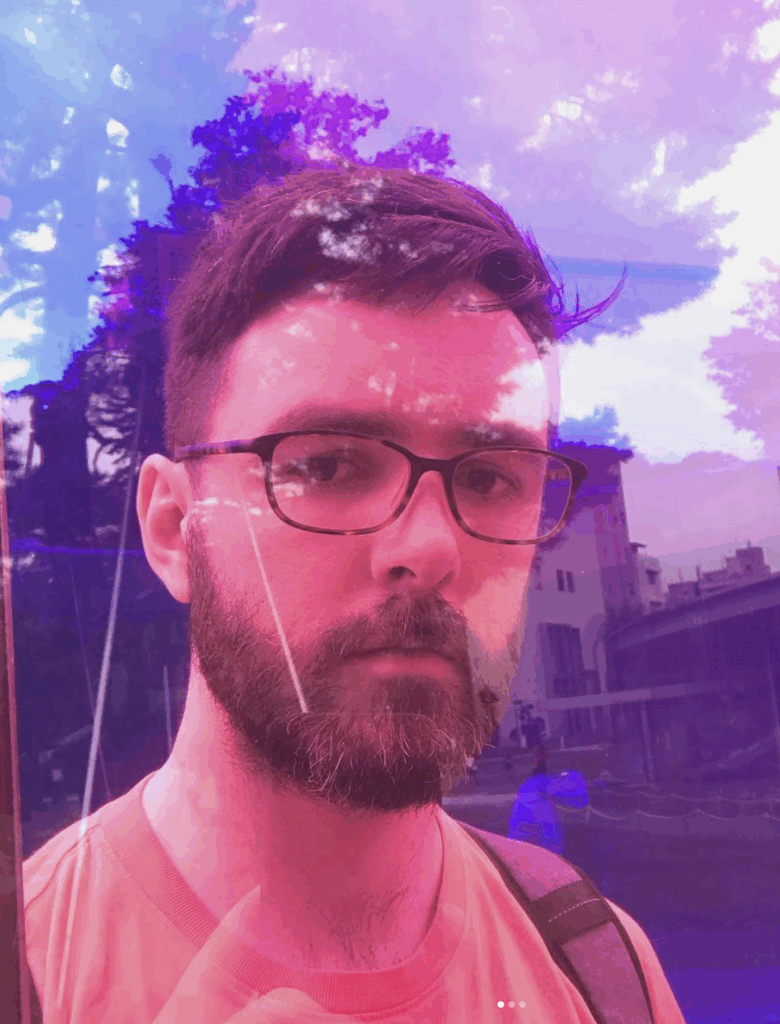
A double-exposure photo of Will, in glasses and bisexual colors.

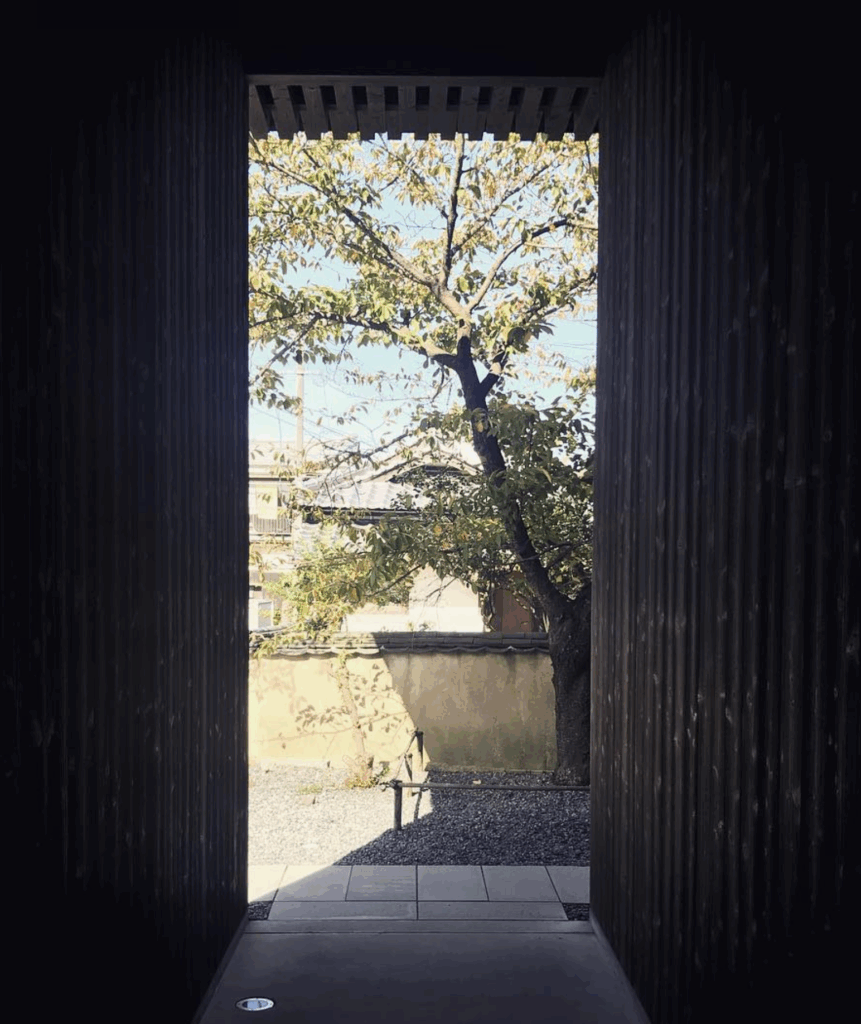
A photo of a bright doorway showing a garden wall, from inside a dark room.

An endless series of Wills and Jojos, in parallel mirrors.

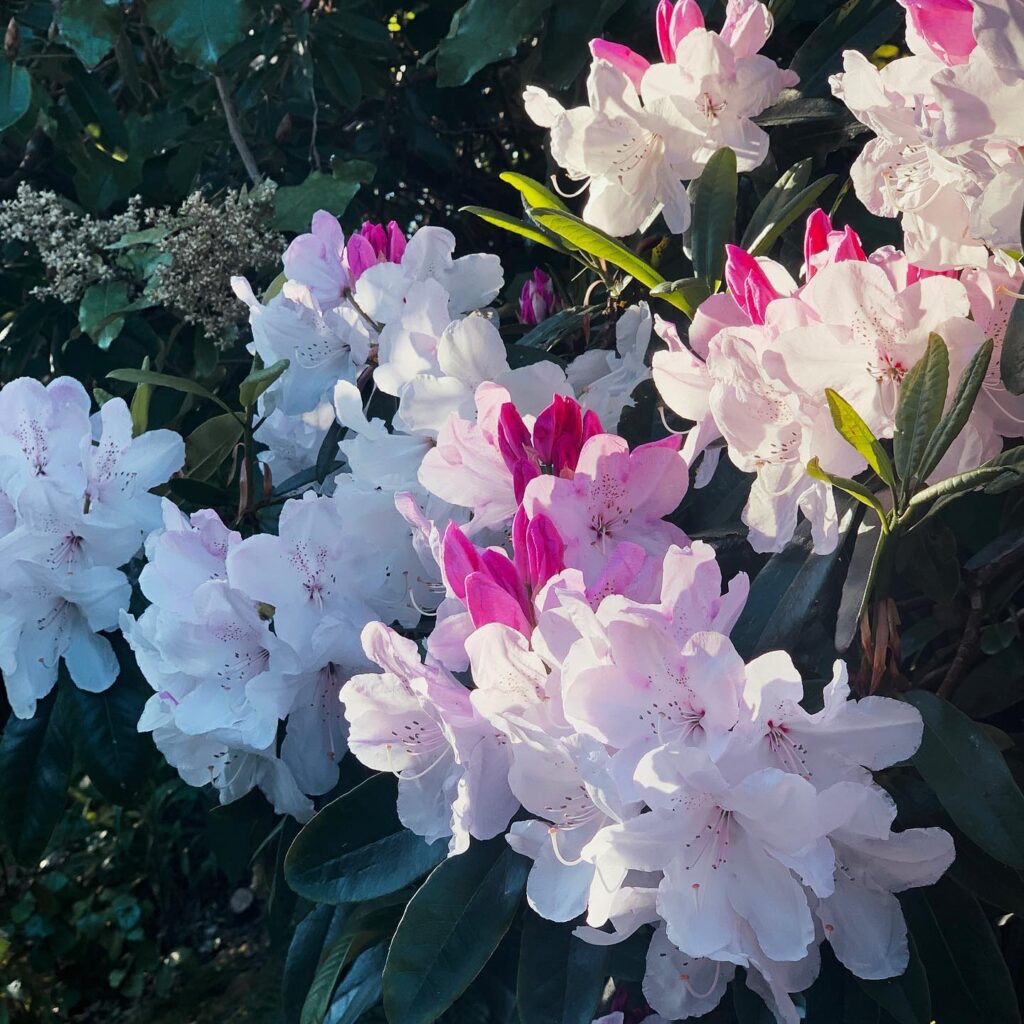
Some lovely flowers, of what variety I do not know.

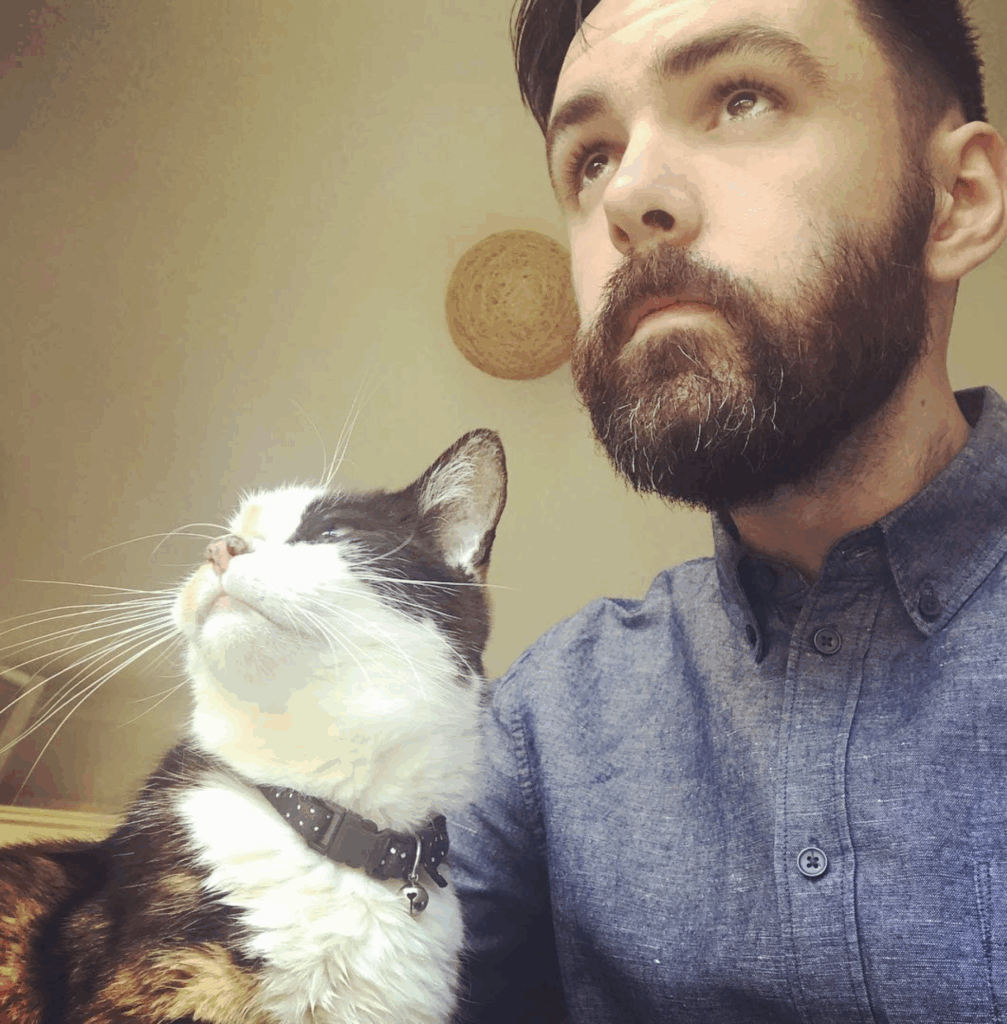
Will with his late cat Leela, looking off into the distance together.

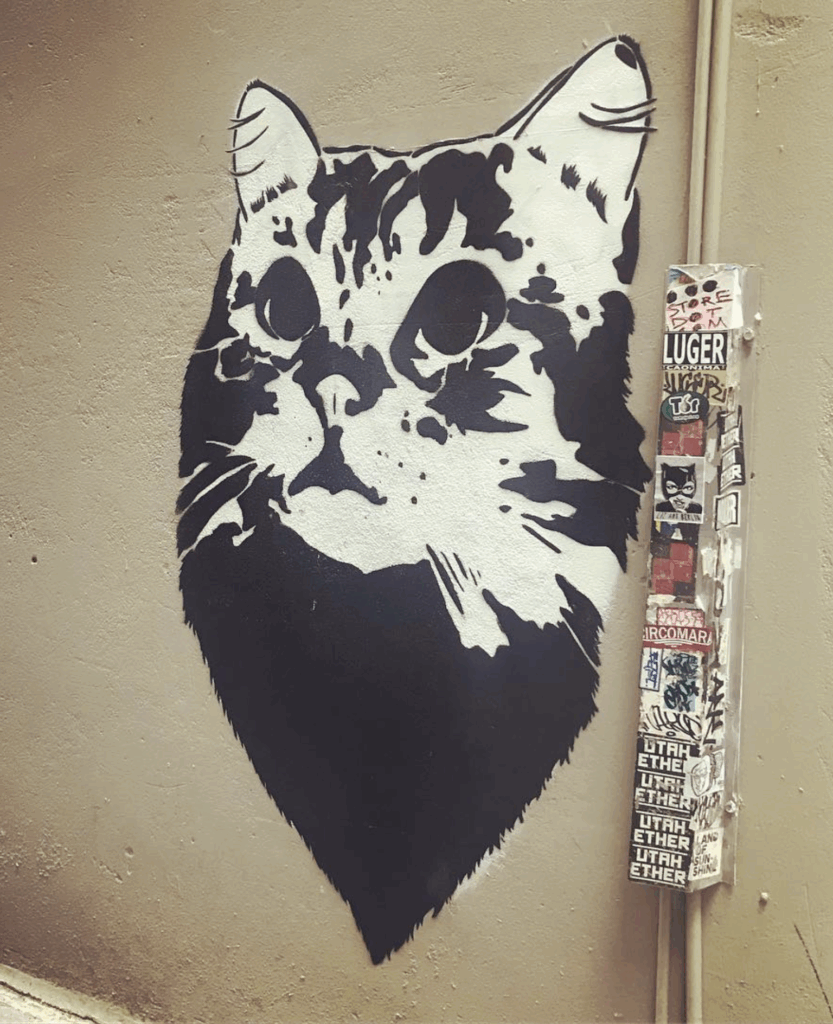
A large paste-up of a surprised cat, next to a utility box covered in sticker graffiti.

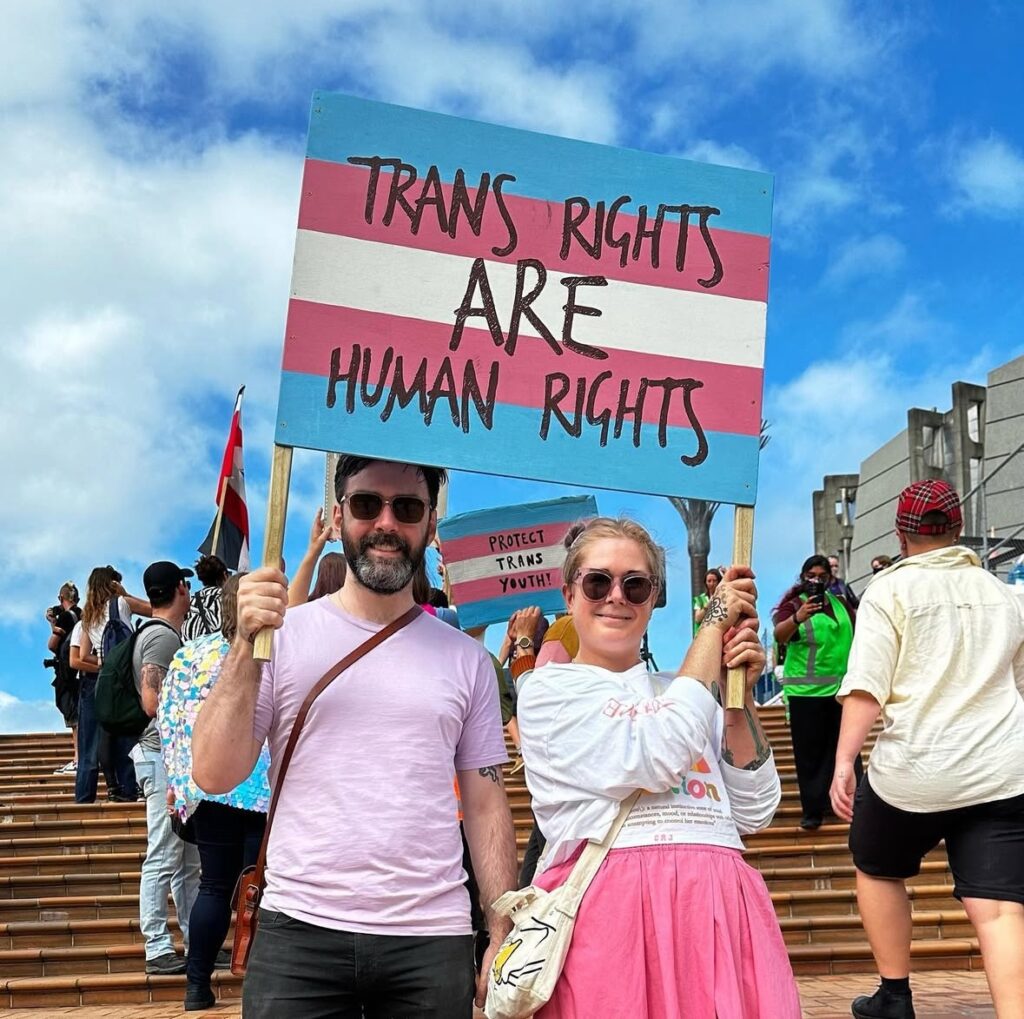
Will and Vee, holding a "trans rights are human rights" sign together.

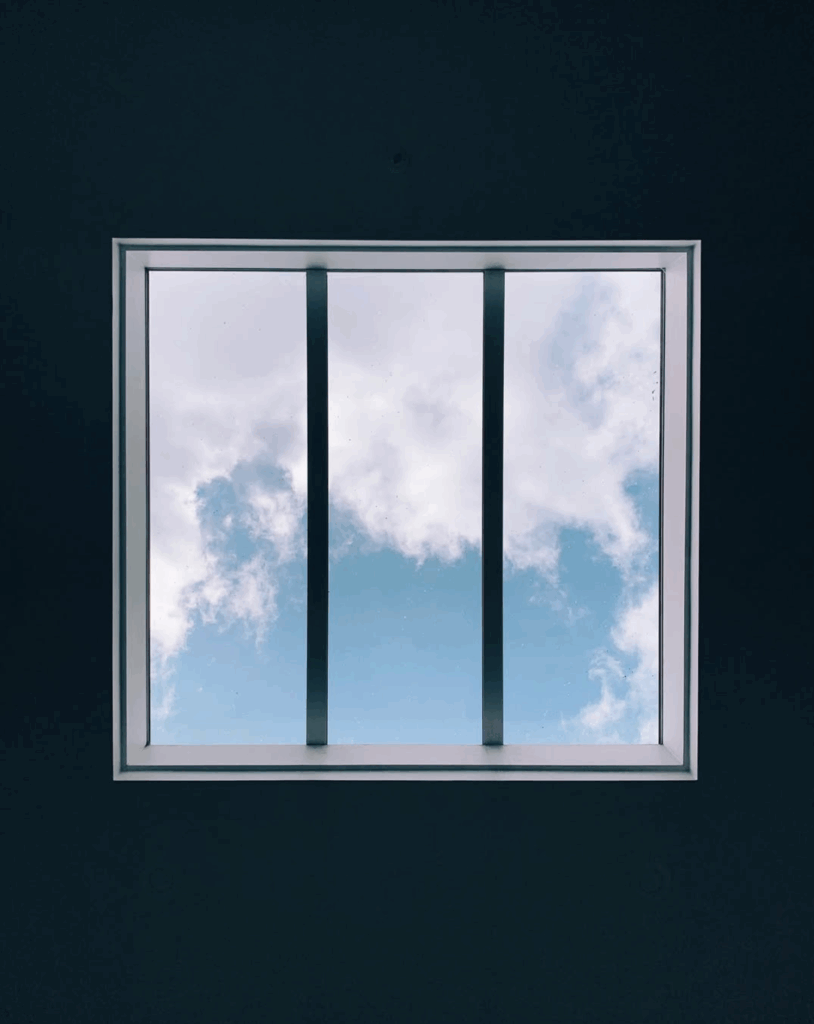
A skylight against a dark ceiling, with two vertical bars against bright clouds in a blue sky. This might also be James Turrell artwork, I'm not sure.

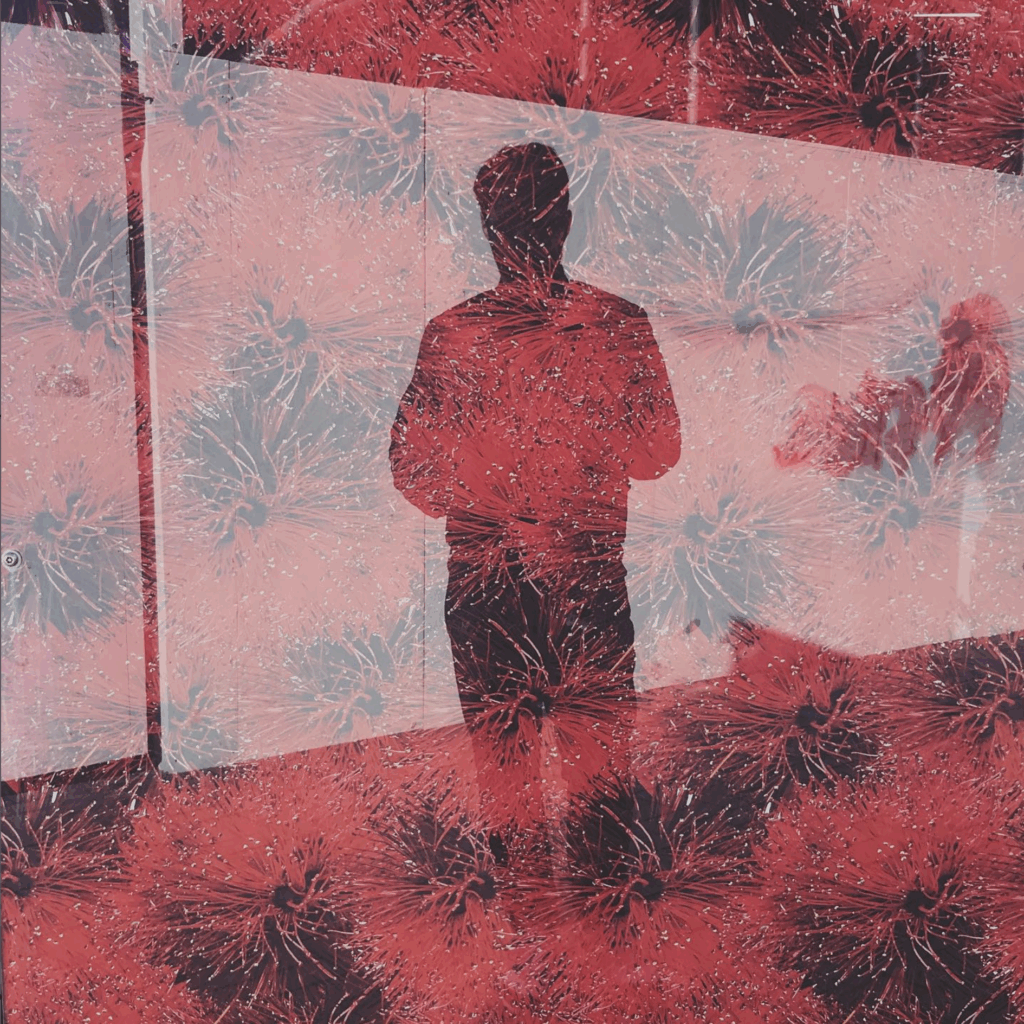
Will's silhouette in reflection against scattered bursts of red on black.

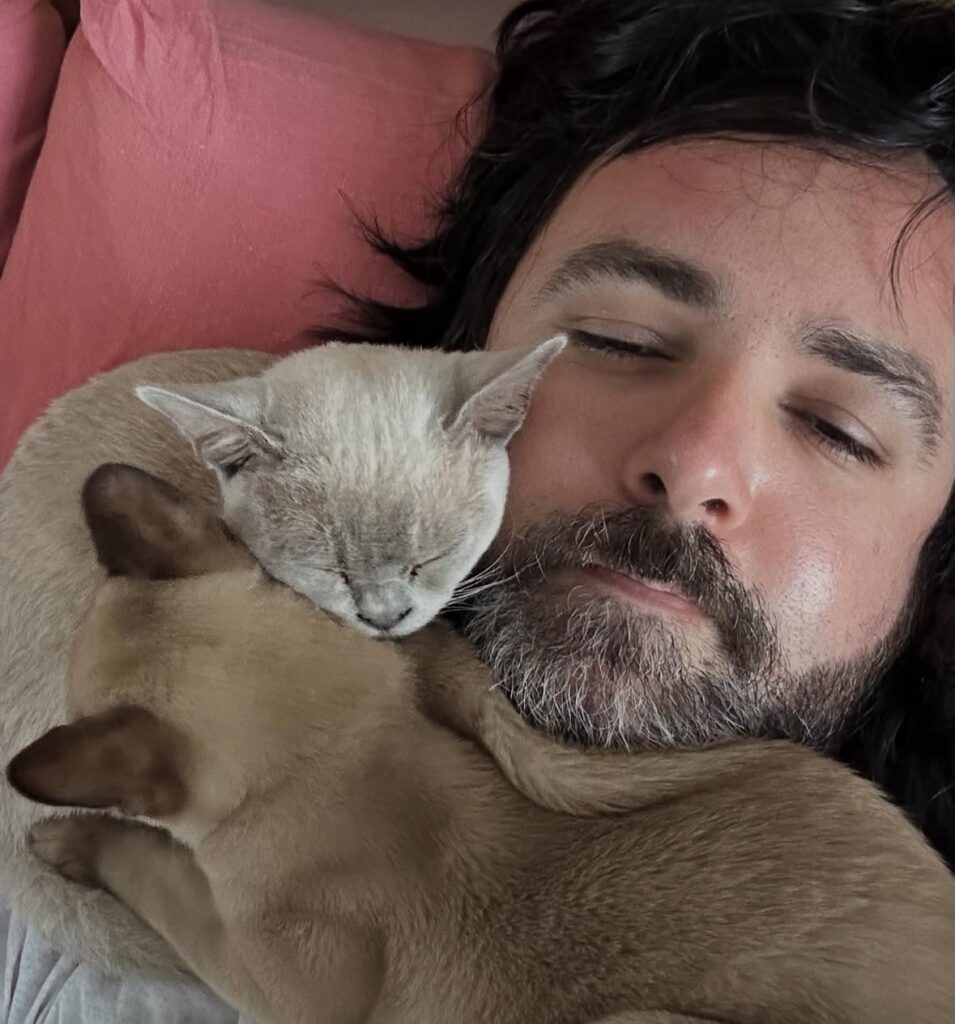
Will being lightly smothered by his cats Budino and Tortina.

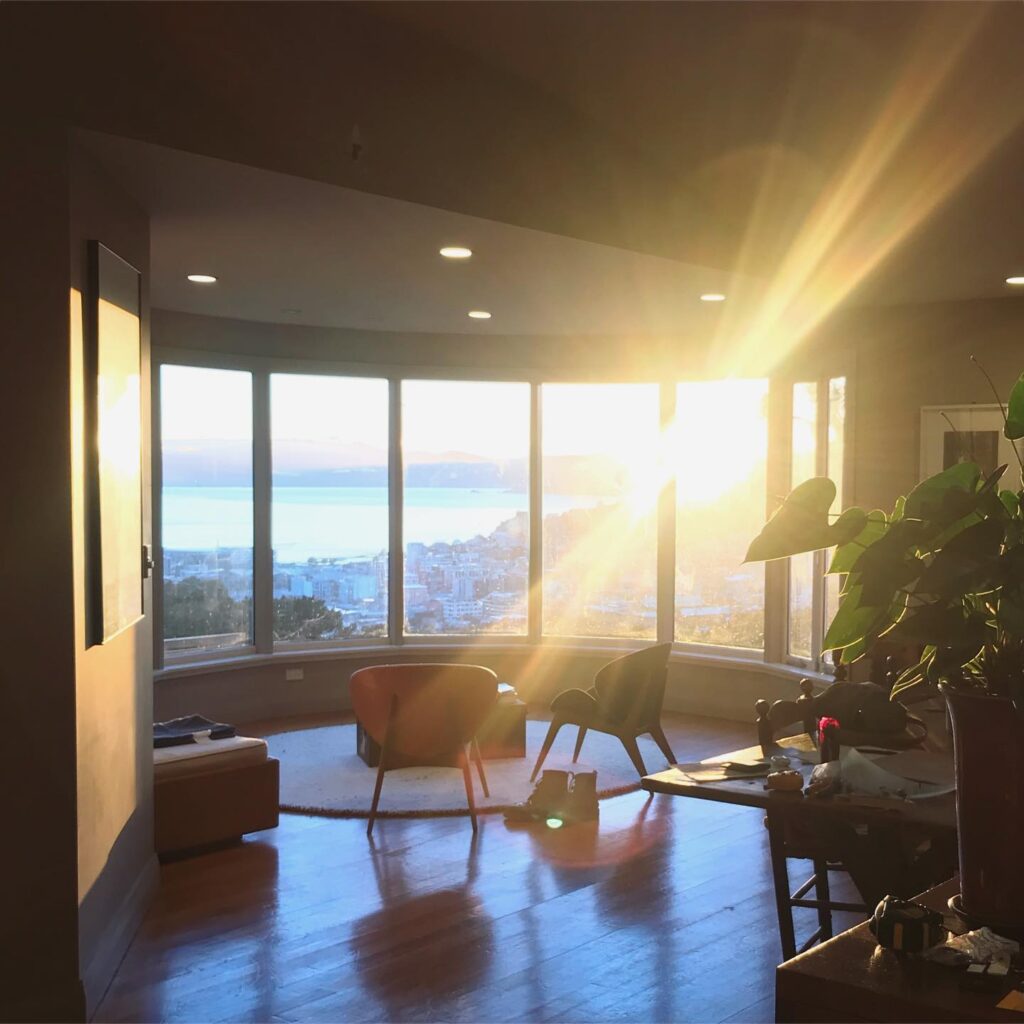
Lens flare through the panoramic windows of a living room with a view.

Sorry. Im sorry. Im trying to remove it

I’m going to make myself write another post after this one so it won’t be at the top of my blog. But I just went for a run with my blood pumping heavy and hot through my body and I’ve got a couple things rattling around in my head right now and so I’m going to sit down here and shake them out.

Yesterday, on our slow bus ride to the art museum, Sophie was talking about how she doesn’t agree with men who say we have escaped the grasp of monoculture. I’m still thinking about that. I think Sophie is right, and a signifier that supports my belief arrived that same day, when Maria (hi Maria) emailed me to ask how I felt regarding something that everyone you know is reluctantly reading or talking about, every day. I don’t even have to name it. You already know. I am succumbing right now—sorry—to its exhausting emergent property of dragging every conversation back to itself. Every monoculture has its own form of universal suckage.

I always say don’t like hot takes but I sure do keep coming up with them. One of them is this: there is no such thing as a solved problem. All we do is transform problems into different shapes. True, sometimes those shapes are smaller, or easier to grasp. More often, in my country, we have just selected for shapes that can be efficiently packed off to other parts of the world so people there can be made to deal with them for us. Or shapes that can be hidden behind something else.

The core narrative I learned growing up is that the darkest stains of the past were problems until, through great deeds by great men, they were solved. The essential promise of my pursuits in education and then profession was that, in computing across networks, I would get to help solve problems for other people, maybe even some of the big problems that still remained.

My faith in those stories is not what it was. The stains of history are worn proudly. The networks I wanted to bring humans closer together are arming us against each other and our planet instead. The machines I hitched my life to have become the stakes in a great gamble that the labor performed by people can be factored out from their inconvenient personhood. And everyone with political or economic power, regardless of their stated position on the axes, seems to have bought in on the same side of the table.

I don’t think everyone performs labor but I do think that every human spends their life in work. Sometimes that work is extractive and oppressive, and people with power tend to assign it great value. Labor against these things—labor that nurtures humans, educates them, brings them pleasure or creates for their joy—is rarely granted that same valuation. We do it anyway, of course. But when your labor is devalued, you present less of a problem to those who would like you to be more efficiently grasped. Packed off. Hidden. Disappeared.

So that’s what I think about the current topical addiction of our monoculture. Maybe the specific foremost iterations of the trend will fall out of favor; they do tend to do that. That won’t wipe away the occurrence of the great wager or what it makes clear about our ruling class. I am sick at heart, often, with rumination on the consequences that are already befalling my loved ones and neighbors, and which will only increase. The people with the money and the weapons have decided that if they can just extract enough tar out of one bank of sand and pump it through some other crystallized sand then, through a process they proudly cannot understand, they will solve their fundamental problem with our humanity.

But consider my argument from its other side. We aren’t solved yet. We can still prove insoluble. And wherever you are, reading this, you can be part of the problem too.